
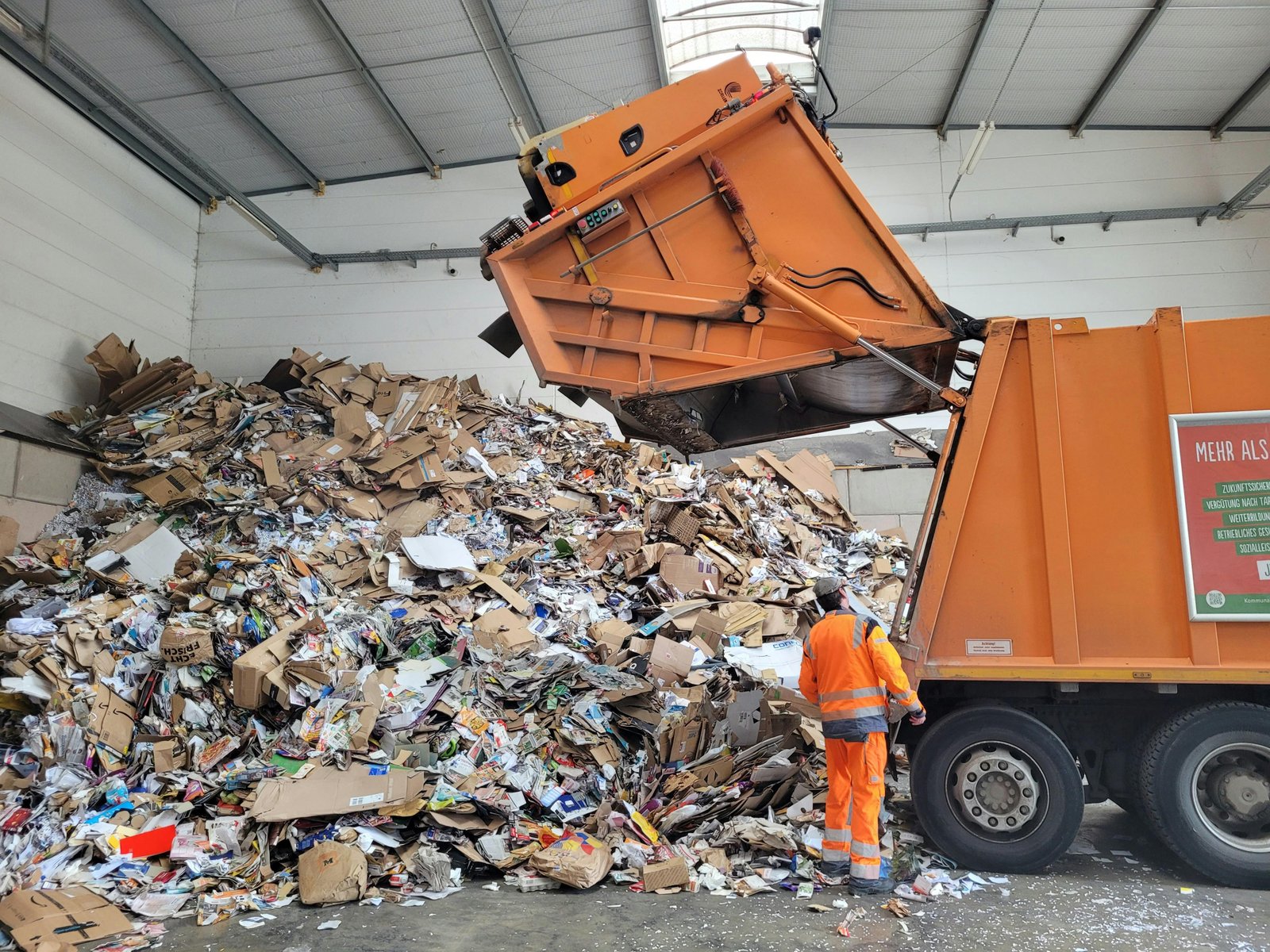
Engineering Material Recovery Facilities for Modern Waste Management and Circular Resource Recovery
Material Recovery Facilities (MRF): Technical Guide for Design, Operations, Technology Systems, and Implementation Strategies for Modern Waste Management
Reading Time: 68 minutes
Key Highlights
• Global market expansion: Material Recovery Facility market valued at USD 12.8 billion in 2024, projected to reach USD 23.4 billion by 2031 at 9.1% CAGR driven by circular economy policies, landfill diversion mandates, and extended producer responsibility regulations across 180+ countries
• Technology performance benchmarks: Modern automated MRFs achieve 85-95% recovery efficiency for target materials, processing 15-50 tonnes per hour with contamination rates below 3%, compared to manual facilities achieving 60-75% recovery with 8-15% contamination through optical sorters, AI robotics, and sensor-based separation systems
• Economic viability indicators: MRF development requires capital investment USD 5-25 million for facilities processing 50,000-150,000 tonnes annually, with operating costs USD 40-120 per tonne processed offset by commodity revenues USD 30-90 per tonne and tipping fees USD 20-80 per tonne depending on market conditions and technology sophistication
• Operational transformation trends: Integration of artificial intelligence, robotics, IoT sensor networks, and predictive analytics delivering 30-45% productivity improvements, 25-40% labor cost reductions, and 20-35% higher material quality through automated sorting, contamination detection, and real-time process optimization versus conventional manual sorting operations
Executive Summary
Material Recovery Facilities constitute essential infrastructure enabling circular economy transition through systematic separation, processing, and preparation of recyclable materials from mixed waste streams for return to manufacturing supply chains. Global municipal solid waste generation exceeding 2.01 billion tonnes annually with recyclable materials (paper, cardboard, plastics, metals, glass) representing 40-50% of waste composition creates substantial opportunity for resource recovery, landfill diversion, and environmental impact reduction. MRFs serve as critical nodes connecting waste collection systems with commodity markets, transforming heterogeneous waste inputs into specification-grade materials meeting stringent quality requirements from paper mills, plastic processors, metal smelters, and glass manufacturers. Facility performance directly impacts recycling program effectiveness, environmental sustainability outcomes, and economic viability determining success or failure of municipal and private sector waste diversion initiatives.
Contemporary MRF technology landscape encompasses diverse configurations ranging from basic manual sorting operations requiring minimal capital investment but intensive labor inputs and achieving moderate recovery rates (60-75%), through semi-automated facilities incorporating mechanical screening and separation equipment improving efficiency while reducing labor requirements, to advanced fully-automated systems utilizing optical sorters, eddy current separators, ballistic separators, air classifiers, and increasingly artificial intelligence-powered robotics achieving superior recovery efficiency (85-95%), throughput capacity (15-50 tonnes per hour), and product quality (contamination below 3%) suitable for demanding end markets. Technology selection depends on complex interplay among feedstock characteristics (source-separated versus mixed waste, contamination levels, material composition), processing capacity requirements (current volumes and growth projections), product quality specifications (end-market standards), labor costs and availability, capital budget constraints, available land area, and regulatory compliance obligations governing facility design, operations, and environmental performance.
Emerging innovations transforming MRF operations include artificial intelligence-powered robotic sorting systems identifying and separating materials with human-like dexterity and superior speed (80-100 picks per minute versus 40-60 for human sorters), advanced sensor technologies including near-infrared spectroscopy, X-ray fluorescence, and hyperspectral imaging enabling precise material identification and separation, Internet of Things sensor networks providing real-time operational monitoring and predictive maintenance capabilities, blockchain-based material tracking ensuring provenance and quality throughout recycling supply chains, and integrated processing configurations combining mechanical sorting with chemical recycling or advanced conversion technologies addressing difficult-to-recycle plastics and composite materials. These technological advancements address persistent industry challenges including labor shortages, rising quality standards from end markets, contamination management, processing cost pressures, and adaptation to evolving packaging materials introducing new separation challenges requiring continuous technology innovation and operational optimization.
This comprehensive technical guide examines Material Recovery Facility development spanning fundamental concepts and terminology, technology configurations and equipment systems, facility design methodologies, operational management strategies, quality control protocols, economic analysis frameworks, regulatory compliance requirements, and future technology trajectories. Drawing on authoritative sources including US Environmental Protection Agency guidelines, World Bank technical guidance, international waste management standards, industry best practices from Solid Waste Association of North America (SWANA), and peer-reviewed research literature, the analysis provides essential reference supporting MRF project development, technology selection, system design, operational optimization, and strategic planning for waste management professionals, facility engineers, municipal officials, private sector developers, and decision-makers pursuing waste diversion, resource recovery, and circular economy objectives through modern recycling infrastructure.
Fundamental Concepts and MRF Classification Framework
Material Recovery Facilities encompass diverse facility types, processing approaches, and technology configurations serving different waste management contexts and operational objectives. Understanding fundamental concepts, terminology, and classification frameworks proves essential for stakeholders evaluating MRF development opportunities, comparing technology alternatives, and making informed decisions regarding facility design, equipment procurement, and operational strategies. MRF classification considers multiple dimensions including feedstock type (source-separated versus mixed waste), processing approach (manual, semi-automated, fully-automated), material focus (single-stream versus dual-stream), facility scale (throughput capacity), and end-market orientation (commodity specifications and quality requirements) creating complex decision space requiring systematic analysis balancing technical feasibility, economic viability, environmental performance, and stakeholder requirements.
MRF Classification by Feedstock Type
Clean MRF (Source-Separated Materials):
Feedstock characteristics: Pre-sorted recyclable materials collected separately from residual waste through curbside recycling programs, drop-off centers, or commercial collection services; residents/businesses perform initial separation removing non-recyclables before collection
Contamination levels: Typically 5-15% contamination from incorrectly-sorted materials, food residues, or non-recyclable items requiring removal during processing; significantly lower than mixed waste streams
Processing complexity: Moderate complexity focusing on separating different recyclable material types (paper grades, plastic resins, metal types, glass colors) rather than removing large contamination quantities
Recovery efficiency: Higher potential recovery rates (75-95%) due to cleaner feedstock enabling more effective mechanical and optical separation with less material loss to residue streams
Product quality: Superior output quality with contamination typically 1-5% meeting stringent end-market specifications; cleaner feedstock enables producing premium-grade commodities commanding higher prices
Operational advantages: Lower processing costs per tonne through reduced residue handling; less equipment wear from contaminants; simplified operations; better workplace conditions with less odor and hazards compared to mixed waste processing
Dirty MRF (Mixed Waste Processing):
Feedstock characteristics: Commingled municipal solid waste without source separation; recyclables mixed with food waste, yard waste, and other residual materials; represents unsorted waste as generated by households and businesses
Contamination levels: Very high contamination (60-80% of incoming material) consisting of organic waste, non-recyclables, and materials unsuitable for recovery requiring extensive processing and residue disposal
Processing complexity: High complexity requiring aggressive mechanical separation removing organics, screening multiple size fractions, and intensive quality control achieving acceptable product specifications from heavily-contaminated feedstock
Recovery efficiency: Lower recovery rates (30-60%) due to material losses from organic contamination, process inefficiencies separating tightly-commingled materials, and quality control rejections of contaminated items
Product quality: Inferior quality with contamination typically 5-15% limiting market access and pricing; extensive cleaning and quality control required approaching acceptable specifications; some materials economically unrecoverable
Operational challenges: Higher processing costs from extensive mechanical separation, residue handling (60-70% of intake), equipment maintenance (accelerated wear), and more difficult working conditions with odor, dust, and safety concerns; limited deployment in developed markets due to economics and environmental concerns but applications in developing regions lacking source separation infrastructure
Hybrid MRF Configurations:
Combined processing: Some facilities process both source-separated recyclables and residual waste in separate processing lines within single facility maximizing infrastructure utilization and operational flexibility
Material-specific separation: Specialized configurations targeting specific high-value materials (commercial cardboard, beverage containers, electronic waste) from relatively clean sources warranting dedicated processing systems
Organic separation integration: Increasingly facilities incorporate front-end organic material separation removing food waste and compostables before recyclable processing improving recovery efficiency and enabling organic recycling
Flexible operations: Modern facilities designed for operational flexibility accommodating changing waste composition, regulatory requirements, and market conditions through modular equipment configurations enabling process adaptation without major capital reinvestment
MRF Classification by Processing Approach and Automation Level
Manual Sorting MRF:
Technology configuration: Minimal mechanization with conveyor systems transporting materials past manual sorting stations where workers remove target materials into collection bins; may include basic screens separating size fractions
Capital investment: Low capital requirements USD 1-5 million for basic facility processing 10,000-30,000 tonnes annually; accessible for municipalities and developing regions with limited budgets
Labor requirements: Very high labor intensity with 15-30 sorters per processing line; labor represents 50-70% of operating costs; vulnerable to labor availability, costs, and turnover affecting operations
Processing capacity: Limited throughput 5-15 tonnes per hour per line constrained by manual sorting rates (40-60 picks per minute per worker) and sorter fatigue affecting productivity
Recovery efficiency: Moderate efficiency 60-75% for target materials; human visual identification effective but consistency variable with worker fatigue, training, and material complexity
Suitable applications: Small-scale operations, developing regions with low labor costs and limited capital, communities with simple waste streams and modest quality requirements, demonstration facilities building toward mechanization
Semi-Automated MRF:
Technology configuration: Combination of mechanical separation equipment (screens, magnets, eddy current separators, air classifiers) and manual sorting stations; mechanization handles bulk separation while manual sorters perform quality control and difficult separations
Capital investment: Moderate investment USD 5-15 million for facilities processing 30,000-75,000 tonnes annually incorporating mechanical systems reducing labor while maintaining cost-effectiveness
Labor requirements: Reduced labor 8-15 sorters per line; labor represents 35-50% operating costs; mechanical systems handle routine separations while workers focus on quality control and complex items
Processing capacity: Improved throughput 10-25 tonnes per hour per line through mechanical systems handling bulk material flows and reducing manual sorting burden
Recovery efficiency: Enhanced efficiency 70-85% combining mechanical separation consistency with human flexibility identifying unusual items or quality concerns
Suitable applications: Mid-scale operations balancing capital investment with operating costs; facilities transitioning from manual to automated operations; markets with moderate labor costs warranting partial mechanization but not full automation economics
Fully-Automated MRF:
Technology configuration: Comprehensive mechanical and optical separation systems including optical sorters (near-infrared, visible light, X-ray), robotic sorters, advanced screening, magnetic and eddy current separation, air classification, and AI-powered quality control minimizing manual sorting
Capital investment: High investment USD 15-30 million for facilities processing 75,000-150,000 tonnes annually with sophisticated automation; economies of scale require larger throughput justifying capital costs
Labor requirements: Minimal labor 3-8 sorters per line primarily for quality control and maintenance; labor represents 20-35% operating costs; automation reduces workforce while requiring higher technical skills
Processing capacity: Maximum throughput 20-50 tonnes per hour per line through high-speed automated systems operating continuously without fatigue limitations
Recovery efficiency: Superior efficiency 85-95% for target materials through precise optical identification, consistent mechanical separation, and automated quality control maintaining specifications
Suitable applications: Large-scale regional facilities serving multiple municipalities; high-value markets with stringent quality requirements; operations in high labor cost regions justifying automation investment; facilities requiring maximum efficiency and product quality for competitive commodity markets
Single-Stream versus Dual-Stream Collection and Processing
Single-Stream MRF (Commingled Recyclables):
Collection system: All recyclable materials (paper, cardboard, plastics, metals, glass) collected together in single container; residents do not separate materials by type simplifying participation and increasing collection efficiency
Participation benefits: Higher residential participation rates (70-90% vs. 40-60% for dual-stream) due to convenience; increased collection tonnage (30-50% more materials) justifying processing costs
Collection economics: Lower collection costs through single truck passes and no separate containers; improved route efficiency and productivity offsetting higher processing costs
Processing requirements: More complex and expensive MRF operations separating commingled materials; higher contamination from glass breakage contaminating paper and plastics; requires sophisticated separation equipment
Product quality challenges: Lower quality outputs with contamination 3-8% vs. 1-3% for dual-stream affecting marketability and commodity pricing; broken glass contamination particularly problematic
Market dominance: Predominant collection approach in North America (80%+ of programs) and increasingly globally due to convenience driving higher participation despite processing challenges; ongoing technology improvements addressing quality concerns
Dual-Stream MRF (Separated Paper and Containers):
Collection system: Paper and cardboard (fibers) collected separately from containers (plastics, metals, glass); requires two compartment trucks or separate collection vehicles
Participation considerations: Lower participation rates (40-60%) due to sorting burden on residents; some materials incorrectly sorted between streams requiring processing correction
Collection economics: Higher collection costs from dual containers and potentially separate collection routes; reduced route productivity compared to single-stream operations
Processing advantages: Simpler, less expensive MRF operations with materials pre-separated; reduced glass contamination of paper; less complex separation equipment requirements
Product quality benefits: Superior quality outputs with contamination typically 1-3% commanding premium commodity prices; cleaner paper particularly valuable to end markets
Market trends: Declining market share (20%+ of programs converting to single-stream) though some markets maintaining dual-stream for quality advantages or converting back from single-stream due to contamination concerns and changing end-market requirements
Core MRF Equipment and Technology Systems
Material Recovery Facility operations depend on integrated equipment systems performing sequential separation processes transforming mixed recyclable feedstocks into specification-grade material commodities. Equipment selection, configuration, and integration determine facility performance including processing capacity, recovery efficiency, product quality, operating costs, and operational reliability. Modern MRFs incorporate diverse technology systems spanning material handling and conveyance, screening and size separation, density separation, ferrous and non-ferrous metal recovery, optical sorting, robotic sorting, and quality control stations. Understanding equipment capabilities, operating principles, performance characteristics, and application contexts enables informed technology selection and system design optimizing facility performance across technical and economic dimensions while adapting to site-specific constraints and operational requirements.
Material Receiving, Storage, and Feed Systems:
Receiving and Tipping Floor:
• Function: Collection vehicles discharge materials onto concrete tipping floor providing temporary storage and surge capacity buffering variable delivery rates from steady processing requirements
• Design considerations: Adequate area (typically 0.5-1.5 hectares for mid-scale facilities) preventing overflow; drainage systems collecting liquids; ventilation managing odors and dust; fire suppression systems
• Material handling: Front-end loaders or excavators with grapples push materials into feed hopper maintaining steady supply to processing line
• Storage capacity: Typically 1-3 days processing capacity providing operational flexibility for equipment maintenance, delivery schedule variations, and weekend accumulation
Feed Hopper and Metering Conveyors:
• Function: Feed hopper receives materials from tipping floor feeding metering conveyor regulating material flow rate onto processing line preventing overloading or gaps
• Hopper design: Sloped walls preventing bridging; adequate volume buffering loader cycle times; safety features preventing worker access during operation
• Metering systems: Variable speed conveyors, vibratory feeders, or apron feeders controlling material depth and distribution onto sorting conveyor optimizing separation equipment performance
• Capacity: Sized for peak processing rates with adjustment range accommodating material density and composition variations
Bag Opening and De-lumping:
• Function: Mechanical systems open plastic bags containing recyclables and break apart compacted material lumps enabling effective screening and separation
• Technology options: Rotating drum screens with lifters (bag breakers), flail mills, or disc screens with bag-opening fingers
• Performance: 90-98% bag opening efficiency critical for facilities receiving bagged materials; prevents bags interfering with downstream separation equipment
• Maintenance: Regular inspection and replacement of wear components (flails, screens) maintaining performance
Screening and Size Separation Equipment
Disc Screens (Star Screens):
Operating principle: Rotating horizontal shafts with star-shaped discs creating dynamic screening surface; small materials fall between discs while large materials ride over top to separate discharge
Separation mechanism: Primary separation by size (typically separating materials smaller than 50-75mm from larger items) with secondary sorting by shape (flat items like cardboard and paper ride over while round/compact items fall through earlier)
Applications: Separating fiber (paper, cardboard) from containers (plastics, metals, glass); removing fines (broken glass, small contaminants) from processing stream; sizing materials for subsequent separation steps
Performance: Efficient separation 85-95% for materials with clear size differentiation; throughput 15-40 tonnes per hour depending on screen size and material characteristics
Advantages: Relatively simple technology with lower capital cost USD 75,000-250,000; reliable operation with moderate maintenance; gentle handling minimizing glass breakage; adaptable to various separations through disc spacing and shaft angle adjustment
Ballistic Separators:
Operating principle: Inclined vibrating deck with perforations creates dynamic screening action separating materials into three fractions: fines falling through perforations, flat materials (2D) riding upward, and round/compact materials (3D) rolling downward
Separation mechanism: Combined size, shape, and density separation exploiting different material behaviors on vibrating inclined surface; adjustable angle, frequency, and amplitude optimizing separation for specific feedstocks
Applications: Separating paper and cardboard (2D fraction) from containers (3D fraction) in single-stream processing; removing fines; pre-sorting before optical sorters reducing their processing burden
Performance: Very efficient multi-dimensional separation 90-95% classification accuracy; high throughput 20-50 tonnes per hour; particularly effective for single-stream applications
Advantages: Highly effective separation replacing multiple pieces of conventional equipment; compact footprint; relatively low operating costs; capital investment USD 150,000-400,000 justified by performance benefits in larger facilities
Trommel Screens:
Operating principle: Rotating cylindrical drum with perforated screen surface; materials fed into one end tumble through rotating drum with small items falling through perforations while large items discharge from opposite end
Applications: Size separation particularly effective for removing fines (broken glass, dirt, small contaminants) from processing stream; less common in modern clean MRFs but applications in mixed waste processing
Performance: Effective for significant size differences; throughput 10-30 tonnes per hour; screening efficiency 80-90% depending on material characteristics and screen condition
Limitations: Glass breakage from tumbling action contaminating materials; slower processing versus disc screens; higher maintenance; declining use in modern MRFs replaced by gentler screening technologies
Magnetic and Eddy Current Separation Systems
Magnetic Separators (Ferrous Metal Recovery):
Operating principle: Strong magnetic field attracts ferrous metals (steel, tin-plated cans) from material stream; suspended magnets over conveyor or magnetic drum pulleys capturing steel items
Technology variants: Overhead belt magnets (electromagnetic or permanent magnet) suspended above conveyor; magnetic drum pulleys integrated into conveyor system; cross-belt magnets for cleaner separation
Recovery efficiency: Very high capture rates 95-98% for steel containers and ferrous materials; relatively simple, reliable technology with minimal operating costs
Product quality: High purity ferrous output (>95% steel) with minimal contamination suitable for scrap metal markets; cleaning (labels, plastic lids) may be required for premium grades
Capital costs: Moderate investment USD 25,000-100,000 per magnet depending on size, magnetic strength, and conveyor integration; essential equipment in every MRF for steel recovery
Eddy Current Separators (Non-Ferrous Metal Recovery):
Operating principle: Rapidly-rotating magnetic field induces electrical currents in non-ferrous metals (aluminum, copper) creating opposing magnetic fields repelling metals from conveyor while non-metallic materials fall normally; metals "jump" into separate collection
System configuration: High-speed magnetic rotor (1,500-3,000 RPM) at discharge end of conveyor; material depth on belt critical (ideally single layer) for effective separation; adjustable splitter positioning optimizing metal capture
Recovery efficiency: Good capture rates 85-95% for aluminum containers and other non-ferrous items; performance depends on material presentation, particle size, and rotor speed
Product purity: Moderate purity 85-92% aluminum with contamination from paper, plastic, and small non-metallic items requiring quality control sorting; multiple passes improving purity
Capital costs: Significant investment USD 100,000-300,000 per separator depending on belt width and magnetic system sophistication; essential for aluminum recovery in single-stream facilities
Optical Sorting Technology Systems
Optical sorters represent cornerstone technology in modern automated MRFs, utilizing advanced sensor systems and high-speed pneumatic ejection mechanisms identifying and separating materials based on optical properties including color, material composition, and shape. Near-infrared (NIR) spectroscopy dominates plastic sorting applications identifying polymer types through molecular vibration signatures, while visible light systems sort paper grades and glass colors. X-ray fluorescence (XRF) and X-ray transmission (XRT) technologies enable sorting by atomic composition separating different metal alloys or removing contaminants. Hyperspectral imaging combining multiple wavelength bands provides superior material identification capabilities addressing complex sorting challenges. These technologies achieve remarkable performance with processing rates 2-8 tonnes per hour per meter of belt width and sorting accuracy 90-98% for most target materials, though capital investment USD 200,000-600,000 per unit and maintenance requirements demand adequate scale and technical capabilities justifying deployment.
Near-Infrared (NIR) Optical Sorters:
Technology principle: NIR light (wavelength 1,000-2,500 nanometers) directed at material stream; reflected light analyzed with spectrometer identifying molecular composition through characteristic absorption patterns; computer determines material type and triggers compressed air jets ejecting target items
Primary applications: Plastic sorting by resin type (PET, HDPE, PP, PS, PVC) essential for plastic recycling; separating paper grades; distinguishing wood from other materials; identifying specific package types
Performance capabilities: Very high identification accuracy 95-99% for clean, dry materials; processing speed up to 3 meters per second conveyor speed; throughput 2-6 tonnes per hour per meter belt width
Limitations: Performance degraded by moisture, dirt, or labels obscuring material surface; black plastics problematic (insufficient reflected signal); requires relatively clean material presentation
Capital and operating costs: Significant investment USD 250,000-500,000 per unit depending on belt width and sophistication; compressed air consumption 15-40 cubic meters per minute requiring air compressor infrastructure; maintenance cleaning optics and replacing valves
Visible Light (Color) Sorters:
Technology principle: High-resolution cameras capturing visible light images; computer vision algorithms analyzing color, shape, and other visual characteristics identifying and sorting materials
Primary applications: Glass sorting by color (clear, green, amber) essential for glass recycling; paper grade sorting by color and printing; removing contamination based on visual appearance
Performance capabilities: Excellent color discrimination; throughput similar to NIR systems 2-6 tonnes per hour per meter width; integration with NIR systems providing comprehensive sorting capabilities
Advantages: Lower cost than NIR USD 150,000-350,000 per unit for applications not requiring material composition analysis; simpler technology with good performance for color-based sorting
X-Ray Sorting Technologies:
Technology variants: X-ray fluorescence (XRF) identifying elements through characteristic X-ray emissions; X-ray transmission (XRT) measuring material density through X-ray absorption
Applications: Metal alloy sorting (aluminum alloys, copper alloys, stainless steel) for scrap metal recycling; heavy contaminant removal (batteries, electronics) from waste streams; specialized sorting applications
Performance: Precise material identification based on elemental composition or density; throughput typically lower 1-4 tonnes per hour per meter width due to measurement time requirements
Capital costs: Premium investment USD 400,000-800,000 per unit due to sophisticated sensor technology and radiation safety requirements; specialized applications justifying costs in metal recycling or contamination removal
Robotic Sorting Systems and Artificial Intelligence
Robotic sorting represents revolutionary technology increasingly deployed in modern MRFs, combining artificial intelligence-powered material recognition with robotic arms providing human-like dexterity separating complex materials. Vision systems utilizing machine learning algorithms trained on millions of images identify materials with superior accuracy compared to conventional sensors, recognizing packages by shape, logos, labels, and visual characteristics rather than just optical properties. Robotic arms equipped with suction or gripper end-effectors precisely pick target items from conveyor streams placing them into designated collection bins. Performance metrics include 40-80 picks per minute per robot (approaching or exceeding human sorter rates), 95-98% picking accuracy, and ability to work continuously without fatigue. Applications span quality control removing contamination, positive sorting recovering target materials, and increasingly complex separations like separating different flexible plastic types or removing problem materials. Capital investment USD 150,000-350,000 per robot unit demands adequate scale but labor savings, improved safety (robots handling hazardous materials), and performance consistency increasingly justify deployment particularly as labor costs rise and worker availability declines in many markets.
AI-Powered Material Recognition:
Technology approach: High-resolution cameras capturing images of materials on conveyor; deep learning neural networks analyzing visual information identifying material types, brands, contamination, and other characteristics; continuous learning improving recognition accuracy over time
Recognition capabilities: Identifies materials conventional sensors miss including multi-layer plastics, cartons, specific package types, contamination like plastic bags in paper stream; recognizes items by logo, shape, or label rather than just material composition
Training and adaptation: Initial training on large datasets (millions of images); ongoing learning from operational data adapting to local waste stream characteristics; facility-specific customization improving performance
Performance advantages: Higher recognition accuracy 95-98% versus 90-95% for conventional optical sorters on complex materials; identifies items optical sorters miss; adapts to new packaging materials or waste stream changes without hardware modifications
Robotic Picking Systems:
System configuration: Industrial robot (typically 4-6 axis articulated arm) mounted above conveyor; vision system guides robot to target items; end effector (vacuum gripper, mechanical gripper) picks items placing in collection bins
Picking performance: Speed 40-80 picks per minute depending on item characteristics and conveyor speed; continuous operation without fatigue; precision placement improving product quality
Applications: Quality control removing contamination from sorted material streams; positive sorting recovering high-value materials like aluminum cans or PET bottles; separating flexible plastics (plastic films vs rigid containers); removing hazardous materials (batteries, aerosols)
Operational advantages: Eliminates worker exposure to hazardous materials; consistent performance without productivity decline during shifts; 24/7 operation capability; reduces workplace injuries; handles difficult materials (glass, sharps) safely
Economic and Implementation Considerations:
Capital investment: USD 150,000-350,000 per robot unit including vision system, robot, end effector, control system, and installation; multiple units typically deployed for comprehensive coverage
Operating costs: Low operating costs primarily electricity (2-5 kW per robot) and maintenance; significantly lower than equivalent manual sorting labor costs in developed markets
Payback period: Typically 2-4 years in high labor cost markets (>USD 15 per hour) through labor displacement; faster payback for hazardous material handling reducing worker compensation costs
Technical requirements: Skilled maintenance staff for robot servicing; IT infrastructure for vision system and data management; adequate material presentation (single layer, controlled speed) optimizing robot performance
Market adoption: Rapidly increasing deployment with >500 robots installed globally in MRFs (2024); expected to exceed 2,000 installations by 2027 as technology costs decline and performance improves
MRF Design Methodology and Process Flow Development
Material Recovery Facility design requires systematic methodology integrating feedstock characterization, material flow modeling, equipment selection, process flow development, facility layout optimization, and supporting infrastructure design creating integrated systems achieving performance objectives within technical and economic constraints. Design process begins with comprehensive feedstock analysis characterizing material composition, contamination levels, and physical properties informing separation strategy development. Mass balance calculations tracking material flows through sequential process steps determine equipment sizing and configuration requirements. Process flow diagrams visualize material pathways, equipment arrangements, and decision points guiding detailed design. Facility layout considerations balance operational efficiency, material handling logistics, safety requirements, maintenance access, and future expansion capability. Supporting infrastructure including electrical systems, compressed air, fire protection, dust control, and wastewater management integrate with processing equipment ensuring reliable operations. Successful design requires multidisciplinary expertise spanning waste engineering, mechanical systems, structural design, electrical engineering, and operations management creating optimized facilities achieving recovery efficiency, product quality, and economic performance targets.
MRF Design Process Framework
Phase 1: Feedstock Characterization and Market Assessment
Waste characterization studies: Detailed composition analysis determining percentages of paper, cardboard, plastics (by resin type), metals (ferrous and aluminum), glass, and contamination; seasonal variations; projected composition changes
Volume projections: Current and forecast recyclable quantities over 15-25 year facility lifetime; population growth, recycling program changes, per-capita generation trends affecting throughput requirements
Collection system characteristics: Single-stream versus dual-stream; container types (carts, bags); contamination patterns from collection methods; delivery schedules and seasonal fluctuations
End-market analysis: Local, regional, and export markets for recovered materials; quality specifications; pricing trends; transportation logistics; market stability and risk assessment
Regulatory requirements: Applicable permits; environmental standards; building codes; worker safety regulations; product quality mandates influencing design parameters
Phase 2: Process Development and Mass Balance
Separation strategy: Determining sequence of separation steps achieving target material recovery and purity; identifying primary, secondary, and tertiary processing stages
Mass balance modeling: Tracking material flows through each process step calculating recovered quantities and residue generation; determining equipment capture rates and process yields
Equipment selection: Choosing specific technology types (screens, optical sorters, magnets, etc.) and sizing based on feedstock characteristics, throughput requirements, and recovery objectives
Process flow diagram: Visual representation showing material pathways, equipment, conveyors, decision points, and recovered material outputs providing design blueprint
Alternative evaluation: Comparing technology configurations (manual vs. automated, different equipment combinations) analyzing capital costs, operating expenses, recovery efficiency, and product quality tradeoffs
Phase 3: Facility Layout and Infrastructure Design
Site planning: Material receiving area, tipping floor, processing building, material storage bunkers, office and support facilities, truck circulation, parking, and future expansion area
Building design: Processing building dimensions accommodating equipment, conveyors, maintenance access, and vertical clearances; structural design for equipment loads and suspended conveyors; architectural features (doors, windows, lighting)
Equipment arrangement: Three-dimensional layout positioning equipment optimizing material flow, maintenance access, operator visibility, and safety while minimizing building volume
Conveyor routing: Belt conveyor paths connecting equipment with appropriate widths, speeds, transitions, and access platforms; minimizing transfer points and maintaining material quality
Support systems: Electrical distribution (typically 500-2,000 kW total demand); compressed air system (100-400 CFM); fire suppression; dust collection; HVAC; wastewater; control room and operator facilities
Phase 4: Detailed Engineering and Construction Documentation
Equipment specifications: Detailed technical requirements for each equipment item; performance guarantees; testing protocols; spare parts; warranties; training requirements
Construction drawings: Architectural, structural, mechanical, electrical, and plumbing drawings providing complete information for construction bidding and execution
Control system design: PLC programming requirements; operator interface design; safety interlocks; remote monitoring capabilities; data collection and reporting
Cost estimates: Detailed quantity takeoffs and pricing for equipment, construction, installation, commissioning, and owner costs developing accurate project budgets
Implementation planning: Construction schedule; procurement strategy; commissioning and startup plans; operations and maintenance manuals; operator training programs
Example Process Flow: Single-Stream MRF (50,000 tonnes/year capacity)
Step 1 - Material Receiving and Feed (100% incoming material = 50,000 tonnes/year):
• Tipping floor receiving collection vehicles
• Front-end loader feeding material into feed hopper
• Metering conveyor regulating flow onto processing line at 20-25 tonnes/hour
• Bag breaker opening plastic bags and de-lumping compacted materials
Step 2 - Initial Screening and Contamination Removal (Material flow: 98% = 49,000 tonnes):
• Pre-sort manual QC station removing large contamination, oversized items, hazardous materials (batteries, propane tanks)
• Residue to landfill: 2% = 1,000 tonnes (primarily large non-recyclables)
Step 3 - Ballistic Separator - Primary Fiber/Container Separation (Material flow: 49,000 tonnes):
• Fines fraction (broken glass, dirt): 8% = 3,920 tonnes → contaminated glass recovery or landfill
• 2D fraction (paper, cardboard): 45% = 22,050 tonnes → fiber processing line
• 3D fraction (containers - plastics, metals, glass): 45% = 22,030 tonnes → container processing line
Step 4a - Fiber Line Processing (22,050 tonnes input):
• Manual positive sort removing containers missed by ballistic separator
• Optical sorter removing ONP (newspaper) - 8,000 tonnes recovered
• Optical sorter removing OCC (cardboard) - 11,000 tonnes recovered
• Mixed paper stream - 2,500 tonnes recovered
• Fiber residue - 550 tonnes to landfill
Step 4b - Container Line Processing (22,030 tonnes input):
• Magnetic separator removing steel cans - 3,000 tonnes recovered (95% capture)
• Manual quality control sort removing fiber and contamination
• Disc screen separating glass - 5,000 tonnes (mixture of colors, contaminated)
• Optical sorter separating PET bottles - 3,500 tonnes recovered
• Optical sorter separating HDPE (natural/colored separately) - 2,800 tonnes recovered
• Eddy current separator removing aluminum cans - 1,200 tonnes recovered (90% capture)
• Optical sorter separating PP/PS containers - 800 tonnes recovered
• Mixed plastics and residue - 5,730 tonnes (some further processing possible or to landfill)
Overall Facility Performance:
• Total materials recovered for sale: 38,300 tonnes (77% of intake)
• Residue to landfill: 11,700 tonnes (23% of intake)
• Primary revenue generators: OCC cardboard (11,000 tonnes × USD 120/tonne), ONP newspaper (8,000 tonnes × USD 60/tonne), PET bottles (3,500 tonnes × USD 300/tonne), HDPE (2,800 tonnes × USD 400/tonne), aluminum (1,200 tonnes × USD 1,200/tonne)
• Processing capacity: 20-25 tonnes/hour × 2,500 operating hours/year = 50,000-62,500 tonnes annual capacity
Operational Management and Performance Optimization
Successful MRF operations require comprehensive management systems spanning material handling, equipment operations, maintenance programs, quality control, safety management, and performance monitoring ensuring consistent achievement of recovery, quality, and economic objectives. Daily operations balance multiple competing priorities including maximizing throughput processing variable incoming volumes, maintaining product quality meeting market specifications, minimizing equipment downtime through preventive maintenance, ensuring worker safety in challenging industrial environments, and managing costs optimizing profitability or minimizing subsidies for public facilities. Performance optimization requires data-driven approaches monitoring key performance indicators, identifying improvement opportunities, implementing corrective actions, and continuously refining operations responding to changing conditions including waste stream composition, equipment performance, market requirements, and regulatory compliance obligations.
Key Performance Indicators (KPIs) for MRF Operations:
Throughput and Capacity Utilization:
• Tonnes processed per hour/day/month/year tracking actual versus design capacity
• Capacity utilization percentage (actual throughput / design capacity)
• Downtime analysis (planned maintenance, unplanned breakdowns, material shortages)
• Target: >85% capacity utilization during operating hours; <10% unplanned downtime
Recovery Efficiency and Material Yield:
• Overall recovery rate (total materials recovered / total intake) percentage
• Individual material recovery rates (paper, plastic, metal, glass) tracking separation effectiveness
• Residue rate (material to landfill / total intake) indicating process losses
• Target: >75% overall recovery for single-stream; >85% for source-separated; <25% residue
Product Quality and Contamination:
• Contamination rates for each recovered material grade (percentage non-target material)
• Material quality audit results comparing outputs to market specifications
• Customer feedback and load rejections tracking market acceptance
• Target: <3-5% contamination for paper grades; <2% for plastics; <5% for metals meeting market standards
Economic Performance:
• Operating cost per tonne processed (labor, energy, maintenance, supplies)
• Revenue per tonne (commodity sales, tipping fees) tracking market returns
• Net processing cost or profit per tonne (revenues minus costs)
• Cash flow and budget variance monitoring financial performance
• Target: Sustainable financial performance with positive cash flow or manageable subsidy requirements
Safety and Environmental Compliance:
• Lost time injury frequency rate (injuries per million hours worked)
• Near-miss incidents and corrective actions tracking safety culture
• Environmental incidents (spills, emissions, complaints) and corrective responses
• Regulatory compliance status (permits, inspections, violations)
• Target: Zero lost-time injuries; zero environmental violations; full regulatory compliance
Comprehensive Implementation Checklist: MRF Development
Pre-Development Phase:
☐ Complete waste characterization study determining composition, volumes, projections
☐ Conduct end-market analysis identifying buyers, specifications, pricing, contracts
☐ Evaluate potential sites considering zoning, access, utilities, environmental constraints
☐ Assess regulatory requirements for permits, approvals, environmental compliance
☐ Develop business plan with capital costs, operating expenses, revenues, financial projections
☐ Secure project financing through bonds, loans, grants, public-private partnerships
☐ Establish governance structure and project management team
Design and Engineering Phase:
☐ Select engineering firm with MRF design experience
☐ Develop conceptual design with process flow, equipment selection, facility layout
☐ Complete preliminary engineering with detailed mass balance, equipment sizing
☐ Prepare detailed design drawings (architectural, structural, mechanical, electrical)
☐ Develop equipment specifications with performance guarantees
☐ Complete environmental review and permitting applications
☐ Finalize cost estimates and construction schedule
☐ Prepare bid documents for construction procurement
Construction and Commissioning Phase:
☐ Award construction and equipment contracts through competitive bidding
☐ Mobilize contractors and establish site safety and quality programs
☐ Complete site preparation and building construction
☐ Install processing equipment, conveyors, and support systems
☐ Complete electrical, mechanical, and control system installation
☐ Conduct equipment functional testing and integrated system testing
☐ Perform performance testing verifying capacity and recovery guarantees
☐ Train operations and maintenance staff
☐ Complete regulatory inspections and obtain operating permits
☐ Execute final acceptance and warranty commencement
Operations Phase:
☐ Establish staffing with operations manager, shift supervisors, equipment operators, sorters, maintenance technicians
☐ Implement operations procedures and standard operating procedures (SOPs)
☐ Execute preventive maintenance program with schedules, procedures, spare parts inventory
☐ Establish quality control system with testing, audits, corrective actions
☐ Implement safety management system with training, audits, incident investigation
☐ Develop material marketing and sales contracts with end-market buyers
☐ Establish performance monitoring and KPI reporting systems
☐ Conduct continuous improvement initiatives optimizing operations
☐ Maintain regulatory compliance with permits, reporting, inspections
Economic Analysis and Financial Modeling
MRF economic viability depends on complex balance among capital investment requirements, operating cost structures, revenue streams from material sales and processing fees, and external factors including commodity markets, competitive landscape, and regulatory environment. Comprehensive financial analysis evaluating lifecycle costs and revenues over 15-25 year facility lifetimes supports investment decisions, technology selection, and operational strategies. Economic modeling incorporates capital costs (site development, buildings, equipment, engineering, permitting), operating expenses (labor, energy, maintenance, insurance, administration), revenues (material sales, tipping fees, grants or subsidies), financing costs (debt service, return on equity requirements), and sensitivity analysis examining how changing variables affect project viability. Understanding economic drivers and structuring appropriate business models prove essential for project success navigating volatile commodity markets, evolving technology, and competitive pressures characterizing modern recycling industry.
Example Financial Analysis: Regional MRF (100,000 tonnes/year)
Capital Investment Summary:
• Land acquisition and site development: USD 2,500,000
• Building construction (processing facility, offices): USD 5,000,000
• Processing equipment (screens, optical sorters, magnets, conveyors): USD 12,000,000
• Mobile equipment (loaders, forklifts): USD 800,000
• Support systems (electrical, compressed air, fire protection): USD 2,000,000
• Engineering, permitting, and soft costs: USD 2,700,000
• Total project capital investment: USD 25,000,000 (USD 250 per tonne annual capacity)
Annual Operating Costs:
• Labor (operations, maintenance, administration - 45 FTE): USD 3,600,000
• Electricity (1,500 kW average × 5,000 hours × USD 0.10/kWh): USD 750,000
• Maintenance (parts, services, repairs): USD 1,200,000
• Residue disposal (22,000 tonnes × USD 65/tonne tipping fee): USD 1,430,000
• Insurance, property taxes, permits: USD 520,000
• Administrative expenses (IT, supplies, professional services): USD 300,000
• Total annual operating costs: USD 7,800,000 (USD 78 per tonne processed)
Annual Revenues:
• OCC cardboard (22,000 tonnes × USD 120/tonne): USD 2,640,000
• ONP newspaper (16,000 tonnes × USD 60/tonne): USD 960,000
• Mixed paper (5,000 tonnes × USD 40/tonne): USD 200,000
• PET bottles (7,000 tonnes × USD 300/tonne): USD 2,100,000
• HDPE natural (3,500 tonnes × USD 450/tonne): USD 1,575,000
• HDPE colored (2,000 tonnes × USD 350/tonne): USD 700,000
• PP/PS containers (1,500 tonnes × USD 200/tonne): USD 300,000
• Aluminum cans (2,400 tonnes × USD 1,200/tonne): USD 2,880,000
• Steel cans (6,000 tonnes × USD 150/tonne): USD 900,000
• Mixed glass (10,000 tonnes × USD 30/tonne): USD 300,000
• Tipping fees (100,000 tonnes × USD 35/tonne): USD 3,500,000
• Total annual revenues: USD 16,055,000 (USD 161 per tonne)
Financial Performance Metrics:
Annual operating margin: USD 8,255,000 (revenues minus operating costs)
Debt service: USD 2,200,000 annually (assuming 70% debt at 5.5% over 20 years)
Annual cash flow after debt service: USD 6,055,000
Simple payback period: 4.1 years on total capital investment
Project internal rate of return (IRR): 28% over 20-year facility life
Sensitivity analysis: Project remains viable with commodity revenue declines up to 35%, tipping fee reductions to USD 20/tonne, or operating cost increases up to 25%; vulnerable to combined adverse scenarios requiring proactive management and hedging strategies
Regulatory Compliance and Environmental Management
MRF development and operations require compliance with comprehensive regulatory frameworks spanning facility permitting, environmental protection, occupational health and safety, building codes, and material handling standards. Regulatory requirements vary by jurisdiction but generally address air quality (dust and odor control), water resources (stormwater management, wastewater discharge), solid waste management (facility operations standards, residue disposal), fire safety (combustible material storage, fire suppression), and worker protection (machine guarding, respiratory protection, hazard communication). Understanding applicable regulations, permit requirements, and ongoing compliance obligations proves essential for project feasibility, facility design, operational planning, and risk management avoiding enforcement actions, operational restrictions, or liability exposures potentially compromising facility viability.
Key Regulatory Compliance Areas:
Solid Waste Facility Permits:
• State/provincial solid waste facility license or registration
• Facility design and operations plan approval
• Capacity and materials limitations
• Financial assurance (closure bonds, insurance)
• Operational standards (fire prevention, vector control, access restrictions)
• Record-keeping and reporting requirements (tonnage, materials, incidents)
• Periodic inspections and compliance certifications
Air Quality and Emissions Control:
• Air permit for dust and odor emissions
• Dust control requirements (enclosures, suppressants, dust collection systems)
• Odor management best practices
• Exhaust ventilation and air quality monitoring
• Combustion source permits if auxiliary equipment (boilers, generators) installed
Water Quality Protection:
• Stormwater pollution prevention plan (SWPPP) with best management practices
• NPDES stormwater permit or state equivalent
• Spill prevention, control, and countermeasure (SPCC) plan if petroleum storage >1,320 gallons
• Industrial wastewater discharge permit if discharging process water to sewer
• Groundwater monitoring if site risk assessment requires
Occupational Health and Safety:
• OSHA compliance including hazard communication, machine guarding, lockout/tagout, confined spaces, powered industrial vehicles, personal protective equipment
• Respiratory protection program if dust exposure significant
• Hearing conservation program for noise exposure >85 dBA
• Bloodborne pathogens program for potential exposure
• Emergency response plan and spill response procedures
• Safety training programs for all workers
• Accident and injury reporting and investigation
Fire Safety and Building Codes:
• Building permits for construction and equipment installation
• Fire protection systems (sprinklers, hydrants, extinguishers) meeting NFPA standards
• Fire department access and emergency vehicle access
• Combustible material storage limitations
• Hot work permits for maintenance and repairs
• Regular fire safety inspections and drills
Frequently Asked Questions About Material Recovery Facilities
1. What is the difference between a Material Recovery Facility (MRF) and a transfer station?
Material Recovery Facilities actively process and separate recyclable materials from mixed waste streams using mechanical and/or optical sorting equipment and manual labor, producing specification-grade commodities sold to end markets for manufacturing into new products. Transfer stations simply consolidate waste from collection vehicles into larger transfer trucks for more efficient long-distance transportation to disposal facilities (landfills or incinerators) without material processing or recovery occurring. Some modern facilities combine both functions with MRF operations separating recyclables while residual waste consolidates for transfer to disposal, maximizing resource recovery and logistics efficiency in integrated waste management systems.
2. How much capital investment is required to develop a Material Recovery Facility?
Capital investment varies dramatically with facility scale, technology sophistication, and site conditions. Small manual sorting facilities processing 10,000-20,000 tonnes annually require USD 2-5 million (USD 150-250 per tonne capacity). Mid-scale semi-automated facilities processing 40,000-75,000 tonnes annually require USD 8-18 million (USD 180-240 per tonne). Large fully-automated regional facilities processing 100,000-200,000 tonnes annually require USD 20-50 million (USD 200-250 per tonne). Costs include land acquisition and site development (10-15% of total), building construction (20-25%), processing equipment (45-55%), support systems and utilities (8-12%), and engineering, permitting, and soft costs (10-15%). Economies of scale favor larger facilities with per-tonne capital costs declining at higher capacities, though market conditions, financing availability, and operational considerations influence optimal facility sizing beyond pure capital efficiency metrics.
3. What recovery efficiency can modern MRFs achieve and what factors influence performance?
Modern automated MRFs processing source-separated recyclables typically achieve 80-92% overall recovery efficiency (materials recovered for sale / total intake), with manual facilities achieving 65-75% and older semi-automated systems 72-85%. Performance depends critically on feedstock quality with source-separated materials enabling higher recovery than mixed waste, contamination levels (residential education and enforcement), technology sophistication (optical sorters and robotics improving capture rates 10-15% versus manual/mechanical-only systems), operational management (equipment maintenance, operator training, quality control), and end-market specifications (stringent contamination limits reducing acceptable recovery). Individual material capture rates vary: paper/cardboard 85-95%, aluminum cans 88-96%, steel cans 94-98%, PET bottles 85-93%, HDPE containers 82-90%, while glass recovery proves challenging with substantial breakage losses. Continuous improvement programs focusing on contamination reduction, equipment optimization, and staff development can improve recovery 5-10% over initial operational performance.
4. What are typical operating costs for MRF operations and how do they compare across different technology configurations?
Operating costs range USD 40-120 per tonne processed depending on labor costs, energy prices, facility scale, and automation level. Manual sorting facilities in low-wage markets operate USD 35-55 per tonne with labor representing 60-75% of costs but limited in high-wage developed markets. Semi-automated facilities operate USD 50-85 per tonne balancing moderate labor (40-55% of costs) with equipment energy and maintenance. Fully-automated facilities operate USD 65-110 per tonne with lower labor (25-40%) but higher energy (20-30%) and maintenance costs (15-25%), though superior product quality and recovery efficiency often justify premium operating costs. Additional costs include residue disposal USD 8-20 per tonne processed (15-25% of intake × USD 50-80 per tonne landfill fees), insurance and administration USD 5-12 per tonne, and equipment replacement reserves USD 3-8 per tonne. Economies of scale reduce per-tonne costs 25-35% comparing 25,000 tonne versus 100,000 tonne facilities through fixed cost distribution, bulk purchasing power, and operational efficiency improvements.
5. How volatile are recyclable commodity markets and what risk management strategies can MRF operators employ?
Recyclable commodity markets experience significant volatility with prices fluctuating 30-60% annually for major materials and occasional dramatic swings (OCC cardboard ranging USD 40-200 per tonne; mixed paper USD 0-80 per tonne; PET bottles USD 200-500 per tonne) driven by manufacturing demand, virgin material prices, international trade policies, and macroeconomic conditions. Risk management strategies include diversifying end markets across multiple buyers and geographies reducing single-customer dependence, long-term contracts (1-3 years) with price floors and ceilings providing revenue stability while sharing market risk, vertical integration into processing or manufacturing creating captive markets for recovered materials, minimum revenue guarantees from municipalities or service contracts shifting market risk to customers, maintaining operational flexibility processing alternative materials or adjusting product mix responding to market conditions, and hedging strategies through forward contracts though limited market development for recycled commodities. Financial planning should stress-test operations under low commodity price scenarios (30-50% below current levels) ensuring viability during market downturns rather than optimizing for peak market conditions.
6. What are the primary maintenance challenges for MRF equipment and how can operators minimize downtime?
MRF equipment faces harsh operating conditions with abrasive materials, contamination, and continuous duty cycles accelerating wear. Critical maintenance challenges include conveyor belt wear and tracking requiring regular adjustment and replacement (typically 12-36 month life depending on material characteristics and belt quality), screen media wear particularly disc screen shafts and bearings experiencing constant rotational stress, optical sorter lens contamination and lighting degradation reducing identification accuracy requiring daily cleaning and periodic replacement, air system maintenance with compressors, dryers, filters, and pneumatic valves demanding preventive service, and structural deterioration from dust accumulation and material impact on support structures. Preventive maintenance programs prove essential with daily inspections (belt tracking, unusual noises, bearing temperatures), weekly service (lubrication, cleaning, minor adjustments), monthly preventive maintenance (detailed equipment inspections, wear component assessment, predictive maintenance data collection), and annual major maintenance shutdowns (comprehensive equipment overhauls, component replacements, system testing). Spare parts inventory for critical wear items (belts, bearings, conveyor components, air valves, optical sorter consumables) enables rapid repairs minimizing downtime. Well-executed maintenance programs achieve >92% equipment availability with <5% unplanned downtime, while poor maintenance results in 75-85% availability with frequent breakdowns disrupting operations and increasing costs.
7. How are artificial intelligence and robotics transforming MRF operations?
AI and robotics represent transformational technologies addressing persistent MRF challenges including labor shortages, quality requirements, and material complexity. AI-powered vision systems using deep learning neural networks identify materials with 95-98% accuracy including items optical sensors miss (multi-layer plastics, specific package brands, subtle contamination), continuously learning and adapting to waste stream changes without hardware modifications. Robotic sorters equipped with AI vision systems pick 60-80 items per minute (approaching human performance) while working continuously without fatigue, handling hazardous materials (glass, sharps, batteries) improving worker safety, and providing consistent quality control. Current deployments focus on quality control removing contamination and positive sorting recovering high-value materials, with future applications including complete automated sorting lines replacing manual labor. Economic justification requires moderate-to-high labor costs (>USD 15 per hour) with typical payback periods 2-4 years through labor displacement and quality improvements. Technology costs declining with >500 robot installations in MRFs globally (2024) and expected exponential growth as performance improves and costs decrease, potentially displacing 40-60% of manual sorting positions by 2030 while creating technical positions for robot operation and maintenance.
8. What safety hazards exist in MRF operations and how can operators protect workers?
MRFs present multiple safety hazards requiring comprehensive management programs. Primary hazards include moving machinery (conveyors, screens, equipment) causing caught-in or struck-by injuries preventable through machine guarding, lockout/tagout procedures, and safety interlocks; sharps and dangerous items (glass, needles, medical waste, propane tanks) causing lacerations or exposure requiring protective equipment, careful handling protocols, and hazardous material removal procedures; ergonomic hazards from repetitive sorting motions causing musculoskeletal disorders addressable through job rotation, ergonomic workstation design, and mechanical assists; respiratory hazards from dust and bioaerosols requiring ventilation systems, dust suppression, and respiratory protection programs; slip, trip, and fall hazards from material accumulation and elevated work platforms requiring housekeeping, proper walking surfaces, and fall protection; powered industrial vehicles (forklifts, loaders) requiring operator training, traffic separation, and pedestrian awareness; fire hazards from combustible materials requiring fire protection systems, hot work permits, and smoking prohibitions; and noise exposure from equipment operations requiring hearing protection programs. Comprehensive safety management integrates engineering controls (machine guards, ventilation systems), administrative controls (procedures, training, job rotation), personal protective equipment (gloves, safety glasses, safety footwear), safety culture development, regular inspections and audits, incident investigation and corrective action, and continuous improvement targeting zero injury performance rather than merely regulatory compliance.
9. How do single-stream and dual-stream collection systems impact MRF design and economics?
Collection system configuration profoundly impacts MRF requirements and economics. Single-stream systems collecting all recyclables commingled require more complex and expensive MRF processing (USD 200-280 per tonne capacity) separating papers from containers and managing glass contamination through ballistic separators, multiple optical sorters, and extensive quality control, but deliver higher residential participation (70-90% versus 45-65% for dual-stream) and collection efficiency (single truck passes) increasing recovered material volumes 25-40% justifying processing investments. Dual-stream systems collecting fibers and containers separately require simpler MRFs (USD 140-200 per tonne capacity) with less sophisticated separation equipment and lower glass contamination producing superior product quality (1-3% contamination versus 3-8% single-stream), but higher collection costs from dual containers or separate routes and lower participation rates limiting total recovery. Economic optimization depends on local factors including labor costs (affecting collection economics), land costs (affecting MRF siting), market quality requirements (affecting price premiums for cleaner materials), and scale (larger programs better justifying single-stream processing investments). Market trends favor single-stream (75% of U.S. programs) though some communities maintaining dual-stream for quality or converting back from single-stream addressing contamination concerns, while others implement hybrid approaches (single-stream for fibers and containers, separate glass collection) optimizing performance across dimensions.
10. What future technology trends will most significantly impact MRF operations and design?
Key technology trends transforming MRFs include comprehensive AI and robotics deployment (2025-2030) with multiple robots per processing line enabling highly-automated operations with minimal manual sorting, advanced sensor technologies including hyperspectral imaging providing superior material identification addressing complex packaging and contamination challenges, digital watermarking and tracer technologies embedded in packaging enabling automated sortation and supply chain tracking supporting circular economy models, chemical recycling integration with MRFs performing initial mechanical separation before directing difficult-to-recycle plastics to chemical processing creating integrated resource recovery systems, IoT and predictive analytics providing real-time operational monitoring, predictive maintenance scheduling, and performance optimization through data-driven decision-making, modular and flexible facility designs enabling rapid reconfiguration responding to waste stream changes or technology advancement without major capital reinvestment, mixed waste processing revival utilizing advanced automation addressing organics separation and recyclable recovery from unsorted waste in markets lacking source separation infrastructure, and blockchain-based material tracking ensuring provenance, quality verification, and carbon footprint documentation supporting premium markets and regulatory compliance. These innovations collectively improve recovery efficiency, product quality, operational safety, and economic performance while enabling MRFs adapting to evolving waste streams, packaging materials, and circular economy requirements fundamentally transforming recycling infrastructure over next decade.
Key Learnings: Material Recovery Facility Development Success Factors
1. Comprehensive Feedstock Characterization Drives Technology Selection
Detailed waste characterization including composition analysis, contamination assessment, physical properties, and volume projections proves essential for rational technology selection and system design. Inadequate characterization results in mismatched technology, undersized equipment, processing problems, and poor financial performance. Investment in thorough waste studies (USD 25,000-100,000) yields substantial returns through optimized facility design avoiding costly modifications.
2. End-Market Requirements Must Drive Quality Specifications
Successful MRFs design operations targeting specific end-market specifications rather than maximizing tonnage recovery regardless of quality. Understanding buyer requirements, establishing material contracts before facility design, and configuring processes delivering consistent specification-grade materials ensures market access and revenue stability. Market-disconnected facilities produce unsaleable materials requiring expensive reprocessing or disposal negating recovery value.
3. Automation Investment Requires Scale and Labor Cost Justification
Advanced automation including optical sorters and robotics delivers superior performance but requires adequate throughput (typically >50,000 tonnes annually) and labor costs (>USD 15 per hour) justifying capital investment. Smaller facilities or low-wage markets may achieve better economics through manual or semi-automated approaches. Technology decisions must balance capital costs, operating expenses, quality requirements, and market conditions rather than pursuing maximum automation regardless of economic returns.
4. Preventive Maintenance Programs Are Non-Negotiable for Operational Reliability
Comprehensive preventive maintenance programs prove essential for achieving >90% equipment availability and minimizing unplanned downtime. Regular inspections, scheduled servicing, spare parts inventory, and predictive maintenance monitoring prevent catastrophic failures and extend equipment life. Facilities neglecting maintenance experience 15-25% higher operating costs from emergency repairs, production losses, and accelerated equipment replacement. Maintenance represents 10-18% of operating budgets but delivers 3-5× return through reliability improvements.
5. Financial Sustainability Requires Diversified Revenue Streams and Risk Management
MRF economic viability depends on balancing commodity revenues (volatile, market-dependent) with tipping fees or service contracts (stable, predictable) creating diversified revenue structures resilient to market fluctuations. Facilities over-dependent on commodity sales alone face financial crisis during market downturns, while balanced revenue models combining material sales with processing fees withstand volatility. Long-term contracts, hedging strategies, operational flexibility, and conservative financial planning ensure sustainability across market cycles.
Technical Resources and Guidelines for Download
Core MRF Design and Standards
1. SBM Advisory on MRF for Municipal Solid Waste
Comprehensive guidelines for MRF development in municipal contexts covering design principles, technology selection, and operational standards
https://sbmurban.org/storage/app/media/pdf/SBM%20Advisory%20on%20MRF%20for%20MSW.pdf
2. Rule III Standards and Criteria for Materials Recovery Facilities
Regulatory standards defining MRF design, operational, and performance requirements for compliance
https://www.swa.org/DocumentCenter/View/342/Rule-3-Standards-and-Criteria-for-Materials-Recovery-Facilities
3. MRF Model Process Description (EPA/RTI)
Technical process modeling framework for MRF mass balance, equipment sizing, and performance analysis
https://mswdst.rti.org/docs/MRF_Model_OCR.pdf
MRF Feasibility and Planning Studies
4. Tacoma Material Recovery Facility Feasibility Study
Comprehensive feasibility analysis examining technology alternatives, costs, and implementation strategies
https://cms.cityoftacoma.org/SolidWaste/SMMPVolume%203%20MRF%20ReportFINAL.pdf
5. NVRC Materials Recovery Facilities Policy Factsheet
Policy guidance covering MRF development considerations, regional planning, and implementation frameworks
https://www.novaregion.org/DocumentCenter/View/13645/nvrc-policy-MRFs-final-2022
Technical Design and Operations Guidance
6. Mixed Waste Materials Recovery Facilities Technical Guide (SCS Engineers)
Advanced technical guidance on mixed waste MRF design, separation technologies, and operational optimization
https://www.scsengineers.com/wp-content/uploads/2016/04/Mixed_Waste_MRFs_Clark_Rogoff_SCS_Engineers_MSW_May_2016.pdf
7. WISH - Design and Operation of MRFs
Comprehensive operational guidance covering safety, design principles, equipment selection, and best practices
https://www.wishforum.org.uk/wp-content/uploads/2023/04/WASTE-13-Design-and-operation-of-MRFs-V2-June-2022.pdf
8. Standard Operating Procedure - Material Recovery Facility
Detailed SOPs covering daily operations, quality control, maintenance, and safety management protocols
https://thanaltrust.org/wp-content/uploads/2020/07/SOP_-Material-Recovery-Facility.pdf
Technology and Innovation Resources
9. Hong Kong MRFs - Exploring Recyclables Sorting Options
Technology assessment examining optical sorting, robotics, and advanced separation systems for MRF applications
https://bec.org.hk/sites/default/files/publications/Materials_Recovery_Facilities_Exploring_Recyclables_Sorting_Options_in_Hong_Kong.pdf
10. Material Recovery Facility - Complete Technical Reference (Scribd)
Comprehensive technical manual covering all aspects of MRF planning, design, construction, and operations
https://www.scribd.com/document/460709032/MATERIALRECOVERYFACILITY-magbanlag
Additional Industry Resources
11. US EPA - Municipal Solid Waste Materials Recovery
EPA guidance on MRF planning, design considerations, and environmental compliance requirements
https://www.epa.gov/recycle/municipal-solid-waste
12. SWANA - MRF Design and Operations Resources
Industry best practices, technical standards, and operational guidance from waste management professionals
https://swana.org/Resources/Technical-Assistance
13. World Bank - Solid Waste Management Guidance
International development perspective on MRF implementation in diverse economic and regulatory contexts
https://www.worldbank.org/en/topic/urbandevelopment/brief/solid-waste-management
14. The Recycling Partnership - MRF Modernization Resources
Tools, case studies, and funding resources supporting MRF technology upgrades and capacity expansion
https://recyclingpartnership.org/mrf-modernization/
15. Resource Recycling Magazine - MRF Technology Updates
Industry news, technology developments, market analysis, and operational insights for MRF professionals
https://resource-recycling.com/recycling/category/mrfs/
Future Outlook and Technology Trajectories
Material Recovery Facility technology and operations continue evolving rapidly driven by multiple converging trends reshaping recycling infrastructure over coming decade. Artificial intelligence and robotics deployment accelerating with costs declining 30-40% over five years while performance improves, enabling economic justification for mid-scale facilities (25,000-50,000 tonnes annually) previously limited to manual approaches. Advanced sensor technologies including hyperspectral imaging and molecular markers embedded in packaging materials promise revolutionary improvements in material identification and separation addressing persistent challenges with complex multi-layer plastics, flexible packaging, and contamination management. Digital infrastructure integration connecting MRFs with collection systems, manufacturers, and end markets through IoT sensors, blockchain tracking, and data analytics creates transparent, optimized recycling supply chains reducing costs while improving material quality and environmental accountability.
Chemical recycling integration represents paradigm shift with MRFs performing initial mechanical separation before directing difficult-to-recycle plastics to advanced chemical processing (pyrolysis, gasification, depolymerization) creating complementary systems maximizing resource recovery across material types. This hybrid mechanical-chemical approach addresses persistent contamination challenges and expands recoverable material scope beyond current mechanical recycling limitations. Extended producer responsibility policies accelerating globally (EU, Canada, US states) shift recycling system costs from municipalities to producers creating substantial new investment in MRF infrastructure, technology modernization, and quality improvement programs funded through producer fees. These policy frameworks incentivize design for recyclability, standardized materials, and reduced contamination aligning manufacturing and recycling system interests supporting circular economy development.
Climate change considerations increasingly influence MRF development with lifecycle greenhouse gas analysis, renewable energy integration, and carbon accounting becoming standard practice. Facilities incorporating solar installations, energy recovery systems, and electrified equipment reduce operational carbon footprints while lowering energy costs. Material recovery itself represents significant climate action with recycling aluminum, plastics, and paper generating 40-95% lower emissions versus virgin production, positioning MRFs as essential climate infrastructure beyond waste management functions. Investment capital flowing toward recycling infrastructure from both public sources (government grants, green bonds) and private sector (impact investors, corporate sustainability commitments) supporting facility development, technology deployment, and operational optimization creating favorable conditions for industry transformation.
Industry consolidation trends continue with larger operators acquiring regional facilities achieving operational synergies, technology standardization, and market negotiating power while municipal ownership declines from operational challenges and capital constraints. However, public-private partnerships offer middle path combining public policy objectives with private operational expertise and capital through long-term service contracts balancing stakeholder interests. Workforce development becomes critical focus with automation displacing traditional manual sorting positions while creating technical roles for robot operation, equipment maintenance, and process optimization requiring training programs and industry-education partnerships developing skilled workforce supporting advanced recycling infrastructure. Success in coming decade requires adaptability, innovation, and continuous improvement as MRF operators navigate technological change, market evolution, regulatory development, and societal expectations for environmental performance driving recycling system transformation globally.
Additional References and Data Sources:
16. US EPA. (2024). Recycling Economic Information Report.
https://www.epa.gov/recycle/recycling-economic-information-rei-report
17. National Waste & Recycling Association. (2024). Industry Statistics and Benchmarks.
https://wasterecycling.org/industry-statistics/
18. Container Recycling Institute. (2024). MRF Performance and Recovery Rates.
https://www.container-recycling.org/
19. CalRecycle. (2024). Materials Recovery Facility Guidance Documents.
https://calrecycle.ca.gov/recycle/commercial/mrf/
20. Waste Management World. (2024). MRF Technology and Operations.
https://waste-management-world.com/topic/mrf-technology/

Expert Support for Material Recovery Facility Development and Operations
SUPRA International provides comprehensive consulting services for Material Recovery Facility planning, design, and operational optimization spanning feasibility studies and market analysis, technology selection and system design, regulatory compliance and permitting support, construction management and commissioning assistance, operational audits and performance improvement programs, and strategic planning for recycling infrastructure development. Our multidisciplinary team combines waste engineering expertise, equipment technology knowledge, operations management experience, and financial analysis capabilities supporting municipal governments, private waste management companies, public-private partnerships, and industrial facilities pursuing material recovery, waste diversion, and circular economy objectives through modern MRF infrastructure.
Need expert guidance on Material Recovery Facility development or operational optimization?
Contact us to discuss your recycling infrastructure requirements and MRF project development needs
Share:
If you face challenges in water, waste, or energy, whether it is system reliability, regulatory compliance, efficiency, or cost control, SUPRA is here to support you. When you connect with us, our experts will have a detailed discussion to understand your specific needs and determine which phase of the full-lifecycle delivery model fits your project best.