
Photovoltaic Energy Systems: Technology Fundamentals and Strategic Implementation for Commercial Applications
Introduction to Solar Cell Technology: Strategic Foundations of Solar Cell Technology for Scalable Photovoltaic Energy Systems
Reading Time: 75 minutes
Key Highlights
• Photovoltaic Market Expansion: Global solar PV capacity exceeded 1,600 gigawatts by end of 2023, with annual installations approaching 400-450 GW representing fastest-growing renewable energy technology worldwide, driven by cost reductions exceeding 85% over past decade bringing levelized cost of electricity from utility-scale solar to USD 0.03-0.06 per kWh competitive with fossil fuel generation
• Technology Efficiency Progression: Commercial crystalline silicon solar cells achieve conversion efficiencies 20-23% in mass production with laboratory records approaching 27%, while advanced multi-junction and tandem architectures demonstrate efficiencies exceeding 30-47% under concentrated light though at substantially higher costs, with continuous improvement trajectory suggesting mainstream modules reaching 25-27% efficiency within 5-10 years
• Material Science: Solar cell technologies span three generations from crystalline silicon wafers dominating 95% of current market, through thin-film materials including CdTe and CIGS achieving 10-15% lower costs with 15-18% efficiencies, to emerging technologies like perovskites demonstrating rapid efficiency improvements from 3% to over 25% in just 10 years of research though facing stability and scaling challenges requiring resolution before commercial deployment
• System Integration Complexity: Complete photovoltaic systems integrate solar modules with balance-of-system components including inverters converting DC to AC power at 95-98% efficiency, mounting structures optimized for local conditions, electrical protection equipment, monitoring systems, and optional battery storage, with total system costs ranging USD 0.80-1.50 per watt installed for utility-scale projects to USD 2.00-3.50 per watt for residential installations depending on scale, location, and configuration requirements
Executive Summary
Solar photovoltaic technology represents one of humanity's most significant achievements in direct energy conversion, transforming abundant sunlight into electrical power through semiconductor physics exploiting the photovoltaic effect discovered by French physicist Edmond Becquerel in 1839 and first demonstrated in practical silicon solar cells by researchers at Bell Laboratories in 1954 achieving approximately 6% conversion efficiency. Over subsequent seven decades, sustained scientific advancement and engineering innovation progressively improved performance while dramatically reducing costs, transforming photovoltaics from expensive space application technology costing thousands of dollars per watt in 1970s to mainstream electricity generation approaching parity with conventional power sources at costs under USD 1.00 per watt for utility-scale installations and USD 0.03-0.06 per kilowatt-hour levelized electricity cost in favorable locations with good solar resources.
The fundamental operating principle underlying all solar cells involves absorption of photons with sufficient energy to excite electrons across the semiconductor band gap from valence band to conduction band, creating electron-hole pairs that are separated by internal electric fields within p-n junctions or heterojunctions before being collected at electrical contacts producing direct current output proportional to incident solar irradiance and cell design characteristics. This seemingly simple process requires sophisticated material science optimizing optical absorption throughout solar spectrum, minimizing thermalization losses from high-energy photons, reducing recombination losses through defect management and surface passivation, and engineering efficient charge carrier collection through appropriate doping profiles, junction design, and contact metallization. Modern high-efficiency solar cells incorporate numerous advanced features including surface texturing enhancing light trapping, anti-reflection coatings reducing optical losses, selective emitters concentrating dopants beneath contacts while minimizing recombination elsewhere, and back surface fields creating potential barriers preventing minority carrier recombination at rear surfaces.
Crystalline silicon technology continues dominating global solar markets with approximately 95% market share, leveraging mature manufacturing infrastructure, abundant silicon feedstock, well-understood processing techniques, and excellent long-term stability documented through field installations operating reliably for 25-40+ years with gradual degradation typically under 0.5% per year. Silicon solar cells employ monocrystalline wafers sliced from cylindrical ingots grown through Czochralski or float-zone processes achieving highest purity and efficiency typically 20-23% for commercial modules, or multicrystalline wafers cast from molten silicon in square ingots providing lower-cost alternative achieving 17-20% module efficiency with larger grain boundaries and defect densities affecting performance but acceptable for most applications where cost sensitivity outweighs modest efficiency differences. Advanced silicon technologies including PERC (Passivated Emitter and Rear Cell), TOPCon (Tunnel Oxide Passivated Contact), HJT (Heterojunction with intrinsic Thin layer), and IBC (Interdigitated Back Contact) architectures progressively improve performance beyond standard aluminum back surface field designs, with PERC representing mainstream high-efficiency technology and others offering pathways toward 25%+ module efficiencies entering mass production during 2020s.
Thin-film technologies including cadmium telluride (CdTe), copper indium gallium selenide (CIGS), and amorphous silicon deposit photoactive semiconductor layers just micrometers thick onto glass, metal, or polymer substrates through vacuum deposition, electrochemical plating, or printing processes, offering potential advantages including lower material usage reducing costs, flexible substrate compatibility enabling novel applications, better high-temperature performance compared to crystalline silicon, and reduced sensitivity to shading or soiling. CdTe modules manufactured by First Solar and others achieve conversion efficiencies 16-18% at module level with lowest lifecycle carbon footprints and manufacturing costs in utility-scale deployments, while CIGS offers highest thin-film efficiency approaching 20% for champion cells though module-level performance typically 15-17% with scaling challenges and manufacturing complexity limiting market penetration to approximately 3-5% combined thin-film market share. Amorphous silicon largely displaced by crystalline silicon and other thin-films retains niches in building-integrated photovoltaics and consumer electronics where low cost and light-weight outweigh lower efficiency typically 6-9% for stabilized modules.
Emerging third-generation technologies encompass wide range of advanced concepts including perovskite solar cells demonstrating remarkable efficiency improvements from 3% in 2009 to over 25% currently rivaling silicon with potential for very low-cost solution processing, organic photovoltaics offering ultra-low weight and mechanical flexibility though efficiency and stability remain challenges, quantum dot solar cells exploiting size-tunable absorption and multiple exciton generation though requiring further development, and multi-junction concentrator systems achieving efficiencies exceeding 47% under concentrated sunlight by stacking multiple semiconductors with different band gaps capturing broader solar spectrum though requiring expensive optics and tracking systems limiting applications to regions with excellent direct normal irradiance. Tandem solar cells combining perovskite absorbers on crystalline silicon wafers represent particularly promising pathway toward high efficiency exceeding 30% at potentially modest cost increases over conventional silicon, with intensive research and early commercialization efforts during 2020s potentially bringing these advanced architectures to mainstream markets by 2030s if stability and manufacturing challenges successfully addressed.
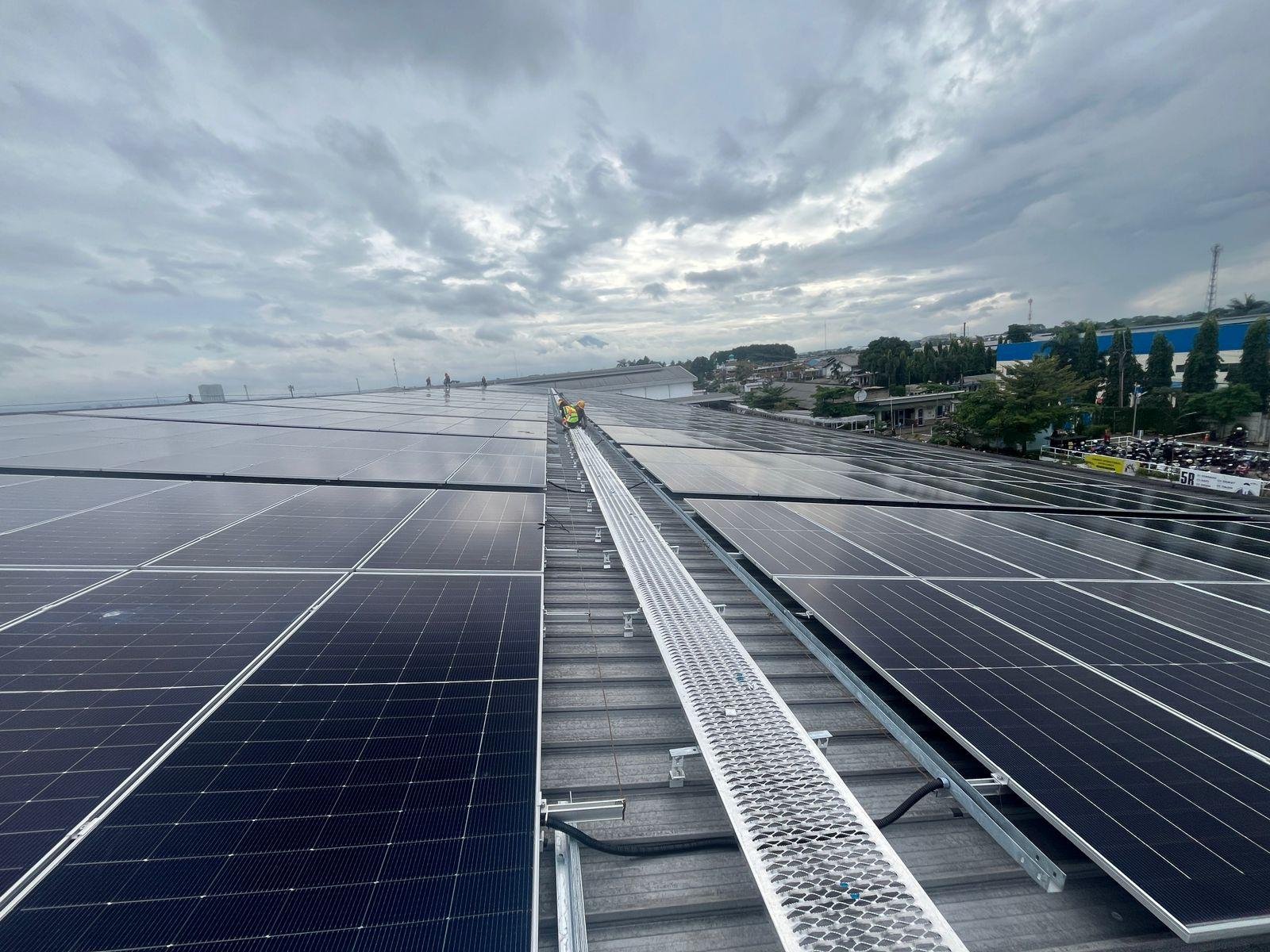
Complete photovoltaic systems integrate solar modules with essential balance-of-system components including inverters converting DC electricity from modules to AC power synchronized with grid or supplying loads, mounting structures providing mechanical support and appropriate orientation optimizing energy capture, electrical equipment including wiring, disconnects, overcurrent protection, and combiner boxes, monitoring systems tracking performance and identifying issues, and optionally battery storage enabling energy time-shifting and grid independence for off-grid or backup power applications. System design requires careful consideration of solar resource availability, load profiles, grid interconnection requirements, local codes and standards, shading analysis, thermal management, and economic optimization balancing capital costs against long-term energy production and revenue. Utility-scale solar farms typically achieve lowest levelized costs through economies of scale, simplified designs, and professional operations management, while residential and commercial rooftop systems face higher per-watt costs but provide distributed generation benefits, potential net metering arrangements, and energy independence valued by building owners.
This comprehensive technical analysis examines all critical aspects of solar cell technology from fundamental physics through practical implementation, providing detailed examination of semiconductor physics and photovoltaic effect mechanisms, material properties and selection criteria for different applications, solar cell architectures and design optimization strategies, manufacturing processes and quality control requirements, performance characterization methodologies including current-voltage measurements and spectral response analysis, module construction and encapsulation technologies ensuring decades-long reliability, system integration principles spanning balance-of-system components and electrical design, installation best practices and safety requirements, performance monitoring and maintenance procedures, economic analysis frameworks including lifecycle costing and financial modeling, and emerging technological innovations driving continued advancement. Drawing extensively on authoritative technical references including NREL research publications, IEEE photovoltaic conference proceedings, international standards from IEC and UL, manufacturer technical specifications, and field performance databases documenting actual system operations across diverse climates and applications, this analysis provides rigorous technical foundation supporting informed decision-making for engineers designing photovoltaic systems, project developers evaluating technology options, policymakers crafting effective solar energy incentives, investors assessing opportunities in rapidly growing solar sector, and students or professionals seeking comprehensive understanding of photovoltaic science and engineering enabling participation in renewable energy transition essential for sustainable development and climate change mitigation globally.
Fundamental Physics of Solar Cells: Semiconductor Properties and Photovoltaic Effect
Solar cells exploit fundamental semiconductor physics converting photon energy directly into electrical power through photovoltaic effect, a quantum mechanical process where incident light excites electrons from bound valence states into mobile conduction states, creating electron-hole pairs subsequently separated by internal electric fields and collected at external contacts producing electrical current under load. Understanding this energy conversion process requires examination of semiconductor electronic structure, optical absorption mechanisms, charge carrier generation and transport phenomena, and loss mechanisms limiting achievable efficiency. The theoretical framework for photovoltaic energy conversion established by Shockley and Queisser in 1961 identifies fundamental limits arising from thermodynamic considerations and semiconductor band gap properties, predicting maximum single-junction efficiency approximately 33% for optimal band gap near 1.3-1.4 eV under unconcentrated AM1.5 solar spectrum, with actual devices achieving 80-85% of this theoretical limit representing remarkable testament to sophisticated engineering optimizing every aspect of cell design and materials processing.
Semiconductors represent materials with electrical conductivity intermediate between conductors and insulators, characterized by band gap energy separating filled valence band from empty conduction band at absolute zero temperature. In silicon, the most widely used photovoltaic semiconductor, this band gap equals approximately 1.12 eV at room temperature, corresponding to wavelength 1,110 nanometers in near-infrared spectrum. Thermal energy at room temperature (approximately 26 millielectron volts or 0.026 eV at 300 Kelvin) proves insufficient to excite significant electrons across this gap, maintaining silicon as insulator in pure undoped form. However, absorption of photons with energy exceeding band gap (wavelengths below approximately 1,100 nm) generates electron-hole pairs through transitions where photon energy promotes valence electrons into conduction band leaving behind positively charged holes in valence band. This photon absorption follows Beer-Lambert law where absorption coefficient determines penetration depth, varying strongly with wavelength and reaching peak values exceeding 10⁵ cm⁻¹ in ultraviolet requiring only micrometers of material for complete absorption, while near-bandgap infrared photons exhibit weak absorption requiring hundreds of micrometers necessitating light trapping strategies enhancing optical path length in thin wafers.
Figure 1: Energy Band Diagram and Photovoltaic Process in p-n Junction Solar Cell
SOLAR SPECTRUM INCIDENT ON CELL SURFACE
AM1.5 Global Spectrum: 1,000 watts/m² total irradiance
Ultraviolet (λ < 400 nm): ~3% of total energy, photon energy > 3.1 eV
Visible (400-700 nm): ~45% of total, photon energy 1.8-3.1 eV
Near-infrared (700-1,100 nm): ~28%, photon energy 1.1-1.8 eV
Infrared (λ > 1,100 nm): ~24%, photon energy < 1.1 eV (below Si band gap)
STEP 1: Photon Absorption and Electron-Hole Pair Generation
Physical process: Photons with energy E_photon = hν = hc/λ ≥ E_g absorbed by semiconductor
Quantum efficiency: Each absorbed photon generates exactly one electron-hole pair
Absorption depth: High-energy UV photons absorbed in ~0.1 μm surface layer
→ Visible light photons penetrate 1-10 μm depth
→ Near-bandgap infrared requires 100-300 μm absorption depth
Thermalization losses: Excess photon energy above E_g (E_photon - E_g) dissipated as heat
→ 3.0 eV blue photon creates 1.12 eV electron-hole pair + 1.88 eV heat (63% thermal loss)
→ 1.2 eV near-infrared photon creates 1.12 eV pair + 0.08 eV heat (7% loss)
Sub-bandgap photons: E_photon < 1.12 eV pass through silicon without absorption
→ Approximately 24% of AM1.5 spectrum lost to transmission
STEP 2: Charge Carrier Separation by Built-in Electric Field
p-n Junction formation: n-type region (phosphorus doped ~10¹⁸-10²⁰ cm⁻³) joined to p-type (boron doped ~10¹⁶-10¹⁸ cm⁻³)
Depletion region: ~0.5 μm wide space charge region with strong electric field (~10⁵ V/cm)
Built-in potential: V_bi ≈ 0.6-0.8 V for silicon at room temperature
Band bending: Conduction and valence bands bend at junction creating potential barrier
Carrier separation mechanism:
→ Electrons generated in depletion region: swept by field toward n-region (cathode)
→ Holes generated in depletion region: swept toward p-region (anode)
→ Carriers outside depletion: drift/diffusion transport toward junction
Minority carrier diffusion:
→ Electrons in p-region: diffuse toward junction with diffusion length L_n = √(D_n·τ_n) ≈ 100-300 μm
→ Holes in n-region: diffuse with L_p ≈ 10-30 μm (shorter due to higher doping)
Collection efficiency: Carriers generated within ~L_n or L_p of junction successfully collected
→ Carriers beyond diffusion length recombine before collection (lost)
STEP 3: Recombination Loss Mechanisms
Radiative recombination: Electron-hole recombination emitting photon, inevitable in direct-gap semiconductors
→ Silicon: indirect band gap makes radiative lifetime very long (~milliseconds), minimal loss
Auger recombination: Three-particle process, energy transferred to third carrier
→ Rate proportional to n²·p or n·p² → significant only at very high doping or injection
→ Limits efficiency of highly doped regions and concentrator cells
Shockley-Read-Hall (trap-assisted) recombination: Defects in crystal create energy levels within band gap
→ Bulk recombination: crystal defects, impurities, grain boundaries
→ Surface recombination: dangling bonds at crystal surface, recombination velocity 10⁴-10⁶ cm/s (unpassivated)
→ Passivation: thermal oxide, silicon nitride, or aluminum oxide coatings reduce surface recombination <100 cm/s
Recombination current impact: Each recombined carrier pair represents lost photocurrent
→ Effective minority carrier lifetime τ_eff characterizes overall recombination rate
→ High-efficiency cells require τ_eff > 1 millisecond achieved through ultra-clean processing
STEP 4: Current Collection at Metal Contacts
Front contact grid: Screen-printed silver or electroplated copper fingers (50-100 μm wide, 10-20 μm thick)
→ Spacing: 1.5-2.5 mm between fingers balancing shadowing losses vs. series resistance
→ Coverage: typically 5-8% of cell area (shadowing loss)
Back contact: Full-area aluminum or silver layer providing low resistance (< 0.5 ohm)
Contact resistance: Metal-semiconductor interface requires low resistance << 1 mΩ·cm²
→ Achieved through heavy local doping (>10¹⁹ cm⁻³) enabling tunneling transport
→ Firing process: high-temperature step (700-900°C) alloys metal into silicon
Series resistance losses: R_s = R_contact + R_metal + R_emitter + R_bulk
→ Target total series resistance: < 0.5-1.0 ohm·cm² for high efficiency
→ Contributes to resistive losses: P_loss = I²·R_s reducing fill factor
Shunt resistance: Parallel resistance R_shunt from edge defects, pinholes, micro-cracks
→ Should exceed 1,000-10,000 ohm·cm² to minimize losses
→ Low shunt resistance causes leakage current reducing V_oc and efficiency
OUTPUT ELECTRICAL POWER
Short-circuit current density: J_sc ≈ 40-42 mA/cm² (standard test conditions)
Open-circuit voltage: V_oc ≈ 0.65-0.72 V for crystalline silicon
Maximum power point: V_mp ≈ 0.55-0.60 V, I_mp ≈ 38-40 mA/cm²
Fill factor: FF = (V_mp × I_mp)/(V_oc × I_sc) ≈ 0.80-0.84 for quality cells
Conversion efficiency: η = P_out/P_in = (V_mp × I_mp)/1,000 W/m² ≈ 20-23% (commercial)
Typical 6-inch cell: 238 cm² area → 5.2-5.5 watts peak power
Energy flow analysis: 1,000 W/m² incident solar power → ~240 W/m² converted to electricity (~24% efficiency) + ~200 W/m² reflection/transmission losses + ~560 W/m² thermalization and recombination losses dissipated as heat
The p-n junction forms through controlled doping creating regions with excess electrons (n-type, typically phosphorus-doped with concentration 10¹⁸-10²⁰ cm⁻³) or holes (p-type, boron-doped 10¹⁶-10¹⁸ cm⁻³) as majority carriers. When these regions contact, majority carriers diffuse across junction driven by concentration gradients, creating space charge region depleted of mobile carriers approximately 0.2-0.5 micrometers wide. This depletion region exhibits strong electric field typically 10⁴-10⁵ volts per centimeter establishing equilibrium where drift current from field exactly balances diffusion current from concentration gradients. The built-in potential resulting from this charge separation typically measures 0.6-0.8 volts for silicon, creating energy barrier preventing further majority carrier diffusion at equilibrium. Under illumination, photogenerated electron-hole pairs within or near depletion region experience this field, with electrons swept toward n-region and holes toward p-region, creating photocurrent flowing opposite to dark diode current. Carriers generated outside depletion region but within minority carrier diffusion length (distance carrier travels before recombining, typically 10-300 micrometers depending on material quality and doping) can diffuse to junction for collection, while carriers beyond diffusion length recombine before contributing to photocurrent representing a fundamental loss mechanism requiring optimization through appropriate cell thickness and surface passivation.
Table 1: Comprehensive Semiconductor Material Properties for Photovoltaic Applications
| Material property | Crystalline Silicon (c-Si) |
Gallium Arsenide (GaAs) |
Cadmium Telluride (CdTe) |
CIGS (Cu(In,Ga)Se₂) |
Perovskite (CH₃NH₃PbI₃) |
|---|---|---|---|---|---|
| Band gap energy (eV) | 1.12 | 1.42 | 1.45 | 1.0-1.7 (tunable) | 1.55 |
| Band gap type | Indirect (requires phonon for transitions) | Direct (efficient optical transitions) | Direct | Direct | Direct |
| Absorption coefficient @ 500nm | ~10⁴ cm⁻¹ | ~2×10⁵ cm⁻¹ | ~1×10⁵ cm⁻¹ | ~1×10⁵ cm⁻¹ | ~2×10⁵ cm⁻¹ |
| Required thickness for absorption | 100-300 μm | 1-5 μm | 2-8 μm | 1-3 μm | 0.3-0.5 μm |
| Electron mobility (cm²/V·s) | 1,400 | 8,500 | 1,050 | 100-1,000 | 20-60 |
| Hole mobility (cm²/V·s) | 450 | 400 | 100 | 25-50 | 10-30 |
| Minority carrier lifetime (typical) | 0.1-10 ms | 10-100 ns | 1-10 ns | 5-50 ns | 10-1,000 ns |
| Diffusion length (μm) | 100-300 (e⁻) 10-100 (h⁺) |
5-20 | 1-5 | 0.5-2 | 0.1-3 |
| Thermal conductivity (W/m·K) | 148 | 55 | 7 | 8-10 | 0.3-0.5 |
| Temperature coefficient of Eg | -0.27 meV/K | -0.45 meV/K | -0.40 meV/K | -0.30 meV/K | -0.30 meV/K |
| Record cell efficiency | 26.7% (lab) 20-23% (comm.) |
29.1% (lab) 25-27% (comm.) |
22.1% (lab) 16-18% (module) |
23.4% (lab) 15-17% (module) |
25.7% (lab) Not commercial |
| Theoretical efficiency limit | 29.4% (S-Q limit) | 33.5% | 32.1% | 32-34% | 31% |
| Material abundance | Abundant (2nd most common element in crust) | Gallium limited (~350 ton/yr production) | Tellurium scarce (~500 ton/yr) | Indium limited (~750 ton/yr), Selenium abundant | Lead concern, but abundant |
| Typical manufacturing cost | USD 0.12-0.18/W | USD 2-5/W | USD 0.10-0.14/W | USD 0.15-0.22/W | Experimental |
| Primary applications | Utility, commercial, residential (95% market) | Space, CPV concentrator systems | Utility-scale thin-film (First Solar) | BIPV, flexible applications | Research, tandem cells (future) |
| Stability / degradation rate | Excellent: 0.3-0.5%/year, >30 year lifetime | Excellent in space, <0.2%/year | Good: 0.5-0.7%/year, >25 years | Moderate: 0.8-1.5%/year concerns | Poor: moisture/UV degradation challenge |
Sources: NREL Photovoltaic Research (2024), Green et al. Progress in Photovoltaics (2024), IEEE Photovoltaic Specialists Conference Proceedings (2023-2024)
Notes: Lab efficiencies from certified NREL champion cell records. Commercial efficiencies typical for mass-production modules. S-Q limit = Shockley-Queisser detailed balance limit under AM1.5G spectrum, 1-sun, 300K. Manufacturing costs exclude installation and balance-of-system.
Silicon Solar Cell Manufacturing: From Polysilicon to Finished Module
Silicon solar cell manufacturing represents highly sophisticated industrial process transforming raw quartz (silicon dioxide) through multiple refining, crystallization, wafer processing, and module assembly stages into finished photovoltaic products delivering decades of reliable power generation. The complete value chain spans metallurgical silicon production in arc furnaces at approximately 98-99% purity, Siemens or fluidized bed refining to solar-grade or semiconductor-grade polysilicon exceeding 99.9999% purity (6-9 nines), crystal growth through Czochralski pulling or directional solidification forming cylindrical or cubic ingots, wire sawing into thin wafers typically 160-180 micrometers thick, extensive wafer processing including surface texturing, diffusion doping, anti-reflection coating, and metallization forming functional solar cells, cell interconnection and lamination into weatherproof modules with aluminum frames and junction boxes, and finally system integration with inverters and mounting structures. This vertically integrated manufacturing typically occurs across specialized facilities optimized for specific process stages, with leading manufacturers like LONGi, JinkoSolar, Trina Solar, JA Solar in China, Hanwha Q CELLS in Korea/Malaysia, and REC Group in Singapore/Norway operating world-scale facilities producing tens of gigawatts annual capacity achieving remarkable economies of scale driving cost reductions enabling mainstream solar adoption globally.
Polysilicon production begins with reduction of metallurgical-grade silicon (MG-Si produced from quartz in electric arc furnaces at 1,900-2,000°C using carbon electrodes) through chemical vapor deposition processes. The Siemens process, dominating approximately 85% of global production, reacts MG-Si with hydrogen chloride forming trichlorosilane (SiHCl₃) gas purified through distillation achieving ultra-high purity, then thermally decomposing trichlorosilane on electrically heated silicon seed rods at 1,000-1,150°C, slowly building polysilicon chunks reaching 150-200 kg over 40-60 hours. Alternative fluidized bed reactor technology developed by REC Silicon and others decomposes silane gas (SiH₄) in fluidized bed of silicon particles at 600-800°C, offering lower energy consumption (approximately 60-70 kilowatt-hours per kilogram versus 80-100 kWh/kg for Siemens) and continuous production but requiring pure silane feedstock with explosive handling challenges. Solar-grade polysilicon must achieve very low concentrations of electrically active dopant impurities (boron, phosphorus, arsenic under 0.1-1.0 parts per billion), metallic contaminants (iron, chromium, copper under 0.01-0.1 ppb), and carbon/oxygen preventing excessive defect formation during crystallization, with specifications somewhat relaxed versus ultra-pure semiconductor-grade material used for integrated circuit production enabling lower costs. Global polysilicon production approached 1.5-2.0 million tons annually by 2023-2024 with prices fluctuating substantially from highs exceeding USD 30-40 per kilogram during supply shortages in 2021-2022 to USD 8-12/kg during periods of oversupply, representing approximately 5-10% of finished module cost though this fraction varies with market conditions and vertical integration levels across supply chain.
Figure 2: Silicon Solar Cell Manufacturing Process Flow with Detailed Specifications
STAGE 1: POLYSILICON PRODUCTION
Input: Metallurgical-grade silicon (MG-Si), 98-99% purity, USD 2-3/kg
Siemens process: MG-Si + 3HCl → SiHCl₃ + H₂ (300-500°C, fluidized bed reactor)
Purification: Distillation of trichlorosilane, impurity removal to <0.1 ppb for key dopants
Deposition: SiHCl₃ + H₂ → Si + 3HCl (1,100°C on heated seed rods, 40-60 hour growth)
Output: Polysilicon chunks, 99.9999+% purity (6N+), 150-200 kg per rod
Energy consumption: 80-100 kWh/kg polysilicon (Siemens), 60-70 kWh/kg (FBR alternative)
Cost contribution: USD 8-12/kg (market dependent), ~8-10% of module cost
Global capacity: ~1.5-2.0 million tons/year (2023-2024), >90% in China
↓
STAGE 2: INGOT CRYSTALLIZATION
Monocrystalline (Czochralski method):
• Polysilicon melted in quartz crucible at 1,420°C (just above Si melting point)
• Seed crystal dipped into melt, slowly pulled upward (0.5-2.0 mm/min) while rotating
• Precise temperature control maintains solid-liquid interface, crystal grows layer-by-layer
• Dopant (boron for p-type) added to melt at ~10¹⁶ cm⁻³ concentration
• Result: Cylindrical ingot 200-300 mm diameter, 2-3 meters length, 250-400 kg weight
• Growth time: 24-36 hours per ingot
• Single crystal: Uniform lattice, minimal defects, highest efficiency potential (22-24%)
• Crystal quality: Oxygen content 10¹⁷-10¹⁸ cm⁻³ from quartz crucible (controlled for gettering)
Multicrystalline (Directional solidification):
• Polysilicon chunks loaded into square graphite or quartz crucible, melted at 1,420°C
• Crucible slowly cooled from bottom upward (controlled gradient ~1°C/cm)
• Silicon solidifies directionally forming columnar grains oriented vertically
• Result: Square ingot 800-900 mm × 800-900 mm × 200-300 mm tall, 250-350 kg
• Solidification time: 48-72 hours (slower cooling)
• Grain structure: Millimeter to centimeter grain size, grain boundaries contain defects
• Efficiency: Lower than mono (19-21%) but acceptable cost-performance tradeoff
• Historical dominance: ~60% market share 2010s, declining to ~35% by 2023 as mono costs fell
Cast monocrystalline (emerging hybrid): Directional solidification with seed crystal layer creating quasi-mono structure combining square ingots with near-monocrystalline quality (20-22% efficiency), gaining market share 2020s
Cost: Mono: USD 5-8/kg | Multi/cast-mono: USD 4-6/kg ingot production cost
↓
STAGE 3: WAFER SAWING AND CLEANING
Ingot squaring: Cylindrical mono ingots ground to pseudo-square cross-section (rounded corners) maximizing wafer area utilization in rectangular modules
Wire sawing: Diamond wire saw slicing ingot into wafers
• Wire: 60-100 μm diameter steel wire with diamond coating
• Thickness: Target 160-180 μm finished wafer (down from 200-250 μm in 2010s)
• Kerf loss: ~100-120 μm silicon powder lost per cut (40-45% material waste)
• Slurry: Water-based coolant + lubricant (diamond wire), or glycol + SiC abrasive (traditional)
• Cut speed: 0.3-0.6 mm/s, approximately 2,000-3,000 wafers per ingot
• Yield: 95-98% after rejecting edge wafers and those with excessive damage
Wafer formats:
• M10: 182 mm × 182 mm (industry standard 2020-2024, ~7.5 W cell power)
• G12: 210 mm × 210 mm (larger format, ~9.0 W, used by some manufacturers)
• 166 mm × 166 mm (legacy format, declining)
Cleaning: Alkaline etch (NaOH or KOH) removing saw damage layer (~10-15 μm each side), RCA clean (H₂O₂/NH₄OH, H₂O₂/HCl sequences) removing organics and metals
Cost contribution: USD 0.01-0.015 per wafer sawing + cleaning
↓
STAGE 4: CELL FABRICATION PROCESS SEQUENCE
4A. Surface texturing (2-5 minutes):
• Monocrystalline: Anisotropic alkaline etch (NaOH/KOH solution, 80°C) creating random pyramids 2-5 μm height, exposes (111) crystal planes at 54.7° angle
• Effect: Multiple internal reflections, light trapping, reduces reflection from 35% to ~11% (before AR coating)
• Multicrystalline: Acidic texture (HF/HNO₃) creating smaller isotropic features (grain boundaries prevent pyramid formation)
4B. Phosphorus diffusion - forming n+ emitter (30-60 minutes):
• Process: POCl₃ vapor at 800-900°C in tube furnace, phosphorus atoms diffuse into p-type wafer
• Junction depth: 0.2-0.5 μm with surface concentration ~10²⁰ cm⁻³ tapering to ~10¹⁸ cm⁻³ at junction
• Sheet resistance: Target 80-120 ohms/square for standard cells, 40-60 Ω/sq for selective emitter
• PSG removal: Phosphosilicate glass formed during diffusion etched away with HF
• Edge isolation: Laser or plasma etch removing n-type layer from wafer edges preventing shunt paths
4C. Anti-reflection coating - SiN_x deposition (seconds to minutes):
• Method: PECVD (plasma-enhanced chemical vapor deposition) from SiH₄ + NH₃ at 400-500°C
• Thickness: 70-85 nm optimized for minimum reflection at peak solar spectrum (~550-600 nm)
• Refractive index: n ≈ 2.0-2.1 (between Si at n=3.9 and air/glass at n=1.0-1.5)
• Dual function: Reduces reflection to ~3-5% total + provides surface passivation (hydrogen)
• Blue color: Thin-film interference creates characteristic appearance of solar cells
4D. Screen printing metallization (front and rear contacts):
• Front grid: Silver paste screen-printed through mesh creating finger grid pattern
→ Fingers: 50-80 μm wide, 10-15 μm thick after firing, 2.0-2.5 mm spacing
→ Busbars: 3-5 wider conductor strips (1.0-1.5 mm) collecting current from fingers
→ Shadowing loss: 5-7% of cell area covered by front metallization
• Rear contact: Aluminum paste screen-printed covering most of rear surface (standard Al-BSF cell)
→ Creates back surface field through Al-Si alloying during firing
→ Silver pads: Local rear contacts in some advanced designs (PERC, TOPCon)
4E. Co-firing (1-5 seconds peak temperature):
• Rapid thermal processing (RTP) in belt furnace at 700-900°C peak
• Silver paste: Fires through SiN_x layer, makes ohmic contact with n+ emitter
• Aluminum paste: Alloys with silicon, forms Al-Si eutectic and back surface field
• Profile: 30-60 second total time, 1-5 seconds above 700°C, precise control critical
Advanced cell architectures (PERC, TOPCon, HJT):
• PERC: Add rear surface passivation (Al₂O₃ or SiO₂) + laser contact opening → +0.5-1.0% absolute efficiency vs. standard
• TOPCon: Tunnel oxide + phosphorus-doped polysilicon rear contact → +1.0-1.5% vs. standard
• HJT: Intrinsic a-Si:H + doped a-Si:H layers on both surfaces, low-temp process → +1.5-2.5% but higher cost
Testing and sorting:
• Flash test: Simulated sunlight (1,000 W/m², AM1.5, 25°C), I-V curve measurement
• Classification: Bins by power output (typically 5 W increments: 185-190W, 190-195W, etc.)
• Visual inspection: Automated or manual checking for cracks, chips, print defects
• Yield: 95-98% good cells after rejecting defectives
Output: Finished solar cell, 160-180 μm thick, 182×182 mm (M10), 6.5-7.5 W Pmax (21-23% efficiency mono PERC)
Manufacturing cost: USD 0.02-0.03 per cell total processing (all steps)
↓
STAGE 5: MODULE ASSEMBLY AND LAMINATION
Cell interconnection:
• Stringing: Cells soldered together in series (typically 10-12 cells per string) using copper ribbon
• Ribbon: Tin-coated copper, 1.5-2.0 mm wide, 0.18-0.25 mm thick, 4-6 ribbons per cell (multi-busbar)
• Junction box prep: Pre-welded cable attachment points, bypass diodes (one per 18-24 cells)
Layup sequence (bottom to top):
• Rear glass (optional bifacial) or polymer backsheet
• EVA (ethylene vinyl acetate) encapsulant layer, 0.4-0.5 mm
• Cell strings arranged in 6×10 or 6×12 array (60 or 72 cell configurations)
• EVA top encapsulant layer
• Front glass: Low-iron tempered, 3.2-4.0 mm thick, anti-reflective coating
Lamination:
• Vacuum lamination at 145-155°C, 15-25 minutes
• EVA melts and cross-links forming transparent polymer hermetically sealing cells
• Pressure: 800-1,000 mbar vacuum removing air bubbles
Framing and finishing:
• Aluminum frame: Anodized, 30-50 mm depth, corner keys or welded joints
• Junction box: Adhesive or screw attachment to rear, IP67 rated, bypass diode array
• Cables: 4 mm² or 6 mm², MC4 or compatible connectors, 900-1,200 mm length
Final testing:
• Flash test: Full module I-V curve under simulated sunlight
• EL (electroluminescence) imaging: Detecting micro-cracks or cell defects
• Insulation test: High voltage (typically 2× V_oc + 1,000V) checking for current leakage
• Wet leakage test: Detecting encapsulation failures
Module specifications (typical 60-cell mono PERC 2024):
• Dimensions: 1,722 mm × 1,134 mm × 35 mm (60-cell) or 2,094 mm × 1,134 mm × 35 mm (72-cell)
• Weight: 20-22 kg (60-cell), 26-28 kg (72-cell)
• Rated power: 370-400 W (60-cell), 450-500 W (72-cell) at STC
• Efficiency: 19.5-21.5% (module level, accounting for gaps, bus bars, frame)
• Warranty: 25 years power output (>80% after 25 years), 10-12 years product defects
Manufacturing cost breakdown (per watt):
• Polysilicon + ingot + wafer: USD 0.06-0.09/W
• Cell processing: USD 0.02-0.03/W
• Module assembly (glass, EVA, frame, etc.): USD 0.04-0.06/W
• Depreciation + overhead + profit: USD 0.02-0.04/W
Total module manufacturing cost: USD 0.14-0.22/W ex-factory (2023-2024 range)
Modern high-efficiency silicon module manufacturing achieves remarkable yields >95% through heavily automated production lines processing 12,000-15,000 wafers per hour in leading facilities, with continuous innovation driving efficiency improvements and cost reductions enabling solar PV to achieve grid parity across most global markets
Solar Cell Performance Characterization: Current-Voltage Curves and Key Metrics
Accurate characterization of solar cell performance requires standardized measurement protocols quantifying electrical output under precisely defined illumination and temperature conditions, enabling fair comparison across different technologies and manufacturers while providing essential data for system design and performance prediction. The primary characterization tool involves current-voltage (I-V) curve measurement where cell or module operates at varying voltages from short-circuit to open-circuit conditions while recording corresponding current output, plotting relationship between current and voltage revealing fundamental performance parameters including short-circuit current, open-circuit voltage, maximum power point, and fill factor. Standard test conditions (STC) specify 1,000 watts per square meter solar irradiance with AM1.5 Global spectrum distribution at 25°C cell temperature, representing conventional reference conditions though actual field operation typically occurs at significantly elevated temperatures reducing output approximately 0.35-0.45% per degree Celsius above 25°C and at irradiance levels varying from near-zero at dawn/dusk to peak values exceeding 1,000 W/m² at solar noon in clear conditions.
The current-voltage relationship for solar cells under illumination follows modified diode equation: I = I_L - I_0 × [exp(q(V + I×R_s)/(n×k×T)) - 1] - (V + I×R_s)/R_shunt, where I_L represents light-generated current proportional to irradiance, I_0 indicates dark saturation current related to recombination losses, R_s designates series resistance from contacts and bulk material, R_shunt denotes shunt resistance from edge defects or pinholes, n represents ideality factor (1.0-2.0 depending on dominant recombination mechanism), and other terms carry standard physical meanings. At short-circuit conditions (V = 0), current reaches maximum value I_sc ≈ I_L determined primarily by optical absorption and collection efficiency, typically 40-42 milliamperes per square centimeter for crystalline silicon under STC. At open-circuit (I = 0), voltage reaches V_oc = (n×k×T/q) × ln(I_L/I_0 + 1), typically 0.65-0.72 volts for silicon solar cells at 25°C, with value fundamentally limited by band gap and recombination losses. Between these extremes, cells operate at maximum power point where product V×I reaches peak value, typically V_mp ≈ 0.8-0.85 × V_oc and I_mp ≈ 0.92-0.95 × I_sc for high-quality cells with good fill factor.
Figure 3: Detailed Current-Voltage Characteristic Curves and Performance Parameter Extraction
I-V CURVE UNDER STANDARD TEST CONDITIONS (STC)
Irradiance: 1,000 W/m² | Spectrum: AM1.5 Global | Temperature: 25°C cell temp
|
Key Operating Points on I-V Curve: Short-Circuit Point (V=0): Maximum Power Point (optimal operation): Open-Circuit Point (I=0): Efficiency Calculation: |
Fill Factor (FF): Temperature Coefficients: |
IRRADIANCE DEPENDENCE - Multiple I-V Curves at Different Light Levels
| Irradiance (W/m²) |
I_sc (A) |
V_oc (V) |
P_max (W) |
Efficiency (%) |
Notes |
|---|---|---|---|---|---|
| 1,000 | 9.84 | 0.701 | 5.40 | 22.8 | Standard test conditions (STC) |
| 800 | 7.87 | 0.693 | 4.28 | 22.6 | Partly cloudy conditions, morning/evening |
| 600 | 5.90 | 0.683 | 3.15 | 22.1 | Heavily overcast or low sun angle |
| 400 | 3.94 | 0.671 | 2.05 | 21.6 | Dawn/dusk, dense clouds |
| 200 | 1.97 | 0.650 | 0.98 | 20.6 | Very low light, significant efficiency drop |
Key observations: I_sc scales linearly with irradiance (proportional relationship), V_oc increases logarithmically (+60 mV per decade irradiance increase), efficiency decreases slightly at low irradiance due to shunt resistance and recombination effects becoming more significant
SERIES AND SHUNT RESISTANCE EFFECTS ON I-V CURVE SHAPE
|
Series Resistance (R_s) Impact: Ideal cell: R_s = 0 ohm·cm² Typical cell: R_s = 0.5-1.0 ohm·cm² Poor cell: R_s = 2-5 ohm·cm² Mitigation strategies: |
Shunt Resistance (R_shunt) Impact: Ideal cell: R_shunt = ∞ (no shunts) Typical cell: R_shunt > 1,000 ohm·cm² Poor cell: R_shunt = 100-500 ohm·cm² Mitigation strategies: |
Combined effect: High-efficiency cells require both low series resistance (R_s < 0.5 ohm·cm²) AND high shunt resistance (R_shunt > 1,000 ohm·cm²) simultaneously. Achieving this demands excellent manufacturing process control throughout all fabrication steps from crystallization through metallization and module assembly.
I-V curve characterization provides complete description of solar cell electrical behavior, enabling extraction of all key performance parameters, identification of loss mechanisms, quality control in manufacturing, and accurate prediction of energy production under varying environmental conditions
Balance of System Components and System Integration
Complete photovoltaic systems integrate solar modules with essential balance-of-system (BOS) components enabling safe, efficient, and reliable conversion of solar energy into usable electricity suitable for grid connection or off-grid applications. These BOS components typically represent 35-55% of total system installed cost for utility-scale projects and 50-65% for residential installations, encompassing inverters converting DC power from modules to AC synchronized with grid requirements, mounting structures providing mechanical support and optimal orientation, electrical equipment including wiring, disconnects, overcurrent protection, and combiner boxes, monitoring systems tracking performance and identifying issues, and optionally battery storage enabling energy time-shifting and grid independence. System design requires careful consideration of solar resource availability at specific location, load profiles if serving local consumption, grid interconnection requirements and utility regulations, local building and electrical codes, shading analysis from nearby obstructions, thermal management for equipment, and economic optimization balancing capital costs against long-term energy production and revenue potential. Utility-scale solar farms spanning tens to hundreds of megawatts benefit from economies of scale, simplified designs with fewer individual systems, professional operations management, and favorable grid interconnection arrangements, achieving lowest levelized costs typically USD 0.03-0.05 per kilowatt-hour in favorable locations. Residential and commercial rooftop systems face higher per-watt costs due to smaller scale, complex roof penetrations, distributed architecture, but provide distributed generation benefits, potential net metering arrangements where excess generation credits against consumption, backup power capability with battery storage, and energy independence valued by building owners.
Table 2: Comprehensive Balance-of-System Component Specifications and Selection Criteria
| Component category | Function and specifications |
Typical ratings and parameters |
Selection considerations |
Cost range (utility/residential) |
|---|---|---|---|---|
| String Inverters | Convert DC from 8-16 modules in series (string) to AC output synchronized with grid | Power: 3-30 kW Efficiency: 96-98% DC input: 300-1,000V AC output: 230/400V |
Residential/small commercial, cost-effective, single failure affects whole string, shading issues | - USD 0.10-0.15/W |
| Central Inverters | Large-scale DC-AC conversion for utility projects, multiple strings combined | Power: 500 kW-5 MW Efficiency: 98-99% DC input: 1,000-1,500V 3-phase AC output |
Lowest cost per watt, highest efficiency, requires inverter station building, single point failure risk | USD 0.04-0.07/W - |
| Microinverters | Module-level conversion, one inverter per 1-2 modules, independent MPPT | Power: 250-500 W Efficiency: 95-97% DC input: 30-60V AC output: 230V |
Maximum energy harvest from partial shading, module-level monitoring, higher cost, slightly lower efficiency | - USD 0.18-0.25/W |
| Power Optimizers | Module-level DC-DC conversion with MPPT, paired with central inverter | Power: 300-500 W Efficiency: 98-99.5% Converts to fixed DC voltage string |
Hybrid approach, better shading performance than string inverter alone, module-level data | - USD 0.12-0.18/W |
| Fixed-Tilt Mounting | Stationary racking at optimal tilt angle facing equator (south in N. hemisphere) | Tilt: latitude ±10-15° Azimuth: 180° (south) Ground clearance: 0.5-2m Wind load: 150-200 km/h |
Lowest cost, proven reliability, optimized for annual production, no seasonal adjustment | USD 0.12-0.18/W USD 0.25-0.40/W |
| Single-Axis Trackers | East-west rotation following sun's daily path, increasing energy 15-25% vs fixed | Rotation: ±60° from horizontal Tilt: 0-10° (backtracking) Motor: 0.5-2 kW per MW Tracking accuracy: ±2° |
Cost-effective for utility scale, higher energy yield, requires flat terrain, O&M costs, not suitable for rooftops | USD 0.18-0.28/W - |
| Combiner Boxes | Parallel connection of multiple strings, fused protection, surge protection | Inputs: 6-16 strings Current rating: 10-15A per input Voltage: 600-1,500V DC IP rating: IP65/NEMA 3R |
Outdoor rated enclosure, proper fusing for overcurrent protection, monitoring capabilities optional | USD 500-2,000 per box (varies by capacity) |
| DC/AC Disconnects | Manual isolation switches for maintenance, code-required safety equipment | DC: 600-1,500V rating AC: Appropriate to system voltage Visible blade, lockable Weather-rated enclosure |
NEC/IEC compliance, proper DC interrupting rating, accessible location for emergency shutdown | USD 200-800 per unit |
| Monitoring Systems | Data acquisition for performance tracking, fault detection, remote diagnostics | String-level or module-level Wireless or wired communication Cloud platform with analytics Mobile app access |
Granularity needs vs cost, O&M reduction benefits, warranty validation, performance guarantees | USD 0.01-0.03/W USD 0.03-0.08/W |
| AC/DC Cabling | Power transmission from modules to inverters and grid connection point | DC: 4-6 mm² (12-10 AWG) AC: Site-specific sizing UV-resistant, temp-rated Conduit or direct burial |
Voltage drop <2-3%, proper ampacity for max current, environmental durability, code compliance | USD 0.05-0.12/W USD 0.08-0.15/W |
| Grounding Equipment | Lightning protection, equipment grounding, personnel safety, PID prevention | Ground rods: 2.4m (8ft) length Grounding wire: 6-10 mm² Resistance: <25 ohms Bonding: all metal structures |
Soil resistivity testing, proper electrode spacing, continuous bonding system, negative grounding prevents PID | USD 0.02-0.05/W |
| Battery Storage (optional) | Energy storage for time-shifting, backup power, grid services | Lithium-ion: 3-15 kWh (residential) Efficiency: 85-95% round-trip Cycle life: 3,000-10,000 cycles Warranty: 10 years typical |
Use case requirements, depth of discharge, chemistry selection, thermal management, fire safety | - USD 0.40-0.80/Wh |
Sources: NREL System Cost Benchmarks (2023-2024), GTM Research Solar Market Analysis, IEA PVPS Technical Reports
Notes: Costs shown are approximate component costs per watt (W) or per watt-hour (Wh) for battery storage. Total installed system costs include labor, permitting, engineering, overhead, and profit margins. Utility-scale benefits from economies of scale with lower per-watt costs. Residential systems face higher costs due to smaller scale, complex installations, and distributed architecture.
Inverter Technology: DC-AC Conversion and Grid Integration
Solar inverters constitute critical interface between DC electricity generated by photovoltaic modules and AC power consumed by most loads or injected into electrical grid, performing multiple essential functions beyond simple power conversion including maximum power point tracking optimizing energy harvest from varying solar conditions, grid synchronization ensuring voltage, frequency, and phase alignment, power quality management maintaining low harmonic distortion, safety functions including anti-islanding protection preventing energization of isolated grid sections, and increasingly sophisticated grid support features including reactive power control, voltage regulation, and frequency response supporting grid stability. Modern inverter technology has developed dramatically from simple square-wave designs of early solar systems to sophisticated devices employing high-frequency switching semiconductors (IGBTs or SiC MOSFETs), digital signal processors executing complex control algorithms, and advanced power electronics topologies achieving conversion efficiencies exceeding 98-99% for large central inverters and 96-98% for residential string inverters, with weighted efficiency over varying load conditions typically 96-98.5% accounting for part-load performance during morning, evening, and cloudy periods when solar production operates below rated capacity.
Inverter architecture selection significantly impacts system performance, cost, and reliability across different application scales and site conditions. String inverters serving 3-30 kilowatts from single string or small number of parallel strings represent dominant technology for residential and small commercial installations, offering good balance between cost (typically USD 0.10-0.15 per watt), efficiency (96-98%), and reliability with single inverter failure affecting only portion of system. Central inverters in 500 kilowatt to 5 megawatt range serve utility-scale installations combining hundreds of strings through combiner boxes, achieving lowest per-watt cost (USD 0.04-0.07/W) and highest efficiency (98-99%) through economies of scale and optimized power electronics, though requiring dedicated inverter stations with environmental control and representing single point of failure requiring redundancy considerations. Microinverters attached to individual modules or pairs provide maximum granularity with independent MPPT for each module optimizing performance under partial shading or module mismatch conditions, enabling module-level monitoring facilitating diagnostics and maintenance, eliminating high-voltage DC wiring reducing installation risks, and offering inherent redundancy where single device failure affects only 300-500 watts, though at premium cost (USD 0.18-0.25/W) and slightly lower efficiency (95-97%) from higher quantity of power conversion stages and semiconductor losses. Power optimizers represent hybrid approach combining module-level DC-DC converters with MPPT connected to centralized string inverter, providing shading benefits and module-level monitoring at intermediate cost (USD 0.12-0.18/W) with efficiency approaching string inverters (96-98%) through reduced number of DC-AC conversion stages.
Figure 4: Inverter Operating Principles and Grid Integration Requirements
INVERTER POWER CONVERSION STAGES
Stage 1: DC Input and Maximum Power Point Tracking (MPPT)
Function: Continuously adjust DC operating voltage to extract maximum power from PV array as irradiance and temperature vary throughout day
Algorithm types:
• Perturb and Observe (P&O): Most common, periodically adjust voltage and observe power change
• Incremental Conductance: Calculates optimal point based on dP/dV = 0 condition
• Advanced techniques: Predict optimal point from temperature and irradiance sensors
Performance specifications:
• Tracking efficiency: 99.0-99.9% (fraction of available power actually captured)
• Response time: 1-10 seconds to new MPP after irradiance change
• Accuracy: Maintains operation within 1-2% of true MPP under steady conditions
DC input voltage range: Typically 2:1 or 3:1 ratio between minimum and maximum operating voltage accommodating varying string configurations and temperature effects (e.g., 300-900 VDC for residential string inverter)
Stage 2: DC-DC Boost Conversion (if required by topology)
Purpose: Increase DC voltage to level suitable for DC-AC inversion stage, typically 700-900 VDC for single-phase inverters
Topology options:
• Transformerless: Direct DC-AC conversion without boost stage (requires sufficient string voltage)
• With boost: DC-DC converter raises voltage before inversion stage
• Multi-stage: Separate boost per MPPT input before common DC bus
Efficiency impact: Each power conversion stage introduces 1-2% losses, so minimizing stages through proper system voltage design optimizes overall efficiency
Stage 3: DC-AC Inversion (Core Power Conversion)
Operating principle: High-frequency switching of power semiconductors (IGBTs or SiC MOSFETs) creating AC waveform from DC source
Power semiconductor options:
• IGBT (Insulated Gate Bipolar Transistor): Traditional technology, switching frequencies 5-20 kHz, proven reliability, lower cost
• SiC MOSFET (Silicon Carbide): Emerging technology, higher frequency switching (20-100 kHz), lower losses, higher temperature operation, higher cost but improving
• GaN (Gallium Nitride): Future technology for smaller inverters, very high frequency, low losses
Modulation techniques:
• PWM (Pulse Width Modulation): Varies duty cycle to create sinusoidal AC output
• Multilevel topologies: Create stepped AC waveform approaching sine wave, reduces filtering requirements
• Advanced control: Digital signal processors execute complex algorithms 10,000-50,000 times per second
Efficiency characteristics:
• Peak efficiency: 98-99% at optimal load (typically 50-75% of rated power)
• European efficiency: Weighted average accounting for operation at 5%, 10%, 20%, 30%, 50%, 100% loads
• CEC efficiency (California): Similar weighted efficiency using different weighting factors
• Part-load performance: Modern inverters maintain >95% efficiency down to 20% load
Loss mechanisms: Switching losses in semiconductors (proportional to frequency), conduction losses (I²R in semiconductors and magnetics), gate drive power, control circuitry consumption typically 5-15 watts constant
Stage 4: AC Filtering and Power Quality Management
Output filtering: LC or LCL filters remove high-frequency switching harmonics creating clean sinusoidal output
Power quality specifications (IEEE 1547, IEC 61727):
• Total Harmonic Distortion (THD): <5% current harmonics typical requirement, <3% for utility-scale
• Individual harmonics: Specific limits for odd harmonics (3rd, 5th, 7th, etc.)
• DC injection: <0.5% of rated output current preventing transformer saturation
• Power factor: Typically 0.95-1.0 leading or lagging, adjustable for grid support
Advanced capabilities: Modern inverters provide reactive power control (Q/V support), voltage ride-through during grid disturbances, frequency-watt response for grid frequency stabilization, ramp rate control limiting output change speed, curtailment accepting commands to reduce output for grid management
Stage 5: Grid Synchronization and Safety Functions
Synchronization requirements:
• Voltage magnitude: Within ±10% of nominal (e.g., 207-253V for 230V nominal single-phase)
• Frequency: Within ±0.5 Hz of nominal (49.5-50.5 Hz or 59.5-60.5 Hz)
• Phase angle: Synchronized within ±10° before connection
• Continuous monitoring: Real-time tracking of grid voltage, frequency, phase for instant detection of abnormalities
Anti-islanding protection (critical safety function):
• Purpose: Prevent inverter from energizing isolated section of grid during utility outage
• Detection methods: Active frequency shift, impedance measurement, voltage/frequency monitoring
• Response time: Disconnect within 2 seconds of islanding detection per IEEE 1547
• Testing: Must pass comprehensive anti-islanding tests during certification
Protection functions:
• Over/under voltage: Disconnect if grid voltage exceeds acceptable range
• Over/under frequency: Trip if frequency deviation indicates grid instability
• Ground fault detection: Monitoring for ground faults in PV array, automatic disconnection
• Arc fault protection: Detection of arc faults in DC wiring (required in US since 2011 NEC)
• Overheat protection: Temperature monitoring with derating or shutdown if limits exceeded
• DC over-voltage: Protection against open-circuit voltage transients
• AC overcurrent: Circuit breaker or fuse coordination for fault protection
Grid support features (utility-scale inverters): Low/high voltage ride-through maintaining connection during transient grid voltage disturbances for specified durations (e.g., remain online for 0.15s at 50% voltage), reactive power injection during voltage sags supporting grid recovery, frequency response adjusting active power output based on grid frequency deviations stabilizing system frequency, communication protocols (Modbus, DNP3, IEC 61850) enabling utility dispatch and control
Modern grid-tied solar inverters represent sophisticated power electronic devices integrating multiple control functions, safety features, and grid support capabilities beyond simple DC-AC power conversion, enabling high penetration of solar PV into electrical grids while maintaining power quality and system stability
Battery Energy Storage Integration: Enabling Solar-Plus-Storage Systems
Integration of battery energy storage with solar photovoltaic systems enables multiple valuable applications including load shifting where solar energy generated during peak production hours stores for consumption during evening peak demand periods, backup power providing electricity during grid outages when properly configured with appropriate transfer switching equipment, demand charge reduction for commercial customers with time-of-use rates or demand charges based on peak consumption, frequency regulation and other grid services providing revenue opportunities in markets with appropriate compensation mechanisms, and off-grid operation enabling electrification in locations without grid connection or where grid extension proves prohibitively expensive. Lithium-ion battery technology dominates residential and commercial solar-plus-storage applications offering favorable combination of high energy density (150-250 watt-hours per kilogram), acceptable cycle life (3,000-10,000 full depth-of-discharge cycles depending on chemistry and operating conditions), reasonable round-trip efficiency (85-95% accounting for charge/discharge losses and battery management system consumption), and declining costs driven by electric vehicle manufacturing scale, with residential battery systems typically ranging 3-15 kilowatt-hours capacity at costs approximately USD 0.40-0.80 per watt-hour installed including battery pack, inverter/charger, installation, and controls.
Battery chemistry selection involves tradeoffs between performance characteristics, cost, safety, and longevity. Lithium nickel manganese cobalt oxide (NMC) offers high energy density and power capability suitable for both energy and power applications, though containing cobalt with supply chain concerns and higher cost. Lithium iron phosphate (LFP) provides excellent cycle life potentially exceeding 6,000-10,000 cycles with better thermal stability and safety characteristics compared to NMC, at cost of somewhat lower energy density and reduced performance at very low temperatures, increasingly popular for stationary storage where weight and volume prove less critical than automotive applications. Lead-acid batteries represent mature, low-cost technology with well-established recycling infrastructure but suffering from limited cycle life (300-1,500 cycles), relatively low depth of discharge recommendations (typically 50-80% of nominal capacity to achieve acceptable lifespan), and lower efficiency (70-85% round-trip) limiting applications to off-grid systems where low initial cost outweighs lifetime energy costs and replacement frequency. Flow batteries utilizing liquid electrolyte stored in external tanks offer potential for very long cycle life and independent scaling of power and energy capacity, though remaining more expensive and complex than lithium-ion for most distributed applications, finding niche in utility-scale and long-duration storage requirements.
Economic Analysis and Financial Modeling: LCOE, Payback, and IRR Calculations
Comprehensive economic analysis of photovoltaic investments requires examination of all costs incurred over system lifetime including upfront capital expenditure for equipment and installation, ongoing operating expenses for maintenance and insurance, periodic major maintenance or component replacement, balanced against benefits including avoided electricity purchases, revenue from excess generation through net metering or feed-in tariffs, possible renewable energy certificates or carbon credits, increased property values, and non-financial benefits like energy security and environmental contributions. Levelized cost of electricity (LCOE) provides useful metric for comparing different generation technologies, calculated as net present value of all costs over system lifetime divided by total energy production over same period, enabling direct comparison with alternative electricity sources on consistent basis. For solar PV in favorable locations with good resources and supportive policies, LCOE typically ranges USD 0.03-0.06 per kilowatt-hour for utility-scale installations and USD 0.08-0.15/kWh for residential rooftop systems, competitive with or below grid electricity prices in many markets worldwide, with continued cost reductions and efficiency improvements expected to further improve economics over coming decade.
Table 3: Solar PV System Cost Breakdown and Economic Performance Metrics
| Cost/Revenue Component | Utility-Scale (100 MW, USA) |
Commercial Rooftop (250 kW, USA) |
Residential (7 kW, USA) |
Notes and Assumptions |
|---|---|---|---|---|
| CAPITAL COSTS (USD per Watt DC) | ||||
| Modules | $0.22-0.30 | $0.28-0.38 | $0.35-0.50 | Bulk pricing for utility, retail for residential, 400-450W modules |
| Inverters | $0.04-0.06 | $0.08-0.12 | $0.12-0.18 | Central inverters (utility), string inverters (comm/res) |
| Racking/Mounting | $0.15-0.25 | $0.20-0.35 | $0.25-0.45 | Ground-mount with tracker (utility), roof attachments (rooftop) |
| Electrical BOS | $0.08-0.12 | $0.12-0.18 | $0.15-0.25 | Wiring, disconnects, combiners, grounding, surge protection |
| Labor & Installation | $0.10-0.18 | $0.25-0.40 | $0.40-0.70 | Economies of scale in large projects, roof complexity affects residential |
| Soft Costs (permits, inspection, etc.) | $0.05-0.10 | $0.15-0.30 | $0.35-0.60 | Engineering, permits, inspection, interconnection, sales/marketing overhead |
| TOTAL INSTALLED COST | $0.80-1.20/W | $1.30-2.00/W | $2.20-3.50/W | 2023-2024 typical ranges, significant regional variation |
| OPERATING COSTS (Annual, USD per kW-DC installed) | ||||
| Operations & Maintenance | $8-15/kW/yr | $15-25/kW/yr | $20-40/kW/yr | Cleaning, vegetation, monitoring, repairs, inverter replacement reserve |
| Insurance & Admin | $3-6/kW/yr | $5-10/kW/yr | $10-20/kW/yr | Property insurance, admin costs, land lease (if applicable) |
| ENERGY PRODUCTION & ECONOMIC METRICS | ||||
| Annual Energy Production | 1,400-1,800 kWh/kW | 1,250-1,650 kWh/kW | 1,100-1,500 kWh/kW | Varies with location, system design, shading, soiling |
| Capacity Factor | 16-21% | 14-19% | 13-17% | Annual production / (365 days × 24 hrs × rated capacity) |
| Levelized Cost of Energy (LCOE) | $0.03-0.06/kWh | $0.07-0.12/kWh | $0.08-0.16/kWh | NPV all costs / NPV all production, 25-yr lifetime, 5-8% discount rate |
| Simple Payback Period | N/A (PPA model) | 4-8 years | 6-12 years | Initial cost / annual savings, before incentives, varies with electricity rates |
| Internal Rate of Return (IRR) | 6-12% | 8-15% | 5-12% | Unlevered project IRR, after tax equivalent for residential |
| Typical Incentive Value | ITC: 30-50% | ITC: 30% federal | ITC: 30% federal | U.S. Investment Tax Credit, varies by project type and meeting bonus criteria |
Sources: NREL Annual Technology Baseline (2024), Berkeley Lab Tracking the Sun report, SEIA/Wood Mackenzie U.S. Solar Market Insight
Notes: Cost ranges reflect 2023-2024 market conditions in United States with significant regional variation based on labor costs, incentives, competitive landscapes. International markets show different cost structures with lower equipment costs in some Asian markets offset by varying soft cost components. Economic metrics assume 25-30 year system lifetime, 0.5-0.7% annual degradation, current incentive structures which degelop over time.
Simple payback period calculation divides initial system cost (after incentives) by annual savings from avoided electricity purchases, providing intuitive metric though ignoring time value of money and future cost escalations. Residential systems in favorable locations with high electricity rates typically achieve 6-10 year payback periods, while less favorable combinations extend to 12-18 years potentially approaching or exceeding reasonable system lifetimes. Commercial systems often achieve shorter payback periods benefiting from economies of scale, favorable tax treatment, and higher electricity rates during business hours when solar production peaks. Net present value (NPV) analysis provides more rigorous evaluation accounting for time value of money through discounting future cash flows to present value using appropriate discount rate reflecting investor required return and project risk, with positive NPV indicating economically attractive investment. Internal rate of return (IRR) calculation determines discount rate resulting in zero NPV, with projects typically requiring minimum IRR thresholds of 8-12% for commercial investments or 5-8% after-tax equivalent for residential consumers to proceed, depending on alternative investment opportunities and risk preferences.
Emerging Technologies and Future Developments
Continued innovation in photovoltaic science and engineering promises further improvements in efficiency, cost, and application versatility over coming decades, with several promising technology pathways progressing from laboratory research toward commercial deployment. Perovskite solar cells based on organic-inorganic metal halide absorbers demonstrate remarkable efficiency progression from initial 3-4% in 2009 to over 25% currently for small-area devices, approaching or matching crystalline silicon despite only 15 years of research compared to 70+ years silicon development. These solution-processed materials offer potential for very low manufacturing costs through printing or coating processes at low temperatures, flexible substrates enabling novel applications, and tunable band gaps through composition engineering optimizing spectral response. However, significant challenges remain including stability under moisture and temperature exposure limiting outdoor lifetimes to months rather than decades currently achieved by silicon, scaling from laboratory cells under 1 square centimeter to commercial modules spanning 1-2 square meters while maintaining efficiency and uniformity, eliminating toxic lead component or ensuring complete encapsulation preventing environmental release, and establishing manufacturing infrastructure and supply chains where crystalline silicon benefits from massive existing investments and mature processes. Despite these challenges, intensive research and early commercialization efforts during 2020s suggest perovskite technology may achieve commercial viability within 5-10 years for niche applications, with mainstream deployment contingent on successfully addressing stability and scaling challenges.
Tandem solar cells stacking multiple semiconductors with different band gaps capture broader solar spectrum achieving efficiencies exceeding single-junction theoretical limits, with perovskite-silicon tandems representing particularly promising near-term opportunity combining established silicon technology with emerging high-efficiency perovskite top cells. Silicon bottom cells efficiently convert red and near-infrared photons with energies near 1.1 eV band gap, while perovskite top cells with 1.6-1.7 eV band gaps capture blue and green photons that would otherwise thermalize excessively in silicon alone. This tandem architecture demonstrated laboratory efficiencies exceeding 32-33% compared to 26-27% maximum for single-junction silicon, with potential pathway toward 35-38% efficiencies with further optimization. Commercial deployment requires solving similar stability and manufacturing challenges facing standalone perovskite cells, plus additional complexity of integrating two separate cell structures with compatible processing temperatures, achieving proper current matching between top and bottom cells for series-connected two-terminal designs, or managing increased complexity and cost of four-terminal designs with separate extraction of top and bottom cell currents. Oxford PV, Tandem PV, and other companies pursuing commercialization during 2020s with early products potentially reaching market by 2025-2027 if development proceeds successfully, initially targeting premium efficiency markets before cost reductions enable broader adoption. Multi-junction III-V semiconductors (GaAs, GaInP, etc.) achieve record efficiencies exceeding 47% under concentrated light through sophisticated designs stacking 4-6 different band gaps, though remaining prohibitively expensive for terrestrial applications except specialized concentrating photovoltaic systems in regions with excellent direct normal irradiance, while dominating space solar arrays where high efficiency justifies premium costs.
Environmental Considerations and Lifecycle Assessment
Photovoltaic systems provide substantial environmental benefits through displacing fossil fuel electricity generation, avoiding greenhouse gas emissions, reducing air pollution from combustion processes, eliminating water consumption for thermal power plant cooling, and utilizing renewable solar resource without depletion or fuel extraction impacts. Comprehensive lifecycle assessment examining all environmental impacts from material extraction through manufacturing, installation, decades of operation, and eventual end-of-life disposal or recycling quantifies these benefits while accounting for environmental costs embedded in PV production including energy consumption during silicon refining and wafer processing, chemical usage and waste streams, transportation impacts, and land use considerations. Studies consistently demonstrate favorable environmental profiles with energy payback times (duration of operation required to generate energy equivalent to that consumed during manufacturing) typically 1-3 years depending on technology, manufacturing location, and deployment site characteristics, compared to 25-30+ year operational lifetimes generating 8-15 times more energy over their lives than required for production. Greenhouse gas emissions over full lifecycle typically range 20-50 grams CO₂-equivalent per kilowatt-hour for crystalline silicon PV systems, compared to 400-500 g CO₂-eq/kWh for coal generation, 350-450 g for natural gas, demonstrating approximately 90% emissions reduction per unit electricity generated.
End-of-life management for photovoltaic modules represents emerging challenge as early installations from 1990s-2000s reach retirement after 25-35 years of service, with global annual waste volumes projected to reach several million tons by 2030-2040 as industry matures and early installations retire. Crystalline silicon modules consist primarily of glass (70-75% by weight), aluminum frames (10-15%), silicon cells (3-5%), polymer encapsulants and backsheets (5-8%), and small quantities of copper, silver, and other metals in electrical components, offering substantial recycling potential recovering valuable materials while avoiding landfill disposal. European Union implemented comprehensive PV recycling requirements through WEEE (Waste Electrical and Electronic Equipment) Directive obligating manufacturers to finance collection and recycling achieving minimum 85% recovery rates, while other jurisdictions gradually developing similar frameworks as waste volumes increase. Recycling processes include mechanical separation recovering aluminum frames and junction boxes, thermal or chemical treatment removing encapsulants, and recovery of glass, silicon, and metals through crushing, separation, and refining processes. Economic viability of recycling improves as waste volumes increase enabling dedicated facilities achieving economies of scale, with recovered materials including glass for construction applications or new module production, aluminum for metallurgical uses, silicon potentially refined for new solar cells or metallurgical applications, and precious metals (silver, copper) providing significant economic value offsetting some recycling costs. Design for recyclability represents increasing focus for new products, with some manufacturers exploring frameless designs, easily separable encapsulants, and reduced use of laminated materials simplifying disassembly and material recovery.
Complete FAQ: Common Questions About Solar Cell Technology
1. What is the expected lifespan and degradation rate of modern solar PV modules?
Modern crystalline silicon solar modules demonstrate excellent long-term reliability with median degradation rates approximately 0.3-0.5% per year based on extensive field studies analyzing thousands of installations globally across diverse climates, translating to approximately 92-95% of original power output remaining after 20 years and 87-92% after 25 years of operation. Standard manufacturer warranties typically guarantee minimum 80% power output after 25 years (linear performance warranty), with some premium manufacturers offering 90% after 25 years or extending warranties to 30 years reflecting confidence in product durability. Actual field performance often exceeds warranty minimums, with numerous installations from 1980s-1990s continuing to operate at 70-85% of original capacity after 30-40 years, demonstrating fundamental technology robustness. Primary degradation mechanisms include encapsulant yellowing reducing light transmission approximately 0.1-0.3% annually, surface soiling accumulation reducing output 2-7% if not cleaned though reversible through washing, potential-induced degradation (PID) causing 1-5% annual losses in susceptible modules though modern designs largely mitigate this through improved materials and grounding practices, cell interconnect fatigue from thermal cycling potentially causing increased series resistance though improved ribbon materials and soldering techniques reduce risks, and delamination or moisture ingress in poorly manufactured modules though quality assurance and IEC certification testing minimize this in reputable products. Thin-film modules historically exhibited higher degradation typically 0.5-1.0% annually though recent CdTe modules from First Solar demonstrate comparable durability to crystalline silicon with degradation approaching 0.5% per year and similar warranty structures. Proper installation following manufacturer guidelines, avoiding excessive mechanical stress during mounting, ensuring adequate ventilation preventing excessive operating temperatures, implementing proper electrical grounding and system design preventing PID, periodic cleaning in dusty environments, and vegetation management preventing shading contribute to maximizing module lifespan and minimizing degradation, with well-maintained systems reliably producing substantial electricity for 30-40+ years providing excellent long-term return on investment.
2. How do different weather conditions and temperatures affect solar panel performance?
Solar panel performance varies significantly with environmental conditions beyond simple proportionality to irradiance, with temperature representing particularly important factor often misunderstood by general public associating hot sunny weather with maximum output. Crystalline silicon modules exhibit negative temperature coefficient typically -0.35 to -0.45% per degree Celsius for power output, meaning module operating at 65°C (common in hot climates during midday) produces approximately 14-18% less power than same irradiance at 25°C standard test conditions. This temperature sensitivity arises from semiconductor physics where increasing temperature reduces band gap slightly and more importantly increases dark current (recombination rate) substantially, decreasing open-circuit voltage approximately 2-2.5 millivolts per degree per cell (roughly -0.35%/°C for 60-cell module), while short-circuit current increases slightly (+0.04 to +0.06%/°C) but insufficient to compensate voltage reduction. Cool sunny conditions therefore produce highest instantaneous power outputs, with spring and fall sometimes generating more monthly energy than summer despite shorter days due to cooler module temperatures offsetting somewhat lower sun angles and irradiance. Thin-film technologies including CdTe generally exhibit better temperature coefficients (-0.25 to -0.35%/°C) providing performance advantage in hot climates, though lower absolute efficiency partially offsets this benefit requiring more area for equivalent capacity. Cloud cover reduces direct beam irradiance but diffuse radiation still enables electricity generation at 10-30% of clear-sky output depending on cloud thickness, with partial cloud cover creating interesting effects where cloud-edge enhancement temporarily boosts irradiance above clear-sky values as direct and diffuse components combine. Rain provides beneficial cleaning effect removing accumulated dust and soiling, with studies showing 5-20% performance improvements after rainfall in dusty environments, while rain itself during daytime reduces output due to reduced irradiance from cloud cover. Snow accumulation blocks sunlight completely requiring either natural melting, wind removal, or manual clearing, though modules' dark surfaces and typical tilt angles facilitate shedding in many conditions, with some energy loss in winter months in snow-prone climates offset by excellent performance on clear cold days with high albedo from surrounding snow reflecting additional light onto modules. Wind provides beneficial cooling effect improving performance particularly in hot climates, while extreme winds may require tracker stow positions or in rare cases cause structural damage if design wind loads exceeded. Humidity and atmospheric water vapor reduce irradiance slightly through scattering and absorption but effect proves minimal compared to temperature or cloud impacts, while high humidity environments may accelerate certain degradation mechanisms over decades requiring appropriate encapsulation materials and designs for tropical or coastal installations.
3. What is the difference between monocrystalline and polycrystalline (multicrystalline) solar panels, and which should I choose?
Monocrystalline and multicrystalline silicon solar panels differ primarily in manufacturing process and resulting crystal structure affecting efficiency, appearance, and cost. Monocrystalline modules use wafers sliced from cylindrical single-crystal silicon ingots grown through Czochralski method, resulting in uniform crystal lattice throughout material with distinctive appearance of rounded cell corners or clipped edges and uniform dark blue or black coloration. This single-crystal structure minimizes grain boundaries and associated defects, enabling higher conversion efficiencies typically 20-23% at module level for modern PERC designs, with premium products approaching 22-24% and laboratory cells exceeding 26%. Multicrystalline (also called polycrystalline) modules use wafers from cast square ingots where molten silicon solidifies directionally forming columnar grains millimeters to centimeters in size, with grain boundaries containing defects that increase recombination reducing efficiency to 17-20% module level for current products, though historically reaching 19-21% before market shifted predominantly to monocrystalline. Multi panels exhibit characteristic appearance of grain structure visible as color variations in cells, typically lighter blue coloration compared to mono. Manufacturing cost differences narrowed substantially over past decade as Czochralski ingot production efficiency improved and diamond wire sawing replaced slurry-based methods reducing kerf loss, largely eliminating multi's historical cost advantage while mono offered superior space efficiency through higher wattage output per area. Consequently market shifted dramatically from approximately 60% multi / 40% mono in 2015 to roughly 35% multi / 65% mono by 2020-2021, progressing to greater than 90% mono market share by 2023-2024 as even previously multi-focused manufacturers transitioned to monocrystalline or cast-monocrystalline hybrid approaches. For consumers, monocrystalline panels generally represent better choice currently offering higher efficiency important for space-constrained installations, better high-temperature performance, more aesthetically uniform appearance preferred by many homeowners, and increasingly competitive or better pricing per watt as manufacturing scale advantages compound. Multicrystalline panels remain acceptable option for ground-mount installations with ample space where lower efficiency proves less important, though diminishing availability as manufacturers exit this segment limits choices. Cast monocrystalline or "mono-like multi" represents emerging compromise combining square ingot economics with near-monocrystalline quality through seed crystal directional solidification, potentially offering middle ground though market increasingly standardizing on cylindrical Czochralski monocrystalline for mainstream production.
4. Can solar panels work during power outages, and what are the safety concerns?
Standard grid-tied solar PV systems without battery storage automatically disconnect from electrical grid during power outages through anti-islanding protection required by electrical codes, preventing PV system from energizing isolated grid sections that utility workers assume are de-energized during repair activities. This safety function means typical grid-tied installations provide no power during outages despite panels continuing to generate electricity from sunlight, representing common source of surprise or disappointment for homeowners who expected solar panels to provide backup power. Anti-islanding protection detects loss of grid voltage and frequency references indicating utility outage, with inverter required to cease energizing output within 2 seconds per IEEE 1547 standard, implementing detection through active frequency shift, impedance measurement techniques, or passive voltage/frequency monitoring with appropriate detection thresholds avoiding nuisance trips from normal grid variations while ensuring reliable disconnection during actual islanding conditions. Residential batteries or backup-capable inverters enable continued operation during outages through transfer switches isolating home from grid and creating controlled micro-grid powered by solar production (if sun available) and/or battery storage, though requiring specifically designed "backup" or "energy security" systems often costing USD 10,000-20,000 more than basic grid-tied installations for residential applications. These backup systems typically support only critical loads rather than whole-house consumption unless substantially oversized, with homeowners designating essential circuits like refrigerator, lighting, communications, and possibly HVAC depending on battery capacity and solar production available during outage. Properly designed systems meeting NEC 2017+ rapid shutdown requirements ensure PV circuit conductors within arrays de-energize to 80 volts or less within 30 seconds of shutdown initiation, minimizing shock hazards for firefighters or emergency responders accessing rooftops during fires or other emergencies. Module-level power electronics (MLPEs) including microinverters or power optimizers inherently provide this rapid shutdown, while string inverters require additional rapid shutdown equipment communicating with modules or installed throughout array. Off-grid systems naturally provide continuous operation during any grid outages since they operate independently, though requiring battery storage and often backup generators for sustained operation during multi-day cloudy periods, with system sizing for worst-case seasonal conditions proving critical for reliability in applications where grid connection unavailable as backup. Utility-scale systems generally offer no outage resilience for surrounding communities unless specifically designed as microgrids with islanding capability and local storage, with most utility PV simply injecting power into transmission grid during normal operations and disconnecting during faults or outages like any conventional generation source.
5. What maintenance is required for solar PV systems, and what can go wrong?
Solar PV systems require relatively minimal maintenance compared to conventional power generation though not completely maintenance-free as sometimes suggested in marketing materials. Periodic visual inspection checking for physical damage including cracked modules or glass, loose wiring connections, corrosion on mounting hardware, vegetation growth shading panels, and general system condition should occur annually or semi-annually, identifying issues before they propagate into more serious failures or performance degradation. Performance monitoring through inverter displays, web portals, or dedicated monitoring systems enables rapid identification of underperformance indicating soiling, shading, equipment failures, or other issues requiring attention, with modern systems providing string-level or module-level data facilitating diagnosis compared to whole-system monitoring obscuring individual underperforming components within otherwise healthy array. Module cleaning proves necessary in dusty or polluted environments with limited rainfall, though cost-benefit analysis often shows professional cleaning economically justified only when soiling losses exceed 5-10% due to labor costs for residential installations, while utility-scale facilities commonly implement scheduled cleaning programs using automated systems or contracted crews where economies of scale make regular cleaning economically attractive maintaining optimal performance. Rainfall provides natural cleaning in most locations with adequate precipitation, with soiling losses generally self-limiting at 3-7% in residential environments with moderate dust and periodic rain. Inverter maintenance involves checking ventilation ensuring adequate airflow preventing overheating, verifying fan operation if equipped with active cooling, monitoring performance indicators, and firmware updates addressing bugs or adding functionality. Inverter lifespan typically 10-15 years versus 25-30+ years for modules, requiring one or possibly two inverter replacements over system lifetime representing significant but predictable cost typically USD 0.10-0.20 per watt for residential string inverters and lower per-watt costs for utility-scale central inverters. Vegetation management around ground-mount arrays prevents shading from growing trees or bushes, with aggressive growth potentially covering arrays entirely within few years without intervention, while rooftop systems generally avoid vegetation issues but may face overhanging branches requiring trimming. Electrical connections checked periodically especially module junction boxes, combiner boxes, and inverter terminals, looking for corrosion, discoloration from overheating, loose connections, or wildlife damage from rodents or birds, with thermal imaging identifying hot spots indicating poor connections before failures occur. Common failure modes include module glass breakage from hail, falling debris, or vandalism typically covered by property insurance, module delamination or junction box failures from manufacturing defects usually covered by product warranties, inverter component failures particularly cooling fans, capacitors, or power semiconductors requiring repair or replacement, and electrical connection failures from thermal cycling, vibration, or corrosion requiring reconnection or component replacement. Bypass diode failures within modules or combiner boxes may occur from sustained shading or defective components, with symptoms including hot spots visible through thermal imaging or performance monitoring showing partial array shading patterns. Most issues manifest as gradual performance degradation detectable through monitoring rather than catastrophic failures, enabling planned maintenance and repair minimizing downtime and maximizing system lifetime energy production. Professional O&M services available for commercial and utility-scale installations providing comprehensive maintenance, monitoring, performance guarantee, and insurance, typically costing USD 15-30 per kilowatt annually but ensuring optimal performance and transferring operational risk to specialized service providers.
6. How does partial shading affect solar panel performance, and what solutions exist?
Partial shading represents one of most challenging issues for photovoltaic systems due to series string configurations where shaded module acts as resistive load consuming power from unshaded modules rather than generating power, with bypass diodes providing some mitigation but unable to fully compensate for shade impacts. In series string without partial shading, all modules operate at same current (series connection) with voltages adding, and string operates near maximum power point voltage approximately 85% of open-circuit voltage. When single module becomes heavily shaded reducing its photocurrent generation, it cannot pass full string current from unshaded modules without developing reverse bias voltage that could damage cell through hot-spot heating, so bypass diodes (typically three per module spanning groups of 20-24 cells) activate when module voltage drops below approximately -0.5 volts, short-circuiting shaded module's affected cell group and allowing string current to bypass rather than flow through shaded cells. This prevents damage but reduces string voltage by approximately 33% per fully-bypassed module (one of three bypass diode groups active), with string power reduced proportionally. Multiple shaded modules compound losses, and partial shading of multiple modules in string can create multiple local maximum power points on I-V curve confusing simple maximum power point tracking algorithms causing inverters to operate at suboptimal points further reducing output. Traditional string inverter serving multiple strings in parallel experiences proportional power loss where shaded string underproduces but other strings maintain normal output, with overall system loss equal to shaded string's capacity fraction. However, module-level power electronics (MLPEs) including microinverters or DC power optimizers largely solve shading issues through independent maximum power point tracking for each module, enabling shaded module to operate at its reduced optimal point while unshaded modules produce full power, reducing shade losses by 30-60% compared to string inverters in significantly shaded installations. Microinverter approach places small AC inverter on each module with completely independent operation, eliminating high-voltage DC wiring and providing maximum granularity though at premium cost (USD 0.18-0.25/watt) and slightly lower efficiency (95-97%). Power optimizer approach uses module-level DC-DC converters with MPPT connected to string feeding central inverter, maintaining some series string benefits while achieving most module-level performance advantages at intermediate cost (USD 0.12-0.18/watt). String inverters with multiple independent MPPT inputs offer compromise where separate roof planes or significantly different orientations/shading connect to different MPPT inputs operating independently, providing partial mitigation for array-level shading variations. Beyond electronics solutions, careful system design avoiding shaded areas, strategic tree trimming removing overhanging branches, and site selection minimizing obstructions represent most cost-effective approaches where feasible. Microsite selection within available roof space choosing areas with minimal shading from vents, chimneys, or other roof features optimizes performance without additional equipment costs. Tilt and orientation adjustments sometimes reduce shading from nearby obstructions though compromising optimal production from unshaded periods requires careful analysis balancing trade-offs. For new construction or major renovations, landscape planning considering mature tree sizes and solar access maintains long-term system performance avoiding future shading from currently small trees or vegetation.
7. What solar panel certifications and standards should I look for?
Reputable solar modules meet multiple international safety and performance standards verified through independent testing laboratories, providing assurance of quality, durability, and safety for long-term grid-connected or off-grid installations. IEC 61215 represents primary performance standard for crystalline silicon modules, defining comprehensive test sequence including thermal cycling (200 cycles between -40°C and +85°C testing solder bond and encapsulant durability), humidity-freeze cycling (10 cycles evaluating moisture ingress and freeze damage), damp heat exposure (1,000 hours at 85°C and 85% relative humidity simulating tropical environments), mechanical load testing (applying positive and negative pressure simulating wind and snow loads), hot-spot endurance (testing bypass diode activation and hot-spot temperature limits), and performance measurements before, during, and after these stresses with maximum allowable degradation typically 5% after initial stabilization and 3-5% from environmental tests. IEC 61730 addresses safety considerations including electric shock protection, fire resistance, and mechanical strength, split into Part 1 (construction requirements) and Part 2 (testing requirements), with certification mandatory for grid-connected applications in most jurisdictions. UL 1703 provides equivalent US safety certification with additional fire resistance requirements important for rooftop installations, though recently UL transitioned to UL 61730 harmonizing with IEC standard while maintaining some additional requirements. IEC 61701 evaluates salt mist corrosion resistance important for coastal installations or humid marine environments. IEC 62716 (formerly IEC 61215-1-3) addresses ammonia corrosion resistance relevant for agricultural buildings where livestock operations generate ammonia potentially corroding metallization. IEC 60904 series defines performance measurement procedures including spectral response, temperature coefficients, and low-irradiance performance enabling consistent module ratings. For thin-film modules, IEC 61646 provides equivalent testing protocol accounting for different degradation mechanisms compared to crystalline silicon. Beyond basic certification, extended testing programs including IEC 62804 for potential-induced degradation (PID) testing, IEC 60068-2-68 for sand and dust exposure, IEC 61853 for energy rating across varying temperature and irradiance conditions, and IEC 62938 for quality management systems demonstrate enhanced quality and performance consistency. Third-party testing laboratories including TÜV Rheinland, TÜV SÜD, Underwriters Laboratories (UL), CSA, Intertek, VDE, and others provide independent certification with periodic factory audits ensuring ongoing compliance rather than merely type-testing initial product samples. Manufacturing quality certifications including ISO 9001 for quality management and ISO 14001 for environmental management indicate systematic approaches to quality control and environmental responsibility. Financial stability assessments from firms like Bloomberg New Energy Finance publishing "Tier 1" manufacturer lists considering bankability, production scale, and research investments help assess whether manufacturer likely to remain in business supporting warranties over 25-year module lifetimes. Warranty terms themselves provide signals, with reputable manufacturers offering 25-year linear power warranties guaranteeing 85-90% of original power at year 25 plus 10-12 year product defect warranties, while questionable manufacturers may offer inadequate warranties or warranties from entities with unclear financial backing. Extended product testing programs operated by specialized testing facilities including PVEL (PV Labs), Renewable Energy Test Center (RETC), or ESTI (European Solar Test Installation) conducting additional durability testing beyond minimum IEC requirements and publishing comparative scorecards enable informed decision-making for project developers and sophisticated buyers seeking premium products for long-term performance and durability.
8. How do grid-tied, off-grid, and hybrid solar systems differ?
Solar PV system configurations fall into three primary categories distinguished by relationship with electrical grid and presence of energy storage, each serving different applications with distinct component requirements, capabilities, and cost structures. Grid-tied systems represent most common configuration for residential and commercial installations in developed areas with reliable grid access, utilizing solar production directly to power loads with surplus exported to grid and shortfalls imported from grid, with bidirectional metering tracking net energy exchange. These systems require grid-tied inverters synchronizing output with utility voltage and frequency, incorporating anti-islanding protection automatically disconnecting during power outages preventing backfeed into grid portions utility workers assume de-energized. Grid-tied systems offer lowest installed cost by eliminating batteries and associated components, maximize solar utilization by exporting excess production for compensation through net metering policies, and provide unlimited backup through grid connection absorbing demand variations and multi-day cloudy periods without requiring oversized solar array or storage. However, they provide no outage resilience with system shutting down during blackouts despite panels generating electricity, depend on favorable net metering policies for economic viability in regions where solar production patterns don't align with consumption, and face potential curtailment or reduced export compensation as solar penetration increases in some markets. Off-grid (standalone) systems operate entirely independently from electrical grid utilizing solar production directly, storing excess in battery banks for nighttime or cloudy period consumption, with backup generators commonly providing supplemental power during extended cloudy periods or high loads exceeding available solar and battery capacity. Component requirements include charge controllers managing battery charging from solar array preventing overcharge damage while implementing multi-stage charging algorithms optimizing battery longevity, battery banks sized for multiple days autonomy (typically 3-5 days) enabling operation through cloudy periods without backup generator use providing rated capacity plus additional to accommodate depth-of-discharge limitations (typically 50-80% recommended depth for lead-acid, 80-95% for lithium-ion), inverters converting DC battery voltage to AC power for conventional loads with sizing based on peak load requirements plus starting surge currents for motor loads, and backup generators automatically starting when batteries deplete to threshold protecting battery health while maintaining critical services. Off-grid systems provide complete energy independence suitable for remote locations where grid extension proves economically infeasible or physically impractical, eliminate ongoing utility bills though generating fuel costs if backup generator operated frequently, and avoid utility outage impacts since no grid connection exists to lose. However, they require substantial upfront investment in batteries and oversized solar arrays ensuring adequate production during worst-case seasonal conditions, impose energy discipline on users who must balance consumption with available production and storage or accept generator operation during shortfalls, and require sophisticated understanding of energy management and system sizing where undersizing leads to frequent generator operation or service interruptions. Hybrid (battery backup) systems represent emerging category combining grid connection with battery storage, enabling both grid benefits (unlimited capacity, export revenue) and outage resilience (backup power from batteries and solar during blackouts). During normal grid operation, hybrid systems function like grid-tied charging batteries from excess solar production and discharging to serve loads or export to grid, with battery also enabling time-shifting where cheap nighttime grid power or excess midday solar charges batteries for use during expensive evening peak demand reducing demand charges or time-of-use costs. During outages, transfer switch isolates installation from grid creating controlled microgrid powered by solar production and battery storage serving critical loads until grid restoration. Hybrid inverters integrate solar charge controller, battery management, grid-tied inverter, backup inverter, and transfer switching in unified package simplifying installation compared to separate components. These systems command premium pricing (USD 10,000-25,000 incremental residential costs for battery and backup capability) while providing best of both worlds for customers prioritizing outage resilience and energy management optimization. Commercial and industrial customers increasingly adopt hybrid systems utilizing batteries for demand charge reduction, power quality improvement, and facility resilience during outages that could cause production losses exceeding battery investment costs. Utility-scale plus storage represents similar concept pairing large solar farms with multi-megawatt battery systems enabling solar energy time-shifting, grid services providing frequency response and voltage support, and firm capacity supporting peak demand periods transforming variable solar into partially dispatchable resource.
9. What factors determine optimal tilt angle and orientation for solar panels?
Solar panel tilt angle and azimuth orientation significantly influence annual energy production with optimal configurations varying based on latitude, local climate patterns, shading conditions, and application-specific objectives. For fixed-tilt systems maximizing annual energy production in locations without significant seasonal consumption variations, rule-of-thumb suggests tilt angle approximately equal to site latitude, with refinements typically reducing tilt by 10-15 degrees in lower latitudes (less than 35 degrees) where sun reaches higher elevations year-round and increasing tilt by 5-10 degrees at higher latitudes (above 45 degrees) optimizing for lower winter sun angles. Azimuth orientation ideally faces true south in Northern Hemisphere (north in Southern Hemisphere) aligned with solar noon, with deviations from true south impacting production relatively gently within approximately 30 degree range (southeast to southwest) causing only 2-5% annual energy losses though impacts increase beyond these bounds approaching 10-15% losses at 60 degrees off-axis and exceeding 25-35% at due east or west orientations. Shallow tilt angles near horizontal reduce winter production when sun tracks low southern arcs while maintaining good summer performance, though angles below approximately 10-15 degrees impede natural rain-washing of modules increasing soiling losses particularly in dusty environments. Steep tilt angles approaching 50-70 degrees optimize winter production at expense of summer, sometimes employed in high-latitude installations or applications with winter-peaked loads like ski resorts or winter lighting, though reducing annual production substantially compared to moderate tilts. For rooftop installations, existing roof pitch and orientation often dictate array configuration with modules mounted parallel to rooflines, accepting modest production compromises (typically under 10-15% if roof orientation reasonably favorable) to avoid expensive tilted racking, roof penetrations, or aesthetic concerns from off-roof plane modules. Commercial flat roofs enable true optimal orientations using ballasted racks though often constrained to 5-10 degree tilts balancing energy production, roof loading limits, wind uplift resistance, and usable array density when accounting for inter-row shading. Single-axis tracking following sun's daily east-west path increases energy capture 15-25% versus optimal fixed-tilt through maintaining near-perpendicular sun angle throughout day, proving cost-effective for utility-scale installations in flat terrain with sufficient land availability and favorable solar resources, though adding mechanical complexity, maintenance requirements, and tracker costs approximately USD 0.08-0.15 per watt increment over fixed-tilt. Dual-axis tracking following both daily and seasonal sun position achieves theoretical maximum energy capture 30-40% exceeding fixed-tilt, though mechanical complexity, reliability concerns, and costs typically USD 0.30-0.50 per watt premium limit applications to concentrating photovoltaic systems or specialized applications rather than mainstream flat-plate PV. Time-of-use rates or consumption patterns may motivate departures from annual energy optimizing orientations, with west-facing arrays producing more afternoon peak electricity matching expensive time-of-use periods or air conditioning loads despite 15-20% lower annual energy compared to south-facing optimal tilt. Some residential installations deliberately bias toward morning east-facing orientation maximizing production during morning routines when household loads peak before occupants leave for work, consciously accepting annual energy reduction to better match generation to specific consumption patterns. Climate considerations refine optimal tilts where high-albedo snow cover during winter in northern climates may favor steeper tilts capturing both direct sun and reflected diffuse radiation, while hot desert climates may prefer slightly lower tilts reducing afternoon high-temperature operation when elevated module temperatures degrade performance.
10. How do net metering policies work, and what happens if they change?
Net metering represents policy mechanism allowing grid-tied solar customers to export excess electricity production to grid receiving credit against future consumption, with specific implementations varying substantially across jurisdictions affecting solar economics and optimal system sizing decisions. Full retail net metering credits exported energy at same retail rate paid for consumption, with monthly or annual reconciliation netting imports against exports, effectively using grid as virtual battery storing midday excess solar production for evening consumption. This favorable policy maximizes solar economics enabling systems sized to annual consumption (100-120% offset) to eliminate utility bills except connection charges while maintaining unlimited grid backup for oversized loads or cloudy periods. California historically operated full retail net metering through NEM 1.0 and NEM 2.0 policies though transitioning to less favorable NEM 3.0 in 2023 dramatically reducing export compensation to wholesale electricity value approximately USD 0.03-0.05 per kilowatt-hour versus USD 0.25-0.35 retail rates. This transition fundamentally altered optimal system sizing toward smaller arrays closely matching instantaneous consumption plus battery storage capturing excess production for evening use rather than exporting at low compensation rates, increasing payback periods and reducing new installation rates pending market adaptation to new policy reality. Other jurisdictions employ variants including net metering with caps limiting program enrollment once threshold capacity reached, credits expiring annually rather than banking indefinitely reducing value for seasonal production-consumption mismatches, export rates set at avoided cost (utility's wholesale power cost) rather than retail rate typically 40-60% lower value, or separate import and export metering with different rates applying to each direction. Some utilities oppose net metering arguing solar customers receive full retail credit including transmission, distribution, and fixed costs even though they use grid infrastructure for backup and export services without paying proportionally for these services, creating cost shift where non-solar customers subsidize grid infrastructure costs as solar customers reduce purchased electricity while requiring same capacity and reliability. Utilities advocate for minimum bill structures, connection charges, demand charges, or reduced export compensation recovering infrastructure costs from all customers proportional to grid service provision. Solar advocates counter that distributed solar provides grid benefits including peak demand reduction during hot sunny summer afternoons when electricity prices and infrastructure stress peak, reduced transmission losses from local generation, and environmental benefits worth incentivizing through favorable policies. Policy development likely continues toward more nuanced approaches including time-variant net metering crediting exports at rates varying by time of day matching wholesale price patterns (higher during evening peak, lower midday when solar floods grid), bifurcated rate structures separating energy charges from demand/connection fees ensuring all customers contribute to infrastructure costs, or comprehensive value of solar studies attempting to quantify both costs and benefits of distributed generation informing fair compensation levels. For consumers considering solar investments, understanding current net metering policies, likelihood of future changes, and grandfathering provisions protecting existing systems from retroactive policy changes proves essential for accurate economic analysis and informed decision-making. Many jurisdictions grandfather existing installations under rules prevailing at interconnection for specified periods (typically 10-20 years) providing some certainty, though future policy unknowns increase investment risk particularly for large commercial or industrial installations with multi-decade payback horizons extending beyond grandfathering periods. Battery storage partially hedges net metering risk by enabling self-consumption of solar production regardless of export policies, though substantial battery costs (USD 0.40-0.80 per watt-hour installed) require careful economic analysis considering time-of-use benefits and outage resilience value supplementing net metering hedge rationale.
11. What role will solar PV play in future electricity systems with high renewable penetration?
Solar photovoltaics represent cornerstone technology for decarbonizing electricity generation globally, with scenarios achieving 80-100% renewable energy by 2050-2070 typically projecting solar capacity expansions exceeding 10-20 times current levels providing 20-40% of total electricity generation depending on region, complemented by wind power (20-40%), hydroelectric (10-20%), battery storage (hundreds of gigawatts to multiple terawatts capacity), demand flexibility, grid modernization, and varying amounts of nuclear or fossil generation with carbon capture. Continued exponential growth trajectories from current approximately 1,600 GW global capacity require sustained annual installations exceeding 400-600 GW through 2030s approaching or surpassing 1,000 GW annually by 2040s, though proving technically and economically feasible given demonstrated manufacturing scaling, cost reductions trajectory, and available land resources. However, integrating very high solar penetrations creates challenges requiring complementary technologies and grid development beyond simply installing more panels. Duck curve phenomenon describes situation where abundant midday solar generation depresses or even eliminates conventional generation requirements followed by rapid increase when sun sets and electricity demand peaks for cooking, lighting, and entertainment, creating large ramping requirements stressing remaining flexible generation units and potentially causing stability issues if insufficient flexible capacity available. California regularly experiences negative wholesale electricity prices during spring midday periods where solar production exceeds instantaneous demand and limited export capability results in curtailment or negative pricing incentivizing flexible loads to consume excess cheap electricity. Battery energy storage represents primary near-term solution for solar intermittency through storing midday surplus for evening peak discharge, with lithium-ion costs declining from over USD 1,000 per kilowatt-hour 2010 to USD 150-250/kWh 2023 for utility-scale systems and projected to reach USD 100-150/kWh by 2030 making 4-8 hour storage economically attractive for daily cycling. Long-duration storage technologies including flow batteries, compressed air energy storage, pumped hydro, or hydrogen production through electrolysis may address multi-day or seasonal storage needs though economic viability and scaling challenges remain. Demand flexibility including electric vehicle charging optimization (shift to midday when solar abundant), building thermal management (pre-cooling during solar production hours reducing evening air conditioning), industrial process scheduling, and water pumping enables some load shifting to match solar production patterns without requiring storage. Geographic diversity where wide-area transmission connects solar resources across time zones and weather patterns reduces localized intermittency impacts as sunset progression spreads evening ramp over wider time period. Hybrid renewable portfolios combining complementary solar and wind resources (offshore wind providing strong evening/overnight generation in many regions complementing solar's daytime peak) reduce overall variability and required storage compared to single-technology buildouts. Grid flexibility through smart inverters providing voltage regulation, frequency response, and fault ride-through transforms solar from passive generation to active grid resource supporting stability rather than merely displacing conventional generation. Forecasting improvements leveraging satellite imagery, weather models, and machine learning reduce uncertainty enabling better unit commitment and real-time operational decisions integrating variable renewables while maintaining reliability. Ultimately, high solar penetration electricity systems likely feature sophisticated integration of solar and wind generation, short-duration (4-8 hour) batteries for diurnal cycling, long-duration storage or flexible generation for multi-day weather patterns, significant demand flexibility especially electric vehicles and thermal loads, and robust transmission networks enabling broad resource sharing, with specific configurations varying regionally based on resource availability, existing infrastructure, policy choices, and technology costs. Solar PV's role extends beyond bulk electricity generation to distributed energy resources providing resilience benefits through local generation, vehicle-to-grid integration where electric vehicle batteries supply storage without dedicated stationary batteries, and possibly hydrogen production converting surplus electricity to storable fuel for sectors difficult to electrify directly including aviation, shipping, and industrial processes requiring high-temperature heat or chemical feedstocks.
12. What are the latest innovations in solar panel technology approaching market?
Solar photovoltaic technology continues rapid innovation with multiple promising developments progressing from laboratory research through pilot production toward potential commercial deployment within 5-10 year timeframe, though each faces characteristic scaling challenges requiring resolution before mainstream adoption. Perovskite-silicon tandem cells stacking high-bandgap perovskite top cells (1.6-1.8 eV) with conventional silicon bottom cells represent most imminent major advance, with laboratory devices achieving 32-33% efficiency compared to 26-27% maximum for single-junction silicon and commercialization efforts underway at Oxford PV, Tandem PV, Swift Solar, and other companies targeting initial production volumes 2025-2027. These tandems promise efficiency improvements without prohibitive cost increases since silicon bottom cell follows conventional manufacturing with perovskite top cell added through relatively low-cost solution processing, though requiring resolution of perovskite stability challenges and development of manufacturing processes achieving uniformity and yield at commercial scale. TOPCon (tunnel oxide passivated contact) architecture represents immediate development of silicon cell technology entering mass production 2023-2024, utilizing ultra-thin silicon oxide tunnel layer (approximately 1-1.5 nanometers) with phosphorus-doped polysilicon providing excellent surface passivation and carrier collection at rear contact, pushing module efficiencies to 23-25% range exceeding PERC generation while using existing manufacturing infrastructure with incremental process additions. Heterojunction (HJT) technology employing thin amorphous silicon layers passivating both crystalline silicon surfaces demonstrates record silicon cell efficiencies approaching 27% in laboratory with commercial modules achieving 22-24%, though requiring modified manufacturing infrastructure and higher capital costs limiting adoption to premium efficiency market segments. Back-contact architectures including Maxeon (formerly SunPower) IBC designs and emerging TOPCon-IBC or HJT-IBC variants relocate all metallization to rear surface eliminating front shadowing losses and enabling full-area front surface field, achieving aesthetically uniform appearance and module efficiencies potentially exceeding 24-25% though at manufacturing complexity and cost premiums over conventional designs. Bifacial modules exposing rear surfaces and utilizing albedo reflection from ground or rooftop surfaces demonstrate energy gains 5-30% depending on albedo (light surfaces like gravel or snow yielding higher gains), mounting height, and tilt angle, with bifacial designs entering mainstream as manufacturing costs approach monofacial levels. Half-cut cells slicing standard cells into two series strings reduce resistive losses by 50% for given finger spacing (halving current per finger), enabling lower series resistance and better temperature coefficients while improving partial shading tolerance, becoming standard in many current module designs. Multi-busbar (MBB) designs utilizing 9-16 busbars compared to traditional 3-5 reduce resistive losses and improve crack resistance through redundant current collection paths, though requiring compatible cell interconnection equipment. Shingled cells overlapping adjacent cells in series like roof shingles eliminate front busbar shadowing losses and improve packing density in modules, though requiring specialized stringing equipment and thermal management considerations. Module-level power electronics integration places power optimizers or microinverters directly at module or submodule level during manufacturing, potentially reducing installation costs and improving system-level optimization though increasing module complexity and cost. Lightweight flexible modules utilizing thin glass (2mm versus traditional 3.2mm), polymer backsheets rather than glass-glass construction, or frameless designs reduce weight by 30-50% enabling applications on weight-limited structures like older commercial buildings or integration into building materials including roofing shingles or facade elements. Transparent solar modules with neutral or lightly tinted appearance enable building-integrated applications including skylight glazing, greenhouse roofs, or window integration, though efficiency penalties to 5-12% and higher costs limit applications to niche building-integrated installations valuing aesthetics and dual-functionality over pure energy generation economics. Agrivoltaics combining solar arrays mounted 2.5-4 meters above ground with agricultural activities below demonstrates crop yield maintenance or even increases for shade-tolerant species while generating electricity, potentially addressing land use concerns and creating synergies where irrigation water for crops cools panels improving electrical efficiency. Vehicle-integrated photovoltaics including solar roofs on electric vehicles or entire solar skin designs provide supplemental range extension 15-40 miles daily depending on vehicle aerodynamics and panel efficiency, with commercial offerings from Lightyear One, Sono Sion (discontinued 2023), and solar roof options from mainstream manufacturers including Tesla, Hyundai, and Toyota testing market acceptance.
13. How do solar panels perform in extreme environments like deserts or arctic regions?
Solar photovoltaic systems demonstrate remarkable operational range functioning across extreme environments from hot desert locations with temperatures exceeding 50-60°C ambient producing module temperatures reaching 75-85°C, to arctic and high-altitude installations experiencing ambient temperatures below -40°C, though each environment presents characteristic challenges requiring appropriate system design and component selection. Desert environments including Southwestern United States, Middle East, North Africa, and Australian outback offer excellent solar resources with very high annual irradiation exceeding 2,000-2,400 kWh/m²/year and minimal cloud cover maximizing energy production, though elevated operating temperatures reduce module output approximately 12-18% compared to standard test conditions, dust accumulation from windblown sand degrades performance 5-15% without regular cleaning, and extreme temperature cycling stressing solder joints and encapsulants over decades of operation. Desert-optimized systems employ modules with superior temperature coefficients (aim for below -0.38%/°C), enhanced UV resistance protecting polymers from intense solar exposure and ozone, and anti-soiling coatings facilitating dust removal during infrequent rainfall. Mounting configurations incorporating adequate rear ventilation preventing excessive temperature buildup, ground clearance avoiding dust accumulation and improving airflow, and sometimes elevated mounting 2-3 meters providing natural ventilation optimize hot-climate performance. Automatic or manual cleaning programs maintain peak performance in dusty conditions, with utility-scale desert installations commonly implementing scheduled cleaning using robotic systems or water trucks. Arctic and high-latitude environments above 60-65 degrees experience extreme seasonal variation from midnight sun summer conditions enabling near-continuous generation during extended daylight periods potentially exceeding daily energy production at lower latitudes despite lower sun elevation, to minimal winter generation from short daylight hours and low sun angles barely clearing horizon. However, cold temperatures benefit module performance through improved temperature coefficients providing approximately 10-15% output boost versus standard conditions during frigid weather partially offsetting low-angle sun position, while high-albedo snow cover reflecting additional light onto module rear surfaces boosts bifacial module output substantially. Challenges include snow accumulation blocking light requiring either steep tilt angles promoting natural shedding, heating elements preventing accumulation, or manual clearing, extreme thermal cycling from perhaps -40°C overnight to +30-40°C in direct sun stressing materials and joints, potential ice accumulation on electrical connections or inverters requiring cold-rated components, and environmental harshness corroding metal components without appropriate protective coatings. Arctic installations benefit from steeper tilt angles 60-70 degrees optimizing low-angle winter sun while facilitating snow shedding, robust mounting structures resisting wind and ice loading, sealed inverter enclosures with heating elements preventing condensation and maintaining operating temperature, battery systems in heated enclosures for off-grid installations since most batteries exhibit reduced performance below freezing, and backup generators ensuring critical service reliability during extended winter periods with minimal solar production. High-altitude locations above 2,000-3,000 meters altitude including Himalayan regions, Andes mountains, and Tibetan plateau combine excellent solar resources from reduced atmospheric attenuation increasing surface irradiance 10-20% versus sea level, cooler ambient temperatures despite intense sun improving panel efficiency, but atmospheric transparency increasing UV exposure accelerating some degradation mechanisms requiring robust encapsulants and back-sheets, low-pressure reducing convective cooling and sometimes requiring thermal management, and potential extreme weather including hail, high winds, or lightning requiring robust construction and protection systems. Tropical humid environments including Southeast Asia, Central Africa, and equatorial regions present challenges from sustained high humidity potentially enabling moisture ingress degrading cells or corroding interconnections, frequent rainfall and cloud cover reducing annual irradiation to 1,200-1,600 kWh/m²/year compared to 1,600-2,000 in temperate zones, though consistent temperatures and minimal seasonal variation provide relatively uniform generation year-round. Coastal installations face salt fog and spray accelerating corrosion requiring aluminum frames with marine-grade coatings, stainless steel mounting hardware, sealed electrical enclosures, and periodic freshwater cleaning removing salt deposits. Urban installations contend with air pollution including sulfur compounds, nitrates, and particulates creating acidic or caustic deposits degrading module surfaces, requiring periodic cleaning and resistant materials. Overall, solar PV demonstrates robust all-climate operation with appropriate component selection and design accommodations, with installations operating successfully from Death Valley desert (37% less rainfall than Sahara) to arctic research stations and Himalayan villages, proving technology versatility supporting renewable energy transition across diverse global environments.
14. What should I know about solar panel warranties and what they actually cover?
Solar module warranties typically comprise two distinct coverages—performance warranty guaranteeing minimum power output over extended period, and product warranty covering manufacturing defects and material failures—each with different terms, conditions, and practical implications requiring careful evaluation. Performance warranties for modern crystalline silicon modules typically guarantee minimum 85-90% of original nameplate power after 25 years, structured as linear degradation curve (commonly 2-3% first year, then 0.5-0.7% annually thereafter) or tiered steps (97% years 1-10, 90% years 11-20, 85% years 21-25). Premium manufacturers including SunPower, LG (discontinued residential solar 2022), REC, Panasonic (Evervolt), and others offer superior warranties potentially guaranteeing 92% at 25 years or extending coverage to 30-40 years reflecting confidence in product longevity. Performance warranty activation requires demonstrating actual output falls below guaranteed level through proper I-V curve measurement under standard test conditions accounting for irradiance, temperature, and spectral variations, with module manufacturer typically responsible for testing costs if claim validated or customer bearing costs if module meets specification. Remedies for underperforming modules include repair, replacement, or pro-rata refund depending on failure severity and warranty terms, with replacement proving most common remedy though potentially problematic if discontinued models lack compatible replacements requiring system reconfiguration or aesthetic mismatches. Product warranties covering manufacturing defects including cell cracking, junction box failures, delamination, or frame corrosion typically extend 10-12 years for mainstream modules with premium manufacturers offering 15-25 year product coverage. These warranties prove more relevant for actual failures requiring replacement compared to performance warranties rarely invoked except severe degradation cases, since most modules meeting certification requirements demonstrate degradation within normal bounds falling outside warranty claims. Critical warranty consideration involves manufacturer financial stability and business continuity, since defunct manufacturers cannot honor warranties regardless of stated terms—numerous solar manufacturers bankrupted since 2012 leaving orphaned warranties including major names like SunEdison, Suntech, Canadian Solar United States operations (though parent continues), Hanwha Q CELLS restructuring, and countless smaller players exiting markets. Tier 1 manufacturer lists published by Bloomberg New Energy Finance and others attempt assessing bankability and likelihood of remaining viable though not guaranteeing warranty support over multi-decade terms. Installer or distributor backed warranties sometimes provide supplementary coverage where installation companies or distributors guarantee warranty performance through insurance or bonding arrangements, offering continued support if manufacturer defaults though often at premium pricing. Warranty exclusions prove equally important as stated coverage, typically excluding damage from improper installation, unauthorized modifications, environmental forces exceeding design limits (hail, extreme winds, lightning), neglect or failure to maintain, fire, or intentional damage, with manufacturer final arbiter of whether failures qualify as covered warranty events or excluded damages. Warranty claims require documentation including original purchase proof, installation records, periodic performance monitoring demonstrating when degradation occurred, and often require professional testing reports rather than simple owner observations. International warranties present challenges where modules manufactured in Asia serve markets in Europe or Americas, requiring coordinating shipping, testing, and remedy fulfillment across borders potentially consuming months and incurring costs that may exceed individual module value especially for residential installations with single module failures. Best practice evaluation considers warranty terms as one factor alongside manufacturer reputation, historical field performance data, independent testing results, and financial stability assessments, recognizing that strong warranties from stable manufacturers provide genuine value while aggressive warranties from marginal manufacturers may prove worthless if company fails or prove difficult to enforce if claim processes prove onerous or exclusions broad. Extended system warranties from installers or financing entities sometimes provide comprehensive coverage including labor costs for diagnosis and replacement alongside module/equipment warranties, offering one-stop resolution and reducing coordination burden for non-technical customers though at costs typically 5-10% of system value for comprehensive 25-year coverage. Solar professionals recommend documenting system performance baselines, maintaining periodic production records through monitoring systems, taking photographs during installation, and retaining all warranty documentation and component serial numbers, facilitating potential claims while demonstrating system history if required for warranty validation years after installation.
15. How do building codes, permitting processes, and utility interconnection requirements affect solar installations?
Solar photovoltaic installations must comply with comprehensive building, electrical, and fire codes plus utility interconnection requirements varying substantially across jurisdictions, with permitting and approval processes representing significant soft cost component consuming 4-12 weeks timeline and contributing USD 0.20-0.50 per watt to residential system costs through permit fees, engineering reviews, and labor coordination. National Electrical Code (NEC) in United States provides foundational electrical requirements updated on three-year cycle with major solar provisions including Article 690 addressing PV system electrical design, wire sizing, overcurrent protection, disconnects, grounding, and labeling requirements developing continuously as technology advances. NEC 2017 introduced rapid shutdown requirements mandating that conductors within array boundary reduce voltage to 80 volts within 30 seconds and 30 volts at array edge within 30 seconds of shutdown initiation, protecting emergency responders accessing rooftops during fires or other emergencies, with NEC 2020/2023 further strengthening these provisions requiring module-level shutdown in most configurations achievable through microinverters, power optimizers, or dedicated rapid shutdown devices. International Building Code (IBC) and local building codes address structural requirements ensuring roof structures withstand additional loading from solar installations typically 2-4 pounds per square foot (10-20 kg/m²), wind uplift forces potentially exceeding 150-200 km/h wind speeds requiring appropriate attachment methods and calculations, and seismic considerations for ground-mount installations in earthquake-prone regions. Fire code provisions from NFPA 1 and local fire marshals require setbacks from roof edges, ridge lines, and penetrations maintaining access pathways for firefighters, typically mandating 3-foot (0.9m) perimeter setback, 3-foot pathways every certain distance on larger roofs, and marked or clearly visible pathways enabling roof access and ventilation operations during structure fires. These requirements reduce usable roof area by 15-30% depending on roof size and configuration, directly impacting system capacity especially on smaller residential roofs. Permitting processes typically require submission of detailed electrical one-line diagrams showing all system components, module and inverter specifications, wire sizing calculations demonstrating code compliance, structural engineering calculations or letters certifying roof capacity adequacy (sometimes required for older structures or large commercial installations), site plans showing array layout and setbacks, and often photographs documenting existing conditions. Permit review times range from same-day or 1-2 weeks in jurisdictions with streamlined solar-ready permitting using standardized applications and online portals, to 6-12 weeks in locations requiring detailed reviews or experiencing permitting backlogs. Inspection requirements typically include preliminary rough-in inspection verifying conduit installation, junction box mounting, and grounding before covering, final inspection after completion verifying proper workmanship, code compliance, and system operation, plus sometimes additional electrical or structural inspections depending on jurisdiction and project complexity. Utility interconnection represents separate approval process requiring interconnection application describing system size and configuration, review of distribution system capacity and potential impacts including voltage regulation and protection coordination, sometimes system impact studies for larger installations potentially affecting distribution transformer loading or feeder capacity, installation of appropriate metering equipment distinguishing between imported and exported electricity, and permission to operate authorization allowing energization after passing utility inspection confirming safety devices, anti-islanding protection, and proper meter installation. Interconnection timelines vary from 2-4 weeks in jurisdictions with streamlined processes for small systems (residential and small commercial under 10-25 kW) qualifying for simplified review, to 3-6 months for larger commercial or industrial installations requiring detailed impact studies and potential system upgrades with cost allocation negotiations. Authority Having Jurisdiction (AHJ) variations create challenging landscape for solar installers and developers operating across multiple locations, with requirements differing between adjacent cities or counties despite similar physical conditions, ranging from highly streamlined processes with online applications, instant permit issuance for standard residential systems, minimal fees (under USD 200-500), and combined permitting/inspection visits, to cumbersome processes requiring in-person submission, extensive documentation, high fees (potentially USD 1,000-3,000+ for residential systems), extended review periods, and multiple separate inspections creating scheduling challenges. Standardization efforts including SolarAPP+ (Solar Automated Permit Processing) platform developed by National Renewable Energy Laboratory provide instant automated permit approval for standard residential systems meeting code-compliant design templates, with adoption by some progressive jurisdictions substantially reducing soft costs and timelines. Ongoing advocacy from solar industry associations including SEIA (Solar Energy Industries Association) promotes model building codes, best practice permit processes, streamlined utility interconnection procedures, and elimination of unnecessary fees or requirements that add costs without commensurate safety benefits, gradually improving regulatory environment though progress varies substantially across different regions and regulatory cultures. For consumers and developers, researching local permitting requirements, utility interconnection procedures, and typical timelines proves essential for accurate project budgets and schedules, while working with experienced local installers familiar with jurisdiction-specific requirements and maintaining good relationships with inspectors and utility interconnection staff facilitates smooth approvals avoiding costly delays or rework from non-compliant installations.
Conclusions: Solar Cell Technology Enabling Clean Energy Future
Solar photovoltaic technology represents one of humanity's most remarkable technological achievements, transforming sunlight into electricity through elegant application of semiconductor physics, material science, and precision manufacturing, with sustained innovation and exponential deployment driving cost reductions exceeding 85% over past 15 years enabling mainstream adoption as competitive electricity generation technology globally. From fundamental discovery of photovoltaic effect in 1839 through first practical silicon solar cells achieving 6% efficiency in 1954 to modern high-efficiency modules approaching 25% in mass production and 47% laboratory records for multi-junction concentrators, continuous scientific advancement progressively improved performance while manufacturing scaling and process optimization reduced costs from thousands of dollars per watt in early space applications to under USD 1.00 per watt for utility-scale installations and USD 2-3 per watt residential systems including all balance-of-system components, installation, and soft costs. This cost reduction trajectory continues with projections suggesting further 30-50% cost declines by 2030-2035 driven by efficiency improvements through advanced cell architectures, manufacturing automation reducing labor content, supply chain maturation improving quality while reducing material costs, and economies of scale as global manufacturing capacity expands to hundreds of gigawatts annually.
Crystalline silicon technology dominating 95% of current market demonstrates excellent maturity with decades of field experience validating 25-35+ year operating lifetimes, reliable degradation characteristics averaging 0.5% annually, comprehensive recycling pathways recovering valuable materials, and established supply chains spanning from quartz mining through polysilicon refining, ingot growth, wafer processing, cell fabrication, module assembly, and system integration. Continued innovation within silicon platform including PERC, TOPCon, HJT, and IBC architectures progressively approach theoretical efficiency limits near 29% for single-junction devices, while perovskite-silicon tandems offer pathway toward 35-38% module efficiencies potentially commercializing during late 2020s if stability challenges successfully addressed. Inverter technology developed from simple bridge converters to sophisticated devices achieving greater than 98% conversion efficiency while providing grid support functions including reactive power control, voltage regulation, frequency response, and ride-through capabilities transforming solar from passive intermittent generation to active grid resource supporting stable high-renewable penetration electricity systems. Balance-of-system innovations including single-axis tracking delivering 20% energy gains at acceptable cost premiums for utility-scale installations, module-level power electronics optimizing individual panel performance under shading or mismatch conditions, and integrated monitoring providing rapid identification of performance issues and targeted maintenance collectively reduce lifecycle electricity costs while improving reliability and energy production.
Economic competitiveness transformed solar from premium technology requiring subsidies to mainstream generation competing favorably with conventional sources even without incentives in many markets, with unsubsidized levelized costs of electricity from utility-scale solar achieving USD 0.03-0.06 per kilowatt-hour in favorable locations with good resources and competitive development markets, substantially below wholesale electricity prices in most regions and competitive with or below residential retail rates in high-cost markets including Hawaii, California, Germany, and Australia. This economic transition drove remarkable deployment growth with global capacity expanding from approximately 5 GW in 2005 to 40 GW in 2010, 300 GW in 2016, 700 GW in 2019, approaching 1,000 GW in 2022, and exceeding 1,600 GW by end of 2023, with annual additions accelerating from approximately 100 GW in 2018 to 200+ GW in 2021, 350+ GW in 2023, and projections suggesting 400-600 GW annually through late 2020s maintaining exponential growth trajectories. This deployment represents one of fastest technology scale-ups in human history, comparable to mobile phone adoption, demonstrating remarkable manufacturing scalability and investment mobilization when technologies achieve cost competitiveness and policy frameworks provide reasonable certainty and grid access.
Integration challenges from variable solar generation increasingly addressed through complementary technologies including battery storage costs declining 70% over past decade making 4-8 hour storage economically attractive for daily cycling, demand flexibility through smart charging of electric vehicles and building thermal management, geographic diversity connecting solar resources across wide areas and time zones through grid expansion, and hybrid renewable portfolios combining solar and wind providing more consistent generation than either technology alone. Grid modernization incorporating smart inverters with grid-forming capabilities, advanced forecasting enabling proactive management of renewable variability, and market designs rewarding flexibility and supporting renewable integration collectively enable electricity systems with 50-70% renewable energy maintaining reliability approaching or exceeding conventional systems while dramatically reducing greenhouse gas emissions. Future electricity systems in 2050 timeframe likely feature solar PV as dominant generation technology providing 25-40% of total electricity alongside comparable wind contribution, supported by hundreds of gigawatts to terawatts of short-duration battery storage, substantial demand flexibility particularly from electric vehicle charging and industrial processes, robust inter-regional transmission enabling broad resource sharing, and complementary firm generation from nuclear, hydroelectric, or potentially hydrogen or other long-duration storage addressing multi-day or seasonal variability.
For stakeholders across solar value chain—module manufacturers, inverter and balance-of-system suppliers, project developers, system integrators, installers, financiers, utilities, policymakers, and end-use customers—understanding photovoltaic technology fundamentals, current state-of-art, cost structures, integration requirements, and future trajectories proves essential for effective participation in rapidly developing industry and energy transition more broadly. Continued research advancing next-generation technologies, manufacturing innovation improving quality while reducing costs, intelligent policy supporting deployment while managing grid integration challenges, and workforce development building skilled labor pool for design, installation, and maintenance collectively enable solar photovoltaics to fulfill its essential role in clean energy transition, providing abundant, economical, and sustainable electricity supporting human prosperity while addressing climate change imperative facing current and future generations worldwide.

Professional Solar PV Engineering and Technical Consulting Services
SUPRA International provides comprehensive technical consulting services for solar photovoltaic project development spanning feasibility studies incorporating detailed solar resource assessment and energy production modeling, technology selection evaluating crystalline silicon versus thin-film options optimized for specific applications and constraints, detailed engineering design covering electrical single-line diagrams, equipment specifications, mounting structure engineering, and electrical protection schemes, procurement support identifying qualified equipment suppliers and negotiating favorable commercial terms, construction management ensuring quality installation following international best practices, commissioning and performance testing verifying system operates at design specifications, and ongoing technical support for operations optimization and troubleshooting. Our multidisciplinary team combines expertise in semiconductor physics, power electronics, electrical engineering, structural design, and project management supporting clients across utility-scale solar farms, commercial and industrial rooftop installations, distributed generation projects, and off-grid applications throughout Indonesia and Southeast Asian region, delivering technically sound, economically optimized, and operationally reliable solar energy systems contributing to renewable energy transition and climate change mitigation objectives.
Need expert guidance on solar PV system design and implementation?
Contact our technical specialists to discuss your renewable energy project requirements, technology options, and comprehensive engineering solutions
Share:
If you face challenges in water, waste, or energy, whether it is system reliability, regulatory compliance, efficiency, or cost control, SUPRA is here to support you. When you connect with us, our experts will have a detailed discussion to understand your specific needs and determine which phase of the full-lifecycle delivery model fits your project best.