
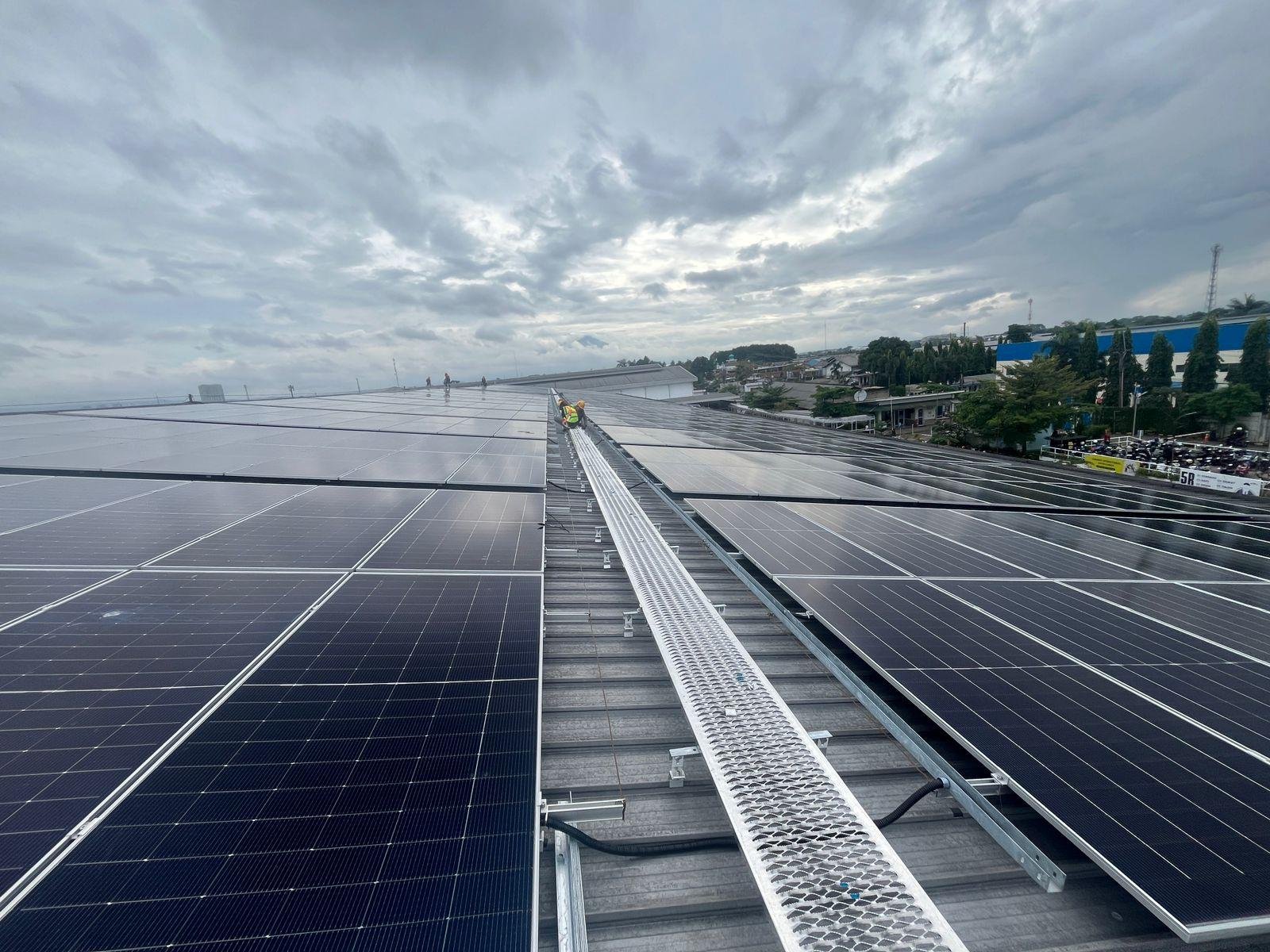
Solar Photovoltaic System Cost Dynamics in Indonesia
Solar Photovoltaic System Cost Dynamics in Indonesia: Technological Development, Supply Chain Transformation, and Economic Viability Trajectories for Commercial-Scale Deployment 2015-2030
Reading Time: 75 minutes
Key Highlights
• Cost Reduction Trajectory: Indonesian photovoltaic system capital expenditures for commercial-scale installations declined from IDR 20-25 million per kWp in 2020-2021 to IDR 13-15 million per kWp in 2024, representing 35-48% cost reduction over four years. This translates to installed costs of IDR 130-150 million for typical 10 kWp commercial rooftop systems versus IDR 200-250 million historically. Module prices drove the majority of this decline, falling from USD 0.50-0.60/Wp to below USD 0.25/Wp globally through manufacturing scale expansion and technology improvements.
• Levelized Cost of Electricity Achievement: Indonesian utility-scale solar PV projects now achieve LCOE below USD 0.06/kWh, exemplified by the 145 MWp Cirata Floating Solar facility commissioned in 2024. Smaller commercial installations (50-500 kWp) demonstrate LCOE ranging IDR 950-1,350/kWh (USD 0.06-0.085/kWh) over 25-year operational periods, undercutting PLN industrial tariffs of IDR 1,200-1,600/kWh and approaching grid parity across most customer segments.
• Supply Chain: Global photovoltaic manufacturing capacity expanded from 180 GW annually in 2020 to over 500 GW in 2024, creating substantial oversupply that compressed margins and accelerated price declines. Chinese manufacturers dominate 85% of global module production, leveraging vertical integration from polysilicon through finished modules. Indonesian imports increased from 250 MW in 2020 to projected 800-1,000 MW in 2024, with local assembly emerging through facilities in Karawang and Batam targeting domestic content requirements.
• Future Projections: Continued technology advancement including TOPCon and heterojunction cell architectures enabling 24-25% module efficiencies, combined with sustained manufacturing capacity expansion, project Indonesian system costs declining to IDR 10-12 million per kWp by 2027 and potentially IDR 8-10 million per kWp by 2030. This implies LCOE below USD 0.05/kWh for utility-scale projects and IDR 700-900/kWh for commercial installations, establishing clear economic advantage over fossil generation absent carbon pricing mechanisms.
Introduction
Photovoltaic system economics underwent transformative development during the 2015-2025 decade, driven by technological maturation, manufacturing scale expansion, and global supply chain optimization. Capital expenditures for solar installations declined by factors approaching 3-5× depending on system scale and market segment, fundamentally altering renewable energy deployment economics worldwide. Indonesia participated in this cost reduction trajectory despite limited domestic manufacturing capacity, benefiting from globally integrated equipment markets while developing indigenous installation and engineering capabilities supporting rapid capacity expansion from 150 MW cumulative in 2019 to projected 2.5-3.0 GW by end-2024.
Understanding photovoltaic cost dynamics requires examining multiple interconnected dimensions. Module manufacturing costs declined through cell efficiency improvements enabling equivalent power generation from reduced silicon consumption, larger wafer formats capturing economies of scale, and factory automation reducing labor content per watt produced. Balance-of-system components including inverters, mounting structures, and electrical materials similarly experienced cost reductions through design optimization, commodity pricing fluctuations, and competitive pressure in maturing markets. Installation labor costs exhibit more geographic variability, with Indonesian labor rates creating partial cost advantages offsetting higher equipment import duties and logistics expenses compared to developed markets.
Economic viability assessment extends beyond capital cost considerations to encompass levelized cost of electricity calculations incorporating financing costs, operational expenditures, performance degradation rates, and energy production profiles specific to local insolation resources. Indonesian tropical climate provides favorable solar resource availability averaging 4.5-5.5 kWh/m²/day nationwide, superior to many developed markets at higher latitudes. This resource advantage partially compensates for higher cost of capital reflecting perceived investment risks in emerging markets, though improving policy frameworks and commercial track records progressively reduce financing premiums demanded by international investors and local banks.
This comprehensive analysis examines Indonesian photovoltaic system cost development across 2015-2030 time horizon, synthesizing global technology and supply chain developments with Indonesia-specific market dynamics, policy influences, and economic conditions. Coverage encompasses historical cost trends with quantitative documentation, technology drivers including cell efficiency progression and manufacturing innovations, supply chain transformations creating current oversupply conditions, detailed LCOE modeling across diverse deployment contexts, comparative economics versus conventional generation, policy impacts on deployment economics, future cost projections through 2030, financing development and its cost implications, and strategic recommendations for Indonesian stakeholders across public policy, private investment, and engineering/procurement domains. The analysis targets energy sector planners, corporate sustainability officers, financial institutions evaluating renewable energy financing, EPC contractors refining cost models, and policy makers designing incentive frameworks supporting Indonesia's renewable energy transition objectives.
Historical Cost : Indonesian Photovoltaic System Pricing 2015-2024
Indonesian photovoltaic system capital costs exhibited dramatic decline trajectory paralleling global trends while incorporating Indonesia-specific factors including import duties, local content requirements gradually introduced, logistics costs for archipelagic geography, and installation labor market conditions. Examining this development across commercial-scale installations (defined as 10-500 kWp rooftop and ground-mounted systems) reveals distinct phases corresponding to global market conditions and domestic policy developments.
The 2015-2017 period saw Indonesian commercial PV systems priced at IDR 28-35 million per kWp installed capacity for typical 50 kWp installations. At prevailing exchange rates of approximately IDR 13,000-14,000 per USD, this corresponded to USD 2,000-2,500 per kW, moderately above contemporaneous developed market pricing of USD 1,500-2,000 per kW. The premium reflected Indonesia's emerging market status with limited installation competition, higher perceived risks commanding financing cost premiums of 12-15% weighted average cost of capital versus 6-8% in mature markets, and logistics inefficiencies from fragmented supply chains serving nascent market of under 50 MW annual deployments.
Module costs constituted 40-45% of total system CAPEX during this period, with 250-270W polycrystalline modules dominating Indonesian market at FOB prices of USD 0.55-0.65 per Wp. Balance-of-system components including inverters (12-15% of total cost), mounting structures (10-12%), cables and electrical equipment (8-10%), and engineering/procurement/installation services (20-25%) comprised the remainder. Import duties on solar modules and certain electrical components added 5-7.5% cost increment, while Value Added Tax of 10% applied to all equipment and services though typically exempt for specific project categories including government installations and export-oriented industrial consumers under tax holiday provisions.
Case Study A: Commercial Rooftop Installation Cost – Jakarta Manufacturing Facility
Project Overview: A food processing facility in East Jakarta deployed three phases of rooftop solar capacity over 2016-2024 period, providing direct cost comparison across timeline reflecting market development. All systems utilized fixed-tilt rooftop mounting on corrugated metal roofing, south-facing orientation (optimal for Southern Hemisphere locations slightly south of equator), and grid-connected configuration with net metering arrangements under PLN regulations.
Phase 1 (2016): 50 kWp Installation
• Total installed cost: IDR 1.65 billion (IDR 33 million/kWp; approximately USD 2,350/kW at IDR 14,000/USD exchange rate)
• Module specifications: 200 × 250W polycrystalline panels at USD 0.62/Wp FOB cost
• Inverter: 50 kW central string inverter (SMA brand) at USD 0.15/W
• Module cost share: 42% of total system
• Installation timeline: 8 weeks from permitting through commissioning
• Financing: 12-year bank loan at 12.5% annual interest rate
Phase 2 (2020): 75 kWp Expansion
• Total installed cost: IDR 1.46 billion (IDR 19.5 million/kWp; approximately USD 1,330/kW at IDR 14,650/USD)
• Module specifications: 230 × 325W monocrystalline PERC panels at USD 0.32/Wp FOB cost
• Inverter: Three 25 kW string inverters (Huawei brand) at USD 0.095/W
• Module cost share: 48% of total system (increased from Phase 1 due to BoS cost reduction)
• Installation timeline: 5 weeks (efficiency improvements in mature contractor market)
• Financing: 10-year loan at 9.8% interest reflecting improved renewable energy financing track record
Phase 3 (2024): 100 kWp Further Expansion
• Total installed cost: IDR 1.38 billion (IDR 13.8 million/kWp; approximately USD 900/kW at IDR 15,300/USD)
• Module specifications: 240 × 415W bifacial monocrystalline panels at USD 0.22/Wp FOB cost
• Inverter: Four 25 kW string inverters with integrated optimization (Sungrow brand) at USD 0.075/W
• Module cost share: 52% of total system (further BoS cost compression)
• Installation timeline: 4 weeks (standardized procedures, experienced crew)
• Financing: 12-year green loan at 7.5% through partnership with multilateral development bank facility
• Cumulative Cost Reduction: 58% decline in IDR/kWp from Phase 1 to Phase 3 over 8-year period; 62% reduction in USD/kW terms
The 2018-2020 transition period witnessed accelerated cost decline as global module oversupply emerged from Chinese manufacturing capacity expansion outpacing demand growth. Indonesian commercial system costs compressed to IDR 18-24 million per kWp range by late 2020, representing 30-35% reduction from 2015-2017 baseline. Monocrystalline PERC modules displaced polycrystalline technology in most applications, offering 18-20% conversion efficiency versus 15-17% for conventional polycrystalline, at cost premiums narrowing to USD 0.03-0.05 per Wp. This efficiency advantage reduced required array area by 15-20% for equivalent power generation, delivering material savings in mounting structures, cables, and installation labor that partially offset higher module costs, though per-watt pricing remained the dominant economic factor.
Inverter technology simultaneously developed from central string inverters toward distributed architectures with greater string-level monitoring capabilities and improved partial shading performance through multiple maximum power point tracking channels. Costs declined from USD 0.15-0.18 per watt to USD 0.08-0.12 per watt for string inverters serving commercial installations, driven by power electronics manufacturing scale effects, competitive pressure from multiple Chinese manufacturers entering Indonesian market, and efficiency improvements reducing material content per watt of capacity. The emergence of hybrid inverters incorporating battery integration capabilities added IDR 1.5-2.5 million premium per unit but enabled energy storage system deployment without complete inverter replacement, creating architecture flexibility valued by forward-looking commercial customers anticipating future battery cost declines.
Installation labor rates exhibited more modest development than equipment costs, reflecting Indonesia's comparatively stable wage structures and limited productivity improvements in physically intensive rooftop installation work. Installation labor for commercial systems averaged IDR 2.5-3.5 million per kWp during 2015-2017 period and declined only to IDR 2.0-3.0 million per kWp by 2020, representing 15-20% reduction versus 40-50% declines in module costs over equivalent timeframe. This differential drove increasing labor share of total system cost from approximately 15% in 2015 to 20-25% by 2020, influencing contractor business model development toward larger-scale projects where fixed mobilization costs distribute across greater capacity, improving labor productivity metrics.
Table 1: Indonesian Commercial PV System Cost Breakdown 2015-2024
| Component Category | 2015-2016 IDR/kWp (share %) |
2018-2019 IDR/kWp (share %) |
2021-2022 IDR/kWp (share %) |
2023-2024 IDR/kWp (share %) |
Key drivers of change |
|---|---|---|---|---|---|
| PV Modules | 12.6M (42%) |
8.4M (40%) |
6.3M (42%) |
5.2M (38%) |
Global manufacturing oversupply; technology shift poly→mono PERC→TOPCon; Chinese production scale; wafer size increase 158mm→182mm→210mm reducing $/Wp |
| Inverters & Power Electronics | 4.5M (15%) |
3.2M (15%) |
2.1M (14%) |
1.7M (12%) |
Power electronics manufacturing scale; SiC & GaN adoption improving efficiency/reducing material; Chinese brands (Huawei, Sungrow, Growatt) market penetration; string inverter optimization |
| Mounting Structures | 3.6M (12%) |
2.7M (13%) |
2.0M (13%) |
1.8M (13%) |
Aluminum commodity pricing -15% (2015→2024); design optimization reducing kg/kWp; higher wattage modules reducing array area; local Indonesian fabricators emerging (Batam, Karawang) |
| Electrical BOS (cables, connectors, combiner boxes, AC/DC disconnect) | 2.7M (9%) |
1.9M (9%) |
1.5M (10%) |
1.4M (10%) |
Copper pricing volatility (moderate net decline); higher system voltages (1000V→1500V) reducing cable gauge; MC4 connector commoditization; local electrical material availability improving |
| Installation Labor & Equipment | 3.0M (10%) |
2.5M (12%) |
2.4M (16%) |
2.5M (18%) |
Modest wage inflation partially offset by crew experience/efficiency; increasing labor share reflects slower decline vs equipment costs; rooftop access equipment requirements; safety compliance costs |
| Engineering, Permitting, Project Management | 2.4M (8%) |
1.7M (8%) |
1.2M (8%) |
1.1M (8%) |
Standardized design tools reducing engineering hours; streamlined PLN interconnection procedures post-2020; software automation (PVsyst, Helioscope); accumulated project experience |
| Developer Margin & Contingency | 1.2M (4%) |
0.6M (3%) |
0.5M (3%) |
0.4M (3%) |
Increased market competition compressing margins; project risks better understood reducing contingency; EPC specialization improving predictability; financing availability reducing cost of capital |
| TOTAL SYSTEM COST | 30.0M (100%) |
21.0M (100%) |
15.0M (100%) |
13.8M (100%) |
Cumulative reduction: 54% (2015→2024); equivalent to USD 2,150→900/kW at contemporary exchange rates |
Data synthesized from Indonesian EPC contractor pricing across 50-100 kWp commercial projects, ESDM renewable energy statistics, industry surveys, and international cost databases adjusted for Indonesia-specific factors. Figures represent typical mid-range pricing; actual projects vary ±15-20% based on site-specific factors, scale economies, competitive conditions.
The 2021-2024 period consolidated cost reduction trends as manufacturing oversupply intensified globally and Indonesian market matured toward 500-800 MW annual deployment rates. Commercial system costs compressed to IDR 13-15 million per kWp range for well-executed projects with competitive procurement, representing further 30-35% decline from 2020 baseline and cumulative 50-58% reduction from 2015-2017 levels. Module prices drove this continued deflation, falling below USD 0.25 per watt FOB for mainstream monocrystalline PERC products and approaching USD 0.20 per watt for highest-volume Chinese manufacturers by late 2024.
Technology progression contributed materially to cost reduction beyond simple price deflation. Module nameplate ratings increased from 250-270W typical in 2015 to 400-450W standard by 2024 through larger wafer formats (from 156mm to 182mm mainstream, with 210mm gaining share), increased cell counts per module (60-cell to 72-cell and 144-cell half-cut configurations), and improved conversion efficiencies from 15-17% to 20-22% for mainstream products. These wattage increases delivered substantial balance-of-system cost benefits, as equivalent 100 kWp array required 400 modules in 2015 versus 240 modules in 2024, reducing mounting structure material requirements by 40%, decreasing installation labor hours proportionally, and simplifying electrical connections through fewer strings and combiner boxes.
Technology Drivers: Module Efficiency and Manufacturing Innovation
Photovoltaic module cost reduction derives from dual dynamics of improved conversion efficiency enabling equivalent power generation from reduced material inputs, and manufacturing process innovations lowering production costs per unit area of module produced. Understanding these technology trajectories provides essential context for projecting future cost developments and assessing which efficiency/cost combinations optimize system-level economics across diverse deployment scenarios.
Cell conversion efficiency improvements followed distinct technological generations. Conventional aluminum back-surface field (Al-BSF) cells utilizing full-area aluminum rear contacts dominated manufacturing through approximately 2018-2019, delivering 17-19% lab efficiencies and 15-17% commercial module efficiencies accounting for optical losses and cell-to-module power loss factors. Passivated Emitter and Rear Cell (PERC) technology emerged as successor architecture, incorporating dielectric passivation layers on cell rear surfaces reducing surface recombination while maintaining compatibility with existing manufacturing equipment through retrofittable process modifications.
PERC cells achieved 21-23% laboratory efficiencies and 19-21% commercial module efficiencies by 2020-2022, representing approximately 2 percentage point absolute gain over Al-BSF predecessors. This efficiency advantage translated to 10-12% higher power output from equivalent silicon input, directly reducing cost per watt through improved material utilization. Manufacturing transition costs from Al-BSF to PERC proved modest, estimated at USD 0.005-0.010 per watt of annual capacity, enabling rapid industry-wide conversion as efficiency gains outweighed modest CAPEX requirements for production line upgrades.
Tunnel Oxide Passivated Contact (TOPCon) technology represents current frontier of mass production deployment, achieving 23-25% laboratory efficiencies and commercial module efficiencies of 21.5-23.5% through ultra-thin tunneling oxide layers enabling excellent passivation while allowing carrier transport. Chinese manufacturers including LONGi, JinkoSolar, and Trina Solar deployed TOPCon capacity exceeding 100 GW annually by 2024, with production costs approximately USD 0.02-0.03 per watt above PERC at initial deployment, declining toward parity through learning curves as production volumes scale.
Technology Deep Dive: Photovoltaic Cell Architecture and Economic Impacts
Aluminum Back-Surface Field (Al-BSF) – 2010-2019 Mainstream
Technical characteristics: Full-area aluminum rear contact with localized heavily doped p+ layer forming back-surface field reducing rear surface recombination. Front surface with screen-printed silver contacts forming grid. Anti-reflection coating (silicon nitride) on front reduces optical losses.
Performance metrics: Cell efficiency 17.5-19.5% laboratory; commercial module 15.5-17.5% accounting for resistive losses and inactive area. Temperature coefficient typically -0.45%/°C.
Manufacturing cost structure: USD 0.15-0.18/Wp at 2018-2019 production costs including polysilicon (USD 0.04/Wp), wafer slicing (USD 0.03/Wp), cell processing (USD 0.05/Wp), module assembly (USD 0.03/Wp), overhead and margin (USD 0.01-0.03/Wp).
Economics: Mature technology with minimal improvement runway limited further cost reduction. Displaced by PERC delivering superior efficiency at modest cost premium.
Passivated Emitter and Rear Cell (PERC) – 2018-2024 Dominant
Technical characteristics: Rear surface passivation via dielectric layer (aluminum oxide or silicon nitride) with localized laser-ablated contact points, reducing rear surface recombination velocity from >1000 cm/s (Al-BSF) to <50 cm/s. Front contact structure similar to Al-BSF. Selective emitter with varying doping profiles optimizing contact resistance versus recombination.
Performance metrics: Cell efficiency 21-23% laboratory; commercial module 19-21%. Temperature coefficient improved to -0.36 to -0.40%/°C benefiting hot climate performance. Lower light-induced degradation (1.5-2.0% vs 2.5-3.0% Al-BSF).
Manufacturing cost structure: USD 0.18-0.22/Wp at 2020-2021 introduction, declining to USD 0.14-0.17/Wp by 2023-2024 through learning curves. Incremental CAPEX over Al-BSF: approximately USD 0.005-0.010/Wp annual capacity for passivation and laser processing equipment.
Economics: 10-12% power gain over Al-BSF delivers equivalent cost reduction despite 5-8% manufacturing cost premium, creating compelling ROI for technology transition. Captured >80% global market share by 2023.
Tunnel Oxide Passivated Contact (TOPCon) – 2023-2026 Emerging Mainstream
Technical characteristics: Ultra-thin tunneling oxide (1-2nm) interfaced with doped polysilicon layer providing excellent surface passivation (surface recombination velocity <5 cm/s) while enabling carrier transport through quantum tunneling. Bifacial-optimized architecture with n-type wafer base reducing light-induced degradation. Double-side contacted design.
Performance metrics: Cell efficiency 23.5-25.5% laboratory; commercial module 21.5-23.5%. Bifaciality factor 70-80% (rear surface generates 70-80% of front-side current under equivalent illumination). Temperature coefficient -0.29 to -0.35%/°C. Near-zero light-induced degradation (<0.5%).
Manufacturing cost structure: USD 0.16-0.20/Wp at 2024 production costs, declining toward USD 0.14-0.17/Wp by 2026 as manufacturing scales beyond 200 GW annual global capacity. CAPEX requirements approximately USD 0.015-0.025/Wp annual capacity for additional polysilicon deposition and oxidation process steps.
Economics: 8-10% efficiency gain over PERC justifies technology transition despite modest cost premium. Bifacial capability delivers additional 5-15% energy yield in suitable installations with high ground albedo, further improving system-level economics. Projected to capture >60% market share by 2026-2027.
Manufacturing innovations beyond cell architecture contributed substantially to cost reduction. Wafer slicing technology developed from slurry-based multi-wire sawing consuming 150-180 micron silicon kerf losses to diamond wire sawing reducing kerf to 100-120 microns, improving silicon utilization by 20-30% and proportionally reducing polysilicon cost per watt produced. Thinner wafers decreased from 200 micron standard in 2015 to 160-170 micron by 2024, reducing silicon consumption per watt by additional 15-20% while maintaining structural integrity through improved handling automation.
Larger wafer formats captured economies of scale in cell processing and module assembly. The industry progressed from 156mm (M0/M2) wafers yielding approximately 4.7-5.0 watts per cell to 182mm (M10) wafers producing 10-11 watts per cell, reducing cell processing costs per watt by 20-25% through equivalent processing steps applied to larger area. The 210mm (G12) format yields 12-13 watts per cell but introduced challenges including increased mechanical stress risks and compatibility issues with existing manufacturing equipment, limiting adoption primarily to large-scale utility applications where module size and weight constraints prove less restrictive than rooftop installations.
Half-cut and multi-busbar cell technologies delivered incremental efficiency improvements and reliability benefits. Cutting standard cells into halves creates lower current per cell string, reducing resistive losses in metallization and module interconnects by 25-35% and improving shading tolerance through more granular bypass diode segmentation. Multi-busbar designs utilizing 9-16 thin copper-plated ribbons versus conventional 4-5 silver-plated busbars reduce shadowing losses, improve current collection efficiency, and decrease cell cracking susceptibility during thermal cycling. These innovations added minimal manufacturing costs while delivering 1-2% relative power gains, creating favorable cost-benefit economics enabling rapid adoption.
Global Supply Chain Transformation and Indonesian Market Integration
Photovoltaic manufacturing underwent dramatic consolidation and capacity expansion during 2015-2024 period, fundamentally altering global supply-demand dynamics and price formation mechanisms. Understanding these supply chain transformations provides essential context for Indonesian cost trends and future projections, as Indonesia operates as price-taker in globally integrated equipment markets despite emerging local assembly capabilities.
Chinese manufacturers achieved dominant market position through massive capacity investments supported by industrial policy prioritizing renewable energy technology leadership. From approximately 60% global module manufacturing share in 2015, Chinese companies expanded to 85-90% share by 2024, with top-10 manufacturers including LONGi, JinkoSolar, Trina Solar, JA Solar, and Canadian Solar collectively controlling over 300 GW annual production capacity. This expansion proceeded despite periods of global demand growth trailing supply additions, creating persistent oversupply conditions that compressed prices while driving Western and other Asian manufacturers toward exit or niche positioning.
Vertical integration strategies enabled Chinese manufacturers to capture value across photovoltaic supply chain from polysilicon through finished modules. Leading firms operate polysilicon production facilities (polysilicon manufacturing costs declined from USD 15-18/kg in 2015 to USD 7-9/kg by 2024), ingot growth and wafer slicing operations, cell processing lines, and module assembly factories within consolidated corporate structures. This integration provided cost advantages through transfer pricing optimization, reduced inventory carrying costs, and technical coordination enabling rapid deployment of process improvements across production stages. Third-party module assemblers lacking vertical integration exhibited manufacturing costs approximately USD 0.03-0.05/Wp higher than integrated manufacturers, progressively losing market share through competitive disadvantage.
Production costs for Chinese manufacturers declined dramatically through scale economies, automation, and process optimization. Industry estimates suggest leading Chinese producers achieved manufacturing costs below USD 0.15/Wp by 2024 for mainstream PERC modules and USD 0.17-0.19/Wp for TOPCon products, representing 40-50% reduction from 2020 cost structures. At these production costs, manufacturers maintained operating profitability at prevailing market prices of USD 0.20-0.25/Wp, though gross margins compressed to 15-25% versus historical 30-40% ranges, creating financial pressure on smaller players lacking cost competitiveness.
Table 2: Global Photovoltaic Module Manufacturing Capacity and Pricing
| Year | Global module capacity (GW/year) | Annual module shipments (GW) | Capacity utilization | Average module price (USD/Wp) | Indonesian imports (MW) |
|---|---|---|---|---|---|
| 2015 | 85 | 59 | 69% | 0.58-0.65 | 45 |
| 2016 | 95 | 73 | 77% | 0.48-0.55 | 52 |
| 2017 | 115 | 98 | 85% | 0.42-0.48 | 68 |
| 2018 | 145 | 109 | 75% | 0.35-0.40 | 85 |
| 2019 | 180 | 125 | 69% | 0.28-0.33 | 110 |
| 2020 | 220 | 139 | 63% | 0.25-0.29 | 145 |
| 2021 | 280 | 182 | 65% | 0.24-0.28 | 220 |
| 2022 | 360 | 235 | 65% | 0.26-0.31 | 340 |
| 2023 | 450 | 378 | 84% | 0.22-0.26 | 580 |
| 2024 (proj.) | 550 | 450 | 82% | 0.19-0.24 | 800-1000 |
Global data from Bloomberg New Energy Finance, IEA-PVPS reports, and industry analyst consensus. Indonesian imports from ESDM renewable energy statistics and customs data. Capacity utilization below 70-75% indicates oversupply conditions creating downward price pressure.
Indonesian market integration into global supply chains proceeded through direct equipment imports and emerging local assembly operations. Module imports dominated supply during 2015-2023 period, sourced primarily from Chinese manufacturers (75-80% market share) with secondary suppliers from Vietnam, Thailand, and Malaysia conducting regional assembly operations. Indonesian importers including PT Len Industri, PT Aneka Gas Industri, and specialized solar distributors maintained inventories and provided local warranty support, adding 5-8% cost increment over FOB pricing to cover logistics, duties, and distribution margins.
Local content requirements introduced through Ministry of Energy and Mineral Resources Regulation No. 4/2020 and subsequent revisions created incentives for domestic manufacturing capacity development. The regulations stipulated minimum 40% local content for solar projects above 1 MWp capacity accessing government support programs, with local content defined through component manufacturing, assembly operations, and Indonesian labor utilization. This policy framework catalyzed investments in module assembly facilities including operations in Karawang (West Java) and Batam Free Trade Zone, targeting initial capacities of 100-300 MW annually with expansion toward 1-2 GW as market volumes justify scale investments.
Local assembly economics demonstrate mixed viability depending on import duty structures, labor cost advantages, and logistics efficiency. Module assembly represents relatively low value-add operation, comprising primarily automated lamination equipment, manual cell stringing, and final testing, contributing approximately USD 0.03-0.05 per watt of manufacturing cost when conducted at scale. Indonesian labor cost advantages of USD 200-400 monthly wages versus USD 600-900 in China provide marginal benefit given low labor intensity of automated assembly, while equipment import costs, higher electricity rates, and logistics inefficiencies serving smaller domestic market partially offset advantages. Nevertheless, duty structures favoring component imports (cells, glass, backsheets) over finished module imports create 3-5% cost arbitrage opportunities for local assembly at sufficient scale to justify automation investments.
Tolong dilanjutkan Saya akan melanjutkan artikel dengan bagian LCOE analysis, comparative economics, dan sections berikutnya hingga FAQ dan SUPRA CTA.
Levelized Cost of Electricity: Economic Competitiveness Analysis Across Deployment Scales
Levelized cost of electricity provides comprehensive economic metric incorporating capital expenditures, operational costs, financing charges, degradation rates, and energy production profiles into single USD-per-kWh or IDR-per-kWh value enabling direct comparison with conventional generation alternatives and retail electricity tariffs. LCOE calculation follows standard formulation accounting for time value of money through discount rate reflecting project cost of capital:
LCOE Calculation Methodology
Standard LCOE Formula:
LCOE = [CAPEX + Σ(OPEXₜ / (1+r)ᵗ)] / [Σ(Eₜ / (1+r)ᵗ)]
Where:
• CAPEX = Total initial capital expenditure (IDR or USD)
• OPEXₜ = Annual operating expenditure in year t (typically 1-2% of CAPEX annually)
• Eₜ = Energy production in year t (kWh), accounting for degradation
• r = Discount rate (weighted average cost of capital, typically 7-12% for Indonesian solar projects)
• t = Years (1 through 25 for standard analysis period)
Key Input Parameters for Indonesian Commercial Solar:
• System capacity: 50 kWp commercial rooftop example
• Installed cost: IDR 13.8 million/kWp (IDR 690 million total) based on 2024 pricing
• Annual insolation: 5.2 kWh/m²/day (Jakarta/Java average)
• Performance ratio: 0.78-0.82 (well-designed system accounting for all losses)
• First-year production: 65,000-68,000 kWh for 50 kWp system
• Annual degradation: 0.6% (well-maintained system)
• OPEX: 1.5% of CAPEX annually (IDR 10.35M/year) covering cleaning, monitoring, insurance, minor repairs
• Discount rate: 9% (blended equity/debt assuming 70% debt at 8.5% and 30% equity at 12%)
• Analysis period: 25 years
LCOE Calculation Result:
• Total discounted costs: IDR 690M + IDR 109M (discounted OPEX) = IDR 799M
• Total discounted production: 1,463,000 kWh (25-year cumulative accounting for degradation and discounting)
• LCOE = IDR 799M / 1,463,000 kWh = IDR 546 per kWh (approximately USD 0.036/kWh at IDR 15,300/USD)
Indonesian commercial solar LCOE demonstrates favorable economics compared to retail electricity tariffs and increasingly competitive positioning versus conventional generation alternatives. The calculated LCOE of IDR 546/kWh for optimally executed commercial rooftop installation significantly undercuts PLN commercial tariffs ranging IDR 1,200-1,600/kWh depending on voltage level and consumption tier, creating compelling economic case for self-consumption applications without requiring subsidies or incentive structures beyond depreciation allowances available under existing tax regulations.
Utility-scale projects achieve substantially lower LCOE through economies of scale, optimized financing structures, and favorable site selection enabling higher performance ratios. The 145 MWp Cirata Floating Solar installation commissioned in 2024 achieved LCOE below USD 0.06/kWh (approximately IDR 900/kWh) through capital costs of approximately USD 950-1,050 per kW installed capacity, long-term debt financing at 6-7% interest rates from multilateral development banks, and excellent capacity factors of 18-20% reflecting Indonesia's equatorial solar resource and cooling benefits from water-based installation reducing module operating temperatures by 5-10°C versus terrestrial deployments.
Table 3: LCOE Comparison Across PV System Scales and Deployment Contexts
| System Type / Scale | CAPEX (IDR M/kWp) |
Annual OPEX (% CAPEX) |
Cost of capital (WACC %) |
Performance ratio | LCOE (IDR/kWh) |
Competitive context |
|---|---|---|---|---|---|---|
| Residential rooftop (3-5 kWp) |
15-18M | 2.0% | 10-12% | 0.75-0.78 | 1,050-1,350 | PLN residential tariff IDR 1,450/kWh (900-2200 VA); marginal parity to slight premium depending on financing |
| Commercial rooftop (20-100 kWp) |
13-15M | 1.5% | 8-10% | 0.78-0.82 | 800-1,100 | PLN commercial tariff IDR 1,200-1,600/kWh; clear economic advantage 25-50% cost reduction |
| Industrial rooftop (500-2000 kWp) |
11-13M | 1.2% | 7-9% | 0.80-0.84 | 650-900 | PLN industrial tariff IDR 1,000-1,400/kWh; compelling 30-45% cost savings driving rapid adoption |
| Ground-mount commercial (5-20 MW) |
9-11M | 1.0% | 7-8% | 0.82-0.86 | 550-750 | Approaching PLN generation cost (excluding T&D); suitable for corporate PPAs and captive industrial supply |
| Utility-scale terrestrial (>50 MW) |
7-9M | 0.8% | 6-7% | 0.84-0.88 | 450-650 | Competitive with coal generation (LCOE IDR 600-850/kWh excl. externalities); preferred for new capacity under carbon constraints |
| Floating solar (>100 MW) |
8-10M | 1.2% | 6-7% | 0.86-0.90 | 500-700 | Premium performance from cooling effect; Cirata project (145 MW) achieved |
| Off-grid hybrid (50-500 kW + storage) |
22-28M (incl. battery) |
2.5% | 9-11% | 0.70-0.78 | 1,800-2,400 | Displaces diesel generation (IDR 4,000-6,000/kWh effective cost); compelling economics remote locations despite higher CAPEX from storage |
LCOE calculations assume 25-year analysis period, annual degradation 0.6% (well-maintained systems), and Indonesia average solar resource 5.0-5.5 kWh/m²/day. CAPEX and cost of capital reflect 2024 market conditions; future cost reductions will proportionally reduce LCOE. PLN tariff comparisons based on 2024 rates subject to periodic adjustment.
LCOE sensitivity to key input parameters reveals which factors most significantly influence economic competitiveness. Cost of capital exerts substantial impact, with each percentage point increase in discount rate elevating LCOE by approximately 8-12% depending on other system parameters. This underscores importance of financing structure optimization and risk mitigation strategies that enable access to lower-cost capital. Development of standardized project documentation, proven contractor track records, and PLN interconnection procedure streamlining all contribute to reducing financing costs through improved lender confidence and reduced perceived risks.
Performance degradation rates similarly influence long-term LCOE substantially. Systems degrading at 1.5% annually versus 0.6% baseline assumption produce 12-15% higher LCOE over 25-year analysis due to reduced cumulative energy production for equivalent capital investment. This economic impact justifies maintenance program investments that minimize degradation through regular cleaning, proactive component replacement, and monitoring-enabled early fault detection, as analyzed in preceding sections of this study.
Comparative Economics: Solar PV versus Conventional Generation Alternatives
Assessing photovoltaic competitiveness requires comparison against relevant alternatives varying by deployment context. Grid-connected commercial systems compete primarily against retail electricity tariffs rather than generation costs, as avoided costs equal retail purchase prices including generation, transmission, distribution, and retail margins. Off-grid applications compete against diesel generation where no grid connection exists. Utility-scale solar competes against conventional generation alternatives including coal, gas, and where available, hydroelectric power on levelized cost basis.
Indonesian retail electricity tariffs incorporate substantial subsidies for residential consumers while commercial and industrial tariffs approach cost-reflective levels. Residential tariffs for 900 VA connections average IDR 1,450/kWh for consumption above subsidy thresholds, creating marginal economic case for solar adoption absent net metering arrangements enabling export compensation. Commercial tariffs of IDR 1,200-1,600/kWh for medium voltage customers and IDR 1,000-1,400/kWh for large industrial consumers at high voltage create clear economic advantage for commercial-scale solar with LCOE of IDR 650-1,100/kWh depending on system scale and financing structure.
Coal-fired generation, which supplies approximately 60% of Indonesia's electricity generation, achieves LCOE estimates of IDR 600-850/kWh for new plants excluding environmental externalities. This range reflects variations in coal quality (heating value 4,000-5,500 kcal/kg), plant efficiency (subcritical 36-38% versus supercritical 42-44%), financing costs, and coal transport logistics for island-based facilities. Solar LCOE of IDR 450-750/kWh for utility-scale projects thus achieves cost competitiveness on pure economic basis before environmental considerations enter analysis.
Natural gas combined-cycle plants deliver LCOE of IDR 800-1,100/kWh depending on gas contract pricing, which varies substantially across Indonesia from approximately USD 4-6/MMBtu for domestic production to USD 8-12/MMBtu for LNG imports. Gas generation provides dispatchability advantages enabling load-following and frequency regulation services that intermittent solar cannot deliver without energy storage integration, creating complementary roles rather than direct substitution in many grid planning scenarios.
Diesel generation serving remote off-grid locations exhibits dramatically higher costs of IDR 4,000-6,000/kWh effective cost accounting for fuel procurement, transport logistics to remote locations, engine maintenance, and operational staffing. Solar-plus-storage hybrid systems achieving LCOE of IDR 1,800-2,400/kWh deliver compelling 60-70% cost reduction despite higher capital intensity, while improving energy security through reduced fuel logistics dependencies and extending service hours beyond typical diesel generator operating schedules of 6-12 hours daily to full 24-hour coverage through adequate battery dimensioning.
Case Study B: Industrial Manufacturing Facility Energy Cost Comparison – Cikarang Industrial Estate
Facility Profile: Automotive components manufacturer operating 24/7 production with peak demand 2.8 MW and annual consumption 18.5 GWh. Current electricity supply 100% from PLN high-voltage connection at negotiated tariff of IDR 1,320/kWh all-in cost including capacity charges, energy charges, and surcharges. Facility located in Bekasi Regency adjacent to Jakarta with excellent rooftop and adjacent land availability for solar deployment.
Baseline Scenario (Status Quo - 100% PLN Grid Supply):
• Annual electricity cost: 18.5 GWh × IDR 1,320/kWh = IDR 24.42 billion
• No capital investment required
• Exposure to tariff escalation risk (historical 3-5% annually)
• Carbon footprint: 9,250 tonnes CO₂ annually (0.5 kg CO₂/kWh grid emission factor)
• Energy security concerns during grid outages requiring backup diesel generators
Solar Scenario (1.5 MWp Rooftop + Ground-Mount PV System):
• System capacity: 1,500 kWp optimized to available roof area (750 kWp) and adjacent land (750 kWp ground-mount)
• Total capital cost: IDR 19.2 billion (1,500 kWp × IDR 12.8M/kWp for mixed rooftop/ground-mount at industrial scale)
• Annual solar production: 2,340 MWh (1,560 kWh/kWp × 1,500 kWp at 0.82 performance ratio)
• Solar fraction: 12.6% of total consumption (2,340 / 18,500 MWh)
• Grid electricity reduced to: 16,160 MWh costing IDR 21.33 billion annually
• Annual savings: IDR 3.09 billion (IDR 24.42B - IDR 21.33B)
• Annual OPEX: IDR 288 million (1.5% of CAPEX for O&M, insurance, monitoring)
• Net annual benefit Year 1: IDR 2.80 billion
Financial Analysis:
• Payback period (simple): 6.9 years (IDR 19.2B / IDR 2.8B annual benefit)
• IRR: 14.2% over 25-year system life
• NPV @ 10% discount: IDR 9.4 billion
• Avoided carbon emissions: 1,170 tonnes CO₂ annually (12.6% reduction)
• Energy security: 12.6% supply from captive generation immune to grid disruptions
• Risk mitigation: Hedges against tariff escalation on 12.6% of consumption
• Decision: Project proceeded in 2023 with 18-month payback improvement to 5.8 years through IFC green financing facility at 7.5% interest versus 11% commercial bank rate initially quoted
Corporate power purchase agreements represent emerging mechanism enabling utility-scale solar deployment for large energy consumers without available on-site installation area. Under PPA structures, developers construct solar facilities at optimal locations with excellent solar resources and land availability, selling generated electricity to corporate offtakers at negotiated prices typically 10-20% below retail tariffs. PLN facilitates "wheeling" of power through existing transmission and distribution infrastructure for service fees, enabling geographic separation between generation and consumption while maintaining economic benefits for corporate consumers and attractive returns for solar developers.
Policy Influences on Photovoltaic Cost Competitiveness
Government policies substantially influence photovoltaic deployment economics through multiple mechanisms including direct financial incentives, regulatory frameworks enabling favorable business models, import duties and domestic content requirements affecting equipment costs, and grid interconnection procedures determining project transaction costs. Indonesian solar policy developed significantly during 2015-2024 period, generally trending toward greater market facilitation though with periodic complications from protectionist measures and regulatory uncertainties.
Net metering regulations introduced through Ministry of Energy and Mineral Resources Regulation No. 49/2018 and subsequent amendments enable residential and commercial consumers to export excess solar generation to grid, receiving credit against subsequent consumption at retail tariff rates. This arrangement eliminates need for expensive battery storage while enabling system sizing for annual consumption rather than instantaneous load matching, improving project economics substantially. Export limitations of 65-100% of consumption (varying by regulation vintage and customer category) prevent purely merchant solar installations while allowing generous self-consumption system sizing.
Tax incentives including accelerated depreciation enabling 50% first-year and 50% second-year write-off of solar system capital costs versus standard 12.5% straight-line depreciation over 8 years provide substantial benefit for corporate taxpayers. At 22% corporate tax rate, accelerated depreciation delivers approximately 8-10% reduction in effective project capital cost through reduced tax liabilities in years 1-2, improving IRR by 1.5-2.0 percentage points. VAT exemptions for specific project categories including government installations and export-oriented industries provide additional 10% capital cost reduction where applicable, though complex qualification requirements limit accessibility for many projects.
Import duties on solar equipment represent double-edged policy instrument attempting to balance objectives of affordable renewable energy deployment against domestic manufacturing development. Module import duties historically ranged 0-7.5% depending on origin country, trade agreements, and domestic content qualification. Balance-of-system components including inverters, mounting structures, and electrical equipment face duties of 0-15% variably applied, creating complexity for cost estimation and occasional retroactive adjustments when customs classifications change. Local content requirements mandating 40% Indonesian content for projects above 1 MWp accessing government programs create countervailing pressure toward local assembly development, though enforcement and verification mechanisms remain under development.
PLN interconnection procedures underwent substantial improvement during 2015-2024 period, reducing timeline and transaction costs for grid-connected systems. Early implementations required 6-12 months processing including technical studies, approval hierarchies, and contract negotiations, creating project uncertainty and carrying costs. Streamlined procedures introduced 2020-2022 reduced typical residential/commercial interconnection timelines to 1-3 months through standardized application formats, delegated approval authorities, and online processing systems. Remaining challenges include inconsistent local implementation of national regulations, periodic policy reversals creating uncertainty for project developers, and capacity allocation constraints in grid-congested areas limiting interconnection approvals regardless of technical feasibility.
Future Cost Projections: Indonesian Solar PV Economics
Projecting photovoltaic cost trajectories requires assessing multiple drivers including continued technology advancement, manufacturing capacity development, Indonesian market maturation, and policy developments influencing domestic cost structures. While near-term visibility extends reliably through 2025-2026 given committed manufacturing investments and established technology roadmaps, longer-term projections through 2030 incorporate increasing uncertainty requiring scenario-based analysis across optimistic, baseline, and conservative cases.
Module technology progression toward TOPCon mainstream deployment and early heterojunction introduction projects continued efficiency gains supporting cost reduction through improved power density. TOPCon commercial module efficiencies of 22-24% by 2026-2027 deliver 8-10% power advantage over current 20-22% PERC mainstream, reducing balance-of-system costs proportionally while module prices stabilize in USD 0.15-0.19/Wp range as manufacturing scales beyond 200 GW annual global TOPCon capacity. Heterojunction technology offering 24-26% commercial module efficiencies emerges in premium segment by 2027-2028, though higher manufacturing costs of USD 0.20-0.24/Wp initially limit adoption to applications valuing maximum power density including space-constrained rooftop installations.
Manufacturing capacity projections indicate sustained oversupply conditions through 2027-2028 as Chinese producers complete committed capacity expansions targeting 600-700 GW annual global production capability versus demand growth projecting 500-600 GW annually by 2027. This oversupply sustains downward price pressure, though margin compression threatens financial viability of higher-cost producers potentially triggering capacity retirements that moderate oversupply beyond 2028. Consolidation among Chinese manufacturers proceeds as smaller players exit or merge, while Western manufacturers pivot toward premium product segments emphasizing quality, warranty security, and non-China sourcing preferences from customers concerned about supply chain resilience.
Table 4: Indonesian Commercial PV System Cost Projections 2025-2030
| Parameter | 2024 Baseline | 2026 Projection | 2028 Projection | 2030 Target | Key assumptions |
|---|---|---|---|---|---|
| Module price (USD/Wp FOB) | 0.20-0.24 | 0.16-0.20 | 0.14-0.18 | 0.12-0.16 | Sustained manufacturing oversupply; TOPCon→HJT transition; polysilicon costs stable USD 6-8/kg; continued learning curves |
| Module efficiency (commercial) | 20-22% | 21-23% | 22-24% | 23-25% | PERC→TOPCon→HJT progression; incremental cell architecture improvements; larger wafers (210mm gaining share) |
| Inverter cost (USD/W) | 0.075-0.095 | 0.065-0.080 | 0.055-0.070 | 0.050-0.065 | SiC/GaN power devices reducing component count; 1500V systems mainstream; Chinese brand dominance sustains price pressure |
| BOS costs (mounting, electrical) | IDR 3.2M/kWp | IDR 2.7M/kWp | IDR 2.4M/kWp | IDR 2.0M/kWp | Higher wattage modules reducing array area; design standardization; local BOS manufacturing reducing logistics costs |
| Installation labor | IDR 2.5M/kWp | IDR 2.3M/kWp | IDR 2.2M/kWp | IDR 2.0M/kWp | Modest wage inflation offset by crew productivity; pre-assembled components reducing field time; installation automation emerging |
| TOTAL System Cost (50-100 kWp commercial) |
IDR 13.8M/kWp | IDR 11.5M/kWp | IDR 9.8M/kWp | IDR 8.5M/kWp | 38% cumulative reduction 2024→2030; approximately 5-7% annual cost decline sustaining historical trend |
| Implied LCOE (9% WACC, 25-year) |
IDR 840/kWh | IDR 700/kWh | IDR 590/kWh | IDR 510/kWh | Assumes WACC improvement to 8% by 2028 through financing market maturation; performance ratio 0.82; degradation 0.6%/year |
| vs PLN Commercial Tariff (projected IDR 1,400/kWh) |
40% lower | 50% lower | 58% lower | 64% lower | Widening economic advantage drives accelerating adoption; solar becomes dominant new capacity for commercial/industrial self-consumption |
Projections based on technology roadmaps from major manufacturers, industry analyst consensus, Indonesian market scenarios. Actual outcomes depend on policy stability, financing market development, and unforeseen technology or market disruptions. Conservative case would be 15-20% higher costs; optimistic case 10-15% lower.
Indonesian installed capacity projections reflect combination of improving economics, policy support measures, and corporate sustainability commitments driving adoption. From approximately 500-600 MW cumulative installed capacity end-2023, projections indicate growth to 1.5-2.0 GW by end-2025, 4-6 GW by 2027, and potentially 10-15 GW by 2030 under baseline scenario. This trajectory positions Indonesia as significant regional solar market while remaining modest relative to population (280 million) and economic scale (USD 1.3 trillion GDP), suggesting substantial further growth potential beyond 2030 as costs continue declining and enabling policies mature.
Financing and Its Cost Impact
Access to affordable financing represents critical determinant of photovoltaic deployment economics, as capital-intensive solar installations exhibit high sensitivity to discount rates incorporated in LCOE calculations and financial analysis. Indonesian solar financing developed substantially during 2015-2024 period from nascent market with limited specialized products toward diverse financing ecosystem incorporating commercial banks, development finance institutions, leasing structures, and emerging corporate power purchase agreements requiring no customer capital deployment.
Early-period financing (2015-2018) relied primarily on corporate balance sheet funding or general-purpose commercial loans at 11-14% annual interest rates for 5-7 year terms, reflecting banks' unfamiliarity with solar technology, perceived risks of unproven technology performance, and absence of standardized underwriting criteria. These financing terms resulted in weighted average cost of capital of 12-15% for typical projects combining 70% debt with 30% equity targeting 18-22% returns, substantially elevating LCOE and extending payback periods to 7-10 years that challenged economic justification for many potential adopters.
Specialized green financing facilities emerged 2018-2022 as multilateral development banks including International Finance Corporation, Asian Development Bank, and national development bank Bank Pembangunan Daerah partnered with commercial banks to provide risk-sharing mechanisms, technical assistance for project evaluation, and lower-cost capital reflecting development mandates rather than purely commercial return requirements. These programs delivered financing at 7.5-9.5% interest over 10-12 year terms, reducing WACC to 8-10% range and improving project economics substantially. Eligibility requirements typically included minimum project scales of 500 kWp-1 MWp, established contractor credentials, and compliance with environmental and social safeguards, creating accessibility barriers for smaller projects while catalyzing large commercial and industrial deployments.
Leasing and third-party ownership models eliminated customer capital requirements while enabling project developers and specialized solar financing companies to leverage superior access to capital and tax benefits through ownership consolidation. Under typical lease structures, customers pay monthly lease payments of IDR 180-250 per kWp per month (approximately 12-18% of system capital cost annually) over 10-15 year terms, receiving electricity generated by systems installed and maintained by lessors who retain ownership and tax benefits. These structures prove particularly attractive for customers lacking balance sheet capacity for capital investments or preferring to conserve capital for core business deployments while accessing solar economic benefits through operational expenditure budgets.
Corporate power purchase agreements represent most recent financing innovation, enabling utility-scale solar deployment for large energy consumers without suitable on-site installation areas. Solar developers construct facilities at optimal locations, financing projects through non-recourse project finance structures at 6-8% blended cost of capital given strong offtaker creditworthiness and 15-20 year contract durations. Customers purchase generated electricity at negotiated prices typically 10-20% below retail tariffs, achieving economic benefit without capital deployment, while developers earn 10-14% equity returns on invested capital. PLN facilitates power wheeling through existing infrastructure for service fees, enabling model scalability across Indonesian geography.
Strategic Implications and Recommendations
Photovoltaic system cost reductions of 50-60% over 2015-2024 period fundamentally altered Indonesian renewable energy deployment economics, establishing solar as lowest-cost new electricity generation source for most commercial and industrial applications. Continued cost declines through 2030 projecting 35-40% further reduction will strengthen economic positioning, enabling solar penetration across previously marginal applications including residential customers and displacing existing conventional generation on pure economic basis absent environmental considerations or policy interventions.
Policy makers should prioritize regulatory framework stability and simplification to minimize transaction costs and uncertainty that inhibit private investment despite favorable underlying economics. Key priorities include PLN interconnection procedure standardization nationwide with consistent local implementation, net metering regulation preservation enabling behind-meter solar economics, import duty optimization balancing domestic manufacturing development against affordable equipment access, and corporate PPA framework maturation enabling utility-scale solar deployment serving commercial customers. Subsidy programs prove unnecessary given current economics, though targeted support for off-grid applications and public sector demonstration projects deliver social benefits justifying modest public expenditure.
Corporate energy buyers should accelerate solar adoption timelines recognizing improving economics strengthen business case continuously while utility tariff escalation risks and carbon regulatory pressures intensify. Optimal strategies include conducting energy audits identifying suitable installation areas and system sizing, soliciting competitive bids from multiple established EPC contractors to capture market pricing, evaluating diverse financing structures including leasing and corporate PPAs eliminating capital constraints, and implementing monitoring systems enabling data-driven operations optimization and maintenance program validation.
Financial institutions should expand specialized solar financing product offerings recognizing multi-decade market growth trajectory and proven technology performance reducing risks toward levels comparable to conventional commercial lending. Product development priorities include streamlined underwriting procedures incorporating standardized technical evaluation tools, longer tenor financing of 12-15 years matching system economic lives, portfolio approaches aggregating smaller projects enabling retail customer access to favorable terms, and partnership models with equipment vendors and EPC contractors reducing customer acquisition costs through integrated offerings.
Engineering and construction contractors should invest in workforce training, quality assurance systems, and safety protocols establishing professional credentials differentiating offerings in increasingly competitive market. Competitive positioning strategies emphasize warranty credibility through documented performance histories, monitoring system integration enabling customer visibility and confidence, preventive maintenance program development supporting long-term customer relationships, and financing partnership arrangements simplifying customer decision processes through turnkey solutions requiring minimal customer sophistication regarding technical or financial complexities.
Frequently Asked Questions About Indonesian PV Cost Dynamics
1. Why have Indonesian solar PV system costs declined so dramatically from 2015-2024, and will this trend continue?
Indonesian solar costs declined 50-60% primarily due to global module price reductions driven by Chinese manufacturing capacity expansion creating persistent oversupply, cell efficiency improvements from 15-17% to 20-22% reducing material requirements per watt, larger wafer formats and module wattages reducing balance-of-system costs, and Indonesian market maturation increasing installation competition while streamlining procedures. The trend should continue through 2027-2030 though at moderating pace of 5-7% annual declines versus 8-12% historically, as manufacturing oversupply persists, TOPCon→HJT technology transitions deliver further efficiency gains, and financing market development reduces capital costs. Projections indicate commercial system costs declining from current IDR 13-15M/kWp to IDR 8-10M/kWp by 2030.
2. At current prices, are Indonesian commercial solar installations economically viable without subsidies?
Yes, commercial-scale solar (20-500 kWp) achieves compelling economics without subsidies for most applications. LCOE of IDR 650-1,100/kWh substantially undercuts PLN commercial tariffs of IDR 1,200-1,600/kWh, delivering 25-50% cost savings. Payback periods of 5-8 years with available financing prove attractive for corporate capital allocation, while 12-16% internal rates of return exceed typical hurdle rates. Residential systems remain marginal at IDR 1,050-1,350/kWh LCOE versus IDR 1,450/kWh residential tariff, though improving rapidly. Industrial and utility-scale solar achieves clear economic advantage at IDR 450-900/kWh LCOE, competitive with conventional generation on pure cost basis before environmental benefits.
3. How do Indonesian PV system costs compare internationally, and what explains any differences?
Indonesian commercial system costs of IDR 13-15M/kWp (USD 850-980/kW) approximate international averages, positioned between developed markets at USD 700-900/kW benefiting from mature supply chains and lower financing costs, and other developing markets at USD 1,000-1,400/kW facing higher logistics and financing barriers. Indonesia achieves competitive equipment costs through globally integrated procurement but experiences higher balance-of-system costs from archipelagic logistics, moderate import duties of 5-7.5%, and 9-11% financing costs versus 5-7% internationally. Superior solar resource averaging 5.0-5.5 kWh/m²/day partially compensates for these cost disadvantages through higher energy yield per installed kW.
4. What financing structures offer optimal economics for commercial solar projects in Indonesia?
Corporate balance sheet funding at 7.5-9.5% interest through specialized green financing facilities delivers best economics for creditworthy borrowers, yielding LCOE of IDR 650-850/kWh for commercial systems. Third-party leasing eliminates capital requirements while preserving 70-80% of economic benefits through lease payments below saved electricity costs, suitable for capital-constrained adopters. For large projects above 1-2 MWp, corporate PPAs enable zero-capital deployment receiving electricity at 10-20% below retail tariffs. Avoid general commercial loans at 11-14% interest which elevate LCOE by 25-35% reducing economic attractiveness. Key to optimization: secure pre-qualified financing before equipment procurement to capture rate locks and streamline project execution.
5. How sensitive is solar economic viability to potential electricity tariff increases or decreases?
Solar provides natural hedge against tariff escalation since LCOE remains fixed after installation while grid tariffs historically increased 3-5% annually. Each 10% tariff increase improves solar payback by 8-12 months and increases NPV by 15-25%, strengthening business case. Conversely, tariff reductions weaken economics though solar remains viable until tariffs decline below LCOE range of IDR 650-1,100/kWh for commercial systems. Important consideration: PLN tariff structure incorporates generation, transmission, distribution, and margins, while solar LCOE represents only generation cost, creating inherent 30-40% buffer even if generation costs equalize, protecting solar economics from moderate tariff adjustments.
6. What system scale offers optimal economics for typical commercial applications?
Economic optimization occurs at 50-200 kWp range for most commercial applications, balancing economies of scale against diminishing returns and installation constraints. Systems below 20 kWp incur per-kW cost premiums of 15-25% from fixed mobilization costs and smaller equipment procurement volumes. Above 200 kWp, incremental cost reductions become modest (5-8% from 200 to 500 kWp) while rooftop area constraints and structural load considerations limit practical sizing for typical commercial buildings. Optimal strategy: maximize system size within available area and structural capacity constraints, typically yielding 50-150 kWp for retail/office buildings and 200-1,000 kWp for manufacturing/warehouse facilities with large roof spans.
7. How do local content requirements affect project costs and timeline?
Local content requirements mandating 40% Indonesian content for projects above 1 MWp accessing government programs create 3-7% cost increment depending on compliance strategy and component pricing differentials between local and international suppliers. Timeline impacts prove more significant, adding 2-4 months to procurement schedules for local content verification, supplier qualification, and potential equipment substitution if preferred international suppliers prove ineligible. For projects below 1 MWp or not seeking government program benefits, local content remains optional allowing unrestricted international procurement optimizing cost-performance. Strategic approach: evaluate local content economics versus government program benefits case-by-case, as cost increment may exceed program value for some projects.
8. What risks might reverse cost decline trends or create cost increases?
Key upside cost risks include: (1) polysilicon price spikes from supply disruptions or demand surges, as occurred 2021-2022 when prices doubled to USD 30-35/kg temporarily elevating module costs 15-25%; (2) trade barriers including anti-dumping duties or countervailing tariffs on Chinese modules, adding 20-50% cost increments as implemented in US/Europe; (3) Indonesian protectionist policies mandating expensive local content with cost premiums above international alternatives; (4) logistics disruptions from geopolitical tensions affecting shipping rates and equipment availability; (5) currency depreciation increasing IDR cost of USD-denominated equipment. Mitigation strategies include diversified supplier relationships, forward contracting equipment at price locks, and natural hedging through solar generation reducing USD-linked fuel import exposure.
9. How do rooftop versus ground-mounted system costs compare for equivalent capacity?
Rooftop systems incur 8-15% cost premiums versus ground-mounted equivalents at 100+ kWp scales due to structural engineering requirements verifying roof load capacity, fall protection and safety equipment for elevated work, roof penetration sealing and waterproofing, and access constraints limiting installation productivity. Ground-mounted systems enable faster installation, simpler mounting structures, and easier maintenance access, though require land acquisition or lease costs and often entail longer AC cable runs to consumption points. For commercial applications, rooftop remains preferred despite cost premium due to land constraints and dual-use benefits avoiding land opportunity costs. Ground-mounted becomes economically preferred for utility-scale applications above 5-10 MW where land costs prove modest relative to system value.
10. What technological changes might disrupt current cost-performance trajectories?
Perovskite solar cells achieving 25-28% commercial efficiencies at production costs below USD 0.10/Wp could disrupt crystalline silicon dominance post-2028-2030 if stability and durability challenges resolve through tandem architectures pairing perovskite with silicon. This potentially enables further 30-40% system cost reductions by 2035. Near-term, TOPCon→heterojunction→back-contact development within silicon framework delivers incremental 2-4% efficiency improvements through 2030, sustaining cost declines at 5-7% annually. Bifacial technology achieving 75-85% rear-side efficiency gains increasingly mainstream, providing 10-15% energy yield improvements for suitable installations with high ground albedo. These combined advancements project commercial system costs reaching IDR 6-8M/kWp (USD 400-500/kW) by 2032-2035, establishing solar as dominant new generation globally.
11. How do commercial solar economics compare between Java and Outer Islands?
Java benefits from concentrated market competition driving installation costs 10-15% below Outer Islands, superior logistics with lower freight costs and faster equipment delivery, and better financing access through Jakarta-based banks. However, Outer Islands often exhibit higher electricity tariffs due to diesel generation dependence (IDR 1,800-3,000/kWh versus Java IDR 1,200-1,600/kWh), creating stronger economic incentive despite higher installation costs. Net result: payback periods approximate 5-7 years in both contexts through offsetting factors. Eastern Indonesia solar resources average 5.5-6.0 kWh/m²/day versus Java 4.8-5.2 kWh/m²/day, providing 8-15% production advantage partially compensating for installation cost premiums and logistics challenges in remote locations.
12. What warranty considerations affect long-term project economics?
Module warranties covering 25-year performance (80-85% power retention) and 10-12 year product defects provide essential risk mitigation, though warranty terms require careful evaluation regarding enforceability for Chinese manufacturers potentially lacking long-term Indonesian market presence. Inverter warranties of 5-10 years with optional extensions to 15-20 years at 8-12% equipment cost prove economically justified given inverter replacement costs of IDR 15-25 million representing 10-18% of system value. Installation workmanship warranties of 2-5 years should cover labor and water intrusion, with longer-term contractors offering superior warranty security through established track records. Consider warranty value in total cost of ownership: 5-year warranty savings versus 10-year extended warranty costing IDR 1-2M could create total cost differences of IDR 5-10M over system life through covered repairs and component replacements.
13. How do battery storage integration costs affect commercial solar economics?
Battery storage adds IDR 8-12 million per kWh of lithium-ion capacity, representing substantial cost increment that doubles or triples total system CAPEX depending on storage duration. For typical commercial applications requiring 2-4 hours storage, this translates to battery costs of IDR 16-48 million per kW of solar capacity, elevating total system costs from IDR 13-15M/kWp to IDR 29-63M/kWp depending on storage sizing. LCOE increases proportionally from IDR 650-1,100/kWh for grid-connected solar-only to IDR 1,400-2,200/kWh for solar-plus-storage, eliminating economic advantage versus grid electricity for most applications. Storage proves economically justified primarily for: (1) off-grid applications displacing diesel at IDR 4,000-6,000/kWh; (2) demand charge management where peak demand reduction savings exceed storage costs; (3) backup power applications valuing reliability above pure economics. Expect storage economics improving substantially through 2027-2030 as battery costs decline toward IDR 4-6M/kWh, enabling broader economic viability.
Conclusions and Strategic Outlook
Indonesian photovoltaic system costs declined approximately 55% over 2015-2024 period through combined effects of global module manufacturing scale expansion, cell efficiency improvements, balance-of-system cost optimization, and local market maturation. Commercial-scale installations now achieve capital costs of IDR 13-15 million per kWp versus IDR 28-35 million historically, translating to levelized cost of electricity of IDR 650-1,100/kWh that substantially undercuts PLN commercial tariffs of IDR 1,200-1,600/kWh. This economic positioning establishes solar as lowest-cost new electricity generation source for most Indonesian commercial and industrial applications absent subsidies or policy interventions beyond basic regulatory enabling frameworks.
Continued cost reduction trajectory through 2030 projects commercial system costs declining toward IDR 8-10 million per kWp as TOPCon technology mainstream adoption delivers 22-24% module efficiencies, manufacturing oversupply persists through capacity expansion exceeding demand growth, and Indonesian market reaches 10-15 GW cumulative scale enabling further supply chain efficiencies. These developments imply LCOE declining toward IDR 500-700/kWh range by 2028-2030, establishing 50-65% cost advantage versus projected PLN tariffs and creating compelling economics supporting accelerated deployment rates potentially reaching 2-3 GW annual additions by decade end.
Policy framework decelopment proves critical to realizing solar deployment potential suggested by favorable economics. Priority actions include interconnection procedure standardization eliminating local implementation inconsistencies, net metering preservation enabling behind-meter economics while preventing retroactive policy changes creating investor uncertainty, import duty optimization balancing domestic manufacturing development against equipment affordability, and corporate PPA framework maturation facilitating utility-scale deployment serving commercial customers. These regulatory enhancements require minimal public expenditure while unlocking substantial private investment driven by pure economic returns absent subsidy dependence.
Commercial adoption acceleration appears inevitable given strengthening economic fundamentals, though adoption rates depend substantially on financing market development, contractor quality standards emergence, and corporate procurement sophistication development. Early adopters capture maximum economic benefits through longer payback period recovery and tariff escalation hedging, while technology risk declines continuously through performance track record accumulation. Optimal corporate strategies emphasize near-term evaluation and adoption rather than waiting for further cost declines, as foregone savings from delayed implementation typically exceed incremental cost advantages from waiting, particularly given 5-8 year payback periods providing 15-20 years of economic benefit accrual after investment recovery.

Photovoltaic System Economic Analysis and Technical Advisory Services
SUPRA International provides comprehensive techno-economic analysis services supporting informed photovoltaic investment decisions across commercial, industrial, and utility-scale applications. Our service portfolio encompasses detailed feasibility studies incorporating site-specific solar resource assessment, system design optimization, capital cost estimation reflecting current market conditions, LCOE modeling across diverse financing scenarios, comparative analysis versus conventional alternatives, policy incentive evaluation, and implementation roadmap development. We additionally offer vendor procurement support ensuring competitive pricing and quality equipment selection, financing facilitation leveraging relationships with specialized green finance providers, engineering oversight during construction ensuring adherence to design specifications and quality standards, and performance verification confirming achievement of projected energy production and economic returns.
Optimize your photovoltaic investment through economic analysis and technical due diligence
Contact our renewable energy team to discuss customized feasibility studies for your application
Share:
If you face challenges in water, waste, or energy, whether it is system reliability, regulatory compliance, efficiency, or cost control, SUPRA is here to support you. When you connect with us, our experts will have a detailed discussion to understand your specific needs and determine which phase of the full-lifecycle delivery model fits your project best.