
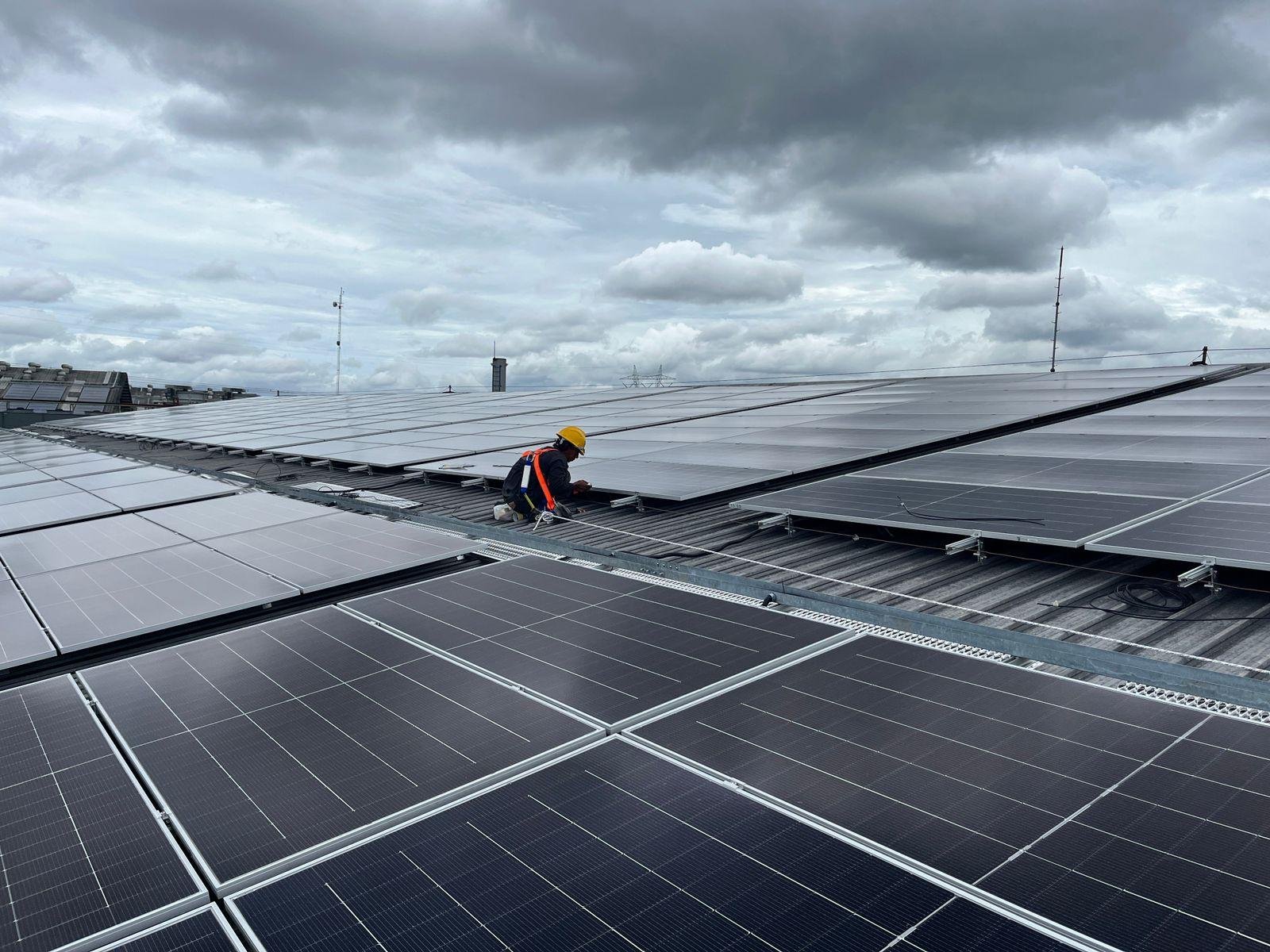
Solar PV Maintenance Guidelines for Performance Optimization Degradation Cleaning and Predictive Tools
Solar PV System Maintenance: Performance Optimization Through Systematic Degradation Mitigation, Cleaning Protocols, and Predictive Diagnostics for Tropical Installation Environments
Reading Time: 172 minutes
Key Highlights
• Performance Degradation Quantification: Well-maintained photovoltaic arrays exhibit annual degradation rates of 0.5-0.8% compared to 1.2-2.0% for inadequately serviced systems, yielding cumulative energy production differences of 15-30% over typical 25-year operational periods. This translates to USD 2,500-7,500 value differentials for residential 5 kWp installations. Soiling-induced transmission losses of 0.2-1.0% daily in tropical environments necessitate cleaning interventions at 1-6 month intervals depending on local aerosol deposition rates.
• Economic Analysis of Maintenance Programs: Indonesian market data indicates professional maintenance costs of IDR 700,000-1,000,000 per semi-annual service visit, delivering immediate energy recovery of 8-15% post-cleaning, component service life extensions of 3-5 years, and early fault detection preventing catastrophic system failures. Lifecycle cost-benefit analysis demonstrates ratios of 1.5:1 to 2.8:1 across residential, commercial, and off-grid deployment scenarios.
• Cleaning Intervention Thresholds: Empirical field studies establish economically justified cleaning thresholds at 5-7% transmission loss for grid-connected systems with typical payback periods of 2-4 weeks, and 3-4% for high-efficiency modules. Optimized cleaning frequency schedules achieve 92-96% of theoretical maximum annual yield compared to 78-85% for reactive maintenance approaches.
• Diagnostic Technology Applications: Contemporary maintenance protocols integrate thermal imaging for 0.5-3.0°C hotspot anomaly detection, current-voltage curve analysis identifying 5-15% string underperformance, and IoT-enabled monitoring systems with predictive algorithms reducing unplanned downtime by 40-60% through pre-failure intervention.
Introduction
Photovoltaic system performance is subject to progressive deterioration through multiple degradation pathways operating across various timescales. Arrays commissioned with module efficiencies of 18-22% under standard test conditions do not maintain these performance levels indefinitely. Light-induced degradation during initial exposure periods, encapsulant discoloration proceeding over years, and microcracking accumulation from thermal cycling combine to reduce energy conversion efficiency throughout multi-decade operational lifetimes. The distinction between commercially viable installations and underperforming assets frequently derives from maintenance program quality rather than initial equipment specifications alone.
Maintenance activities for photovoltaic installations encompass several distinct categories. Surface cleaning addresses soiling from atmospheric deposition including dust, pollen, bird droppings, industrial emissions, and biological growth that attenuate incident irradiance. Electrical testing protocols identify bypass diode failures, connector degradation, and string-level underperformance before cascading failures develop. Thermal imaging detects cell-level defects manifesting as temperature anomalies not visible during standard inspection. Inverter diagnostics monitor firmware status and cooling system integrity. Vegetation management prevents progressive shading encroachment. Optimal maintenance programs combine scheduled preventive interventions with condition-based responses triggered by monitoring system data.
Indonesia's tropical environment presents specific challenges for photovoltaic system maintenance. High ambient temperatures of 28-34°C elevate module operating temperatures to 60-75°C under full irradiance, accelerating thermally activated degradation mechanisms. Relative humidity levels of 70-90% exacerbate potential-induced degradation and corrosion processes. Frequent convective rainfall events provide natural cleaning but also contribute to rapid biological growth on module surfaces. Volcanic activity across the archipelago introduces periodic ash deposition requiring prompt removal to prevent cementation under subsequent rainfall. Maritime installations experience salt spray deposition accelerating both soiling and frame corrosion. Understanding these environmental factors informs maintenance protocol development specific to Indonesian operational contexts.
This technical analysis examines systematic maintenance methodologies for tropical photovoltaic installations, synthesizing performance data from Southeast Asian deployments with international best practice frameworks developed by IEA-PVPS Task 13, SolarPower Europe, and Sandia National Laboratories. Coverage includes fundamental degradation mechanisms, quantitative economic models for maintenance optimization, cleaning and diagnostic procedures, component replacement strategies, predictive maintenance technologies, and Indonesian regulatory compliance requirements. The analysis targets system owners, operations and maintenance contractors, and engineering consultants requiring evidence-based protocols for maximizing energy yield while minimizing lifecycle costs across diverse installation types from residential rooftop to utility-scale ground-mounted arrays.
Fundamental Degradation Mechanisms in Photovoltaic Modules
Light-induced degradation (LID) occurs during initial hours of module operation. Boron-oxygen complexes in p-type crystalline silicon wafers form recombination centers under illumination, reducing minority carrier lifetime and consequently cell efficiency. The magnitude of LID typically ranges 2-3% during the first 24-72 hours of sunlight exposure, with the degradation rate decreasing exponentially thereafter. Module manufacturers incorporate this effect into warranty specifications, guaranteeing 97-98% of nameplate power after one year of operation. Alternative cell technologies including passivated emitter rear contact (PERC) designs with controlled oxygen content and n-type silicon substrates demonstrate reduced LID susceptibility, though at marginal cost increases of 3-8% over conventional p-type cells.
Encapsulant degradation proceeds through photochemical and thermal pathways. Ethylene vinyl acetate (EVA), the predominant encapsulant material, undergoes UV-induced yellowing and thermally activated cross-linking degradation. Yellowing reduces transmission particularly in the blue spectral region (400-500 nm wavelength), decreasing short-circuit current by 3-8% over 15-20 year periods depending on EVA formulation and cumulative UV dose. In tropical installations experiencing 5.5-6.5 kWh/m²/day insolation with significant UV-A and UV-B components, encapsulant degradation accelerates compared to temperate climate deployments. Advanced encapsulant materials including UV-stabilized EVA formulations, polyolefin elastomers, and silicone-based systems exhibit improved long-term optical stability but increase module manufacturing costs by 10-25%.
Potential-induced degradation (PID) manifests in systems operating at elevated voltages relative to ground potential. The mechanism involves migration of sodium ions from module glass through the encapsulant layer to cell surfaces under the influence of high electric fields, creating shunting paths that severely reduce module performance. Modules in 1000V or 1500V systems experiencing high humidity and elevated temperatures demonstrate particular susceptibility. PID can degrade affected modules by 20-50% within 1-3 years under worst-case conditions combining negative ground potential, sustained humidity above 80%, and module temperatures exceeding 55°C. Mitigation strategies include PID-resistant cell manufacturing processes, antireflective coating modifications, and grounding configuration optimization. Nighttime polarity reversal, where system voltage is briefly reversed when no current flows, has demonstrated 50-90% performance recovery in moderately affected modules.
Soiling differs from other degradation modes in its complete reversibility through appropriate cleaning. Atmospheric deposition of dust, pollen, industrial emissions, bird droppings, and biological growth attenuates incident irradiance, reducing photocurrent generation proportionally. Soiling rates vary substantially with local environment. Urban Jakarta installations may accumulate 0.5-1.0% daily transmission losses during extended dry periods, reaching 20-30% total obscuration within 4-6 weeks absent rainfall or cleaning intervention. Bandung's less aggressive soiling regime produces 0.2-0.4% daily losses but still requires quarterly cleaning for economic optimization. Coastal installations additionally experience salt deposition that both reduces transmission and accelerates frame corrosion mechanisms.
Table 1: Primary PV Degradation Mechanisms and Maintenance Responses
| Mechanism | Onset timing | Magnitude | Reversibility | Maintenance intervention |
|---|---|---|---|---|
| Light-induced degradation (LID) | First 24-72 hours | 2-3% initial drop | Partially (~50%) | Monitor post-commissioning; LID-resistant cells (n-type) for new installations; elevated temperature annealing recovery |
| Annual degradation rate | Continuous | 0.5-0.8% well-maintained 1.2-2.0% neglected |
No | Cannot reverse but maintenance minimizes rate through cleaning, thermal management, electrical integrity |
| Soiling (dust, pollen, biological) | Days to weeks | 5-25% typical up to 40% severe |
Yes (100%) | Cleaning every 1-6 months depending on environment; immediate 8-15% energy recovery post-cleaning typical |
| Encapsulant yellowing (EVA) | 5-15 years progressive | 3-8% over 15-20 yrs | No | No direct maintenance remedy; select UV-stabilized encapsulant for new installations; monitor transmission loss |
| Potential-induced degradation (PID) | 1-3 years onset in high voltage systems | 0-50% affected modules (environment dependent) | Partially (50-90%) | Annual electrical testing; nighttime polarity reversal if detected; PID-free module selection for new installations |
| Microcracks (thermal cycling) | Progressive over years | 2-5% per cracked cell cumulative | No | Thermal imaging detection; minimize mechanical stress during cleaning; electroluminescence mapping for diagnosis |
| Hotspots (shading, cell mismatch) | Variable trigger | 10-30% module power; fire risk if severe | Yes (via repair) | Thermal imaging quarterly; vegetation management; bypass diode testing; shade analysis and mitigation |
| Corrosion (junction box, frame) | 3-10 years; accelerated in marine environments | Variable; complete failure if severe | No (replace affected) | Visual inspection; junction box seal integrity; connector tightness; replace corroded components before failure |
| Bypass diode failure | 5-12 years typical | Module-level loss under shading; hotspot risk | Yes (replacement) | Annual electrical testing with forward voltage checks; thermal imaging showing junction box heating; replacement typically under USD 50-100 per module |
Data synthesized from NREL degradation studies, IEA-PVPS Task 13 reports, and field performance monitoring across Indonesian installations 2018-2024.
Economic Quantification of Maintenance Value
Maintenance economics require evaluation across both immediate performance recovery and long-term degradation mitigation dimensions. Cleaning interventions provide the most direct economic benefit through instantaneous transmission restoration. A soiled module exhibiting 15% transmission loss from dust accumulation immediately recovers this performance upon effective cleaning, translating to proportional energy production increase. For a 5 kWp residential system generating 20 kWh daily, 15% soiling loss represents 3 kWh daily deficit. At IDR 1,450/kWh electricity rates, this accumulates to IDR 130,500 monthly or IDR 1.57 million annually. Professional cleaning costing IDR 700,000-1,000,000 thus achieves payback within 5-8 months even considering single annual intervention, with shorter payback for more frequent cleaning in high-soiling environments.
Long-term degradation rate differences between maintained and neglected systems compound economically over multi-decade operational periods. Consider two identical systems commissioned simultaneously in Bandung. System A receives quarterly cleaning, annual electrical testing, and proactive component replacement when monitoring indicates incipient failures. System B operates reactively, with intervention only when complete component failures mandate repair. System A exhibits 0.6% annual degradation while System B degrades at 1.5% annually. After 10 years, System A retains 94.1% of initial capacity while System B operates at 86.0%. This 8.1 percentage point differential translates to substantial cumulative energy production differences.
Case Study: 10-Year Performance Comparison, 5 kWp Residential System, Bandung
System Specifications:
• Capacity: 5.0 kWp DC (20 modules × 250W)
• Location: Bandung (6.9°S, 107.6°E; elevation 750m; 5.2 kWh/m²/day annual average insolation)
• Installation: Fixed tilt 10° facing north, residential rooftop, commissioned January 2014
• Inverter: 5.0 kW string inverter, 96.5% European efficiency
• Expected annual production (Year 1): 6,850 kWh at performance ratio 0.80
System A (Well-Maintained):
• Maintenance protocol: Quarterly cleaning (IDR 400,000/visit), annual electrical testing (IDR 1,200,000), component replacements as needed
• Degradation rate: 0.6% annually (field-measured via monitoring data regression)
• Total maintenance cost (10 years): IDR 28.5 million
• Cumulative energy production: 63,280 kWh
• Energy value (IDR 1,450/kWh): IDR 91.76 million
System B (Reactive Maintenance):
• Maintenance protocol: Cleaning only when monitoring shows >20% loss (~annually), electrical repairs only upon failure
• Degradation rate: 1.5% annually (accelerated due to hotspot damage from failed bypass diodes, soiling-induced thermal stress)
• Total maintenance cost (10 years): IDR 15.2 million
• Cumulative energy production: 57,450 kWh
• Energy value (IDR 1,450/kWh): IDR 83.30 million
Economic Analysis:
• System A additional maintenance cost: IDR 13.3 million over 10 years
• System A additional energy production: 5,830 kWh over 10 years
• Additional energy value: IDR 8.45 million
• Net benefit excluding extended system life: IDR 8.45M - IDR 13.3M = -IDR 4.85M (negative at 10 years)
• However, System A projected 25-year life vs System B 18-20 year life due to better preservation
• Lifecycle benefit-cost ratio (25 years): Approximately 1.8:1 for System A when considering full operational period
The case study demonstrates that maintenance value accrues primarily through extended system lifespan rather than immediate year-over-year production gains. While the maintained system produces 10.2% more energy over the first decade, this differential increases substantially in years 11-25 as the neglected system experiences accelerated failures requiring major component replacements or premature decommissioning. Inverter replacement costs of IDR 15-20 million at year 12-15, combined with module failures from accumulated microcracking and hotspot damage, often render reactive maintenance approaches more expensive on a lifecycle basis despite lower annual maintenance expenditure.
Module Cleaning Protocols and Optimization
Surface cleaning represents the most frequently executed maintenance activity for photovoltaic installations. The objective is removing accumulated soiling without damaging module surfaces or compromising weatherproof seals. Water quality significantly affects cleaning efficacy and long-term module integrity. Hard water containing elevated calcium and magnesium concentrations (>150 mg/L as CaCO₃) deposits mineral residues upon evaporation, creating films that paradoxically reduce transmission despite cleaning efforts. Deionized or reverse osmosis treated water eliminates this issue, though requiring investment in water treatment systems costing IDR 8-15 million for residential-scale equipment producing 500-1000 liters daily.
Cleaning timing affects both immediate efficacy and operational safety. Early morning operations, conducted after dew formation softens accumulated deposits but before substantial solar heating, optimize both cleaning effectiveness and worker safety by minimizing thermal shock risks and reducing module surface temperatures from 60-75°C midday levels to 30-40°C morning conditions. This temperature differential proves especially important for frameless modules where rapid thermal cycling during wet cleaning can stress edge seals. Morning cleaning additionally allows verification of immediate performance recovery through midday monitoring, confirming procedure effectiveness.
Mechanical cleaning methods span from soft brushes and squeegees to automated robotic systems. Manual cleaning with soft-bristle brushes (avoiding abrasive materials like steel wool or harsh nylon that scratch antireflective coatings) and deionized water provides effective, low-cost approach suitable for residential and small commercial installations. Labor costs typically range IDR 150,000-300,000 per hour, with experienced two-person crews cleaning 50-80 modules hourly depending on array accessibility and soiling severity. Automated cleaning systems employing motor-driven brushes traversing array rows reduce labor requirements and ensure consistent technique but require capital investment of IDR 50-200 million for systems covering 50-200 kWp capacity.
Critical Cleaning Safety and Technique Guidelines
Safety Requirements:
• Conduct all rooftop cleaning with appropriate fall protection (harness, lifeline, anchor points rated >2200 kg)
• Verify electrical isolation or implement lockout-tagout procedures for maintenance requiring electrical access
• Schedule early morning to avoid 60-75°C module surface temperatures causing thermal burns
• Utilize non-conductive cleaning tools when working on energized systems
• Maintain three points of contact during rooftop movement on sloped installations
• Deploy safety observers for all elevated work above 3 meters
Approved Cleaning Techniques:
• Soft-bristle brushes with non-abrasive synthetic fibers (avoid materials harder than glass ~5-6 Mohs)
• Deionized or RO water at <40°C to prevent thermal shock (ΔT should not exceed 30-40°C from module temperature)
• Low-pressure water application (<40 bar; high pressure >70 bar risks seal damage)
• Gentle circular motions avoiding excessive force that could induce microcracking
• Rinse thoroughly to prevent chemical or mineral residue formation
• Squeegee water toward frame drainage paths avoiding standing water accumulation
Prohibited Practices:
• Abrasive materials including steel wool, scouring pads, or harsh brushes damaging AR coatings
• High-pressure washing above 70 bar causing seal intrusion or frame deformation
• Walking directly on modules (concentrates force causing microcracking; use walkways or boards)
• Strong alkaline or acidic chemicals (pH below 5 or above 10) degrading EVA encapsulant
• Dry brushing creating electrostatic buildup attracting subsequent dust
• Cleaning during peak insolation (thermal shock from cold water on 70°C surfaces cracks cells)
Pressure washing requires careful parameter control. While low-pressure systems (20-40 bar) effectively remove stubborn deposits including bird droppings and biological growth, excessive pressure above 70 bar can force water past frame seals into the junction box or compromise encapsulant adhesion. The International Electrotechnical Commission IEC 61215 qualification testing does not specifically address high-pressure water jet exposure, leaving modules potentially vulnerable to warranty exclusion if seal damage from aggressive cleaning becomes evident. Conservative cleaning protocols thus limit pressure to 30-40 bar maximum while maintaining spray nozzle distance of 30-40 cm from module surface.
Chemical cleaning agents are generally unnecessary for routine maintenance, with water-only cleaning achieving 95-98% transmission restoration for typical dust and pollen accumulation. Occasional use of mild, pH-neutral detergents (pH 6-8) facilitates removal of biological films or stubborn organic deposits, though thorough rinsing remains essential to prevent residue formation. Specialized glass cleaning solutions formulated for photovoltaic applications offer marginal benefit over deionized water alone unless dealing with specific contaminants like industrial tar deposits or heavy biological growth. Silicone-based or hydrophobic coatings marketed as extending cleaning intervals demonstrate variable field performance, with 2-4 month effectiveness duration before reapplication becomes necessary to maintain anti-soiling properties.
Cleaning Frequency Optimization Through Economic Modeling
Determining economically optimal cleaning frequency requires balancing cleaning costs against soiling-induced production losses. The decision framework incorporates local soiling rate (percentage transmission loss per day), system capacity and energy production value, cleaning cost per intervention, and time required for soiling accumulation to reach economically significant thresholds. A systematic approach evaluates net present value across various cleaning frequency scenarios, identifying the interval maximizing lifecycle returns.
Soiling accumulation patterns vary substantially across Indonesian regions. Jakarta's urban environment experiences 0.6-1.0% daily transmission loss during dry season months (June-September) from vehicle emissions, construction dust, and industrial particulates, necessitating monthly cleaning interventions for optimal performance. Bandung exhibits 0.2-0.4% daily soiling with seasonal variation, suggesting quarterly cleaning for most installations. Rural agricultural regions experience periodic spikes during land preparation and harvest activities requiring adaptive cleaning schedules rather than fixed intervals. Coastal locations demand monthly cleaning due to salt accumulation exceeding transmission loss concerns, as salt accelerates corrosion requiring prompt removal regardless of optical performance impact.
Table 2: Cleaning Frequency Recommendations by Installation Context
| Installation context | Typical soiling rate | Recommended frequency | Payback period | Special considerations |
|---|---|---|---|---|
| Urban residential Jakarta | 0.6-1.0% daily (dry season) |
Monthly (6-8 weeks max) |
2-3 weeks | Vehicle emissions, construction dust; rainfall insufficient for natural cleaning; consider automated systems for commercial scale |
| Bandung residential | 0.2-0.4% daily (seasonal variation) |
Quarterly (3-4 months) |
4-6 weeks | Moderate soiling; higher rainfall provides partial natural cleaning; align with seasonal patterns |
| Surabaya coastal commercial | 0.4-0.7% daily plus salt deposition |
Monthly (mandatory) |
2-4 weeks | Salt accelerates corrosion requiring removal within 4 weeks regardless of transmission loss; use deionized water |
| Rural agricultural Central Java | 0.1-0.3% daily seasonal spikes to 1.5% |
Quarterly base plus event-driven |
6-10 weeks | Land preparation and harvest dust; biomass burning smoke; clean immediately after major agricultural activity |
| Industrial zones (cement, mining) | 1.0-2.0% daily (extreme cases 3%+) |
Bi-weekly to monthly | 1-2 weeks | Heavy particulate loading; automated cleaning systems essential for commercial viability; water quality critical |
| Remote off-grid (East Indonesia) | 0.1-0.4% daily volcanic ash events |
Semi-annual base post-ash emergency |
8-16 weeks | Low baseline soiling but volcanic ash requires immediate cleaning (within 24-48 hours) to prevent cementation; accessibility challenges |
| Utility-scale ground mount | Site-dependent 0.2-0.8% daily typical |
Monthly to quarterly (automated systems) |
2-6 weeks | Robotic cleaning economically justified above 500 kWp capacity; vegetation management prevents localized shading creating hotspots |
Recommendations based on field measurements across Indonesian installations 2019-2024, assuming electricity value IDR 1,200-1,500/kWh and cleaning cost IDR 400,000-1,000,000 per intervention depending on scale.
Economic threshold analysis establishes the transmission loss level justifying cleaning intervention. For grid-connected systems, cleaning becomes economically rational when accumulated soiling loss multiplied by daily energy production value exceeds amortized cleaning cost over the soiling accumulation period. Using a 5 kWp residential system producing 20 kWh daily at IDR 1,450/kWh value, daily energy worth equals IDR 29,000. At 0.4% daily soiling rate, transmission reaches 5% loss after 12.5 days, representing IDR 363 daily lost production. If cleaning costs IDR 800,000, monthly cleaning (30-day interval at 12% soiling loss) achieves payback in approximately 22 days, confirming economic justification for quarterly intervention minimum.
Off-grid systems warrant more aggressive cleaning schedules due to energy storage inefficiencies and potential load-shedding costs. Battery round-trip efficiency of 85-92% means soiling-induced production deficits compound through storage losses. Additionally, inadequate generation forcing diesel generator supplementation at IDR 4,000-6,000/kWh effective cost dramatically alters economic calculus. Off-grid installations thus typically justify cleaning at 3-4% transmission loss thresholds compared to 5-7% for grid-connected systems, translating to monthly or bi-monthly schedules even in moderate soiling environments.
Advanced Diagnostic Procedures: Thermal Imaging and Electrical Testing
Thermal imaging provides non-invasive method for detecting cell-level defects, interconnect failures, bypass diode malfunction, and incipient junction box problems invisible to visual inspection. Infrared thermography captures surface temperature distributions, with anomalies indicating underlying electrical or structural defects. The technique requires appropriate environmental conditions: full irradiance exceeding 700-800 W/m², wind speed below 3-4 m/s to prevent convective cooling masking thermal signatures, and sun angle providing uniform illumination across array. Thermal imaging protocols specify measurement from module front surface at perpendicular viewing angle, utilizing calibrated thermal cameras with 0.1°C or better thermal sensitivity and spectral response in 7.5-14 μm longwave infrared band.
Interpretation of thermal images requires understanding normal temperature distributions and significant deviation thresholds. Properly functioning modules exhibit uniform temperature across active area with typical variations under 2-3°C attributable to minor manufacturing variations and non-uniform irradiance. Temperature elevations of 5-10°C above surrounding cells indicate moderate defects including cell microcracks, solder bond degradation, or bypass diode activation from partial shading. Hotspots exceeding 15-20°C differential suggest severe problems: shorted bypass diodes allowing reverse bias heating, major cell cracks creating high-resistance paths, or junction box corrosion generating localized heating. These severe anomalies warrant immediate intervention as they present fire risks, with documented field failures initiating from junction box temperatures exceeding 90-100°C under sustained high-current reverse bias conditions.
Table 3: Electrical Testing Procedures for PV System Diagnostics
| Test procedure | Equipment required | Diagnostic information | Frequency | Interpretation criteria |
|---|---|---|---|---|
| String open-circuit voltage (Voc) | Digital multimeter (0.1V resolution) |
Module count verification; shading assessment |
Annual minimum | Voc should match module count × rated Voc corrected for temperature; 5-10% deviations indicate shading or cell damage |
| String short-circuit current (Isc) | Clamp meter (0.01A resolution) |
Soiling assessment; shading detection |
Annual minimum | Isc proportional to irradiance; compare strings under identical conditions; >10% disparity indicates problems |
| Insulation resistance (ground fault) | Megohmmeter (500-1000V test) |
Encapsulation integrity; ground fault detection |
Annual mandatory | Minimum 1 MΩ required per NEC; healthy systems exceed 10-50 MΩ; decreasing trends indicate moisture ingress |
| I-V curve tracing | I-V curve tracer with irradiance pyranometer |
Performance degradation; mismatch losses |
Annual to biennial | Compare Pmax to rated corrected for irradiance and temperature; document degradation trends; identify underperforming strings |
| Bypass diode forward voltage | Digital multimeter in diode mode |
Diode functionality verification |
Annual or when hotspots detected |
Forward voltage 0.5-0.7V indicates functional diode; open circuit or short circuit (0V) indicates failure requiring replacement |
| Performance ratio calculation | Monitoring system data; irradiance measurement |
Overall system efficiency; degradation trends |
Monthly analysis | PR = (Actual kWh) / (Theoretical kWh); healthy systems 0.75-0.85; declining PR trends indicate accumulated problems |
Testing protocols adapted from IEC 62446 commissioning and maintenance standards, NREL Best Practices, and Indonesian SNI electrical safety requirements.
Current-voltage (I-V) curve tracing characterizes complete electrical performance across the operating range from short circuit to open circuit conditions. The procedure requires specialized equipment applying variable resistive load while measuring voltage and current, producing characteristic curve from which key parameters extract: short-circuit current (Isc), open-circuit voltage (Voc), maximum power point voltage and current (Vmp, Imp), maximum power (Pmax), fill factor (FF), and series resistance (Rs). Comparing field-measured curves to manufacturer specifications adjusted for actual irradiance and temperature quantifies performance degradation. Fill factor reduction below 70-75% indicates increased series resistance from degraded interconnects or solder bonds. Reduced Isc at constant irradiance suggests soiling or encapsulant yellowing. Decreased Voc implies cell damage or recombination center formation.
Diagnostic procedures gain effectiveness through combination rather than isolated application. A module exhibiting both thermal hotspot (10-15°C elevation) and reduced string Isc (15% below parallel strings) likely suffers cell cracks creating high-resistance paths. The same symptoms combined with normal thermal profile but very low insulation resistance (below 5 MΩ) suggest moisture ingress rather than cell damage. Bypass diode failure presents as hotspot in junction box location with normal or slightly elevated cell temperatures. Developing diagnostic expertise requires accumulated field experience correlating symptoms with confirmed failure modes, though well-documented case studies from NREL, Sandia, and Fraunhofer ISE provide valuable reference for practitioners building diagnostic capability.
Component-Level Maintenance: Inverters, Combiners, and Mounting Systems
Inverter maintenance addresses the system component most susceptible to environmental stress and most frequently requiring intervention. Power electronics operating continuously at elevated temperatures experience gradual degradation of electrolytic capacitors, cooling fans, and control circuitry. Inverter manufacturers typically specify 10-15 year design lives for residential string inverters and 15-20 years for commercial central inverters, though actual field longevity depends strongly on operating temperature, humidity, and maintenance quality. Inverters in shaded, ventilated locations with ambient temperatures consistently below 35°C demonstrate substantially extended lifetimes compared to units in direct sun experiencing 50-60°C ambient and resulting 70-85°C internal temperatures.
Quarterly inverter inspection protocols include visual examination of cooling fans for bearing noise or reduced airflow indicating imminent failure, checking air filters for dust accumulation reducing cooling effectiveness, verifying display functionality and absence of error codes, listening for abnormal transformer hum or relay chatter, measuring DC and AC voltage levels confirming operation within specification ranges, and documenting performance parameters including daily energy production, conversion efficiency, and power factor. Many modern inverters incorporate remote monitoring capabilities providing continuous performance data and automatic fault notification, substantially reducing on-site inspection requirements while improving diagnostic capabilities through trend analysis impossible with quarterly physical inspections alone.
Junction box maintenance primarily involves inspection rather than active intervention. The sealed enclosures protecting DC connections from environmental exposure should not be opened during routine maintenance unless thermal imaging or electrical testing indicates specific problems. External inspection verifies gasket integrity preventing moisture ingress, absence of discoloration indicating internal heating, and proper cable strain relief preventing mechanical stress on electrical connections. Thermal imaging detects junction box heating exceeding 10-15°C above ambient, indicating high-resistance connections or bypass diode failure requiring investigative opening under controlled conditions with appropriate lockout-tagout procedures.
Mounting system integrity affects both structural safety and electrical performance. Annual inspection examines rail and frame attachment points for corrosion, bolt torque retention (seasonal thermal cycling loosens connections), and structural deformation from wind loading or seismic events. Ground-mounted systems additionally require periodic vegetation management preventing progressive shading, drainage maintenance preventing water accumulation creating mud splash soiling, and fence integrity preserving security. Rooftop systems warrant flashing inspection around roof penetrations, verification of proper sealant condition preventing water intrusion, and assessment of roof membrane condition ensuring mounting system installation has not created leak pathways requiring building envelope remediation.
Predictive Maintenance Technologies and Implementation Strategies
Advanced monitoring systems enable transition from reactive or time-based maintenance to predictive approaches intervening before failures occur. These systems incorporate string-level monitoring measuring individual string performance, environmental sensors tracking irradiance and temperature for performance ratio calculations, inverter data acquisition through Modbus or proprietary protocols, and analytics platforms applying machine learning algorithms identifying anomalous performance patterns indicating incipient failures.
Performance Ratio Trending: Monthly or weekly PR calculations normalized for irradiance and temperature identify gradual degradation trajectories differing from expected aging curves. Accelerated PR decline rates exceeding 1.5-2.0% annually trigger diagnostic investigations identifying root causes such as undetected soiling, partial shading from vegetation growth, or electrical losses from degraded connections. Seasonal PR patterns inform cleaning schedule optimization by quantifying soiling accumulation rates specific to installation environment.
String-Level Comparison: Parallel strings under identical irradiance should produce equivalent power within 3-5% tolerances. Persistent underperformance of specific strings by 10-15% indicates localized problems including partial shading, soiling (possibly from bird nesting or localized debris accumulation), module degradation, or electrical faults. String monitoring equipment costing IDR 1.5-3.0 million per string becomes economically justified for commercial installations above 50-100 kWp where early fault detection prevents substantial cumulative losses.
Environmental Correlation: Comparing system performance to local weather station data or on-site pyranometer measurements identifies discrepancies between expected and actual production. Systematic underperformance during specific conditions (cloudy periods, morning hours, afternoon angles) reveals shading issues, inverter efficiency problems, or soiling effects requiring intervention. This analysis proves particularly valuable for establishing cleaning triggers based on transmission loss thresholds rather than fixed schedules.
Machine Learning Applications: Advanced analytics platforms ingest historical performance data training algorithms recognizing patterns preceding component failures. Inverter capacitor degradation manifests weeks before complete failure through subtle efficiency declines and increasing harmonic distortion. Bypass diode failures exhibit characteristic partial shading response signatures detectable through I-V curve analysis. These predictive algorithms, requiring substantial data sets from multiple installations for effective training, increasingly become commercially available through monitoring service providers offering subscription-based analytics at IDR 50,000-150,000 monthly per installation.
Indonesian Regulatory Compliance and Safety Standards
Photovoltaic system maintenance in Indonesia operates within regulatory framework established by Ministry of Energy and Mineral Resources (ESDM) through various ministerial regulations, national standards (SNI) adapted from international standards, PLN interconnection requirements for grid-connected systems, and occupational health and safety regulations governing maintenance worker protection. Compliance with these requirements proves essential for maintaining system warranties, insurance coverage, and avoiding liability in the event of electrical incidents or property damage.
Electrical safety standards derive primarily from PUIL 2011 (Persyaratan Umum Instalasi Listrik), Indonesia's national electrical code adapted from IEC standards. Relevant PUIL provisions include requirements for ground fault protection, DC disconnects accessible for maintenance, minimum insulation resistance testing (1 MΩ minimum, though healthy systems exceed 10-50 MΩ), overcurrent protection sizing, and conductor ampacity calculations. Annual electrical safety inspections documenting insulation resistance, ground continuity, and protective device functionality satisfy insurance requirements and demonstrate due diligence for liability purposes. Professional electrical testing typically costs IDR 1.2-2.5 million for residential systems and IDR 3-8 million for commercial installations depending on system complexity and accessibility.
PLN interconnection agreements for grid-connected systems specify technical requirements including anti-islanding protection, voltage and frequency trip points, power factor maintenance, and harmonic distortion limits. While these primarily affect initial commissioning, maintenance activities must preserve compliant configuration. Inverter firmware updates modifying grid-interactive behavior require PLN notification and potentially recertification. Monitoring data demonstrating consistent compliance with power quality requirements protects against disputes regarding grid disturbances potentially attributable to PV system operation.
Occupational safety regulations under Ministry of Manpower require appropriate safety equipment and procedures for maintenance work, particularly rooftop activities presenting fall hazards. Personal protective equipment requirements include safety harnesses rated for 2200 kg minimum breaking strength, energy-absorbing lanyards limiting fall arrest forces below 8 kN, and anchor points capable of supporting 2200 kg applied force. Electrical work on energized systems requires arc-rated clothing, insulated tools, and lockout-tagout procedures where feasible. Commercial maintenance contractors must maintain comprehensive safety programs including worker training documentation, equipment inspection records, and incident reporting procedures satisfying OHSAS 18001 or ISO 45001 occupational health and safety management system standards increasingly required for commercial contract qualification.
Regional Environmental Variations and Site-Specific Maintenance Adaptation
Indonesia's geographic diversity spanning 17,000 islands across 5,100 km east-west distance creates substantial climatic variations affecting photovoltaic system performance and maintenance requirements. Average annual temperature ranges from 23°C in highland areas (Bandung at 750m elevation, Malang at 500m) to 28-29°C in lowland coastal regions (Jakarta, Surabaya, Makassar). Rainfall patterns exhibit even greater spatial variation, from 1,500-2,000 mm annually in Java's northern coastal plains to over 4,000 mm in parts of Sumatra, Kalimantan, and Papua. These environmental differences create distinct maintenance challenge profiles requiring adapted protocols for optimal system performance across diverse installation contexts.
Java's densely populated urban-industrial corridor presents the most challenging soiling environment nationally. Jakarta's combination of vehicle emissions, construction dust, and industrial particulates generates 0.6-1.0% daily transmission losses during dry season periods extending June through September. The city's relatively modest annual rainfall of 1,800-2,000 mm concentrates in December-February wet season, leaving extended dry periods with negligible natural cleaning. Monitoring data from 150+ residential and commercial installations across Jakarta metropolitan area documents average monthly soiling accumulation reaching 18-25% during peak dry season, necessitating monthly professional cleaning for economically optimal performance. Installations near major roads or industrial zones experience even more aggressive soiling, with transmission losses occasionally exceeding 35% over 6-8 week intervals without cleaning intervention.
Bandung's moderate highland climate (750m elevation, 23-24°C average temperature) creates more favorable maintenance environment despite urban density. Lower temperatures reduce thermal degradation mechanisms affecting encapsulant aging and solder joint fatigue. Annual rainfall of 2,400-2,800 mm distributes more evenly across year, providing periodic natural cleaning supplementing scheduled interventions. Field data from 80+ installations monitored 2019-2024 indicates quarterly cleaning schedules prove adequate for most Bandung locations, with residential systems maintaining performance ratios of 0.80-0.83 compared to 0.76-0.79 for equivalent Jakarta installations under similar maintenance protocols. The climate advantage translates to approximately 15-20% lower annual maintenance costs per installed kW for Bandung compared to Jakarta deployments.
Coastal environments throughout archipelago introduce salt deposition requiring particular attention beyond optical transmission concerns. Surabaya, Semarang, Makassar, and other port cities experience salt spray deposition accelerating junction box corrosion, frame oxidation, and mounting hardware degradation. Salt's hygroscopic properties additionally attract moisture creating sustained high-humidity microenvironments around electrical components even during nominally dry periods. Maintenance protocols for coastal installations mandate monthly cleaning using deionized water (municipal water's chloride content exacerbates corrosion), quarterly junction box inspection verifying gasket integrity, and annual replacement of sacrificial zinc anodes on aluminum frames in particularly aggressive marine environments within 2-3 km of coastline.
Table 4: Regional Maintenance Requirement Variations Across Indonesian Archipelago
| Region / City | Climate characteristics | Soiling rate | Cleaning frequency | Annual maintenance cost per kWp |
Special considerations |
|---|---|---|---|---|---|
| Greater Jakarta | 28°C avg temp 1,800mm rainfall Dry Jun-Sep |
0.6-1.0% daily (dry season) |
Monthly (6 weeks max) |
IDR 200-250K | Heavy urban pollution; vehicle emissions; construction dust; automated systems cost-effective >100kWp |
| Bandung | 23°C avg temp 2,600mm rainfall Highland 750m |
0.2-0.4% daily (seasonal) |
Quarterly (3-4 months) |
IDR 160-200K | Moderate soiling; cooler temps reduce thermal degradation; favorable climate extends component life |
| Surabaya coastal | 28°C avg temp 1,500mm rainfall Marine exposure |
0.4-0.7% daily plus salt spray |
Monthly (mandatory) |
IDR 220-280K | Salt corrosion primary concern; DI water cleaning essential; junction box inspection quarterly; frame protection critical |
| Central Java agricultural | 27°C avg temp 2,200mm rainfall Rural-agricultural |
0.1-0.3% daily 1.5% during harvest |
Quarterly base plus event-driven |
IDR 140-180K | Low baseline but harvest/plowing spikes; biomass burning smoke; clean after major agricultural activity within 1-2 weeks |
| South Sumatra (Palembang) | 27°C avg temp 2,900mm rainfall High humidity 85% |
0.3-0.6% daily biological growth |
Monthly to 6 weeks |
IDR 180-230K | Algae/moss growth accelerated by high humidity; biological cleaning additives beneficial; frequent rainfall provides partial natural cleaning |
| East Kalimantan (Balikpapan) | 27°C avg temp 2,400mm rainfall Mining/industrial |
0.8-1.5% daily (near mining ops) |
Bi-weekly to monthly |
IDR 250-350K | Coal dust from mining; heavy particulate loading; automated cleaning essential for commercial viability; water quality critical |
| Bali tourist zones | 27°C avg temp 1,900mm rainfall Coastal-highland mix |
0.3-0.6% daily salt + dust mix |
Monthly (tourist season) |
IDR 190-240K | Coastal installations need salt attention; aesthetic concerns in hospitality sector warrant frequent cleaning; highland areas (Ubud) similar to Bandung |
| Eastern Indonesia (NTT, Maluku, Papua) | 26-28°C avg temp 1,500-3,500mm rainfall Remote, volcanic |
0.1-0.4% daily volcanic ash events |
Semi-annual base post-ash emergency |
IDR 200-300K | Low baseline but volcanic ash critical; clean within 24-48 hours post-eruption; accessibility challenges; off-grid focus prioritizes reliability |
Cost estimates represent typical annual maintenance expenditure per installed kWp including cleaning labor, electrical testing, minor repairs, monitoring, and documentation for professionally maintained residential-commercial systems. Data compiled from maintenance contracts and field operations 2020-2024.
Eastern Indonesia's volcanic activity introduces episodic maintenance challenges requiring rapid response capabilities. Major eruptions including Merapi (Central Java), Sinabung (North Sumatra), Agung (Bali), and numerous volcanoes across Maluku and Nusa Tenggara periodically deposit ash over surrounding regions. Fresh volcanic ash exhibits highly abrasive properties and cement-like behavior when wetted, necessitating immediate dry removal followed by thorough water cleaning within 24-48 hours post-deposition. Delayed cleaning allows ash cementation through rainfall or dew formation, requiring aggressive mechanical removal potentially damaging antireflective coatings. Installations within 50-100 km of active volcanoes should maintain emergency cleaning protocols and pre-positioned equipment enabling rapid intervention, as ash events may affect dozens to hundreds of megawatts capacity simultaneously requiring coordinated response from limited available maintenance personnel.
Advanced Troubleshooting Procedures and Systematic Fault Diagnosis
Effective troubleshooting requires systematic approach progressing from high-level system performance analysis to component-level diagnostic testing. The diagnostic hierarchy begins with monitoring data review identifying performance deviations, proceeds through visual inspection detecting obvious physical damage, advances to electrical testing quantifying performance parameters, and culminates in specialized diagnostics including thermal imaging and I-V curve analysis when initial procedures prove inconclusive. This structured methodology ensures efficient problem identification while avoiding unnecessary invasive testing on properly functioning equipment.
Performance ratio analysis provides initial screening for system-level problems. PR calculation compares actual energy production to theoretical output expected from measured irradiance and system capacity, normalized for temperature effects. The fundamental equation takes form: PR = E_actual / E_theoretical = E_actual / (H × P_STC × η_inverter × K_temp), where E_actual represents measured energy output (kWh), H equals plane-of-array irradiance (kWh/m²), P_STC denotes module capacity under standard test conditions, η_inverter indicates inverter efficiency (typically 0.96-0.98), and K_temp applies temperature correction based on module temperature coefficient (typically 0.4-0.5%/°C above 25°C). Well-maintained systems achieve PR values of 0.75-0.85 accounting for inherent losses from module mismatch (2-3%), wiring resistance (1-2%), soiling (2-5%), and inverter conversion inefficiency (2-4%). PR values below 0.70 indicate significant problems requiring investigation.
String-level performance comparison identifies localized versus system-wide issues. When monitoring equipment provides string-level data, parallel strings under identical environmental conditions should produce equivalent power within narrow tolerances reflecting manufacturing variations and minor shading differences. Significant disparity (greater than 10%) between strings suggests localized problems. If all strings underperform proportionally, system-wide issues including soiling, shading, or inverter problems prove more likely. Diagnostic decision trees incorporating these patterns guide efficient troubleshooting directing effort toward most probable causes rather than exhaustive testing of all possible failure modes.
Systematic Troubleshooting Decision Tree for Underperformance Diagnosis
Step 1: Quantify Performance Deficit
• Calculate current performance ratio over 7-30 day period for statistical validity
• Compare to historical baseline PR from same season previous year(s)
• PR decline <5%: Likely normal seasonal variation or minor soiling accumulation
• PR decline 5-15%: Investigate soiling, partial shading, or electrical connection issues
• PR decline >15%: Indicates major problem requiring immediate diagnostic intervention
• Sudden vs gradual onset differentiates acute failures from progressive degradation
Step 2: Visual Inspection Protocol
• Module surface condition: Check for obvious soiling, shading, physical damage, discoloration
• Wiring and connections: Verify DC and AC cable connections tight, no visible corrosion
• Inverter status: Check display for error codes, listen for unusual sounds (buzzing, clicking)
• Mounting integrity: Confirm no structural movement or loosening affecting electrical connections
• Vegetation growth: Assess if landscaping or tree growth creates new shading patterns
• Environmental changes: Identify if nearby construction or changes affect system
Step 3: String-Level Analysis (if monitoring available)
• Compare all string voltages and currents under equivalent irradiance conditions
• Single string underperformance (>10% deficit): Module failure, bypass diode fault, or localized shading
• Multiple strings proportionally low: System-wide soiling, inverter MPPT problem, or irradiance sensor error
• One string open circuit (Voc present, zero current): Disconnected DC combiner or broken conductor
• One string short circuit (very low voltage, high current): Module short or wiring fault creating safety hazard
Step 4: Electrical Testing Sequence
• String Voc measurement: Should equal module count × rated Voc corrected for temperature (±10% tolerance)
• String Isc measurement: Should equal rated Isc × (actual irradiance/1000 W/m²) for all parallel strings
• Insulation resistance: Test positive and negative to ground; healthy systems >10 MΩ, concerning if <5 MΩ
• Bypass diode check: Forward voltage test in junction box identifying shorted or open diodes
• Connection resistance: IR thermography during operation revealing high-resistance connections as hotspots
Step 5: Advanced Diagnostics (when basic testing inconclusive)
• Thermal imaging: Conduct during full sun (800+ W/m²) identifying cell defects, hotspots, diode failures
• I-V curve tracing: Compare field-measured curves to specifications identifying fill factor reduction, series resistance
• Electroluminescence imaging: Advanced technique requiring darkness, detecting microcracks invisible to thermal IR
• Inverter detailed analysis: Review internal diagnostics, waveform quality, harmonic content if available
• Pyranometer calibration verification: Confirm reference irradiance measurement accuracy affecting PR calculations
Step 6: Root Cause Determination and Corrective Action
• Soiling confirmed: Schedule cleaning, adjust maintenance frequency if recurring faster than expected
• Shading identified: Vegetation removal, array relocation if severe, or accept reduced output if minor
• Module failure detected: Replace affected modules under warranty if applicable, document serial numbers
• Electrical connection problem: Re-torque connections, replace corroded terminals, document repairs
• Inverter malfunction: Firmware update, component replacement, or full inverter replacement as needed
• Update maintenance records: Document findings, actions taken, and performance recovery for future reference
Thermal anomaly interpretation requires understanding expected temperature patterns and significant deviation thresholds. Modules under uniform full irradiance typically exhibit 60-75°C surface temperatures in tropical Indonesian conditions, with variations under 3°C across active area attributable to minor manufacturing tolerances and non-uniform insolation. Temperature elevations of 5-10°C above surrounding area indicate moderate concern including cell microcracks, solder bond degradation, or bypass diode activation from partial shading. These moderate hotspots warrant monitoring and investigation but rarely present immediate hazards. Severe anomalies exceeding 15-20°C differential demand immediate attention as potential fire risks, typically arising from shorted bypass diodes creating reverse bias heating, major cell damage with high-resistance paths, or junction box corrosion generating localized heating potentially igniting encapsulant materials.
I-V curve analysis provides comprehensive electrical characterization identifying performance degradation mechanisms. Curve shape reveals specific problems: reduced maximum power with maintained short-circuit current and open-circuit voltage suggests increased series resistance from degraded interconnects; decreased short-circuit current indicates soiling or encapsulant yellowing; reduced open-circuit voltage implies cell damage or shunting; and fill factor reduction below 70% (calculated as FF = Pmax/(Voc × Isc)) generally indicates electrical degradation requiring module replacement. Comparing field curves to manufacturer specifications corrected for actual irradiance and temperature quantifies degradation magnitude, supporting warranty claims when performance falls below guaranteed thresholds.
Case Studies: Maintenance Outcomes Across Installation Types
Real-world performance data from diverse Indonesian installations demonstrates maintenance impact across operational contexts. The following case studies, drawn from field monitoring and maintenance contractor records 2019-2024, illustrate economic returns, technical outcomes, and lessons learned informing optimal maintenance practice development. System identities remain confidential per data sharing agreements, with technical specifications and financial data representative of broader installation populations within respective categories.
Case Study A: Residential Rooftop, South Jakarta
System Specifications:
• Capacity: 5.2 kWp DC (16 modules × 325W, monocrystalline PERC)
• Location: Residential district 8 km south of Jakarta CBD, minimal shading from nearby structures
• Installation: June 2019, fixed tilt 10° north-facing on concrete tile roof
• Inverter: 5 kW single-phase string inverter, expected efficiency 97%
• Monitoring: Basic inverter-integrated monitoring, daily energy logging via mobile app
• Expected annual production (Year 1): 6,240 kWh at 0.78 performance ratio
Maintenance Protocol Evolution:
Years 1-2 (Minimal maintenance): Owner-executed cleaning 2-3 times annually using garden hose and soft brush, no professional services. Performance ratio declined from 0.78 (Year 1) to 0.71 (Year 2), with pronounced seasonal variation reaching PR 0.65 during dry season. Cumulative production Years 1-2: 11,850 kWh (5.8% below projection).
Year 3 (Professional program initiated): Engaged maintenance contractor providing quarterly cleaning, annual electrical testing, and thermal imaging following Year 2 performance disappointment. Testing identified one bypass diode failure causing 6°C junction box temperature elevation, replaced under warranty. Performance ratio recovered to 0.76 annual average. Production Year 3: 6,010 kWh. Maintenance cost: IDR 4.8 million (4× cleaning @ IDR 800K, electrical testing IDR 1.6M, thermal imaging IDR 1.2M).
Years 4-5 (Optimized protocol): Adjusted to monthly cleaning during dry season (June-September), bi-monthly during wet season based on Year 3 performance data showing seasonal soiling patterns. Annual electrical testing continued, thermal imaging reduced to biennial given Year 3 findings showed otherwise healthy modules. Average PR Years 4-5: 0.79. Cumulative production Years 4-5: 12,360 kWh. Average annual maintenance cost: IDR 6.2 million (9× cleaning, electrical testing).
Economic Analysis (5-year cumulative):
• Total energy produced: 30,220 kWh vs 31,200 kWh projected (96.9% of expectation, within acceptable range)
• Energy value @ IDR 1,450/kWh: IDR 43.8 million actual vs IDR 45.2 million projected
• Total maintenance cost Years 1-5: IDR 32.1 million (Years 1-2 minimal ~IDR 2M, Year 3 intensive IDR 4.8M, Years 4-5 optimized IDR 12.4M average)
• Additional production from professional maintenance Years 3-5 vs continuing Year 2 trajectory: Estimated +1,450 kWh (IDR 2.1 million value)
• Component preservation: Avoided inverter premature failure from thermal stress (IDR 18M replacement cost), bypass diode early detection preventing module damage
• Key lesson: Initial reactive approach created recovery deficit; earlier professional engagement would have optimized cumulative returns. Monthly dry-season cleaning proves economically justified in Jakarta urban environment.
Case Study B: Commercial Rooftop, Bandung Industrial Park
System Specifications:
• Capacity: 248 kWp DC (760 modules × 325W across three rooftop sections)
• Location: Manufacturing facility, Bandung industrial zone, 780m elevation
• Installation: August 2018, mixed tilt angles 10-15° optimizing roof geometry
• Inverters: Four 60 kW three-phase string inverters with string-level monitoring
• Monitoring: Comprehensive SCADA system, string-level production tracking, weather station
• Expected annual production: 312,000 kWh at PR 0.82 (favorable highland climate)
Maintenance Approach:
Professional O&M contract from commissioning providing quarterly cleaning, semi-annual detailed electrical testing, annual thermal imaging, continuous performance monitoring with automated alerting, and emergency response for faults. String-level monitoring enabled early detection of progressive underperformance in one 15-string section (comprising 20% system capacity), triggering diagnostic investigation revealing gradual shading encroachment from newly constructed adjacent warehouse approximately 18 months post-installation.
Performance Results (6-year operation through 2024):
• Average annual PR: 0.81 (consistent with projection considering partial shading impact Year 2-6)
• Cumulative production Years 1-6: 1,842,000 kWh (98.4% of projected 1,872,000 kWh despite shading issue)
• Energy value @ IDR 1,200/kWh industrial rate: IDR 2.21 billion actual vs IDR 2.25 billion projected
• Total maintenance costs: IDR 186 million over 6 years (average IDR 31M annually, ~IDR 125K per kWp-year)
• Major interventions: Inverter cooling fan replacement Year 3 (IDR 4.2M), string reconfiguration optimizing shading mitigation Year 2 (IDR 8.5M), junction box seal replacement 15 modules experiencing moisture ingress Year 4 (IDR 6.8M)
Economic Analysis and Key Insights:
• Maintenance cost represents 1.5% of initial system capital cost (IDR 12.4 billion) annually, within industry benchmark
• String-level monitoring justified investment (added IDR 45M capital) through early shading detection enabling timely response limiting production loss to 1.8% cumulative versus potential 12-15% without intervention
• System remains 98.4% of original performance entering Year 7, annual degradation 0.27% (excellent, attributable to good maintenance and favorable Bandung climate)
• Lifetime extension: Professional maintenance projects 28-30 year operational life versus 20-22 years typical for reactive approaches, creating additional 6-10 years production value
• Facility energy cost reduction: System provides 18-20% of facility electricity consumption, maintaining original economic value proposition despite minor shading impact
• Key lesson: String-level monitoring with professional O&M enables proactive management achieving near-design performance despite external challenges (shading). Highland climate advantage (cooler temperatures, moderate soiling) reduces degradation and maintenance intensity compared to lowland equivalents.
Case Study C: Off-Grid Resort Installation, Raja Ampat
System Specifications:
• Capacity: 42 kWp PV with 200 kWh lithium battery storage, diesel backup 40 kVA
• Location: Remote island resort, Raja Ampat archipelago, West Papua
• Installation: March 2020, ground-mounted tilt 5° (near-equatorial location)
• Inverters: Hybrid inverter system managing PV, battery, and diesel integration
• Challenge: Extreme remoteness, 4-hour boat journey from nearest service center
• Expected daily production: 180-200 kWh serving 15-20 guest bungalows and resort facilities
Maintenance Strategy and Adaptations:
Given accessibility constraints and cost of mobilizing professional contractors (IDR 12-18M per mobilization covering boat transport, accommodation, mobilization time), system designed for maximum reliability with intensive staff training enabling routine maintenance by resort employees. Professional contractor visits semi-annually for comprehensive diagnostics, component servicing, and refresher training. Daily monitoring via satellite internet connection enables remote diagnostics between site visits.
Staff-Executed Maintenance Protocol:
• Bi-weekly cleaning (every 14 days) using deionized water from resort RO system, soft brushes, and detailed checklist procedure
• Weekly visual inspection of all electrical connections, cable conditions, monitoring display status
• Monthly junction box inspection, basic voltage measurements documented in logbook
• Salt deposition attention: Modules cleaned immediately after storm events bringing salt spray, frame surfaces wiped monthly preventing corrosion
• Vegetation management: Weekly perimeter clearing, quarterly comprehensive vegetation control around array
• Emergency response: Trained staff can safely isolate sections, perform basic troubleshooting, communicate with remote technical support
Professional Semi-Annual Service:
• Comprehensive electrical testing all strings, battery system, inverter diagnostics
• Thermal imaging complete array identifying any developing problems
• Deep cleaning addressing any accumulated marine biological growth
• Component replacement as needed (bypass diodes, worn connectors, degraded cabling)
• Staff retraining reinforcing procedures, addressing questions from prior 6-month period
• Cost per visit: IDR 28-35M including mobilization, 3-4 day on-site duration
Performance Results and Economic Impact (4-year operation):
• Average system availability: 98.2% (exceptional for remote off-grid, attributable to intensive maintenance)
• Average daily PV production: 188 kWh (94% of 200 kWh upper projection, limited by periodic cloudy weather)
• Diesel supplementation: Reduced from pre-PV 280,000 liters annually to 18,000 liters (93.6% reduction)
• Diesel cost savings @ IDR 12,500/liter: IDR 3.28 billion savings over 4 years
• Total maintenance cost: IDR 412 million over 4 years (semi-annual professional IDR 280M, staff time/materials IDR 132M)
• Net operational savings: IDR 2.87 billion over 4 years (diesel savings minus maintenance, not counting capital)
• Additional benefits: Eliminated diesel generator noise enhancing guest experience, carbon reduction aligning with eco-resort positioning, hedged against diesel supply disruptions common in remote Papua regions
• Key lesson: Off-grid applications justify intensive maintenance given high value of avoided diesel generation (IDR 4,000-6,000/kWh effective cost including delivery to remote location). Staff training enables cost-effective routine maintenance while semi-annual professional service ensures technical integrity. Remote monitoring critical for early problem detection minimizing downtime when professional support mobilization requires days.
Inverter Technology and Maintenance Deep Dive
Inverters constitute the most complex system component and often the first requiring replacement during multi-decade facility lifetimes. Understanding inverter operating principles, failure modes, and maintenance requirements enables effective preservation of these critical power conversion devices. Modern string inverters incorporate maximum power point tracking (MPPT) algorithms continuously adjusting operating voltage-current parameters extracting optimal power from connected PV strings despite varying irradiance and temperature conditions. This sophisticated control requires microprocessors, sensors, and power electronics including IGBTs or MOSFETs switching at 16-20 kHz frequencies, inductor-capacitor filter networks, and cooling systems managing 3-4% conversion losses manifesting as heat.
Electrolytic capacitors represent the most failure-prone inverter component. These aluminum electrolytic capacitors smooth DC bus voltage and support power factor correction, operating continuously at elevated temperatures (60-85°C internal ambient) while handling substantial ripple current. Capacitor degradation proceeds through electrolyte evaporation and aluminum oxide layer deterioration, progressively increasing equivalent series resistance (ESR) while decreasing capacitance. Performance degradation manifests gradually as reduced conversion efficiency, increased harmonic distortion, and eventual complete failure when ESR increases sufficiently that capacitor no longer performs filtering function. Design lifetime typically ranges 8-12 years for residential inverters, though actual service life depends strongly on operating temperature and electrical stress. Monitoring inverter efficiency trends enables predictive capacitor replacement before catastrophic failure.
Cooling system maintenance proves critical for inverter longevity, as component life correlates inversely with operating temperature following approximate rule that every 10°C temperature reduction doubles semiconductor and capacitor lifetimes. Most residential inverters employ fan-forced air cooling drawing ambient air across heatsinks via axial fans operating continuously during daylight hours. Maintenance protocols address two primary concerns: air filter condition and fan mechanical integrity. Dust-clogged air filters restrict airflow, elevating internal temperatures and accelerating component degradation. Quarterly filter inspection and cleaning, or replacement for severe contamination, maintains proper cooling. Fan bearing wear manifests through progressive noise increase and eventual seizure, detectable through listening for unusual sounds during quarterly inspections. Replacement fans typically cost IDR 800,000-1,500,000 plus labor, representing economical intervention preventing expensive inverter replacement.
Table 5: Inverter Maintenance Schedule and Component Life Expectancy
| Maintenance activity | Frequency | Typical labor time | Component cost | Diagnostic indicators |
|---|---|---|---|---|
| Visual inspection and display check | Quarterly | 5-10 minutes | None | Error codes, unusual sounds (buzzing, clicking), physical damage, display functionality, indicator LED status |
| Air filter cleaning/replacement | Quarterly to semi-annual | 10-15 minutes | IDR 50-150K if replacement needed | Visible dust accumulation, reduced airflow, elevated internal temperature if monitoring available |
| Cooling fan inspection | Quarterly | 5 minutes listening test | IDR 800K-1.5M if replacement needed | Bearing noise, reduced airflow, visible wear, excessive vibration; expected life 5-8 years |
| DC and AC voltage verification | Annual | 15-20 minutes | None (test equipment) | DC voltage within 10% of expected from string Voc, AC voltage 220V ±10%, frequency 50Hz ±0.2Hz |
| Connection tightness check | Annual | 10-15 minutes | None | Thermal imaging shows hotspots at terminals (>10°C above ambient), visible arcing marks, discoloration |
| Firmware updates | As released by manufacturer | 30-60 minutes | None | Manufacturer advisory, performance improvements, grid code compliance updates, bug fixes |
| Efficiency monitoring and trending | Continuous if monitoring available | Monthly data review 15 min | None | Efficiency decline >2-3% from baseline suggests capacitor degradation or power device issues; trending enables predictive maintenance |
| Capacitor bank replacement (major service) | 8-12 years typical | 2-4 hours professional | IDR 3-6M parts + labor | Efficiency decline, increased harmonic distortion, higher operating temperature, failure imminent if not addressed |
| Complete inverter replacement | 10-15 years residential 15-20 years commercial |
4-8 hours | IDR 15-22M residential IDR 45-85M commercial |
Multiple component failures, obsolescence, more economical than refurbishment; budget lifecycle replacement |
Cost estimates reflect Indonesian market 2024 for professional installation and quality replacement components. Actual component life varies with operating temperature, electrical stress, and maintenance quality.
Firmware updates address grid code compliance changes, performance optimization, and security vulnerabilities. PLN periodically updates grid interconnection requirements including voltage-frequency trip curves, power factor requirements, and anti-islanding detection parameters. Inverter manufacturers release firmware updates ensuring continued compliance, with installation typically performed via USB connection or wireless interface depending on model. Major updates warrant professional installer execution given potential configuration errors could cause grid disconnection or reduced performance, while minor updates may proceed through remote monitoring platform if available. Maintaining current firmware proves essential for regulatory compliance and optimal energy harvest through improved MPPT algorithms incorporated in newer firmware releases.
Documentation Systems, Record Keeping, and Performance Verification
Comprehensive documentation serves multiple essential functions: tracking system performance over time enabling degradation quantification, maintaining maintenance records supporting warranty claims and insurance requirements, demonstrating regulatory compliance with PUIL 2011 and PLN interconnection standards, facilitating troubleshooting through historical context, and supporting financial reporting for commercial installations claiming investment tax credits or accelerated depreciation. Effective documentation systems balance thoroughness against practical implementation constraints, capturing essential information without creating excessive administrative burden discouraging consistent record maintenance.
Maintenance logbooks document all service activities including dates, personnel performing work, specific tasks completed, components replaced (with serial numbers), test measurements recorded, problems identified, corrective actions taken, and recommendations for future attention. Digital systems prove superior to paper logbooks through searchable records, automated reminder generation for scheduled tasks, photograph integration documenting conditions, and cloud backup preventing loss. Commercial maintenance management software packages (CMMS) designed for building systems adapt well to PV maintenance applications, though simpler spreadsheet-based solutions suffice for residential-small commercial installations lacking budgets for specialized software subscriptions costing IDR 1.5-3.5 million annually.
Performance monitoring data provides quantitative foundation for maintenance optimization. Key performance indicators tracked continuously or monthly include total energy production (kWh), performance ratio calculated from measured or modeled irradiance, specific yield (kWh/kWp) enabling capacity-normalized comparisons, availability percentage accounting for downtime from maintenance or faults, and inverter efficiency monitoring power conversion performance. Trending these metrics identifies gradual performance degradation requiring investigation, while sudden changes indicate acute problems demanding immediate response. Cloud-based monitoring platforms increasingly provide automated analytics generating alerts when metrics deviate from expected ranges, substantially reducing manual analysis burden while improving fault detection timeliness.
Workforce Training and Technical Capacity Development
Indonesia's expanding PV deployment requires parallel development of skilled maintenance workforce capable of professional system operations across diverse installation types. Current technician availability lags installation growth, with industry estimates suggesting requirement for 3,000-5,000 additional trained PV maintenance technicians by 2030 supporting 10-15 GW projected cumulative capacity. Training programs must address multiple competency levels from basic cleaning and safety procedures suitable for building maintenance staff augmenting routine operations, to advanced diagnostic capabilities including thermal imaging interpretation, I-V curve analysis, and complex electrical troubleshooting required for professional O&M contractors and system integrators.
Competency frameworks developed by international organizations including SEI (Solar Energy International), NABCEP (North American Board of Certified Energy Practitioners), and TÜV Rheinland provide structured curricula applicable to Indonesian context with appropriate adaptation. Entry-level PV maintenance training typically comprises 40-80 hours instruction covering system components and operation principles, electrical safety and lockout-tagout procedures, basic cleaning techniques and equipment operation, visual inspection protocols identifying common problems, documentation and record keeping requirements, and hands-on practice under supervision. Intermediate training adds 60-120 hours addressing electrical testing procedures including string Voc/Isc measurement and insulation resistance testing, basic troubleshooting using systematic diagnostic approaches, component replacement procedures for common failures, thermal imaging equipment operation and interpretation, and inverter maintenance including filter cleaning and basic repairs.
Advanced technical training for senior technicians and system engineers requires 120-200 hours comprehensive instruction in I-V curve tracing and analysis, advanced thermal imaging interpretation including quantitative temperature analysis, complex fault diagnosis in large commercial and utility systems, inverter detailed diagnostics and repair, battery system integration for hybrid installations, monitoring system configuration and optimization, performance modeling and degradation analysis, and regulatory compliance including PUIL 2011 electrical code and PLN interconnection requirements. Hands-on laboratory exercises using actual PV equipment prove essential, as purely theoretical instruction fails to develop practical diagnostic skills requiring physical interaction with systems under various operating and fault conditions.
Certification programs provide standardized competency verification benefiting both technicians through credential recognition and employers through validated skill assessment. While Indonesia currently lacks comprehensive national PV maintenance certification comparable to systems in United States (NABCEP), Australia (CEC), or Germany (TÜV), professional engineering organizations including Indonesian Solar Energy Society (METI) and Persatuan Insinyur Indonesia (PII) increasingly offer PV technician training with certificates of completion. International certifications remain accessible for Indonesian professionals willing to invest in examination fees (typically USD 400-800) and required preparation, with several hundred Indonesian technicians holding NABCEP or similar international credentials primarily employed by international EPC contractors and premium O&M service providers.
Long-term Performance Forecasting and Degradation Modeling
Predicting system performance evolution across multi-decade operational periods enables informed maintenance investment decisions, realistic financial projections, and early identification of abnormal degradation requiring intervention. Degradation modeling combines empirical data from operational systems, accelerated aging test results from research laboratories, and statistical methods accounting for uncertainty inherent in long-term projections. The standard approach employs linear degradation model assuming constant annual percentage decline, though research increasingly demonstrates nonlinear patterns with higher degradation rates during initial years (light-induced degradation) and potentially accelerating degradation in later life as multiple mechanisms accumulate effects.
The linear degradation equation takes form: P(t) = P₀ × (1 - R_d)^t, where P(t) represents power at year t, P₀ denotes initial power at commissioning, R_d equals annual degradation rate (typically 0.005-0.008 for well-maintained systems, 0.012-0.020 for poorly maintained), and t indicates years of operation. This model predicts well-maintained 5 kWp system commissioned at 5,000W capacity retains 4,700W after 10 years at 0.6% annual degradation (94.0% retention), or 4,300W at 1.5% degradation (86.0% retention). Over 25 years, differences compound substantially to 88.2% retention (0.6% rate) versus 69.2% (1.5% rate), explaining dramatic lifecycle energy production differentials between maintained and neglected systems despite apparently modest annual degradation rate differences.
Uncertainty quantification recognizes degradation variability across module populations and environmental contexts. Field studies of identical modules from single manufacturing batch deployed across diverse environments demonstrate degradation rate standard deviations of ±0.2-0.3% annually around population means. This variability translates to substantial cumulative uncertainty, with 25-year power retention predictions exhibiting ±5-8 percentage point uncertainty bands around central estimates even for seemingly homogeneous populations. Monte Carlo simulation techniques propagate these uncertainties through financial models, generating probabilistic production forecasts supporting risk-informed decision making. Conservative financial projections typically employ 75th or 90th percentile degradation rates (higher than median) ensuring adequate financing reserves for below-average performance scenarios.
Degradation acceleration factors from environmental conditions modify baseline rates for site-specific forecasting. Tropical high-temperature environments experience 10-30% higher degradation rates compared to temperate baseline references due to accelerated encapsulant yellowing, potential-induced degradation progression, and thermal cycling stress. High-humidity coastal installations face additional acceleration from corrosion and moisture ingress. Conversely, highland locations like Bandung benefit from reduced thermal stress yielding 10-20% lower degradation compared to sea-level tropical sites. These environmental modifiers adjust baseline degradation assumptions deriving from predominantly temperate climate field data (United States, Europe) to Indonesian-specific conditions, improving forecast accuracy for local planning purposes.
Spare Parts Inventory Management and Strategic Procurement
Effective maintenance operations require strategic spare parts availability balancing inventory carrying costs against downtime risks from component unavailability. Critical spare parts include bypass diodes (junction box replacements), MC4 connectors and cable assemblies, inverter cooling fans, DC and AC disconnect switches, junction box gaskets and seals, mounting hardware including bolts and clamps, fuses and circuit breakers, and monitoring system sensors. For larger commercial installations exceeding 100 kWp, considerations extend to spare modules (2-5% of array capacity), complete junction boxes, and potentially spare inverters depending on system architecture and criticality.
Inventory optimization balances three competing factors: component failure probability, lead times for emergency procurement, and value of lost production during outages. High-criticality components with long lead times (inverters requiring 4-8 weeks shipping from international manufacturers) and substantial downtime costs justify on-site spares despite capital immobilization. Conversely, readily available low-cost items (MC4 connectors, fuses) require only modest safety stock. Failure rate data from manufacturer specifications and industry experience databases inform probabilistic inventory models. For instance, inverter cooling fans exhibiting mean time between failure of 40,000-60,000 hours (5-7 years continuous operation) combined with 2-week procurement lead time suggests maintaining one spare fan per 3-4 residential inverters provides 95-98% probability of immediate availability when needed.
Recommended Spare Parts Inventory by Installation Scale
Residential Systems (3-10 kWp):
• MC4 connectors: 10 pairs (male/female) for emergency connection repairs
• Bypass diodes: 5-10 pieces, compatibility verified with installed modules
• DC disconnect: One spare if critical system, otherwise rely on next-day procurement
• Fuses: 5 pieces each rating present in system (string fuses, inverter DC input)
• Junction box gaskets: Not typically stocked, order if inspection reveals degradation
• Mounting hardware: 20-30 piece assortment of critical bolts, nuts, clamps
• Estimated inventory value: IDR 800,000-1,500,000
• Justification: Residential systems tolerate 1-3 day downtime for component procurement; maintain only high-failure-rate items enabling immediate repair
Commercial Systems (50-250 kWp):
• Spare modules: 2-3% of array capacity (1-7 modules) for rapid string restoration
• Complete junction boxes: 3-5 assemblies with compatible bypass diodes and pigtails
• MC4 connectors: 50 pairs for field repairs during maintenance campaigns
• DC cable assemblies: 10-meter and 20-meter pre-assembled cables various gauges
• Inverter cooling fans: One per 2-3 inverters based on make/model
• Fuses and circuit breakers: Full complement for all protection points
• Monitoring sensors: One each type (irradiance, temperature, string current sensors)
• Estimated inventory value: IDR 15-35 million
• Justification: Commercial systems require 95%+ availability; downtime costs exceed inventory carrying costs for critical components
Large-Scale Systems (500+ kWp):
• Module inventory: 5% array capacity supporting rapid string reconfiguration
• Spare inverter: One unit if string inverters, critical components if central inverter
• Complete cable assemblies: Comprehensive kit enabling rapid field installation
• Junction box inventory: 25-50 complete assemblies
• Structural components: Mounting clips, rail sections, grounding hardware
• Monitoring/SCADA: Complete sensor suite plus communication hardware
• Specialized tools: I-V curve tracer, thermal camera, insulation tester (capital equipment)
• Estimated inventory value: IDR 250-800 million (0.5-1.0% of system capital cost)
• Justification: Utility-scale availability targets (98-99%) and substantial lost revenue from downtime justify comprehensive sparing philosophy; procurement lead times and mobilization costs favor on-site availability
Procurement strategies address component obsolescence and supplier reliability. Inverters pose particular obsolescence challenges with model lifecycles of 5-8 years while installations operate 25+ years. Purchasing spare critical boards or complete spare inverters during initial installation ensures availability for first-generation repairs, though eventual replacement with updated technology becomes inevitable. Module procurement requires attention to electrical compatibility, with replacement modules matching voltage-current characteristics within 5% of original specifications ensuring minimal string mismatch losses. Establishing relationships with multiple component suppliers provides redundancy against single-supplier disruptions, particularly important for Indonesian market where international supply chain vulnerabilities periodically disrupt equipment availability.
Warranty Administration and Claim Procedures
Photovoltaic system warranties span multiple components with varying coverage terms, conditions, and claim procedures requiring systematic administration for value capture. Module manufacturers typically provide 10-12 year product warranties covering manufacturing defects, and 25-year linear performance warranties guaranteeing 80-84% of original power at year 25 (95-98% year 10, declining approximately 0.55% annually thereafter). Inverter warranties range 5-10 years standard with optional extensions to 15-20 years at additional cost of 8-15% of inverter value. Balance-of-system components including mounting structures, cabling, and junction boxes carry 2-5 year warranties. Installation workmanship warranties from system integrators typically span 2-5 years covering labor and water intrusion issues.
Module performance warranty claims require careful documentation demonstrating actual power output falls below guaranteed thresholds. Claimants must provide factory-calibrated I-V curve measurements under standard test conditions (1000 W/m² irradiance, 25°C cell temperature, AM 1.5 spectrum) or field measurements with appropriate corrections for actual test conditions. Many manufacturers require measurements by independent certified testing laboratories, with testing costs of IDR 8-15 million per module potentially creating economic barriers for small-scale residential claims. Systematic performance monitoring identifying underperforming strings enables early warranty claims before power degradation advances beyond warranty floor. Claims submitted years after degradation onset may encounter challenges proving when degradation occurred relative to warranty cutoff dates.
Product defect warranties (manufacturing flaws, premature component failures) typically require less stringent documentation but demand prompt reporting. Many warranties specify claim initiation within 30-90 days of defect discovery, with delays potentially voiding coverage. Visual documentation through photographs showing manufacturing defects, electrical test results demonstrating failure, and thermal imaging revealing cell-level problems support claim justification. Serial number recording during initial installation proves essential, as manufacturers require serial verification for warranty eligibility and counterfeit detection.
Table 6: Systematic Warranty Claim Documentation Requirements
| Warranty type | Typical duration | Required documentation | Common claim scenarios | Claim success rate |
|---|---|---|---|---|
| Module performance warranty | 25 years (linear degradation) |
• I-V curve measurements (STC or corrected) • Independent lab testing often required • Original purchase invoice proving warranty start • Serial number verification • Installation conditions documentation |
Excessive degradation below warranty curve; LID exceeding 3%; systematic underperformance across multiple modules from single batch | 60-75% (if well documented) |
| Module product warranty | 10-12 years | • Photographic evidence of defect • Description of failure mode • Electrical test results if applicable • Thermal imaging showing hotspots • Claim within 30-90 days of discovery |
Junction box failures; bypass diode shorts; lamination delamination; glass breakage from manufacturing defect; frame corrosion; cell discoloration patterns | 70-85% |
| Inverter warranty | 5-10 years standard (extension available) |
• Error codes from inverter display • Electrical measurements (DC input, AC output) • Description of operational symptoms • Maintenance records showing proper filter cleaning • Installation conditions (temperature, ventilation) |
Capacitor failures; cooling fan failures; display malfunctions; communication board failures; power device failures; control board defects | 80-90% |
| Installation workmanship warranty | 2-5 years | • Evidence linking problem to installation quality • Timeline showing problem onset • Expert assessment attributing cause to installation • Exclusion of user damage or maintenance issues |
Roof penetration leaks; improper electrical connections causing failures; inadequate structural attachment; wiring errors; improper grounding | 50-70% (causation disputes) |
| Mounting structure warranty | 10-15 years | • Photos showing corrosion or structural failure • Installation date verification • Environmental exposure documentation • Evidence of manufacturing defect vs environmental damage |
Premature aluminum corrosion; fastener failures; rail structural failures; coating delamination | 65-80% |
Success rates based on industry experience from major manufacturers and international PV O&M contractors. Well-documented claims with clear defect evidence achieve higher approval rates. Extended negotiations may occur for marginal cases.
Warranty claim procedures involve multiple steps: initial claim notification to manufacturer or supplier within specified timeframes, documentation submission including required evidence and test results, manufacturer review and potential site inspection, approval or dispute resolution, and finally replacement component delivery or financial compensation. Processing times range 4-12 weeks for routine claims to 3-6 months for disputed cases requiring additional investigation. During this period, systems remain offline unless temporary repairs proceed at owner expense with reimbursement contingent on claim approval. For critical commercial installations, proceeding with immediate repairs using spare inventory while pursuing parallel warranty claims minimizes downtime despite upfront cost exposure.
Service Level Agreements and Contractor Qualification Criteria
Operations and maintenance service agreements establish contractual frameworks defining maintenance scope, performance obligations, response times, and compensation structures. Service level agreements (SLAs) prove particularly important for commercial and industrial installations where production downtime translates directly to financial losses. SLA structures range from time-and-materials arrangements appropriate for small residential systems to comprehensive performance contracts guaranteeing availability and energy production for utility-scale deployments.
Basic maintenance contracts typically specify scheduled service visit frequencies (quarterly, semi-annual, annual) with defined scope including cleaning, visual inspection, electrical testing, and minor repairs. These fixed-price arrangements might cost IDR 12-18 million annually for commercial 100 kWp systems, providing predictable maintenance budgeting though offering limited downtime guarantees. Contractors assume responsibility for scheduled activities but client bears risk of unscheduled failures and associated downtime losses. Response time provisions for emergency service calls typically specify 24-48 hour mobilization in urban areas, 3-5 days for remote locations, with actual repair times depending on spare parts availability and fault complexity.
Performance-based O&M contracts align contractor incentives with system availability and energy production through penalties for failing to meet guaranteed performance thresholds. A commercial 500 kWp installation might guarantee 97% availability (downtime under 11 days annually) with financial penalties of IDR 15-25 million per percentage point below threshold. These arrangements motivate preventive maintenance and rapid fault response but require sophisticated monitoring systems quantifying performance, clear force majeure provisions exempting contractors from liability for external factors (grid outages, extreme weather, vandalism), and careful definition of measurement methodologies avoiding disputes. Annual contract values typically range 1.5-2.5% of system capital cost for comprehensive performance contracts.
O&M Contractor Qualification and Due Diligence Checklist
Technical Competency Verification:
• Years of PV O&M experience (minimum 3-5 years preferred for commercial systems)
• Portfolio of systems under management (capacity, diversity of technologies)
• Staff qualifications and certifications (electrical licenses, PV-specific training)
• In-house technical capabilities vs subcontractor dependencies
• Diagnostic equipment inventory (thermal cameras, I-V curve tracers, test equipment)
• Technical training programs and knowledge management systems
• Reference checks with existing clients, site visit to operational contracts
Safety and Regulatory Compliance:
• OHSAS 18001 or ISO 45001 occupational health and safety certification
• Safety incident history and experience modification rate
• Height work certifications and fall protection equipment
• Electrical work safety procedures and lockout-tagout protocols
• Insurance coverage: public liability (IDR 5-10 billion minimum), professional indemnity, worker's compensation
• Regulatory compliance knowledge: PUIL 2011, PLN requirements, environmental regulations
• Safety performance metrics from previous contracts
Operational Infrastructure:
• Geographic coverage and response time capabilities
• 24/7 emergency call center or on-call system
• Spare parts inventory and supply chain relationships
• Fleet capacity (vehicles, specialized equipment) supporting service commitments
• Monitoring system expertise across major platforms (SMA, SolarEdge, Huawei, etc.)
• Documentation and reporting systems providing client visibility
• Scalability to handle portfolio growth or multiple simultaneous incidents
Financial Stability:
• Years in business and financial statements demonstrating stability
• Bonding capacity for performance guarantees if required
• Credit references and banking relationships
• Insurance adequacy protecting against contractor failure
• References from equipment suppliers regarding payment history
• Adequate capitalization supporting spare parts inventory and operational cash flow
Contract Terms Evaluation:
• Scope clarity: specific tasks, frequencies, deliverables unambiguously defined
• Performance metrics and penalty/bonus structures aligned with priorities
• Termination provisions: adequate notice periods, smooth transition support
• Dispute resolution mechanisms: escalation procedures, arbitration clauses
• Price escalation terms: CPI adjustment, labor rate changes, material cost passthroughs
• Liability limitations: caps appropriate to system value and operational risks
• Intellectual property: monitoring data ownership, access post-contract termination
Emergency Response Protocols and Business Continuity Planning
Critical PV installations supporting essential operations require comprehensive emergency response protocols and business continuity plans addressing various failure scenarios. Emergency categories include electrical faults posing fire or electrocution hazards requiring immediate isolation, severe weather events damaging arrays necessitating structural assessment before energization, inverter failures in hybrid systems requiring generator backup coordination, monitoring system outages preventing performance visibility, and security incidents including vandalism or component theft. Each scenario demands specific response procedures, decision authority definition, and communication protocols ensuring coordinated effective action minimizing safety risks and production losses.
Fire emergencies demand particular attention given photovoltaic systems remain energized during daylight regardless of AC disconnect status, complicating firefighting operations. Emergency shutdown procedures require clearly marked rapid shutdown devices, firefighter training on PV hazards, and placards indicating system presence and emergency isolation locations. Indonesian fire codes increasingly mandate rapid shutdown systems reducing DC voltage to 30V or less within 30 seconds at array boundaries, protecting emergency responders. Module-level electronics (microinverters, power optimizers) inherently provide this protection through distributed architecture, representing significant safety advantage in dense urban installations where fire department response times prove rapid but PV system knowledge may be limited.
Natural disaster preparedness for Indonesian context must address earthquake, flood, and volcanic ash scenarios. Post-earthquake protocols prohibit system energization until qualified personnel conduct structural integrity inspections verifying mounting system stability, electrical connection security, and absence of visible module damage. Flood events introduce both immediate hazards from submerged electrical equipment and longer-term corrosion from contaminated water exposure. Volcanic ash deposits require emergency cleaning procedures within 24-48 hours preventing cement-like ash consolidation under rainfall or dew formation. Regional emergency response plans should identify contractor resources, spare parts availability, and coordination with authorities managing broader disaster response efforts.
Critical Incident Response Decision Matrix
IMMEDIATE ISOLATION REQUIRED (minutes to act):
• Electrical arcing, smoke, or fire: Activate emergency shutdown, call fire department, evacuate area, do NOT attempt to extinguish energized DC equipment
• Electrocution hazard: Water intrusion into junction boxes, damaged cables exposing conductors, ground fault alarms; isolate affected sections immediately
• Structural collapse risk: Earthquake damage, extreme wind events, visible mounting failures; prevent access until professional assessment
• Personnel injury: Any injury from electrical shock, falls, burns; medical response priority, incident investigation follows safety protocols
URGENT RESPONSE REQUIRED (hours to act):
• Inverter complete failure: Zero production despite good irradiance; dispatch technician within 4-8 hours for commercial systems, 24 hours residential
• Major underperformance: Greater than 50% production loss; investigate within 8-12 hours determining if electrical fault, soiling, or shading
• Monitoring system failure: Loss of visibility into system status; restore monitoring within 12-24 hours, interim manual checks if critical
• Severe weather damage: Post-storm visual inspection within 12 hours identifying physical damage, do not energize until safety confirmation
PRIORITY RESPONSE (1-3 days):
• Partial system underperformance: Single string or subset of array producing below expectations; schedule diagnostic visit within 48-72 hours
• Inverter degraded operation: Operating but efficiency below normal, error messages, elevated temperatures; intervention within 2-3 days
• Moderate soiling impact: Greater than 10% transmission loss in systems without scheduled cleaning imminent; expedite cleaning service
• Communication issues: Data gaps, intermittent monitoring, reporting anomalies; investigate within 3-5 days
ROUTINE RESPONSE (scheduled intervention):
• Preventive maintenance due: Scheduled cleaning, electrical testing, thermal imaging per maintenance calendar; execute per schedule without acceleration
• Minor anomalies: Small performance variations within 5% of expected, isolated hotspots below threshold temperatures; address at next scheduled visit
• Documentation updates: Record keeping, report generation, warranty administration; complete per contractual timelines
• Non-critical components: Monitoring sensor drift, cosmetic mounting issues, vegetation requiring trimming; routine maintenance timing appropriate
Seasonal Maintenance Planning and Weather-Adaptive Strategies
Indonesia's tropical monsoon climate creates pronounced seasonal patterns affecting photovoltaic system performance and optimal maintenance timing. The wet season typically extending October through March brings frequent rainfall providing natural cleaning while creating challenges from biological growth, moisture ingress, and flood risks in low-lying areas. Dry season from April through September produces peak soiling accumulation requiring intensified cleaning programs, but also enables optimal scheduling for major maintenance activities requiring extended system downtime and favorable weather conditions for rooftop work.
Seasonal maintenance calendar optimization accounts for these patterns. Major electrical testing, thermal imaging campaigns, and inverter servicing concentrate during dry season months when stable weather enables proper diagnostic conditions and reduces moisture-related measurement complications. Extended downtime for mounting system inspections, structural repairs, or array reconfiguration similarly targets dry season avoiding wet weather complications and worker safety hazards from slippery surfaces. Conversely, wet season activities emphasize visual inspections for water intrusion, junction box seal integrity verification, and vegetation management preventing progressive shading from rapid wet-season plant growth.
Cleaning frequency optimization follows inverse seasonal patterns in many locations. Jakarta's aggressive dry-season soiling necessitates monthly cleaning April through September, while wet season rainfall provides sufficient natural cleaning extending intervals to 6-8 weeks during December through February. Bandung's more moderate soiling environment and better-distributed rainfall enables consistent quarterly cleaning throughout year with minimal seasonal adjustment. Coastal installations maintain monthly cleaning year-round addressing salt deposition unaffected by rainfall patterns, with particular attention following storm events bringing salt spray inland.
Annual Maintenance Calendar Template for Indonesian Tropical Climate
January-February (Peak Wet Season):
• Visual inspection emphasizing water intrusion, junction box seals, drainage function
• Vegetation inspection and trimming from wet season growth
• Minimal cleaning required (natural rainfall), spot cleaning bird droppings if problematic
• Documentation review, warranty status verification, spare parts inventory
• Planning for dry season major maintenance activities
March-April (Transition to Dry Season):
• Post-wet-season comprehensive inspection assessing moisture-related degradation
• Electrical testing: string Voc/Isc, insulation resistance establishing baseline for dry season
• Initial dry season cleaning as rainfall frequency decreases
• Inverter filter inspection and cleaning before high-production season
• Vegetation control preparing for reduced growth during dry months
May-August (Mid-Late Dry Season, Peak Soiling):
• Intensive cleaning program: monthly for urban Jakarta/coastal, 6-week for other locations
• Thermal imaging campaign during stable conditions and peak production periods
• Major component servicing: inverter detailed inspection, mounting hardware inspection
• I-V curve tracing if scheduled (stable conditions optimal for testing)
• Training activities: contractor staff training, system owner education
• Documentation of soiling rates informing next-year cleaning schedule optimization
September-October (Late Dry/Transition to Wet):
• Pre-wet-season preparation: seal inspections, drainage verification, waterproofing repairs
• Final dry season cleaning before monsoon onset
• Structural inspection before wet season wind/rain loading
• Monitoring system verification ensuring data continuity through wet season
• Emergency response preparations: spare parts, contractor availability, weather monitoring
November-December (Wet Season Onset):
• Visual monitoring for water intrusion developing during initial heavy rains
• Reduced access for rooftop systems due to weather, emphasis on ground-level monitoring
• Vegetation growth monitoring, intervention if shading develops rapidly
• Year-end documentation: annual performance report, maintenance summary, budget planning
• Contract renewals, cost adjustments, maintenance scope revisions for following year
Lightning Protection and Grounding System Maintenance
Indonesia's equatorial location and convective weather patterns create among the world's highest lightning incidence rates, with ground flash densities reaching 10-15 strikes per square kilometer annually in high-activity regions including Java, Sumatra, and Kalimantan. Lightning represents significant hazard for photovoltaic installations through direct strikes to elevated arrays, induced surges from nearby strikes coupling into cables through electromagnetic fields, and ground potential rises from strikes near grounding systems. Comprehensive lightning protection requires properly designed and maintained grounding systems, surge protective devices on DC and AC circuits, proper cable routing and bonding, and periodic system verification.
Grounding system effectiveness degrades over time through corrosion of grounding electrodes, loosening of bonding connections, and changes in soil resistivity from moisture variation or chemical alteration. Annual grounding resistance measurements verify system maintains specified thresholds typically 10 ohms or less for residential installations, under 5 ohms for commercial systems with sophisticated electronic equipment, and potentially under 2-3 ohms for critical installations. Testing employs fall-of-potential method or clamp-on meters, with results documented tracking resistance trends indicating degradation requiring intervention.
Module frame bonding provides first line of defense against potential differences during lightning events. Bonding conductors connecting each module frame to grounding system must maintain low-resistance connections despite thermal cycling, vibration, and corrosion. Visual inspection during quarterly maintenance verifies bonding conductor integrity, connection tightness (torque verification annually), and absence of corrosion at aluminum-copper interfaces where dissimilar metal galvanic corrosion accelerates without proper anti-corrosion compounds. Thermography during operation identifies high-resistance bonding connections through localized heating, enabling preemptive tightening before complete failure.
Lightning Protection System Maintenance Checklist
Annual Grounding Resistance Testing:
• Measure ground resistance at main system grounding point using calibrated meter
• Document results comparing to previous years identifying upward trends
• Target resistance: under 10Ω residential, under 5Ω commercial, under 3Ω for SPD protection
• If resistance exceeds threshold, add supplementary ground rods or chemical treatment
• Test during dry season when soil resistivity maximum (worst-case conditions)
• Verify continuity between all grounding components and main ground
Bonding Conductor Inspection (Quarterly):
• Visual inspection of frame bonding connectors: corrosion, looseness, damage
• Verify bonding conductor routing preventing mechanical stress from thermal expansion
• Check bonding washers and anti-corrosion compound at aluminum-copper junctions
• Thermal imaging identifying high-resistance connections (hotspots during operation)
• Annual torque verification: bonding connections to 15-20 N-m torque specification
• Document any replaced bonding components including location and date
Surge Protective Device (SPD) Testing:
• Visual indicator check: many SPDs have LED or mechanical indicators showing status
• Voltage measurement across SPD verifying low insertion voltage under normal operation
• Clamping voltage verification if test equipment available (specialized testing)
• Replace SPDs showing failure indication or after known lightning strikes nearby
• Documentation: SPD model, installation date, replacement history
• Consider SPD upgrades if lightning damage history suggests inadequate protection
Post-Lightning-Strike Inspection Protocol:
• After known nearby strikes (within 500m) or during intense lightning storms, conduct inspection
• String voltage measurement: sudden Voc reduction indicates possible module damage
• SPD visual inspection: blown fuses, damaged components, indicator status
• Inverter error logs: surge trip events, grid disconnections during storm
• Thermal imaging if string voltage anomalies detected (possible internal module damage)
• Ground resistance re-test if strike very close (ground electrode possible damage)
• Document findings, coordinate warranty claims if lightning damage confirmed
Data Analytics and Performance Benchmarking for Continuous Improvement
Advanced monitoring systems generate substantial data streams requiring systematic analysis extracting actionable intelligence. Moving beyond simple energy production totals, sophisticated analytics quantify performance losses, identify degradation trends, enable comparative benchmarking, and support predictive maintenance strategies. Commercial installations increasingly deploy automated analytics platforms applying statistical process control, machine learning algorithms, and comparative analysis against design models, similar installations, and historical baselines identifying deviations warranting investigation.
Performance ratio trending constitutes fundamental analytical tool tracking overall system health. Monthly PR calculations normalized for measured or modeled irradiance and temperature enable identification of gradual performance degradation from aging, soiling accumulation between cleanings, progressive shading from vegetation growth, or electrical degradation from connection corrosion. Step changes in PR indicate acute events including component failures, monitoring sensor drift, or configuration changes. Statistical process control methods applying control charts to PR time series automatically detect statistically significant deviations from established baselines, generating alerts when performance falls outside expected variation bands typically set at ±2 or ±3 standard deviations from rolling mean values.
Comparative benchmarking against similar installations in similar environments provides context for individual system performance assessment. Industry databases aggregating anonymized performance data from thousands of global installations enable comparison of observed degradation rates, soiling loss rates, and inverter efficiencies against population distributions. Systems performing below 25th percentile of comparable installations warrant detailed investigation identifying whether design issues, component problems, or maintenance deficiencies explain underperformance. Indonesian PV performance databases remain under development, with international benchmarks requiring adjustment for tropical climate conditions through appropriate environmental correction factors.
Failure prediction algorithms represent frontier application of artificial intelligence to PV maintenance. Machine learning models trained on large datasets spanning multiple installations learn patterns preceding component failures, enabling predictive alerts before catastrophic failures occur. Inverter capacitor degradation manifests weeks to months before complete failure through gradual efficiency decline, increasing harmonic distortion, and elevating ripple current. String-level monitoring algorithms detect asymmetric degradation patterns suggesting bypass diode failures or progressive shading before dramatic performance loss develops. These predictive capabilities require substantial training data from diverse installations, driving value of portfolio-scale O&M operations aggregating performance data across dozens to hundreds of systems informing predictive algorithm development.
Key Performance Indicators and Alert Thresholds for Automated Monitoring
Performance Ratio (PR) Alerts:
• Normal range: 0.75-0.85 for well-maintained tropical systems
• Warning threshold: PR below 0.70 for 7+ consecutive days suggests investigation needed
• Critical threshold: PR below 0.65 indicates significant problem requiring urgent response
• Trend analysis: PR declining >2% per month indicates progressive problem (soiling, degradation, shading)
• Seasonal adjustment: Expect 3-5% PR variation between wet season (higher) and dry season (lower) from soiling
String-Level Production Monitoring:
• Normal variation: Parallel strings should produce within 5% of each other under equivalent conditions
• Warning threshold: One string 10-15% below others suggests localized problem
• Critical threshold: String 20%+ below others or complete string failure (zero production) requires immediate investigation
• Temporal patterns: Underperformance only during specific times suggests shading, all-day suggests electrical fault
Inverter Efficiency Monitoring:
• Normal range: 96-98% conversion efficiency for modern string inverters
• Warning threshold: Efficiency below 95% for 3+ consecutive days
• Critical threshold: Efficiency below 93% indicates significant degradation or malfunction
• Trend analysis: Gradual efficiency decline over months suggests capacitor aging, sudden drop suggests failure
Environmental Sensor Validation:
• Irradiance consistency: On-site pyranometer should correlate with satellite-derived irradiance within 10-15%
• Temperature reasonableness: Module temperature should be 25-35°C above ambient during full sun
• Sensor drift detection: Comparing multiple sensors or historical patterns identifying calibration drift
• Alert generation: Suspect sensor errors if PR calculations show anomalies contradicting visual observations
Insurance Requirements, Risk Transfer, and Financial Protection
Comprehensive insurance coverage protects photovoltaic system owners and operators against various risks including physical damage from natural disasters, equipment breakdown, business interruption from production losses, liability for injuries or property damage, and cyber risks for connected systems. Indonesian insurance market offers specialized solar insurance products adapted from international renewable energy underwriting practices, though coverage terms, exclusions, and pricing require careful evaluation ensuring adequate protection without excessive premium expenditure.
Property damage insurance covers physical loss or damage to PV equipment from insured perils including fire, lightning, windstorm, flood, earthquake, vandalism, and equipment breakdown. Policies typically written on all-risk or named-peril basis, with all-risk coverage preferred despite 10-20% premium increases providing broader protection. Critical coverage elements include replacement cost valuation (paying current equipment replacement cost rather than depreciated actual cash value), business interruption coverage compensating for lost production during repair periods, and expediting expense coverage reimbursing premium freight or overtime costs accelerating equipment replacement and restoration.
Liability insurance protects against third-party claims for bodily injury or property damage arising from PV system operations. Commercial general liability policies provide basic coverage with typical limits IDR 5-10 billion per occurrence, sufficient for most residential and small commercial applications. Larger commercial installations may require higher limits (IDR 25-50 billion or more) reflecting greater exposure from potential fire spread to adjacent properties, electrical hazards, or structural failures. Professional indemnity insurance additionally covers claims arising from design errors, negligent advice, or inadequate maintenance by professional service providers, with typical limits USD 1-5 million for engineering firms and O&M contractors.
Table 7: Insurance Coverage Framework for PV Systems
| Coverage type | Typical limits | What is covered | Key exclusions | Annual premium (% of system value) |
|---|---|---|---|---|
| Property damage (all-risk) | 100% replacement cost | Fire, lightning, wind, flood, earthquake, theft, vandalism, equipment breakdown, collapse | Wear and tear, gradual deterioration, manufacturer defects, war, nuclear, intentional damage by insured | 0.4-0.8% |
| Business interruption | 3-12 months indemnity | Lost production value during repair/replacement following covered property damage event; continuing fixed costs | Losses without physical damage, grid outages, curtailment, normal maintenance downtime | 0.2-0.5% |
| General liability | IDR 5-50 billion per occurrence | Third-party bodily injury, property damage, personal injury from system operations; legal defense costs | Intentional acts, pollution, professional services, employer liability, contractual liability (unless assumed) | 0.1-0.3% |
| Professional indemnity (E&O) | USD 1-5 million per claim | Design errors, negligent advice, inadequate maintenance, breach of professional duty causing financial loss to clients | Fraud, intentional misconduct, bodily injury/property damage (covered by CGL), contractual guarantees | 0.5-2.0% of revenue (for O&M contractors) |
| Cyber liability | USD 500K-2 million | Data breach costs, ransomware, cyber extortion, business interruption from cyber events, liability for compromised systems | Physical damage, traditional business interruption, IP theft, prior known vulnerabilities, war | 0.1-0.3% of sum insured |
Premium rates indicative based on Indonesian insurance market 2024; actual premiums depend on system size, location, construction quality, loss history, deductibles, and market conditions. Combined property/BI packages often available at 0.6-1.2% total annual premium.
Future Technologies and Industry Development Trends
Photovoltaic maintenance practices continue evolving through technological advancement, cost reduction, and operational experience accumulation. Emerging technologies promise to enhance diagnostic capabilities, reduce labor intensity, improve safety, and extend system lifetimes beyond current 25-30 year projections. Understanding these trends enables strategic planning for equipment replacement cycles, training investments, and process adaptations maintaining competitive maintenance service delivery as industry matures.
Robotic and automated cleaning systems reduce manual labor requirements while enabling more frequent cleaning economically justified for large-scale installations. Water-free robotic systems using rotating brushes or microfiber materials mount on rails traversing arrays, typically programmed for nightly operation avoiding production disruption. Capital costs of IDR 50-150 million for 500 kWp systems (IDR 100,000-300,000 per kWp) create payback periods of 3-7 years compared to manual cleaning contracts in aggressive soiling environments requiring monthly service. Autonomous operation eliminates worker safety exposure from rooftop access while enabling optimal cleaning frequency unconstrained by labor availability. Adoption accelerates for utility-scale installations exceeding 1 MW where economies of scale prove compelling, with residential/commercial deployment limited by higher per-kW costs and complexity.
Drone-based thermal imaging and visual inspection dramatically reduce field time and safety exposure for large distributed portfolios. Drones equipped with high-resolution thermal cameras and RGB imaging survey multi-megawatt arrays in hours rather than days required for manual inspection, generating georeferenced thermal maps identifying hotspots requiring ground-based investigation. Automated image analysis algorithms detect anomalies from thermal signatures, reducing manual review burden. Indonesian drone operations require compliance with Ministry of Transportation regulations including operator licensing, flight approvals for commercial operations, and altitude restrictions near airports. Emerging legislation addressing privacy concerns and public safety continues evolving, requiring operators maintain current regulatory knowledge and operating permissions.
Artificial intelligence applications extend beyond failure prediction to automated dispatch optimization, spare parts inventory management, and maintenance scheduling. Machine learning algorithms analyzing weather forecasts, soiling accumulation patterns, performance data, and technician availability optimize cleaning schedules maximizing net revenue (energy value recovered minus cleaning costs), prioritize service dispatch to highest-value interventions during resource constraints, and predict spare parts requirements enabling proactive procurement before stockouts. These sophisticated optimization capabilities require significant data infrastructure, software development investment, and statistical expertise accessible primarily to large-scale O&M operators managing substantial portfolios generating economies of scale justifying technology investments. Smaller operators increasingly access these capabilities through cloud-based software-as-service platforms offering subscription-based pricing models (IDR 5-15 million annually) democratizing access to advanced analytics previously limited to major operators.
Module-level power electronics (MLPE) including microinverters and DC optimizers provide enhanced monitoring granularity enabling faster fault detection and more accurate performance assessment. These distributed architectures eliminate string-level mismatch losses from partial shading or module degradation, monitor performance of individual modules rather than strings, and provide module-level rapid shutdown enhancing safety. Additional benefits for maintenance include simplified troubleshooting through pinpoint fault localization, elimination of string voltage hazards during maintenance, and potential for selective module replacement without entire string de-energization. Premium costs of 15-30% above string inverter systems historically limited adoption to residential installations valuing shade tolerance and safety features, though declining prices expand commercial viability particularly for complex-shading environments where energy harvest improvements offset cost differentials.
Bifacial module adoption creates new considerations for maintenance and performance evaluation. These modules capturing reflected irradiance on rear surfaces achieve 5-15% energy yield increases in favorable albedo environments (white gravel, concrete, light-colored roofing) but introduce complexities for soiling management and performance modeling. Rear surface cleaning proves difficult or impossible for many mounting configurations, while front-surface-only cleaning potentially degrades rear-side energy capture if soiling preferentially accumulates on rear reducing albedo reflection. Performance modeling must account for ground albedo variations, rear-side mismatch losses, and bifacial gain factor temperature coefficients. Indonesian deployments increasingly incorporate bifacial modules for ground-mounted commercial and utility installations seeking maximum energy density, requiring O&M contractors develop bifacial-specific maintenance protocols and performance assessment methodologies.
Frequently Asked Questions About PV System Maintenance
1. How frequently should residential PV systems in Indonesian cities require professional cleaning?
Cleaning frequency depends primarily on local soiling rates and rainfall patterns. Urban Jakarta installations typically warrant monthly cleaning during dry season (June-September) when 0.6-1.0% daily transmission losses accumulate to economically significant levels within 4-6 weeks. Bandung's moderate soiling environment (0.2-0.4% daily) allows quarterly cleaning schedules. Surabaya and other coastal locations require monthly intervention primarily for salt removal preventing corrosion rather than optical transmission concerns. Rural areas with lower aerosol loading may extend cleaning intervals to 4-6 months except during agricultural activity periods generating temporary dust spikes. Systems with monitoring enabling precise transmission loss measurement optimize cleaning based on actual performance degradation rather than fixed schedules, typically intervening at 5-7% accumulated soiling loss for grid-connected residential installations.
2. What seasonal patterns affect optimal maintenance scheduling in tropical Indonesian climate?
Indonesia's monsoon climate creates distinct wet and dry season patterns affecting maintenance scheduling. Dry season (approximately April-October with regional variation) experiences accelerated soiling from reduced rainfall, warranting increased cleaning frequency or scheduling major cleaning interventions at dry season conclusion. Wet season provides partial natural cleaning through convective rainfall events, though biological growth accelerates in humid conditions requiring different intervention approaches. Scheduling annual electrical testing during early dry season (April-May) allows issue identification before peak production months (July-September) when energy losses from unresolved problems prove most costly. Major system upgrades or invasive maintenance preferably occur during wet season when temporary system downtime causes minimal production impact due to reduced insolation and more frequent cloud cover.
3. Are automated cleaning systems economically justified for residential installations?
Automated cleaning systems for residential scales (5-15 kWp) rarely demonstrate positive economic returns under Indonesian conditions. Capital costs of IDR 50-150 million for robotic cleaning equipment covering typical residential array sizes exceed lifecycle manual cleaning costs of IDR 8-12 million over 25 years (quarterly cleaning at IDR 800,000 per intervention). Automated systems become economically viable for commercial installations above 100-200 kWp capacity where labor cost scaling, consistent technique ensuring uniform results, and reduced safety incident risks from repetitive rooftop access collectively justify investment. Systems in extreme soiling environments requiring monthly or more frequent cleaning similarly achieve faster payback through avoided labor costs. Residential owners in high-soiling contexts typically realize better economics from increased manual cleaning frequency rather than automation investment.
4. When does module replacement become necessary versus continuing maintenance of aging panels?
Module replacement decisions require comparing continued operation costs (reduced production from aged modules plus ongoing maintenance) against replacement costs providing restored capacity. Well-maintained modules typically retain 80-85% capacity after 25 years, with degradation accelerating slightly in years 25-30 to perhaps 75-80% retention by year 30. At this performance level, 100 kWp installation producing 360 MWh annually when new generates approximately 285 MWh at year 25 (79% of original). New modules costing USD 200-300/kW installed would require approximately 8-12 years payback from increased production at IDR 1,450/kWh electricity value. This generally proves economically marginal unless inverters and other components simultaneously require replacement, enabling comprehensive system upgrade with shared installation costs improving combined economics. Individual module replacement makes sense only for failed units creating safety hazards or severe underperformance, not for gradual age-related degradation affecting entire array uniformly.
5. How do maintenance requirements differ between residential rooftop and ground-mounted utility-scale systems?
Scale creates fundamental differences in optimal maintenance approaches. Residential rooftop systems (5-15 kWp) typically receive manual maintenance from two-person crews performing quarterly to monthly cleaning, annual electrical testing, and visual inspection during each service visit. Total annual maintenance time remains under 6-12 hours enabling service provider efficiency through route optimization serving multiple customers per day. Ground-mounted utility systems (1-50 MW) justify dedicated operations teams, automated or mechanized cleaning equipment, comprehensive string-level monitoring with centralized SCADA systems, and preventive maintenance schedules derived from statistical reliability models rather than fixed intervals. Utility systems additionally require vegetation management, perimeter security, access road maintenance, and medium-voltage electrical infrastructure servicing absent from residential installations. Per-kW maintenance costs decline substantially with scale, from IDR 150,000-250,000/kW annually for residential to IDR 50,000-100,000/kW for utility-scale through mechanization and labor efficiency.
6. What performance monitoring metrics indicate maintenance intervention necessity?
Key monitoring metrics triggering maintenance intervention include performance ratio declining below 0.75-0.78 (healthy systems maintain 0.78-0.85 PR) indicating accumulated soiling or system faults; string-level production disparity exceeding 10% between parallel strings under identical conditions suggesting localized problems; inverter efficiency below manufacturer specification by more than 2-3 percentage points indicating power electronics degradation; daily energy production falling 15% or more below historical baseline corrected for seasonal irradiance variation; and error code generation including ground fault warnings, isolation resistance alerts, or grid parameter excursions. Continuous monitoring systems with automated alerting enable proactive intervention before performance degradation becomes severe, while monthly manual data review proves adequate for smaller installations lacking automated analytics capabilities.
7. How does tropical high-temperature and high-humidity environment affect maintenance protocols compared to temperate climates?
Tropical conditions accelerate several degradation mechanisms requiring adapted maintenance protocols. High module operating temperatures (60-75°C versus 40-55°C in temperate climates) accelerate encapsulant yellowing, PID progression, and solder joint thermal fatigue, warranting more frequent electrical testing (annually versus biannually in temperate regions). Sustained high humidity (70-90% versus 40-60% typical temperate) exacerbates corrosion requiring attention to junction box seals, connector integrity, and frame/mounting hardware condition. Biological growth proceeds rapidly in warm humid conditions necessitating cleaning even when dust accumulation remains moderate. Conversely, absence of freeze-thaw cycling eliminates one degradation mechanism affecting temperate climate installations. Overall, tropical maintenance proves more intensive with 20-40% higher annual costs per installed kW, though these increased costs remain economically justified by higher annual energy production from superior insolation resources.
8. What warranty implications result from inadequate or improper maintenance?
Module manufacturers typically warrant 90-92% capacity retention at 10 years and 80-85% at 25 years, conditioned on proper installation and maintenance. Warranty claims require documentation proving failure exceeds specified degradation rate, measured through I-V curve testing under controlled conditions. Inadequate maintenance potentially voids warranty coverage through several mechanisms. Failure to perform annual insulation resistance testing documenting electrical integrity may void warranty for moisture-related failures. Using abrasive cleaning materials or high-pressure washing damaging antireflective coatings creates exclusions for optical performance degradation. Allowing persistent hotspots from unmitigated shading without intervention voids coverage for resulting cell damage. Maintenance records demonstrating adherence to manufacturer guidelines and relevant standards (IEC 62446, PUIL 2011) prove essential for warranty claims, with professional maintenance contractors providing verifiable documentation superior to homeowner self-maintenance from coverage perspective.
9. How should maintenance budgets be structured for new installations to ensure adequate long-term system care?
Comprehensive maintenance budgets should allocate 1.5-2.5% of initial system capital cost annually for residential installations and 1.0-1.5% for larger commercial systems benefiting from economies of scale. For typical residential 5 kWp system costing IDR 55-70 million installed, this translates to IDR 1.1-1.4 million annual maintenance budget. This covers quarterly or monthly cleaning (IDR 400,000 per intervention × 4 = IDR 1.6 million if quarterly), annual electrical testing (IDR 1.2 million), monitoring system fees (IDR 0.6-1.2 million annually for professional services), minor repairs and component replacement reserves (IDR 0.8-1.5 million annually averaged over system life), and contingency for major repairs (10% reserve). Financing structures should incorporate maintenance reserves or require escrow accounts ensuring funds availability for necessary interventions throughout 20-25 year project financing periods, preventing maintenance deferral from temporary cash flow constraints that accelerates degradation creating larger future costs.
10. What role do operations and maintenance contractors play versus owner self-maintenance?
Professional O&M contractors provide several advantages over owner self-maintenance including specialized equipment (thermal cameras, I-V curve tracers, insulation resistance testers) costing IDR 25-80 million collectively, technical expertise correctly interpreting diagnostic results and identifying problems requiring intervention, insurance coverage for rooftop work and electrical safety incidents, standardized procedures ensuring consistent quality, and documentation meeting warranty and regulatory requirements. Residential owners with technical background can perform basic cleaning and visual inspection, but annual electrical testing and thermal imaging diagnostics generally warrant professional contractor engagement. Commercial and utility-scale systems almost universally employ professional O&M either through dedicated in-house staff (for very large facilities exceeding 5-10 MW) or contracted service providers. Hybrid approaches combining owner basic maintenance (cleaning, visual inspection) with annual professional comprehensive assessment often optimize cost-effectiveness for technically capable residential and small commercial system owners.
11. How does maintenance approach differ for battery-integrated systems versus grid-connected only?
Battery-integrated systems introduce additional maintenance complexity and criticality. PV array underperformance from inadequate cleaning or component failures not only reduces grid export or self-consumption but also impacts battery cycle life through suboptimal charging profiles. Incomplete daily charging from soiled arrays increases battery depth-of-discharge for given load profile, accelerating capacity degradation in lithium-ion systems where cycle life correlates inversely with DOD. Battery systems additionally require their own maintenance protocols including battery management system firmware updates, cell voltage balance verification, thermal management system inspection, and periodic capacity testing. Combined PV-plus-storage maintenance typically costs 30-50% more than PV-only systems due to additional battery-specific requirements, though this incremental cost remains economically justified by superior energy security and grid independence benefits motivating battery investment.
12. What maintenance protocols apply specifically to floating solar installations becoming more common in Indonesia?
Floating PV systems on reservoirs, lakes, or coastal waters face unique maintenance challenges requiring adapted protocols. Algae and biological growth accelerate on modules in constant proximity to water, necessitating monthly cleaning minimum versus quarterly for terrestrial installations. Floating platform integrity requires quarterly inspection of pontoon buoyancy, mooring line tension, and platform structural connections subject to wave action and differential thermal expansion. Waterproof electrical connections demand particular attention with annual inspection verifying seal integrity preventing moisture ingress that causes catastrophic failures in aquatic environments. Access logistics prove more complex requiring boats for routine maintenance and specialized equipment for module handling on unstable platforms. Maintenance costs for floating systems typically exceed terrestrial equivalents by 40-60% due to access complications and accelerated biological fouling, though superior module cooling and avoided land acquisition costs often justify floating configuration selection despite elevated O&M requirements.
13. What insurance requirements and documentation support optimal risk management for PV system maintenance?
Comprehensive insurance coverage for PV installations should include property damage covering equipment from natural hazards (earthquake, flood, wind, lightning), business interruption compensating for lost production during outage periods, liability coverage for third-party injury or property damage from system failures (falling modules, electrical faults, fire), and contractor coverage protecting maintenance workers during service activities. Insurers typically require annual electrical safety inspections, maintenance records documenting quarterly to monthly service activities, thermal imaging reports demonstrating absence of fire-risk hotspots, and compliance verification with PUIL 2011 electrical codes. Insurance premiums for well-documented maintenance programs typically run 0.3-0.6% of system replacement value annually versus 0.8-1.2% for poorly documented or reactively maintained systems. The premium differential of 0.3-0.6% annually on IDR 60 million residential system (IDR 180,000-360,000 annual savings) partially offsets maintenance costs while providing superior risk protection, creating financial incentives for systematic maintenance beyond direct energy production benefits.
Conclusions and Strategic Recommendations
Photovoltaic system maintenance constitutes essential investment ensuring reliable energy production, acceptable degradation rates, and achievement of projected lifecycle returns. Evidence from field performance monitoring across Indonesian installations demonstrates well-maintained systems exhibit 0.5-0.8% annual degradation rates compared to 1.2-2.0% for reactively maintained arrays, translating to 15-30% cumulative energy production differentials over 25-year operational periods. Soiling remains the most economically significant reversible loss mechanism in tropical environments, with quarterly to monthly cleaning interventions achieving immediate 8-15% performance recovery while maintaining optimal annual energy yield approaching 92-96% of theoretical maximum.
Economic analysis establishes maintenance cost-effectiveness across diverse installation contexts. Professional maintenance programs costing 1.5-2.5% of initial system capital annually (IDR 1.1-1.4 million for typical 5 kWp residential installation) deliver lifecycle benefit-cost ratios of 1.5:1 to 2.8:1 through avoided degradation, extended component lifetimes, and early fault detection preventing catastrophic failures. These benefits accrue primarily over extended 20-30 year operational periods rather than immediate year-over-year returns, emphasizing importance of lifecycle perspective in maintenance investment evaluation. Systems receiving systematic preventive care typically achieve 25-30 year operational lifetimes versus 15-20 years for reactive maintenance approaches, with this lifespan differential constituting the primary economic justification for comprehensive maintenance programs.
Implementation of effective maintenance protocols requires technical capability, appropriate equipment, and organizational discipline executing scheduled interventions consistently despite competing priorities. Residential owners typically optimize economics through hybrid approaches combining owner-executed cleaning and visual inspection with annual professional electrical testing and thermal imaging diagnostics. Commercial and utility-scale installations generally justify professional O&M contractors or dedicated internal operations teams providing standardized procedures, specialized equipment, comprehensive documentation, and insurance coverage essential for commercial risk management.
Emerging technologies including string-level monitoring, predictive analytics platforms, and automated cleaning systems enable transition from reactive or time-based maintenance to condition-based approaches optimizing intervention timing and resource allocation. These technologies become economically justified for commercial installations above 50-100 kWp capacity where performance monitoring equipment costs (IDR 1.5-3.0 million per string) and automated cleaning systems (IDR 50-200 million) achieve acceptable payback periods through early fault detection and reduced manual labor requirements. Residential installations benefit from simpler monitoring solutions tracking whole-system performance at modest cost (IDR 3-8 million comprehensive monitoring system) enabling data-driven cleaning schedule optimization and early problem identification without requiring sophisticated string-level diagnostics.
Indonesia's expanding photovoltaic deployment, projected to reach 10-15 GW cumulative capacity by 2030 under national renewable energy targets, creates substantial opportunities for specialized O&M service providers, diagnostic equipment suppliers, and training organizations developing Indonesia's PV maintenance workforce capability. Professional standards development, technician certification programs, and industry best practice dissemination through organizations including Indonesian Solar Energy Society (METI) and professional engineering associations will support sector maturation ensuring maintenance quality keeps pace with installation growth. As Indonesian PV sector evolves from primarily new installations toward increasing proportions of aging systems requiring intensive maintenance, operations and maintenance services will constitute growing business segment within broader solar industry value chain, with maintenance market potentially reaching IDR 1.5-3.0 trillion annually by 2030 supporting several thousand technical jobs across archipelago.

Professional PV System Operations and Maintenance Services
SUPRA International provides comprehensive operations and maintenance services for photovoltaic installations across residential, commercial, and utility-scale capacities throughout Indonesia. Our service portfolio encompasses routine cleaning protocols optimized for tropical soiling conditions, thermal imaging and electrical diagnostic testing utilizing calibrated professional equipment, component replacement and repair services, monitoring system integration and analytics, maintenance planning and optimization studies, staff training programs, and regulatory compliance support ensuring adherence to PUIL 2011, PLN interconnection requirements, and occupational safety standards.
Maximize your photovoltaic system performance and investment returns through systematic professional maintenance
Contact our technical team to discuss customized maintenance programs for your installation
Share:
If you face challenges in water, waste, or energy, whether it is system reliability, regulatory compliance, efficiency, or cost control, SUPRA is here to support you. When you connect with us, our experts will have a detailed discussion to understand your specific needs and determine which phase of the full-lifecycle delivery model fits your project best.