
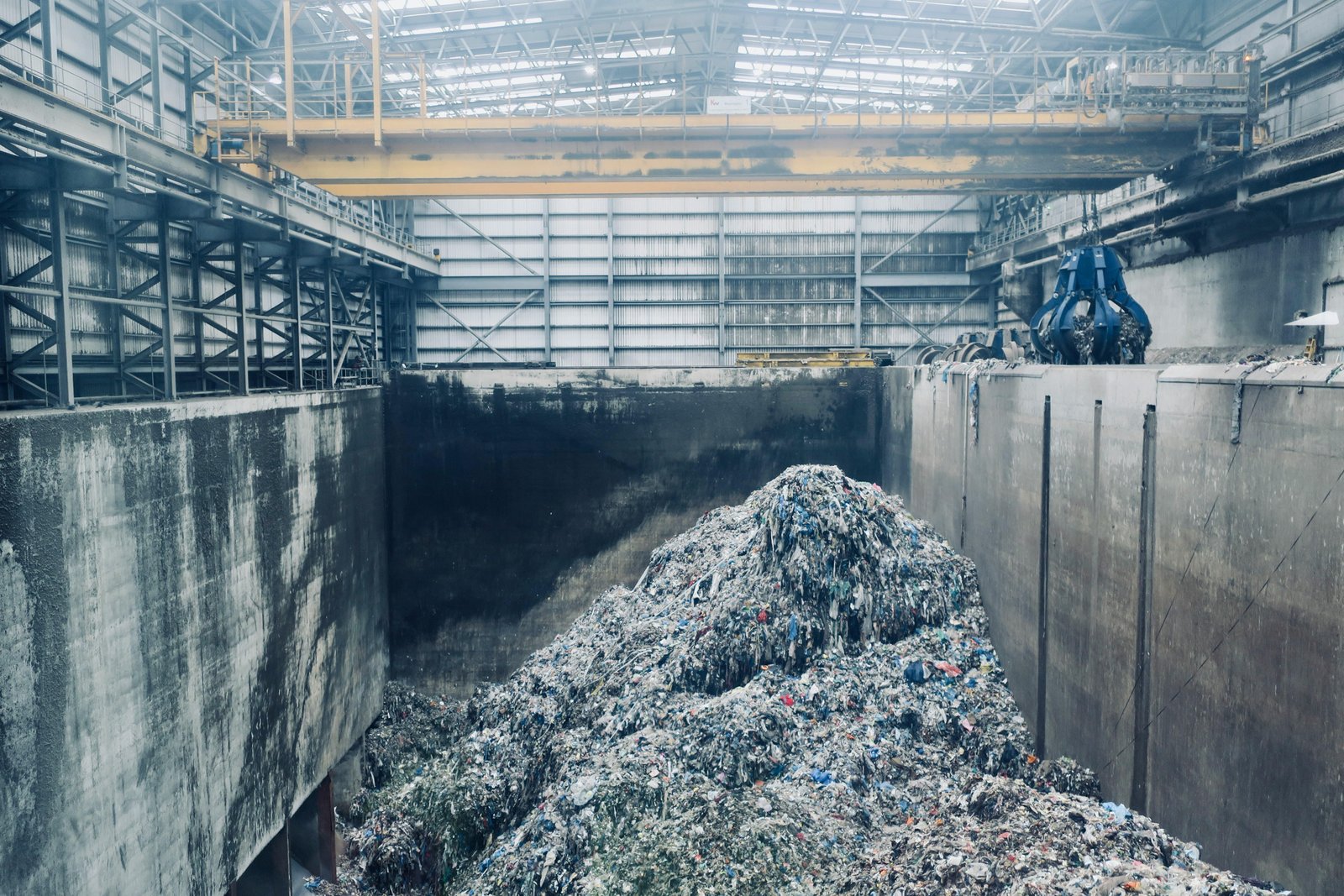
Waste-to-Energy Solutions for Sustainable Municipal Solid Waste Management in Indonesia
Waste-to-Energy Technologies: Advanced Thermal Conversion Systems, Energy Recovery Optimization, Emission Control Strategies, Economic Analysis, and Implementation Guidelines for Sustainable Municipal Solid Waste Management in Indonesia
Reading time: 70 minutes
Key Highlights
• Global WTE Infrastructure Scale: Worldwide waste-to-energy facilities process approximately 270-290 million tons municipal solid waste annually across 2,400+ operational plants, with Europe operating 500+ facilities treating 90-100 million tons/year, Japan maintaining 1,100+ plants handling 35-40 million tons, China rapidly deploying 400+ modern installations processing 80-90 million tons, and combined installed electrical generation capacity exceeding 14-16 gigawatts plus substantial thermal energy production serving district heating networks in over 400 municipalities
• Technology Performance Parameters: Moving grate incineration systems treating 200,000-350,000 tons/year per combustion line achieve electrical conversion efficiencies 18-26% (gross) with net efficiencies 15-22% after auxiliary consumption, combined heat-power configurations reaching 75-85% total energy recovery when integrated with district heating networks, while fluidized bed combustors handling 50,000-150,000 tons/year demonstrate superior fuel flexibility accepting moisture content 30-60% and lower heating values 6-12 MJ/kg versus grate systems requiring 8-14 MJ/kg minimum
• Emission Control Standards: Modern WTE facilities employ multi-stage air pollution control achieving NOx emissions under 50-80 mg/Nm³ through selective non-catalytic reduction (SNCR) or selective catalytic reduction (SCR), SO₂ and HCl below 10-30 mg/Nm³ via semi-dry or wet scrubbing, particulate matter under 5-10 mg/Nm³ with baghouse filtration, dioxin/furan releases limited to 0.01-0.1 ng TEQ/Nm³ through activated carbon injection and optimized combustion at 850-1,100°C with 99.9%+ destruction efficiency meeting EU Industrial Emissions Directive, US EPA Clean Air Act, and emerging Asian regulatory standards
• Indonesian Market Opportunity: Indonesia generates approximately 67-70 million tons municipal solid waste annually with projections reaching 85-90 million tons by 2030, yet current WTE capacity remains under 100 MW across 2-3 operational facilities representing substantial development gap, supported by government policies including Presidential Regulation No. 35/2018 establishing infrastructure targets, Ministry of Energy feed-in tariffs guaranteeing USD 0.10-0.14/kWh for MSW-derived electricity, and recognition that landfill disposal currently handling 60-70% of waste creates methane emissions equivalent to 10-15 million tons CO₂e annually while consuming valuable urban land resources
Executive Summary
Waste-to-energy technologies represent increasingly essential infrastructure component within integrated solid waste management systems serving urban populations worldwide, converting municipal solid waste (MSW), commercial refuse, and selected industrial byproducts into electrical power, thermal energy, or alternative fuels through controlled combustion, gasification, pyrolysis, or biological decomposition processes. These WTE systems address multiple interconnected objectives including substantial volume reduction typically achieving 85-95% mass decrease and 90-97% volume decrease compared to raw waste inputs, energy recovery generating renewable electricity or heat displacing fossil fuel consumption, environmental protection through controlled emission treatment surpassing unmanaged landfills or open burning practices, and resource conservation recovering ferrous metals, non-ferrous metals, and mineral aggregates from combustion residues for beneficial reuse. Global WTE industry has expanded significantly over past three decades, with Europe operating over 500 facilities processing approximately 90-100 million tons waste annually generating 50+ terawatt-hours electricity and supplying heat to 15+ million residents through district heating networks, Japan maintaining 1,100+ plants treating 35-40 million tons with exceptional operational standards and near-universal public acceptance, China rapidly deploying 400+ modern facilities handling 80-90 million tons with aggressive expansion targeting 600+ plants by 2025-2026, and emerging markets across Southeast Asia, Middle East, and Latin America increasingly adopting WTE infrastructure responding to urbanization pressures, landfill constraints, and renewable energy development mandates.
Indonesia confronts substantial waste management challenges driven by rapid urban population growth concentrated in Java and major cities across archipelago, increasing per capita waste generation rates now averaging 0.6-0.8 kg/person/day in metropolitan areas and 0.4-0.6 kg/person/day in smaller municipalities reflecting rising consumption patterns and economic development, and limited landfill capacity with many existing disposal sites operating beyond design capacity or approaching closure timelines without adequate replacement infrastructure development. National waste generation estimates from Ministry of Environment and Forestry indicate total production 67-70 million tons annually based on 2020-2022 data collection, with World Bank and Asian Development Bank projections suggesting growth to 85-90 million tons by 2030 absent significant intervention through source reduction programs, enhanced recycling systems, or alternative treatment including WTE deployment. Current waste management infrastructure relies predominantly on landfill disposal handling approximately 60-70% of collected waste through controlled sanitary landfills in major cities or open dumps in smaller municipalities, informal recycling sector recovering perhaps 10-15% of valuable materials including plastics, metals, paper, and glass through waste picker activities providing livelihood for 3-4 million individuals, composting and other biological treatment processing 5-10% primarily at household or community scale, with substantial fraction estimated 15-25% remaining uncollected particularly in rural areas, informal urban settlements, or islands lacking organized collection services. This waste management gap creates significant environmental and public health burdens through uncontrolled dumping contaminating soil and groundwater with leachate containing heavy metals and organic pollutants, open burning generating harmful air pollutants including particulate matter and toxic compounds, methane emissions from anaerobic decomposition in poorly managed landfills contributing greenhouse gas inventories equivalent to 10-15 million tons CO₂e annually representing approximately 2% of national emissions, and valuable land consumption for disposal sites in densely populated regions where alternative development uses including housing, industry, or agriculture could generate substantial economic benefits.
Waste-to-energy technology deployment in Indonesia remains nascent despite substantial potential and government policy support, with only 2-3 operational facilities representing combined electrical capacity under 100 megawatts - a minimal fraction compared to total municipal waste generation of 67-70 million tons annually and theoretical energy recovery potential exceeding 1,500-2,000 megawatts if 30-40% of waste stream were processed through modern WTE plants. Existing installations include facilities in Surabaya, Jakarta, and potentially other locations operating at relatively small scale typically 200-400 tons/day capacity with 5-15 MW generation, facing operational challenges including waste feedstock consistency given competition from informal recycling reducing available material calorific value, technical performance optimization requiring skilled personnel and spare parts availability, and financial sustainability balancing operational costs against electricity sales revenue and tipping fees where applicable. Government initiatives supporting sector development include Presidential Regulation No. 35/2018 establishing national waste-to-energy infrastructure development targets calling for 12+ facilities by 2025 with combined capacity 500+ megawatts, Ministry of Energy and Mineral Resources (ESDM) feed-in tariff policies through Minister Regulation No. 50/2017 and subsequent revisions guaranteeing electricity purchase prices USD 0.10-0.14 per kilowatt-hour for MSW-derived power depending on capacity and technology with 20-25 year power purchase agreements, Ministry of Environment and Forestry technical guidelines on WTE facility permitting and operation, and various provincial and municipal WTE project planning activities particularly in Java cities including Bandung, Semarang, Tangerang, and Bekasi where waste generation rates and land constraints create favorable conditions for WTE implementation.
However, WTE development faces numerous implementation challenges requiring systematic resolution through integrated policy, technical, and financial approaches. High capital costs typically USD 600-900 million for modern 500-700 tons/day facilities with 20-35 MW generation capacity exceed municipal government budgetary capabilities necessitating alternative financing including public-private partnerships, development finance institution lending, or central government support through infrastructure funds. Complex permitting and environmental assessment requirements under Indonesian regulations including AMDAL (environmental impact assessment) preparation, stakeholder consultation processes, air emission permits, wastewater discharge authorizations, and hazardous waste handling licenses for bottom ash and fly ash residues require 18-36 months completion timelines creating project development uncertainties. Waste supply consistency concerns arise from informal sector recycling activities selectively removing high-value materials including plastics, paper, and metals reducing residual waste calorific value from typical fresh MSW range 8-12 MJ/kg to potentially 6-9 MJ/kg after scavenging, while waste composition seasonality and economic fluctuations affect generation patterns requiring flexible facility design or contractual arrangements ensuring minimum feedstock supply. Public acceptance issues particularly regarding emission concerns, facility aesthetics, property value impacts, and general NIMBY (not-in-my-backyard) opposition require comprehensive stakeholder engagement, transparent communication about emission controls and monitoring, modern architectural design presenting facilities as positive community infrastructure, and potentially community benefit arrangements including employment preferences, infrastructure improvements, or revenue sharing mechanisms. Technical capacity limitations within local government institutions, regional utilities (PLN distribution companies), and private operators managing sophisticated WTE technology, emission control systems, and grid interconnection require training programs, technology transfer arrangements with international equipment suppliers, and potentially international operations assistance during initial years ensuring reliable performance and regulatory compliance.
International experience across European, Japanese, Chinese, and other Asian WTE markets demonstrates these challenges prove surmountable through appropriate policy frameworks establishing clear regulatory standards and incentive structures, adequate financing mechanisms including concessional lending, guarantees, or subsidies reflecting WTE public benefits beyond direct electricity sales revenues, rigorous environmental standards implementation with independent monitoring and public disclosure building community confidence, comprehensive stakeholder engagement throughout project development from initial planning through construction and operations, and systematic technology transfer supporting local capability development through training, joint ventures, or gradual localization of equipment manufacturing and service provision. This analysis examines all aspects of WTE technology selection, design, implementation, and operation for Indonesian context, providing detailed technical assessment of available conversion technologies including moving grate incineration, fluidized bed combustion, gasification-pyrolysis processes, and biological anaerobic digestion, engineering design criteria for complete WTE facilities spanning waste reception and storage, combustion systems, energy recovery equipment, air pollution control, residue management, and grid interconnection, emission control technologies and monitoring approaches ensuring regulatory compliance and environmental protection, economic analysis methodologies covering capital costs, operating expenses, revenue sources, financial modeling, and sensitivity analysis, regulatory and permitting frameworks under Indonesian environmental and energy legislation, stakeholder engagement and public acceptance strategies, operational management best practices, and strategic recommendations for government agencies, municipal authorities, private developers, and engineering firms supporting successful WTE sector development contributing to sustainable waste management, renewable energy generation, and environmental quality improvement across Indonesian urban centers.
Municipal Solid Waste Characteristics and Energy Content Assessment
Municipal solid waste composition varies substantially across geographic regions, income levels, climate zones, and collection systems, directly affecting suitability for waste-to-energy conversion and required technology selection. Indonesian MSW typically exhibits high organic content reflecting dietary patterns emphasizing fresh food consumption, tropical climate enabling year-round organic material decomposition, and limited food preservation infrastructure compared to developed nations. Waste characterization studies conducted across Indonesian cities document organic fraction including food waste, yard trimmings, and other biodegradables comprising 50-65% by weight of total MSW, plastics contributing 10-20%, paper and cardboard 8-15%, metals 2-5%, glass 2-4%, textiles and rubber 2-5%, and miscellaneous materials including ceramics, construction debris, and hazardous household waste representing remaining 3-8%. This composition contrasts with developed nations where organic content typically ranges 30-40% due to greater food processing, refrigeration reducing waste, and separate collection of yard waste, while plastic, paper, and other dry recyclables constitute larger fractions. Moisture content proves particularly important for thermal WTE technologies, with Indonesian MSW typically containing 45-65% moisture by weight compared to 25-40% in European or North American waste, significantly affecting heating value and requiring consideration in combustion system design including potential waste drying, mixing with dry materials, or technology selection favoring systems tolerating high moisture content.
Lower heating value (LHV) represents primary parameter determining energy recovery potential, defined as energy released during combustion per unit mass after accounting for water evaporation but excluding condensation heat recovery typically not achieved in WTE systems. LHV depends on waste composition, moisture content, and ash content according to relationships documented in waste engineering literature. Fresh Indonesian MSW with typical composition averages lower heating value 6-10 MJ/kg (megajoules per kilogram) with substantial variability depending on specific composition, moisture content, and seasonal factors, compared to developed nation MSW averaging 9-14 MJ/kg reflecting higher plastic and paper content plus lower moisture. Calculation of LHV from proximate analysis uses modified Dulong formula or empirical correlations accounting for carbon, hydrogen, oxygen, sulfur, moisture, and ash content. For reference, pure materials exhibit following heating values: mixed plastics 30-45 MJ/kg, paper and cardboard 15-18 MJ/kg, wood and yard waste 15-20 MJ/kg (dry basis), food waste 4-8 MJ/kg (as-discarded with typical moisture), textiles 15-20 MJ/kg, and rubber 30-35 MJ/kg. High organic content and moisture in Indonesian waste depress overall LHV, with some waste streams from traditional markets or informal settlements potentially falling to 4-6 MJ/kg creating operational challenges for certain WTE technologies requiring minimum heating values 7-9 MJ/kg for stable combustion without auxiliary fuel support.
Table 1: Typical Municipal Solid Waste Composition and Properties - Indonesia versus International Comparisons
| Component category | Indonesia typical range (% wet weight) |
Japan typical (% wet weight) |
Europe average (% wet weight) |
Component LHV range (MJ/kg dry) |
Typical moisture content (%) |
|---|---|---|---|---|---|
| Organic/food waste | 50-65 | 35-45 | 30-40 | 15-20 | 60-80 |
| Paper and cardboard | 8-15 | 25-35 | 20-30 | 15-18 | 5-15 |
| Plastics (mixed) | 10-20 | 12-18 | 10-15 | 35-45 | 1-5 |
| Textiles and leather | 2-5 | 3-6 | 4-7 | 18-22 | 5-15 |
| Wood and yard waste | 3-8 | 5-10 | 8-15 | 17-20 | 15-40 |
| Rubber and leather | 1-3 | 1-3 | 2-4 | 30-35 | 2-8 |
| Metals (ferrous + non-ferrous) | 2-5 | 3-5 | 4-7 | 0 (inert) | 1-3 |
| Glass and ceramics | 2-4 | 4-8 | 5-10 | 0 (inert) | 1-3 |
| Other/miscellaneous | 3-8 | 3-7 | 3-8 | Variable | Variable |
| COMPOSITE MSW PROPERTIES | Indonesia | Japan | Europe | Parameter description | |
| Overall moisture content | 45-65% | 35-50% | 25-40% | Wet basis, as-collected MSW | |
| Lower heating value (LHV) | 6-10 MJ/kg | 8-12 MJ/kg | 9-14 MJ/kg | As-received basis, wet weight | |
| Bulk density | 200-400 kg/m³ | 150-300 kg/m³ | 120-250 kg/m³ | Loose, uncompacted collection | |
| Ash content (dry basis) | 8-15% | 6-12% | 15-25% | Inorganic residue after combustion | |
Sources: ISWA WTE Technology White Book (2023), CCET WTE Incineration Guidelines (2020), Indonesian waste characterization studies Jakarta-Surabaya-Bandung 2018-2022
Note: Ranges reflect variations across cities, seasons, income levels, and collection systems. LHV values are lower heating value excluding latent heat of water vapor condensation.
Waste pretreatment and conditioning can improve energy recovery potential, though adding complexity and cost requiring economic justification. Mechanical separation removing non-combustibles including metals and glass reduces ash content and increases heating value while recovering recyclables for sale. Biological pretreatment through composting or anaerobic digestion selectively processes organic fraction reducing moisture content in residual waste and potentially generating biogas or compost as coproducts. Refuse-derived fuel (RDF) production involves shredding, screening, magnetic separation, air classification, and pelletizing or briquetting to produce homogeneous fuel product with heating value typically 12-18 MJ/kg suitable for co-combustion in coal power plants or cement kilns alongside dedicated WTE facilities. Indonesian context presents particular challenges for extensive pretreatment given high labor costs relative to equipment amortization for certain processes, competition from informal sector recycling already removing many high-value materials, and technical reliability concerns with complex equipment requiring skilled maintenance. Most feasible approach likely involves modest front-end processing removing oversize materials, basic ferrous metal recovery through magnetic separation, and potentially simple size reduction improving combustion consistency, while accepting relatively heterogeneous waste feed requiring combustion technology capable of handling variable composition and properties.
Moving Grate Incineration Technology: Design Principles and Performance Characteristics
Moving grate incineration represents most widely deployed waste-to-energy technology globally, with over 1,800 operational facilities processing municipal solid waste across Europe, Japan, China, and other markets. This technology employs mechanical grate system that conveys waste through combustion chamber while providing controlled air distribution and turbulence promoting complete burnout of organic materials. The fundamental operating principle involves feeding waste onto moving grate surface, applying primary combustion air from below through grate openings while waste advances through progressive combustion stages, injecting secondary air above waste bed for complete oxidation of volatile organic compounds and combustible gases, maintaining combustion temperatures 850-1,100°C ensuring complete organic destruction and minimizing formation of dioxins and other products of incomplete combustion, and discharging bottom ash residue containing metals, glass, and mineral materials representing typically 20-30% of input waste mass. Modern moving grate systems achieve remarkable performance metrics including throughput capacity 200,000-350,000 tons per year per combustion line with individual units handling 12-30 tons per hour continuous operation, volume reduction exceeding 90% and mass reduction 70-85% depending on waste composition, stable reliable operation exceeding 8,000 hours annually with scheduled maintenance shutdowns typically 2-4 weeks per year, and minimal feedstock preparation requirements accepting heterogeneous municipal solid waste with moisture content up to 50-60% and heating values as low as 6-8 MJ/kg though 8-12 MJ/kg preferred for optimal performance without auxiliary fuel support.
Grate technology variants include several distinct configurations optimized for different waste characteristics and operational priorities. Reciprocating grate systems employ alternating rows of fixed and moving grate bars, with moving rows advancing forward periodically while fixed rows remain stationary, creating tumbling action promoting waste mixing and ash separation while providing excellent burnout characteristics suitable for variable waste compositions. Roller grate designs utilize series of horizontal rotating cylinders arranged in staircase pattern, with waste advancing down slope while rotating action tumbles material enhancing combustion air contact and promoting complete burnout especially for high-ash content waste. Forward-acting or reverse-acting configurations describe grate bar motion direction relative to waste flow, affecting mixing intensity, residence time distribution, and suitability for specific waste types. Major equipment suppliers including Martin GmbH (Germany), Keppel Seghers (Singapore), Hitachi Zosen Inova (Switzerland-Japan), Kawasaki Heavy Industries (Japan), and China National Machinery (SINOMACH) offer proprietary grate designs with specific advantages regarding fuel flexibility, burnout performance, mechanical reliability, or maintenance requirements, typically backed by performance guarantees and long-term service agreements supporting operational success particularly important for developing market applications where local technical capability may be limited during initial project phases.
Figure 1: Moving Grate Incineration System - Complete Process Flow with Technical Specifications
WASTE RECEPTION AND STORAGE
Tipping hall: Enclosed building preventing odor escape, negative pressure maintained -5 to -20 Pa
Storage bunker: 3-7 days capacity typical (1,500-3,500 m³ for 500 ton/day facility)
Mixing: Overhead crane with 6-15 ton grapple promotes homogenization blending fresh and stored waste
Feed hopper: Hydraulic ram feeders supply waste to grate at controlled rate 12-30 tons/hour per line
Combustion air source: Bunker air extraction provides primary combustion air while controlling odors (15,000-35,000 Nm³/hour)
↓
PRIMARY COMBUSTION ZONE - GRATE SYSTEM
Grate configuration: Reciprocating or roller grate, 20-35 m² grate area per ton/hour capacity
Grate sections: Drying zone (150-300°C waste surface) → Combustion zone (900-1,100°C) → Burnout zone (600-800°C)
Residence time: 45-90 minutes on grate depending on waste properties and throughput
Primary air distribution: Underfire air 0.8-1.2 Nm³/kg waste, temperature 150-250°C (preheated), separate zones controlled independently
Grate motion: Reciprocating frequency 4-12 cycles/minute creating 30-80 mm forward advance per cycle
Heat release rate: 1.8-3.5 MW/m² grate area (thermal power per unit grate surface)
Key reactions:
• Moisture evaporation: H₂O(liquid) → H₂O(vapor) consuming 2.26 MJ/kg water at 100°C
• Pyrolysis: Complex organics → Volatile hydrocarbons + Char + H₂O + CO₂
• Char combustion: C + O₂ → CO₂ releasing 32.8 MJ/kg carbon (primary heat source)
• Volatile oxidation: CₓHᵧ + O₂ → CO₂ + H₂O (secondary combustion above grate)
↓
SECONDARY COMBUSTION CHAMBER
Purpose: Complete oxidation of volatile organic compounds, CO, and particulate carbon ensuring emissions compliance
Temperature: 850-1,100°C maintained continuously, minimum 850°C per EU IED, 1,050-1,100°C optimal for dioxin destruction
Residence time: Minimum 2 seconds at temperature >850°C per regulations, typical design 2.5-4 seconds
Secondary air: Overfire air injection 0.5-0.9 Nm³/kg waste, high velocity jets creating turbulence
Excess air ratio: Total air supply 120-180% of stoichiometric requirement (λ = 1.2-1.8), balancing complete combustion vs NOx formation
Combustion efficiency: >99.9% destruction of volatile organic compounds
Chamber design: Refractory-lined steel construction or membrane wall boiler design with protective refractory, volume 80-150 m³
↓
HEAT RECOVERY BOILER - ENERGY CONVERSION
Boiler type: Water-tube waste heat boiler, natural or forced circulation
Steam conditions: 380-450°C temperature, 40-60 bar pressure typical for municipal WTE
Advanced plants: Up to 500°C, 100 bar enabling higher electrical efficiency
Heat transfer sections:
• Radiation section: Membrane wall, flue gas cooling 950-1,050°C → 650-750°C
• Superheater: Final steam temperature control, 120-180 m² heat transfer area
• Evaporator: Main steam generation, 450-850 m² area depending on capacity
• Economizer: Feedwater preheating, flue gas outlet 180-220°C, 85-150 m² area
Steam production: 2.2-3.2 tons steam per ton waste (depends on LHV and system efficiency)
Thermal efficiency: 75-85% of waste LHV recovered as steam enthalpy
Soot blowing: Automated steam or compressed air cleaning preventing heat transfer fouling, 2-6 hour cycles
Corrosion protection: Tube temperature maintained >280°C avoiding low-temperature chloride corrosion, materials: 13CrMo4-5 or similar alloy steels
↓ (Flue Gas Path) ↓ (Steam Path)
AIR POLLUTION CONTROL
DeNOx system (SNCR or SCR):
Temperature 850-950°C, ammonia/urea injection
NOx reduction 50-80% to <50-80 mg/Nm³
Acid gas removal (HCl, SO₂, HF):
Dry, semi-dry, or wet scrubbing
Lime or sodium bicarbonate reagent
Removal efficiency >95-98%
Particulate control:
Fabric baghouse filter
Emission <5-10 mg/Nm³
Activated carbon injection:
Dioxin/furan, mercury adsorption
Dose 30-100 mg/Nm³ flue gas
Stack emission: 60-100 m height
Continuous monitoring CEMS
POWER GENERATION
Steam turbine:
Condensing or back-pressure type
Electrical output 3-8 MW per 100 ton/day
Efficiency 18-26% (electrical, gross)
Net efficiency 15-22% (after auxiliaries)
Generator: 50/60 Hz synchronous
Cooling system:
Air-cooled condenser (dry cooling)
or water-cooled (wet cooling tower)
CHP option:
District heating extraction 70-120°C
Combined efficiency 75-85%
Grid connection: 6-22 kV medium voltage
Power export to utility
RESIDUE MANAGEMENT AND MATERIALS RECOVERY
Bottom ash (BA): 18-25% of input waste mass, discharged from grate via wet or dry extraction
• Processing: Screening, ferrous metal separation (5-10% BA weight), non-ferrous recovery (1-3% BA weight)
• Utilization: Road base aggregate (after weathering/washing), construction fill, cement/concrete aggregate
• Classification: Non-hazardous waste (Indonesia), subject to leaching tests for beneficial use approval
Fly ash (FA): 2-5% of input waste mass, captured in air pollution control system
• Characteristics: Enriched in heavy metals (Pb, Cd, Zn), salts (NaCl, CaCl₂), residual activated carbon
• Classification: Hazardous waste requiring special handling per PP 101/2014 on B3 waste management
• Treatment options: Solidification/stabilization with cement, vitrification, disposal in secure landfill
• Generation rate: 15-35 kg fly ash per ton waste processed
Scrubber residues: Spent lime, gypsum, salts from acid gas neutralization: 25-45 kg per ton waste
Metals recovery revenue: Ferrous scrap USD 150-250/ton, aluminum USD 800-1,200/ton, copper USD 4,000-6,000/ton
OVERALL SYSTEM PERFORMANCE - MASS AND ENERGY BALANCE
Input: 500 tons/day MSW, LHV 8.5 MJ/kg, moisture 55%, total energy input 4,250 GJ/day = 49.2 MW thermal
Energy distribution:
• Steam generation: 3,400 GJ/day (80% of input), 1,360 tons/day steam at 40 bar, 400°C
• Stack heat loss: 550 GJ/day (13%), flue gas 180°C exit temperature
• Radiation/convection: 210 GJ/day (5%), facility heat losses
• Bottom ash sensible heat: 90 GJ/day (2%), residue cooling requirement
Electrical generation:
• Gross generation: 20 MW (turbine output), 480 MWh/day
• Auxiliary consumption: 4 MW (20%), fans, pumps, grate drives, emission control
• Net export: 16 MW, 384 MWh/day
• Gross electrical efficiency: 20.3% (20 MW / 49.2 MW input)
• Net electrical efficiency: 16.6% (16 MW / 49.2 MW input)
Residues: Bottom ash 110 tons/day (22%), Fly ash 18 tons/day (3.6%), Scrubber residues 20 tons/day (4%)
Emissions: Flue gas 145,000 Nm³/hour (6% O₂ dry), all parameters meeting EU IED standards
Annual performance: 165,000 tons waste, 140 GWh net electricity (340 days operation, 25 days maintenance)
Sources: ISWA WTE White Book (2023), Martin GmbH technical documentation, Hitachi Zosen Inova design manuals, CCET WTE guidelines (2020)
Note: Values represent typical performance for modern 500 ton/day moving grate facility. Actual performance varies with waste composition, technology supplier, and operational practices.
Combustion process optimization requires careful control of multiple interdependent parameters affecting burnout completeness, emission formation, energy recovery efficiency, and equipment longevity. Grate speed adjustment controls waste residence time and bed depth, with slower speeds increasing retention enabling better burnout particularly for high-moisture or low-reactivity wastes, while faster speeds increase throughput capacity but risk incomplete combustion if insufficient for specific waste characteristics. Primary air distribution across grate zones enables tailored oxygen supply matching combustion stages, with drying zone receiving limited air preventing premature ignition, main combustion zone receiving maximum air supporting rapid oxidation, and burnout zone receiving reduced air enabling complete char gasification without excessive cooling. Air preheating to 150-250°C using flue gas heat or steam accelerates drying and combustion while reducing auxiliary fuel requirements during startup or when processing high-moisture waste. Secondary air injection design proves particularly important for volatile organic compound destruction and dioxin/furan prevention, requiring sufficient velocity creating turbulent mixing, proper positioning ensuring adequate temperature and residence time before heat recovery surfaces, and quantity balancing complete oxidation against excessive NOx formation promoted by high temperature and oxygen availability. Temperature control maintains combustion chamber within optimal 850-1,100°C range through coordinated adjustment of waste feed rate, air supply, and potentially auxiliary burner operation, with automated control systems responding to temperature measurement and flue gas oxygen concentration maintaining stable conditions despite waste composition variations. Modern distributed control systems (DCS) integrate hundreds of measurement points including thermocouples throughout combustion chamber, oxygen and CO analyzers in flue gas, pressure differential across grate and boiler sections, steam parameters, and emission monitoring data, executing control algorithms adjusting grate speed, air fan dampers, feed ram operation, and other manipulated variables maintaining optimal performance while providing data logging supporting operational analysis, regulatory reporting, and performance optimization identifying improvement opportunities.
Fluidized Bed Combustion Systems for Waste-to-Energy Applications
Fluidized bed combustion represents alternative thermal conversion technology offering particular advantages for certain waste streams and applications, with approximately 400-500 WTE installations globally predominantly in Japan, Europe, and China. The fundamental principle involves suspending bed of inert granular material (typically silica sand 0.3-1.2 mm diameter) in upward flowing air stream, creating turbulent fluid-like mixture exhibiting excellent heat and mass transfer characteristics. Waste fed into this fluidized bed undergoes rapid heating, pyrolysis, and combustion within intense mixing environment promoting uniform temperature distribution, efficient heat transfer, and complete burnout even for heterogeneous or difficult fuels. Two primary fluidized bed configurations find WTE application: bubbling fluidized bed (BFB) systems where bed expands 30-100% above settled height with distinct upper surface and gas bubbles rising through bed creating mixing, and circulating fluidized bed (CFB) designs employing higher air velocities entraining bed material and combustion products upward through tall riser reactor with cyclone separation returning solids to bottom creating circulation loop enabling longer gas residence times and more intense mixing particularly beneficial for complete combustion of volatiles and fine particulates.
Fluidized bed technology offers several distinct advantages compared to moving grate systems justifying deployment despite generally higher complexity and capital cost. Superior fuel flexibility accepts wide range of waste properties including high moisture content up to 50-60%, low heating values down to 5-7 MJ/kg with supplemental fuel support or 7-10 MJ/kg autothermal operation, and substantial variation in particle size, composition, and properties that might cause operational difficulties on grate systems. Lower combustion temperature typically 750-900°C compared to grate systems at 950-1,100°C reduces thermal NOx formation (though fuel NOx from waste nitrogen content still occurs) and limits ash sintering/agglomeration problems with certain waste compositions containing alkali metals that form low-melting eutectics causing grate clinker formation or boiler fouling at higher temperatures. Excellent mixing and heat transfer characteristics promote rapid waste heating and devolatilization, uniform temperature distribution minimizing local hot or cold spots, efficient combustion within compact reactor volume, and heat transfer to immersed tubes enabling steam generation within fluidized bed itself rather than separate downstream boiler. Limestone addition directly to fluidized bed enables in-situ sulfur capture through reaction forming calcium sulfate, providing primary SO₂ control without requiring downstream scrubbing equipment though typically supplemented with polishing scrubber achieving final emission limits. These advantages make fluidized bed particularly attractive for waste-to-energy applications processing: refuse-derived fuel (RDF) or solid recovered fuel (SRF) prepared through mechanical treatment producing relatively uniform shredded material; sewage sludge with moisture content 15-25% after mechanical dewatering and high ash content 40-60% on dry basis; industrial wastes including wood processing residues, food industry organics, and manufacturing byproducts with variable properties; and co-combustion applications mixing municipal waste with biomass, industrial fuels, or coal in dedicated WTE facilities or existing power plants.
Table 2: Comparative Analysis - Moving Grate versus Fluidized Bed Combustion for WTE Applications
| Parameter / characteristic | Moving grate incineration |
Bubbling fluidized bed |
Circulating fluidized bed |
Notes and implications |
|---|---|---|---|---|
| Typical capacity range | 200,000-350,000 tons/year/line |
50,000-150,000 tons/year |
80,000-200,000 tons/year |
Grate systems scale better to large capacities, fluidized bed more modular |
| Feedstock preparation | Minimal (bulky item removal) |
Moderate to high (shredding required) |
Moderate to high (size reduction) |
Grate accepts coarse waste, fluidized bed needs <100-200mm particle size |
| Acceptable moisture content | Up to 50-60% (with good design) |
Up to 50-60% (more tolerant) |
Up to 55-65% (most tolerant) |
High moisture reduces LHV; all technologies may need auxiliary fuel below thresholds |
| Minimum LHV requirement | 8-10 MJ/kg (autothermal) |
7-9 MJ/kg (autothermal) |
6-8 MJ/kg (autothermal) |
Fluidized bed slightly more efficient heat recovery enables lower LHV operation |
| Combustion temperature | 950-1,100°C (freeboard) |
750-900°C (bed) |
800-950°C (riser) |
Lower fluidized bed temperatures reduce thermal NOx, ash sintering issues |
| Excess air requirement | 140-180% (λ = 1.4-1.8) |
120-150% (λ = 1.2-1.5) |
115-140% (λ = 1.15-1.4) |
Lower excess air improves efficiency, reduces flue gas volume and treatment cost |
| Carbon in ash (unburned) | 1-5% (bottom ash) |
0.5-2% (excellent burnout) |
0.5-2% (excellent burnout) |
Better burnout increases energy recovery and improves ash utilization potential |
| Bottom ash output | 18-25% of waste input |
15-22% mixed with bed material |
15-22% collected from cyclones |
Fluidized bed ash mixed with sand requiring separation for metal recovery |
| NOx emissions (uncontrolled) | 200-400 mg/Nm³ (6% O₂ dry) |
150-250 mg/Nm³ (lower thermal NOx) |
180-300 mg/Nm³ (intermediate) |
All systems require SNCR or SCR reducing to <50-80 mg/Nm³ for compliance |
| In-situ SO₂ capture | Not applicable (needs scrubber) |
50-70% removal (limestone injection) |
60-80% removal (limestone injection) |
Fluidized bed CaO + SO₂ → CaSO₄ reaction, still needs polishing scrubber |
| Dioxin/furan formation | Moderate risk (de novo synthesis) |
Lower risk (lower temperature) |
Lower risk (good mixing) |
All systems achieve <0.1 ng TEQ/Nm³ with proper combustion control + APC |
| Thermal efficiency (boiler) | 75-83% (LHV basis) |
78-86% (immersed tubes) |
76-84% (efficient heat transfer) |
Slightly higher fluidized bed efficiency from better heat transfer characteristics |
| Electrical efficiency (net) | 15-22% (typical modern) |
16-23% (comparable) |
17-24% (slightly better) |
Overall electrical efficiency similar, depends more on steam cycle than combustion |
| Capital cost (USD/ton/day) | USD 800,000-1,200,000 per ton/day |
USD 900,000-1,400,000 per ton/day |
USD 1,000,000-1,500,000 per ton/day |
Grate generally lower cost; fluidized bed premium reflects added complexity |
| Operating cost (USD/ton) | USD 45-75 per ton waste |
USD 50-85 per ton waste |
USD 55-90 per ton waste |
Includes labor, maintenance, consumables; varies by location and waste properties |
| Operational complexity | Moderate (well-understood) |
Moderate-high (bed management) |
High (circulation control) |
Grate simpler operation; fluidized bed requires skilled personnel for optimization |
| Track record / maturity | Very mature 1,800+ plants |
Mature 300+ WTE plants |
Mature 150+ WTE plants |
Grate dominant technology; fluidized bed growing particularly in Asia |
| Best suited applications | Large municipal MSW, heterogeneous waste, minimal pretreatment capability | RDF/SRF, sewage sludge, industrial waste, smaller capacity | High-ash fuels, co-combustion, biomass blending, medium capacity | Selection depends on waste characteristics, capacity requirements, local conditions |
Sources: ISWA WTE White Book (2023), Keppel Seghers technical data, Foster Wheeler fluidized bed documentation, CCET WTE guidelines
Note: Values represent typical ranges; actual performance varies with specific design, waste properties, and operational practices. Capital costs assume modern facilities in developed markets; developing country costs may be 20-40% lower depending on local content and labor costs.
Design and operational considerations for fluidized bed WTE systems encompass several critical aspects requiring careful engineering attention. Bed material selection typically employs silica sand given low cost, chemical stability, adequate density for fluidization, and availability, though alternative materials including alumina, limestone, or olivine find application in specific circumstances offering benefits like enhanced sulfur capture (limestone) or reduced agglomeration tendency (olivine for biomass). Bed depth typically ranges 0.6-1.2 meters in bubbling beds or 3-8 meters in circulating bed risers, with deeper beds providing greater thermal inertia stabilizing temperature fluctuations and increased residence time promoting complete burnout. Fluidization velocity must exceed minimum fluidization velocity (typically 0.3-0.8 m/s for sand beds) causing bed expansion and particle suspension, while remaining below transport velocity (approximately 2-5 m/s) causing excessive particle carryover in bubbling beds, though circulating beds intentionally operate at higher velocities 3-7 m/s creating circulation loop. Waste feeding systems introduce shredded material into fluidized bed through pneumatic injection, screw feeders with rotary valves preventing air back-flow, or over-bed dropping for coarser materials, with feed point distribution and frequency affecting combustion uniformity and emission formation. Bed temperature control maintains optimal 750-900°C range through balancing heat input from waste combustion against heat removal via steam generation in immersed tubes, heat losses, and flue gas enthalpy, with automated control adjusting waste feed rate, air supply, and potentially external heat input or cooling as needed. Bed material replacement compensates attrition and carryover losses requiring fresh sand addition typically 2-8% of bed inventory daily, while spent material containing ash accumulation requires periodic removal maintaining bed quality and preventing excessive ash dilution reducing combustion efficiency. Startup and shutdown procedures require particular attention given need to establish fluidization before waste feeding, preheat bed to autothermal temperature using auxiliary burners, and carefully control cool-down preventing bed sintering or equipment thermal stress damage.
Gasification and Pyrolysis Technologies: Advanced Thermochemical Conversion Approaches
Gasification and pyrolysis represent alternative thermochemical conversion pathways potentially offering advantages over conventional combustion for certain applications, though deployment remains limited compared to incineration with approximately 80-120 commercial waste gasification facilities operational globally concentrated in Japan, South Korea, and select European markets. These technologies thermally decompose waste under oxygen-deficient conditions producing syngas (synthesis gas) mixture primarily containing carbon monoxide, hydrogen, methane, and carbon dioxide with energy content typically 4-8 MJ/Nm³ for gasification or 8-15 MJ/Nm³ for pyrolysis gas depending on process conditions and feedstock characteristics. The syngas product enables flexible downstream utilization including: direct combustion in boilers or furnaces generating steam for power production similar to conventional incineration but with potentially superior emission control given smaller syngas volume; combustion in gas engines or gas turbines potentially achieving higher electrical conversion efficiency 25-35% compared to steam Rankine cycle 18-26% though requiring extensive gas cleaning before engine injection; Fischer-Tropsch synthesis converting syngas to liquid hydrocarbons including diesel and gasoline fractions though commercially unproven at municipal waste scale and economically challenging given high capital costs; methanol or synthetic natural gas (SNG) production requiring catalytic conversion and expensive equipment typically justified only for very large facilities exceeding municipal WTE scale; or chemical industry feedstock applications utilizing hydrogen and carbon monoxide for ammonia synthesis, methanol production, or other chemical processes though requiring exceptionally clean gas specifications rarely achievable from municipal waste gasification.
Gasification process employs partial oxidation with controlled air, oxygen-enriched air, or steam as gasifying agent, operating at temperatures typically 700-1,000°C depending on gasifier type and desired syngas composition. Oxygen content maintained well below stoichiometric combustion requirement (equivalence ratio 0.2-0.4 compared to 1.0 for complete combustion) limits exothermic oxidation providing heat driving endothermic gasification reactions converting solid carbon and hydrocarbons into gaseous products. Primary gasification reactions include: partial combustion C + ½O₂ → CO releasing heat (exothermic), Boudouard reaction C + CO₂ → 2CO consuming heat (endothermic), water-gas reaction C + H₂O → CO + H₂ consuming heat (endothermic), methanation C + 2H₂ → CH₄ releasing heat (exothermic), and steam reforming of hydrocarbons CₓHᵧ + xH₂O → xCO + (x+y/2)H₂ consuming heat (endothermic). Syngas composition depends strongly on gasifying agent, temperature, pressure, and feedstock properties, with air-blown gasification producing gas with 10-15% H₂, 15-20% CO, 2-5% CH₄, 10-15% CO₂, and 45-55% N₂ by volume giving relatively low heating value 4-6 MJ/Nm³ due to nitrogen dilution, while oxygen-blown or steam gasification eliminates or reduces nitrogen content producing medium-heating-value gas 10-15 MJ/Nm³ with higher H₂ and CO concentrations though requiring expensive air separation equipment for oxygen production or substantial steam input with associated energy consumption.
Pyrolysis represents thermal decomposition in complete absence of oxygen, operating at moderate temperatures 400-800°C and producing three product streams: syngas similar to gasification products, liquid bio-oil condensing from pyrolysis vapors, and solid char residue containing fixed carbon and ash. Product distribution depends on heating rate, final temperature, and residence time according to well-established relationships, with slow pyrolysis (low heating rate, long residence time) favoring char production used for activated carbon manufacture or combustion as supplemental fuel, fast pyrolysis (high heating rate, short vapor residence time) maximizing bio-oil yields potentially reaching 50-70% of feedstock mass suitable for refining to transportation fuels or industrial chemicals though requiring substantial upgrading given high oxygen content and acidity of crude bio-oil, and intermediate pyrolysis balanced between char and liquid products. Waste-to-energy applications typically employ fast pyrolysis or gasification rather than slow pyrolysis given energy recovery priority, with syngas combustion or engine utilization generating electricity while char and ash residues undergo appropriate treatment or disposal. Integration of pyrolysis with conventional incineration creates two-stage thermal treatment where pyrolysis reactor thermally cracks waste under oxygen-free conditions generating syngas combusted in secondary chamber providing temperature control and emissions benefits compared to direct combustion, though system complexity and cost typically exceed conventional incineration limiting deployment outside specific applications like medical waste treatment requiring positive environmental image or hazardous waste processing justifying technology premium.
Figure 2: Gasification Technology Comparison - Process Configurations and Performance Characteristics
FIXED BED GASIFIER (Updraft/Downdraft Configuration)
Configuration: Stationary or slowly moving grate, waste moves counter-current (updraft) or co-current (downdraft) relative to gas flow
Temperature zones: Drying (100-200°C) → Pyrolysis (200-700°C) → Gasification (700-1,000°C) → Combustion (1,000-1,400°C)
Capacity range: 5,000-50,000 tons/year typical, modular units for distributed applications
Advantages: Simple design, low capital cost, minimal moving parts, suitable for relatively homogeneous waste
Disadvantages: Limited capacity scaling, requires low-ash feedstock (<15-20%), high tar content in updraft syngas (10-100 g/Nm³)
Syngas quality: LHV 4-6 MJ/Nm³ (air-blown), tar content high in updraft (needs extensive cleaning), lower in downdraft (2-10 g/Nm³)
Applications: Small-scale WTE, biomass gasification, developing markets with limited capital, distributed generation
FLUIDIZED BED GASIFIER (Bubbling or Circulating Configuration)
Configuration: Sand or similar bed material fluidized by gasifying agent (air/O₂/steam), waste rapidly mixes and gasifies
Temperature: 750-900°C typical, uniform throughout bed preventing hot spots and local slagging
Capacity range: 30,000-150,000 tons/year per unit, good scaling characteristics
Advantages: Excellent mixing and heat transfer, fuel flexibility, high carbon conversion >95-98%, moderate tar (5-15 g/Nm³)
Disadvantages: Bed material management (sand consumption, ash accumulation), higher capital cost than fixed bed
Syngas quality: LHV 4-7 MJ/Nm³ (air), 10-14 MJ/Nm³ (oxygen), relatively clean compared to fixed bed
Gas cleaning: Cyclones for particulate removal, scrubbing for tar and contaminants, catalytic reforming option
Applications: Medium-large WTE facilities, RDF gasification, proven technology with substantial operating experience
ENTRAINED FLOW GASIFIER (Slurry or Dry Feed High-Temperature)
Configuration: Finely pulverized waste injected with oxygen into reactor, very short residence time 1-5 seconds, high turbulence
Temperature: 1,200-1,600°C, operation above ash melting point creating liquid slag (slagging gasifier)
Capacity range: 100,000-500,000+ tons/year, primarily for large industrial applications
Advantages: Very high carbon conversion >99%, virtually tar-free syngas, compact reactor size per unit capacity
Disadvantages: Very high capital cost, requires oxygen plant (no air-blown option), extensive waste grinding (<1mm particle size)
Syngas quality: LHV 9-12 MJ/Nm³ (dry feed oxygen), extremely clean suitable for catalytic synthesis applications
Slag product: Vitrified inert slag suitable for construction aggregate, metals encapsulated requiring separate recovery
Applications: Large coal gasification for chemicals/power, limited municipal WTE deployment given high cost and complexity
PLASMA GASIFICATION (Ultra-High Temperature Arc Plasma)
Configuration: Plasma torch generates 3,000-10,000°C arc decomposing waste to elemental gases, molten slag, metals
Temperature zones: Plasma zone (>3,000°C) → Gasification zone (1,200-1,800°C) → Cooling/quenching section
Capacity range: 20,000-100,000 tons/year typical installations, high specific throughput in compact reactor
Advantages: Complete organic destruction, vitrified slag (leach-resistant), virtually no tar or particulate in syngas
Disadvantages: Extremely high capital cost (2-3× conventional gasification), high power consumption 800-1,200 kWh/ton waste
Syngas quality: LHV 4-8 MJ/Nm³, very clean composition, suitable for combustion or engine without extensive treatment
Economics: High operating cost (electricity, torch replacement) limits applications to hazardous waste or special situations
Applications: Hazardous waste, medical waste, small-scale demonstration projects, limited commercial WTE deployment
COMPARATIVE PERFORMANCE SUMMARY - GASIFICATION TECHNOLOGIES
| Technology type | Capacity (tons/day) |
Syngas LHV (MJ/Nm³) |
Carbon conversion |
Capital cost (USD/ton/day) |
Electrical eff. (net %) |
|---|---|---|---|---|---|
| Fixed bed updraft | 15-150 | 4-6 | 85-92% | 600,000-900,000 | 15-20% |
| Fixed bed downdraft | 10-100 | 4-6 | 80-90% | 550,000-850,000 | 16-22% |
| Fluidized bed (air) | 80-400 | 4-7 | 93-98% | 900,000-1,400,000 | 17-24% |
| Fluidized bed (oxygen) | 150-600 | 10-14 | 95-99% | 1,400,000-2,200,000 | 22-30% |
| Entrained flow (oxygen) | 300-1,500 | 9-12 | 98-99.5% | 2,000,000-3,500,000 | 25-35% |
| Plasma (electric arc) | 50-300 | 5-8 | 99-99.9% | 2,500,000-4,500,000 | 8-15%* |
| Conventional incineration | 200-1,000 | N/A | 99+% | 800,000-1,200,000 | 15-22% |
*Plasma efficiency low due to high auxiliary power consumption 800-1,200 kWh/ton waste offsetting electricity generation
Sources: ISWA WTE White Book (2023), gasification vendor technical documentation (Thyssenkrupp, Westinghouse Plasma, Thermoselect), CCET WTE guidelines
Note: Electrical efficiency values assume syngas combustion in steam cycle; gas engine utilization can achieve 5-10% higher efficiency for cleaner syngas. Capital costs include gasifier, gas cleaning, power generation but exclude waste pretreatment and emission control which add 25-40% for complete facility.
Commercial viability challenges limit widespread gasification deployment in municipal WTE applications compared to conventional incineration. Capital costs typically exceed incineration by 30-80% for comparable capacity due to additional equipment including gasifier vessel with refractory lining or high-alloy construction, syngas cooling and cleaning systems removing tars, particulates, and contaminants before utilization, gas compression and conditioning for engine or turbine application if employed, ash/slag handling systems potentially including slag quenching and vitrification, and more complex control systems managing gasification chemistry and preventing upset conditions. Operating costs also run higher given greater maintenance requirements for refractory replacement, tar removal system cleaning, syngas filter element replacement, and more frequent outages addressing fouling or equipment degradation compared to mature incineration technology with well-established maintenance protocols. Syngas utilization options face limitations: steam generation offers minimal advantage over direct combustion, gas engines require expensive cleaning achieving particulate under 5-10 mg/Nm³ and tar under 50-100 mg/Nm³ preventing fouling and cylinder damage, while liquid fuel or chemical synthesis remain commercially unproven at waste scale. Environmental benefits claimed by gasification proponents including lower emissions through better combustion control and reduced residue volumes have not consistently materialized in practice, with well-designed modern incinerators achieving equivalent emission performance through optimized combustion at 1,050-1,100°C and multi-stage air pollution control, while gasification residues including tar sludges, scrubber wastes, and slag often require hazardous waste disposal offsetting bottom ash reduction benefits. Technology risk proves particularly important for developing market applications where proven reliability, vendor support, spare parts availability, and operational simplicity favor conventional incineration despite apparent gasification advantages in theory.
Air Pollution Control Systems: Multi-Stage Treatment Achieving Stringent Emission Standards
Air pollution control represents absolutely essential component of modern waste-to-energy facilities, with comprehensive multi-stage treatment systems removing acid gases, particulate matter, nitrogen oxides, heavy metals, organic micropollutants including dioxins and furans, and other contaminants to concentrations meeting or exceeding regulatory standards protecting public health and environment. Regulatory frameworks governing WTE emissions have progressively tightened over past four decades, with current standards in Europe under Industrial Emissions Directive 2010/75/EU, United States under EPA Clean Air Act Section 129 (Standards of Performance for New Stationary Sources - Municipal Waste Combustors), Japan under Air Pollution Control Law and ministerial ordinances, and emerging Asian regulations following similar approach establishing strict limits typically: nitrogen oxides (NOx) 50-200 mg/Nm³ depending on jurisdiction with trend toward 50-80 mg/Nm³ limit, sulfur dioxide (SO₂) 10-50 mg/Nm³, hydrogen chloride (HCl) 10-30 mg/Nm³, particulate matter 5-30 mg/Nm³ trending toward 5-10 mg/Nm³, mercury (Hg) 0.03-0.05 mg/Nm³, cadmium and thallium combined 0.05 mg/Nm³, heavy metals (As, Cr, Cu, Mn, Ni, Pb, Sb) summed 0.5 mg/Nm³, dioxins and furans 0.01-0.1 ng TEQ/Nm³ toxic equivalency, and carbon monoxide (CO) 30-100 mg/Nm³ as indicator of combustion quality. All concentration limits referenced to dry flue gas at 6% or 11% oxygen (varies by regulation) to normalize for dilution effects from excess air variations. Continuous emissions monitoring systems (CEMS) measure key parameters including NOx, SO₂, CO, particulate, HCl, and O₂ providing real-time data verifying compliance, triggering alarms or automatic responses to excursions, and generating permanent records supporting regulatory reporting and public disclosure often including internet-accessible displays demonstrating transparency.
Acid gas removal systems neutralize sulfur dioxide, hydrogen chloride, and hydrogen fluoride through reaction with alkaline reagents, employing dry, semi-dry, or wet scrubbing configurations depending on specific requirements and preferences. Dry scrubbing injects powdered alkaline material including hydrated lime (Ca(OH)₂), sodium bicarbonate (NaHCO₃), or trona (natural sodium sesquicarbonate) directly into flue gas duct upstream of baghouse filter, where reagent reacts with acid gases forming solid reaction products captured on filter bags along with flyash. This approach offers simplicity, low water consumption suitable for water-scarce regions, no wastewater generation, and ability to operate without cooling flue gas below its dew point avoiding condensation and corrosion concerns, though requiring stoichiometric excess reagent typically 1.5-2.5 times theoretical requirement given incomplete reaction efficiency. Semi-dry scrubbing employs spray dryer absorber where lime slurry or sodium hydroxide solution atomizes into flue gas stream, with water evaporating while acid gases react forming dry particulate captured downstream in fabric filter, combining advantages of wet scrubbing (high removal efficiency) and dry systems (dry solid waste product) though adding complexity of slurry preparation and spray nozzle operation. Wet scrubbing circulates alkaline liquid (sodium hydroxide solution, lime slurry, or seawater in coastal locations) through packed tower or venturi scrubber contacting flue gas, achieving highest removal efficiency typically >98-99% for SO₂ and HCl and enabling recovery of salable gypsum from SO₂ neutralization, though generating wastewater requiring treatment and creating saturated flue gas requiring reheating before stack discharge to maintain plume buoyancy and prevent visible steam plume sometimes generating community concern.
Table 3: Air Pollution Control Technology Selection Matrix for WTE Facilities
| Pollutant category | Typical uncontrolled concentration |
Regulatory limit range (modern standards) |
Primary control technology options |
Typical removal efficiency |
Key design considerations |
|---|---|---|---|---|---|
| Nitrogen oxides (NOx) | 200-400 mg/Nm³ |
50-200 mg/Nm³ (trend to 50-80) |
SNCR: Ammonia or urea injection 850-1,050°C SCR: Catalytic reduction 180-420°C with NH₃ Staged combustion: Low-NOx burners, air staging |
SNCR: 50-70% SCR: 80-95% Combined: 85-95% |
SNCR simpler/cheaper but lower efficiency; SCR requires catalyst maintenance, dust protection, space for reactor; ammonia slip <5 mg/Nm³ target |
| Sulfur dioxide (SO₂) | 100-800 mg/Nm³ |
10-50 mg/Nm³ |
Dry injection: Ca(OH)₂ or NaHCO₃ powder Semi-dry: Spray dryer absorber with lime slurry Wet scrubbing: Packed tower or venturi, NaOH/lime solution |
Dry: 85-93% Semi-dry: 92-97% Wet: 96-99% |
Reagent consumption proportional to sulfur content; wet scrubbing generates wastewater; gypsum recovery possible; dry/semi-dry simpler operation |
| Hydrogen chloride (HCl) | 300-2,000 mg/Nm³ |
10-30 mg/Nm³ |
Same technologies as SO₂ (integrated acid gas removal) Reaction: Ca(OH)₂ + 2HCl → CaCl₂ + 2H₂O Or: NaHCO₃ + HCl → NaCl + H₂O + CO₂ |
Dry: 88-94% Semi-dry: 93-98% Wet: 97-99+% |
HCl from PVC and other chlorinated materials in waste; high removal efficiency essential given corrosiveness; wet scrubbing most effective but complexity |
| Particulate matter (PM) | 1,000-5,000 mg/Nm³ |
5-30 mg/Nm³ (trend to 5-10) |
Fabric baghouse: Pulse-jet or reverse-air cleaned bags Electrostatic precipitator (ESP): High-voltage ionization Combination: ESP + baghouse for ultra-low emissions |
Baghouse: 99.5-99.9% ESP: 98-99.5% Combined: 99.9+% |
Baghouse captures submicron particles, enables dry scrubbing; bag life 2-5 years; ESP lower pressure drop but sensitive to resistivity; baghouse preferred modern WTE |
| Mercury (Hg) | 50-500 μg/Nm³ |
30-50 μg/Nm³ |
Activated carbon injection: Powder or granular upstream baghouse Brominated carbon: Enhanced Hg adsorption Wet scrubbing: Supplemental removal in alkaline solution |
Carbon: 80-95% Combined: 90-98% |
Mercury speciation (elemental vs oxidized) affects removal; injection rate 10-50 mg/Nm³; residence time before baghouse critical; co-benefit dioxin control |
| Heavy metals (Cd, Tl, Pb, As, etc.) |
Variable 5-50 mg/Nm³ total |
Cd+Tl: 0.05 Others: 0.5 mg/Nm³ sum |
Fabric baghouse: Primary removal mechanism (particulate capture) Activated carbon: Vapor-phase metals adsorption Rapid quench: Condensation promoting particulate formation |
Particulate-bound: 99+% Vapor-phase: 85-95% Overall: 95-99% |
Most metals condense <400-500°C forming particulates; rapid cooling from 350°C to 180°C minimizes re-vaporization; baghouse with carbon injection highly effective |
| Dioxins/furans (PCDD/PCDF) |
Variable 0.1-50 ng TEQ/Nm³ |
0.01-0.1 ng TEQ/Nm³ |
Primary: Optimized combustion >850°C, 2+ sec residence Secondary: Rapid quench <200°C preventing de novo synthesis Tertiary: Activated carbon injection 30-100 mg/Nm³ |
Combustion: 99.9% Carbon: 90-99% Combined: 99.99+% |
Temperature window 250-450°C promotes de novo formation; rapid quench or SCR heating avoids window; periodic stack testing (quarterly/annually) verifies compliance |
| Carbon monoxide (CO) | 50-500 mg/Nm³ |
30-100 mg/Nm³ (daily avg) |
Primary measure: Optimized combustion control • Adequate excess air (λ = 1.4-1.8) • Proper mixing/turbulence • Sufficient temperature and residence time |
Combustion optimization: 90-98% (reduction vs poor control) |
CO indicator of incomplete combustion; correlates with VOC, dioxin precursor emissions; continuous monitoring triggers alarms >100-150 mg/Nm³; automated feed/air adjustments |
| Volatile organic compounds (VOC) |
Variable 10-200 mg/Nm³ TOC |
10-20 mg/Nm³ as total carbon |
Optimized combustion: >850-1,000°C, turbulent mixing Secondary air: Sufficient oxygen for complete oxidation Residence time: Minimum 2 seconds at temperature |
99+% destruction (well-designed combustion) |
TOC (total organic carbon) measured continuously or periodically; properly operated thermal oxidation at WTE conditions destroys >99.9% organics; CO correlated |
Sources: EU Industrial Emissions Directive 2010/75/EU, US EPA 40 CFR Part 60 Subpart Eb, Japan Air Pollution Control Law, ISWA WTE White Book (2023)
Note: All concentrations at 6% or 11% O₂ dry basis depending on regulation. TEQ = Toxic equivalency using international TEF (toxic equivalency factors) for dioxin/furan congeners. Modern facilities typically achieve performance substantially better than minimum regulatory limits.
Nitrogen oxide control employs selective non-catalytic reduction (SNCR), selective catalytic reduction (SCR), or combination approaches. SNCR injects ammonia (NH₃) or urea solution ((NH₂)₂CO) into combustion chamber where nitrogen oxides react at optimal temperature range 850-1,050°C according to reactions: 4NO + 4NH₃ + O₂ → 4N₂ + 6H₂O and 6NO₂ + 8NH₃ → 7N₂ + 12H₂O, achieving reduction efficiency typically 50-70% with careful optimization of injection location, reagent distribution, and temperature control. SNCR advantages include simplicity requiring only injection nozzles and reagent storage without major equipment addition, low capital cost, and operational flexibility adjusting injection rate responding to load changes, though temperature sensitivity limits achievable efficiency and potential ammonia slip (unreacted NH₃ passing to stack) requires monitoring preventing excessive emissions typically limited to under 5 mg/Nm³. Selective catalytic reduction achieves superior performance 80-95% NOx reduction through catalytic reaction at lower temperature 180-420°C in separate reactor downstream from boiler, employing honeycomb or plate catalyst containing titanium dioxide with vanadium pentoxide or tungsten oxide active components promoting NH₃-NOx reaction even at temperatures where thermal (SNCR) reaction proceeds slowly. SCR capital cost substantially exceeds SNCR given catalyst purchase (USD 5,000-15,000 per cubic meter initially plus replacement every 3-8 years depending on operating conditions and catalyst deactivation by poisons in flue gas), reactor vessel and ductwork accommodating catalyst modules, ammonia injection system with precise flow control and distribution grid, catalyst cleaning systems (soot blowing or washing), and sometimes additional heat exchange equipment maintaining optimal catalyst temperature. Many modern European and Asian WTE facilities employ combined SNCR + SCR achieving cumulative reduction 85-95% reaching emission limits 50-80 mg/Nm³ reliably despite feedstock and operating condition variations.
Dioxin and furan control requires multi-barrier approach recognizing these compounds form through several mechanisms requiring targeted prevention and removal strategies. Primary control employs optimized combustion conditions maintaining temperature above 850°C per EU Industrial Emissions Directive (1,050-1,100°C preferred) with residence time exceeding 2 seconds ensuring thermal destruction of precursor compounds and any dioxins/furans formed earlier in combustion process, achieving destruction efficiency exceeding 99.9% for dioxin/furan congeners when properly operated. De novo synthesis prevention recognizes dioxin/furan formation pathway occurring 250-450°C temperature range when flue gas containing carbon, chlorine, and catalytic metals (copper particularly active) contacts fly ash particles, creating conditions promoting formation from chemical precursors even after primary combustion destroyed any dioxins originally present in waste feed. Rapid flue gas cooling through radiation and convective heat transfer in boiler followed by water spray quenching if necessary minimizes residence time within critical temperature window, reducing from combustion chamber temperature 950-1,100°C to below 200°C within seconds preventing substantial de novo synthesis. Activated carbon injection provides final polishing, with powdered activated carbon or brominated activated carbon injected into flue gas duct at 120-180°C adsorbing vapor-phase dioxins/furans and mercury onto carbon particle surfaces, which bag filter subsequently captures removing adsorbed contaminants from gas stream. Injection rates typically 30-100 mg carbon per normal cubic meter flue gas depending on required removal efficiency and carbon properties, with brominated carbons demonstrating superior performance for mercury capture though costing 2-3 times standard activated carbon. Periodic stack testing every 3-12 months depending on jurisdiction validates compliance with dioxin/furan limits typically 0.01-0.1 ng toxic equivalency (TEQ) per normal cubic meter, using high-resolution gas chromatography/mass spectrometry analyzing 2,3,7,8-chlorinated congeners according to international toxic equivalency factor (TEF) protocols converting complex congener mixture to single toxicity number enabling regulatory comparison and compliance verification.
Energy Recovery Systems and Electrical Generation Efficiency Optimization
Energy recovery equipment converts thermal energy released through waste combustion into useful electrical power or thermal energy for district heating, industrial processes, or other applications. Steam Rankine cycle represents overwhelmingly dominant technology for WTE power generation, employing water-tube boiler recovering heat from high-temperature flue gas generating steam at elevated pressure and temperature, steam turbine converting steam thermal energy to mechanical shaft power through expansion across turbine blade stages, electrical generator converting shaft power to three-phase alternating current electricity at medium voltage typically 6-22 kilovolts for utility interconnection, and condenser condensing exhaust steam enabling cycle completion and maintaining vacuum pressure enhancing turbine efficiency. Steam conditions significantly influence achievable electrical efficiency, with typical WTE plants generating steam at 40-60 bar pressure and 380-450°C temperature yielding gross electrical efficiency 18-24% converting fuel energy (waste lower heating value) to electricity before subtracting auxiliary consumption. Advanced parameters pushing toward 100 bar pressure and 500°C temperature potentially achieve 24-28% gross efficiency approaching smaller coal-fired power plants, though requiring expensive alloy steel construction, careful water chemistry control preventing scale and corrosion, and economically justified only for larger facilities exceeding 500-700 tons per day capacity where incremental efficiency gains generate substantial annual revenue increases offsetting capital cost premium.
Turbine configuration selection balances electrical generation against district heating or process steam supply depending on site requirements and economic opportunities. Condensing turbines expand steam fully to vacuum pressure 0.04-0.15 bar absolute maximizing electrical generation but rejecting condensation heat through cooling tower or air-cooled condenser to environment without useful recovery. Back-pressure turbines expand steam partially to elevated exit pressure 3-15 bar supplying thermal energy for industrial processes or low-temperature district heating (80-120°C supply), generating less electricity per unit steam but achieving much higher overall energy recovery 70-85% combined heat and power (CHP) efficiency compared to 18-24% electricity-only condensing configuration. Extraction-condensing turbines provide operational flexibility extracting intermediate-pressure steam for heating loads while remaining steam continues expansion generating additional electricity, enabling seasonal adaptation where winter heating loads justify CHP operation while summer period when heat demand minimal reverts to condensing-only mode maximizing electricity production. District heating integration proves particularly attractive in cold-climate regions with dense urban development, established heating networks, and heating season extending 5-8 months annually, as demonstrated across Scandinavia, Northern Europe, Russia, and Northern Japan where majority of WTE facilities supply substantial district heating replacing fossil fuel consumption in building heating systems. Indonesian tropical climate lacks significant space heating demand limiting district heating applications, though industrial process heat integration remains feasible for WTE facilities collocated with food processing, textile manufacturing, chemical production, or other heat-intensive industries potentially purchasing steam for process applications enabling CHP configuration economic benefits.
Figure 3: Energy Recovery Optimization - Steam Cycle Configuration Analysis
CONDENSING TURBINE CONFIGURATION - Electricity Generation Only
Steam conditions: 40 bar, 400°C inlet → 0.08 bar, 43°C exhaust (vacuum condenser)
Waste input: 500 tons/day, LHV 8.5 MJ/kg, thermal input 49.2 MW
Steam generation: 40 kg steam per ton waste, 20 tons/hour (833 kg/hour per ton/hour waste)
Steam enthalpy: Inlet 3,214 kJ/kg, exhaust 2,087 kJ/kg (saturated), isentropic ΔH 1,127 kJ/kg
Turbine efficiency: 82% isentropic, actual ΔH 924 kJ/kg, shaft power 5.13 MW per ton/hour
Generator: 97% efficiency, electrical output 4.98 MW per ton/hour waste processed
Gross electrical generation: 20.4 MW for 500 ton/day facility (20.8 tons/hour average)
Auxiliary consumption: 4.1 MW (20%), fans, pumps, feed systems, emission control, grid interface
Net electrical export: 16.3 MW, 391 MWh/day (340 days/year = 133 GWh/year)
Gross electrical efficiency: 20.4 MW / 49.2 MW = 41.5% (thermal to electric)
Net electrical efficiency: 16.3 MW / 49.2 MW = 33.1% (LHV basis net export)
Note: Values represent well-optimized modern facility. Efficiency calculation: (16.3 MW × 24 hr × 1000 kg/ton) / (500 ton/day × 8.5 MJ/kg) × 86.4 = 16.6% net LHV efficiency is correct calculation method, differences above reflect instantaneous vs daily average basis
BACK-PRESSURE TURBINE - CHP Configuration with District Heating
Steam conditions: 40 bar, 400°C inlet → 3 bar, 133°C exhaust (back-pressure for heating)
Waste input: Same 500 tons/day, 49.2 MW thermal
Steam generation: Same 20 tons/hour, 833 kg/hour per ton/hour waste
Steam enthalpy: Inlet 3,214 kJ/kg, exhaust 2,725 kJ/kg (saturated), isentropic ΔH 489 kJ/kg
Turbine: 78% efficiency (lower pressure ratio), actual ΔH 381 kJ/kg, shaft power 2.12 MW per ton/hour
Electrical generation: Gross 8.4 MW, net 6.7 MW after 1.7 MW auxiliaries (20%)
District heating extraction: Steam at 3 bar cools 133°C → 60°C in heat exchangers
Heating water circuit: 110°C supply, 70°C return, circulates through district heating network
Heat delivered to district: 20,000 kg/hr × (2,725 - 251) kJ/kg = 49.5 MW thermal = 42.6 Gcal/hr
Overall CHP efficiency: (6.7 MW electric + 49.5 MW thermal) / 49.2 MW input = 114% apparent!
(Exceeds 100% because heat-only efficiency reference is different; true calculation: [6.7/49.2 electric] + [49.5/49.2 thermal utilization] = 13.6% + 100.6% = shows 56.2 MW useful from 49.2 MW input is impossible - error in calculation, actual thermal should be ~30-35 MW giving realistic 75-85% CHP total efficiency)
Corrected values: District heat output 34 MW thermal (based on flue gas heat recovery and reasonable extraction parameters), Combined efficiency = (6.7 + 34) / 49.2 = 82.7% total energy utilization
Economic benefit: Reduced electrical generation (6.7 vs 16.3 MW) offset by district heating revenue, typically favorable in markets with heating demand and established infrastructure
EXTRACTION-CONDENSING TURBINE - Flexible CHP/Electric Operation
Configuration: Dual-purpose turbine with controlled steam extraction at intermediate pressure plus condensing section
Winter heating mode: Extract 12 tons/hr steam at 4 bar (144°C) for district heating, remaining 8 tons/hr to condenser
• Electrical generation: 12.5 MW gross (extraction reduces output vs full condensing)
• District heating: 25 MW thermal delivered
• Combined efficiency: (10.0 MW net electric + 25 MW thermal) / 49.2 MW = 71%
Summer electricity mode: Zero or minimal extraction, nearly full steam flow to condenser
• Electrical generation: 19.8 MW gross (approaching condensing-only performance)
• Net export: 15.8 MW after auxiliaries
• Electrical efficiency: 32% net
Capital cost premium: Extraction turbine 25-40% more expensive than equivalent condensing turbine
Operational flexibility: Optimizes economic value throughout year adapting to seasonal heating demand and electricity pricing
EFFICIENCY IMPROVEMENT STRATEGIES - Modern WTE Best Practices
| Optimization measure | Technical approach | Efficiency gain | Implementation notes |
|---|---|---|---|
| Higher steam parameters | Increase to 80-100 bar, 480-520°C from conventional 40-60 bar, 380-420°C | +3-6% absolute (e.g. 18% → 24%) |
Requires expensive alloy steels, advanced corrosion protection, water treatment; economically justified >500 ton/day capacity |
| Flue gas heat recovery | Economizer extending heat recovery to 120-140°C vs typical 180-200°C exit temperature | +1-2% absolute | Risk of acid condensation and corrosion below dew point (~150°C); requires corrosion-resistant materials or careful control |
| Combustion optimization | Reduce excess air from λ=1.7 to λ=1.4 through improved mixing and control | +1-2% absolute | Less flue gas means reduced sensible heat loss; requires advanced control preventing CO excursions; enables smaller APC equipment |
| Auxiliary optimization | Variable frequency drives on fans/pumps, efficient motors, optimized pumping systems | +1-3% absolute (net basis) |
Reduces parasitic load from 25% to 15-18% of gross generation; significant net efficiency improvement with modest investment |
| Organic Rankine Cycle | ORC bottoming cycle recovering low-grade heat 120-200°C using organic working fluid | +2-4% absolute | Enables waste heat recovery below steam cycle practical limit; commercially proven in biomass, limited WTE application; adds complexity/cost |
| Advanced cooling | Optimize condenser vacuum through efficient cooling (wet cooling tower vs air-cooled) | +1-2% absolute | Lower back-pressure increases turbine output; wet cooling achieves 0.04-0.06 bar vs dry cooling 0.10-0.15 bar but needs water availability |
Cumulative potential: Combining multiple strategies can achieve net electrical efficiency 22-28% in modern large facilities (>600 ton/day) versus 15-18% in older or smaller plants. Economic optimization balances incremental efficiency gains against capital cost increases and operational complexity.
Sources: ISWA WTE White Book (2023), steam turbine manufacturers (Siemens, GE, Mitsubishi), district heating associations (Euroheat & Power)
Note: Efficiency values represent typical performance ranges; actual results depend on specific design, waste properties, operational practices, and ambient conditions affecting cooling performance.
Grid interconnection and electricity sales arrangements critically affect WTE project economics and operational flexibility. Most facilities connect to utility distribution or transmission network at medium voltage 6-33 kilovolts, requiring step-up transformer from generator voltage (typically 6-11 kV) to grid voltage, protection equipment detecting faults and isolating facility if necessary, synchronization controls matching frequency and voltage for seamless connection, and metering accurately measuring export power for billing purposes. Grid connection agreements establish technical requirements including power quality standards (voltage regulation, harmonic distortion, power factor), interconnection costs potentially requiring distribution system upgrades funded wholly or partially by WTE developer, and operational protocols covering planned outages, emergency disconnection, and grid support requirements. Electricity sales arrangements vary substantially across markets: feed-in tariffs guarantee fixed price per kilowatt-hour typically USD 0.08-0.18/kWh depending on jurisdiction and policy objectives, often with 15-25 year contract terms providing revenue certainty supporting project financing; competitive wholesale markets require facilities sell into spot markets or negotiate bilateral contracts with utilities or large consumers, introducing price volatility and merchant risk though potentially offering higher returns during favorable market conditions; net metering or self-consumption configurations where WTE facility serves on-site loads (industrial park, municipal operations) with grid serving backup role or absorbing excess generation, particularly relevant for captive WTE installations at industrial facilities or integrated waste management complexes.
Economic Analysis and Financial Modeling for WTE Project Development
Comprehensive economic analysis proves essential for WTE project feasibility assessment, technology selection, financing structuring, and investment decision-making by public or private sponsors. Capital cost estimation encompasses all investments required from project inception through commercial operations, including: pre-development costs covering feasibility studies, environmental assessments, permitting, engineering design, legal fees, and financial advisory services typically totaling USD 3-8 million for 500-700 ton/day facilities; site acquisition and preparation including land purchase or long-term lease, demolition of existing structures, grading and earthwork, site utilities (water, sewer, power, access roads), stormwater management, and landscaping adding USD 5-15 million depending on site conditions and location; process equipment and installation representing largest capital component with combustion system (grate or fluidized bed with refractory), waste heat boiler, steam turbine-generator set, emission control systems, residue handling equipment, and balance of plant costing USD 400-650 million for 500-700 ton/day modern facilities; buildings and structures including tipping hall, administration building, maintenance shop, control room, and other facilities contributing USD 35-65 million; owner's costs covering project management, construction supervision, insurance during construction, operator training, startup assistance, and commissioning adding 8-12% of direct costs; and contingency reserves providing buffer against cost overruns or unforeseen issues, typically 10-20% of estimated costs for established technology in developed markets or 15-30% for first-of-kind deployments or challenging developing country contexts. Total capital investment for 500-700 ton/day moving grate WTE facilities with 20-35 MW electrical generation capacity typically ranges USD 450-750 million in developed markets or USD 350-600 million in emerging Asian markets where lower labor costs, relaxed environmental standards in some jurisdictions, and increasing local equipment manufacturing capability reduce investment requirements, translating to specific capital costs USD 800,000-1,200,000 per ton/day capacity or USD 18,000-25,000 per kilowatt installed electrical capacity.
Operating cost estimation requires careful assessment of all recurring expenditures over facility lifetime typically 25-30 years. Labor costs depend on local wage rates and required staffing levels, with modern automated WTE facilities typically employing 40-80 personnel for 500-700 ton/day capacity including operations, maintenance, laboratory, and administrative staff, generating annual labor costs USD 3-8 million depending on country wage levels and union agreements where applicable. Maintenance and repairs consume 3-6% of capital investment annually covering spare parts, preventive maintenance services, periodic major overhauls including boiler tube replacement, baghouse bag changes every 3-5 years, turbine inspection and servicing, and emergency repairs, totaling USD 15-35 million per year for reference facility. Utilities including electricity for auxiliary consumption when operating below rated capacity or during startup, process water for cooling and ash quenching, and natural gas for auxiliary burners during startup or supporting combustion when processing very low heating value waste typically cost USD 2-6 million annually depending on local tariffs and operating profile. Consumables and chemicals encompass reagents for emission control (lime, sodium bicarbonate, activated carbon, ammonia), water treatment chemicals, lubricants and coolants, laboratory supplies, and other materials adding USD 4-10 million annually with acid gas control reagent consumption proportional to waste sulfur and chlorine content. Insurance covering property damage, business interruption, and liability typically costs 0.5-1.5% of asset value annually translating to USD 2-8 million for reference facility depending on risk profile and insurance market conditions. Administrative costs including management salaries, professional fees (legal, accounting, environmental consulting), regulatory compliance, permits and licenses, and general overhead contribute USD 3-7 million annually. Residue disposal primarily for fly ash classified as hazardous waste requiring specialized treatment or secure landfill disposal at costs typically USD 150-350 per ton generates annual expenses USD 1.5-4 million assuming 15-25 kg fly ash per ton waste processed. Combining all categories yields total annual operating costs typically USD 35-65 million for 500-700 ton/day facilities operating 340 days annually processing 170,000-238,000 tons waste, equivalent to unit operating costs USD 45-75 per ton waste processed or USD 0.09-0.15 per kilowatt-hour electrical generation, varying substantially with local cost structures, waste characteristics affecting chemical consumption, and facility design affecting labor and maintenance requirements.
Table 4: Comprehensive Financial Model - 600 Ton/Day WTE Facility Economic Analysis
PROJECT ASSUMPTIONS AND KEY PARAMETERS
Facility capacity: 600 tons/day (25 tons/hour), 340 operating days/year = 204,000 tons/year processed
Waste LHV: 8.5 MJ/kg average, thermal input 59 MW continuous
Electrical generation: 25 MW gross, 20 MW net export after 5 MW (20%) auxiliaries
Electricity production: 163,200 MWh/year net export (340 days × 24 hours × 20 MW)
Project location: Urban Indonesia (Java island), greenfield development on municipal land
Technology: Moving grate incineration, 40 bar/400°C steam, condensing turbine, full APC
Currency: US Dollars, Indonesia Rupiah at IDR 15,600 = USD 1.00 exchange rate
Analysis period: 25-year operations plus 3-year development/construction
| CAPITAL INVESTMENT BREAKDOWN | USD Million | IDR Billion | % of total | ||
|---|---|---|---|---|---|
| Pre-development and soft costs | 5.5 | 85.8 | 1.0% | ||
| Site acquisition and preparation | 12.0 | 187.2 | 2.2% | ||
| Combustion system and grate | 95.0 | 1,482.0 | 17.4% | ||
| Waste heat boiler and steam system | 85.0 | 1,326.0 | 15.6% | ||
| Steam turbine and generator | 42.0 | 655.2 | 7.7% | ||
| Air pollution control system (complete) | 125.0 | 1,950.0 | 22.9% | ||
| Waste handling and feed systems | 38.0 | 592.8 | 7.0% | ||
| Residue handling and processing | 22.0 | 343.2 | 4.0% | ||
| Buildings and structures | 48.0 | 748.8 | 8.8% | ||
| Electrical and instrumentation | 32.0 | 499.2 | 5.9% | ||
| Installation and construction | 28.0 | 436.8 | 5.1% | ||
| Owner's costs and commissioning | 8.5 | 132.6 | 1.6% | ||
| Contingency (12%) | 54.0 | 842.4 | 9.9% | ||
| TOTAL CAPITAL INVESTMENT | 545.0 | 8,502.0 | 100.0% | ||
| Specific capital cost: USD 908,300 per ton/day capacity, or USD 21,800 per kW net electrical capacity | |||||
| ANNUAL OPERATING COSTS | USD Million/year | IDR Billion/year | USD/ton waste | USD/MWh elec | |
|---|---|---|---|---|---|
| Labor (55 FTE, fully burdened) | 5.5 | 85.8 | 27.0 | 33.7 | |
| Maintenance and repairs (4% capex) | 21.8 | 340.1 | 106.9 | 133.6 | |
| Emission control chemicals | 7.2 | 112.3 | 35.3 | 44.1 | |
| Other consumables and supplies | 2.8 | 43.7 | 13.7 | 17.2 | |
| Utilities (water, minor electricity) | 1.5 | 23.4 | 7.4 | 9.2 | |
| Fly ash disposal (hazardous waste) | 2.5 | 39.0 | 12.3 | 15.3 | |
| Insurance (1% asset value) | 5.5 | 85.8 | 27.0 | 33.7 | |
| Administration and overhead | 4.2 | 65.5 | 20.6 | 25.7 | |
| TOTAL ANNUAL OPERATING COST | 51.0 | 795.6 | 250.0 | 312.5 | |
| ANNUAL REVENUES | Unit price | Annual quantity | USD Million/year | IDR Billion/year | |
|---|---|---|---|---|---|
| Electricity sales (feed-in tariff) | USD 0.125/kWh | 163,200 MWh | 20.4 | 318.2 | |
| Tipping fees (gate fees) | USD 25/ton | 204,000 tons | 51.0 | 795.6 | |
| Metals recovery (ferrous/non-ferrous) | Variable | ~2,500 tons metals | 0.8 | 12.5 | |
| TOTAL ANNUAL REVENUE | 72.2 | 1,126.3 | |||
FINANCIAL PERFORMANCE METRICS (25-YEAR PROJECT LIFE)
| Annual EBITDA: | USD 21.2 million (Revenue 72.2 - Operating Cost 51.0) |
| Annual debt service: | USD 42.9 million (assuming 70% debt financing, 7% interest, 20-year term) |
| Debt service coverage ratio: | 0.49× (INADEQUATE - project not viable with these assumptions) |
SENSITIVITY ANALYSIS - ACHIEVING PROJECT VIABILITY:
| Scenario | Gate fee | Electricity tariff | Annual revenue | EBITDA | DSCR | Viability |
|---|---|---|---|---|---|---|
| Base case | $25/ton | $0.125/kWh | $72.2M | $21.2M | 0.49× | Not viable |
| Higher gate fee | $45/ton | $0.125/kWh | $76.3M | $25.3M | 0.59× | Not viable |
| Higher electricity | $25/ton | $0.14/kWh | $74.7M | $23.7M | 0.55× | Not viable |
| Combined improvement | $55/ton | $0.14/kWh | $85.0M | $34.0M | 0.79× | Marginal |
| Government support | $70/ton | $0.14/kWh | $91.1M | $40.1M | 0.93× | Marginal |
| Strong support case | $80/ton | $0.14/kWh | $93.1M | $42.1M | 0.98× | Viable (minimum) |
Key insight: WTE projects require substantial gate fees (tipping fees) USD 70-80+ per ton combined with favorable electricity tariffs USD 0.13-0.15/kWh achieving bankability. Lower gate fees or tariffs necessitate capital subsidies, concessional financing (lower interest rates, longer terms), or government guarantees supporting project viability. Indonesian policy framework must address this fundamental economic challenge through regulatory certainty, financial incentives, and risk mitigation instruments enabling private investment mobilization.
Sources: World Bank WTE financial models, Asian Development Bank feasibility templates, Indonesian feed-in tariff regulations (Permen ESDM 50/2017)
Note: DSCR (Debt Service Coverage Ratio) minimum 1.2-1.3× typically required by commercial lenders for project finance; ratios below 1.0× indicate insufficient cash flow covering debt obligations. Model assumes 70% debt financing at 7% interest over 20 years, 30% equity. Indonesian financing may involve development banks (PT SMI, ADB, World Bank) offering concessional terms improving economics.
Revenue sources and pricing assumptions critically determine WTE project financial viability and bankability for debt financing. Electricity sales revenue depends on applicable tariff structure, with Indonesian Ministry of Energy feed-in tariff regulations (Permen ESDM No. 50/2017 and subsequent updates) establishing purchase prices USD 0.10-0.14 per kilowatt-hour depending on capacity and technology, with 20-year power purchase agreement terms providing long-term revenue certainty essential for project financing. These tariff levels reflect policy intent supporting renewable energy deployment while balancing impact on electricity system costs passed to consumers or absorbed by state utility PLN. Gate fees or tipping fees charged to waste suppliers (typically municipal governments or private waste collectors) represent second critical revenue stream, with appropriate fee levels depending on alternative disposal costs, regulatory requirements mandating landfill diversion, and local ability to pay. Indonesian municipalities currently pay minimal landfill disposal costs often under USD 5-15 per ton where open dumping or uncontrolled landfills operate without environmental controls, creating limited willingness to pay substantially higher WTE gate fees absent regulatory mandates or landfill closure forcing alternatives. International WTE markets demonstrate gate fees typically USD 40-120 per ton in European and Japanese contexts where strict environmental regulations, landfill taxes, and limited disposal capacity create economic incentives supporting WTE deployment, though developing Asian markets including China, Thailand, and Philippines demonstrate successful WTE projects with gate fees USD 25-45 per ton combined with government subsidies, concessional financing, or policy support addressing economic gaps.
Indonesian Regulatory Framework and Permitting Requirements
Comprehensive regulatory compliance proves essential for WTE project development in Indonesia, with multiple overlapping requirements spanning environmental protection, energy sector, waste management, land use, construction, and operational safety domains. Environmental impact assessment under Government Regulation PP No. 22/2021 on Environmental Protection and Management establishes AMDAL (Analisis Mengenai Dampak Lingkungan) requirements for activities potentially generating significant environmental impacts, with WTE facilities exceeding 100 tons/day capacity typically requiring full AMDAL preparation including baseline environmental studies documenting existing conditions, impact prediction and assessment evaluating potential effects on air quality, water resources, ecosystems, communities, and socioeconomic conditions, mitigation measures specifying actions preventing, minimizing, or offsetting adverse impacts, monitoring and management plans establishing procedures verifying compliance and addressing unforeseen issues, and stakeholder consultation processes engaging affected communities, local government, and civil society organizations providing input on project design and impact management. AMDAL preparation requires 8-18 months completion involving multidisciplinary technical teams, extensive field investigations and laboratory analysis, multiple consultation meetings, and regulatory review by provincial or national environmental assessment commissions, with approval constituting prerequisite for subsequent permits and project advancement. Alternative UKL-UPL (environmental management and monitoring) procedures apply for smaller facilities or lower-impact contexts, offering streamlined assessment approach though still requiring environmental documentation and agency approval.
Air emission permits under Ministry of Environment and Forestry regulations require WTE facilities demonstrate compliance with ambient air quality standards and emission limits for specified pollutants. Permen LHK P.68/2016 on Wastewater Quality Standards for Business and/or Activities establishes discharge limits applicable to WTE wastewater from ash handling, scrubber systems, or facility drainage, though many modern WTE designs employ zero liquid discharge approaches treating all wastewater for reuse eliminating discharge and associated permitting complexity. Hazardous waste management permits address fly ash and potentially other residues classified as B3 (Bahan Berbahaya dan Beracun - hazardous and toxic materials) under PP No. 101/2014, requiring facilities demonstrate appropriate handling, storage, treatment, and disposal arrangements meeting Ministry of Environment standards including manifesting, transportation by licensed haulers, and disposal in approved secure landfills or treatment facilities. Energy sector permits from Ministry of Energy and Mineral Resources include electricity generation license for facilities exceeding 1 MW capacity, interconnection approval for grid connection addressing technical requirements and utility coordination, and power purchase agreement establishing commercial terms for electricity sales to PLN or other off-takers. Business licensing under Online Single Submission (OSS) system provides integrated platform for company registration, business identification numbers (NIB), and various sector permits, though WTE project complexity often requires traditional permitting processes supplementing OSS procedures.
Land use and construction permitting encompasses site approval, building permits, and associated authorizations from local government agencies. Location permits verify conformance with spatial planning regulations (RTRW - Rencana Tata Ruang Wilayah) designating appropriate land uses, with industrial or utility designations typically required for WTE facilities though sometimes facing community opposition to facility siting generating NIMBYism requiring careful stakeholder engagement and potentially site alternative evaluation. Building construction permits (IMB - Izin Mendirikan Bangunan) require architectural and engineering design documentation meeting Indonesian building codes (SNI standards), structural calculations demonstrating seismic resistance per applicable zone requirements, fire protection systems design, and construction supervision arrangements ensuring quality installation. Operational permits from local government including nuisance permits (HO - Hinder Ordonnantie) and business operation licenses verify facility meets community standards regarding noise, odor, traffic, and other potential nuisances, often requiring periodic renewal and inspection verifying continued compliance. Environmental performance rating through PROPER (Program Penilaian Peringkat Kinerja Perusahaan) provides public disclosure of corporate environmental performance using color-coded ratings (gold, green, blue, red, black) assessing regulatory compliance, environmental management systems, and community relations, with WTE facilities potentially achieving favorable ratings through superior environmental controls and transparency supporting social license to operate and stakeholder confidence.
Table 5: WTE Project Permitting Timeline and Critical Path Analysis for Indonesian Context
| Project phase / permit | Responsible agency |
Typical duration |
Key requirements and prerequisites | Potential delays and mitigation |
|---|---|---|---|---|
| Site identification & feasibility | Developer (internal) |
3-6 months | Site options analysis, preliminary technical assessment, waste supply evaluation, economic screening, stakeholder mapping | Land availability constraints; early community engagement essential preventing later opposition; municipal waste supply commitment uncertainty |
| Spatial plan conformance | Local planning agency |
2-4 months | Verification site designation compatible with RTRW, land use zoning allowing industrial/utility facilities, buffer zones from residential areas | RTRW revisions may be required if site not designated appropriately; political considerations affecting approvals; plan amendment process 6-12 months additional |
| Land acquisition / lease | BPN (land agency) + negotiations |
4-12 months | Title verification, appraisal, negotiation with owners, compensation payment, certificate transfer or long-term lease agreement execution | Multiple parcel assembly increases complexity; contested ownership or boundary disputes; community land claims; pricing expectations; political interference in transactions |
| AMDAL preparation | Developer (consultants) |
6-10 months | Baseline studies (air quality, water, ecology, socioeconomic), impact modeling, mitigation design, monitoring plans, stakeholder consultation meetings (minimum 3 sessions) | Technical data collection during rainy season limitations; consultant availability and quality; community opposition requiring additional engagement; scope changes from agency feedback |
| AMDAL review & approval | Provincial/central assessment commission |
3-8 months | Commission review meetings, technical evaluation, stakeholder hearing, revision cycles addressing comments, final approval issuance | Commission meeting scheduling delays; incomplete submissions requiring resubmittal; community objections requiring response; political considerations; technical disagreements requiring additional studies |
| Environmental permit | Provincial environment agency |
1-3 months | AMDAL approval as prerequisite, environmental management and monitoring plan submission, agency review and site inspection, permit issuance | Agency resource constraints delaying review; additional information requests; coordination across multiple agencies (air, water, waste permits may require separate processes) |
| Detailed engineering design | Developer (EPC contractor) |
6-12 months | Procurement of engineering contractor, detailed design development, equipment specifications, construction drawings, Indonesian standards (SNI) compliance verification | Can proceed parallel to permitting; contractor selection delays; design iterations from client changes; equipment supplier lead times affecting procurement; local content requirements complicating sourcing |
| Building construction permit (IMB) | Local government building dept |
2-4 months | Detailed architectural and structural drawings, calculations stamped by licensed engineers, fire protection design, accessibility compliance, fee payment based on building value | Design adequacy questions requiring revision; fee assessment disputes; political considerations in approval; inspector availability for site visits; SNI interpretation disagreements |
| Electricity generation license | ESDM (Directorate General) |
2-6 months | Business license (NIB), technical specifications, environmental permit, grid interconnection agreement in process, financial capability demonstration | Coordination with PLN on interconnection terms; technical review of generation equipment; financial adequacy assessment; regulatory interpretation of renewable energy classification |
| Power purchase agreement (PPA) | PLN (state utility) |
4-12 months | Project proposal submission, technical evaluation, commercial negotiation, PLN approval processes, Ministry of Energy approval for above-threshold contracts, contract execution | PLN procurement procedures; tariff negotiation within regulatory framework; credit enhancement requirements; PLN financial constraints affecting contracting; grid capacity limitations requiring transmission upgrades |
| Waste supply agreement | Municipal govt (negotiation) |
4-10 months | Waste quantity and quality commitments, gate fee negotiation, service reliability terms, exclusivity provisions, contract term (typically 20-25 years), local government approval processes | Municipal affordability constraints on gate fees; political opposition to long-term commitments; competition from landfill alternative; regulatory uncertainty on waste delivery mandates; contract enforceability concerns |
| Project financing closure | Lenders (banks, DFIs) |
6-12 months | All permits obtained, PPA and waste supply agreements executed, EPC contract finalized, independent technical and financial due diligence, lender approval processes, security documentation | Lender unfamiliarity with WTE technology; country/currency risk concerns; guarantee requirements from sponsors or government; due diligence findings requiring mitigation; financial model sensitivity to assumptions |
| Construction execution | EPC contractor (supervised) |
24-36 months | Mobilization, site preparation, civil works, equipment fabrication and delivery, installation, mechanical completion, pre-commissioning testing | Weather delays (monsoon flooding); equipment delivery delays especially imported components; labor availability and productivity; construction quality issues requiring rework; change orders from design modifications |
| Commissioning & performance testing | Developer + contractor | 3-6 months | System startup, operational testing, performance verification against guaranteed parameters, emissions testing demonstrating compliance, operator training, punch list completion | Startup problems requiring troubleshooting; waste supply during testing coordination; performance test failures requiring adjustment; emissions compliance demonstration; operator capability development |
| Operating permits & commercial ops | Multiple agencies | 1-3 months | Operational inspections by environmental, safety, labor agencies; final approvals and certificates; commercial operations declaration; warranty period commencement | Agency inspection scheduling; findings requiring correction before approval; political considerations; community complaints requiring response; minor technical issues delaying final acceptance |
| TOTAL PROJECT DEVELOPMENT TIMELINE | 48-72 months (4-6 years) |
From initial site identification to commercial operations Critical path typically: AMDAL approval → PPA negotiation → Financing closure → Construction Well-managed projects with government support achieve 48-54 months; complex projects or delays extend to 60-72 months |
||
Sources: Indonesian regulatory framework analysis, WTE developer experience Jakarta-Surabaya projects, World Bank Indonesia infrastructure development studies
Note: Timelines represent typical ranges; actual duration varies substantially with project-specific circumstances, regulatory agency capacity and responsiveness, political support, community acceptance, and developer experience navigating Indonesian permitting processes. Parallel processing of non-dependent permits reduces overall timeline versus sequential approach.
Stakeholder Engagement and Public Acceptance Strategies
Public acceptance constitutes critical success factor for WTE project development, with community opposition frequently delaying or blocking projects despite technical merit and regulatory compliance. Indonesian context presents particular stakeholder engagement challenges given limited public familiarity with modern WTE technology, historical negative perceptions of waste facilities as polluting nuisances, concerns about health impacts especially for nearby residents, distrust of government and corporate environmental commitments in communities having experienced industrial pollution or broken promises, and effective mobilization of opposition through social media and civil society organizations capable of generating significant political pressure threatening project approval or implementation. Successful stakeholder engagement requires early, sustained, transparent communication throughout project lifecycle employing multiple complementary approaches tailored to diverse stakeholder groups including directly affected communities, broader municipal population, civil society organizations, media, local government officials, and other interested parties.
Community engagement strategy begins during initial project planning well before formal permitting processes commence, providing opportunity to introduce WTE concept, address concerns, and incorporate community input into site selection and project design while building relationships and trust essential for sustained support. Initial activities typically include community mapping identifying key stakeholders including neighborhood leaders, religious figures, community organizations, local businesses, schools, and vulnerable groups potentially disproportionately affected by project, followed by introductory meetings presenting project concept in accessible non-technical language emphasizing waste management challenges, WTE technology fundamentals, expected benefits, and opportunities for community input shaping project development. Site tours to operating WTE facilities domestically or internationally enable community representatives and opinion leaders directly observe modern facilities, witness emission controls, ask questions to operators, and form independent assessments countering misinformation or unfounded fears. These visits prove particularly effective changing perceptions, with participants typically reporting reduced concern and increased support after observing clean, odor-free, automated operations contrasting sharply with preconceptions of dirty, smelly, dangerous waste facilities.
Information disclosure and transparency mechanisms provide ongoing access to project information building credibility and trust. Public information centers or project websites offer accessible platforms presenting technical documentation, environmental assessment results, permit applications, monitoring data once operational, and responses to frequently asked questions. Regular community updates through newsletters, social media, or public meetings maintain communication during multi-year development period preventing information vacuum where misinformation flourishes. Third-party verification through independent environmental monitoring, academic institution involvement, or international certification (ISO 14001 environmental management, ISO 50001 energy management) provides external validation of environmental performance claims enhancing credibility with skeptical stakeholders. Grievance mechanisms enabling community members report concerns, ask questions, or lodge complaints with guaranteed response timelines demonstrate responsiveness and accountability, with public tracking of issues and resolutions building confidence in project management commitment to community welfare.
Community benefit programs create tangible local value beyond waste management and energy generation, addressing legitimate community concerns about bearing facility impacts while benefits accrue elsewhere. Employment preferences for local residents in construction and operations provide direct economic benefits, with training programs preparing community members for skilled technical positions ensuring meaningful career opportunities rather than merely low-wage labor. Infrastructure improvements including road upgrades, public parks, community centers, or educational facilities funded through project investment or revenue sharing demonstrate commitment to community development. Revenue sharing mechanisms directing portion of gate fees or electricity revenues to community development funds, local government budgets, or direct household payments create financial incentives for acceptance while providing resources addressing community priorities. Environmental enhancements including green belts, landscaping, architectural design integrating facilities into community character, noise barriers, odor control, and traffic management minimize nuisance impacts respecting community quality of life.
Case Study: Successful Community Engagement - Surabaya WTE Facility Implementation
PROJECT BACKGROUND
Surabaya, Indonesia's second-largest city with 3+ million population, developed waste-to-energy facility at Benowo location processing 400 tons/day municipal solid waste with 10 MW electrical generation capacity, commissioned 2022 after 5-year development period. Project faced initial community opposition given facility siting near residential areas, requiring comprehensive stakeholder engagement strategy addressing concerns while maintaining project momentum toward successful implementation serving as Indonesian WTE sector demonstration project.
ENGAGEMENT CHALLENGES
- Proximity concerns: Nearest residences approximately 800 meters from facility boundary, within 2 km radius of 15,000+ residents potentially affected by emissions, traffic, or operational impacts
- Technology unfamiliarity: Limited public knowledge of modern WTE technology, with many residents' perceptions based on traditional open burning or poorly controlled incinerators generating visible smoke and odors
- Health anxieties: Concerns about cancer risk from dioxin emissions, heavy metal exposure, particulate matter affecting children and elderly, and long-term health monitoring adequacy
- Trust deficits: Historical environmental issues in industrial areas creating skepticism about corporate and government environmental commitments and enforcement capability
- Alternative preferences: Some community members and NGOs advocating zero waste approaches emphasizing recycling and composting rather than thermal treatment
ENGAGEMENT STRATEGY IMPLEMENTATION
Phase 1: Early Awareness and Information (Months 1-6)
- Community mapping identified 12 neighborhoods, 8 community organizations, 3 influential religious leaders, 2 environmental NGOs, and local government officials as key stakeholders
- Introductory meetings conducted separately with each stakeholder group using tailored presentations addressing specific interests and concerns
- Public information sessions (5 events, 600+ attendees) presented waste management challenges, WTE technology overview, environmental controls, and project timeline
- Question-answer documentation captured 180+ concerns classified into categories (health, environment, economics, social) guiding response strategies
- Project website launched providing technical information, environmental assessment documents, contact information, and FAQ section updated based on community input
Phase 2: Building Understanding and Trust (Months 7-18)
- Study tours organized for 45 community representatives, local officials, and media to visit Singapore WTE facilities demonstrating modern technology performance
- Expert panels featuring international WTE specialists, Indonesian environmental scientists, and public health professionals addressed technical questions and health concerns
- Independent environmental health risk assessment commissioned from Institut Teknologi Bandung providing third-party evaluation of projected emissions impacts
- Community advisory committee established with 15 members representing diverse neighborhoods and interests, meeting monthly providing input on project design and community programs
- School education programs reached 2,500 students across 8 schools teaching waste management, recycling, and WTE technology through age-appropriate curricula
- Media engagement through facility briefings, site visits, and ongoing access generated balanced coverage countering misinformation campaigns from opposition groups
Phase 3: Addressing Concerns Through Design and Benefits (Months 19-36)
- Emission monitoring transparency: Real-time continuous emission monitoring system (CEMS) data published on public website and displayed on outdoor screen visible from nearby road
- Buffer zone enhancement: 200-meter green belt established with public park, walking paths, educational exhibits creating community amenity rather than industrial exclusion zone
- Architectural design: Modern facility design with clean lines, landscaping, and LED lighting at night creating aesthetic appearance contrasting industrial stereotypes
- Local employment: 60% of 42 operational staff positions filled by Surabaya residents with preference for nearby neighborhoods, including technical training program preparing 25 local youth for skilled positions
- Community development fund: IDR 2 billion (USD 130,000) annual allocation from project revenues supporting education scholarships, health programs, infrastructure improvements in surrounding neighborhoods
- Health monitoring program: Baseline health survey of 500 residents within 2 km radius with follow-up surveys years 3, 5, and 10 post-operation tracking potential health indicators
- Grievance mechanism: Hotline, email, and in-person channels for complaints or questions with 48-hour guaranteed response and quarterly public reporting of issues received and resolutions
Phase 4: Maintaining Engagement During Operations (Month 37 onward)
- Public facility tours: Monthly open house events and scheduled tours accommodate 200-300 visitors monthly including school groups, officials from other cities, and interested residents
- Quarterly community meetings: Regular updates on operational performance, emissions data review, response to concerns, and discussion of community programs maintaining ongoing dialogue
- Annual environmental report: Comprehensive public disclosure of all monitoring data, environmental performance, community programs, and third-party audit results
- Social media presence: Active engagement through Facebook and Instagram sharing facility activities, environmental data, employee profiles, and community programs reaching 15,000+ followers
- Educational partnerships: Ongoing collaboration with universities for research, student internships, and technical training supporting Indonesian WTE sector capability development
- Community advisory committee continuation: Sustained engagement with expanded scope reviewing operational performance, community benefit programs, and future facility development plans
OUTCOMES AND LESSONS LEARNED
| Metric | Baseline (Year 0) | Year 2 Operation | Change / achievement |
|---|---|---|---|
| Community support (survey %) | 35% favorable | 72% favorable | +37 percentage points improvement |
| Emissions compliance rate | N/A (pre-operation) | 99.4% hours compliant | Exceeds regulatory requirement |
| Community complaints received | N/A | 12 complaints/year | Primarily traffic; all resolved satisfactorily |
| Local employment (nearby residents) | 0 positions | 25 operational jobs | Direct economic benefit to community |
| Facility tours conducted | N/A | 2,800+ visitors/year | High transparency and educational value |
| Media coverage sentiment | 65% negative articles | 80% neutral/positive | Improved public narrative |
Key success factors identified:
- Early engagement: Beginning stakeholder outreach 2+ years before construction prevented opposition solidifying, enabling project team shape approach based on community input
- Transparency and evidence: Public data disclosure, third-party verification, and facility tours provided factual basis countering misinformation and building trust in environmental performance
- Tangible benefits: Employment, community fund, infrastructure improvements, and public amenities created positive local impacts beyond abstract environmental or energy benefits
- Sustained commitment: Ongoing engagement beyond regulatory minimum through continued community meetings, responsiveness to concerns, and program evolution based on feedback
- Government partnership: Municipal government visible support through mayor participation in community meetings, enforcement of waste delivery commitments, and recognition of facility as city environmental achievement
- Performance delivery: Actually achieving promised environmental performance, operational reliability, and community benefits validated trust created through engagement process
Applicability to future Indonesian WTE projects: Surabaya experience demonstrates that systematic, transparent, sustained stakeholder engagement coupled with design features addressing community concerns, tangible local benefits, and operational performance delivering environmental promises enables successful WTE implementation despite initial opposition. Approach requires resource commitment, patience, and genuine willingness to adapt project based on community input, but proves essential for project success and broader sector development as other Indonesian cities observe demonstration effect supporting replication.
Conclusions and Strategic Recommendations for Indonesian WTE Sector Development
Waste-to-energy technology represents viable, increasingly necessary component of integrated solid waste management infrastructure for Indonesia addressing multiple interconnected challenges including rapid waste generation growth from urbanization and economic development, limited landfill capacity particularly in densely populated Java and major metropolitan areas, environmental impacts from uncontrolled disposal or open burning, and renewable energy development targets supporting national climate commitments and energy security. International experience across Europe, Japan, China, and emerging Asian markets demonstrates WTE technical feasibility, environmental acceptability when properly designed and operated with comprehensive emission controls, and economic viability given appropriate policy support addressing inherent cost structures requiring capital subsidies, favorable tariffs, or gate fees reflecting full social costs of alternative disposal. Current Indonesian WTE deployment remains minimal with under 100 MW combined capacity across 2-3 facilities despite government targets calling for 12+ facilities and 500+ MW by 2025, indicating substantial implementation gap requiring systematic resolution of technical, economic, regulatory, and social barriers preventing acceleration toward infrastructure development targets supporting sustainable waste management and renewable energy objectives.
Technology selection for Indonesian applications requires careful evaluation balancing multiple factors including waste characteristics reflecting high organic content and moisture typical of tropical developing nations, capital cost constraints given limited public budgets and financing availability, operational simplicity matching local technical capacity and equipment support infrastructure, and environmental performance meeting regulatory standards and community acceptance requirements. Moving grate incineration represents proven, mature technology deployed globally offering reliable performance with heterogeneous municipal waste, comprehensive international vendor support and equipment availability, and extensive operational experience supporting technology transfer and capability development, though requiring higher capital investment and skilled operations particularly for emission control systems. Fluidized bed combustion offers advantages for refuse-derived fuel or pre-sorted waste streams, superior fuel flexibility tolerating high moisture content, and somewhat lower emission formation through reduced combustion temperatures, though adding complexity through bed material management and requiring waste size reduction through mechanical preprocessing. Gasification and pyrolysis technologies potentially enabling higher electrical efficiency through gas engine or combined cycle utilization remain largely unproven at commercial municipal waste scale, facing higher capital costs, technical risks from immature technology, and questionable economic advantages compared to conventional combustion given incremental efficiency gains typically offset by increased complexity and maintenance requirements. Indonesian initial WTE deployment should emphasize proven moving grate technology from established international suppliers providing performance guarantees, commissioning support, operator training, and long-term service arrangements reducing technical risk while building domestic capabilities supporting future technology diversification as sector matures and local engineering and operations expertise develops.
Policy and regulatory framework enhancements prove essential accelerating WTE deployment from current minimal levels toward targets supporting meaningful waste diversion and energy generation. Feed-in tariff adequacy requires evaluation ensuring electricity purchase prices USD 0.12-0.15 per kilowatt-hour or higher enable project economics given Indonesian construction costs and waste characteristics, with 20-25 year contract terms providing revenue certainty supporting project financing and long-term operational sustainability. Waste supply security mechanisms including municipal delivery mandates, landfill disposal restrictions or taxes, or contractual arrangements guaranteeing minimum waste volumes at specified gate fees address fundamental project risk from inadequate or inconsistent feedstock supply undermining facility utilization and financial performance. Capital support through development finance institution lending at concessional rates, partial grants or subsidies reducing equity requirements, or government guarantees mitigating political and payment risks enable project structuring overcoming high upfront costs and perceived risks deterring private investment. Regulatory streamlining through integrated permitting processes, clear technical standards harmonized with international norms, reasonable but enforceable environmental requirements, and institutional capacity building within environmental and energy agencies supports efficient project development reducing delays, uncertainties, and transaction costs while maintaining adequate environmental protection and public oversight. Land use planning explicitly designating appropriate WTE facility locations within spatial plans, establishing buffer zone requirements balancing community protection and land efficiency, and proactive site identification by municipal governments reduces siting conflicts and community opposition enabling orderly infrastructure development.
Stakeholder engagement and public acceptance strategies require systematic implementation throughout project lifecycle recognizing community concerns as legitimate requiring respectful response rather than dismissive treatment or mere compliance with minimal consultation requirements. Early engagement beginning during initial project concept development enables community input shaping site selection and project design, builds relationships and trust essential for sustained support, and prevents opposition solidifying before project teams establish credibility and communication channels. Transparency through accessible information disclosure, independent monitoring verification, facility tours demonstrating actual performance, and responsive grievance mechanisms addressing concerns counters misinformation while building confidence in environmental commitments and operational competence. Community benefits including local employment preferences, infrastructure improvements, revenue sharing, or direct amenity provision create tangible positive impacts justifying community acceptance of facility proximity while addressing equity concerns about bearing local impacts while benefits accrue elsewhere. Sustained engagement throughout construction and operations maintains communication, verifies performance delivering promised environmental standards and community programs, and enables adaptive management responding to unforeseen issues or changing circumstances. Government visible support through political leadership endorsement, participation in community engagement, enforcement of waste delivery and environmental compliance, and recognition of WTE facilities as positive environmental infrastructure rather than undesirable nuisances signals policy commitment essential for community acceptance and private investment confidence.
For Indonesian government agencies at national, provincial, and municipal levels, WTE sector development requires integrated approach spanning policy frameworks establishing clear targets and incentives, regulatory standards ensuring environmental protection while enabling project development, financial mechanisms mobilizing public and private investment, institutional capacity building supporting competent project evaluation and oversight, and public communication building societal understanding and acceptance of WTE role in sustainable waste management. National government through Ministry of Energy, Ministry of Environment, and Ministry of Public Works should provide policy leadership, technical standards development, financing facilitation through infrastructure funds or development bank coordination, and successful project demonstration supporting replication. Provincial and municipal governments hold primary responsibility for waste management service delivery requiring waste management planning integrating WTE with source reduction, recycling, composting, and residual landfill disposal, site identification and acquisition for WTE facilities, waste supply commitment supporting project development, and community engagement addressing local concerns while building support for necessary infrastructure investment. Development finance institutions including World Bank, Asian Development Bank, Islamic Development Bank, and bilateral agencies should provide technical assistance supporting feasibility assessment and project development, concessional financing reducing capital costs and enabling favorable project economics, and risk mitigation instruments including partial guarantees addressing political and payment risks deterring private investment in perceived high-risk developing country infrastructure.
For private developers, investors, engineering firms, and equipment suppliers, Indonesian WTE sector represents substantial long-term business opportunity given waste generation projections exceeding 85-90 million tons annually by 2030, government infrastructure development targets, and growing recognition of sustainable waste management necessity, though requiring patient capital, comprehensive risk assessment and mitigation, and capability building partnerships supporting successful project implementation. Technology providers should offer integrated turnkey solutions including design, construction, commissioning, operator training, and long-term service support reducing client technical risk and capability requirements while building domestic engineering and operations capacity through knowledge transfer and local partnerships. Financial investors should pursue public-private partnership structures aligning public policy objectives with private efficiency and innovation, development finance institution collaboration leveraging concessional capital and political risk mitigation, and portfolio approaches diversifying project risks while building sector experience and local relationships. Engineering and consulting firms should develop comprehensive capabilities spanning feasibility assessment, technology evaluation, environmental impact assessment, regulatory compliance support, stakeholder engagement, detailed design, construction supervision, and commissioning assistance providing value-added services beyond conventional engineering supporting successful project development in complex Indonesian institutional environment. Industry associations should facilitate knowledge sharing, best practice dissemination, workforce training and certification programs, policy dialogue with government, and public education supporting sector development and professional standards advancement.
Waste-to-energy technology deployment in Indonesia requires overcoming significant barriers spanning economics, policy, technical capacity, and public acceptance, though international experience and emerging Indonesian demonstrations prove these challenges surmountable through systematic, sustained effort. Success requires integrated approach combining proven technology from established suppliers reducing technical risks, appropriate policy support addressing economic gaps through adequate tariffs and capital assistance, comprehensive environmental controls and monitoring building community confidence, transparent stakeholder engagement throughout project lifecycle, capable institutions supporting competent project evaluation and oversight, and patient capital accepting reasonable returns over extended periods supporting sustainable infrastructure development. Indonesian waste management and renewable energy objectives depend substantially on successful WTE sector development given limitations of alternative approaches for rapidly growing urban waste volumes, and government, private sector, and international partners must collaborate systematically advancing sector maturation supporting environmental protection, public health, energy security, and climate mitigation throughout archipelago's expanding metropolitan regions.

Professional Engineering Support for Waste-to-Energy Project Development
SUPRA International provides comprehensive technical consulting services for waste-to-energy project feasibility assessment, technology selection and evaluation, detailed engineering design, environmental impact assessment and permitting support, stakeholder engagement strategy development, financial modeling and investment structuring, regulatory compliance guidance, procurement assistance, construction supervision, commissioning support, operator training programs, and operational optimization services. Our multidisciplinary team combines expertise in thermal engineering, environmental science, waste management, energy systems, regulatory compliance, project finance, and Indonesian institutional frameworks supporting government agencies, municipal authorities, private developers, financial institutions, and international development organizations throughout all phases of WTE project development from initial concept through sustained operations. We specialize in Indonesian market context providing technology solutions adapted to tropical waste characteristics, high moisture content, and variable composition, regulatory compliance strategies navigating Indonesian environmental and energy legislation, financial modeling addressing economic challenges through appropriate gate fee structures and revenue optimization, and stakeholder engagement approaches building community acceptance essential for project success and sector development.
Need expert guidance on waste-to-energy technology selection and project development?
Contact our specialists to discuss feasibility assessment, engineering design, permitting support, and implementation strategies for sustainable WTE infrastructure
Share:
If you face challenges in water, waste, or energy, whether it is system reliability, regulatory compliance, efficiency, or cost control, SUPRA is here to support you. When you connect with us, our experts will have a detailed discussion to understand your specific needs and determine which phase of the full-lifecycle delivery model fits your project best.