
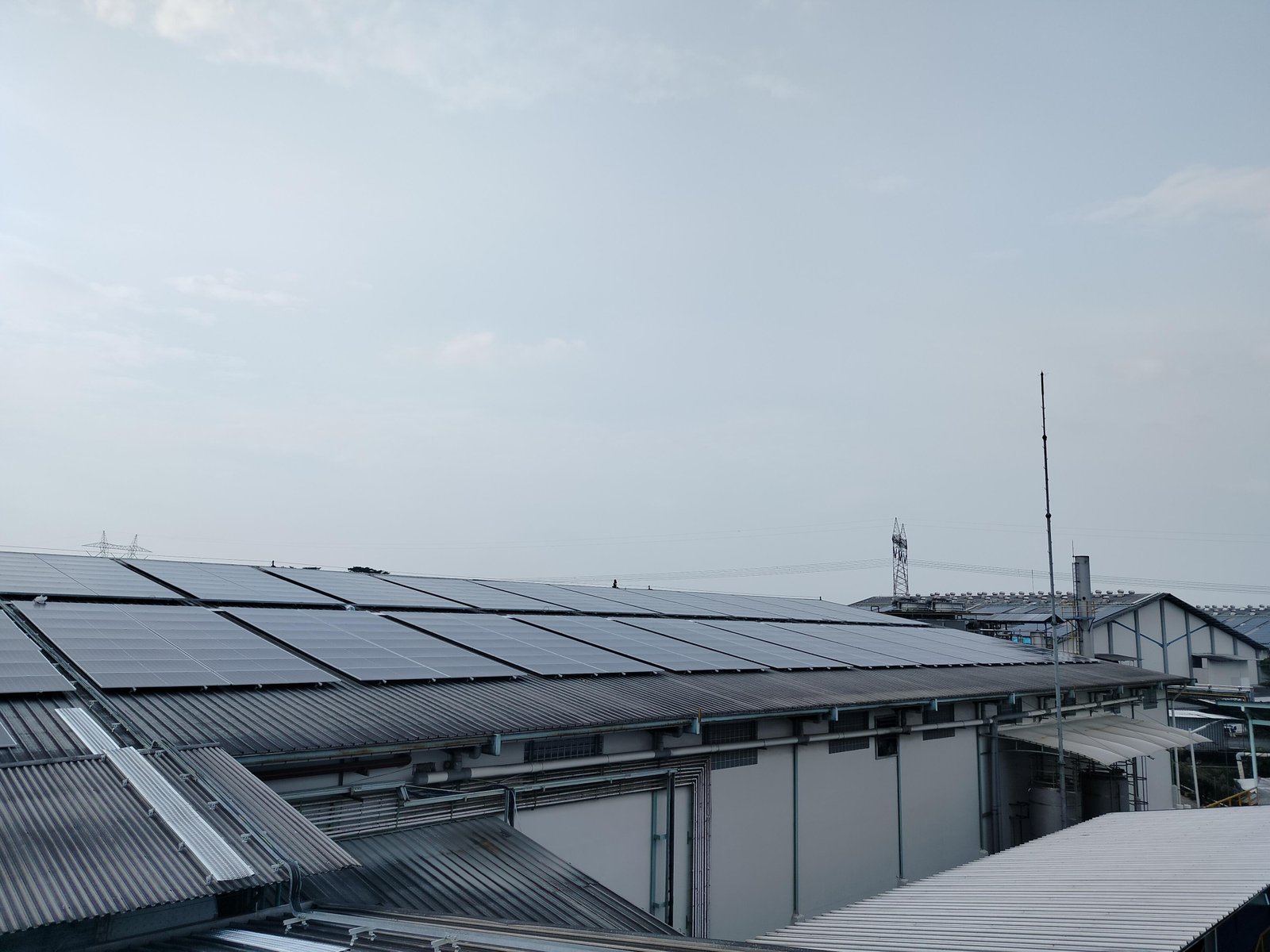
Business Models for Solar Photovoltaic Systems and Grid-Connected Deployment
Business Model Frameworks for Solar Photovoltaic Systems: Strategic Analysis of Partnership Structures, Financial Mechanisms, Economic Viability Assessment, and Implementation Pathways for Grid-Connected and Distributed Generation Projects
Reading Time: 145 minutes
Key Highlights
• Business Model Diversity: Solar PV deployment globally utilizes at least 10 distinct business models ranging from direct ownership requiring full capital investment to innovative third-party financing structures including Power Purchase Agreements (PPAs), Build-Own-Operate (BOO), Build-Operate-Transfer (BOT), public-private partnerships (PPP), and emerging models like crowdfunding and pay-as-you-go schemes serving different market segments with varied risk-return profiles
• Economic Performance Benchmarks: Well-structured solar PV investments in Indonesian context demonstrate Internal Rate of Return (IRR) ranging 12.71% to 18.5% for rooftop commercial systems, Net Present Value (NPV) of IDR 608 million to IDR 7.78 billion (USD 39,000 to USD 500,000) for 200 kWp systems, payback periods 6.5 to 8.55 years, and Levelized Cost of Energy (LCOE) IDR 735 to 1,200 per kWh (USD 0.047 to 0.077 per kWh) based on verified case studies
• Capital Investment Requirements: Turnkey solar PV installations require capital expenditure approximately IDR 12.3 million per kWp (USD 790 per Wp) for rooftop systems under 500 kWp declining to IDR 10.5 million per kWp (USD 670 per Wp) for utility-scale projects exceeding 10 MWp, with financing structures enabling zero upfront cost through third-party ownership models transferring capital burden to specialized investors achieving economies of scale across portfolio projects
• Operational Cost Structures: Annual operation and maintenance expenditure typically represents 1.5% to 2.5% of initial capital investment for grid-connected systems without battery storage, comprising panel cleaning, inverter maintenance, monitoring system operation, insurance, and component replacement reserves, with lifecycle costs over 25-year operational period totaling 30-40% of initial capital expenditure before accounting for major component replacements potentially required after year 15-20
Executive Summary
Solar photovoltaic technology has developed from niche application serving remote off-grid locations to mainstream electricity generation option competitive with conventional fossil fuel power plants across most global markets, driven by dramatic cost reductions exceeding 90% since 2010, improving conversion efficiencies now routinely achieving 20-22% for commercial monocrystalline modules, and maturing supply chains enabling reliable project delivery at scale. This transformation fundamentally reshapes business model landscape, with diverse financing structures, ownership arrangements, and revenue mechanisms emerging to address varied stakeholder needs spanning individual homeowners seeking electricity bill reductions, commercial building operators pursuing sustainability objectives and operating cost control, industrial facilities requiring reliable power supply and carbon footprint management, utility companies integrating distributed generation into grid operations, and financial investors seeking stable long-term returns from renewable energy assets. Understanding these business model alternatives, their economic characteristics, implementation requirements, and suitability for different contexts proves essential for decision-makers evaluating solar PV adoption across residential, commercial, industrial, and utility market segments.
Indonesian solar PV market demonstrates accelerating deployment supported by government renewable energy targets mandating 23% renewable share in national energy mix by 2025 and longer-term objectives approaching 31% by 2050, feed-in tariff mechanisms enabling distributed generation grid export under Ministry of Energy and Mineral Resources (MEMR) regulations, declining equipment costs making projects economically viable even without subsidies in many applications, and growing corporate sustainability commitments driving commercial and industrial adoption. However, market development faces constraints including limited understanding of available business models and financing options among potential adopters, capital availability challenges for upfront investment particularly affecting small and medium enterprises, regulatory complexity in interconnection processes and tariff structures, and grid infrastructure limitations in certain regions affecting export viability and project economics. Addressing these barriers requires information resources explaining business model alternatives, financial analysis methodologies, implementation frameworks, and real-world performance data supporting informed decision-making.
This analysis provides detailed examination of solar PV business models applicable in Indonesian and broader Southeast Asian context, covering direct ownership models requiring full capital commitment from system beneficiaries, third-party ownership structures including Power Purchase Agreements and solar leasing enabling zero-upfront-cost deployment, public-private partnerships facilitating government facility installations and broader renewable energy program delivery, specialized financing mechanisms including crowdfunding and community solar expanding access for smaller participants, and emerging models addressing specific market needs such as pay-as-you-go systems serving unelectrified communities or micro-enterprises. For each business model category, the discussion examines fundamental structure and stakeholder roles, financial flows and revenue mechanisms, risk allocation among participants, economic characteristics including typical capital requirements and return profiles, regulatory and contractual frameworks, implementation processes and timelines, advantages and limitations for different applications, and documented performance data from operational projects internationally and within Indonesia where available.
Economic analysis framework presented encompasses lifecycle cost assessment capturing initial capital expenditure components (equipment procurement, installation labor, grid interconnection, engineering and permitting), ongoing operational expenditure (maintenance, insurance, monitoring, component replacement reserves), revenue streams (electricity bill savings, export tariff payments, renewable energy certificates, carbon credits), and financial metrics enabling comparative evaluation (Net Present Value, Internal Rate of Return, Simple and Discounted Payback Period, Levelized Cost of Energy, Profitability Index). Detailed cost data derived from verified Indonesian case studies published in peer-reviewed literature and international benchmarking databases provide realistic baseline assumptions supporting financial modeling, while sensitivity analysis examines project viability under different scenarios for electricity prices, solar irradiation levels, equipment costs, financing terms, and regulatory parameters. This treatment supports rigorous feasibility assessment guiding technology selection, business model choice, financing structuring, and implementation planning for diverse solar PV applications across Indonesian market segments.
Fundamental Economics and Technology Fundamentals of Solar Photovoltaic Systems
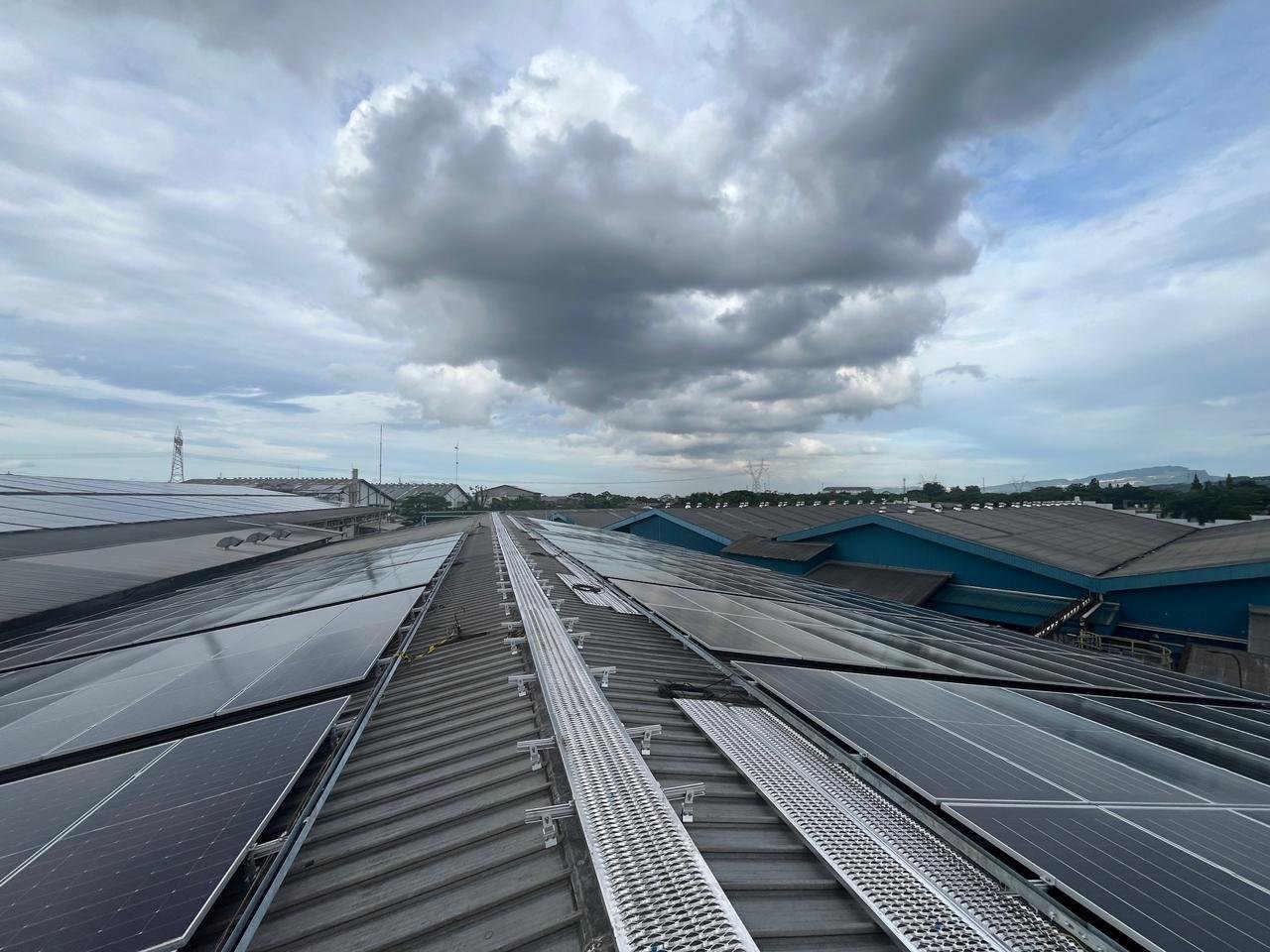
Solar photovoltaic technology converts sunlight directly into electricity through semiconductor materials exhibiting photovoltaic effect, where photons striking solar cell surface liberate electrons creating electrical current without moving parts, fuel consumption, or emissions during operation. Modern commercial solar panels typically utilize crystalline silicon cells arranged in series and parallel configurations producing rated power output under standard test conditions defined as 1,000 watts per square meter solar irradiance, 25°C cell temperature, and air mass 1.5 solar spectrum approximating clear day conditions at sea level. Panel efficiency, measured as percentage of incident solar energy converted to electrical output, ranges from 15-17% for conventional polycrystalline modules to 20-22% for premium monocrystalline products, with highest-efficiency panels utilizing PERC (Passivated Emitter and Rear Cell) or other advanced cell architectures approaching 23-24% in commercial production. These efficiency improvements enable higher power generation from given installation area, reducing balance-of-system costs per watt and improving project economics particularly for space-constrained rooftop applications.
Complete solar PV system comprises multiple components beyond photovoltaic panels including inverters converting direct current (DC) panel output to alternating current (AC) suitable for building electrical systems and grid export, mounting structures securing panels to roofs or ground-mounted racking systems, electrical protection devices including disconnect switches and circuit breakers ensuring safe operation and maintenance access, monitoring systems tracking performance and identifying operational issues, and optional battery storage enabling electricity consumption shifting or backup power during grid outages. Grid-connected systems predominate in commercial and utility applications, synchronizing inverter output with utility grid enabling bidirectional power flow where solar generation exceeding instantaneous consumption exports to grid for compensation under net metering or feed-in tariff mechanisms, while solar generation shortfalls draw supplemental grid supply ensuring continuous electricity availability. Stand-alone off-grid systems incorporate battery storage and charge controllers enabling independent operation where grid access proves impractical or uneconomic, serving remote telecommunications facilities, agricultural installations, residential applications in unelectrified areas, and emergency backup power requirements.
Table 1: Typical Solar PV System Component Costs and Performance Characteristics
| System Component | Cost Range (IDR per Wp) |
Cost Range (USD per Wp) |
% of Total System Cost |
Typical Warranty |
Expected Lifetime |
|---|---|---|---|---|---|
| Photovoltaic modules (panels) Monocrystalline silicon, 400-550 Wp per panel, 20-22% efficiency |
4,500 - 6,200 | 0.29 - 0.40 | 35-45% | 25 years performance |
30-35 years |
| Inverter system String or micro-inverters, 97-98.5% efficiency, DC to AC conversion |
1,200 - 2,100 | 0.08 - 0.13 | 10-15% | 5-10 years product |
10-15 years |
| Mounting structure & racking Aluminum or galvanized steel, tilt-optimized, wind-rated |
800 - 1,500 | 0.05 - 0.10 | 7-12% | 10-15 years structural |
25-30 years |
| Electrical BOS (cables, breakers, disconnects) Wiring, combiner boxes, protection devices, AC/DC distribution |
600 - 1,200 | 0.04 - 0.08 | 5-10% | 1-5 years varies |
20-25 years |
| Monitoring system Data loggers, sensors, cloud platform, performance tracking |
150 - 400 | 0.01 - 0.03 | 1-3% | 2-5 years | 5-10 years |
| Installation labor Engineering, site preparation, panel mounting, electrical work, testing |
1,500 - 2,800 | 0.10 - 0.18 | 12-20% | 1-2 years workmanship |
N/A |
| Engineering, permits, grid interconnection Design, permitting, utility coordination, commissioning, documentation |
800 - 1,500 | 0.05 - 0.10 | 6-12% | N/A | N/A |
| Contingency & developer margin Risk reserves, project management, financing costs, profit margin |
700 - 1,800 | 0.04 - 0.12 | 5-12% | N/A | N/A |
| TOTAL INSTALLED COST | 10,250 - 17,500 | 0.66 - 1.12 | 100% | Varies by component |
25+ years system |
Note: Costs shown for commercial rooftop systems 50-500 kWp capacity in Indonesian context (2024-2025 pricing). Smaller residential systems typically 15-25% higher per-watt costs due to reduced economies of scale. Utility-scale ground-mounted systems achieve 10-20% lower costs through bulk procurement and simplified installation. Exchange rate assumed IDR 15,600 per USD. Sources: Industry surveys, verified project data, IRENA cost database.
Solar resource availability fundamentally determines system performance and economic viability, with Indonesia's equatorial location providing consistent year-round solar irradiation averaging 4.5 to 5.5 peak sun hours daily equivalent to 1,650 to 2,000 kWh per square meter annually across most populated regions. This solar resource compares favorably with global benchmarks including Southern Europe (1,400 to 1,800 kWh/m²/year), India (1,800 to 2,200 kWh/m²/year), and Middle East (2,000 to 2,400 kWh/m²/year), supporting viable project economics without exceptional resource quality requirements. System performance depends on multiple factors beyond raw solar irradiation including panel tilt angle and orientation affecting light incidence angles and seasonal variation, shading from nearby structures or vegetation reducing output, soiling from dust accumulation requiring periodic cleaning particularly in dry climates or near industrial emissions sources, ambient temperature with high temperatures reducing panel efficiency approximately 0.4% to 0.5% per degree Celsius above standard test conditions, and inverter efficiency losses typically 2% to 3% during DC to AC conversion. Comprehensive performance modeling tools including PVsyst, SAM (System Advisor Model), and PVWatts incorporate these factors predicting realistic annual energy generation supporting accurate financial projections.
Operational expenditure for grid-connected solar PV systems without battery storage remains relatively modest compared to initial capital investment, typically totaling 1.5% to 2.5% of installed system cost annually encompassing scheduled maintenance activities (quarterly inspections, annual electrical testing, periodic panel cleaning), inverter servicing and eventual replacement after 10-15 years operation, insurance coverage for property damage and liability risks, monitoring system subscription fees, and component replacement reserves for failed panels, optimizers, or other equipment. A 200 kWp commercial rooftop system with initial installed cost IDR 2.46 billion (USD 158,000) would incur annual O&M expenditure approximately IDR 37 million to 62 million (USD 2,400 to 4,000), with major inverter replacement adding IDR 240 million to 420 million (USD 15,000 to 27,000) once during 25-year system lifetime. These operational costs prove significantly lower than conventional diesel generation requiring continuous fuel purchases, frequent oil changes, major overhauls every 3-5 years, and complete engine replacement after 20,000 to 40,000 operating hours, contributing to solar PV's economic competitiveness particularly for commercial and industrial applications with high electricity consumption and expensive grid or generator electricity.
Direct Ownership Business Model: Capital Investment and Self-Financed Deployment
Direct ownership represents the most straightforward solar PV business model where system beneficiary (homeowner, business, institution) makes complete upfront capital investment purchasing and installing equipment, assumes all operational responsibilities including maintenance and insurance, and directly captures all benefits through reduced electricity purchases from grid, feed-in tariff revenues from exported generation, and potential renewable energy certificate income where applicable. This model eliminates intermediary parties and their associated profit margins or fees, provides complete asset control enabling modification or expansion decisions without third-party approvals, and offers maximum long-term economic returns through full savings capture over 25-30 year system operational lifetime. However, direct ownership requires substantial upfront capital commitment ranging IDR 2 billion to 5 billion (USD 130,000 to 320,000) for typical 100-200 kWp commercial installations, exposes owner to all technical and performance risks without shared liability, demands in-house technical capabilities for system monitoring and maintenance coordination, and creates balance sheet impacts that may affect borrowing capacity for other business purposes depending on financing structure employed.
Financing alternatives for direct ownership span multiple mechanisms each with distinct characteristics and implications. Cash purchase using existing capital reserves or operating cash flow provides simplest implementation without debt obligations, interest costs, or lender requirements, though constraining liquidity for other business needs and potentially reducing returns if capital could achieve higher yields in alternative investments. Commercial bank loans specifically for renewable energy projects offer dedicated financing structures with terms typically 5 to 10 years, interest rates approximately 8% to 12% for creditworthy borrowers in Indonesian market, and loan-to-value ratios reaching 70% to 80% of project cost requiring 20% to 30% equity contribution. Some Indonesian banks including BRI, Mandiri, and BNI have developed specialized solar PV lending programs incorporating technical due diligence, energy savings verification, and flexible repayment structures aligned with project cash flows, though loan approval processes can extend 2 to 4 months requiring business financial statements, project feasibility studies, equipment quotations, and collateral arrangements potentially including real estate mortgages or equipment liens.
Financial Analysis Example: 200 kWp Commercial Rooftop System - Direct Ownership with Bank Financing
Project Parameters and Assumptions:
| System capacity (DC rating): | 200 kWp (500 panels × 400 Wp each) |
| Installation type: | Commercial rooftop, optimal tilt and orientation |
| Location & solar resource: | Jakarta area, 4.8 kWh/m²/day average irradiation |
| Annual energy production (Year 1): | 265,000 kWh (1,325 kWh/kWp, 75% performance ratio) |
| Annual degradation rate: | 0.5% per year (standard mono-Si panel degradation) |
| Self-consumption ratio: | 85% (225,250 kWh/year used on-site, 15% exported) |
| Grid electricity price (avoided cost): | IDR 1,450/kWh (USD 0.093/kWh, commercial tariff) |
| Export tariff (feed-in rate): | IDR 1,000/kWh (USD 0.064/kWh, 65% of retail) |
| Electricity price escalation: | 3.5% annually (conservative estimate) |
| System lifetime: | 25 years analysis period |
Capital Investment Breakdown:
| Cost Component | IDR (millions) | USD | IDR per Wp | % of Total |
|---|---|---|---|---|
| Solar panels (500 × 400W monocrystalline) | 1,020 | 65,400 | 5,100 | 41.5% |
| Inverters (2 × 100kW string inverters) | 280 | 17,900 | 1,400 | 11.4% |
| Mounting structure & racking system | 220 | 14,100 | 1,100 | 8.9% |
| Electrical BOS (cables, breakers, disconnects) | 165 | 10,600 | 825 | 6.7% |
| Monitoring & data acquisition system | 45 | 2,900 | 225 | 1.8% |
| Installation labor & commissioning | 380 | 24,400 | 1,900 | 15.4% |
| Engineering, permits, grid interconnection | 210 | 13,500 | 1,050 | 8.5% |
| Contingency (5%) | 140 | 9,000 | 700 | 5.7% |
| TOTAL CAPITAL INVESTMENT | 2,460 | 157,700 | 12,300 | 100% |
Financing Structure and Debt Service:
| Equity contribution (owner's capital): | IDR 492 million (USD 31,500, 20% of project cost) |
| Bank loan amount: | IDR 1,968 million (USD 126,200, 80% LTV) |
| Interest rate: | 9.5% per annum (fixed rate for RE projects) |
| Loan term: | 8 years (96 monthly payments) |
| Monthly debt service payment: | IDR 30.4 million (USD 1,950) |
| Annual debt service (Years 1-8): | IDR 365 million (USD 23,400) |
| Total interest paid over loan term: | IDR 954 million (USD 61,200) |
Annual Operating Costs (Years 1-25):
| Routine maintenance & cleaning: | IDR 24.6 million/year (USD 1,580, 1.0% of capex) |
| Insurance (property & liability): | IDR 12.3 million/year (USD 790, 0.5% of capex) |
| Monitoring system subscription: | IDR 4.7 million/year (USD 300) |
| Component replacement reserve: | IDR 9.8 million/year (USD 630, 0.4% of capex) |
| TOTAL ANNUAL O&M: | IDR 51.4 million (USD 3,300, 2.1% of capex) |
| Inverter replacement (Year 12 & 22): | IDR 320 million (USD 20,500) one-time cost each occurrence |
Annual Revenue Streams and Cash Flow (Year 1 example, escalating 3.5% annually):
| Revenue Component | Energy (kWh/yr) | Rate | Annual Value (IDR millions) | Annual Value (USD) |
|---|---|---|---|---|
| Self-consumption savings (avoided grid purchase) | 225,250 | IDR 1,450/kWh | 326.6 | 20,940 |
| Export revenue (grid feed-in) | 39,750 | IDR 1,000/kWh | 39.8 | 2,550 |
| Total annual benefit (Year 1) | 265,000 | - | 366.4 | 23,490 |
| Less: O&M expenses | - | - | (51.4) | (3,300) |
| Less: Debt service (Years 1-8 only) | - | - | (365.0) | (23,400) |
| Net annual cash flow (Year 1-8, debt service period) | - | - | (50.0) | (3,210) |
| Net annual cash flow (Year 9-25, post debt payoff) | - | - | +315.0 | +20,190 |
Financial Performance Metrics (25-year analysis, 8% discount rate):
| Net Present Value (NPV): | IDR 1,847 million (USD 118,400) |
| Internal Rate of Return (IRR): | 13.8% (exceeds typical hurdle rate 10-12%) |
| Simple Payback Period: | 8.2 years (including debt service) |
| Discounted Payback Period: | 11.4 years (accounting for time value of money) |
| Profitability Index (PI): | 1.75 (present value benefits / equity invested) |
| Levelized Cost of Energy (LCOE): | IDR 892/kWh (USD 0.057/kWh over 25 years) |
| Total 25-year revenue (nominal IDR): | IDR 15,240 million (USD 977,000, with 3.5% annual escalation) |
| Total 25-year costs (nominal IDR): | IDR 4,738 million (USD 304,000, capex + O&M + inverter replacement + interest) |
| Net 25-year benefit (nominal IDR): | IDR 10,502 million (USD 673,000, 4.3× total investment) |
This analysis demonstrates that even with debt financing requiring interest payments, the project achieves positive NPV and acceptable IRR, becoming cash-flow positive after loan repayment in year 9 and generating substantial cumulative savings over system lifetime. Sensitivity to electricity price escalation is significant - reducing escalation from 3.5% to 2.0% annually would decrease NPV by approximately 25%, while increasing to 5.0% would improve NPV by approximately 35%.
Direct ownership model particularly suits organizations with available capital, long-term facility occupancy providing sufficient time horizon to realize investment returns, in-house technical capabilities for system monitoring and maintenance coordination, and balance sheet capacity to absorb capital expenditure without compromising other business priorities. Manufacturing facilities, commercial buildings, hotels, hospitals, universities, and government institutions frequently pursue direct ownership given stable electricity demand, permanent facility occupation, and organizational capacity to manage energy infrastructure. Small and medium enterprises may find direct ownership challenging due to capital constraints and lack of dedicated facilities management personnel, making third-party ownership alternatives more attractive despite higher effective energy costs accounting for investor margins and transaction structuring expenses.
Power Purchase Agreement (PPA) Model: Third-Party Ownership and Energy Services
Power Purchase Agreement (PPA) business model fundamentally restructures solar PV project ownership and financing, with specialized third-party investor (often dedicated solar development company, private equity renewable energy fund, or utility-scale project developer) making complete capital investment in system design, procurement, installation, and commissioning, retaining ownership and operational responsibility throughout contract term typically 15 to 25 years, while customer (electricity consumer, building owner) commits to purchasing generated electricity at predetermined pricing structure. This arrangement eliminates customer's upfront capital requirement and balance sheet impact, transfers all technical and performance risks to PPA provider with contractual energy delivery guarantees, and provides immediate electricity cost savings or price certainty from day one of operations. Meanwhile, PPA provider gains revenue stream from electricity sales, potential monetization of renewable energy certificates or carbon credits, depreciation tax benefits where applicable in certain jurisdictions, and asset ownership enabling potential refinancing or portfolio aggregation opportunities.
PPA pricing structures vary considerably depending on market conditions, customer credit quality, project economics, and competitive dynamics. Fixed-price PPAs establish constant electricity rate throughout contract term, providing maximum price certainty for customer though potentially forgoing future decreases in PPA provider's costs from equipment price declines or operational improvements. Escalating PPAs start with initial rate lower than current grid electricity price, then increase annually at predetermined percentage (typically 2% to 4% representing long-term inflation expectations), appealing to customers prioritizing immediate savings while accepting gradual rate increases that may eventually exceed grid prices if utility rates remain stable or decline. Time-of-use PPAs incorporate variable pricing reflecting different generation value across daily or seasonal periods, with higher rates during afternoon peak solar production correlating with peak grid demand and lower rates during early morning or late evening low-generation periods. Performance-based PPAs tie pricing to actual energy delivery, with PPA provider bearing production risk from equipment failures, shading, or suboptimal performance, incentivizing rigorous system design, quality equipment selection, and proactive maintenance.
Table 2: PPA Business Model - Stakeholder Roles, Responsibilities, and Risk Allocation
| Project Element | PPA Provider (System Owner/Investor) |
Customer (Electricity Purchaser) |
Risk Allocation |
|---|---|---|---|
| Capital investment | 100% responsibility Provides all upfront capital for equipment and installation |
$0 upfront No capital requirement or balance sheet impact |
PPA provider bears financing risk and cost of capital |
| System ownership | Owner Retains asset ownership throughout contract term |
Host/User Provides roof/land and consumes electricity |
Customer has no ownership claim; must allow system access |
| Design & engineering | Full responsibility Handles all technical design and permitting |
Approval rights Reviews design for roof integrity, aesthetics |
Provider bears design deficiency risks |
| Construction & installation | Manages entirely Contracts installers, oversees quality |
Facilitates access Provides site access and coordination |
Provider bears construction delays, cost overruns |
| Operations & maintenance | Full responsibility Performs all O&M, repairs, component replacement |
Coordination Allows access for maintenance activities |
Provider bears equipment failure, underperformance risks |
| Insurance & liability | Carries insurance Property, liability, business interruption coverage |
May require coverage Additional insured status on provider's policy |
Shared based on fault; generally provider liability for system |
| Performance guarantee | Guarantees minimum production Typically 90-95% of projected annual generation |
Receives compensation If production shortfall, payment adjustment |
Provider bears production risk, compensates underperformance |
| Grid interconnection | Manages process Handles utility applications, upgrades |
Account holder support May need to authorize interconnection as account owner |
Provider bears interconnection denial or delay risks |
| Electricity payment | Receives revenue Monthly payments per kWh generated or fixed capacity |
Makes payments Pays agreed PPA rate for solar generation consumed |
Customer bears payment obligation; provider bears credit risk |
| REC/carbon credit ownership | Typically retains May monetize environmental attributes separately |
May negotiate purchase Can buy RECs for sustainability reporting if desired |
Negotiable; often bundled into PPA price or sold separately |
| Contract termination | Removal obligation At term end, removes system or extends contract |
Options May purchase system, extend PPA, or require removal |
Provider responsible for decommissioning unless buyout |
| Tax benefits (depreciation) | Claims benefits As asset owner, claims applicable tax deductions |
None directly Benefits passed through as lower PPA pricing |
Provider monetizes tax benefits, shares via competitive pricing |
PPA structure fundamentally transfers capital and technical risks from customer to specialized solar investor, who achieves returns through electricity sales and potential auxiliary revenue streams (RECs, tax benefits) while customer gains immediate energy cost reduction without upfront investment. Contractual terms must clearly allocate responsibilities and establish performance guarantees protecting both parties' interests over multi-decade relationship.
PPA providers typically target Internal Rate of Return 10% to 15% on invested capital depending on project scale, customer credit quality, regulatory framework, and competitive market conditions. Achieving these returns requires careful cost management across development, equipment procurement, installation, and ongoing operations, while pricing electricity at levels attractive to customers typically 10% to 30% below prevailing grid rates initially. PPA economics benefit substantially from economies of scale, with larger projects and portfolio aggregation reducing per-watt development costs, enabling bulk equipment procurement discounts, spreading fixed operational overhead across greater capacity, and improving financing terms through demonstrated track record and diversified cash flow sources. Consequently, PPA model proves most viable for commercial and industrial applications with electricity consumption exceeding 500,000 kWh annually supporting system sizes above 200-300 kWp, while smaller residential or small business applications face higher relative transaction costs and less attractive economics for PPA providers unless aggregated through community solar or similar programs discussed subsequently.
Build-Own-Operate (BOO) Model for Industrial and Captive Power Applications
Build-Own-Operate (BOO) business model shares structural similarities with PPA arrangements through third-party ownership and operation, but typically applies to larger industrial or captive power installations where solar generation serves dedicated customer facility under long-term supply agreement without electricity retail through grid. Under BOO structure, specialized project developer or independent power producer designs, finances, constructs, owns, and operates solar generation facility located at customer's industrial site or nearby dedicated land parcel, selling entire output to single industrial off-taker under contracted terms spanning 15 to 25 years with no ownership transfer at contract conclusion. This model enables industrial corporations to secure reliable, competitively-priced renewable electricity supporting manufacturing operations and sustainability commitments without diverting capital from core business activities, while retaining operational focus on primary products rather than managing energy infrastructure as non-core asset.
BOO projects typically achieve considerably larger scale than rooftop PPA installations, often ranging 5 to 50 MWp for significant industrial facilities including aluminum smelters, steel mills, automotive manufacturing complexes, petrochemical plants, large commercial building campuses, or industrial estates serving multiple tenants. These scale advantages enable more favorable project economics through reduced per-watt equipment costs from bulk procurement, more efficient balance-of-system design utilizing utility-scale inverters and simplified electrical configuration, lower soft costs with engineering and permitting expenses spread across greater capacity, and improved financing terms given larger loan sizes supporting dedicated project finance structures rather than relying solely on corporate balance sheet lending. Ground-mounted configurations common in BOO projects also offer technical advantages versus rooftop installations including optimized panel tilt and orientation maximizing annual generation, easier installation and maintenance access, better cooling from air circulation improving panel efficiency, and greater expansion flexibility to scale capacity matching growing industrial electricity demand.
Financial structuring for BOO projects frequently employs project finance techniques where debt and equity providers look primarily to project cash flows for repayment rather than sponsor balance sheet guarantees, supported by power purchase agreement providing contracted revenue stream, operations and maintenance contract ensuring reliable system performance, equipment warranties backing component quality, and insurance policies mitigating various operational and environmental risks. This structure enables high leverage ratios reaching 70% to 80% debt financing from commercial banks, development finance institutions, or infrastructure debt funds, with equity contributions from project sponsors, private equity renewable energy funds, or strategic industrial investors. Indonesian renewable energy financing ecosystem includes specialized lenders such as Indonesia Infrastructure Finance (IIF), international institutions including Asian Development Bank and International Finance Corporation, and commercial banks developing renewable energy lending expertise notably Bank Mandiri, BRI, and BNI, collectively enabling viable project finance structures for appropriately sized and structured BOO solar developments.
Figure 1: BOO Project Cash Flow Structure - 20 MWp Industrial Solar Facility
PROJECT OVERVIEW
20 MWp ground-mounted solar facility serving aluminum processing plant
Location: Java industrial estate | Annual generation: 28,600 MWh (1,430 hours full equivalent)
Total capital cost: IDR 273 billion (USD 17.5 million) | Unit cost: IDR 13.65 million/kWp (USD 875/Wp)
Contract: 20-year PPA at IDR 1,200/kWh (USD 0.077/kWh) fixed price, escalating 2.5% annually
CAPITAL INVESTMENT SOURCES (Year 0)
Equity capital (30%): IDR 82 billion (USD 5.25 million)
• Sponsor A (project developer): 60% equity share = IDR 49.2 billion
• Sponsor B (strategic industrial investor): 40% equity share = IDR 32.8 billion
• Target equity IRR: 14-16% after-tax
Senior debt (70%): IDR 191 billion (USD 12.25 million)
• Term: 15 years with 6-month construction plus 18-month grace period
• Interest rate: 9.0% per annum (competitive commercial rate for RE projects)
• Debt service coverage ratio requirement: Minimum 1.30× average over loan term
• Security: First priority security over project assets, assignment of revenue from PPA
ANNUAL REVENUE (Year 1 example, escalating 2.5% thereafter)
Electricity sales to offtaker:
• Annual generation: 28,600 MWh
• PPA rate (Year 1): IDR 1,200/kWh (USD 0.077/kWh)
• Gross revenue: IDR 34.32 billion (USD 2.20 million)
Renewable Energy Certificate (REC) sales (if applicable):
• Estimated value: IDR 50-100/kWh additional (USD 0.003-0.006/kWh)
• Additional revenue: IDR 1.43-2.86 billion (USD 92,000-183,000)
TOTAL YEAR 1 REVENUE: IDR 35.75-37.18 billion (USD 2.29-2.38 million)
ANNUAL OPERATING COSTS (Years 1-20, escalating 2% annually)
Operations & Maintenance: IDR 3.28 billion (USD 210,000) - 1.2% of capex
• Routine inspections, cleaning (quarterly), vegetation management
• Preventive maintenance on inverters, trackers (if applicable), electrical systems
Insurance: IDR 1.64 billion (USD 105,000) - 0.6% of capex
• Property insurance (all-risk coverage)
• Business interruption insurance
• Third-party liability coverage
Asset management & monitoring: IDR 0.82 billion (USD 53,000)
• Remote monitoring system subscription and analysis
• Performance reporting to lenders and offtaker
• Compliance reporting and meter calibration
Land lease (if applicable): IDR 0.55 billion (USD 35,000)
• Annual payment for land use rights
Component replacement reserve: IDR 1.09 billion (USD 70,000)
• Inverter replacement fund (years 12-15 estimated)
• Module degradation buffer and string repairs
TOTAL ANNUAL OPEX: IDR 7.38 billion (USD 473,000) - approximately 2.7% of capex
ANNUAL DEBT SERVICE (Years 2-16, after grace period)
Principal + Interest payment: IDR 23.95 billion annually (USD 1.54 million)
• Calculated using level debt service schedule
• Comprises interest on outstanding principal plus principal repayment
• Final payment Year 16, then debt-free operations Years 17-20
Debt service coverage ratio (DSCR) - Year 1 example:
• Net operating income: Revenue IDR 35.75B - OpEx IDR 7.38B = IDR 28.37 billion
• Annual debt service: IDR 23.95 billion
• DSCR = 28.37 / 23.95 = 1.18× (below 1.30× minimum covenant)
• Note: With 2.5% revenue escalation, DSCR improves to 1.35× by Year 5 and 1.55× by Year 10
• Average DSCR over 15-year debt term: 1.42× (meets lender requirements)
EQUITY RETURNS AND PROJECT METRICS (20-year analysis period)
Levered equity IRR: 15.2% (after debt service and all expenses)
Equity NPV (8% discount rate): IDR 54.8 billion (USD 3.51 million) on IDR 82B investment
Equity cash-on-cash return (average Years 6-20): 18.4% annually
Project-level IRR (unlevered): 11.3% (return on total capital before financing structure)
Project NPV (8% WACC): IDR 98.2 billion (USD 6.3 million)
Cumulative cash flow distribution (20 years, nominal IDR):
• Total revenue: IDR 975 billion (USD 62.5 million)
• Total operating costs: IDR 172 billion (USD 11.0 million)
• Total debt service: IDR 359 billion (USD 23.0 million, Years 2-16)
• Available for equity distribution: IDR 444 billion (USD 28.5 million)
• Equity multiple: 5.4× (cash returned / equity invested)
• Payback to equity: Year 8 (cumulative equity distributions equal initial investment)
This 20 MWp BOO project demonstrates attractive returns for both debt and equity investors through contracted revenue stream, reasonable operating costs, and substantial project scale achieving economies. Key success factors include creditworthy offtaker ensuring payment certainty, appropriate financing structure balancing leverage benefits against coverage requirements, and operational excellence maintaining performance supporting debt service and equity distributions over 20-year period.
BOO model particularly suits large industrial corporations with substantial, stable electricity demand supporting multi-megawatt solar installations, long-term facility occupation providing contract term certainty, creditworthiness supporting favorable financing terms for project developer, and strategic commitment to renewable energy driven by sustainability objectives, carbon footprint reduction targets, or electricity cost management priorities. Indonesian industrial sectors actively pursuing BOO solar arrangements include automotive manufacturing (notably Astra Group facilities), cement production (Semen Indonesia, Indocement), pulp and paper manufacturing, textiles, food and beverage processing, and electronics assembly. International examples demonstrate BOO model viability across diverse applications including Apple's supplier clean energy program financing solar installations at component manufacturing facilities globally, aluminum industry adopting dedicated renewable generation for energy-intensive smelting operations, and data center operators contracting large-scale solar facilities supporting net-zero commitments while managing electricity costs for 24/7 computing operations.
Build-Operate-Transfer (BOT) Partnerships: Public Infrastructure and Eventual Asset Ownership
Build-Operate-Transfer (BOT) model introduces eventual asset transfer distinguishing it from perpetual private ownership under BOO or PPA structures, with private developer designing, financing, and constructing solar facility, operating and maintaining system throughout concession period typically 15 to 25 years recovering investment and earning returns through electricity sales or capacity payments, then transferring ownership to public authority, facility owner, or other designated party at concession conclusion typically for nominal consideration or predetermined buyout price. This structure proves particularly applicable for public sector facilities including government buildings, schools, universities, hospitals, and municipal infrastructure where immediate budget constraints prevent capital investment but long-term facility ownership aligns with public asset management objectives and eliminates ongoing capacity payment obligations post-transfer. BOT arrangements also suit corporate real estate portfolios where building owners desire eventual solar system ownership to maximize long-term asset value and eliminate third-party payment obligations, but lack current capital availability or technical expertise for upfront development and initial operations management.
Concession period length critically affects project economics and stakeholder interests under BOT structure. Longer concession periods (20-25 years) provide developer greater revenue generation timeframe enabling complete cost recovery with reasonable profit margins even with conservative electricity pricing or capacity payment structures, supporting more aggressive equipment procurement and higher-quality component selection given extended payback horizons. However, extended concessions delay public authority or building owner receipt of unencumbered system ownership and associated savings from eliminating capacity payments, while introducing greater uncertainty regarding system condition at transfer with older equipment potentially requiring imminent replacement or major maintenance expenditures. Conversely, shorter concessions (10-15 years) accelerate ownership transfer and maximize long-term public savings but necessitate higher pricing or payment structures enabling developer cost recovery over abbreviated timeframe, potentially creating affordability challenges or reducing project viability altogether if payment levels become uncompetitive with alternative procurement approaches.
BOT Contract Structuring Considerations and Negotiation Framework
Critical Contract Elements Requiring Clear Definition:
1. Scope of Work and Technical Specifications:
• System capacity (DC and AC ratings) with minimum guaranteed performance levels
• Equipment standards including panel efficiency, inverter quality, mounting durability
• Design criteria addressing local conditions (wind loads, corrosion protection, seismic)
• Grid interconnection requirements and compliance with utility technical specifications
• Monitoring and remote access capabilities for performance verification
• Expandability provisions if future capacity additions may be desired
2. Construction Timeline and Performance Standards:
• Detailed construction schedule with milestones (design approval, equipment procurement, installation completion, commissioning)
• Liquidated damages for schedule delays attributable to developer
• Force majeure provisions excusing delays from extraordinary events
• Performance testing protocols establishing baseline energy production expectations
• Acceptance criteria and punch list procedures for project handover to operations
• Warranty coverage periods for workmanship and equipment performance
3. Revenue Mechanism and Payment Structure:
• Capacity payment (fixed monthly/annual charge for system availability) versus energy payment (per kWh generated)
• Payment rates and any escalation formulae tied to inflation or electricity price indices
• Minimum energy delivery guarantees with payment adjustments for underperformance
• Invoice and payment terms (monthly billing, payment due dates, late payment penalties)
• Currency provisions if foreign exchange exposure exists for imported equipment
• Tax treatment clarification regarding value-added tax, withholding tax, or other fiscal considerations
4. Operations and Maintenance Requirements:
• Specific O&M activities required (inspection frequency, cleaning protocols, preventive maintenance schedules)
• Performance standards including minimum system availability (typically 97-99% excluding force majeure)
• Response time requirements for equipment failures or performance issues
• Reporting obligations including monthly production reports, annual performance summaries
• Spare parts inventory and replacement protocols for failed components
• System upgrades or modifications approval procedures
5. Transfer Conditions and End-of-Concession Provisions:
• Transfer timing (specific date, upon achieving certain milestones, or automatic upon payment completion)
• Transfer price if any (nominal IDR 1, fair market value, predetermined formula, or included in concession payments)
• System condition requirements at transfer (minimum performance level, specific component warranties remaining)
• Training and knowledge transfer to receiving entity's personnel during transition period
• Documentation delivery including as-built drawings, O&M manuals, equipment warranties, historical performance data
• Spare parts and consumables included in transfer versus developer retention
6. Risk Allocation and Liability Framework:
• Performance risk (developer guarantees minimum energy production with payment adjustments for shortfalls)
• Technology risk (developer bears obsolescence risk during concession, receiving entity post-transfer)
• Regulatory risk allocation (changes in interconnection requirements, tariff structures, permitting)
• Force majeure definitions and consequences (natural disasters, civil disturbance, pandemics)
• Insurance requirements including property, liability, business interruption coverage with receiving entity as additional insured
• Indemnification provisions protecting each party from liabilities arising from the other's actions
7. Early Termination Rights and Buyout Options:
• Default conditions permitting termination (payment defaults, performance failures, bankruptcy)
• Cure periods allowing defaulting party opportunity to remedy breaches
• Termination compensation (outstanding debt payoff, equity return targets, operational period-based schedules)
• Optional early buyout allowing receiving entity to purchase system before concession end
• Buyout price formulae (net present value of remaining payments, depreciated book value, third-party appraisal)
• Removal obligations if receiving entity opts not to accept transfer at concession conclusion
8. Permits, Approvals, and Regulatory Compliance:
• Responsibility allocation for obtaining construction permits, electrical permits, environmental approvals
• Grid interconnection application and utility coordination (often requires facility owner participation as account holder)
• Ongoing compliance obligations including safety inspections, environmental reporting
• Changes in law provisions addressing how regulatory modifications affecting project economics will be handled
• Government support letters or guarantees if public entity creditworthiness enhancements needed for project financing
• Feed-in tariff or net metering registration if applicable to project structure
Indonesian public-private partnership framework established through Presidential Regulation 38/2015 (as amended) and supporting Ministry of Finance guidelines provides legal foundation for BOT solar projects involving government entities, defining procurement processes, contract standardization, government guarantee mechanisms, and dispute resolution procedures. However, solar BOT applications remain relatively limited in Indonesian public sector compared to transportation or water infrastructure PPPs, reflecting limited awareness of renewable energy BOT possibilities among government procurement officials, budget prioritization favoring immediate expenditure over long-term commitments even when lifecycle costs prove favorable, complex procedural requirements deterring developers from pursuing relatively small-scale solar projects, and uncertainty regarding enforcement of payment obligations across multi-year political cycles potentially spanning different administrations. Addressing these constraints requires capacity building among government procurement staff regarding renewable energy PPP structures, development of standardized solar BOT contract templates reducing transaction costs, political commitment to honoring multi-year payment obligations through budget appropriations, and demonstration projects showcasing successful implementations building confidence for broader adoption.
International best practices for solar BOT projects emphasize thorough feasibility assessment before procurement including detailed energy audit establishing baseline consumption and solar generation potential, legal review of property rights and easements ensuring system can remain operational throughout concession, financial modeling comparing BOT approach against alternative procurement methods including direct purchase with debt financing or conventional power purchase, and competitive procurement processes soliciting multiple developer proposals enabling value-for-money comparisons. Successful BOT implementations documented globally include India's RESCO (Renewable Energy Service Company) model deploying solar systems at government buildings across multiple states under standardized BOT frameworks, Philippines' Department of Education solar program installing systems at public schools with eventual ownership transfer supporting long-term operational savings, and South Africa's municipal solar initiatives enabling renewable energy adoption by budget-constrained local governments through private financing with eventual public ownership aligning with infrastructure asset management strategies.
Engineering, Procurement, and Construction (EPC) Contracting Models
Engineering, Procurement, and Construction (EPC) contracting represents turnkey project delivery approach where single contractor assumes comprehensive responsibility for system design, equipment procurement, installation, testing, and commissioning, delivering fully operational solar PV facility to owner under fixed-price, fixed-schedule agreement. This integrated contracting model contrasts with traditional multi-contract approaches where owner separately engages engineering consultants for design, equipment suppliers for procurement, and construction contractors for installation, requiring substantial owner coordination and bearing interface risks between different parties. EPC contracts prove particularly attractive for solar PV projects given relatively standardized technology, well-established supply chains, and proven installation methodologies enabling experienced contractors to deliver complete systems with minimal owner involvement beyond specification development, milestone approvals, and final acceptance testing.
EPC contract structures typically allocate substantial risks to contractor including design deficiencies affecting system performance, equipment procurement challenges or price fluctuations, construction schedule delays from contractor-controllable causes, installation quality issues requiring rework, and performance shortfalls relative to guaranteed output levels. In exchange for assuming these risks, EPC contractors command premium pricing typically 8-15% above component-by-component procurement costs, reflecting risk contingencies, project management overhead, coordination responsibilities, and warranty obligations. However, this premium often proves economically justified through reduced owner administrative burden, single-point accountability simplifying problem resolution, accelerated project timelines from integrated planning and execution, and performance guarantees providing recourse if system underperforms design specifications.
Key EPC Contract Elements and Risk Allocation Framework
1. Scope of Work and Technical Specifications
Design responsibilities: EPC contractor develops detailed engineering based on owner's technical requirements, site conditions, and applicable codes/standards. Includes electrical single-line diagrams, structural calculations for mounting systems, layout drawings optimizing panel placement, interconnection designs, and equipment specifications. Owner typically retains approval rights over major design elements while contractor bears responsibility for design adequacy.
Equipment procurement: Contractor selects, purchases, and manages delivery of all major components (panels, inverters, mounting, electrical) meeting specification requirements. May propose value engineering alternatives offering cost savings or performance improvements. Specifications should define minimum acceptable standards (panel efficiency ≥20%, inverter efficiency ≥97%, 25-year panel warranty) while allowing contractor flexibility for competitive sourcing.
Construction and installation: Complete site preparation, mounting structure installation, panel placement, electrical wiring, inverter installation, grid interconnection, and commissioning. Includes temporary facilities, safety management, quality control, and site restoration. Contractor responsible for obtaining necessary construction permits and managing subcontractor coordination.
2. Pricing Structure and Payment Milestones
Lump-sum fixed price: Most common structure providing price certainty to owner. Typical pricing for 200-500 kWp commercial rooftop EPC: IDR 12-14 million per kWp (USD 770-900 per Wp) turnkey installed. Larger projects 1-5 MWp achieve IDR 10-12 million per kWp. Price includes all design, equipment, labor, testing, commissioning, and contractor margin.
Payment schedule aligned with milestones:
• Advance payment: 10-15% upon contract signing (mobilization, engineering)
• Design approval: 10-15% upon owner acceptance of detailed engineering
• Equipment delivery: 30-40% upon major equipment arrival at site
• Installation completion: 20-25% upon mechanical completion and pre-commissioning tests
• Final payment: 10-15% upon successful commissioning and performance acceptance
• Retention: 5-10% held for warranty period (typically 12 months) ensuring defect correction
Alternative pricing structures: Cost-plus-fee arrangements where contractor reimbursed for actual costs plus fixed fee or percentage markup, used for complex or uncertain scope. Unit pricing per kWp installed with quantity adjustments for actual capacity, suitable when final system size remains flexible. Target price with gainshare/painshare provisions splitting cost overruns/underruns between parties, aligning incentives for cost control.
3. Performance Guarantees and Acceptance Testing
Guaranteed system capacity: Contractor guarantees minimum DC nameplate capacity (e.g., 200 kWp ±3% tolerance) verified through measurement of installed panel ratings and inverter capacity. Shortfalls require installation of additional panels or price reduction proportional to capacity deficit.
Performance ratio guarantee: More sophisticated guarantees specify minimum performance ratio (PR) representing actual energy output as percentage of theoretical maximum based on solar irradiation. Typical guaranteed PR: 75-80% accounting for temperature derating, inverter losses, soiling, shading, and other real-world factors. Measured over initial 12-month period with adjustments for actual irradiation versus design assumptions.
Minimum energy production guarantee: Contractor guarantees minimum first-year energy production (e.g., 1,300-1,350 kWh per kWp installed for Indonesia) with compensation mechanism if actual generation falls below guarantee. Compensation typically calculated as shortfall kWh multiplied by agreed energy value (often PPA rate or avoided grid electricity cost), paid as cash or additional performance payments.
Acceptance testing protocols: Detailed procedures verifying system performance before final acceptance including:
• Visual inspection confirming workmanship quality and completion per drawings
• String testing measuring voltage and current from each panel series group
• Inverter functional testing across operating range and grid synchronization
• Insulation resistance and ground continuity testing ensuring electrical safety
• Performance testing under varying irradiation conditions documenting actual output
• Monitoring system verification confirming accurate data collection and reporting
• Documentation review including as-built drawings, O&M manuals, warranties, test reports
4. Schedule Commitments and Delay Provisions
Project timeline: Typical EPC schedule for commercial rooftop systems:
• Detailed engineering: 4-6 weeks from contract signing
• Equipment procurement: 8-12 weeks including manufacturing, shipping, customs clearance
• Installation: 4-8 weeks depending on system size and site complexity
• Commissioning and testing: 1-2 weeks
• Total project duration: 4-6 months from contract to energization
Delay liquidated damages: Contractor pays predetermined damages for schedule delays attributable to contractor (typically IDR 0.1-0.3% of contract value per day delayed, capped at 5-10% total). Compensates owner for lost electricity savings during delay period without requiring proof of actual damages.
Force majeure exceptions: Delays from extraordinary events outside contractor control (natural disasters, pandemics, civil unrest, government actions) excuse liquidated damages. Requires prompt notice, reasonable mitigation efforts, and potential schedule extension. COVID-19 pandemic demonstrated importance of carefully defining force majeure scope and procedures.
Owner-caused delays: Extensions granted for delays attributable to owner including late approvals, site access restrictions, utility interconnection delays beyond contractor control, or owner-requested changes. May trigger time extension without cost adjustment or both time and cost if contractor incurs additional expenses.
5. Warranty and Post-Completion Support
Workmanship warranty: Contractor warrants installation quality for 1-2 years post-completion, correcting defects in workmanship or materials at no cost. Covers mounting structure integrity, electrical connections, weatherproofing, and all installation-related items.
Equipment warranties pass-through: Contractor assigns manufacturer warranties to owner including:
• Panel performance warranty: Typically 25 years guaranteeing minimum 80-85% of original capacity
• Panel product warranty: 10-12 years covering manufacturing defects
• Inverter warranty: 5-10 years product warranty, sometimes extended to 20-25 years for premium
• Mounting structure: 10-15 years structural warranty against corrosion or failure
Performance guarantee period: First 12-24 months monitoring performance against guarantees, with contractor responsible for correcting shortfalls through system optimization, additional panels, or financial compensation.
Operations training: Contractor provides training to owner's personnel on system operations, monitoring platform use, basic troubleshooting, and preventive maintenance procedures. Typically 2-3 day program during commissioning period.
O&M services (optional): Many EPC contractors offer ongoing O&M contracts post-completion, leveraging installation knowledge and spare parts inventory. Typical pricing: IDR 200,000-400,000 per kWp annually (1.5-3% of initial capex) covering scheduled maintenance, monitoring, and corrective repairs.
6. Risk Allocation and Insurance Requirements
Design risk: Contractor bears responsibility for design adequacy including structural calculations, electrical sizing, and performance predictions. Owner recourse if design deficiencies cause performance shortfalls or require costly remediation.
Construction risk: Contractor responsible for safe execution, quality workmanship, and managing construction hazards. Includes responsibility for worker safety, third-party property damage during construction, and environmental compliance.
Price/cost risk: Under lump-sum contracts, contractor absorbs cost overruns from equipment price increases, labor cost escalation, or inefficient execution. Protects owner from budget uncertainties.
Insurance coverage required:
• Contractor's all-risk insurance: Covers equipment and work during construction against damage, theft, or loss
• Third-party liability: Minimum IDR 5-10 billion coverage for bodily injury or property damage
• Worker's compensation: Mandatory coverage for all construction workers per Indonesian labor regulations
• Professional indemnity: Errors and omissions coverage for design work
• Installation all-risk warranty: First year coverage continuing after completion for workmanship defects
Community Solar and Crowdfunding Business Models
Community solar programs enable multiple participants to share benefits from solar installations without requiring individual rooftop systems, addressing key market barriers including renters lacking property ownership rights, homeowners with unsuitable roofs (shading, structural limitations, unfavorable orientation), apartment residents in multi-tenant buildings, and small electricity consumers for whom individual installations prove uneconomical. Community solar facilities typically range 500 kWp to 5 MWp, with electricity production allocated among subscribers proportional to their subscription levels, generating bill credits or direct savings on participants' utility bills. This shared-benefit structure democratizes solar access while achieving economies of scale through larger installations, professional management, and portfolio diversification across multiple customer load profiles reducing intermittency impacts.
Virtual net metering (VNM) represents enabling regulatory mechanism for community solar, allowing electricity generated at single facility to be allocated among multiple utility accounts potentially at different physical locations. Subscribers receive bill credits for their allocated generation, effectively netting solar production against their consumption even though panels reside elsewhere. Indonesia's current regulatory framework under ESDM No. 2/2024 does not explicitly provide for virtual net metering, representing significant barrier to community solar development requiring future policy evolution. However, alternative structures including private-wire community systems serving defined building complexes or industrial estates, and subscription-based models where community solar operator sells electricity directly to participants under bilateral contracts, enable shared solar benefits within existing regulatory constraints.
Community Solar Implementation Models and Participation Structures
Model 1: Subscriber-Owned Cooperative Structure
Organizational structure: Participants form cooperative or association collectively owning solar facility. Each member purchases shares or capacity allocations (e.g., 5 kWp, 10 kWp) proportional to their electricity needs. Cooperative engages EPC contractor for system installation and potentially O&M provider for ongoing management.
Capital raising: Members contribute upfront capital purchasing their capacity shares. Typical investment: IDR 60-75 million per 5 kWp subscription (including proportional share of project development, installation, and initial working capital). May structure as member loans to cooperative or equity shares, affecting tax treatment and return distribution.
Benefit distribution: Electricity cost savings distributed to members based on their capacity allocations. If facility produces 1,000,000 kWh annually and member owns 2% of capacity (20 kWp of 1,000 kWp facility), they receive credit for 20,000 kWh annual production. Savings calculated as credited kWh multiplied by avoided grid electricity rate.
Governance: Democratic member control through elected board of directors, annual general meetings, and voting rights proportional to capacity ownership. Decisions on O&M contractors, insurance, system expansions, or modifications require member approval per cooperative bylaws.
Advantages: Member ownership aligns incentives, no profit margin to third-party operator, democratic governance, potential community-building benefits.
Challenges: Requires member coordination and engagement, administrative overhead for cooperative management, slower decision-making, potential disputes among members over operations or financial matters.
Model 2: Developer/Operator-Owned Subscription Model
Organizational structure: Professional solar developer finances, builds, owns, and operates community solar facility. Recruits subscribers who purchase capacity allocations receiving electricity bill credits or direct electricity supply at discounted rates compared to grid. Developer retains ownership throughout 20-25 year contract term.
Subscription terms: Participants pay subscription fees structured as:
• Upfront payment model: One-time payment purchasing capacity allocation (e.g., IDR 55 million for 5 kWp), receiving electricity credits over 20-25 years with no ongoing fees. Developer uses upfront payments as equity reducing project financing requirements.
• Monthly subscription model: No upfront payment, participants pay monthly fee per kWp subscribed (e.g., IDR 300,000-500,000 per kWp monthly) receiving electricity credits or supply. Fees typically 10-20% below participant's grid electricity costs creating immediate savings.
• Hybrid model: Modest upfront payment (e.g., IDR 15-20 million per 5 kWp) plus reduced monthly fees, balancing capital raising with ongoing revenue.
Electricity allocation: Proportional to subscription size. Subscriber with 5 kWp allocation in 1 MWp (1,000 kWp) facility receives 0.5% of total production. If facility generates 1,300 MWh annually, subscriber receives 6,500 kWh credit annually (or ~542 kWh monthly).
Contract terms: 20-25 year subscription agreements with provisions for early termination, subscription transfers, and production guarantees. Developer guarantees minimum annual production per kWp subscribed, compensating shortfalls.
Advantages: Professional development and management, no subscriber operational burden, flexible subscription terms, easier financing through developer's balance sheet or project finance.
Challenges: Subscribers lack ownership or control, developer profit margin reduces participant savings versus cooperative model, subscription contract complexity, potential for developer business failure leaving subscribers unserved.
Model 3: Utility-Sponsored Community Solar Program
Program structure: Electric utility (PLN in Indonesian context) develops community solar facilities or contracts with third-party developers, offering subscription programs to residential and commercial customers within service territory. Utility integrates community solar into distributed generation portfolio alongside utility-scale projects.
Subscription mechanism: Customers subscribe through utility account, adding community solar allocation to regular electricity service. Monthly bill shows:
• Regular electricity consumption and charges
• Community solar credit (kWh generated from subscriber's allocation)
• Net charges after solar credit applied
• Community solar subscription fee (if applicable)
Pricing structure: Fixed monthly subscription fee per kWp (e.g., IDR 400,000-600,000) with kWh credits at retail electricity rate, or discounted credit rate (e.g., 90% of retail) with lower or no subscription fee. Structure designed for modest savings (10-15%) ensuring program financial viability.
Program administration: Utility manages all subscriber enrollment, billing integration, capacity allocation, and customer service. Participants subscribe and cancel similar to adding optional utility services, with standardized terms and simplified processes.
Advantages: Utility credibility and established customer relationships, billing system integration, regulatory framework clarity, scalability across service territory.
Challenges: Requires utility willingness to develop/support program, potential conflicts with utility business model favoring electricity sales, regulatory approvals for program structure and pricing, limited to utility service territory.
Indonesian context: PLN-sponsored community solar would require MEMR policy directive or regulatory framework explicitly authorizing program structure. Given Indonesia's electricity sector structure with PLN monopoly in most regions, utility-sponsored model could achieve rapid scale if regulatory barriers removed.
Crowdfunding Models for Solar Project Finance
Equity crowdfunding: Multiple small investors collectively fund solar project equity, receiving proportional ownership and profit distributions. Platform intermediary (e.g., renewable energy crowdfunding portal) aggregates investors, manages legal structure, and distributes returns. Minimum investments typically IDR 5-25 million enabling retail investor participation. Target returns: 8-12% annually over 10-20 year holding period. Regulatory considerations: Must comply with Indonesian Financial Services Authority (OJK) equity crowdfunding regulations including investor accreditation, disclosure requirements, and platform licensing.
Debt crowdfunding (peer-to-peer lending): Investors provide loans to solar projects receiving fixed interest payments over loan term. Platform structures debt offering, manages collections, and distributes payments to lenders. Typical terms: 6-8 year loans, 8-11% interest rates, minimum investment IDR 1-10 million. Priority over equity in payment waterfall reducing investor risk. Subject to OJK P2P lending regulations including platform registration, borrower credit assessment, and investor protection requirements.
Revenue-based financing crowdfunding: Investors receive percentage of project revenue (e.g., PPA payments, electricity sales) until achieving predetermined return multiple (e.g., 1.3-1.5× investment). Aligns investor returns with project performance while avoiding dilutive equity or restrictive debt covenants. Particularly suitable for solar projects with contracted revenue streams providing cash flow certainty.
Donation-based models: For social impact projects (schools, clinics, community facilities), donors contribute without financial return expectation, motivated by environmental or social benefits. Platform facilitates donations, provides project updates and impact reporting. May offer non-financial recognition (naming rights, certificates, site visits) acknowledging contributions.
International examples: Mosaic (USA): $400+ million solar loans originated through crowdfunding platform; Abundance Investment (UK): £80+ million invested in renewable energy projects via retail investors; Trine (Sweden/Africa): €80+ million crowdfunded for solar home systems in emerging markets. Indonesian market potential significant but requires regulatory clarity and platform development.
Pay-As-You-Go and Solar-as-a-Service Models for Distributed Applications
Pay-as-you-go (PAYG) solar systems revolutionize electricity access in off-grid and underserved areas, enabling customers to acquire solar home systems through incremental payments rather than prohibitive upfront purchase costs. PAYG model typically provides 50-200 Wp solar system with LED lighting, phone charging, radio, and sometimes small appliances (fans, television) through asset financing structure where customers make small regular payments (daily, weekly, or monthly) over 12-36 month period totaling system cost plus interest. Mobile money integration enables convenient payment collection while remote monitoring and control technology allows provider to disable system remotely for payment defaults, reducing credit risk enabling service to customers lacking traditional credit history or collateral.
PAYG business model proves particularly relevant for Indonesia's rural and peri-urban populations, with approximately 2,500 villages and over 4 million households lacking grid electricity access according to government electrification statistics. Eastern Indonesia regions including Papua, Maluku, and Nusa Tenggara demonstrate highest unelectrified populations where PAYG solar provides immediate electricity access without waiting for grid extension. Additionally, grid-connected households experiencing frequent outages or unreliable supply supplement with PAYG solar backup systems, creating substantial market beyond purely off-grid applications. Typical PAYG customer payments range IDR 15,000-50,000 daily or IDR 100,000-300,000 monthly, comparable to or below previous expenditure on kerosene, candles, dry-cell batteries, and phone charging fees at kiosks, creating affordability while improving energy access quality.
PAYG Solar Business Model Economics and Operational Framework
System Components and Pricing Structure:
| System Size | Components Included | Cash Price (IDR) |
PAYG Down Payment |
Daily Payment (24 months) |
Total PAYG Cost (Principal + Interest) |
|---|---|---|---|---|---|
| Entry (50-80 Wp) | 50-80W panel, 12V 40Ah battery, charge controller, 3× LED lights, phone charging, radio | 3.5-4.5 million | 0-500,000 (0-10%) |
15,000-20,000 | 5.4-6.3 million (35-40% markup) |
| Standard (100-150 Wp) | 100-150W panel, 12V 75Ah battery, 4× LED lights, phone charging, 16" LED TV, radio, fan capability | 6.5-8.5 million | 500,000-1 million (8-12%) |
25,000-35,000 | 9.8-12.1 million (38-42% markup) |
| Premium (200+ Wp) | 200W panel, 24V 100Ah battery, 6× LED lights, phone charging, 24" LED TV, radio, fan, small fridge capability | 12-15 million | 1-2 million (10-13%) |
45,000-60,000 | 17.3-21.2 million (40-45% markup) |
Technology Enablers and Operational Infrastructure:
Mobile money integration: Partnership with telecommunications providers (Telkomsel, XL Axiata, Indosat) enabling payments through mobile money platforms (T-Cash, XL Tunai, Dompetku) or banking apps. Customers send payments via SMS or app, automatically recorded in provider's system updating account status. Alternative: direct agent collection in areas with limited mobile money penetration, though increasing operational costs.
Remote monitoring and control: Embedded GSM/GPRS module in charge controller or separate control unit enables:
• Real-time system performance monitoring (battery voltage, charging current, load consumption)
• Usage pattern analysis optimizing system sizing and customer support
• Payment status tracking automatically reconciling mobile money receipts
• Remote system lockout for payment defaults, typically after 3-7 day grace period
• Remote reactivation upon payment receipt without field technician visit
• Diagnostic alerts identifying technical issues requiring field service
Field operations network: PAYG providers require distributed service infrastructure including:
• Installation technicians: Install systems at customer homes, provide usage training, conduct initial testing
• After-sales service: Respond to technical issues, perform warranty repairs, conduct preventive maintenance
• Collection agents: Follow up payment defaults, negotiate payment plans, retrieve systems for chronic non-payment
• Warehouse and logistics: Manage inventory, dispatch systems for installation, stock spare parts
• Customer service: Call center or SMS support addressing payment questions, technical inquiries, complaint resolution
Typical staffing: 1 field technician per 150-250 active customers, 1 customer service agent per 500-800 customers. Labor costs represent 20-30% of total operating expenses for PAYG providers.
Financial Model and Unit Economics:
Revenue structure (100 Wp standard system example):
• Cash price: IDR 7,500,000 (hardware cost IDR 5,200,000 + margin IDR 2,300,000)
• PAYG price: IDR 10,800,000 (24 months × 30 days × IDR 15,000 daily)
• Down payment: IDR 750,000 (10% upfront)
• Financed amount: IDR 10,050,000 over 24 months
• Implicit interest rate: ~28% annually (reflects customer credit risk, operational costs, profit margin)
Cost structure per system:
• Hardware (panels, battery, controller, lights, accessories): IDR 5,200,000 (48% of PAYG price)
• Installation and delivery: IDR 650,000 (6%)
• Customer acquisition (marketing, sales commissions): IDR 850,000 (8%)
• Financing cost (working capital for hardware before customer payoff): IDR 1,280,000 (12%)
• Operating expenses (customer service, collections, repairs): IDR 1,620,000 (15%)
• Default losses (non-payment, system retrieval costs): IDR 540,000 (5%, assumes 5-8% default rate)
• Gross profit margin: IDR 660,000 (6% margin on 100% collection)
Achieving profitability: PAYG model requires scale and operational efficiency. Break-even typically 3,000-5,000 active customers. Successful providers achieve:
• Collection rate: 92-96% (customers maintaining payments through contract term)
• System utilization: 85-90% (proportion of manufactured systems deployed and generating revenue)
• Customer lifetime value: IDR 12-15 million (initial system payoff plus potential repeat purchases/upgrades)
• Provider margins: 8-15% EBITDA after reaching scale, though early-stage operations typically loss-making
International benchmarks: M-KOPA (Kenya): 1.2 million customers served, ~92% repayment rate, systems range USD 200-750; d.light (multiple countries): 100+ million people served globally; BBOXX (Africa/Asia): 175,000+ customers, $150 million raised; Angaza (technology provider): Enabled 1.5+ million PAYG systems worldwide through white-label platform.
Solar-as-a-Service (SaaS) model extends PAYG concepts to larger commercial and industrial applications, where service provider installs, owns, operates, and maintains solar system while customer pays usage-based fees for electricity consumed rather than making capital investment or multi-year PPA commitments. Unlike traditional PPAs requiring 15-25 year contracts, SaaS offers greater flexibility with shorter terms (3-5 years common) and easier exit provisions, appealing to businesses with uncertain facility tenure or preferring operational expense treatment. Service fees typically structured per kWh consumed with minimum monthly charges ensuring provider revenue stability, priced 10-20% below grid electricity creating immediate customer savings. Provider retains ownership and performance risk, incentivizing system reliability and efficiency while customer avoids capital deployment, technical expertise requirements, and operational burdens associated with ownership.
Implementation Frameworks and Project Development Processes
Systematic implementation framework guides solar PV project development from initial concept through operational handover, ensuring comprehensive evaluation, stakeholder alignment, regulatory compliance, quality execution, and successful commissioning. Seven-phase project lifecycle encompasses: (1) Opportunity assessment and feasibility, (2) Business case development and approvals, (3) Detailed design and engineering, (4) Procurement and contracting, (5) Installation and construction, (6) Testing and commissioning, and (7) Handover and operations commencement. Each phase requires specific deliverables, stakeholder decisions, and completion criteria before advancing, preventing premature commitment to inadequately developed projects while maintaining momentum toward implementation.
Seven-Phase Solar PV Project Development Framework
Phase 1: Opportunity Assessment (Duration: 2-4 weeks)
Key activities:
• Site evaluation: Roof/land area measurement, orientation assessment, shading analysis, structural adequacy preliminary review
• Electricity consumption analysis: 12-month billing history, load profile identification, growth projections
• Solar resource assessment: Location-specific irradiation data from NASA POWER, PVGIS, or local measurements
• Preliminary system sizing: Capacity estimate based on available area and consumption profile
• High-level cost estimate: IDR per kWp range based on system size and configuration
• Financial screening: Simple payback calculation, estimated annual savings, comparison to investment alternatives
Key deliverables: Opportunity assessment memo (5-10 pages) summarizing technical feasibility, preliminary economics, major risks or constraints, and go/no-go recommendation
Decision point: Proceed to detailed feasibility or abandon based on preliminary attractiveness and alignment with organizational priorities
Phase 2: Detailed Feasibility and Business Case (Duration: 4-8 weeks)
Technical feasibility components:
• Detailed site assessment: Structural engineering review of roof loading capacity, as-built drawings review, site access evaluation for equipment delivery and installation
• System design optimization: Panel layout maximizing generation within constraints, inverter sizing and configuration, electrical single-line diagram, mounting system design
• Energy production modeling: PVsyst or SAM simulation accounting for shading, soiling, temperature, system losses producing monthly and annual generation estimates
• Grid interconnection assessment: Utility coordination understanding technical requirements, capacity availability, approval timeline, upgrade costs if any
Financial analysis:
• Detailed capital cost estimate: Equipment quotations, installation cost proposals, permitting and grid interconnection fees, contingency provisions
• Operating cost projections: Annual O&M, insurance, monitoring, component replacement reserves over 25-year period
• Revenue/savings forecast: Energy production × avoided grid cost, export compensation if applicable, renewable energy certificates if available
• Financial metrics calculation: NPV, IRR, payback period, profitability index, LCOE across 20-25 year analysis period
• Sensitivity analysis: Testing key assumptions (grid price escalation, production, capex, discount rate) identifying critical value drivers
• Financing structure alternatives: Cash purchase, commercial loan, lease, PPA comparison if multiple options viable
Risk assessment:
• Technical risks: Equipment performance, structural adequacy, shading impacts, installation quality
• Financial risks: Cost overruns, lower-than-projected generation, utility tariff changes, financing availability
• Regulatory risks: Interconnection approval delays, policy changes affecting net metering or feed-in tariffs
• Operational risks: Maintenance requirements, component failures, performance degradation
• Mitigation strategies: Warranties, performance guarantees, contractual protections, insurance coverage
Key deliverables: Comprehensive feasibility study (30-60 pages) including executive summary, technical design, financial model, risk assessment, business model comparison, implementation plan, and investment recommendation
Decision point: Investment committee or senior management approval to proceed with project implementation, including business model selection and budget authorization
Phase 3: Detailed Engineering and Design (Duration: 4-6 weeks)
Engineering deliverables:
• Electrical design: Single-line diagrams, panel string configurations, inverter specifications, circuit protection devices, grounding design, metering arrangements
• Structural design: Mounting system specifications, roof attachment details, wind and seismic load calculations, waterproofing details, structural drawings
• Civil works (if applicable): Site preparation, foundation design for ground-mounted systems, access roads, fencing, drainage
• Lightning protection: Air terminals, down conductors, earthing system integrated with building existing protection
• Monitoring system: Sensors, data loggers, communication infrastructure, dashboard configuration
• Safety systems: Emergency shutoff, arc fault detection, firefighter access provisions per local codes
Permits and approvals:
• Building permit: Structural and electrical permit applications to local government (Dinas PU, Dinas ESDM)
• Grid interconnection application: Submission to PLN with technical specifications, single-line diagrams, proposed metering arrangements
• Environmental compliance: AMDAL or UKL-UPL if required based on capacity thresholds
• Fire department review: Coordination ensuring firefighter safety access and emergency procedures
Procurement specifications: Detailed equipment specifications for competitive bidding including:
• Solar panels: Efficiency minimums, warranty requirements, certification standards (IEC, UL), approved manufacturer list
• Inverters: Topology (string, central, micro), efficiency requirements, grid compliance, monitoring capabilities
• Mounting: Material specifications (aluminum, galvanized steel), wind ratings, tilt angles, approved systems
• Electrical BOS: Wire sizing per current capacity and voltage drop limits, protection device ratings, connector specifications
Key deliverables: Construction-ready design package including drawings, specifications, equipment lists, permit applications
Decision point: Design approval and authorization to proceed with procurement and contractor selection
Phase 4: Procurement and Contracting (Duration: 6-10 weeks)
Procurement strategies:
• EPC turnkey: Single contractor for entire project (design refinement, procurement, installation, commissioning)
• Equipment + installation separation: Direct equipment procurement + separate installation contractor (owner coordination required)
• Self-perform: Owner manages all procurement and installation (suitable for organizations with in-house technical capabilities)
Contractor selection process:
1. Request for Proposal (RFP) issuance to pre-qualified contractors (minimum 3-5 bidders)
2. Bidder questions and RFP clarifications period (1-2 weeks)
3. Proposal submission deadline
4. Technical evaluation: Approach, experience, equipment quality, schedule, team qualifications
5. Commercial evaluation: Price reasonableness, payment terms, warranty coverage
6. Reference checks: Contact previous clients, site visit to completed projects
7. Negotiation with selected contractor(s): Final pricing, terms refinement, risk allocation
8. Contract award and execution
Contract negotiation priorities:
• Fixed price and schedule commitments with liquidated damages
• Performance guarantees: Minimum capacity, energy production, performance ratio
• Payment milestones tied to verifiable deliverables
• Warranty coverage: Workmanship, equipment, performance period
• Insurance requirements: Builders risk, liability, workers compensation
• Change order procedures: Scope changes, pricing mechanisms
• Acceptance testing protocols and criteria
Key deliverables: Fully executed contracts with EPC contractor, equipment suppliers, O&M provider (if separate), insurance certificates
Decision point: Contract execution authorization and notice to proceed with construction
Phase 5: Installation and Construction (Duration: 6-12 weeks)
Pre-construction activities:
• Kick-off meeting: Project team introductions, roles/responsibilities, communication protocols, schedule review
• Site mobilization: Contractor establishes staging areas, temporary facilities, safety signage
• Material delivery coordination: Schedule shipments, arrange storage, conduct receiving inspections
• Safety plan review: Fall protection, electrical safety, emergency procedures, required PPE
Construction sequence:
1. Site preparation: Roof cleaning, access pathways, equipment staging
2. Mounting structure installation: Roof attachments, railing installation, panel racks assembly
3. Panel installation: Mounting panels to racks, torque verification, electrical continuity checks
4. Electrical work: String wiring, combiner box installation, inverter mounting and connection, AC distribution
5. Balance of system: Monitoring sensors, disconnect switches, metering equipment, grounding system
6. Testing and inspection: String testing, insulation resistance, ground continuity, functional verification
Owner oversight activities:
• Weekly progress meetings: Schedule review, issue resolution, upcoming activities coordination
• Site inspections: Quality verification, safety compliance, progress photography
• Payment approval: Review pay applications, verify milestone completion before authorizing payment
• Change order management: Evaluate proposed changes, approve/reject, update budget and schedule
• Third-party inspections: Municipal building inspector, PLN interconnection inspector, third-party commissioning agent
Key deliverables: Completed installation per approved drawings, all testing passed, preliminary acceptance, punch list preparation
Decision point: Substantial completion certification allowing commissioning to commence
Phase 6: Testing, Commissioning, and Performance Verification (Duration: 2-3 weeks)
Commissioning test sequence:
1. Visual inspection: Verify workmanship quality, proper installation per specifications, labeling completeness
2. Mechanical verification: Torque checks on connections, mounting structure integrity, weatherproofing adequacy
3. Electrical testing:
• String open-circuit voltage and short-circuit current measurements
• Insulation resistance testing (DC circuits to ground: ≥1 MΩ typically required)
• Ground continuity verification (resistance <1 Ω end-to-end)
• Inverter functional testing: Startup, grid synchronization, fault response
• Protective device coordination: Over-current, ground fault, arc fault detection
4. Performance testing: System output measurement across range of irradiation conditions comparing actual to predicted
5. Monitoring system: Data accuracy verification, communication testing, alarm function confirmation
6. Safety systems: Emergency shutoff testing, firefighter access verification, signage review
Performance acceptance criteria:
• DC nameplate capacity verification: Total installed capacity ≥contracted amount (within ±3% tolerance)
• AC inverter capacity: Total inverter rating appropriate for DC capacity and application
• Initial performance ratio: Measured PR ≥90% of theoretical (accounting for temperature, inverter efficiency)
• System availability: No critical faults, all monitoring functioning, all safety systems operational
Documentation deliverables:
• As-built drawings: Final electrical and structural drawings reflecting actual installation
• Test reports: All commissioning test results, certification of acceptance criteria achievement
• Operation & maintenance manual: System description, operational procedures, maintenance schedules, troubleshooting guides
• Warranty documentation: Equipment warranties, installation warranty, performance guarantee terms
• Training records: Operator training completion, competency verification
• Spare parts inventory: List of spares provided, storage locations, procurement sources
Key deliverables: Commissioning report certifying successful testing, punch list resolution, final acceptance certificate
Decision point: Final acceptance and payment authorization, warranty period commencement, handover to operations
Phase 7: Operations Handover and Performance Monitoring (Ongoing)
Operations transition activities:
• Operator training: Hands-on training on system operation, monitoring platform, basic troubleshooting, safety procedures
• Maintenance plan activation: Schedule first routine maintenance activities, stock spare parts, engage O&M contractor if applicable
• Insurance activation: Builder's risk transitions to property insurance, ongoing liability coverage
• Performance monitoring setup: Dashboard configuration, alert thresholds, reporting schedules to management
• Warranty registration: Register equipment warranties, document performance guarantee baseline
Ongoing performance management:
• Daily monitoring: Generation output review, comparison to predictions, fault detection
• Monthly analysis: Actual vs. predicted performance, weather normalization, performance ratio trending
• Quarterly reporting: Energy production summary, financial performance, maintenance activities, issues and resolutions
• Annual review: Comprehensive performance assessment, budget vs actual comparison, optimization opportunities identification
Continuous improvement:
• Performance optimization: Cleaning schedules, inverter parameter tuning, shading mitigation
• Predictive maintenance: Component monitoring, failure prediction, proactive replacement
• Expansion evaluation: Additional capacity potential, battery storage integration, consumption optimization
• Benchmarking: Comparison to similar systems, industry performance standards, best practice adoption
Indonesian Regulatory Framework and Compliance Requirements
Solar PV deployment in Indonesia operates within comprehensive regulatory framework established primarily through Ministry of Energy and Mineral Resources (MEMR) regulations governing renewable energy development, grid interconnection, and electricity trading. ESDM Regulation No. 2/2024 represents current governing framework for rooftop solar PV systems, fundamentally restructuring previous net-metering approach toward zero-export self-consumption model with quota-based deployment limits. This regulation establishes three system categories: On-grid systems requiring PLN interconnection approval and quota allocation (subject to aggregate national cap of 5.75 GW over 2024-2028 period), Off-grid systems operating independently without grid connection exempt from approval and quota requirements, and Hybrid systems incorporating battery storage with grid connection treated as on-grid systems subject to same approval and quota constraints.
Key regulatory requirements under ESDM 2/2024 include: (1) Zero export mandate requiring systems prevent electricity flow to grid through technical controls including export limiters, battery storage absorbing excess production, or load management ensuring consumption matches or exceeds real-time generation at all times; (2) Smart meter installation by PLN tracking import and export flows separately with customers responsible for meter costs (approximately IDR 8-15 million depending on capacity); (3) Quota allocation through first-come-first-served online registration via PLN customer portal, with allocations exhausted within weeks during initial 2024 rollout demonstrating demand exceeding quotas substantially; (4) System capacity limits restricting rooftop solar to maximum customer connection capacity or 100% of contracted demand, preventing oversized systems generating consistent surplus; and (5) IUPTLS licensing requirement for commercial systems exceeding 500 kW capacity, requiring separate electricity supply business license from local government introducing additional approval complexity.
Regulatory Evolution Timeline and Economic Impacts
ESDM 49/2018 - First Net Metering Framework (2018-2021)
Key provisions:
• Net metering at 1:0.65 ratio (export credited at 65% of import tariff)
• System capacity limited to 100% of customer connection capacity
• Monthly billing reconciliation with no carryover of credits
• Excess generation not compensated beyond monthly period
Economic impact: Asymmetric net metering reduced project economics significantly. Customer consuming IDR 1,450/kWh from grid received only IDR 943/kWh credit for exports, creating strong incentive to maximize self-consumption and minimize exports. According to University of Udayana research, 8 kWp Bali residential system achieved simple payback period 8.3 years under this framework, with effective electricity cost IDR 1,054/kWh after accounting for reduced export value.
Adoption results: Limited uptake with approximately 2,500 customers nationwide by October 2020 due to unfavorable economics, complex approval procedures, and limited awareness.
ESDM 26/2021 - Improved Net Metering (2021-2024)
Key improvements:
• Net metering at 1:1 ratio (export credited at full retail tariff rate)
• System capacity increased to 115% of connection capacity allowing modest oversizing
• Maintained monthly settlement without long-term credit banking
Economic impact: Full-value export compensation dramatically improved project economics. Same University of Udayana 8 kWp Bali system improved to 5.7-year payback period (31% reduction from ESDM 49/2018), with IRR increasing from 10.4% to 16.2% - achieving attractive investment-grade returns. Effective electricity cost reduced to IDR 735/kWh representing 49% savings versus grid electricity.
Adoption acceleration: MEMR data shows installations increased substantially with approximately 15,000-20,000 customers by early 2024, though still representing <0.1% of eligible customer base indicating continued barriers beyond economics (awareness, capital access, approval complexity).
ESDM 2/2024 - Current Zero Export Framework (2024-Present)
Fundamental restructuring:
• Net metering eliminated completely - zero electricity export permitted
• Systems must prevent grid export through:
(a) Export limiter devices restricting outflow to zero
(b) Battery storage systems absorbing all excess production
(c) Load management matching consumption to real-time generation
• Quota system: 5.75 GW total allocation over 2024-2028 (901 MW 2024, 1,004 MW 2025, 1,065 MW 2026, 1,183 MW 2027, 1,593 MW 2028)
• First-come-first-served online registration via PLN portal
• Smart meters required (customer cost: IDR 8-15 million)
• IUPTLS licensing for systems >500 kW (commercial/industrial)
Economic impact analysis: Zero export requirement fundamentally alters project economics by eliminating revenue from excess generation. Impact depends critically on self-consumption ratio:
Scenario A - High self-consumption (90-95%): Minimal impact since most generation consumed on-site. Projects remain economically viable with payback periods 6-8 years, IRR 12-15%. Typical for:
• Manufacturing facilities with consistent daytime loads
• Commercial buildings (offices, retail) with operating hours matching solar production
• Cold storage, data centers, continuous process industries
Scenario B - Moderate self-consumption (70-80%): Noticeable impact with 20-30% generation previously exported now wasted or requiring costly battery storage. Payback extends to 8-11 years, IRR reduces to 9-12%. Many projects remain viable but marginal economics may deter adoption. Typical for:
• Schools, universities with reduced weekend/holiday consumption
• Restaurants, entertainment venues with evening-heavy loads
• Office buildings with strong weekday but zero weekend consumption
Scenario C - Low self-consumption (<60%): Severe impact with 40%+ generation wasted absent battery storage. Project economics become unfavorable with payback exceeding 12-15 years, IRR below 8-10%. Most projects infeasible without battery storage (adding IDR 8-12 million per kWh storage capacity). Typical for:
• Residential customers with daytime absence (dual-income households)
• Hotels, hospitality with peak evening/night consumption
• Facilities with predominantly air conditioning loads (evening peak in tropical climates)
Battery storage integration: Zero export framework creates strong economic case for battery storage enabling:
• Capture excess daytime solar generation for evening consumption
• Peak demand reduction (demand charge savings for commercial/industrial)
• Backup power capability during grid outages
• Time-of-use optimization if differential tariffs exist
Battery economics improving rapidly with lithium-ion costs declining from USD 400-500/kWh (2020) to USD 120-180/kWh (2024) for large installations. Residential battery systems (5-10 kWh) currently IDR 40-80 million; commercial systems (50-100 kWh) IDR 200-400 million. Payback periods for solar+storage combinations currently 9-14 years, expected to improve as battery costs continue declining.
Comparative Economics Example: 100 kWp Commercial System
| Parameter | ESDM 49/2018 (1:0.65 net metering) |
ESDM 26/2021 (1:1 net metering) |
ESDM 2/2024 (Zero export, 75% self-consumption) |
ESDM 2/2024 (Zero export + 30 kWh battery) |
|---|---|---|---|---|
| Annual generation | 132,500 kWh | 132,500 kWh | 132,500 kWh | 132,500 kWh |
| Self-consumption | 85,000 kWh (64%) | 85,000 kWh (64%) | 99,375 kWh (75%) | 122,000 kWh (92%) |
| Export | 47,500 kWh @ IDR 943/kWh | 47,500 kWh @ IDR 1,450/kWh | 33,125 kWh wasted (IDR 0 value) | 10,500 kWh wasted (battery enabled capture) |
| Annual savings (Year 1) | IDR 168 million | IDR 192 million | IDR 144 million | IDR 177 million |
| Initial capital (solar only) | IDR 1,230 million | IDR 1,230 million | IDR 1,230 million | IDR 1,410 million (+ battery IDR 180M) |
| Simple payback | 7.3 years | 6.4 years | 8.5 years | 8.0 years |
| IRR (25-year) | 12.8% | 14.5% | 11.2% | 11.8% |
| 25-year NPV (8% discount) | IDR 1,420 million | IDR 1,785 million | IDR 1,050 million | IDR 1,238 million |
Analysis: ESDM 2/2024 zero export framework reduces NPV by approximately 25-40% versus ESDM 26/2021 full net metering, depending on self-consumption patterns. Projects with high inherent self-consumption (>85%) remain economically attractive. Lower self-consumption scenarios benefit substantially from battery storage integration, though adding IDR 6-12 million/kWh to initial investment. Optimal strategy involves load profiling analysis identifying self-consumption potential, with battery sizing to economic optimum rather than capturing 100% of excess generation.
Additional regulatory considerations: Environmental permitting through AMDAL (Analisis Mengenai Dampak Lingkungan) or UKL-UPL (Upaya Pengelolaan Lingkungan dan Upaya Pemantauan Lingkungan) typically not required for rooftop systems under 5 MWp given minimal environmental impacts, though ground-mounted utility-scale projects require comprehensive environmental assessment. Building permits from local government (Dinas PU) necessary for structural modifications, particularly roof-penetrating mounting systems requiring engineering certifications. Fire safety compliance governed by local fire department regulations, potentially requiring firefighter access pathways, rapid shutdown systems, and equipment labeling. Occupational safety standards under Ministry of Manpower regulations apply during construction, requiring contractor compliance with safety management systems, worker training, and accident reporting protocols.
Decision Matrix Framework for Business Model Selection
Selecting optimal solar PV business model requires systematic evaluation of multiple competing criteria spanning financial performance, operational requirements, risk allocation, strategic alignment, and implementation complexity. Decision matrix methodology provides structured framework for comparative assessment, assigning weighted scores across evaluation dimensions enabling quantitative comparison of alternatives. This approach proves particularly valuable when stakeholders hold diverse priorities or face trade-offs between conflicting objectives, such as maximizing long-term returns versus minimizing upfront capital requirements, or optimizing financial performance versus simplifying operational management. Decision matrices incorporate both objective metrics derived from financial modeling and qualitative assessments reflecting organizational capabilities, risk tolerance, and strategic priorities unique to each potential solar PV adopter.
Table 3: Multi-Criteria Decision Matrix for Solar PV Business Model Evaluation
| Evaluation Criteria (Weight %) |
Direct Ownership (Cash/Debt) |
Power Purchase Agreement (PPA) |
Build-Own- Operate (BOO) |
Build-Operate- Transfer (BOT) |
Solar Lease/ Rental |
|---|---|---|---|---|---|
| FINANCIAL PERFORMANCE METRICS (35% total weight) | |||||
| Long-term NPV maximization 25-year lifecycle value (10% weight) |
9/10 Highest NPV capturing full lifecycle savings without intermediary margins |
6/10 Moderate NPV with PPA provider margin reducing customer savings 15-25% |
5/10 Lower NPV for customer, value captured by BOO operator |
7/10 Good NPV post-transfer, moderate during concession period |
5/10 Moderate value with lease payments including lessor return |
| Return on equity (IRR) After-tax equity returns (8% weight) |
8/10 IRR 12-15% typical for well-structured projects with debt leverage |
N/A No equity investment by customer, not applicable metric |
N/A Customer makes no investment, operator achieves 10-15% IRR |
6/10 Returns materialize post-transfer, deferred value realization |
N/A No customer equity investment in leased system |
| Payback period Time to cost recovery (7% weight) |
6/10 6-9 years typical, moderate timeline requiring patient capital |
10/10 Immediate savings from day 1, zero payback period for customer |
10/10 Instant energy cost reduction without capital recovery period |
8/10 Some immediate benefit, full value realization post-transfer |
9/10 Quick benefits if lease costs below grid electricity |
| Cash flow predictability Revenue/savings certainty (5% weight) |
7/10 Savings vary with grid price changes and generation variability |
9/10 Fixed PPA rate provides high cost certainty over contract term |
9/10 Contracted pricing delivers stable, predictable electricity costs |
8/10 Predictable during concession, uncertain post-transfer O&M |
9/10 Fixed lease payments create budget certainty |
| Tax benefit optimization Depreciation, incentives (5% weight) |
9/10 Owner claims full depreciation and applicable tax incentives |
3/10 Tax benefits accrue to PPA provider, partially reflected in pricing |
2/10 All tax benefits retained by BOO operator |
4/10 Benefits to developer during concession, to customer post-transfer |
3/10 Lessor claims tax benefits, may reduce lease rates competitively |
| CAPITAL AND FINANCING REQUIREMENTS (25% total weight) | |||||
| Upfront capital requirement Initial investment burden (12% weight) |
2/10 Full capital required even with debt (20-30% equity typical) |
10/10 Zero upfront capital, PPA provider finances 100% |
10/10 No customer capital required, fully third-party financed |
10/10 Developer provides all capital during concession period |
10/10 Zero capital outlay, lessor owns equipment |
| Balance sheet impact Asset/liability recognition (8% weight) |
3/10 Asset and debt on balance sheet, affects financial ratios |
9/10 Off-balance-sheet (operating expense treatment possible) |
9/10 Minimal balance sheet impact, contracted operating expense |
7/10 Operating expense during concession, asset post-transfer |
8/10 Operating lease treatment, limited balance sheet impact |
| Credit/financing accessibility Ease of obtaining financing (5% weight) |
6/10 Requires creditworthiness, collateral, financial track record |
9/10 PPA provider arranges financing, customer credit less critical |
8/10 Customer credit supports PPA pricing, but developer finances |
7/10 Public entity credit supports financing, partnership structure |
8/10 Lessor finances equipment, customer pays from operations |
| OPERATIONAL CONTROL AND FLEXIBILITY (15% total weight) | |||||
| System control and modification rights Ability to modify/expand (5% weight) |
10/10 Complete control, can modify or expand without approval |
3/10 Limited control, modifications require provider approval |
2/10 Operator controls system, customer has minimal input |
6/10 Limited during concession, full control post-transfer |
4/10 Restricted modifications, lessor maintains ownership control |
| Contract exit flexibility Early termination options (5% weight) |
9/10 Can sell asset or repurpose, minimal contractual constraints |
4/10 15-25 year commitment, early buyout possible but expensive |
3/10 Long-term contract, exit penalties typically substantial |
5/10 Defined concession period, early buyout options negotiable |
6/10 Lease termination possible with penalties, more flexible than PPA |
| Technology upgrade potential Adoption of improvements (5% weight) |
9/10 Owner decides on upgrades, battery addition, efficiency improvements |
5/10 Provider controls upgrades, may or may not prioritize |
4/10 Operator upgrades if economically beneficial to their returns |
6/10 Limited during concession, full control after transfer |
4/10 Lessor decides on equipment upgrades or replacements |
| RISK ALLOCATION AND MANAGEMENT (15% total weight) | |||||
| Performance and technical risk Equipment failure exposure (6% weight) |
4/10 Owner bears all performance risk, underproduction impacts savings |
9/10 Provider guarantees performance, compensates shortfalls |
9/10 Operator assumes all technical risk, ensures output delivery |
7/10 Developer risk during concession, customer post-transfer |
8/10 Lessor maintains system, absorbs performance risk |
| Maintenance and O&M burden Operational responsibility (5% weight) |
3/10 Owner responsible for all maintenance, requires in-house capability |
10/10 Provider handles all O&M, zero customer operational burden |
10/10 Operator manages all operations and maintenance activities |
7/10 Developer maintains during concession, customer after transfer |
9/10 Lessor typically includes maintenance in lease agreement |
| Regulatory and policy risk Feed-in tariff, net metering (4% weight) |
5/10 Owner exposed to tariff changes, export quota limitations |
7/10 Provider absorbs regulatory risk, may adjust pricing mechanisms |
7/10 Operator manages regulatory compliance and changes |
6/10 Shared risk depending on contract structure and term |
7/10 Lessor typically bears regulatory compliance burden |
| IMPLEMENTATION AND TRANSACTION COMPLEXITY (10% total weight) | |||||
| Transaction simplicity Contracting complexity (5% weight) |
8/10 Straightforward procurement, standard EPC contracts |
5/10 Complex contracts, lengthy negotiations on terms and pricing |
4/10 Sophisticated agreements, project finance structuring required |
3/10 Public procurement complexity, partnership agreements detailed |
7/10 Simpler than PPA, standard lease agreements available |
| Time to implementation From decision to operation (5% weight) |
7/10 4-8 months typical, depends on financing and permitting |
5/10 6-12 months including provider selection and contract negotiation |
4/10 8-18 months for large projects with project finance requirements |
3/10 12-24 months with public procurement and partnership structuring |
6/10 6-10 months, faster than PPA with simpler agreements |
| WEIGHTED TOTAL SCORE (Out of 10.0 maximum) |
6.4 Best for: Long-term owners with capital access |
7.1 Best for: Capital-constrained commercial users |
6.8 Best for: Large industrial with long-term needs |
6.2 Best for: Public facilities seeking eventual ownership |
7.0 Best for: SMEs wanting simplicity and flexibility |
Scoring methodology: Each criterion rated 1-10 (10 = most favorable), multiplied by weight percentage, summed for total weighted score. Weights reflect typical commercial/industrial decision priorities but should be customized for specific organizational contexts, strategic objectives, and constraints. This matrix provides comparative framework rather than absolute recommendation - optimal choice depends on stakeholder-specific circumstances including available capital, risk tolerance, operational capabilities, and long-term strategic objectives.
Applying decision matrix methodology requires careful customization of evaluation criteria and weighting factors reflecting specific organizational priorities and constraints. Capital-constrained organizations lacking borrowing capacity or seeking to preserve cash for core business investments naturally weight "upfront capital requirement" and "balance sheet impact" criteria more heavily, potentially shifting optimal choice toward PPA, BOO, or lease models despite higher lifecycle costs. Conversely, well-capitalized corporations or institutions with patient capital and long facility occupancy horizons may prioritize "long-term NPV maximization" and "tax benefit optimization," favoring direct ownership despite substantial initial investment requirements. Risk-averse organizations may weight performance guarantees and operational burden transfer heavily, accepting premium costs for third-party risk assumption, while sophisticated energy consumers with technical capabilities may tolerate performance uncertainty in exchange for superior economics under direct ownership model.
Investment Analysis Frameworks and Financial Modeling Methodologies
Rigorous investment analysis provides quantitative foundation supporting solar PV project evaluation and business model selection decisions.Financial modeling incorporates project lifetime spanning 20-25 years typical for solar installations, detailed capital expenditure breakdown across equipment, installation, and soft costs, realistic operational expenditure projections including maintenance, insurance, and component replacement reserves, revenue streams from electricity savings and any export compensation, financing structure if debt or third-party capital employed, tax implications including depreciation and applicable incentives, and terminal value considerations at analysis period conclusion. These inputs enable calculation of standard financial metrics facilitating comparative evaluation across investment alternatives and assessment against organizational hurdle rates or return requirements.
Core Financial Metrics for Solar PV Investment Evaluation
1. Net Present Value (NPV) - Fundamental Value Measure
Definition: NPV calculates present value of all future cash inflows minus present value of all cash outflows over project lifetime, discounted at appropriate rate reflecting time value of money and investment risk. Positive NPV indicates project creates value exceeding required return, while negative NPV suggests destroying value relative to alternative investments earning discount rate.
2. Internal Rate of Return (IRR) - Return on Investment Percentage
Definition: IRR represents discount rate at which NPV equals zero, indicating breakeven return where project value exactly matches initial investment. IRR exceeding organizational hurdle rate or cost of capital suggests acceptable investment, while IRR below threshold indicates rejecting project. Unlike NPV providing absolute value measure, IRR expresses return as percentage facilitating intuitive comparison with alternative investments or financing costs.
3. Payback Period - Capital Recovery Timeframe
Simple Payback Period: Number of years required for cumulative cash inflows to equal initial investment, without discounting future cash flows. Provides intuitive measure of capital recovery timeline and investment liquidity. Discounted Payback Period: Similar calculation but applying discount rate to future cash flows, providing more accurate representation of time required to recover investment on present value basis.
4. Levelized Cost of Energy (LCOE) - Per-Unit Energy Cost
Definition: LCOE represents average cost per kWh of electricity generated over system lifetime, calculated as present value of all costs (capital, operating, maintenance, financing) divided by present value of lifetime energy production. Enables direct comparison with grid electricity costs or alternative generation options, with LCOE below grid price indicating economic viability for self-consumption applications.
5. Profitability Index (PI) - Value Creation per Dollar Invested
Definition: Profitability Index calculates present value of future cash flows divided by initial investment, indicating value created per unit of capital invested. PI greater than 1.0 indicates positive NPV and value creation, while PI less than 1.0 suggests value destruction. Particularly useful for capital rationing scenarios where organization must select among multiple positive-NPV projects but faces investment budget constraints.
Financial modeling best practices for solar PV investment analysis emphasize conservative assumptions reducing optimism bias, comprehensive sensitivity analysis exploring impacts of variable parameters, scenario planning examining performance under different futures, and transparent documentation enabling stakeholders to understand methodology and validate results. Conservative assumptions particularly important for parameters with substantial uncertainty including future grid electricity price escalation (often assumed at inflation rate or slightly below rather than historical growth rates potentially unsustainable), system degradation rates (using manufacturer warranted degradation 0.5-0.7% annually rather than optimistic real-world performance potentially better), self-consumption ratios (conservative estimates below actual usage patterns creating margin for behavioral changes or operational modifications), and component lifetime expectations (prudent replacement timing for inverters and other equipment versus extending to maximum theoretical lifespans). These conservative approaches reduce risk of overestimating project value while maintaining analytical rigor supporting confident investment decisions.
Sensitivity Analysis and Risk Assessment Frameworks
Solar PV project economics exhibit sensitivity to numerous parameters spanning equipment costs, energy production, electricity prices, financing terms, and operational expenses. Systematic sensitivity analysis quantifies how variations in these input assumptions affect financial outcomes including NPV, IRR, and payback period, enabling identification of critical value drivers requiring careful validation and ongoing monitoring. One-way sensitivity analysis examines individual parameter impacts by varying single inputs across reasonable ranges while holding others constant, revealing which factors most significantly influence project viability. Multi-way sensitivity analysis explores interaction effects where multiple parameters vary simultaneously, capturing compounding impacts of correlated assumptions such as high equipment costs coinciding with low generation performance creating worst-case scenarios substantially diverging from base case projections.
Table 4: Sensitivity Analysis Matrix - 200 kWp Commercial Solar Project NPV
| Variable Parameter | Base Case Assumption |
Pessimistic Scenario (-20%) |
Conservative Scenario (-10%) |
Base Case NPV (IDR million) |
Optimistic Scenario (+10%) |
Best Case Scenario (+20%) |
|---|---|---|---|---|---|---|
| Grid electricity price IDR/kWh avoided cost |
1,450 | 1,160 NPV: 524 (IRR: 9.2%) |
1,305 NPV: 1,686 (IRR: 11.5%) |
2,847 (IRR: 13.8%) |
1,595 NPV: 4,008 (IRR: 16.1%) |
1,740 NPV: 5,170 (IRR: 18.4%) |
| Annual energy production kWh/year output |
265,000 | 212,000 NPV: 782 (IRR: 9.8%) |
238,500 NPV: 1,815 (IRR: 11.8%) |
2,847 (IRR: 13.8%) |
291,500 NPV: 3,879 (IRR: 15.8%) |
318,000 NPV: 4,912 (IRR: 17.8%) |
| Initial capital cost Total capex (IDR million) |
2,460 | 2,952 NPV: 2,355 (IRR: 12.3%) |
2,706 NPV: 2,601 (IRR: 13.0%) |
2,847 (IRR: 13.8%) |
2,214 NPV: 3,093 (IRR: 14.6%) |
1,968 NPV: 3,339 (IRR: 15.5%) |
| Self-consumption ratio % used on-site vs exported |
85% | 65% NPV: 1,892 (IRR: 12.1%) |
75% NPV: 2,370 (IRR: 12.9%) |
2,847 (IRR: 13.8%) |
95% NPV: 3,324 (IRR: 14.7%) |
100% NPV: 3,563 (IRR: 15.2%) |
| Electricity price escalation Annual % increase |
3.5% | 1.5% NPV: 1,203 (IRR: 10.9%) |
2.5% NPV: 2,025 (IRR: 12.3%) |
2,847 (IRR: 13.8%) |
4.5% NPV: 3,669 (IRR: 15.3%) |
5.5% NPV: 4,491 (IRR: 16.8%) |
| Loan interest rate Annual % for 80% LTV debt |
9.5% | 11.5% NPV: 2,521 (IRR: 13.1%) |
10.5% NPV: 2,684 (IRR: 13.4%) |
2,847 (IRR: 13.8%) |
8.5% NPV: 3,010 (IRR: 14.1%) |
7.5% NPV: 3,173 (IRR: 14.5%) |
| Annual O&M costs % of initial capex |
2.1% | 2.5% NPV: 2,623 (IRR: 13.5%) |
2.3% NPV: 2,735 (IRR: 13.6%) |
2,847 (IRR: 13.8%) |
1.9% NPV: 2,959 (IRR: 14.0%) |
1.7% NPV: 3,071 (IRR: 14.1%) |
| System degradation rate Annual % output decline |
0.5% | 0.9% NPV: 2,401 (IRR: 13.1%) |
0.7% NPV: 2,624 (IRR: 13.4%) |
2,847 (IRR: 13.8%) |
0.3% NPV: 3,070 (IRR: 14.1%) |
0.1% NPV: 3,293 (IRR: 14.5%) |
Sensitivity ranking (highest to lowest NPV impact):
1. Grid electricity price (±72% NPV variation) - Most critical parameter
2. Annual energy production (±73% NPV variation) - Second most critical
3. Electricity price escalation (±58% NPV variation) - Long-term value driver
4. Self-consumption ratio (±25% NPV variation) - Moderately significant
5. Initial capital cost (±17% NPV variation) - Important but manageable
6. Loan interest rate (±11% NPV variation) - Modest financial impact
7. O&M costs (±8% NPV variation) - Limited overall impact
8. System degradation (±16% NPV variation) - Moderate long-term effect
Key insights: Project viability most sensitive to grid electricity pricing and actual generation performance, both largely outside investor control post-installation. Even under pessimistic scenarios (-20% grid price or generation), project maintains positive NPV, though returns fall below typical hurdle rates. Self-consumption ratio emerges as controllable factor with moderate impact, emphasizing importance of load profiling and consumption pattern optimization. Capital cost variations create relatively modest NPV impacts given project's strong base economics, suggesting pricing negotiations should not dominate project evaluation versus generation performance and long-term electricity savings.
Risk assessment frameworks complement quantitative sensitivity analysis by identifying, categorizing, and evaluating qualitative risks affecting solar PV project success beyond financial parameters. Risk registers capture technical risks including equipment underperformance or premature failure, site risks such as roof structural adequacy or shading from future construction, regulatory risks from policy changes affecting interconnection rules or export compensation, counterparty risks if relying on third-party PPA providers or offtakers, force majeure events including natural disasters or pandemic disruptions, and commercial risks like electricity demand changes or facility relocation. Each risk receives probability assessment (low/medium/high likelihood), impact evaluation (minor/moderate/severe consequences), and mitigation strategies ranging from insurance coverage and contractual protections to design redundancy and operational procedures reducing exposure.
Monte Carlo Simulation for Probabilistic Financial Analysis
Advanced financial analysis employs Monte Carlo simulation techniques generating probability distributions for financial outcomes rather than single-point estimates. This methodology assigns probability distributions to key uncertain variables (e.g., electricity price escalation following normal distribution with 3.5% mean and 1.5% standard deviation, annual generation following triangular distribution with 240,000/265,000/285,000 kWh minimum/most likely/maximum), then runs thousands of scenario iterations randomly sampling from input distributions to produce output probability distributions for NPV, IRR, and payback period. Results indicate not merely single expected value but complete probability profiles including median outcomes, confidence intervals, and downside risk percentiles.
Example Monte Carlo Results (10,000 iterations for 200 kWp project):
| Output Metric | 10th Percentile (Pessimistic) |
50th Percentile (Median) |
90th Percentile (Optimistic) |
Probability NPV > 0 |
|---|---|---|---|---|
| Net Present Value (IDR million) | 982 | 2,761 | 4,893 | 94.3% |
| Internal Rate of Return (%) | 10.1% | 13.6% | 17.8% | 91.7% > 10% |
| Simple Payback Period (years) | 6.2 | 7.9 | 10.5 | 97.2% < 12 yrs |
| 25-Year Cumulative Savings (IDR million) | 7,842 | 10,356 | 13,521 | 99.8% positive |
Interpretation: Monte Carlo analysis reveals 94.3% probability of positive NPV and 91.7% probability of exceeding 10% IRR hurdle rate, providing confidence in project viability despite uncertainty. Even at pessimistic 10th percentile outcome, project generates positive NPV IDR 982 million and acceptable 10.1% IRR, indicating economics across plausible scenarios. Median NPV IDR 2,761 million closely matches deterministic base case IDR 2,847 million, validating base assumptions as reasonable central estimates. Wide probability ranges (10th to 90th percentile NPV spans IDR 982 million to 4,893 million) emphasize importance of risk mitigation focusing on controllable factors including equipment selection, installation quality, and operational excellence maximizing generation within inherent variability constraints.
Comparative Economic Analysis Across Business Model Structures
Comparative analysis examining identical solar PV system deployed under different business model structures illuminates fundamental economic trade-offs between upfront capital requirements, operational responsibilities, risk allocation, and long-term value capture. Consider hypothetical 200 kWp commercial rooftop installation evaluated under five alternative business models: (1) direct ownership with 80% debt financing, (2) Power Purchase Agreement at competitive market pricing, (3) solar lease with monthly equipment rental, (4) Build-Operate-Transfer with 15-year concession, and (5) community solar virtual net metering subscription. Each model serves identical 265,000 kWh annual generation and IDR 1,450/kWh avoided grid electricity cost, but differs fundamentally in capital structure, stakeholder returns, cash flow timing, and cumulative lifecycle economics.
Table 5: Comparative Economics - 200 kWp System Under Alternative Business Models
| Economic Parameter | Direct Ownership (80% Debt Finance) |
Power Purchase Agreement (PPA) |
Solar Lease (Equipment Rental) |
Build-Operate- Transfer (15-yr) |
Community Solar Subscription |
|---|---|---|---|---|---|
| CAPITAL INVESTMENT AND FINANCING | |||||
| Customer upfront capital required | IDR 492 million (USD 31,500) 20% equity |
IDR 0 Zero capital PPA provider finances |
IDR 0 Zero capital Lessor owns equipment |
IDR 0 Zero capital Developer finances |
IDR 0 Subscription model No equipment ownership |
| Total system capital cost | IDR 2,460 million (customer borrows 80%) |
IDR 2,583 million (PPA provider cost +5% transaction) |
IDR 2,583 million (lessor cost +5% overhead) |
IDR 2,706 million (developer cost +10% premium) |
IDR 2,337 million (portfolio scale economies) |
| Financing cost to customer/user | 9.5% interest rate 8-year loan term Total interest: IDR 954 M |
Implicit in PPA pricing Provider WACC ~10% Cost passed through |
Implicit in lease rate Lessor WACC ~11% Included in monthly fee |
Implicit in capacity charge Developer IRR target 14% Recovered via payments |
Implicit in subscription Community solar IRR 12% Shared among participants |
| ANNUAL COSTS AND CASH FLOWS (Year 1 example, escalating thereafter) | |||||
| Debt service / capacity payment | IDR 365 million/yr (Years 1-8 only) Then IDR 0 |
N/A Pay per kWh only No capacity charge |
IDR 273 million/yr (20-year lease term) Escalates 2.5% annually |
IDR 312 million/yr (15-year concession) Fixed pricing |
N/A Subscription model Pay per allocated kWh |
| O&M expenses (if applicable) | IDR 51.4 million/yr (2.1% of capex) Customer responsibility |
IDR 0 Provider handles all O&M Included in PPA rate |
IDR 0 Lessor maintains system Included in lease |
IDR 0 (Yrs 1-15) IDR 68.5 M (Yrs 16-25) Customer post-transfer |
IDR 0 Community solar operator Manages all maintenance |
| Electricity / energy payment | IDR 0 (self-consumed) Avoided cost benefit Not cash outflow |
IDR 1,175/kWh PPA rate IDR 311 M total (265,000 kWh × rate) |
Included in lease IDR 273 M covers All energy delivered |
Included in capacity IDR 312 M payment Covers generation |
IDR 1,160/kWh subscription IDR 307 M total (Based on allocation) |
| Year 1 total customer payment | IDR 416 million (Debt + O&M) Decreases year 9+ |
IDR 311 million (Energy purchase only) Escalates 2.5%/yr |
IDR 273 million (Lease payment) Escalates 2.5%/yr |
IDR 312 million (Capacity charge) Fixed 15 years |
IDR 307 million (Subscription fee) Escalates 2.0%/yr |
| Year 1 savings vs grid electricity | IDR -50 million Negative short-term Positive year 9+ |
IDR +55 million Immediate savings 19% below grid |
IDR +92 million Immediate savings 29% below grid |
IDR +54 million Immediate savings 18% below grid |
IDR +58 million Immediate savings 20% below grid |
| LIFECYCLE FINANCIAL PERFORMANCE (25-year analysis period) | |||||
| 25-year cumulative customer payments | IDR 4,738 million (Capex + debt interest + O&M + replacements) |
IDR 10,485 million (25 years PPA payments escalating 2.5% annually) |
IDR 9,267 million (20-yr lease + 5-yr O&M post-lease expiration) |
IDR 5,994 million (15-yr capacity charge + 10-yr owner O&M) |
IDR 10,218 million (25-yr subscription fees escalating 2.0% annually) |
| 25-year avoided grid electricity costs | IDR 15,240 million (Self-consumption savings + export revenues) |
IDR 15,240 million (Theoretical grid cost for comparison) |
IDR 15,240 million (Theoretical grid cost for comparison) |
IDR 15,240 million (Theoretical grid cost for comparison) |
IDR 15,240 million (Theoretical grid cost for comparison) |
| Net 25-year lifecycle benefit | IDR 10,502 million (USD 673,000) 4.3× investment |
IDR 4,755 million (USD 305,000) 31% total savings |
IDR 5,973 million (USD 383,000) 39% total savings |
IDR 9,246 million (USD 593,000) 61% total savings |
IDR 5,022 million (USD 322,000) 33% total savings |
| Net Present Value (8% discount) | IDR 2,847 million Highest NPV Equity IRR: 13.8% |
IDR 1,324 million Moderate NPV Effective cost: IDR 1,175/kWh |
IDR 1,687 million Good NPV Effective cost: IDR 1,031/kWh |
IDR 2,518 million Strong NPV Post-transfer value high |
IDR 1,398 million Moderate NPV Effective cost: IDR 1,160/kWh |
| Simple payback period | 7.8 years (Including debt service) Equity recovery basis |
Immediate Positive cash flow year 1 No capital to recover |
Immediate Positive cash flow year 1 No capital to recover |
Immediate Savings during concession Full value post-transfer |
Immediate Positive cash flow year 1 No capital to recover |
| RISK ALLOCATION AND OPERATIONAL RESPONSIBILITY | |||||
| Performance risk bearer | Customer Full exposure to underperformance |
PPA Provider Guarantees minimum output with compensation |
Lessor Maintains system performance obligation |
Shared Developer (1-15) Customer (16-25) |
Community Solar Operator guarantees allocated production |
| O&M responsibility | Customer Manages all maintenance Requires technical staff |
PPA Provider Complete O&M services Zero customer burden |
Lessor Full-service maintenance Typically included |
Shared Developer (1-15) Customer (16-25) |
Operator Professional management Portfolio economies |
| Equipment ownership | Customer Full ownership and control Asset on balance sheet |
PPA Provider Provider retains ownership 25-year term typical |
Lessor Lessor owns equipment Buyout options possible |
Transfer to Customer After 15-year concession Eventually customer asset |
None Subscription-based access No ownership rights |
Comparative analysis summary: Direct ownership delivers highest 25-year net benefit (IDR 10.5 billion) and strongest NPV (IDR 2.8 billion) but requires upfront capital and operational capabilities with delayed positive cash flow until year 9 post-debt payoff. Third-party models (PPA, lease, community solar) provide immediate savings without capital requirements, ideal for capital-constrained organizations prioritizing liquidity, though lifecycle savings reduced 45-52% versus direct ownership due to intermediary margins and financing costs. BOT model offers attractive middle ground combining zero upfront capital with eventual asset ownership, achieving 88% of direct ownership lifetime value while eliminating short-term capital barriers. Business model selection should weigh upfront capital availability, technical capabilities, risk tolerance, and time horizon against economic performance across these dimensions.
These comparative economics illuminate fundamental value proposition of third-party ownership models: converting large upfront capital expenditure into predictable operating expenses, transferring technical and performance risks to specialized solar companies achieving economies of scale across portfolios, and providing immediate electricity cost savings despite moderately higher lifecycle costs versus direct ownership. For organizations facing capital constraints, lacking technical capabilities for system management, prioritizing balance sheet optimization, or uncertain about long-term facility occupation justifying 25-year investment horizons, third-party models' sacrifice of maximum lifecycle returns proves economically rational in exchange for eliminated capital barriers, reduced risk exposure, and simplified operational requirements. Conversely, well-capitalized organizations with long-term facility control, technical staff capacity, patient capital tolerating multi-year payback periods, and preference for maximizing lifecycle returns naturally gravitate toward direct ownership capturing full economic value chain without intermediary profit margins diluting savings.
Technical References and Downloadable Resources
Access solar PV business model documentation and verified performance data:
IEA-PVPS: Innovative PV Business Models for Emerging Regions (PDF)
Comprehensive analysis of 10 case studies including SELCO India solar financing, SunEdison community programs, AZURI pay-as-you-go Africa deployments, crowdfunding platforms, and microgrid business models with financial performance data and implementation frameworks
IRENA Open Solar Contracts: SPGA BOO Model Templates (PDF)
Standardized contract templates for solar PV generation agreements under build-own-operate structures, including power purchase agreement clauses, implementation agreements, offtaker obligations, and risk allocation frameworks developed by IRENA and The World Institute
World Bank PPP Knowledge Lab: Rooftop Solar PPP Guidance (PDF)
Practical implementation guide for rooftop solar public-private partnerships covering urban applications, procurement processes, risk mitigation strategies, and green power access frameworks with international case examples and transaction structuring approaches
https://ppp.worldbank.org/sites/default/files/2022-06/PIQ_RooftopSolar_INTERACTIVE.pdf
Economic Feasibility Study: On-Grid Solar PV Indonesia (Research Paper PDF)
Peer-reviewed analysis of 200 kWp Indonesian rooftop system achieving NPV IDR 7.78 billion, IRR 12.71%, payback period 8.55 years with detailed capital cost breakdown, operational expenditure modeling, and sensitivity analysis for grid electricity price scenarios
Technical-Economic Performance Analysis: 200kWp Commercial Installation (PDF)
Comprehensive study documenting IRR 12.71%, total investment IDR 2.46 billion, LCOE analysis, performance ratio calculations, and operational data from functional Indonesian commercial solar installation with component specifications and actual generation performance
ICLEI Renewable Energy Roadmap: PPP in Renewable Energy (PDF)
Case study analysis of Maldives 20 MW solar PPP project demonstrating construction and operational risk sharing, public-private collaboration frameworks, and lessons learned from island nation renewable energy partnerships applicable to Indonesian archipelagic context
https://renewablesroadmap.iclei.org/wp-content/uploads/2024/05/PPP-in-RE_final.pdf

Professional Solar PV Project Development and Business Model Structuring Services
SUPRA International provides consulting services for solar photovoltaic project development spanning feasibility assessment, business model evaluation and structuring, financial modeling and investment analysis, technical design review, regulatory compliance support, procurement advisory, financing arrangement facilitation, and implementation oversight. Our multidisciplinary team combining energy engineering, project finance, legal frameworks, and Indonesian regulatory expertise supports corporations, government agencies, real estate developers, industrial facilities, and financial institutions evaluating solar PV investments across all business model alternatives including direct ownership, power purchase agreements, build-own-operate structures, build-operate-transfer partnerships, and innovative financing mechanisms. We deliver data-driven analysis, realistic financial projections, and practical implementation guidance enabling informed decision-making and successful project execution aligned with organizational objectives, budget constraints, and risk tolerance across Indonesian and Southeast Asian renewable energy markets.
Need expert guidance on solar PV business models and project development?
Contact our renewable energy specialists to discuss your solar investment opportunities and optimal business structuring approaches
Share:
If you face challenges in water, waste, or energy, whether it is system reliability, regulatory compliance, efficiency, or cost control, SUPRA is here to support you. When you connect with us, our experts will have a detailed discussion to understand your specific needs and determine which phase of the full-lifecycle delivery model fits your project best.