
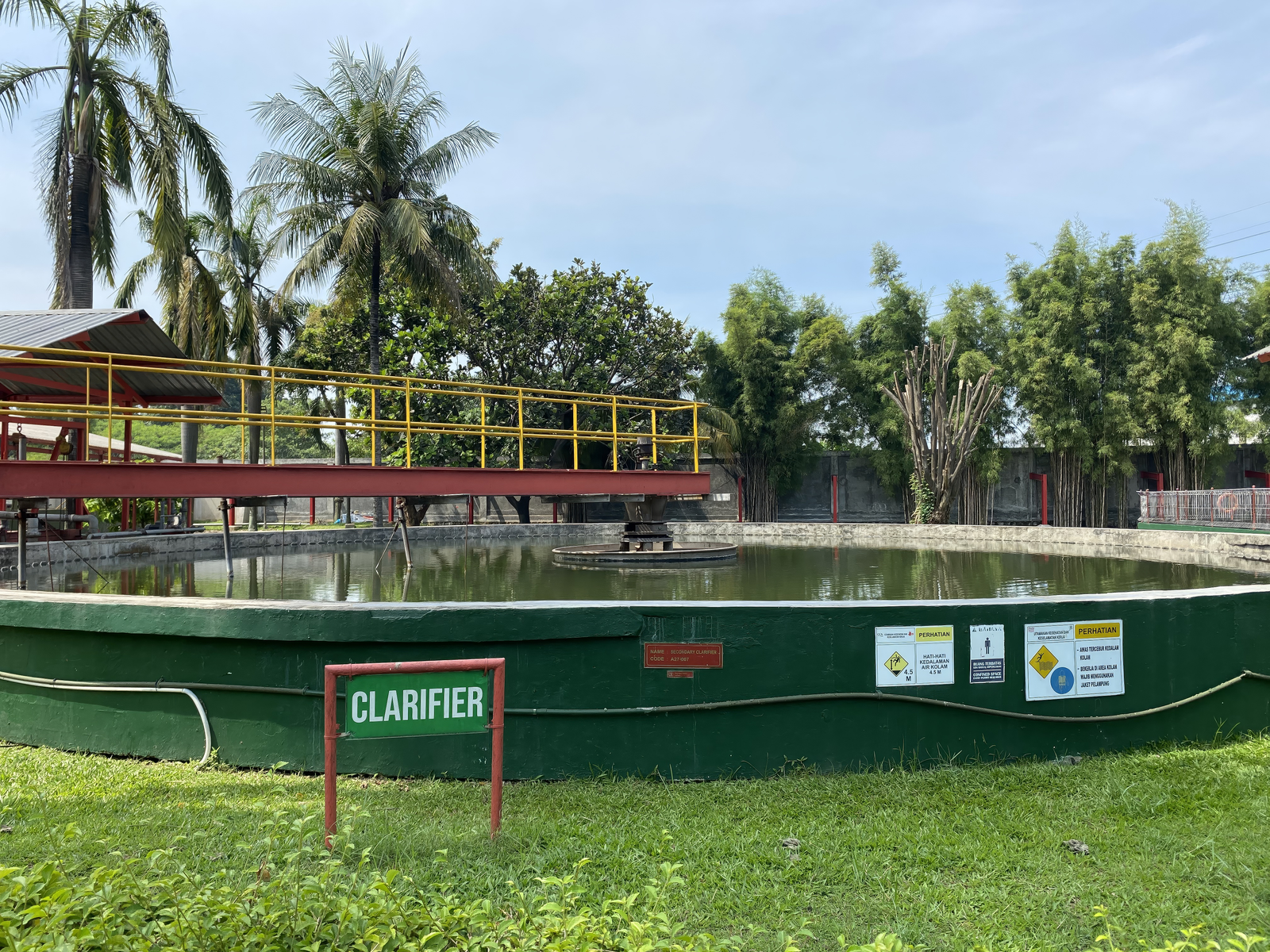
Operational Cost Modeling and Financial Optimization of Wastewater Treatment Plants (WWTP) for Industrial Sectors in Indonesia
Operational Wastewater Treatment Plant Economics: Cost Analysis, Lifecycle Financial Modeling, CAPEX and OPEX Optimization, and Strategic Investment Planning for Industrial and Municipal Applications in Indonesia
Reading Time: 75 minutes
Key Highlights
• Capital Investment Requirements: Modern industrial wastewater treatment plants in Indonesia require capital expenditures ranging USD 400,000-800,000 per 1,000 m³/day capacity for conventional activated sludge systems, with membrane bioreactor (MBR) technologies commanding 40-60% premium at USD 600,000-1,200,000 per equivalent capacity, though lifecycle analysis demonstrates MBR operational savings potentially justify initial investment through reduced footprint, superior effluent quality, and lower sludge disposal costs over 20-25 year facility lifespans
• Operational Cost Structure: Total operating expenditures for industrial wastewater treatment typically range USD 0.50-1.20 per m³ treated, comprising energy consumption (25-40% of OPEX), chemical additives for coagulation, pH adjustment, and disinfection (20-35%), labor including operators, technicians, and management (15-30%), maintenance and replacement parts (10-20%), sludge handling and disposal (8-15%), and laboratory analysis, monitoring, and regulatory compliance (5-10%), with actual distributions varying substantially based on treatment technology, wastewater characteristics, discharge standards, and operational efficiency
• Lifecycle Economic Analysis: Comprehensive 25-year lifecycle cost assessments reveal initial capital investment represents only 15-30% of total ownership costs for wastewater treatment infrastructure, with operational expenditures dominating at 60-75% and major equipment replacement, facility rehabilitation, and technology upgrades comprising remaining 10-15%, emphasizing importance of optimizing long-term operational efficiency rather than solely minimizing upfront capital through technology selection, process design, automation investment, and predictive maintenance programs reducing total cost of ownership
• Cost Optimization Opportunities: Strategic operational improvements including energy-efficient aeration systems adoption reducing energy consumption 30-50%, automation and process control investments decreasing labor requirements 20-35% while improving treatment consistency, chemical optimization through precise dosing and alternative reagents saving 15-25% annually, biogas recovery from anaerobic digestion potentially generating 40-60% of facility energy needs, and treated water reuse displacing freshwater purchases collectively achieve 25-45% total operational cost reduction compared to baseline operations without compromising discharge compliance or treatment reliability
Executive Summary
Wastewater treatment infrastructure represents important environmental management imperative and substantial financial commitment for industrial facilities, municipal utilities, and commercial developments throughout Indonesia, requiring sophisticated engineering systems, sustained operational investment, and long-term financial planning ensuring regulatory compliance with increasingly stringent discharge standards while managing lifecycle costs affecting overall business economics and infrastructure sustainability. The Indonesian wastewater treatment sector serves diverse applications spanning industrial manufacturing facilities discharging process wastewater containing organic compounds, suspended solids, dissolved metals, and other contaminants requiring specialized treatment; municipal sewage treatment plants handling domestic wastewater from residential, commercial, and institutional sources; hospitality and tourism developments including hotels, resorts, and recreational facilities; real estate and property developments requiring decentralized treatment for mixed-use communities; and specialized applications including hospitals, food processing facilities, textile manufacturing, pulp and paper mills, chemical plants, and other industrial operations generating wastewater with unique characteristics demanding customized treatment approaches achieving compliance with regulatory requirements established under Indonesian environmental legislation.
Financial planning for wastewater treatment projects requires comprehensive understanding of capital investment requirements, ongoing operational expenditures, lifecycle cost dynamics, and strategic optimization opportunities affecting total cost of ownership across facility lifespans typically spanning 20-30 years for primary infrastructure with major rehabilitation or technology upgrades extending operational periods to 40-50 years. Capital expenditure (CAPEX) encompasses initial design and engineering services, civil works including excavation, concrete structures, and buildings, mechanical equipment procurement covering pumps, blowers, mixers, clarifiers, and specialized treatment units, electrical and instrumentation systems providing process control and monitoring, installation and construction management, commissioning and performance verification, and contingencies addressing unforeseen conditions or scope modifications. These upfront investments establish treatment capacity, define technology platform, and create physical infrastructure foundation supporting decades of subsequent operations.
Operational expenditure (OPEX) represents ongoing costs required maintaining continuous treatment plant operations achieving consistent effluent quality meeting discharge standards, comprising energy consumption for pumping, aeration, mixing, and ancillary equipment typically representing largest single operational cost component at 25-40% of total OPEX; chemical reagents including coagulants, flocculants, pH adjustment chemicals, disinfectants, and process-specific additives (20-35%); labor costs for operations staff, maintenance technicians, laboratory personnel, and management (15-30%); routine and preventive maintenance including parts replacement, equipment servicing, and facility upkeep (10-20%); sludge handling, dewatering, transportation, and disposal representing significant cost particularly for biological treatment generating substantial biosolids (8-15%); laboratory analysis and monitoring ensuring treatment performance and regulatory compliance (3-8%); utilities beyond electricity including water supply and communications (2-5%); insurance, permitting, and regulatory fees (2-4%); and administrative overhead supporting treatment plant operations (3-7%). Understanding these cost components, their drivers, and optimization opportunities proves essential for effective financial management and strategic planning.
Lifecycle cost analysis integrating capital investment, operational expenditures, major equipment replacement, facility rehabilitation, and eventual decommissioning over extended planning horizons provides most accurate basis for technology selection, investment decisions, and long-term financial planning. Research documented by the World Bank, Asian Development Bank, and water sector organizations consistently demonstrates operational costs dominate lifecycle economics, typically representing 60-75% of total ownership costs over 25-year periods for conventional treatment technologies, with initial capital investment comprising only 15-30% and major replacements or upgrades accounting for remaining 10-15%. This cost structure emphasizes importance of operational efficiency optimization, technology selections balancing upfront costs against long-term performance and operational economics, and automation investments reducing labor requirements while improving treatment consistency potentially justifying higher capital expenditure through lifecycle savings.
This comprehensive technical and economic analysis examines all aspects of wastewater treatment plant operational economics for Indonesian applications, providing detailed examination of capital cost components and drivers across different treatment technologies and capacity ranges, comprehensive operational cost breakdowns identifying major expenditure categories and their determinants, lifecycle costing methodologies enabling informed investment decisions, cost optimization strategies reducing total ownership costs while maintaining or improving treatment performance, economic comparison frameworks evaluating alternative technologies and configurations, case study analysis documenting real-world cost performance from Indonesian and regional facilities, financial modeling approaches supporting feasibility assessment and investment planning, regulatory and policy considerations affecting project economics, emerging technologies and innovations impacting future cost structures, and strategic recommendations for industrial operators, municipal utilities, developers, engineering consultants, equipment suppliers, and financial institutions supporting wastewater treatment infrastructure development. Drawing extensively on peer-reviewed literature from journals including Water Research, Journal of Environmental Management, and Water Science & Technology, international agency reports from organizations including World Bank, Asian Development Bank, and International Water Association, Indonesian regulatory frameworks and technical standards, industry benchmarking data from treatment facility operators and engineering firms, and manufacturer specifications for equipment and systems, this analysis provides authoritative foundation supporting rational economic decision-making throughout project lifecycle from initial concept through decades of successful operations.
Capital Expenditure Components and Investment Planning Framework
Capital expenditure for wastewater treatment infrastructure encompasses all upfront investments required establishing operational treatment capacity, comprising multiple interconnected cost components that collectively determine total project investment and significantly influence subsequent operational economics through technology selections, equipment specifications, automation levels, and design provisions affecting energy efficiency, maintenance requirements, and operational labor needs. Understanding capital cost structure, key drivers affecting investment magnitude, and strategic considerations balancing upfront expenditure against lifecycle performance proves essential for effective project planning, budgeting, financing, and technology evaluation supporting optimal investment decisions aligned with organizational objectives, regulatory requirements, and long-term economic sustainability.
Pre-construction professional services represent important initial investment phase establishing technical foundation, regulatory approvals, and detailed specifications enabling subsequent construction, typically comprising 10-18% of total capital expenditure depending on project complexity and site conditions. Feasibility studies evaluate treatment requirements, technology alternatives, site suitability, regulatory compliance pathways, and preliminary economics, typically costing USD 15,000-50,000 for industrial facilities or USD 50,000-200,000 for larger municipal systems depending on scope and complexity. Detailed engineering design produces complete technical specifications, drawings, calculations, equipment selections, and construction documents, representing 6-12% of construction costs with typical fees of USD 40,000-120,000 per 1,000 m³/day capacity for conventional technologies or USD 60,000-180,000 for more complex treatment trains. Environmental permitting including AMDAL (Analisis Mengenai Dampak Lingkungan) preparation for significant projects or UKL-UPL (Upaya Pengelolaan Lingkungan Hidup dan Upaya Pemantauan Lingkungan Hidup) for smaller facilities, discharge permit applications, and stakeholder consultation requirements represent USD 20,000-100,000 investment depending on regulatory requirements and project scale.
Table 1: Comprehensive Capital Cost Breakdown for Industrial Wastewater Treatment Plant (1,000 m³/day Design Capacity)
| Cost Component Category | Conventional Activated Sludge System |
Membrane Bioreactor (MBR) System |
Sequential Batch Reactor (SBR) System |
Cost % of Total (Typical Range) |
|---|---|---|---|---|
| Professional Services & Engineering | USD 75,000 (IDR 1.17 B) |
USD 95,000 (IDR 1.48 B) |
USD 68,000 (IDR 1.06 B) |
10-15% |
| • Feasibility study & conceptual design • Detailed engineering & specifications • Environmental permitting (AMDAL/UKL-UPL) • Tender documentation & procurement support |
25,000 35,000 8,000 7,000 |
30,000 45,000 12,000 8,000 |
22,000 32,000 8,000 6,000 |
— |
| Civil Works & Site Development | USD 185,000 (IDR 2.88 B) |
USD 165,000 (IDR 2.57 B) |
USD 155,000 (IDR 2.42 B) |
25-35% |
| • Site preparation, excavation, grading • Concrete structures (tanks, basins, clarifiers) • Buildings (control room, laboratory, workshop) • Access roads, fencing, landscaping • Piping systems & hydraulic structures |
35,000 95,000 28,000 12,000 15,000 |
28,000 75,000 32,000 12,000 18,000 |
30,000 70,000 25,000 12,000 18,000 |
— |
| Mechanical Equipment & Systems | USD 220,000 (IDR 3.43 B) |
USD 385,000 (IDR 6.01 B) |
USD 195,000 (IDR 3.04 B) |
30-45% |
| • Screens, grit removal, preliminary treatment • Pumps & pumping systems (various duties) • Aeration equipment (blowers, diffusers) • Clarifiers, settling tanks, sludge collectors • Membrane modules & cleaning systems (MBR) • Sludge dewatering equipment • Disinfection systems (UV or chlorination) • Chemical dosing systems & storage |
18,000 42,000 55,000 38,000 — 35,000 16,000 16,000 |
22,000 48,000 42,000 — 175,000 45,000 28,000 25,000 |
15,000 38,000 48,000 28,000 — 32,000 18,000 16,000 |
— |
| Electrical & Instrumentation | USD 95,000 (IDR 1.48 B) |
USD 135,000 (IDR 2.11 B) |
USD 105,000 (IDR 1.64 B) |
12-20% |
| • Electrical distribution & MCC panels • Process instrumentation (pH, DO, flow, level) • SCADA system & process control • Variable frequency drives (VFDs) • Backup generator & UPS systems • Lighting, communications, security |
28,000 22,000 18,000 12,000 8,000 7,000 |
35,000 38,000 32,000 15,000 8,000 7,000 |
32,000 25,000 22,000 12,000 8,000 6,000 |
— |
| Installation, Testing & Commissioning | USD 65,000 (IDR 1.01 B) |
USD 85,000 (IDR 1.33 B) |
USD 58,000 (IDR 0.90 B) |
8-12% |
| • Equipment installation & rigging • Piping installation & pressure testing • Electrical installation & termination • Functional testing & performance verification • Operator training & documentation • Warranty period support |
22,000 15,000 12,000 8,000 5,000 3,000 |
28,000 18,000 15,000 12,000 8,000 4,000 |
20,000 13,000 11,000 7,000 5,000 2,000 |
— |
| Project Management & Contingency | USD 85,000 (IDR 1.33 B) |
USD 95,000 (IDR 1.48 B) |
USD 74,000 (IDR 1.15 B) |
10-15% |
| • Construction management & supervision • Quality assurance & control • Contingency for scope changes & unknowns • Permits, fees, insurance during construction |
32,000 18,000 28,000 7,000 |
35,000 22,000 30,000 8,000 |
28,000 16,000 24,000 6,000 |
— |
| TOTAL CAPITAL EXPENDITURE | USD 725,000 (IDR 11.31 B) |
USD 960,000 (IDR 14.98 B) |
USD 655,000 (IDR 10.22 B) |
100% |
| Unit Capital Cost (per m³/day capacity) | USD 725 per m³/day | USD 960 per m³/day | USD 655 per m³/day | — |
Notes: Costs based on 1,000 m³/day (11.6 L/s) design capacity for industrial wastewater with moderate organic loading (BOD 300-500 mg/L, COD 600-1,000 mg/L). Currency conversion at IDR 15,600 per USD. Site assumed accessible with normal soil conditions requiring standard foundation design. Costs exclude land acquisition, off-site utilities beyond property line, and extraordinary site conditions. Actual costs vary ±20-30% based on specific site conditions, equipment specifications, construction market conditions, and scope variations.
Civil works and site development typically represent 25-35% of total capital expenditure, encompassing site preparation through excavation, clearing, grading, and erosion control establishing proper drainage and foundation conditions; concrete construction for treatment tanks, clarifiers, and hydraulic structures requiring substantial formwork, reinforcement, and controlled concrete placement; buildings housing control rooms, laboratories, maintenance workshops, and chemical storage facilities; piping networks distributing wastewater between treatment units and conveying process air, chemicals, and utilities; and site improvements including access roads, fencing, landscaping, and stormwater management. Civil construction costs exhibit significant geographic variation across Indonesian archipelago, with remote locations potentially commanding 30-50% premiums over urban areas due to mobilization costs, material transportation, and limited contractor availability, while difficult site conditions including soft soils requiring deep foundations, high groundwater necessitating dewatering during construction, or rocky terrain requiring blasting add substantial costs beyond typical conditions.
Mechanical equipment represents largest single capital cost component at 30-45% of total investment, dominated by specialized treatment equipment and systems. Membrane bioreactor (MBR) installations prove particularly capital intensive due to membrane module costs typically USD 40-65 per square meter of membrane area, with 1,000 m³/day capacity requiring approximately 2,500-3,500 m² membrane area depending on flux rates and redundancy provisions, translating to USD 100,000-225,000 membrane investment alone. However, MBR technology eliminates secondary clarifiers required in conventional activated sludge systems, reduces aeration basin volumes through higher mixed liquor suspended solids (MLSS) concentrations of 8,000-12,000 mg/L versus 2,000-4,000 mg/L conventional systems, and produces superior effluent quality enabling water reuse or stringent discharge compliance without tertiary treatment, potentially justifying premium capital investment through operational advantages and reduced footprint valuable for space-constrained sites. Aeration equipment including blowers and diffuser systems represents another major mechanical cost, with 1,000 m³/day capacity typically requiring 30-50 kW blower capacity costing USD 35,000-65,000 depending on efficiency specifications and redundancy provisions.
Operational Expenditure Analysis and Cost Optimization Strategies
Operational expenditure represents sustained financial commitment required maintaining wastewater treatment plant performance, ensuring regulatory compliance, and protecting receiving water quality throughout facility operational life, typically dominating lifecycle economics through cumulative costs over 20-30 year periods substantially exceeding initial capital investment. Understanding operational cost structure, major expenditure drivers, and strategic optimization opportunities enables effective budgeting, performance benchmarking, technology evaluation, and continuous improvement supporting economic and environmental sustainability. Unlike capital expenditure occurring primarily during construction phase, operational costs recur annually or more frequently, exhibiting variability from influent wastewater characteristics, regulatory requirements, treatment technology, equipment condition, operational practices, chemical and energy prices, and other factors requiring active management and optimization maintaining cost-effectiveness while ensuring treatment objectives.
Energy consumption represents largest single operational cost component for most wastewater treatment technologies, typically comprising 25-40% of total OPEX depending on treatment process intensity and efficiency measures. Biological treatment processes particularly activated sludge systems require substantial aeration energy maintaining dissolved oxygen concentrations supporting aerobic microorganisms oxidizing organic matter, with typical aeration energy requirements of 45-65 kWh per kilogram BOD removed for conventional systems or 35-50 kWh/kg BOD for high-efficiency fine bubble diffusion with energy recovery. For treatment plant handling 1,000 m³/day wastewater with 400 mg/L BOD₅ influent concentration and achieving 95% removal, daily BOD removal reaches 380 kg requiring approximately 15,000-25,000 kWh daily aeration energy or 5.5-9.1 million kWh annually. At Indonesian industrial electricity rates of IDR 1,450 per kWh (approximately USD 0.093/kWh), annual aeration energy costs range USD 51,000-85,000 or 12-18% of typical total operational budget for 1,000 m³/day facility.
Figure 1: Annual Operational Cost Distribution for 1,000 m³/day Industrial Wastewater Treatment Plant
Conventional Activated Sludge System - Total Annual OPEX: USD 292,000 (IDR 4.56 Billion)
Aeration: USD 68,000 (67%) | Pumping: USD 22,000 (21%) | Mixing & others: USD 12,200 (12%)
Daily consumption: 3,150 kWh avg | Unit cost: IDR 1,450/kWh (USD 0.093/kWh)
Coagulant (alum): USD 32,000 (39%) | Polymer: USD 24,500 (30%) | Lime/caustic: USD 14,200 (17%)
Chlorine disinfection: USD 8,800 (11%) | Nutrient supplements: USD 2,260 (3%)
Operators (4 FTE): USD 38,000 (59%) | Technicians (1.5 FTE): USD 18,500 (29%)
Supervisor (0.5 FTE): USD 7,740 (12%)
Note: Includes salaries, benefits, training at Indonesian industrial wage scales
Dewatering chemicals: USD 12,500 (29%) | Transportation: USD 16,800 (38%)
Disposal fees: USD 14,500 (33%)
Sludge production: ~365 tons dry solids annually (1 ton/day average)
Spare parts & consumables: USD 18,200 (52%) | Preventive maintenance: USD 11,500 (33%)
Equipment servicing: USD 5,340 (15%)
External lab testing: USD 10,200 (58%) | Reagents & supplies: USD 4,900 (28%)
Equipment calibration: USD 2,420 (14%)
Insurance: USD 8,800 (43%) | Permits & fees: USD 5,200 (25%)
Utilities (water, communications): USD 3,800 (19%) | Overhead allocation: USD 2,640 (13%)
Unit Treatment Cost: USD 0.80 per m³ treated
Based on 365,000 m³ annual throughput (1,000 m³/day average)
Equivalent to IDR 12,480 per m³ at exchange rate IDR 15,600/USD
Data reflects typical operational costs for well-managed industrial wastewater treatment facility in Indonesia treating moderate-strength wastewater (BOD 300-500 mg/L, COD 600-1,000 mg/L, TSS 200-400 mg/L) using conventional activated sludge followed by clarification and chlorine disinfection. Costs vary based on influent characteristics, discharge standards, treatment efficiency, equipment condition, and local economic factors including utility rates, chemical prices, and labor costs.
Pumping represents second major energy consumer, encompassing influent pumping lifting wastewater from collection systems or equalization basins to treatment plant elevation, internal transfer pumps moving flows between treatment units, return activated sludge (RAS) and waste activated sludge (WAS) pumping, and effluent discharge pumps. Total pumping energy varies substantially with site hydraulic profile, with gravity-flow designs minimizing pumping to essential transfer points versus constrained sites requiring extensive elevation changes, but typically ranges 0.3-0.8 kWh per m³ treated or approximately 110,000-290,000 kWh annually for 1,000 m³/day facility, translating to USD 10,000-27,000 annual pumping energy costs. Mechanical mixing in equalization tanks, anaerobic or anoxic zones, and chemical contact chambers adds supplementary energy demand of 0.1-0.3 kWh/m³, while ancillary systems including lighting, instrumentation, control systems, and HVAC for buildings contribute relatively minor 5-10% of total energy consumption.
Chemical costs represent second largest OPEX category at 20-35% depending on treatment process requirements and influent characteristics. Coagulation-flocculation processes treating industrial wastewater with elevated suspended solids or colloidal materials require aluminum sulfate (alum), ferric chloride, or polyaluminum chloride (PAC) dosages typically 50-200 mg/L as aluminum or iron depending on suspended solids concentration, colloidal content, and required removal efficiency. Alum costs approximately USD 0.40-0.60 per kilogram in Indonesian market, with 100 mg/L average dosage treating 1,000 m³/day consuming 100 kg daily or 36.5 tons annually costing USD 14,600-21,900. Polyelectrolyte flocculants enhance floc formation and settleability at typical dosages of 1-5 mg/L active polymer, with high molecular weight anionic polymers costing USD 3-5 per kilogram active ingredient translating to USD 1,100-9,100 annual polymer costs for typical dosing range. pH adjustment chemicals including lime, caustic soda, or sulfuric acid may be required neutralizing acidic or alkaline industrial wastewaters before biological treatment or meeting discharge pH requirements, with costs varying substantially based on influent chemistry and required adjustment magnitude.
Table 2: Detailed Annual Operational Cost Comparison Across Treatment Technologies (1,000 m³/day Capacity)
| Cost Component | Conventional Activated Sludge |
Membrane Bioreactor (MBR) |
Sequential Batch Reactor (SBR) |
Extended Aeration Oxidation Ditch |
Moving Bed Biofilm (MBBR) |
|---|---|---|---|---|---|
| Energy Costs | USD 102,200 (35%) |
USD 95,800 (32%) |
USD 88,600 (33%) |
USD 118,500 (42%) |
USD 91,200 (34%) |
| Total kWh/year Unit energy (kWh/m³) |
1,100,000 3.01 |
1,030,000 2.82 |
952,000 2.61 |
1,274,000 3.49 |
980,000 2.68 |
| Chemical Costs | USD 81,760 (28%) |
USD 72,300 (24%) |
USD 68,400 (25%) |
USD 58,200 (21%) |
USD 76,500 (28%) |
| Coagulant/flocculant pH adjustment Disinfection Membrane cleaning Other chemicals |
56,500 14,200 8,800 — 2,260 |
38,200 12,500 — 18,500 3,100 |
42,800 13,200 9,500 — 2,900 |
32,500 11,800 11,200 — 2,700 |
48,000 14,800 10,500 — 3,200 |
| Labor Costs | USD 64,240 (22%) |
USD 78,500 (26%) |
USD 58,200 (22%) |
USD 52,800 (19%) |
USD 61,500 (23%) |
| Staff FTE equivalent Operators Technicians Supervisors |
6.0 4.0 1.5 0.5 |
7.5 4.5 2.5 0.5 |
5.5 3.5 1.5 0.5 |
5.0 3.0 1.5 0.5 |
5.8 3.8 1.5 0.5 |
| Sludge Management | USD 43,800 (15%) |
USD 29,200 (10%) |
USD 38,500 (14%) |
USD 36,800 (13%) |
USD 35,200 (13%) |
| Dry sludge (tons/year) Dewatering chemicals Transportation Disposal fees |
365 12,500 16,800 14,500 |
240 8,200 10,800 10,200 |
320 10,800 14,600 13,100 |
310 10,200 14,100 12,500 |
295 9,800 13,500 11,900 |
| Maintenance & Repairs | USD 35,040 (12%) |
USD 57,600 (19%) |
USD 32,700 (12%) |
USD 28,200 (10%) |
USD 36,800 (14%) |
| Laboratory & Monitoring | USD 17,520 (6%) |
USD 21,400 (7%) |
USD 16,200 (6%) |
USD 14,800 (5%) |
USD 18,500 (7%) |
| Administrative & Other | USD 20,440 (7%) |
USD 24,200 (8%) |
USD 18,900 (7%) |
USD 16,700 (6%) |
USD 19,800 (7%) |
| TOTAL ANNUAL OPEX | USD 292,000 | USD 300,000 | USD 268,500 | USD 282,000 | USD 270,500 |
| Unit Cost (USD/m³) | 0.80 | 0.82 | 0.74 | 0.77 | 0.74 |
| Unit Cost (IDR/m³) | 12,480 | 12,792 | 11,544 | 12,012 | 11,544 |
Notes: Annual costs based on 365,000 m³ throughput (1,000 m³/day average, 90% capacity utilization). Influent characteristics: BOD 400 mg/L, COD 800 mg/L, TSS 300 mg/L, TN 40 mg/L, TP 6 mg/L. Discharge standards: BOD <30 mg/L, COD <100 mg/L, TSS <30 mg/L, TN <10 mg/L. Energy cost IDR 1,450/kWh (USD 0.093/kWh). Labor costs reflect Indonesian industrial sector wages with benefits. Currency conversion IDR 15,600/USD. Actual costs vary ±15-25% based on specific operating conditions, influent variability, local market conditions, and operational efficiency.
Labor costs typically represent 15-30% of operational expenditure, varying substantially with treatment technology complexity, automation level, and facility size enabling operational efficiency through economies of scale. Conventional activated sludge plants require continuous operator presence monitoring process performance, adjusting operational parameters, conducting routine maintenance, and responding to upset conditions, with typical staffing of 4-6 operators providing shift coverage plus 1-2 maintenance technicians and 0.5-1.0 supervisor for 1,000 m³/day facility. Indonesian industrial labor costs for skilled wastewater treatment operators average IDR 6,000,000-9,500,000 monthly (approximately USD 385-610) including benefits, maintenance technicians IDR 7,500,000-12,000,000 monthly (USD 480-770), and supervisors IDR 12,000,000-18,000,000 monthly (USD 770-1,155), with total annual labor expenditure typically USD 50,000-80,000 for conventionally operated 1,000 m³/day facility. Automation investment reducing manual monitoring and adjustment through SCADA systems, automated sampling and testing, and advanced process control potentially reduces operator requirements 20-40% while improving treatment consistency, though requiring higher maintenance technician capabilities supporting instrumentation and control systems.
Lifecycle Cost Analysis and Long-Term Financial Planning
Lifecycle cost analysis provides comprehensive economic evaluation integrating all costs associated with wastewater treatment infrastructure over extended planning horizons spanning initial design and construction through decades of operations to eventual facility decommissioning or major rehabilitation, enabling rational technology selection, investment prioritization, and financial planning based on total cost of ownership rather than solely initial capital expenditure. Research consistently demonstrates operational expenditures dominate lifecycle economics for wastewater treatment infrastructure, typically representing 60-75% of total costs over 25-year evaluation periods, with initial capital investment comprising only 15-30% and major equipment replacements or facility upgrades accounting for remaining 10-15%. This cost structure fundamentally differs from infrastructure types where capital expenditure dominates, emphasizing importance of operational efficiency, energy optimization, automation strategies, and maintenance management for wastewater treatment economic sustainability.
Comprehensive lifecycle costing methodology encompasses multiple cost components occurring at different points across facility operational life. Initial capital expenditure occurs primarily during design and construction phases, representing one-time investment establishing treatment capacity and infrastructure foundation. Annual operational expenditures recur throughout facility life, exhibiting potential escalation from inflation, utility rate increases, chemical price volatility, or regulatory changes requiring treatment modifications. Major equipment replacement costs occur periodically as mechanical equipment, instrumentation, and other components reach end of service life requiring replacement, typically including membrane modules every 7-10 years for MBR systems, blowers every 10-15 years, pumps every 8-12 years depending on duty, electrical and instrumentation equipment every 10-20 years, and structural rehabilitation every 20-30 years. Decommissioning or major rehabilitation costs may occur at facility end of life, potentially including demolition, site remediation, or alternatively major upgrading extending service life additional decades.
Table 3: 25-Year Lifecycle Cost Analysis Comparison - 1,000 m³/day Industrial Wastewater Treatment Systems
| Cost Component | Conventional Activated Sludge |
Membrane Bioreactor (MBR) |
Sequential Batch Reactor (SBR) |
Analysis Notes |
|---|---|---|---|---|
| Initial CAPEX (Year 0) | USD 725,000 (IDR 11.3 B) |
USD 960,000 (IDR 15.0 B) |
USD 655,000 (IDR 10.2 B) |
One-time investment establishing treatment capacity |
| Annual OPEX (Years 1-25) | USD 292,000/yr | USD 300,000/yr | USD 268,500/yr | Recurring operational expenditures with 2.5% annual escalation |
| Total OPEX (25 years, nominal) | USD 8,940,000 (IDR 139.5 B) |
USD 9,180,000 (IDR 143.2 B) |
USD 8,214,000 (IDR 128.1 B) |
Cumulative operating costs over 25-year period with escalation |
| Total OPEX (25 years, NPV) | USD 5,240,000 | USD 5,385,000 | USD 4,815,000 | Present value at 7% discount rate reflecting time value of money |
| Major Equipment Replacements | USD 385,000 (nominal) |
USD 625,000 (nominal) |
USD 342,000 (nominal) |
Scheduled replacements over 25-year period |
| Blowers (Year 12, 23) Pumps (Years 10, 20) Mixers/aerators (Years 15) Clarifier mechanism (Year 18) Membrane modules (Yr 8, 16) Instrumentation (Yr 12, 22) Electrical systems (Year 20) |
85,000 65,000 42,000 55,000 — 68,000 70,000 |
75,000 72,000 38,000 — 310,000 82,000 48,000 |
78,000 58,000 38,000 42,000 — 62,000 64,000 |
Replacement timing based on typical equipment service life and manufacturer recommendations |
| Equipment Replacement (NPV) | USD 165,000 | USD 272,000 | USD 148,000 | Present value of future replacement costs at 7% discount rate |
| Facility Rehabilitation (Year 20) | USD 180,000 | USD 210,000 | USD 165,000 | Major rehabilitation ~25% of initial CAPEX at Year 20 |
| Rehabilitation (NPV) | USD 47,000 | USD 54,000 | USD 43,000 | Present value discounted from Year 20 |
| TOTAL LIFECYCLE COST (Nominal) | USD 10,230,000 (IDR 159.6 B) |
USD 10,975,000 (IDR 171.2 B) |
USD 9,376,000 (IDR 146.3 B) |
Sum of all costs over 25-year period (not discounted) |
| TOTAL LIFECYCLE COST (NPV @ 7%) | USD 6,177,000 | USD 6,671,000 | USD 5,661,000 | Net present value accounting for time value of money |
| Levelized Cost (USD/m³) | 0.98 | 1.06 | 0.90 | Annualized lifecycle cost divided by 25-year throughput |
| Levelized Cost (IDR/m³) | 15,288 | 16,536 | 14,040 | Comprehensive unit cost including all lifecycle components |
| Lifecycle Cost Distribution (% of Total NPV) | ||||
| Initial CAPEX | 12% | 14% | 12% | Capital represents small fraction of total lifecycle cost |
| Operational Expenditure | 85% | 81% | 85% | OPEX dominates lifecycle economics across all technologies |
| Replacements & Rehabilitation | 3% | 5% | 3% | Periodic major costs comprise minor percentage when discounted |
Analysis assumptions: 25-year evaluation period, 7% discount rate reflecting opportunity cost of capital, 2.5% annual OPEX escalation, 365,000 m³ annual throughput (1,000 m³/day at 90% utilization), equipment replacements at typical service life intervals, major facility rehabilitation at Year 20. Currency conversion IDR 15,600/USD. NPV calculations use mid-year convention for annual cash flows. This analysis demonstrates operational costs dominate lifecycle economics (80-85% of total NPV) emphasizing importance of operational efficiency optimization over minimal capital expenditure for long-term economic sustainability.
Levelized cost analysis provides alternative perspective calculating equivalent uniform annual cost or unit treatment cost incorporating all lifecycle expenditures discounted to present value then annualized over facility life and divided by total throughput. This methodology enables direct comparison between alternatives with different capital-operational cost tradeoffs, revealing true economic competitiveness accounting for timing of cash flows and total ownership costs rather than comparing only initial capital or annual operating expenses in isolation. The analysis presented in Table 3 demonstrates Sequential Batch Reactor (SBR) technology achieving lowest levelized cost at USD 0.90/m³ despite mid-range initial capital, primarily through operational efficiency advantages including reduced energy consumption from cyclic aeration and intermittent operations, simplified equipment configurations reducing maintenance costs, and effective treatment achieving discharge standards without tertiary processes.
Sensitivity analysis examining how lifecycle costs respond to variations in key parameters including discount rate, OPEX escalation, equipment service life, and utility rates provides important insights regarding economic robustness and risk factors. Discount rate selection significantly influences relative importance of near-term versus long-term costs, with higher discount rates (8-10%) reducing present value of future operational expenditures thereby increasing relative importance of initial capital investment, while lower discount rates (4-6%) emphasize long-term operational efficiency as future costs retain greater present value. OPEX escalation rates reflecting inflation and utility price trends substantially impact lifecycle economics, with energy-intensive technologies exhibiting greater vulnerability to electricity price increases potentially reversing economic competitiveness if utility rates escalate faster than assumed baseline. Similarly, equipment service life variations affecting replacement timing and frequency create uncertainty in lifecycle projections, though sensitivity analysis typically demonstrates relatively minor impact given replacement costs represent small percentage of total lifecycle expenditure when discounted to present value.
Cost Optimization Strategies and Performance Improvement Opportunities
Strategic cost optimization opportunities enable substantial reductions in wastewater treatment operational expenditure while maintaining or improving treatment performance and regulatory compliance, with comprehensive optimization programs potentially achieving 25-45% total cost reduction compared to baseline operations without compromising discharge quality or environmental protection. These optimization strategies span multiple interconnected domains including energy efficiency improvements, process control and automation, chemical optimization, preventive maintenance, capacity utilization management, and resource recovery from treatment processes. However, successful optimization requires careful technical analysis ensuring modifications do not adversely impact treatment reliability or create operational risks, systematic implementation through pilot testing and gradual rollout rather than simultaneous large-scale changes introducing excessive variability, and sustained commitment to continuous improvement culture monitoring performance, identifying opportunities, and implementing refinements over extended periods.
Energy efficiency represents highest-priority optimization opportunity given energy typically comprises 25-40% of operational costs and proven technologies exist achieving substantial consumption reductions. Aeration system optimization through fine bubble diffuser retrofits replacing coarse bubble systems increases oxygen transfer efficiency from typical 6-12% per meter submergence for coarse bubbles to 18-30% for fine bubbles, potentially reducing blower energy consumption 30-50% for equivalent oxygen delivery. Variable frequency drives (VFDs) on blowers enable precise airflow control matching real-time oxygen demand rather than operating fixed-speed machines with excess capacity, further reducing energy consumption 15-25% through optimized operation. Dissolved oxygen (DO) control systems maintaining set points of 1.5-2.5 mg/L in aeration basins rather than conservative fixed-speed operation often resulting in 3-5 mg/L excess DO reduce energy consumption 20-30% while improving nitrification efficiency through optimized conditions. These aeration optimizations collectively achieve 40-60% energy reduction versus baseline conventional systems, with payback periods typically 2-4 years justifying retrofit investments for facilities operating older inefficient systems.
Comprehensive Cost Optimization Opportunities and Implementation Framework
1. Energy Efficiency Optimization (Target: 30-50% energy cost reduction)
Aeration System Improvements:
- Fine bubble diffuser retrofit: Replacing coarse bubble aeration increases oxygen transfer efficiency from 8-12% to 20-28% per meter submergence, reducing blower energy 35-50% with typical payback 2-4 years. Capital investment USD 15-30 per m³ basin volume for diffuser replacement, grid modifications, and installation
- Variable frequency drives (VFDs) on blowers: Enable precise airflow control reducing energy 18-28% compared to fixed-speed operation, with capital cost USD 8,000-15,000 per 50 kW blower including VFD, electrical modifications, and commissioning. Payback typically 1.5-3 years
- Dissolved oxygen (DO) control systems: Automated DO measurement and blower speed adjustment maintains optimal 1.5-2.5 mg/L reducing excess aeration energy 15-25%. Implementation cost USD 12,000-25,000 for sensors, controllers, integration with existing SCADA
- Aeration grid optimization: Computational fluid dynamics (CFD) modeling identifies dead zones and short-circuiting enabling grid modifications improving oxygen utilization 10-20% through enhanced mixing
Pumping System Optimization:
- Pump efficiency assessment and replacement: Older pumps operating at 60-70% efficiency replaced with high-efficiency designs achieving 75-85% efficiency reduce energy 15-25%. Capital cost USD 3,000-12,000 per pump depending on size
- VFDs on variable-duty pumps: Return activated sludge (RAS), waste activated sludge (WAS), and recycle pumps benefit from VFD control matching instantaneous process needs, reducing energy 20-35%
- Piping system hydraulic optimization: Reducing pipe friction losses through diameter increases, bend elimination, or valve replacements lowers pumping head requirements 5-15%
Energy Recovery and Generation:
- Biogas capture and utilization: Anaerobic digestion of sludge generates biogas (60-70% methane) producing 0.35-0.6 m³ biogas per kg VS destroyed. For 1,000 m³/day plant generating 400 kg VS/day with 50% destruction, potential biogas production of 70-120 m³/day generates 750-1,300 kWh/day thermal energy or 300-520 kWh/day electricity through cogeneration, potentially supplying 40-60% of facility energy needs. Capital investment USD 180,000-350,000 for digester, gas handling, and generation equipment with 4-7 year payback
- Heat recovery from processes: Capturing waste heat from blowers, pumps, and biological processes for building heating or process preheating reduces auxiliary energy consumption
Typical Energy Optimization Results:
Baseline energy: 3.0 kWh/m³ | Post-optimization: 1.7-2.1 kWh/m³ | Reduction: 30-43%
Annual savings for 1,000 m³/day facility: USD 31,000-45,000 | Payback period: 2.5-4.5 years
2. Chemical Optimization (Target: 15-30% chemical cost reduction)
- Coagulant dosing optimization through jar testing: Systematic jar testing determining minimum effective dosage typically reduces coagulant consumption 15-25% versus conservative historical dosing. Regular testing (monthly or with influent changes) maintains optimal dosing
- Alternative coagulants evaluation: Comparing aluminum sulfate, ferric chloride, polyaluminum chloride (PAC), and ferric sulfate identifies lowest-cost option achieving required performance, with potential savings 20-40% depending on regional pricing and wastewater characteristics
- Polymer optimization: Selecting optimal polymer type (anionic, cationic, nonionic) and molecular weight through bench-scale and pilot testing maximizes sludge dewatering at minimum dosage, reducing polymer costs 20-35% while improving dewatered cake solids concentration
- pH adjustment optimization: Precise pH control using feedback automation prevents chemical overconsumption from manual adjustment variability, reducing lime or caustic usage 10-20%
- Chemical procurement optimization: Bulk purchasing, long-term supply contracts, and competitive bidding reduce unit chemical costs 10-25% compared to spot purchases
Typical Chemical Optimization Results:
Baseline chemical cost: USD 81,760/year | Post-optimization: USD 61,000-69,000/year
Reduction: 16-25% | Annual savings: USD 12,800-20,800 | Implementation cost: USD 8,000-15,000
3. Process Control and Automation (Target: 20-35% labor reduction, 10-15% overall OPEX reduction)
- SCADA system implementation: Centralized monitoring and control enabling single-operator oversight of multiple processes reduces staffing requirements while improving response to process upsets. Capital cost USD 45,000-95,000 for comprehensive system with payback 3-5 years
- Advanced process control (APC): Model-based predictive control optimizes multiple parameters simultaneously (DO, RAS rate, WAS rate, chemical dosing) improving treatment efficiency while reducing chemical and energy consumption 8-15%
- Automated sampling and testing: Online analyzers measuring BOD, COD, ammonia, nitrate, phosphate replace manual sampling and laboratory analysis, reducing labor while providing real-time process feedback enabling rapid optimization
- Predictive maintenance systems: Vibration monitoring, thermal imaging, and performance tracking identify impending equipment failures enabling scheduled repairs during planned downtime versus emergency failures causing treatment upsets and expensive overtime repairs
Typical Automation Investment Results:
Capital investment: USD 75,000-150,000 | Labor reduction: 1.0-1.5 FTE (USD 12,000-22,000/year)
Chemical/energy savings: USD 15,000-28,000/year | Total annual benefit: USD 27,000-50,000
Payback period: 2.2-4.2 years | ROI: 24-45% annually
4. Resource Recovery and Reuse (Target: Revenue generation or cost offset USD 15,000-50,000 annually)
- Treated water reuse: High-quality effluent from MBR or tertiary treatment reused for cooling tower makeup, process water, irrigation, or toilet flushing displaces freshwater purchases. For facility using 200 m³/day freshwater at USD 0.80/m³, reuse saves USD 58,000 annually
- Biosolids beneficial use: Composted biosolids sold for agriculture, landscaping, or land restoration generates USD 10-40 per ton revenue versus disposal costs of USD 30-60 per ton, net benefit USD 40-100 per ton. For 365 tons/year production, potential annual value USD 14,600-36,500
- Nutrient recovery: Phosphorus recovery as struvite (magnesium ammonium phosphate) from digester supernatant produces slow-release fertilizer valued USD 200-400 per ton while reducing downstream treatment chemical costs. Typical recovery 20-40 kg P₂O₅ per 1,000 m³ treated wastewater
- Heat recovery from effluent: Treated effluent temperature typically 5-12°C warmer than ambient provides heat source for facility space heating or process preheating through heat exchangers, reducing natural gas or electricity consumption
Combined Optimization Program Results (1,000 m³/day facility):
Baseline annual OPEX: USD 292,000 | Optimized OPEX: USD 195,000-225,000
Total reduction: 23-33% (USD 67,000-97,000 annually)
Implementation capital: USD 135,000-295,000 | Payback: 1.8-3.2 years
25-year NPV benefit: USD 980,000-1,420,000 (7% discount rate)
Chemical optimization through systematic testing, alternative product evaluation, and precise dosing control typically achieves 15-30% cost reduction with minimal capital investment. Jar testing conducted monthly or when influent characteristics change determines minimum effective coagulant dosage achieving required turbidity and suspended solids removal, often revealing historical overdosing by 20-40% providing safety margins no longer necessary with proper process control. Polymer optimization through comprehensive screening of alternative products (varying molecular weight, charge density, and chemistry) identifies most cost-effective options maximizing sludge dewatering performance, with potential savings of USD 8,000-18,000 annually for typical 1,000 m³/day facility. Meanwhile, bulk chemical purchasing leveraging economies of scale through larger delivery quantities, long-term supply contracts with fixed or indexed pricing protecting against market volatility, and competitive bidding among multiple suppliers reduce unit chemical costs 10-25% compared to small-quantity spot purchases.
Process control and automation investments reducing labor requirements while improving treatment consistency and enabling optimization represent high-value opportunities, particularly for larger facilities where capital investment amortizes across substantial throughput. Comprehensive SCADA systems providing centralized monitoring and control enable single operators managing entire treatment plants versus traditional approaches requiring multiple operators stationed at different process units, reducing staffing requirements 20-35% or 1-2 full-time equivalent (FTE) positions for typical 1,000 m³/day facility saving USD 12,000-25,000 annually. Beyond labor reduction, automation improves treatment consistency through rapid response to process upsets, enables advanced control strategies optimizing multiple parameters simultaneously, and generates comprehensive operational data supporting continuous improvement initiatives. However, automation requires capable maintenance staff supporting instrumentation and control systems, representing shift from operational labor to technical maintenance capacity.
Economic Comparison Framework and Technology Selection Methodology
Systematic economic comparison methodology evaluating alternative treatment technologies, process configurations, and equipment options requires comprehensive framework integrating capital investment requirements, operational cost projections, lifecycle cost analysis, performance reliability assessment, risk evaluation, and strategic considerations affecting technology suitability for specific applications and organizational contexts. This multidimensional evaluation recognizes economic metrics alone provide incomplete basis for technology selection, requiring balanced consideration of technical performance meeting discharge standards and treatment objectives, operational complexity matching available management capabilities and staffing, environmental footprint including energy consumption and greenhouse gas emissions increasingly important for corporate sustainability commitments, scalability and flexibility accommodating future capacity expansions or treatment objective modifications, and proven performance through reference installations demonstrating technology maturity and vendor support capabilities.
Capital cost comparison requires normalizing for capacity differences, performance specifications, and scope inclusions or exclusions creating misleading direct cost comparisons. Unit capital cost metrics expressed as USD per m³/day capacity or USD per kg BOD removal capacity enable comparison across size ranges, though economies of scale create nonlinear relationships where larger facilities achieve lower unit costs through fixed-cost amortization and bulk equipment procurement advantages. Performance normalization accounts for different treatment objectives, with tertiary treatment achieving very low effluent concentrations (BOD <10 mg/L, TSS <10 mg/L) commanding premium capital investment versus secondary treatment meeting conventional limits (BOD <30 mg/L, TSS <30 mg/L). Scope consistency ensures fair comparison by including all necessary components from preliminary treatment through final discharge or reuse, rather than comparing partial treatment trains or excluding essential but costly elements like sludge handling facilities.
Comprehensive Technology Selection Decision Matrix
Evaluation Criteria and Weighting Framework for Industrial Wastewater Treatment Technology Selection
| Evaluation Criteria | Weight (%) |
Conventional Activated Sludge |
Membrane Bioreactor (MBR) |
Sequential Batch Reactor (SBR) |
Moving Bed Biofilm (MBBR) |
|---|---|---|---|---|---|
| ECONOMIC FACTORS (40% total weight) | |||||
| Initial Capital Investment (CAPEX) | 15% | 8.5 (Good) |
5.0 (Moderate) |
9.0 (Excellent) |
7.5 (Good) |
| Operational Costs (OPEX) | 15% | 7.0 (Moderate) |
6.5 (Moderate) |
8.5 (Excellent) |
8.0 (Good) |
| Lifecycle Cost (25-year NPV) | 10% | 7.5 (Good) |
6.0 (Moderate) |
9.0 (Excellent) |
8.0 (Good) |
| TECHNICAL PERFORMANCE (30% total weight) | |||||
| Effluent Quality & Compliance Reliability | 12% | 7.5 (Good) |
9.5 (Excellent) |
8.0 (Good) |
7.0 (Good) |
| Process Stability & Shock Load Tolerance | 8% | 7.0 (Good) |
8.0 (Good) |
8.5 (Excellent) |
8.5 (Excellent) |
| Footprint Efficiency (Treatment per Area) | 5% | 6.0 (Moderate) |
9.0 (Excellent) |
7.0 (Good) |
8.0 (Good) |
| Scalability & Future Expansion Capability | 5% | 8.0 (Good) |
7.5 (Good) |
9.0 (Excellent) |
8.5 (Excellent) |
| OPERATIONAL FACTORS (20% total weight) | |||||
| Operational Simplicity & Labor Requirements | 10% | 8.5 (Good) |
6.0 (Moderate) |
7.5 (Good) |
7.0 (Good) |
| Maintenance Requirements & Complexity | 7% | 7.5 (Good) |
5.5 (Moderate) |
8.0 (Good) |
6.5 (Moderate) |
| Sludge Production & Handling | 3% | 6.5 (Moderate) |
8.5 (Good) |
7.0 (Good) |
7.5 (Good) |
| STRATEGIC FACTORS (10% total weight) | |||||
| Technology Maturity & Proven Performance | 5% | 9.5 (Excellent) |
8.5 (Good) |
9.0 (Excellent) |
8.0 (Good) |
| Vendor Support & Parts Availability | 3% | 9.0 (Excellent) |
8.0 (Good) |
8.5 (Good) |
7.5 (Good) |
| Environmental Impact & Sustainability | 2% | 7.0 (Good) |
8.0 (Good) |
7.5 (Good) |
7.5 (Good) |
| WEIGHTED TOTAL SCORE (out of 10.0) | 100% | 7.69 | 7.48 | 8.24 | 7.71 |
| RANKING | — | 3rd | 4th | 1st (Best Overall) |
2nd |
Scoring methodology: Each criterion scored 0-10 scale (10 = excellent, 7-8 = good, 5-6 = moderate, <5 = poor) based on technology characteristics for 1,000 m³/day industrial wastewater application treating moderate-strength effluent (BOD 400 mg/L, COD 800 mg/L). Weights reflect typical industrial facility priorities emphasizing economic performance and operational reliability. Actual weighting should be adjusted for specific project requirements, site constraints, and organizational priorities. This analysis suggests Sequential Batch Reactor (SBR) technology offers optimal balance of economic performance, technical reliability, and operational characteristics for this application, though project-specific factors may favor alternative technologies.
Sensitivity analysis examining how technology rankings shift under different weighting scenarios provides important insights regarding decision robustness and key drivers affecting optimal technology selection. For projects prioritizing minimal capital investment due to financial constraints or high capital cost of capital, increasing CAPEX weighting from baseline 15% to 25-30% shifts preference toward conventional activated sludge or SBR systems versus higher-capital MBR technology, potentially reversing lifecycle cost advantages if capital availability limits investment regardless of long-term economics. Conversely, operations with expensive labor, remote locations requiring minimal staffing, or corporate strategies emphasizing automation increase labor-related criteria weighting favoring MBR despite capital premium through operational simplicity and reduced staffing requirements. Environmental footprint emphasis from sustainability commitments, carbon reduction targets, or environmental reporting requirements increases energy efficiency and environmental impact criteria weighting, potentially favoring SBR or optimized conventional systems with energy recovery versus energy-intensive alternatives.
Frequently Asked Questions on Wastewater Treatment Plant Economics
1. What are typical payback periods for wastewater treatment plant investments in Indonesian industrial context?
Wastewater treatment infrastructure typically does not generate direct revenue, instead representing compliance and environmental management investments preventing discharge violations, regulatory penalties, operational restrictions, or environmental damage liability. As such, traditional payback period calculations based on revenue generation do not apply. However, comparative economics can evaluate payback for incremental investments in efficiency improvements, automation, or advanced technologies versus baseline conventional approaches. Energy efficiency upgrades including fine bubble diffuser retrofits, variable frequency drives, and process control systems typically achieve payback in 2-4 years through operational cost savings. Water reuse infrastructure enabling treated effluent utilization for cooling, process water, or irrigation demonstrates payback of 3-6 years through freshwater purchase cost avoidance at typical Indonesian industrial water rates of USD 0.60-1.20 per cubic meter. Automation investments reducing labor requirements while improving treatment consistency show payback periods of 2.5-4.5 years depending on labor costs and operational complexity. Biogas recovery from anaerobic digestion generating facility energy requires 4-7 year payback periods given substantial capital investment in digestion, gas handling, and generation equipment. For greenfield treatment plant development, economic evaluation should focus on lifecycle cost optimization and regulatory compliance assurance rather than revenue-based payback calculations, selecting technologies minimizing total cost of ownership across expected 20-30 year facility lifespans.
2. How do economies of scale affect wastewater treatment costs, and what capacity ranges achieve optimal economic efficiency?
Wastewater treatment exhibits strong economies of scale, with unit costs (per cubic meter capacity or per cubic meter treated) declining substantially as facility capacity increases from hundreds to thousands of cubic meters daily throughput. Capital costs demonstrate most pronounced scale economies, with unit capital investment (USD per m³/day capacity) declining approximately 25-35% as capacity doubles within range of 100-5,000 m³/day, though scale benefits diminish beyond approximately 5,000-10,000 m³/day as facilities reach practical size limits requiring multiple parallel treatment trains introducing diseconomies. For example, 500 m³/day conventional activated sludge plant may require USD 950-1,200 per m³/day capacity (total CAPEX USD 475,000-600,000), while 2,000 m³/day facility achieves USD 600-800 per m³/day (USD 1,200,000-1,600,000 total), and 5,000 m³/day plant reaches USD 450-600 per m³/day (USD 2,250,000-3,000,000 total), demonstrating substantial unit cost reduction with scale. Operational costs exhibit more modest but still significant scale economies, with labor comprising fixed minimum requirements regardless of capacity creating per-unit advantages at larger scale, though chemical and energy costs scale relatively proportionally with throughput. Overall, facilities exceeding 1,000-1,500 m³/day capacity typically achieve economically efficient scale balancing capital efficiency, operational optimization, and management complexity, while smaller facilities under 300-500 m³/day face unit cost premiums of 40-80% compared to larger installations. For industrial applications generating insufficient wastewater for economically efficient standalone treatment, shared regional facilities serving multiple generators through collection systems or mobile treatment services may provide cost-effective alternatives leveraging scale economies.
3. What financial assistance, incentives, or financing mechanisms are available in Indonesia for wastewater treatment infrastructure investment?
Indonesian wastewater treatment infrastructure financing options include multiple government programs, development finance institutions, and commercial mechanisms supporting investment. Ministry of Environment and Forestry (KLHK) administers programs supporting industrial environmental compliance including technical assistance, though direct capital grants remain limited for private sector. Green Indonesia Fund (ICCTF - Indonesia Climate Change Trust Fund) provides concessional financing for environmental projects including wastewater treatment supporting climate objectives through emissions reduction and resource efficiency. Indonesian Infrastructure Finance (IIF - PT Penjaminan Infrastruktur Indonesia) offers guarantees and financing for infrastructure projects potentially including large-scale municipal wastewater systems though primarily focused on public sector. Development finance institutions including Asian Development Bank (ADB), International Finance Corporation (IFC), and bilateral agencies provide financing for projects demonstrating developmental impact, environmental benefits, and commercial viability, typically requiring substantial project scale exceeding USD 10-20 million total investment and sophisticated project preparation meeting international standards. Commercial banks offer project finance or term loans for environmental infrastructure secured by corporate balance sheets or project revenues, with interest rates typically 8-12% annually for IDR-denominated financing or 5-8% for USD loans depending on borrower creditworthiness and collateral. Equipment suppliers and engineering firms increasingly offer financing arrangements or performance contracts where providers fund initial investment recovering costs through service fees over multi-year operating contracts, particularly for membrane systems, energy-efficient equipment, or automation packages with clear value propositions. For industrial facilities, internal capital budgets funded through retained earnings or corporate credit facilities represent most common financing mechanism, requiring economic justification demonstrating regulatory compliance requirements, operational benefits, risk mitigation, or strategic value justifying capital allocation competing with alternative business investment opportunities.
4. How should organizations approach build-operate-transfer (BOT) or design-build-operate (DBO) contracting for wastewater treatment versus traditional design-bid-build project delivery?
Alternative project delivery methods including design-build-operate (DBO) or build-operate-transfer (BOT) contracts transferring design, construction, and long-term operations responsibility to specialized service providers offer potential advantages over traditional design-bid-build approaches separating these functions among different entities with limited integration or lifecycle accountability. DBO/BOT models align contractor incentives with long-term performance through multi-year operating contracts (typically 10-25 years) creating motivation for lifecycle optimization, reliable equipment selections, operational efficiency design, and sustainable performance rather than minimum first-cost construction. These integrated approaches potentially reduce total project costs 15-30% through design-construction integration, supplier relationships enabling competitive equipment procurement, operational expertise informing design for maintainability and efficiency, and economies of scale as specialized providers leverage experience across multiple installations. Performance risk transfer proves particularly valuable for organizations lacking wastewater treatment expertise, enabling focus on core business activities while ensuring regulatory compliance through contractual performance guarantees and professional operations management. However, DBO/BOT contracts require sophisticated procurement establishing clear performance specifications, appropriate risk allocation between owner and contractor, realistic pricing accounting for long-term obligations, and robust contract administration monitoring performance and managing relationship over extended contract period. Costs typically exceed traditional approaches when considering financing premiums for contractor capital, profit margins across design-construction-operations, and transaction costs developing complex long-term agreements, though performance reliability and risk transfer may justify premium for risk-averse organizations or applications where treatment failure creates substantial business disruption. Organizations should evaluate alternative delivery methods based on internal capabilities and strategic priorities: facilities with strong technical teams, operational resources, and desire for direct control benefit from traditional approaches enabling technology selection and operational control, while organizations prioritizing simplicity, risk transfer, performance certainty, and resource focus on core business may find DBO/BOT models attractive despite higher nominal costs once lifecycle risks and opportunity costs of internal capability development are properly valued.
5. What are critical success factors for controlling operational costs and achieving sustained treatment plant economic performance?
Sustained operational cost control and economic performance require multifaceted approach integrating technical optimization, management systems, organizational capabilities, and continuous improvement culture. Success factors include: (1) Competent technical staff combining wastewater treatment process knowledge, troubleshooting capabilities, and operational discipline, requiring competitive compensation attracting and retaining qualified personnel, systematic training programs developing capabilities, and career development opportunities maintaining engagement; (2) Preventive maintenance programs conducting scheduled inspections, servicing, calibration, and component replacement before failures occur, reducing emergency repairs, treatment upsets, and expensive overtime while extending equipment service life 30-50% compared to run-to-failure approaches; (3) Process monitoring and control through adequate instrumentation providing real-time visibility into treatment performance, automated control systems maintaining optimal operating conditions, and data analysis identifying trends, opportunities, and developing issues enabling proactive intervention; (4) Energy management systematically evaluating consumption patterns, identifying efficiency opportunities, implementing proven technologies (VFDs, high-efficiency equipment, process optimization), and monitoring results ensuring sustained benefits; (5) Chemical optimization through regular jar testing, alternative product evaluation, precise dosing control, and bulk purchasing maximizing value; (6) Performance benchmarking comparing operational metrics including energy per volume treated, chemical per kilogram BOD removed, labor per megaliter capacity, and unit costs against industry standards or similar facilities identifying performance gaps and improvement opportunities; (7) Management commitment recognizing environmental infrastructure as important business function warranting appropriate investment, supporting staff development and systems implementation, and prioritizing sustainable performance over short-term cost cutting compromising reliability; (8) Continuous improvement culture encouraging innovation, learning from incidents and near-misses, implementing lessons learned, and systematically pursuing optimization opportunities rather than accepting status quo performance. Organizations successfully implementing these factors typically achieve and maintain operational costs in lower quartile of industry benchmarks while ensuring consistent regulatory compliance and reliable performance supporting overall business objectives.
Conclusions and Strategic Recommendations
Wastewater treatment plant economics encompass complex interplay of capital investment requirements, ongoing operational expenditures, lifecycle cost dynamics, and strategic considerations affecting infrastructure sustainability across decades-long operational periods serving critical environmental compliance and resource protection functions. This comprehensive analysis demonstrates operational costs dominate lifecycle economics, typically representing 60-75% of total ownership costs over 25-year evaluation periods for conventional biological treatment technologies, with initial capital investment comprising only 15-30% and periodic equipment replacements accounting for remaining 10-15%. This fundamental cost structure emphasizes importance of technology selections, process designs, and operational strategies optimizing long-term efficiency rather than solely minimizing upfront capital expenditure, with lifecycle cost analysis providing essential framework for rational decision-making accounting for total cost of ownership across extended facility lifespans.
Energy consumption represents largest operational cost component at 25-40% of total OPEX, with proven optimization technologies including fine bubble diffuser systems, variable frequency drives, dissolved oxygen control, and biogas recovery enabling 30-50% energy reductions justifying implementation through 2-5 year payback periods and substantial lifecycle savings. Chemical optimization through systematic testing, alternative product evaluation, and precise dosing control achieves 15-30% cost reduction with minimal capital investment, while process control and automation reducing labor requirements 20-35% enable operational efficiency particularly for larger facilities amortizing capital investment across substantial throughput. Comprehensive optimization programs integrating energy, chemical, automation, and resource recovery initiatives demonstrate potential for 25-45% total operational cost reduction compared to baseline conventional operations, creating substantial value over facility lifespans while maintaining or improving treatment performance and regulatory compliance.
Technology selection requires balanced evaluation integrating economic metrics, technical performance, operational characteristics, and strategic considerations rather than relying solely on capital cost minimization or simplistic decision criteria. The comprehensive decision matrix presented demonstrates that Sequential Batch Reactor (SBR) technology often provides optimal balance of economic performance, operational efficiency, and technical reliability for industrial wastewater applications, though project-specific factors including discharge standards, site constraints, operational capabilities, and organizational priorities may favor alternative technologies. Membrane Bioreactor (MBR) systems command 30-50% capital premium but deliver superior effluent quality enabling water reuse, reduced footprint valuable for space-constrained sites, and lower sludge production offsetting higher initial investment through lifecycle benefits for appropriate applications. Conventional activated sludge represents mature proven technology with lowest technical risk and strong vendor support suitable for cost-sensitive projects accepting larger footprints and conventional treatment performance.
For Indonesian industrial facilities, municipal utilities, real estate developments, and commercial operations requiring wastewater treatment infrastructure, strategic recommendations include: commencing treatment planning early in facility development integrating requirements into site planning, process design, and financial projections; conducting comprehensive lifecycle cost analysis evaluating total ownership costs over 20-30 year periods rather than selecting technologies based solely on minimum capital investment; prioritizing operational efficiency through energy-efficient equipment, process control systems, and optimization enabling sustained cost-effective performance; developing internal technical capabilities or establishing relationships with qualified service providers ensuring competent operations, maintenance, and continuous improvement; implementing systematic performance monitoring and benchmarking identifying opportunities and measuring improvement; considering alternative project delivery methods including design-build-operate contracts transferring design, construction, and long-term operational responsibility to specialized providers for applications lacking internal expertise or prioritizing risk transfer; evaluating resource recovery opportunities including water reuse, biogas generation, or biosolids beneficial use offsetting treatment costs while advancing sustainability objectives; and maintaining long-term perspective recognizing wastewater treatment as important environmental management function requiring sustained commitment and appropriate investment ensuring regulatory compliance, environmental protection, and business sustainability across extended operational periods.
For engineering consultants, equipment suppliers, construction contractors, and service providers supporting Indonesian wastewater treatment sector, opportunities exist providing comprehensive solutions spanning feasibility studies incorporating lifecycle cost analysis and technology optimization, detailed engineering producing efficient constructible designs, equipment supply delivering reliable performance-proven systems, construction management ensuring quality installation, operations and maintenance services enabling competent management, and performance improvement programs optimizing existing facilities through systematic assessment and incremental enhancements. Technical excellence must integrate with understanding of Indonesian regulatory frameworks, economic conditions, industrial sector requirements, and practical constraints affecting project implementation and long-term operations. Investment in capability development addressing emerging technologies including membrane systems, advanced process control, resource recovery, and digital optimization positions providers as industry leaders supporting sector evolution toward increasingly efficient and sustainable wastewater management practices protecting environmental values while enabling continued industrial development and economic growth supporting Indonesian prosperity across coming decades.
Technical References and Data Sources
Authoritative references supporting wastewater treatment operational economics analysis:
World Bank: Investing in Water Infrastructure - Capital, Operations and Maintenance
Comprehensive analysis of water and wastewater infrastructure lifecycle costs demonstrating operations and maintenance represent 60-75% of total costs over 25-year periods, with detailed case studies from developing countries including Indonesia
US EPA: Clean Watersheds Needs Survey - Cost Estimates and Project Data
Detailed cost data for wastewater treatment infrastructure including capital costs, operational expenditures, and energy consumption across various treatment technologies and capacity ranges, widely referenced for international benchmarking
Water Environment Federation: Energy Conservation in Water and Wastewater Facilities
Technical manual documenting energy efficiency best practices including aeration optimization, pump system improvements, process control, and biogas recovery with quantified savings potential and implementation costs
Indonesian Ministry of Environment and Forestry: Industrial Wastewater Management Regulations
Regulatory framework including Peraturan Menteri LHK P.68/2016 establishing discharge standards for various industries and compliance requirements informing treatment system design and operational obligations
Asian Development Bank: Indonesia Water Supply and Sanitation Sector Assessment
Comprehensive sector analysis including infrastructure needs, financing mechanisms, institutional frameworks, and operational performance benchmarks relevant to Indonesian wastewater treatment economics and investment planning
https://www.adb.org/publications/indonesia-water-supply-sanitation-sector-assessment

Professional Engineering Consulting for Wastewater Treatment Economics and System Optimization
SUPRA International provides comprehensive engineering consulting services for wastewater treatment plant feasibility studies, lifecycle cost analysis, technology selection and optimization, detailed engineering design, CAPEX and OPEX budgeting, financial modeling and investment analysis, operational efficiency improvement programs, energy optimization assessments, process control system design, performance benchmarking studies, regulatory compliance support, and strategic planning for industrial facilities, municipal utilities, real estate developments, and commercial operations throughout Indonesia. Our multidisciplinary team combining expertise in environmental engineering, process design, automation and control, economic analysis, and operational management supports clients across all phases of wastewater treatment project lifecycle from initial concept and feasibility assessment through detailed engineering, construction support, commissioning, operational optimization, and continuous improvement programs ensuring cost-effective regulatory compliance and sustainable long-term performance.
Need expert guidance on wastewater treatment economics, technology selection, or operational optimization?
Contact our technical specialists to discuss your wastewater management challenges, cost reduction opportunities, and sustainable treatment solutions
Share:
If you face challenges in water, waste, or energy, whether it is system reliability, regulatory compliance, efficiency, or cost control, SUPRA is here to support you. When you connect with us, our experts will have a detailed discussion to understand your specific needs and determine which phase of the full-lifecycle delivery model fits your project best.