
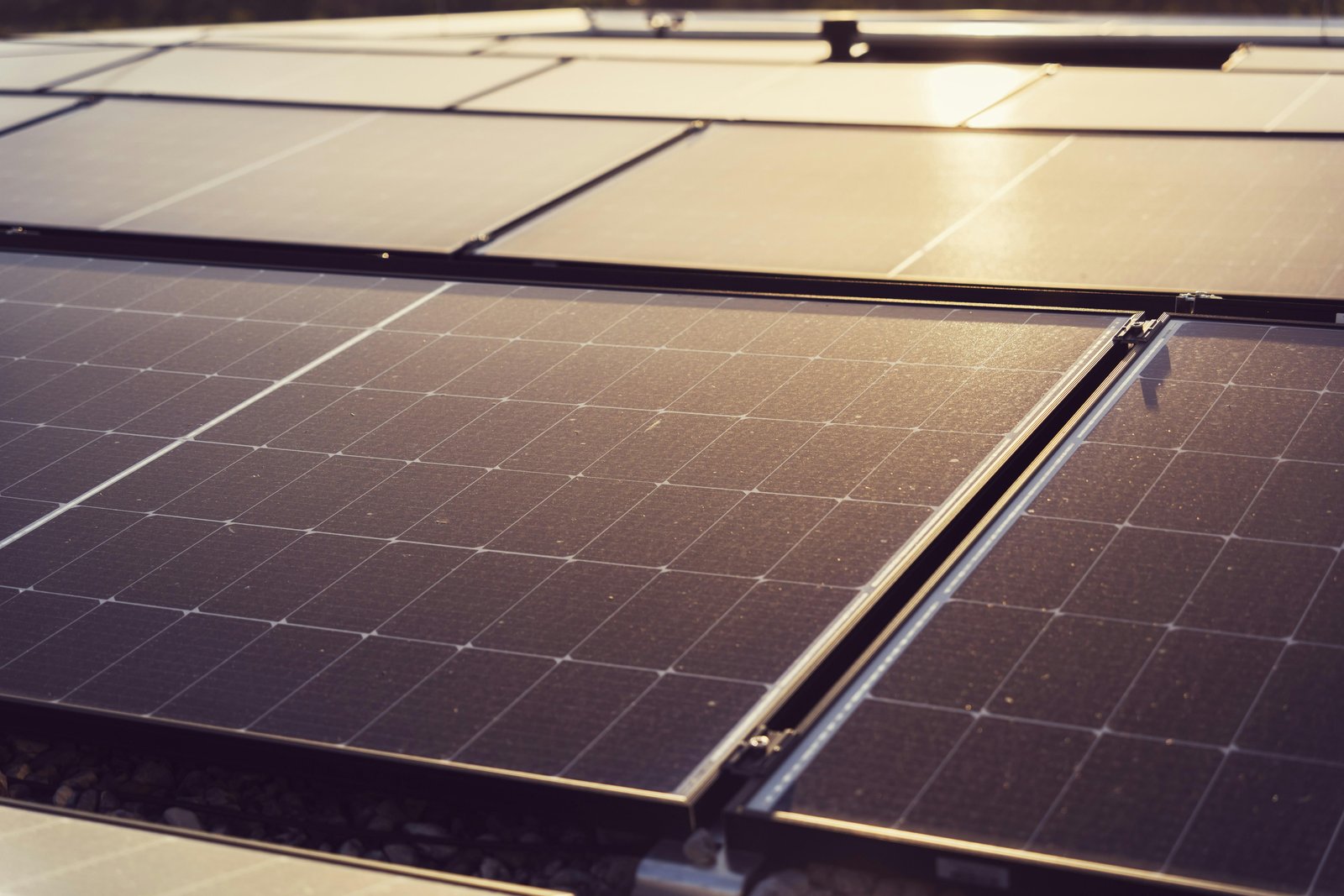
Comprehensive Guide to Calculating Solar Panel Cost Efficiency: Technical Methods and Economic Analysis
Comprehensive Guide to Calculating Solar Panel Cost Efficiency: Technical Methods and Economic Analysis
Reading Time: 35 minutes
Key Highlights
• Technical Efficiency Range: Commercial solar panels achieve conversion efficiencies between 6-22%, with monocrystalline panels reaching 18-22%, polycrystalline 15-17%, and thin-film technologies 6-14% under Standard Test Conditions
• Temperature Performance Impact: Solar panel efficiency decreases by 0.4-0.5% for every 1°C temperature rise above Standard Test Conditions (25°C), significantly affecting cost-effectiveness in tropical climates
• Meteorological Factors: Efficiency correlates directly with solar intensity and wind speed, while showing inverse relationships with ambient temperature, humidity, and dew point temperature based on comprehensive field data analysis
• Economic Optimization: Lifecycle cost analysis reveals operations and maintenance represent 75-85% of total system costs over 25-30 year lifespan, making efficiency improvements yielding 10-30% cost reduction critical for investment returns
Executive Summary
Solar photovoltaic technology represents fundamental component of global renewable energy transition, with installations expanding rapidly across residential, commercial, and utility-scale applications. However, solar panel performance and economic viability depend critically on accurate efficiency calculation and cost analysis incorporating technical parameters, environmental conditions, and lifecycle economics. The conversion efficiency of solar panels, measured as ratio of electrical power output to incident solar radiation, typically ranges from 6-22% depending on cell technology, with monocrystalline silicon achieving highest commercial efficiencies around 18-22%, polycrystalline silicon 15-17%, and thin-film technologies including amorphous silicon and CIGS ranging from 6-14%.1
Calculating solar panel cost efficiency extends beyond simple technical conversion rates to encompass comprehensive economic analysis including capital investment, installation costs, operations and maintenance expenditures, performance degradation over time, and financial returns from energy generation. Research demonstrates that initial capital costs typically represent only 15-25% of total lifecycle expenditure, with operations, maintenance, and eventual replacement comprising 75-85% of costs over typical 25-30 year system lifespans. Environmental factors significantly impact both technical efficiency and economic returns, with ambient temperature, humidity, wind speed, solar intensity, and dew point all demonstrating measurable correlations with panel performance. Field research establishes that panel efficiency increases with solar intensity and wind speed, while decreasing with temperature, humidity, and dew point elevation.2
This comprehensive guide examines methodologies for calculating solar panel cost efficiency from multiple perspectives including technical performance measurement, meteorological impact assessment, economic analysis incorporating lifecycle costs, optimization strategies through cooling systems and tracking mechanisms, and practical implementation frameworks for diverse applications. The analysis integrates recent research findings, validated calculation methods, and practical case studies providing readers with complete toolkit for evaluating solar installations across residential, commercial, and industrial contexts. Content addresses fundamental efficiency calculation formulas, Standard Test Condition parameters, real-world performance adjustments, financial metrics including levelized cost of energy (LCOE), payback periods, and return on investment calculations, as well as advanced topics including temperature coefficient impacts, soiling losses, inverter efficiency considerations, and system degradation rates affecting long-term performance and economics.
Fundamental Solar Panel Efficiency Calculation Methods
Solar panel efficiency represents the percentage of incident solar radiation successfully converted into electrical energy, calculated as ratio of electrical power output to total solar power striking panel surface. The fundamental efficiency calculation follows standardized formula tested under controlled laboratory conditions and verified through field measurements. For any solar panel operating under specific irradiance conditions, the instantaneous efficiency η can be calculated using the relationship between electrical power output and incident solar radiation across panel surface area. The basic efficiency equation takes the form:
Basic Efficiency Calculation Formula:
η = (Pp) / (Ip × Ap) × 100%
Where:
• η = Solar panel efficiency (%)
• Pp = Electrical power output (Watts)
• Ip = Solar irradiance or intensity (W/m²)
• Ap = Panel surface area (m²)
Power Output Calculation:
Pp = V × I
Where:
• V = Output voltage (Volts)
• I = Output current (Amperes)
Field research conducted over 100-day period measuring solar panel performance under varying meteorological conditions demonstrates practical application of efficiency calculations. Using 100W rated solar panel with dimensions 0.620m × 0.755m (surface area 0.468m²), researchers recorded voltage and current outputs under diverse solar intensity conditions ranging from 105 W/m² to 980 W/m². At solar intensity of 863 W/m² with ambient temperature of 24°C, the panel produced approximately 19.37% efficiency, while at 980 W/m² intensity with 21°C ambient temperature, efficiency reached 19.47%, demonstrating positive correlation between solar intensity and conversion efficiency.2
Standard Test Conditions (STC) provide baseline for solar panel performance specifications, defining reference parameters enabling fair comparison across different panel technologies and manufacturers. STC establishes irradiance level of 1000 W/m² (representing peak solar intensity at AM1.5 spectrum), cell temperature of 25°C, and air mass coefficient of 1.5 corresponding to sun angle 48° from zenith. These standardized conditions rarely occur in real-world operations, necessitating correction factors and performance adjustments for actual field conditions including temperature variations, reduced irradiance from clouds or atmospheric conditions, soiling from dust accumulation, and spectral variations throughout day and seasons. Most commercial solar panels experience 15-25% lower real-world efficiency compared to STC ratings when accounting for these operational factors.
Technology-Specific Efficiency Characteristics
Solar photovoltaic technologies span three primary generations with distinct efficiency characteristics, manufacturing costs, and application suitability. First-generation crystalline silicon technologies dominate commercial markets, representing approximately 90% of global installations through proven reliability and competitive efficiency levels. Second-generation thin-film technologies offer manufacturing cost advantages and flexibility for building-integrated applications despite lower conversion efficiencies. Third-generation emerging technologies including perovskite, dye-sensitized, and quantum dot solar cells demonstrate promising laboratory efficiencies though commercial viability remains under development. Understanding efficiency characteristics across technologies proves essential for accurate cost-effectiveness analysis and technology selection for specific applications.
Solar Panel Technology Efficiency Ranges:
First Generation - Crystalline Silicon:
• Monocrystalline Silicon: 18-22% efficiency (laboratory records up to 26.1%)
• Polycrystalline Silicon: 15-17% efficiency
• Advantages: High efficiency, proven reliability, 25-30 year lifespan
• Disadvantages: Higher manufacturing costs, temperature sensitivity
• Temperature coefficient: -0.4 to -0.5% per °C above 25°C
• Market share: approximately 90% of installations
Second Generation - Thin Film Technologies:
• Amorphous Silicon (a-Si): 6-9% efficiency
• Copper Indium Gallium Selenide (CIGS): 10-12% efficiency (laboratory 22.6%)
• Cadmium Telluride (CdTe): 9-11% efficiency (laboratory 22.1%)
• Advantages: Lower manufacturing costs, better high-temperature performance, flexible substrates
• Disadvantages: Lower efficiency, faster degradation rates
• Temperature coefficient: -0.25% per °C (better than crystalline)
• Applications: Building-integrated PV, portable applications
Third Generation - Emerging Technologies:
• Perovskite Solar Cells: Laboratory efficiency 25.5%
• Dye-Sensitized Solar Cells: Laboratory efficiency 11-12%
• Quantum Dot Solar Cells: Under development
• Organic Photovoltaics: Laboratory efficiency 17-18%
• Status: Primarily research stage, limited commercial availability
• Potential: Higher theoretical efficiencies, lower manufacturing costs
Monocrystalline silicon panels achieve highest commercial efficiencies through uniform crystal structure and high purity silicon, absorbing approximately 90% of solar radiation in 400-1200 nm wavelength range though converting only 18-22% to electricity with remainder dissipating as heat. The uniform structure minimizes electron recombination losses and provides superior low-light performance compared to polycrystalline alternatives. However, higher manufacturing costs from energy-intensive production processes and material wastage during ingot slicing result in 15-25% cost premium over polycrystalline panels. For applications where space constraints limit installation area or where maximum energy output per unit area proves critical, monocrystalline technology offers optimal cost-effectiveness despite higher initial investment.1
Thin-film technologies sacrifice conversion efficiency for manufacturing cost advantages and unique performance characteristics. Cadmium telluride and CIGS panels demonstrate better performance under high-temperature conditions with temperature coefficients around -0.25% per °C compared to crystalline silicon's -0.4 to -0.5% per °C, making them relatively more efficient in hot climates despite lower baseline efficiencies. Thin-film flexibility enables building-integrated photovoltaic applications including curved surfaces, facades, and lightweight installations infeasible with rigid crystalline panels. However, faster degradation rates with typical power output declining 1-2% annually compared to 0.5-0.8% for crystalline silicon necessitates consideration of longer-term replacement costs in lifecycle economic analysis.
Environmental Factors Impacting Solar Panel Efficiency
Solar panel performance demonstrates strong sensitivity to environmental and meteorological conditions including ambient temperature, solar irradiance intensity, wind speed, relative humidity, and atmospheric dew point. Comprehensive field research spanning 100 days and diverse weather conditions establishes quantified relationships between these parameters and panel efficiency, enabling predictive modeling and performance optimization. Understanding these relationships proves critical for accurate economic analysis since real-world efficiency typically runs 15-30% below rated STC performance depending on climate conditions and installation configuration. Sites with high temperatures, low wind speeds, and high humidity experience greatest efficiency reductions, directly impacting energy generation and investment returns.
Ambient temperature represents single most significant environmental factor affecting solar panel efficiency, with research demonstrating inverse linear relationship between temperature and performance. Field measurements establish efficiency decrease of 0.4-0.5% for each degree Celsius above 25°C Standard Test Condition temperature. At typical operating temperatures of 45-65°C experienced by roof-mounted panels in tropical climates during peak solar hours, this temperature effect reduces efficiency by 8-16% compared to STC ratings. The temperature impact mechanism involves bandgap shrinkage in semiconductor materials as temperature increases, reducing open-circuit voltage while slightly increasing short-circuit current with net effect strongly negative on power output. Research recorded efficiency of 20.51% at solar intensity 764 W/m² and 31°C ambient temperature, compared to 21.30% efficiency at 736 W/m² and 27°C temperature, demonstrating substantial temperature sensitivity despite similar irradiance levels.2
Meteorological Impact on Solar Panel Efficiency:
Temperature Effects:
• Efficiency decrease: 0.4-0.5% per °C above 25°C
• Typical operating temperature: 45-65°C in tropical climates
• Performance loss: 8-16% at peak operating temperatures
• Regression equation: η = -0.0316T + 20.237
• Mechanism: Bandgap shrinkage causing voltage reduction
• Mitigation: Active or passive cooling systems
Solar Intensity Correlation:
• Direct positive relationship with efficiency
• Efficiency increase: 0.0027% per W/m² intensity increase
• Regression equation: η = 0.0027S + 17.955
• Optimal performance: Clear sky conditions 800-1000 W/m²
• Reduced performance: Cloudy conditions 100-400 W/m²
• Field data range: 105-980 W/m² measured intensity
Wind Speed Benefits:
• Positive correlation through enhanced cooling
• Efficiency increase: 0.2784% per km/h wind speed
• Regression equation: η = 0.2784W + 18.367
• Cooling mechanism: Convective heat dissipation
• Additional benefit: Dust removal from panel surface
• Optimal range: 5-10 km/h sustained wind
Humidity and Dew Point:
• Inverse relationship with efficiency
• Humidity impact: -0.021% per 1% relative humidity increase
• Regression equation: η = -0.021H + 20.797
• Dew point effect: -0.1021% per °C dew point increase
• Regression equation: η = -0.1021D + 21.077
• Mechanisms: Increased cloud cover, condensation formation, reduced heat dissipation
Comprehensive regression analysis incorporating temperature, humidity, wind speed, solar intensity, and dew point establishes predictive correlation enabling efficiency estimation from readily available meteorological data. Using 100 days of field measurements, researchers developed multivariate linear regression model: η = -2.30054 + 0.413065T + 0.109577H + 0.882282W + 0.005034S - 0.08313D, where T represents temperature, H humidity, W wind speed, S solar intensity, and D dew point. Validation testing across 10 independent measurement days demonstrated absolute errors between calculated and measured efficiency ranging from 0.08% to 1.20%, confirming model accuracy for practical application in performance prediction and economic analysis.2
Soiling from dust accumulation, bird droppings, pollen, and atmospheric particulates represents additional efficiency reduction factor varying substantially by location and precipitation patterns. Desert installations may experience 4-7% efficiency loss monthly without cleaning, while urban areas with higher air pollution see 2-5% monthly degradation. Coastal installations face salt accumulation issues, while agricultural areas contend with pollen and debris. Regular cleaning restores performance though maintenance costs must factor into economic analysis. Dust accumulation effects prove particularly severe in arid climates with limited rainfall for natural cleaning, with some Middle Eastern installations reporting 20-30% performance degradation over 6-month dry periods between cleaning interventions.
Efficiency Optimization Through System Design and Configuration
Solar panel installation design significantly impacts energy generation efficiency and economic returns through optimization of tilt angle, orientation, shading avoidance, and thermal management systems. Research demonstrates that proper system configuration can improve energy output by 25-40% compared to suboptimal installations, directly affecting cost-effectiveness and investment payback periods. Tilt angle optimization alone yields 10-25% performance improvement by maximizing solar radiation incidence throughout year, while sophisticated tracking systems following sun path across sky can increase energy capture by 20-45% over fixed installations though at substantial capital cost and maintenance requirements necessitating careful economic analysis.
Optimal tilt angle depends on geographic latitude and desired optimization period, with research establishing 26-28° as optimal for locations around 27°N latitude maximizing annual energy generation. Field experiments testing tilt angles from 5° to 50° demonstrated maximum power output of 84.64W occurring at 26° tilt, declining at steeper or shallower angles due to reduced effective solar radiation capture. For locations at latitude φ, annual optimization typically uses tilt angle approximately equal to latitude (φ ≈ latitude), though seasonal adjustments can enhance performance with summer tilt around latitude minus 15° and winter tilt around latitude plus 15° maximizing generation during respective seasons.2
System Configuration Optimization:
Tilt Angle Optimization:
• Annual optimization: Tilt ≈ Geographic latitude
• Field research optimal: 26-28° for 27°N latitude
• Summer adjustment: Latitude - 15° for June-August focus
• Winter adjustment: Latitude + 15° for December-February focus
• Performance gain: 10-25% versus horizontal mounting
• Economic consideration: Fixed versus seasonal adjustment mechanisms
Sun Tracking Systems:
• Single-axis tracking: 32.17% efficiency gain over fixed mount
• Dual-axis tracking: 81.68% efficiency gain over fixed mount
• Daily intensity increase: 13.8% single-axis, 22.5% dual-axis
• Cost premium: $0.08-0.10 per watt additional investment
• Maintenance requirements: Moving parts, motors, controllers
• Economic viability: Utility-scale applications, high irradiance regions
Thermal Management Systems:
• Passive cooling (finned heat sinks): 2-5% efficiency improvement
• Active water cooling: 8-12% efficiency improvement
• Active air cooling: 5-8% efficiency improvement
• Nanofluid cooling: 12-18% efficiency improvement
• Cost-benefit analysis: Investment versus energy gains
• Climate dependence: Greater benefits in hot environments
Concentrating Systems:
• Mirror concentration: 52% power increase with cooling
• Increased intensity: Higher efficiency from concentration
• Temperature challenges: Concentrated heat requires cooling
• Cost considerations: Mirror maintenance, cleaning requirements
• Space efficiency: More power from smaller panel area
• Application: High-value installations, limited space
Thermal management through cooling systems addresses efficiency losses from elevated operating temperatures, with research demonstrating multiple approaches offering varying cost-effectiveness profiles. Passive cooling using aluminum fins mounted on panel rear surfaces achieves 2-5% efficiency improvements through enhanced radiative and convective heat dissipation without energy consumption. Active water cooling systems spraying or circulating water across panel surfaces demonstrate 8-12% efficiency gains though requiring pumping energy, water supply, and maintenance offsetting some benefits. Advanced approaches using nanofluids (water with metaloxide nanoparticles) as coolants show 12-18% efficiency improvements from superior thermal conductivity, with Al2O3-water, TiO2-water, and ZnO-water nanofluids tested showing incremental performance gains in that order.1
Hybrid photovoltaic-thermal (PV/T) systems capture waste heat for useful applications including domestic hot water, space heating, or driving absorption cooling systems, improving total energy utilization to 60-75% compared to 18-22% electrical efficiency alone. Economic viability depends on thermal energy value at installation site, with residential hot water applications and industrial process heat uses showing strongest returns. PV/T systems require careful hydraulic design ensuring adequate flow rates for heat extraction without excessive pumping energy, typically achieving optimal performance with water flow rates around 0.02-0.04 kg/s per square meter of collector area based on experimental research demonstrating temperature reductions from 72.5°C to 39.3-47.2°C across this flow range.
Economic Analysis: Calculating Cost-Effectiveness and Financial Returns
Solar panel cost-effectiveness analysis extends beyond technical efficiency calculations to comprehensive economic evaluation incorporating capital investment, installation costs, operations and maintenance expenditures, energy production revenues or avoided electricity costs, financial incentives, tax benefits, and system degradation over lifecycle. Multiple financial metrics enable comparison across investment alternatives including levelized cost of energy (LCOE) measuring lifetime electricity production costs, payback period indicating investment recovery timeframe, net present value (NPV) calculating discounted cash flows, and internal rate of return (IRR) determining effective investment yield. Thorough economic analysis proves essential for rational decision-making given substantial upfront investment and long payback periods characteristic of solar installations.
Levelized Cost of Energy represents fundamental metric for solar economic analysis, calculating per-unit electricity cost when total lifecycle costs distributed across total energy production over system lifetime. LCOE enables direct comparison between solar and alternative electricity sources on common economic basis. The calculation incorporates initial capital investment, annual operations and maintenance costs, financing costs, degradation rates, and total energy production over system lifetime. For typical residential solar installation with total installed cost $3.00-4.00 per watt DC capacity, 25-year system life, 0.8% annual degradation, and operations/maintenance costs approximately $20 per kW per year, LCOE ranges from $0.08-0.15 per kWh depending on location-specific solar resource quality and system efficiency. Utility-scale installations achieve significantly lower LCOE of $0.03-0.06 per kWh through economies of scale, optimized site selection, and professional operations.
Solar Panel Economic Calculations:
Levelized Cost of Energy (LCOE):
LCOE = (Total Lifecycle Costs) / (Total Lifetime Energy Production)
Total Lifecycle Costs include:
• Initial capital investment (panels, inverters, mounting, installation)
• Annual operations and maintenance costs
• Inverter replacement costs (typically year 10-12)
• Financing costs (interest payments if financed)
• Insurance and property tax increases
Total Lifetime Energy Production considers:
• System capacity × Solar resource × System efficiency
• Annual degradation rate (typically 0.5-0.8%)
• Availability factor (system downtime for maintenance)
• Inverter efficiency (typically 95-98%)
Simple Payback Period:
Payback = (Total System Cost) / (Annual Energy Savings)
Where Annual Energy Savings = (Annual Energy Production) × (Electricity Rate) - (Annual O&M Costs)
Net Present Value (NPV):
NPV = Σ [(Cash Flowt) / (1 + discount rate)t] - Initial Investment
Positive NPV indicates economically viable investment
Discount rate typically 3-8% depending on cost of capital
Internal Rate of Return (IRR):
IRR is discount rate where NPV = 0
Represents effective investment yield
Compare against alternative investment opportunities
Installation costs represent major capital investment component, varying substantially by system size, mounting configuration, site complexity, and labor rates. Residential rooftop installations typically cost $2.50-4.00 per watt DC installed capacity in mature markets, with smaller systems under 5kW commanding premium prices due to fixed costs spreading across fewer watts. Ground-mounted residential systems incur 10-20% higher costs from additional racking and site preparation requirements. Commercial rooftop installations achieve economies of scale at $2.00-3.00 per watt for systems 50-500kW, while utility-scale ground-mounted projects reach $0.80-1.50 per watt through bulk procurement, simplified installation, and professional project management. These cost ranges reflect mature markets with established supply chains and installation expertise; developing markets may experience 20-40% cost premiums from limited competition and supply chain inefficiencies.
Operations and maintenance costs, though appearing modest annually at $15-25 per kilowatt for residential systems and $8-15 per kilowatt for commercial/utility installations, accumulate substantially over 25-30 year system lifetimes to represent 10-15% of total lifecycle costs. O&M activities include periodic panel cleaning (2-4 times annually depending on climate), inverter monitoring and maintenance, electrical connection inspection, vegetation management for ground-mounted systems, performance monitoring and troubleshooting, insurance premiums, and inverter replacement typically required once during system lifetime at years 10-12. Professional O&M contracts for commercial systems cost $10-20 per kilowatt annually but often prove cost-effective through superior performance monitoring, preventive maintenance reducing downtime, and warranty management compared to ad-hoc in-house approaches.
Performance Degradation and Lifetime Energy Production
Solar panel performance degrades gradually over operational lifetime through multiple mechanisms including cell metallization corrosion, encapsulant discoloration reducing light transmission, delamination between layers, cell cracking from thermal cycling, and gradual semiconductor material changes. Understanding degradation rates and patterns proves critical for accurate lifecycle energy production forecasting and economic analysis, as cumulative efficiency losses over 25-30 years substantially impact total energy generation and investment returns. Modern monocrystalline and polycrystalline panels typically degrade 0.5-0.8% annually, while thin-film technologies show 1.0-2.0% annual degradation. Over 25-year lifetime, this translates to total performance reduction of 12-20% for crystalline panels versus 25-40% for thin-films, significantly affecting comparative economics despite lower initial costs for thin-film installations.
Manufacturer power output warranties typically guarantee 80-90% of rated power after 25 years for crystalline silicon panels, implying assumed annual degradation around 0.5-0.8%. However, field studies indicate actual degradation rates vary substantially by technology, climate, and installation quality, with well-maintained systems in moderate climates often showing degradation below 0.5% annually while hot, humid climates or installations with poor electrical connections experience accelerated degradation approaching or exceeding 1% annually. Independent third-party testing programs including NREL's long-term outdoor testing demonstrate median degradation around 0.65% annually for crystalline silicon with significant variation between manufacturers and specific product lines, emphasizing importance of quality panel selection for lifecycle economics.
Degradation Rates and Lifetime Performance:
Technology-Specific Degradation:
• Monocrystalline silicon: 0.5-0.7% annual degradation
• Polycrystalline silicon: 0.6-0.8% annual degradation
• Thin-film CdTe: 1.0-1.5% annual degradation
• Thin-film CIGS: 1.2-2.0% annual degradation
• Amorphous silicon: 1.5-2.5% annual degradation
• Climate factor: Hot humid climates show 20-30% faster degradation
Typical Warranty Structure:
• Product warranty: 10-12 years for manufacturing defects
• Performance warranty: 25-30 years power output guarantee
• Year 1: Typically 97-98% of rated power
• Year 25: Typically 80-85% of rated power
• Linear warranty: Annual guaranteed minimum power level
• Step warranty: Guaranteed thresholds at specific years
Lifetime Energy Production Calculation:
Year 1 Production = System Size (kW) × Solar Hours × 365 × Performance Ratio
Subsequent Years = Prior Year × (1 - Degradation Rate)
Lifetime Total = Σ Annual Production over 25-30 years
Performance Ratio typically 0.75-0.85 accounting for:
• Temperature losses: 8-15% in hot climates
• Inverter efficiency: 2-5% losses
• Soiling/shading: 2-7% losses
• Wiring resistance: 1-3% losses
• Mismatch/aging: 2-4% losses
Example Calculation for 5kW System:
Location: 5.5 peak sun hours daily average
Performance Ratio: 0.80 (accounting for all losses)
Annual Degradation: 0.7%
• Year 1: 5 kW × 5.5 hrs × 365 days × 0.80 = 8,030 kWh
• Year 10: 7,565 kWh (6% cumulative degradation)
• Year 25: 6,807 kWh (15% cumulative degradation)
• 25-Year Total Production: approximately 187,000 kWh
Accelerated degradation mechanisms require understanding for risk assessment and quality system selection. Potential-induced degradation (PID) occurs when high voltage differences between solar cells and grounding frame cause ion migration and performance loss, with susceptible modules losing 20-40% efficiency within 1-2 years under adverse conditions. Modern manufacturers address PID through improved encapsulation materials and anti-PID coatings, with quality panels demonstrating PID resistance through independent testing certification. Light-induced degradation (LID) affects crystalline silicon panels during first weeks of operation causing 1-3% initial performance loss, factored into manufacturer ratings with "stabilized" efficiency specifications. Mechanical degradation from cell cracking due to thermal cycling, wind loading, or installation stress gradually accumulates over years, with improved cell technologies including multi-wire busbar designs and half-cut cells demonstrating superior mechanical reliability.
Performance monitoring systems enable degradation detection and optimization opportunities identifying underperforming modules requiring attention. Modern microinverter and power optimizer systems provide module-level production monitoring enabling identification of individual panel issues including shading, soiling, or degradation abnormalities. String-level monitoring through string inverters offers less granular visibility but adequate for performance trending and major issue detection at lower cost. Sophisticated monitoring platforms correlating actual production against weather data and modeled expected performance enable early detection of degradation acceleration or system issues requiring maintenance intervention before major productivity losses accumulate. Investment in quality monitoring systems typically costs $100-300 for residential installations but provides substantial value through optimized performance and longevity.
Practical Application: Case Study Economic Analysis
Comprehensive case study examines economic analysis for 6kW residential solar installation demonstrating practical application of efficiency calculations and cost-effectiveness evaluation. The analysis location assumes tropical climate with 5.2 average peak sun hours daily, high ambient temperatures averaging 30°C, moderate humidity, and typical residential electricity rates $0.15 per kWh. The installation uses monocrystalline panels rated 400W under STC with 20.5% rated efficiency, though actual field efficiency expected 17.2% accounting for temperature losses and other derating factors. Total installed system cost $18,000 ($3.00 per watt) includes panels, inverters, mounting hardware, electrical components, permits, and professional installation labor.
6kW Residential Solar Case Study:
System Specifications:
• System size: 6.0 kW DC capacity
• Panel technology: Monocrystalline, 400W modules
• Number of panels: 15 modules
• Panel efficiency: 20.5% (STC), 17.2% (field-adjusted)
• Inverter: String inverter, 97% efficiency
• Installation: Rooftop, 15° tilt angle (suboptimal for latitude)
• Total installed cost: $18,000 ($3.00/watt)
Performance Parameters:
• Location: Tropical climate, 5.2 peak sun hours average
• Temperature: 30°C average ambient, 55°C typical operating
• Temperature derating: 12% loss (30°C above STC)
• Soiling/shading: 5% combined losses
• System losses: 8% (wiring, mismatch, availability)
• Overall performance ratio: 0.77
• Annual degradation: 0.7% per year
Energy Production Forecast:
• Year 1: 6.0 kW × 5.2 hrs × 365 × 0.77 = 8,771 kWh
• 25-year total: approximately 203,500 kWh
• Average annual: 8,140 kWh (accounting for degradation)
Financial Analysis:
• Annual electricity savings: 8,771 kWh × $0.15 = $1,316 (Year 1)
• Annual O&M costs: $120 ($20/kW)
• Net annual savings: $1,196 (Year 1)
• Simple payback: 18,000 / 1,196 = 15.1 years
• 25-year NPV (5% discount): $4,250
• 25-year IRR: 6.8%
Sensitivity Analysis:
• With 26° optimal tilt: 10% production increase, payback 13.8 years
• With passive cooling: 3% efficiency gain, payback 14.7 years
• With both optimizations: 13% gain total, payback 13.5 years
• If electricity rate increases 3% annually: payback 12.8 years
• If system cost $2.50/watt: payback 12.6 years, IRR 9.1%
The case study demonstrates moderate economic returns typical for residential solar in markets without substantial financial incentives or very high electricity rates. The 15.1-year simple payback period and 6.8% IRR indicate positive but modest investment returns, with system generating surplus value over 25-year lifetime though with extended capital recovery period compared to alternative investments. Sensitivity analysis reveals opportunities for substantial improvement through system optimization, with proper tilt angle adjustment yielding 10% production increase reducing payback to 13.8 years. Combined tilt optimization and passive cooling implementation achieving 13% total efficiency improvement reduces payback period to 13.5 years while increasing IRR to 8.2%, demonstrating economic value of thorough system design optimization beyond minimum-cost installation approaches.
Location-specific factors dramatically affect solar economics, with high-insolation regions like southwestern United States, Australia interior, Middle East, and North Africa achieving 30-60% higher energy production than moderate climates, proportionally improving economics. Conversely, northern European locations with 3.0-3.5 peak sun hours experience payback periods 40-60% longer than high-insolation regions for identical system costs and electricity rates. Electricity rate structures significantly impact economics, with tiered residential rates where solar production offsets expensive upper-tier consumption providing better economics than flat-rate structures. Time-of-use rates aligning peak production hours with peak pricing periods optimize solar value, while net metering policies enabling excess production credit at retail rates versus wholesale rates create 20-40% economic value differences across jurisdictions with different regulatory frameworks.
Advanced Economic Considerations and Optimization Strategies
Beyond fundamental economic analysis, sophisticated optimization strategies enhance solar investment returns through careful attention to system sizing, technology selection, financing structures, incentive programs, and operational practices. Optimal system sizing balances installation economies of scale against diminishing returns from export pricing for excess generation in jurisdictions without net metering or with unfavorable export rates. Technology selection weighs higher-efficiency premium panels against standard-efficiency alternatives, with economic optimization depending on space constraints and installation cost structures. Financing options including cash purchase, loans, leases, and power purchase agreements present distinct economic implications requiring careful evaluation aligned with investor objectives and financial circumstances.
Premium high-efficiency panels cost 15-30% more than standard-efficiency alternatives but generate 8-12% more energy per unit area, creating economic trade-offs depending on site-specific constraints. For installations with limited roof space preventing achievement of target capacity with standard panels, premium efficiency justifies cost premium by enabling full capacity within available area. Conversely, installations with abundant space achieve better economics through standard panels despite lower efficiency, as marginal installation cost for additional area proves less than premium panel cost differential. Detailed economic modeling comparing specific panel options with installed cost differentials and actual space constraints determines optimal selection rather than assuming highest efficiency always provides best value.
Advanced Optimization Strategies:
System Sizing Optimization:
• Match sizing to consumption profile avoiding export at poor rates
• Consider future consumption growth (electric vehicles, additions)
• Account for net metering versus feed-in tariff rate structures
• Battery storage integration for time-shifting and backup
• Oversizing capacity with battery to maximize self-consumption
• Economic modeling of various sizing scenarios with actual rates
Financing Structure Comparison:
Cash Purchase: Lowest lifetime cost, immediate ownership, tax benefits
Solar Loan: Zero down, monthly payments, own system and benefits
Solar Lease: Zero down, fixed monthly payment, no ownership
Power Purchase Agreement (PPA): Zero down, pay per kWh, no ownership
• Cash purchase optimal for investors with capital and tax appetite
• Loans enable participation without capital while retaining ownership
• Leases/PPAs transfer performance risk but sacrifice tax benefits
Incentive Program Optimization:
• Federal tax credits: 30% Investment Tax Credit (varies by jurisdiction)
• State/local rebates: $0.10-1.00 per watt in some markets
• Accelerated depreciation: MACRS for commercial systems
• Renewable Energy Certificates: Additional revenue in some markets
• Net metering: Retail rate credit for excess generation
• Feed-in tariffs: Fixed rate for all or excess generation
• Timing: Incentive program phase-outs affect optimal timing
Operational Optimization:
• Monitoring systems: Early problem detection, $100-300 investment
• Preventive maintenance: Cleaning schedule optimization
• Warranty management: Documentation and claims process
• Consumption management: Shift loads to solar production hours
• Battery dispatch optimization: Maximize time-of-use arbitrage
• Performance verification: Annual production audits against forecasts
Financial incentives dramatically affect solar economics, with federal investment tax credits, state rebates, accelerated depreciation for commercial systems, and renewable energy certificate revenues potentially covering 30-50% of system costs in favorable jurisdictions. However, incentive programs often phase down over time or terminate after budget exhaustion, creating timing considerations for project development. Thorough research of available incentives including federal programs, state and local utility rebates, and financing programs proves essential for accurate economic analysis. Commercial systems benefit from additional incentive mechanisms including Modified Accelerated Cost Recovery System (MACRS) depreciation enabling substantial upfront tax deductions, solar renewable energy certificates providing ongoing revenue streams in compliance markets, and green building certifications adding property value beyond energy production benefits.
Battery energy storage integration creates additional optimization opportunities through time-shifting solar production to high-value evening hours, providing backup power during grid outages, and enabling participation in demand response or frequency regulation programs generating ancillary revenues. Economic viability depends strongly on electricity rate structures and grid reliability, with time-of-use rates showing 3:1 or greater peak-to-off-peak ratios justifying battery investment through arbitrage value, while flat-rate jurisdictions find limited economic justification. Typical residential battery systems cost $8,000-15,000 installed for 10-13 kWh capacity, with lifecycle costs around $0.15-0.25 per kWh of throughput accounting for replacement after 10-15 years or 3,000-5,000 cycles. Commercial and utility-scale systems achieve $0.08-0.15 per kWh costs through economies of scale and sophisticated optimization algorithms maximizing value capture across multiple revenue streams.
Conclusions and Strategic Recommendations
Solar panel cost efficiency calculation encompasses comprehensive technical and economic analysis integrating conversion efficiency measurement, environmental factor impacts, system optimization opportunities, lifecycle cost evaluation, and financial return assessment. Technical efficiency ranges from 6-22% across commercial technologies, with monocrystalline silicon achieving highest performance levels around 18-22% under Standard Test Conditions though real-world operation typically yields 15-30% lower efficiency due to temperature effects, soiling, shading, and other derating factors. Field research establishes quantified relationships between efficiency and meteorological parameters including inverse temperature correlation (-0.4 to -0.5% per °C), direct solar intensity relationship, wind speed benefits from cooling, and humidity/dew point negative impacts, enabling predictive modeling and site-specific performance forecasting essential for accurate economic analysis.
Economic analysis methods including levelized cost of energy, payback period, net present value, and internal rate of return provide complementary perspectives on solar investment viability, with comprehensive evaluation considering all lifecycle costs beyond initial capital investment. Operations and maintenance, inverter replacement, degradation impacts, and financing costs represent substantial components often comprising 75-85% of total lifecycle expenditure over 25-30 year system lifetimes. System optimization through proper tilt angle selection, thermal management, tracking systems where economically justified, and quality component selection substantially improves energy production and financial returns, with potential performance enhancements of 25-40% versus suboptimal installations directly translating to proportional economic improvements and reduced payback periods.
Strategic recommendations for solar investment evaluation emphasize thorough site assessment including solar resource measurement, shading analysis, and structural capacity verification; comprehensive economic modeling incorporating location-specific costs, rates, incentives, and financing options; quality system design optimizing tilt, orientation, and component selection for site-specific conditions; professional installation ensuring proper electrical connections, mounting security, and warranty compliance; and ongoing performance monitoring enabling early problem detection and maintenance optimization. Solar technology continues advancing with efficiency improvements, cost reductions, and enabling technologies including storage and smart home integration expanding application opportunities and improving economics, requiring periodic reassessment of solar viability as market conditions, technology capabilities, and financial incentives evolve over time.
References and Data Sources:
1. Frontiers in Energy Research. (2022). An Enhancement of the Solar Panel Efficiency: A Comprehensive Review.
https://www.frontiersin.org/journals/energy-research/articles/10.3389/fenrg.2022.937155/full
2. ACS Environmental Au (PMC). (2023). Comprehensive Analysis of Solar Panel Performance and Correlations with Meteorological Parameters.
https://pmc.ncbi.nlm.nih.gov/articles/PMC10733962/
3. International Journal of Research and Printing Research. (2024). Advancements in Enhancing Solar Panel Efficiency.
https://ijrpr.com/uploads/V5ISSUE5/IJRPR27232.pdf
4. ScienceDirect. (2023). Experimental analysis of solar panel efficiency improvement by phase change materials cooling.
https://www.sciencedirect.com/science/article/abs/pii/S0960148123006481
5. Nature Scientific Reports. (2025). A comprehensive analysis of advanced solar panel productivity and exergy aspects.
https://www.nature.com/articles/s41598-024-70682-2
6. International Journal of Renewable Energy Development. (2023). Theoretical and Experimental Study on the Performance of Photovoltaic Panel Cooled by Porous Media.
https://ijred.cbiore.id/index.php/ijred/article/view/47686
7. ScienceDirect. (2025). Innovations in improving photovoltaic efficiency: Performance enhancement techniques.
https://www.sciencedirect.com/science/article/abs/pii/S0196890425001128
8. Clean Energy Reviews. (2025). Most efficient solar panels 2025.
https://www.cleanenergyreviews.info/blog/most-efficient-solar-panels
9. SSRN Electronic Journal. (2024). Optimizing Solar Panel Efficiency for Different Weather Conditions.
https://papers.ssrn.com/sol3/papers.cfm?abstract_id=4888827
10. Neliti Media Publications. Optimizing Solar Cell Efficiency: A Comprehensive Review.
https://media.neliti.com/media/publications/603839-optimizing-solar-cell-efficiency-a-compr-a91bed7b.pdf

Expert Consultation for Solar Energy Project Development
SUPRA International provides comprehensive engineering consulting services for solar photovoltaic project development including feasibility studies, site assessment, system design and optimization, technology selection, economic analysis and financial modeling, performance monitoring strategy, and implementation support. Our multidisciplinary team delivers technical expertise and practical guidance for residential, commercial, industrial, and utility-scale solar installations maximizing energy production and investment returns through rigorous analysis and proven methodologies.
Ready to optimize your solar investment through expert analysis and engineering support?
Contact us to discuss your solar energy project requirements and development strategy
Share:
If you face challenges in water, waste, or energy, whether it is system reliability, regulatory compliance, efficiency, or cost control, SUPRA is here to support you. When you connect with us, our experts will have a detailed discussion to understand your specific needs and determine which phase of the full-lifecycle delivery model fits your project best.