
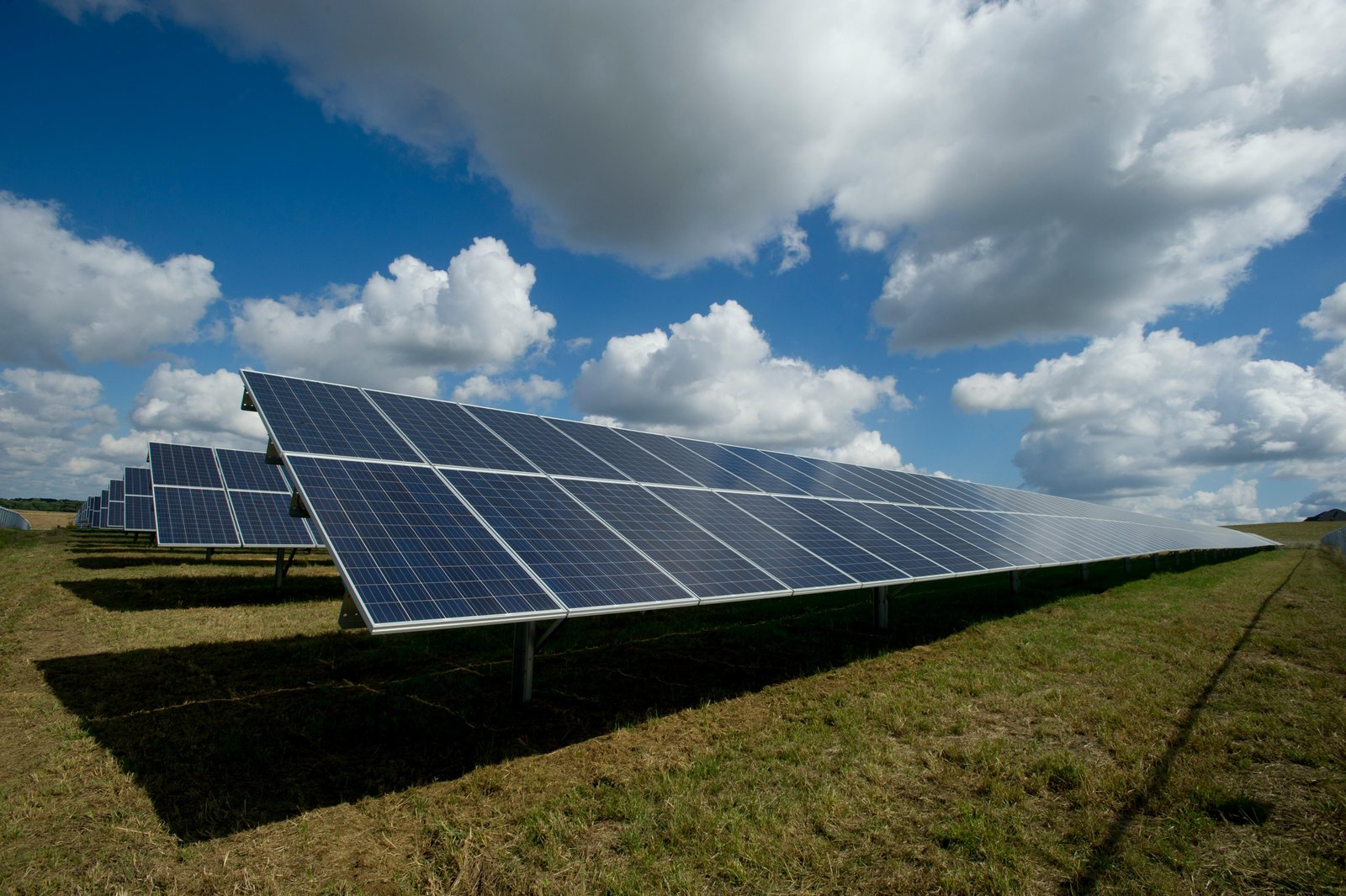
Technical Fundamental for Design, Implementation, and Operations of Solar Photovoltaic Systems Engineering
Solar Photovoltaic Systems Engineering: Comprehensive Technical Guide for Design, Implementation, and Operations
Reading Time: 87 minutes
Key Highlights
• Photovoltaic Fundamentals: Solar cells convert sunlight to electricity through semiconductor p-n junctions with theoretical maximum efficiency of 33.7% (Shockley-Queisser limit) for single-junction silicon cells, though commercial modules typically achieve 15-22% efficiency
• Global Deployment Scale: Worldwide installed PV capacity exceeded 1,600 GW by 2024 with annual additions surpassing 400 GW, driven by cost reductions from USD 76.67/Watt in 1977 to under USD 0.20/Watt in 2024 for crystalline silicon modules
• System Engineering Scope: Complete PV system engineering encompasses solar resource assessment, cell technology selection, electrical design, inverter sizing, structural mounting, grid interconnection, energy storage integration, and lifecycle performance optimization
• Economic Viability: Levelized cost of electricity (LCOE) from utility-scale PV systems declined to USD 0.03-0.06/kWh range in optimal locations, making solar competitive with conventional generation while offering distributed generation flexibility and minimal environmental impact
Executive Summary
Solar photovoltaic technology represents the most rapidly deployed renewable energy source globally, with installed capacity growing from essentially zero in 1970s to over 1,600 gigawatts by 2024 through sustained cost reduction, efficiency improvement, and manufacturing scale expansion. Photovoltaic systems directly convert solar radiation into electrical energy through semiconductor devices called solar cells, which exploit quantum mechanical phenomena to generate current when illuminated. This direct conversion process offers distinct advantages including modularity enabling installations from watts to gigawatts, minimal operations requirements with no fuel consumption, silent operation with no moving parts, and distributed generation potential reducing transmission losses while enhancing grid resilience.
Engineering photovoltaic systems requires multidisciplinary expertise spanning semiconductor physics, electrical engineering, power electronics, structural engineering, meteorology, economics, and regulatory compliance. System designers must understand fundamental cell operation principles governing voltage-current characteristics, temperature dependencies, and efficiency limitations. Practical engineering addresses site-specific solar resource assessment, module selection balancing cost and performance, electrical configuration optimizing voltage and current for inverter compatibility, structural mounting withstanding environmental loads, power conditioning converting DC to AC with minimal losses, grid interconnection meeting utility requirements, and energy storage integration enabling time-shifting or backup power capability.
Global Solar PV Deployment Milestones
USD 76.67/Watt
Module cost
40 GW Total
Global capacity
760 GW Total
Global capacity
USD 0.20/Watt
Module cost
This comprehensive technical guide examines photovoltaic systems engineering from fundamental semiconductor physics through practical implementation considerations. Drawing on authoritative international references including IEA-PVPS technical reports, National Renewable Energy Laboratory research, IEEE conference proceedings, and standard engineering textbooks, the discussion provides rigorous technical foundation for professionals engaged in PV system planning, design, installation, operations, or policy development. Coverage includes theoretical principles underlying photovoltaic conversion, contemporary cell and module technologies, complete system component specifications, engineering design methodologies, performance prediction modeling, quality assurance protocols, maintenance strategies, and emerging technology developments shaping future solar deployment.
For engineering consultants, project developers, equipment manufacturers, utility planners, and government agencies engaged with photovoltaic technology, understanding fundamental operating principles, performance characteristics, design methodologies, and practical implementation considerations proves essential for successful project execution. Indonesian context presents specific opportunities and challenges including high solar irradiance across archipelago averaging 4.5-5.5 kWh/m²/day, rapidly growing electricity demand driven by economic development and population growth, ambitious renewable energy targets seeking 23% renewable share by 2025, and substantial distributed generation potential serving remote communities lacking grid access. This analysis provides technical foundation enabling informed decision-making, optimal system design, and reliable operations across diverse photovoltaic applications serving Indonesian development objectives.
Fundamentals of Photovoltaic Effect and Semiconductor Physics
Photovoltaic effect describes phenomenon whereby certain materials generate electrical current when exposed to light, discovered by French physicist Alexandre-Edmond Becquerel in 1839 through experiments with silver chloride electrodes. Modern understanding reveals photovoltaic conversion depends on quantum mechanical properties of semiconductor materials, particularly their electronic band structure defining allowed and forbidden energy states for electrons. When photons with sufficient energy strike semiconductor material, they excite electrons from valence band to conduction band, creating electron-hole pairs. In properly designed semiconductor junctions, built-in electric fields separate these charge carriers before recombination occurs, driving electrons through external circuit to produce useful electrical current.
Fundamental Energy Conversion Process
| Step | Process | Energy State |
|---|---|---|
| 1. Photon Absorption | Incident photon with E ≥ Eg absorbed by semiconductor | hν → e⁻ excitation |
| 2. Carrier Generation | Electron promoted to conduction band, hole in valence band | e⁻-h⁺ pair created |
| 3. Carrier Separation | Built-in electric field separates charges at p-n junction | Drift and diffusion |
| 4. Current Collection | Electrons flow through external circuit to recombine | Electrical work output |
Semiconductor materials exhibit electrical properties intermediate between conductors and insulators, determined by energy gap (bandgap) between valence and conduction bands. Silicon, the predominant photovoltaic material, possesses bandgap of approximately 1.12 electron volts (eV) at room temperature, optimal for terrestrial solar spectrum conversion. Photons with energy exceeding bandgap can promote electrons to conduction band, while photons with insufficient energy pass through material without absorption. Optimal bandgap balances competing factors: wider bandgaps generate higher voltage per photon but absorb fewer photons from solar spectrum, while narrower bandgaps absorb more photons but extract less voltage from each. Detailed balance calculations by Shockley and Queisser (1961) established theoretical maximum efficiency of 33.7% for single-junction cells under concentrated sunlight, assuming optimal bandgap of 1.34 eV and considering only fundamental thermodynamic losses.1
Semiconductor Material Properties for Photovoltaics
| Material | Bandgap (eV) | Type | Max Efficiency | Application |
|---|---|---|---|---|
| Silicon (Si) | 1.12 | Indirect | 26.7% | Dominant commercial |
| GaAs | 1.42 | Direct | 29.1% | Space, concentrator |
| CdTe | 1.45 | Direct | 22.1% | Thin-film commercial |
| CIGS | 1.0-1.7 | Direct | 23.4% | Thin-film flexible |
| Perovskite | 1.5-2.3 | Direct | 25.8% | Emerging technology |
| Multijunction | 0.7-1.9 | Multiple | 47.6% | Space, CPV |
Semiconductor Physics Principles:
Band Structure and Charge Carriers:
• Valence band containing bound electrons in atomic orbitals
• Conduction band enabling free electron movement
• Bandgap energy determining photon absorption threshold
• Intrinsic carrier concentration dependent on temperature
• Doping modifying carrier concentrations and conductivity
• Fermi level indicating statistical electron occupation
Photon Absorption and Carrier Generation:
• Photon energy E = hν (Planck constant times frequency)
• Absorption coefficient determining penetration depth
• Direct vs indirect bandgap affecting absorption efficiency
• Electron-hole pair generation from photon absorption
• Thermalization losses when photon energy exceeds bandgap
• Quantum efficiency measuring carrier generation per photon
Carrier Transport and Recombination:
• Drift current driven by electric fields
• Diffusion current from concentration gradients
• Mobility describing carrier velocity per unit field
• Recombination processes including radiative and Auger
• Minority carrier lifetime affecting collection efficiency
• Surface recombination at material interfaces
Material Requirements for Photovoltaics:
• Appropriate bandgap for solar spectrum (1.0-1.5 eV optimal)
• High absorption coefficient enabling thin active layers
• Long minority carrier lifetime and diffusion length
• High carrier mobility reducing resistive losses
• Material purity minimizing recombination centers
• Stability under illumination and environmental exposure
Silicon dominates photovoltaic applications through combination of near-optimal bandgap, excellent material quality achievable through mature semiconductor processing, abundance as second most common element in Earth's crust, non-toxicity, and four decades of manufacturing experience reducing costs. Crystalline silicon exists in two primary forms for photovoltaics: monocrystalline silicon featuring single-crystal structure providing highest efficiency but requiring energy-intensive crystal growth, and multicrystalline (polycrystalline) silicon featuring multiple crystal grains with grain boundaries increasing recombination but enabling simpler, lower-cost production. Commercial monocrystalline cells achieve 22-24% efficiency in production, while multicrystalline typically reaches 18-20%, though laboratory cells demonstrate efficiencies exceeding 26% through advanced architectures and processing optimization.
P-N Junction Theory and Solar Cell Operation
P-n junction forms core of solar cell operation, created by joining p-type semiconductor (material with excess holes as majority carriers) with n-type semiconductor (material with excess electrons as majority carriers) to establish electric field enabling charge separation. Doping introduces controlled impurities modifying semiconductor electrical properties: p-type doping adds acceptor atoms (boron in silicon) creating electron deficiencies or holes, while n-type doping adds donor atoms (phosphorus in silicon) providing excess electrons. At junction interface, majority carriers diffuse across boundary driven by concentration gradients: electrons from n-region diffuse into p-region, holes from p-region diffuse into n-region. These carriers recombine near junction, leaving behind immobile ionized dopant atoms creating space charge region or depletion zone depleted of mobile carriers but containing fixed charges establishing built-in electric field.
Solar Cell I-V Characteristic Parameters
| Parameter | Symbol | Typical Value (Si) | Description |
|---|---|---|---|
| Short-Circuit Current | Isc | 9-10 A | Maximum current at V = 0 |
| Open-Circuit Voltage | Voc | 0.6-0.7 V | Maximum voltage at I = 0 |
| Maximum Power Voltage | Vmp | 0.5-0.6 V | Voltage at maximum power (~0.8Voc) |
| Maximum Power Current | Imp | 8-9 A | Current at maximum power (~0.9Isc) |
| Fill Factor | FF | 0.75-0.85 | FF = (Vmp×Imp)/(Voc×Isc) |
| Efficiency | η | 15-22% | η = Pmax / (G × Area) |
Key Equation: Solar cell current-voltage relationship:
I = IL - I0[exp(qV/nkT) - 1] - V/Rsh
Built-in electric field at p-n junction provides mechanism for photogenerated carrier separation essential to photovoltaic operation. When light generates electron-hole pairs within diffusion length of junction, built-in field sweeps electrons toward n-region and holes toward p-region before recombination occurs. Electrons accumulate in n-region raising its voltage, holes accumulate in p-region, establishing photovoltage across junction. Connecting external circuit allows photogenerated electrons to flow from n-contact through load to p-contact, recombining with holes and completing circuit while delivering useful electrical power. Current continues flowing as long as illumination generates new carriers, with photocurrent magnitude proportional to incident light intensity and carrier collection efficiency.
Loss Mechanisms in Solar Cells
| Loss Type | Typical Loss | Mitigation Strategy |
|---|---|---|
| Reflection from surface | 3-5% | Anti-reflection coating, texturing |
| Contact shadowing | 2-3% | Fine-line contacts, IBC architecture |
| Thermalization losses | 30-33% | Tandem cells, hot carrier cells |
| Sub-bandgap transmission | 20-23% | Lower bandgap, tandem cells |
| Recombination (bulk + surface) | 5-10% | High purity, surface passivation |
| Resistive losses (series) | 2-4% | Optimized contact design |
Solar Cell Structure and Operating Principles:
Junction Formation and Built-in Field:
• Diffusion of majority carriers across junction
• Recombination creating depletion region
• Space charge from ionized dopants
• Built-in potential typically 0.5-1.0 V for silicon
• Electric field strength of 10⁴-10⁵ V/cm
• Depletion width of 0.1-1.0 micrometers
Carrier Generation and Collection:
• Photon absorption creating electron-hole pairs
• Generation throughout cell thickness not just junction
• Diffusion of minority carriers toward junction
• Field-driven separation at depletion region
• Collection at selective contacts
• Series resistance losses during transport
Current-Voltage Characteristics:
• Short-circuit current (Isc) under zero external voltage
• Open-circuit voltage (Voc) with no current flow
• Maximum power point (Vmp, Imp) optimizing power output
• Fill factor FF = (Vmp × Imp)/(Voc × Isc)
• Efficiency η = (Voc × Isc × FF)/incident power
• Temperature coefficient affecting voltage and current
Loss Mechanisms and Optimization:
• Optical losses from reflection and transmission
• Thermalization of high-energy photons
• Recombination of photogenerated carriers
• Series resistance from contacts and bulk material
• Shunt resistance from manufacturing defects
• Spectral mismatch between spectrum and bandgap
Mathematical description of solar cell behavior follows from semiconductor physics combining generation, recombination, and transport processes. Classic Shockley diode equation modified for illumination describes cell current-voltage relationship: I = IL - I0[exp(qV/nkT) - 1] - V/Rsh, where IL represents photogenerated current, I0 is dark saturation current characterizing recombination, q is elementary charge, n is ideality factor, k is Boltzmann constant, T is absolute temperature, and Rsh is shunt resistance. Series resistance Rs added to account for contact and bulk resistive losses modifies voltage term to V - IRs. Open-circuit voltage Voc occurs when I = 0, yielding Voc ≈ (nkT/q)ln(IL/I0 + 1), showing logarithmic dependence on light intensity and inverse exponential dependence on dark current. Maximum power occurs at voltage Vmp and current Imp satisfying dP/dV = 0, typically around 0.8Voc and 0.9Isc for good quality cells.2
Solar Cell Technologies: Silicon, Thin-Film, and Advanced Architectures
Photovoltaic Cell Technology Comparison
| Technology | Module Efficiency | Cost (USD/W) | Degradation Rate | Key Advantages |
|---|---|---|---|---|
| Mono-Si (PERC) | 21-23% | 0.18-0.25 | 0.5-0.7%/yr | Highest efficiency, proven reliability |
| Multi-Si | 18-20% | 0.15-0.22 | 0.6-0.8%/yr | Lower cost, simpler manufacturing |
| CdTe Thin-Film | 16-18% | 0.20-0.28 | 0.5-1.0%/yr | Better high-temp performance, low-light |
| CIGS Thin-Film | 15-17% | 0.25-0.35 | 0.8-1.2%/yr | Flexible substrates possible |
| HJT (Heterojunction) | 23-25% | 0.25-0.35 | 0.3-0.5%/yr | Low temp coeff, bifacial ready |
| Perovskite (Lab) | 22-25% | TBD | Under study | Low-cost processing, tandem potential |
Crystalline silicon technology dominates global photovoltaic production with approximately 95% market share through established manufacturing infrastructure, proven reliability exceeding 25-year lifetimes, and continuing efficiency improvements approaching theoretical limits. Manufacturing process begins with metallurgical-grade silicon (98% pure) refined through Siemens process or fluidized bed reactor to produce polysilicon feedstock exceeding 99.9999% purity. Monocrystalline ingots grow through Czochralski (CZ) process pulling single crystal from molten silicon, or float-zone (FZ) refinement for highest purity. Multicrystalline ingots form through directional solidification of molten silicon producing material with multiple crystal grains and lower manufacturing energy but slightly reduced efficiency. Ingots are sawn into wafers typically 160-180 micrometers thick (down from 300+ micrometers in early 2000s), etched to remove saw damage, doped to form p-n junction, coated with antireflection layer and contacts, then assembled into weatherproof modules.
Silicon Solar Cell Manufacturing Process Flow
Production
Siemens/FBR
99.9999% purity
Growth
CZ/DS
Single/multi crystal
Slicing
Diamond wire
160-180 μm
Processing
Doping, coating
metallization
Assembly
Lamination
framing, testing
Several crystalline silicon cell architectures serve different market segments. Standard aluminum back-surface field (Al-BSF) cells represent mature, low-cost technology with efficiencies of 18-20% through simple processing: phosphorus diffusion forming n-type emitter, aluminum paste forming p+ back-surface field and rear contact, silver paste forming front contacts and busbars, silicon nitride antireflection coating. Passivated emitter and rear cell (PERC) architecture adds dielectric passivation layers on rear surface reducing recombination, aluminum oxide or silicon oxide layers plus localized contact openings, achieving 21-23% efficiency with modest additional processing complexity. This PERC technology transitioned to dominant commercial cell type through 2020s. Interdigitated back contact (IBC) cells place both positive and negative contacts on rear surface eliminating front-surface shading losses and enabling efficiency above 24%, though requiring precise alignment and additional processing steps increasing cost. Heterojunction technology (HJT) deposits thin intrinsic amorphous silicon layers on crystalline wafer providing excellent surface passivation, enabling efficiencies exceeding 25% with lower temperature processing but requiring specialized equipment.3
Photovoltaic Cell Technologies:
Crystalline Silicon Cells:
• Monocrystalline: 22-24% efficiency, highest performance
• Multicrystalline: 18-20% efficiency, lower cost
• PERC architecture: 21-23% with rear passivation
• IBC cells: >24% with rear contacts only
• HJT cells: >25% with amorphous silicon passivation
• Bifacial designs capturing rear-side illumination
Thin-Film Technologies:
• Cadmium telluride (CdTe): 16-18% module efficiency
• CIGS (copper indium gallium selenide): 15-17% modules
• Amorphous silicon (a-Si): 6-9% with degradation
• Direct deposition on glass or flexible substrates
• Lower material and energy requirements
• Better high-temperature and low-light performance
Advanced and Emerging Technologies:
• Multijunction cells: >40% under concentration
• Perovskite cells: 25% lab efficiency, stability challenges
• Organic photovoltaics: flexible, ultra-thin applications
• Quantum dot cells: tunable absorption spectrum
• Hot carrier cells: reduced thermalization losses
• Intermediate band cells: sub-bandgap absorption
Technology Selection Considerations:
• Efficiency requirements and available space
• Cost constraints and project economics
• Environmental conditions and temperature
• Module lifetime and degradation rates
• Manufacturing maturity and supply chain
• Application-specific requirements (weight, flexibility)
Module Design, Manufacturing, and Quality Standards
Solar modules package individual cells into weatherproof units providing structural support, environmental protection, electrical insulation, and safe electrical connections enabling practical power generation. Standard module construction employs layered structure: tempered low-iron glass front cover providing mechanical strength and optical transmission, encapsulant layers (typically ethylene vinyl acetate or EVA) embedding cells and providing adhesion, solar cells electrically interconnected in series, rear encapsulant layer, and back sheet (polymer or glass) providing moisture barrier and electrical insulation. Aluminum frame provides structural rigidity, mounting attachment points, and some modules incorporate integrated junction box containing bypass diodes and electrical terminals. Manufacturing process involves cell sorting by current output, soldering tabbing ribbon interconnecting cells in series strings, laying up materials in sequence, lamination at elevated temperature and vacuum fusing layers together, cooling, framing, junction box attachment, and testing verifying electrical performance and safety.
Module Specifications: 450W Mono-Si PERC Example
| Electrical Characteristics (STC: 1000W/m², 25°C, AM1.5) | |
|---|---|
| Rated Maximum Power (Pmax) | 450 W |
| Power Tolerance | 0 ~ +5 W |
| Maximum Power Voltage (Vmp) | 41.2 V |
| Maximum Power Current (Imp) | 10.92 A |
| Open Circuit Voltage (Voc) | 49.5 V |
| Short Circuit Current (Isc) | 11.55 A |
| Module Efficiency | 21.3% |
| Temperature Coefficients | |
| Temperature Coefficient of Pmax | -0.37 %/°C |
| Temperature Coefficient of Voc | -0.28 %/°C |
| Temperature Coefficient of Isc | +0.048 %/°C |
| Mechanical Specifications | |
| Cell Type | Mono-crystalline PERC |
| Number of Cells | 144 cells (6×24) |
| Dimensions (L×W×H) | 2115×1052×35 mm |
| Weight | 24.5 kg |
| Maximum System Voltage | 1500 V DC (IEC) |
| Maximum Series Fuse Rating | 25 A |
Module electrical configuration connects typically 60 or 72 cells in series achieving voltage suitable for system applications. Each crystalline silicon cell generates approximately 0.5-0.6V regardless of size, so 60-cell modules produce 30-36V open circuit and 24-30V at maximum power, while 72-cell modules reach 36-43V open circuit and 29-36V maximum power. Higher voltage configurations reduce resistive losses in system wiring and enable efficient operation with common inverter input voltage ranges. Bypass diodes installed in junction box protect against reverse current flow when individual cells become shaded or damaged, preventing hot-spot formation that could damage modules. Typically three bypass diodes divide module into three substrings, so partial shading affects only one-third of module output rather than entire module. Connectors employ standardized MC4-type design providing weatherproof, quick-connect capability simplifying installation while ensuring reliable low-resistance connections.4
International Quality Standards & Certification
| Standard | Scope | Key Tests |
|---|---|---|
| IEC 61215 | Crystalline silicon module qualification | Thermal cycling, humidity-freeze, damp heat |
| IEC 61730 | Module safety qualification | Electrical isolation, fire resistance, mechanical |
| IEC 62804 | Potential-induced degradation (PID) | High voltage stress testing (96 hours) |
| IEC 61701 | Salt mist corrosion testing | Coastal installation durability |
| UL 1703 | North American safety certification | Fire, electrical, mechanical safety |
Module performance specifications reference standard test conditions (STC) defined as 1000 W/m² irradiance, 25°C cell temperature, and AM1.5 solar spectrum representing typical terrestrial sunlight. Rated power Pmax indicates maximum power output under STC, with commercial modules typically ranging from 250-550W depending on cell efficiency and module size. Module efficiency calculated as Pmax divided by module area typically ranges from 15-22% for crystalline silicon modules. Temperature coefficients describe performance change with temperature: voltage decreases approximately 0.3-0.5%/°C while current increases slightly (~0.05%/°C), resulting in power decrease of 0.35-0.45%/°C. This temperature dependence means modules operating at 50°C (common in sunny climates) produce 10-12% less power than STC rating, requiring consideration during system design and performance prediction.
System Components: Inverters, Balance of System, and Integration
Inverter Technology Comparison Matrix
| Feature | Central (50kW-5MW) |
String (1-50kW) |
Microinverter (200-400W) |
|---|---|---|---|
| Cost per Watt | $0.03-0.08 | $0.08-0.15 | $0.40-0.60 |
| Peak Efficiency | 98-99% | 97-98.5% | 96-97% |
| MPPT Inputs | 1-4 large arrays | 1-3 per inverter | Per module |
| Shading Tolerance | Low | Medium | Excellent |
| System Redundancy | Single point failure | Partial redundancy | Full redundancy |
| Monitoring Granularity | System level | String level | Module level |
| DC Voltage | 600-1500V | 300-1000V | 25-60V |
| Typical Application | Utility-scale | Commercial/Residential | Complex residential |
Solar photovoltaic systems beyond modules require power conditioning equipment, structural mounting, electrical protection, and control systems collectively termed balance of system (BOS) components. Inverters represent most critical BOS component, converting DC electricity generated by solar modules into AC electricity compatible with grid or loads while performing maximum power point tracking optimizing energy harvest. Inverter technology fundamentally determines system reliability, efficiency, and cost, with architecture selection depending on system size, voltage requirements, and application-specific needs. Three primary inverter architectures serve different market segments: central inverters (50 kW to several MW) for utility-scale plants achieving highest efficiency and lowest cost per watt; string inverters (1-50 kW) for commercial and residential applications balancing cost and performance; and microinverters (200-400W) mounting under individual modules enabling module-level power electronics with maximum flexibility but higher cost per watt.
Modern inverters employ power electronics converting DC to AC through controlled semiconductor switching at high frequency. Transformer-based topologies provide galvanic isolation between DC input and AC output improving safety and enabling ground fault protection, though transformers add weight, cost, and losses. Transformerless topologies eliminate transformer achieving higher efficiency (98-99% vs 96-98% for transformer designs) and lower weight but require careful grounding and fault protection design to maintain safety. Multi-level conversion architectures build AC waveform through sequential switching producing cleaner output with lower harmonic content than simple full-bridge designs. Maximum power point tracking (MPPT) algorithms continuously adjust operating voltage finding point on module I-V curve delivering maximum power output as conditions vary. Perturb-and-observe algorithms incrementally adjust voltage monitoring power change, while incremental conductance methods calculate derivative of power-voltage curve predicting optimal operating point more rapidly during changing conditions.5
System Components and Integration:
Inverter Technologies and Architectures:
• Central inverters: 50kW-5MW for utility-scale plants
• String inverters: 1-50kW for commercial/residential
• Microinverters: 200-400W module-level electronics
• Power optimizers: DC-DC conversion with string inverter
• Transformer vs transformerless topologies
• Efficiency: 96-99% peak, 94-98% weighted
Maximum Power Point Tracking:
• MPPT algorithms optimizing energy harvest
• Multiple MPPT inputs handling different orientations
• Perturb-and-observe vs incremental conductance
• Tracking efficiency typically 99-99.5%
• Response time affecting energy capture
• Voltage range matching module configurations
Mounting Structures and Tracking:
• Fixed-tilt mounts: lowest cost, simple installation
• Single-axis tracking: 15-25% energy gain, moderate cost
• Dual-axis tracking: 25-35% gain, highest cost/complexity
• Rooftop vs ground-mount considerations
• Wind and snow load structural design
• Foundation types: driven piles, ballast, concrete
Electrical Balance of System:
• DC combiner boxes aggregating module strings
• Overcurrent protection: fuses or circuit breakers
• DC and AC disconnect switches
• Surge protection devices
• Grounding and bonding systems
• Monitoring and communication equipment
System Design and Engineering Methodology
PV System Design Framework
Resource Assessment
• Solar irradiance data
• Site survey
• Shading analysis
• Weather patterns
• Temp & wind
System Sizing
• Load analysis
• Array capacity
• Module selection
• Inverter sizing
• DC:AC ratio
Electrical Design
• String configuration
• Wire sizing
• Protection devices
• Grounding
• Interconnection
Performance Modeling
• Energy simulation
• Loss analysis
• Financial modeling
• Uncertainty
• Optimization
Photovoltaic system design integrates site-specific solar resource assessment, load analysis, electrical configuration, equipment selection, structural engineering, and economic optimization to deliver systems meeting performance objectives within budget constraints while ensuring safety and reliability. Design process typically follows sequential steps: defining project objectives and constraints, characterizing solar resource, determining system capacity, selecting major components, configuring electrical subsystems, designing mounting structures, preparing construction documents, and validating design through modeling and analysis. Successful designs balance competing priorities including energy production maximization, cost minimization, aesthetic requirements, maintenance access, reliability, and constructability, requiring iterative optimization and trade-off analysis addressing project-specific circumstances.
Solar Resource Data Sources for Indonesia
| Data Source | Coverage | Resolution | Access |
|---|---|---|---|
| NASA POWER | Global | 0.5° × 0.5° | Free API/Web |
| NREL NSRDB | Limited Asia | 4 km × 4 km | Free registration |
| Solargis | Global | 250m - 9km | Commercial/Free maps |
| Meteonorm | Global | Site-specific | Commercial software |
| BMKG Ground Stations | Indonesia cities | Point measurement | On request |
Typical Indonesia Values: GHI: 1,600-2,000 kWh/m²/year | Daily: 4.5-5.5 kWh/m²/day | POA (optimal tilt): 1,800-2,200 kWh/m²/year
Solar resource assessment quantifies available sunlight energy at project site through analysis of solar geometry, atmospheric conditions, and local weather patterns. Global horizontal irradiance (GHI) measures total solar radiation on horizontal surface from both direct beam and diffuse sky components, serving as primary resource metric with typical values ranging from 1,200-2,400 kWh/m²/year globally (Indonesia averages 1,600-2,000 kWh/m²/year). Direct normal irradiance (DNI) measures only direct beam component relevant for tracking and concentrated systems. For tilted modules, plane-of-array (POA) irradiance accounts for module orientation relative to sun, calculated through geometric transformations from GHI and DNI. Meteorological databases including NASA POWER, NREL NSRDB, and Meteonorm provide long-term solar resource statistics from satellite observations or ground measurements. Site-specific measurements using pyranometers can improve accuracy but require minimum one-year data collection capturing seasonal variation, becoming cost-effective primarily for large utility projects exceeding 10-20 MW capacity.6
System Design Process and Methodology:
Solar Resource Assessment:
• Global horizontal irradiance (GHI) determination
• Direct normal and diffuse components
• Transposition to plane-of-array (POA) irradiance
• Temperature and environmental conditions
• Shading analysis from obstructions
• Long-term resource variability assessment
System Sizing and Configuration:
• Load analysis or production target definition
• Array capacity determination from resource and efficiency
• Module selection and series-parallel configuration
• String voltage matching inverter input range
• Inverter sizing: DC-AC ratio typically 1.1-1.3
• System losses: soiling, shading, thermal, mismatch
Electrical Design:
• Voltage drop calculations for DC and AC circuits
• Wire sizing meeting ampacity and voltage drop limits
• Overcurrent protection device selection
• Grounding system design and bonding
• Disconnect and safety equipment placement
• AC interconnection and metering configuration
Performance Modeling and Validation:
• Hour-by-hour energy production simulation
• PVsyst, SAM, or similar simulation software
• System losses including soiling, mismatch, thermal
• Production uncertainty analysis (P50/P90 values)
• Economic metrics: LCOE, payback, IRR, NPV
• Sensitivity analysis for key parameters
Performance Modeling, Simulation, and Energy Prediction
Typical System Loss Factors (Annual Average)
| Loss Category | Typical Range | Design Value | Mitigation Options |
|---|---|---|---|
| Soiling (dust, pollen) | 2-10% | 4-5% | Regular cleaning, rain, steep tilt |
| Shading losses | 0-20% | 1-3% | Site selection, tree removal, MPPT |
| Module mismatch | 1-3% | 2% | Tight binning, module-level electronics |
| DC wiring losses | 1-3% | 2% | Proper wire sizing, short runs |
| Inverter efficiency | 2-5% | 3% | High-efficiency inverters, proper sizing |
| AC wiring losses | 0.5-2% | 1% | Adequate conductor sizing |
| Transformer losses | 0.5-2% | 1% | High-efficiency transformers, direct connect |
| Availability (downtime) | 1-3% | 1.5% | Quality equipment, preventive maintenance |
| Age degradation (Year 1) | 1-3% | 2% | LID-resistant modules, quality control |
| TOTAL SYSTEM LOSSES | 15-30% | 18-22% | Comprehensive optimization approach |
Accurate energy production prediction requires detailed modeling accounting for solar resource variation, temperature effects, system losses, and component interactions determining hourly energy output summed over annual period. Simulation software including PVsyst, System Advisor Model (SAM), PVWatts, and others employ validated algorithms implementing industry-standard calculation methodologies. Typical modeling approach processes hourly or sub-hourly meteorological data through series of calculation steps: transposing irradiance to plane-of-array accounting for orientation and tracking; calculating cell temperature from ambient temperature, irradiance, and wind speed; determining module DC output from irradiance and temperature using performance parameters; applying loss factors representing soiling, shading, mismatch, wiring, and other derates; converting DC to AC through inverter efficiency curve; and summing hourly production over annual period. Multiple year meteorological datasets enable inter-annual variability analysis quantifying production uncertainty from weather variation.
PV Simulation Software Comparison
| Software | Developer | Cost | Key Features |
|---|---|---|---|
| PVsyst | University Geneva | ~€800 | Industry standard, detailed loss modeling |
| SAM | NREL | Free | Comprehensive financial modeling, open-source |
| PVWatts | NREL | Free | Simple calculator, quick estimates |
| Helioscope | Folsom Labs | Subscription | Cloud-based, 3D shading, design automation |
| Homer Pro | NREL/UL | Commercial | Hybrid systems, microgrids, optimization |
Performance Modeling and Energy Prediction:
Irradiance Modeling:
• Decomposition of GHI into direct and diffuse
• Transposition to plane-of-array orientation
• Sky diffuse models: isotropic, Hay-Davies, Perez
• Ground-reflected component with albedo
• Shading analysis and solar access calculation
• Spectral effects and air mass correction
Module Temperature and Performance:
• Cell temperature from ambient and irradiance
• NOCT or thermal model parameter determination
• Module output: I-V curve at operating temperature
• Temperature coefficients affecting voltage and power
• Low-irradiance and spectral response
• Mismatch losses from module variation
System Loss Factors:
• Soiling losses: typically 2-5% annually
• Shading losses from near and far obstructions
• Module mismatch: 1-3% from parameter variation
• DC and AC ohmic losses: 1-3% from wiring
• Inverter efficiency losses: 2-5% depending on loading
• Availability and downtime: 1-2% for good systems
Uncertainty Analysis:
• Resource uncertainty: ±5-10% from measurement error
• Modeling uncertainty: ±3-5% from algorithm assumptions
• Inter-annual variability: ±5-10% year-to-year weather
• Degradation uncertainty over project lifetime
• P50, P75, P90 exceedance probability values
• Monte Carlo simulation for comprehensive uncertainty
Financial Analysis, Economics, and Project Development
PV System Cost Breakdown and Economic Metrics
| Cost Component | Residential (5 kW) |
Commercial (100 kW) |
Utility-Scale (10 MW) |
|---|---|---|---|
| Modules | $0.40-0.50/W | $0.30-0.40/W | $0.20-0.30/W |
| Inverters | $0.15-0.25/W | $0.10-0.15/W | $0.05-0.10/W |
| Mounting/BOS | $0.30-0.40/W | $0.20-0.30/W | $0.15-0.25/W |
| Labor/Installation | $0.40-0.60/W | $0.25-0.35/W | $0.15-0.25/W |
| Soft Costs | $0.50-0.70/W | $0.30-0.50/W | $0.15-0.30/W |
| Total Installed Cost | $2.50-3.50/W | $1.50-2.00/W | $0.80-1.20/W |
| Economic Performance Metrics | |
|---|---|
| LCOE (Utility-Scale) | $0.03-0.06/kWh |
| LCOE (Residential) | $0.10-0.15/kWh |
| Payback Period (Residential) | 7-12 years |
| IRR (Utility-Scale) | 8-15% |
Photovoltaic project economics depend on complex interaction of capital costs, operations expenses, energy production, electricity prices or power purchase agreement rates, financing terms, tax incentives, and depreciation benefits. Levelized cost of electricity (LCOE) provides single metric summarizing economic competitiveness, calculated as present value of lifetime costs divided by present value of lifetime energy production. Modern utility-scale PV systems achieve LCOE of USD 0.03-0.06/kWh in optimal locations with excellent solar resource, benefiting from economies of scale, low-cost capital, and competitive equipment pricing. Residential systems typically cost USD 0.10-0.15/kWh LCOE reflecting smaller scale, higher installation costs per watt, and often higher financing costs. Photovoltaic LCOE has declined approximately 90% since 2010 through sustained cost reductions in modules, balance of system components, and labor productivity improvements, while conventional generation costs remained relatively stable, leading solar to achieve unsubsidized cost competitiveness with coal and natural gas in many markets.
Financial Analysis and Project Economics:
Cost Components:
• Modules: USD 0.15-0.30/W, 30-50% of system cost
• Inverters: USD 0.05-0.15/W, 5-10% of cost
• Mounting structures: 10-15% of total cost
• Electrical BOS: 10-15% including wiring and protection
• Installation labor: 15-25% depending on complexity
• Engineering, permitting, financing: 10-20%
Operations and Maintenance:
• Annual O&M: USD 10-30/kW for utility-scale
• Residential O&M: USD 20-50/kW annually
• Insurance: 0.25-0.5% of capital cost annually
• Inverter replacement: typically year 10-15
• Land lease: USD 500-2,000/acre/year
• Asset management and monitoring services
Revenue Streams and Value:
• Energy production: kWh sold to grid or consumed
• Capacity payments in some market structures
• Renewable energy certificates (RECs)
• Tax incentives: ITC, production tax credits
• Depreciation benefits: MACRS or similar
• Avoided electricity purchase costs
Financial Metrics:
• LCOE: typically USD 0.03-0.15/kWh depending on scale
• Internal rate of return (IRR): 6-12% range
• Net present value (NPV) of cash flows
• Payback period: 5-15 years depending on economics
• Debt service coverage ratio for project finance
• Equity returns for investors
Indonesian Context: Opportunities, Challenges, and Strategic Considerations
Indonesia Solar PV Market Overview
| Parameter | Current Status | Target/Potential | Notes |
|---|---|---|---|
| Solar Resource (GHI) | 4.5-5.5 kWh/m²/day | 1,600-2,000 kWh/m²/yr | Excellent year-round resource |
| Installed Capacity | ~400 MW (2024) | 4,680 MW by 2030 | RUKN target, rapid growth |
| % of Total Generation | <1% | ~2-3% by 2030 | Growing from low base |
| Renewable Energy Target | ~12% (2023) | 23% by 2025 | All renewables combined |
| Electricity Price (Industrial) | $0.08-0.15/kWh | Regional variation | Makes rooftop competitive |
| Rooftop Solar Potential | ~655 GW technical | Vast untapped resource | Commercial & industrial buildings |
| Off-Grid Population | ~2-3 million households | Electrification target | Remote islands, interior |
| System Cost (Rooftop) | $1,000-1,500/kW | Declining trend | 5-7 year payback typical |
Indonesia possesses exceptional solar resource potential with average daily irradiation 4.5-5.5 kWh/m² across archipelago, equivalent to leading solar markets while benefiting from year-round generation without winter production decline affecting temperate regions. Total technical potential estimates suggest hundreds of gigawatts capacity could deploy utilizing available rooftop, degraded land, and water bodies without impacting productive agriculture or ecosystems. Despite favorable resource, installed capacity remained under 1 GW by 2024, representing less than 1% of total electricity capacity, though recent policy reforms and improving economics accelerate growth. Government targets call for 23% renewable electricity by 2025 and net-zero emissions by 2060, requiring substantial solar deployment alongside hydropower, geothermal, and other renewables. Achieving ambitious targets requires addressing multiple challenges including grid infrastructure limitations, financing availability, regulatory framework optimization, land acquisition procedures, and local industry development building domestic manufacturing and service capabilities.
Indonesian Solar PV Context:
Resource and Potential:
• Average daily irradiation: 4.5-5.5 kWh/m²
• Year-round generation without seasonal variation
• Technical potential: hundreds of gigawatts
• Diverse applications: grid-connected and off-grid
• Installed capacity: <1 GW as of 2024
• Government targets: 23% renewable by 2025
Market Opportunities:
• Rooftop commercial/industrial: immediate economics
• Remote area electrification: off-grid villages
• Floating PV on reservoirs: land conservation
• Hybrid systems with existing hydro or diesel
• Mining operations: reduce diesel consumption
• Agricultural applications: irrigation pumping
Implementation Challenges:
• Grid infrastructure capacity in some regions
• Financing availability and cost of capital
• Regulatory complexity and permitting
• Local content requirements and supply chain
• Skilled workforce availability
• Land acquisition for large projects
Policy and Regulatory Environment:
• Net metering regulations: variable by region
• Feed-in tariff programs: limited scale
• Tax incentives: duty exemptions, depreciation
• Licensing procedures: streamlined for rooftop
• PLN interconnection requirements
• Local content targets: supporting domestic industry
Frequently Asked Questions
Q1: What is the theoretical maximum efficiency for solar cells and why?
The Shockley-Queisser limit establishes theoretical maximum efficiency of 33.7% for single-junction solar cells under unconcentrated sunlight, assuming optimal bandgap of 1.34 eV. This limit derives from fundamental thermodynamic losses: photons with energy below bandgap pass through without absorption contributing nothing, while photons with energy above bandgap waste excess energy as heat through thermalization. Additional losses include blackbody radiation from hot cell, recombination of photogenerated carriers before collection, and entropy considerations from converting heat to work. Silicon with 1.12 eV bandgap achieves theoretical maximum 32.3% under these constraints, while practical cells reach 26-27% due to additional losses from surface reflection, shadowing from contacts, and non-ideal collection efficiency.
Q2: How does temperature affect photovoltaic module performance?
Cell temperature significantly affects voltage and power output with minor impact on current. Voltage decreases approximately 0.3-0.5%/°C due to thermodynamic effects on bandgap and recombination rates, while current increases slightly (~0.05%/°C) from bandgap narrowing enabling absorption of longer wavelengths. Combined effect reduces power output by 0.35-0.45%/°C, meaning module operating at 50°C (common in sunny climates) produces 10-12% less power than 25°C standard test conditions rating. Cell temperature exceeds ambient temperature by amount depending on irradiance, wind speed, and mounting configuration affecting cooling, calculated using NOCT parameter provided by manufacturers. Proper system design accounts for temperature effects through derating factors ensuring realistic production predictions and proper inverter sizing accommodating voltage variation from cold morning startups to hot afternoon peak temperatures.
Q3: What causes photovoltaic modules to degrade over time and how fast?
Module degradation results from multiple mechanisms including encapsulant discoloration reducing light transmission, potential-induced degradation from voltage stress between cells and frame, cell crack formation from thermal cycling and mechanical loads, interconnect failure from fatigue, corrosion of metallization and contacts, and delamination from adhesion loss between layers. Quality crystalline silicon modules degrade 0.5-0.8% annually based on field studies, cumulating to 10-15% loss over 25-30 year warranted lifetime. Poor quality products or installation problems cause much faster degradation potentially reaching 1-2% annually. Recent improvements in materials and manufacturing (PERC cells, improved encapsulants, better edge seals) reduce degradation rates with some premium products demonstrating <0.5% annual degradation and offering enhanced warranties guaranteeing 90% power retention at 25 years rather than standard 80-85%.
Q4: What is maximum power point tracking and why is it necessary?
Maximum power point tracking (MPPT) refers to inverter algorithms continuously adjusting operating voltage to extract maximum power from solar array as conditions change. Photovoltaic I-V curve features unique maximum power point where voltage-current product reaches maximum, typically around 0.8 times open-circuit voltage and 0.9 times short-circuit current. Operating away from this point reduces power extraction potentially dramatically if far off optimal point. Solar cells exhibit constant-current behavior at low voltages and constant-voltage behavior at high voltages, with maximum power occurring at transition between regimes. Environmental changes from irradiance variation, temperature changes, and partial shading continually shift I-V curve and maximum power point location. MPPT algorithms employ perturb-and-observe or incremental conductance methods monitoring power as voltage adjusts, finding and tracking optimal point. Modern inverters achieve 99-99.5% MPPT efficiency, meaning losses from imperfect tracking remain under 1%.
Q5: How are photovoltaic systems sized for grid-connected vs off-grid applications?
Grid-connected system sizing maximizes energy production within site constraints since excess generation exports to grid while deficits import from grid, eliminating storage requirements and load-matching concerns. Array capacity determined by available space, budget, and electrical infrastructure (roof structural capacity, inverter AC interconnection limits), with configuration optimizing orientation and tilt for maximum annual energy. Inverter sized matching array DC capacity with typical DC-AC ratio 1.1-1.3 allowing modest overproduction for cost optimization. Off-grid systems require careful load analysis determining daily and seasonal energy consumption, then sizing array and battery storage meeting loads with acceptable reliability during worst-case solar resource periods. Critical considerations include days of autonomy (storage capacity in days of load), battery depth of discharge affecting lifetime, charge controller efficiency, and system losses. Typical off-grid design provides 3-5 days autonomy requiring substantial battery capacity and costs 3-5 times higher per watt than grid-connected systems, limiting economic viability to locations where grid access impossible or diesel generation exceeds USD 0.25-0.40/kWh.
Q6: What are main differences between string inverters, central inverters, and microinverters?
String inverters (1-50 kW) serve commercial and residential applications, connecting one or multiple module strings to inverter with one or more MPPT inputs, balancing cost and performance through moderate unit sizing. Central inverters (50 kW to several MW) combine many strings into single large inverter achieving lowest cost per watt and highest efficiency for utility-scale plants, though single point of failure affects entire system and MPPT granularity limited. Microinverters (200-400W) mount under each module providing module-level power electronics with independent MPPT and monitoring, maximizing energy harvest from complicated installations with shading or multiple orientations, enabling incremental system expansion, and eliminating high-voltage DC wiring improving safety, but at substantial cost premium (USD 0.40-0.60/W vs USD 0.10-0.15/W for string inverters) limiting deployment primarily to residential applications where shading complications justify expense. Architecture selection weighs system size, shading conditions, monitoring requirements, reliability concerns, and cost constraints for specific application.
Q7: How does soiling affect solar panel performance and when should cleaning occur?
Soiling from dust, pollen, bird droppings, pollution, and other deposits on module surface reduces light transmission causing 2-10% losses depending on climate, rainfall, tilt angle, and cleaning frequency. Arid regions with infrequent rain and dusty conditions experience highest soiling rates potentially requiring cleaning every 2-6 months, while humid regions with regular rainfall experience natural cleaning reducing manual cleaning frequency to annual or less. Optimal cleaning timing balances energy production gain against cleaning cost: analysis comparing actual to expected production identifies 5-10% losses justifying cleaning when production recovery exceeds cleaning cost plus lost production during cleaning. Rain provides free cleaning though insufficient during dry seasons or for stubborn deposits. Steeper tilt angles shed soiling more effectively than shallow tilts, while hydrophobic coatings reduce adhesion though durability questions remain. Automated dry brushing or water-spray systems increasingly deployed at utility-scale plants enabling frequent low-cost cleaning maximizing energy production, while residential and small commercial systems typically clean manually on annual or as-needed basis.
Q8: What is levelized cost of electricity (LCOE) and how is it calculated for solar projects?
LCOE represents present value of lifetime costs divided by present value of lifetime energy production, providing single metric comparing generation technologies on equal footing accounting for capital costs, operations expenses, energy production, and project lifetime. Calculation sums capital expenditure plus discounted annual operations and maintenance costs over project life (typically 25-30 years), dividing by discounted energy production accounting for degradation. Formula: LCOE = (CAPEX + Σ[OM_t / (1+r)^t]) / Σ[E_t / (1+r)^t], where r represents discount rate, OM_t operations costs in year t, and E_t energy production in year t. Modern utility-scale PV achieves USD 0.03-0.06/kWh LCOE in optimal locations with excellent solar resource, benefiting from low capital cost (USD 800-1,200/kW), minimal O&M (USD 10-20/kW-year), high capacity factor (20-28% depending on location and tracking), and declining equipment costs. Residential systems cost USD 0.10-0.15/kWh LCOE reflecting higher installation cost per watt and often higher financing costs, though retail electricity offset value (USD 0.12-0.25/kWh) enables competitive economics versus utility purchase.
Q9: How do photovoltaic systems interact with electricity grids and what technical challenges arise at high penetration?
Grid-connected PV systems inject power into distribution or transmission networks requiring coordination with grid operations ensuring power quality, voltage regulation, and stability. Small systems (residential, small commercial) typically operate as negative load reducing net demand but not actively controlling grid parameters. Large systems provide grid services including reactive power for voltage support, frequency response responding to grid frequency deviations, and curtailment on operator command managing oversupply conditions. High PV penetration creates challenges: midday oversupply when generation exceeds load requiring curtailment or export unless storage or load shifting absorbs production; evening ramp-down as sun sets requiring rapid conventional generation ramp-up or storage discharge; reduced inertia since inverter-based resources lack rotating mass providing frequency stability; voltage rise on distribution feeders when reverse power flow creates voltage increase potentially exceeding limits. Solutions include storage deployment enabling load shifting, grid infrastructure upgrades increasing capacity and voltage regulation capability, smart inverter functions providing frequency and voltage support, and sophisticated forecasting and dispatch procedures coordinating variable generation with flexible resources maintaining reliability.
Q10: What safety considerations are critical for photovoltaic system installation and operations?
Photovoltaic systems present electrical hazards from DC circuits that remain energized whenever illuminated and cannot simply switch off, high voltages potentially exceeding 600-1000V for large strings creating shock and arc flash risks, and fire hazards from electrical faults or poor installation. Critical safety measures include proper grounding bonding all metallic components protecting against electric shock and lightning, overcurrent protection devices (fuses, breakers) preventing wire overheating from faults, DC disconnects enabling circuit de-energization for maintenance requiring cover and shade modules for true zero-energy state, arc fault circuit interrupters detecting arcing from loose connections or insulation damage, and rapid shutdown systems reducing DC voltage to safe levels at module when system disconnects addressing firefighter safety concerns. Installation safety requires fall protection for rooftop work, electrical safety procedures including voltage testing before contact and personal protective equipment, and material handling preventing module damage or injury. Operations safety demands maintenance lockout-tagout procedures, hot-work permits for activities creating ignition sources, and emergency response plans addressing fire, electrical injury, and equipment failures.
References and Technical Resources:
1. National Renewable Energy Laboratory. (1995). Photovoltaic Fundamentals (Revised).
https://docs.nrel.gov/docs/legosti/old/16319.pdf
2. Mertens, Konrad. (2018). Photovoltaics: Fundamentals, Technology and Practice.
http://ndl.ethernet.edu.et/bitstream/123456789/87792/3/Photovoltaics%20Fundamental%20and.pdf
3. Luque, Antonio & Hegedus, Steven. Handbook of Photovoltaic Science and Engineering (Wiley).
https://kashanu.ac.ir/Files/Content/Handbook.pdf
4. IEA-PVPS Task 15. (2025). Building-Integrated Photovoltaics: A Technical Guidebook.
https://iea-pvps.org/wp-content/uploads/2025/02/Building-Integrated-Photovoltaics-Technical-Guidebook.pdf
5. Goswami, D. Yogi. Principles of Solar Engineering, Third Edition.
https://www.advan-kt.com/principlesofsolarengi.pdf
6. SPREP. (2009). Solar Photovoltaic Systems Technical Training Manual.
https://prdrse4all.spc.int/sites/default/files/1201133249eng.pdf
7. Kalogirou, Soteris A. Solar Energy Engineering: Processes and Systems.
https://library.uniteddiversity.coop/Energy/Solar/Solar_Energy_Engineering-Processes_and_Systems.pdf
8. Duffie, John A. & Beckman, William A. Solar Engineering of Thermal Processes, Photovoltaics and Wind.
https://www.eng.uc.edu/~beaucag/Classes/SolarPowerForAfrica/Solar%20Engineering%20of%20Thermal%20Processes,%20Photovoltaics%20and%20Wind.pdf
9. Luque, Antonio & Hegedus, Steven. Handbook of Photovoltaic Science and Engineering (Wiley Online Library).
https://onlinelibrary.wiley.com/doi/book/10.1002/0470014008
10. IEA-PVPS Task 14. (2022). Practical Handbook for Photovoltaic Systems.
https://iea-pvps.org/wp-content/uploads/2023/01/IEA_PVPS-T14-01-2022-Practical-Handbook-for-PV-Systems.pdf
11. National Renewable Energy Laboratory. (2015). Advanced Photovoltaic System Design.
https://www.nrel.gov/docs/fy15osti/63892.pdf
12. IRENA. (2020). Renewable Power Generation Costs in 2020.
https://www.irena.org/-/media/Files/IRENA/Agency/Publication/2021/Jun/IRENA_Power_Generation_Costs_2020.pdf
13. National Renewable Energy Laboratory. (2020). Best Research-Cell Efficiency Chart.
https://www.nrel.gov/docs/fy20osti/75821.pdf
14. Sandia National Laboratories. Photovoltaic System Performance Modeling.
https://pvpmc.sandia.gov/
15. IEA-PVPS. (2024). Snapshot of Global PV Markets 2024.
https://iea-pvps.org/snapshot-reports/snapshot-2024/

Professional Solar Photovoltaic Engineering Consulting Services
SUPRA International provides comprehensive engineering consulting services for solar photovoltaic projects including feasibility studies, solar resource assessment, system design and optimization, technology selection, electrical engineering, structural analysis, performance modeling, grid integration studies, energy storage integration, project development support, construction oversight, commissioning services, and operations optimization. Our multidisciplinary team supports clients across residential, commercial, industrial, and utility-scale applications throughout Indonesia and Southeast Asia.
Need expert guidance on solar photovoltaic system engineering and project development?
Contact us to discuss your renewable energy project requirements and engineering needs
Share:
If you face challenges in water, waste, or energy, whether it is system reliability, regulatory compliance, efficiency, or cost control, SUPRA is here to support you. When you connect with us, our experts will have a detailed discussion to understand your specific needs and determine which phase of the full-lifecycle delivery model fits your project best.