
Frameworks for Groundwater Contamination Remediation: Technical Analysis of Phases, Technologies, and International Guidelines
Frameworks for Groundwater Contamination Remediation: Technical Analysis of Phases, Technologies, and International Guidelines
Reading time: 60 minutes
Key Highlights
• Phased Remediation Approach: International frameworks emphasize systematic five-phase process including site characterization, remedy selection, design and implementation, operation and monitoring, and closure evaluation, with US EPA CERCLA/Superfund program establishing globally-adopted standards requiring achievement of applicable or relevant and appropriate requirements (ARARs) while protecting human health and environment
• Technology Advancement: Recent innovations integrate in-situ chemical oxidation achieving 90-99% contaminant removal, enhanced bioremediation using bioaugmentation and molecular biological tools, nanotechnology applications for targeted treatment, and monitored natural attenuation protocols validated through comprehensive monitoring, replacing traditional pump-and-treat as primary remediation strategy in appropriate conditions
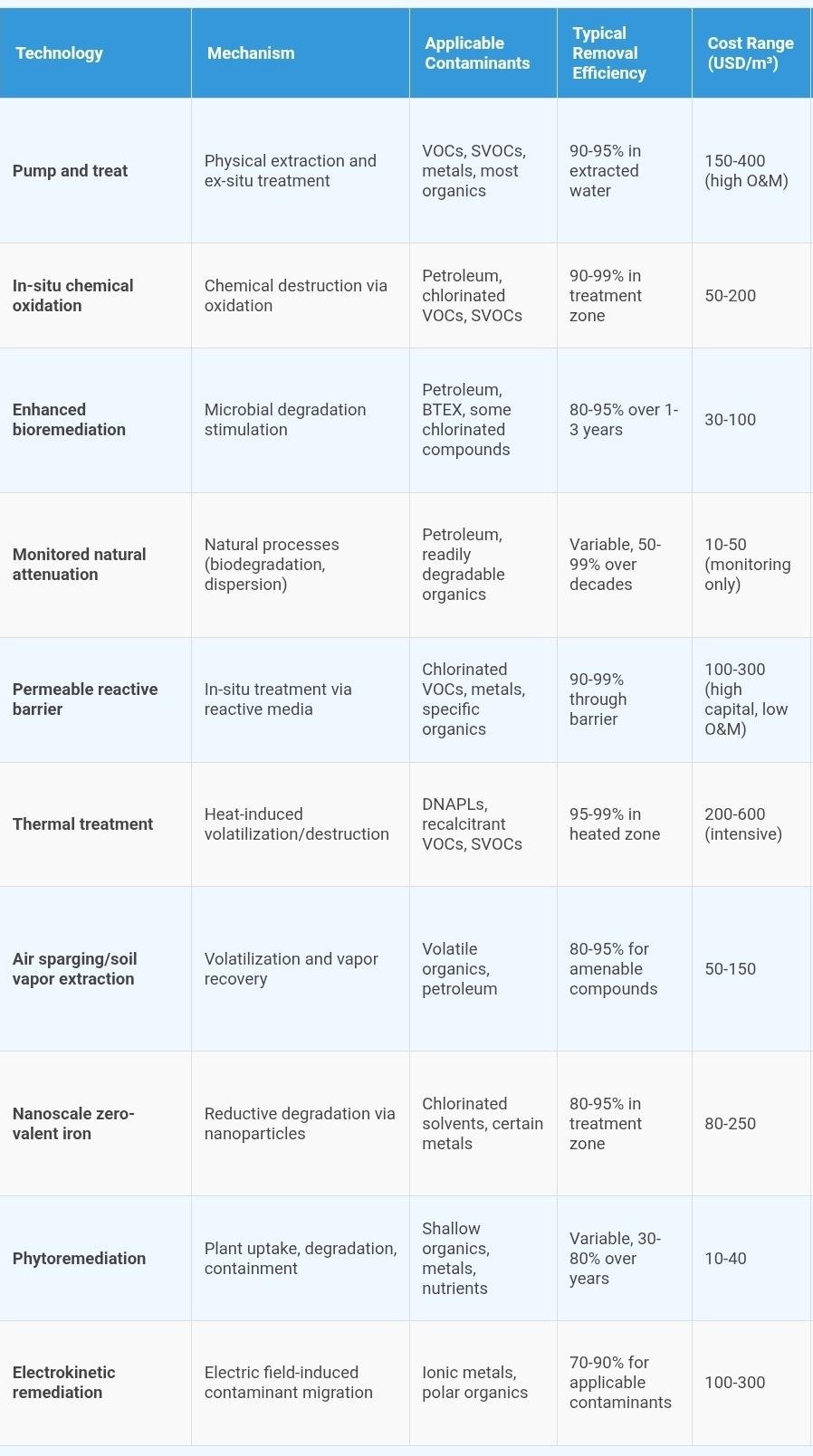
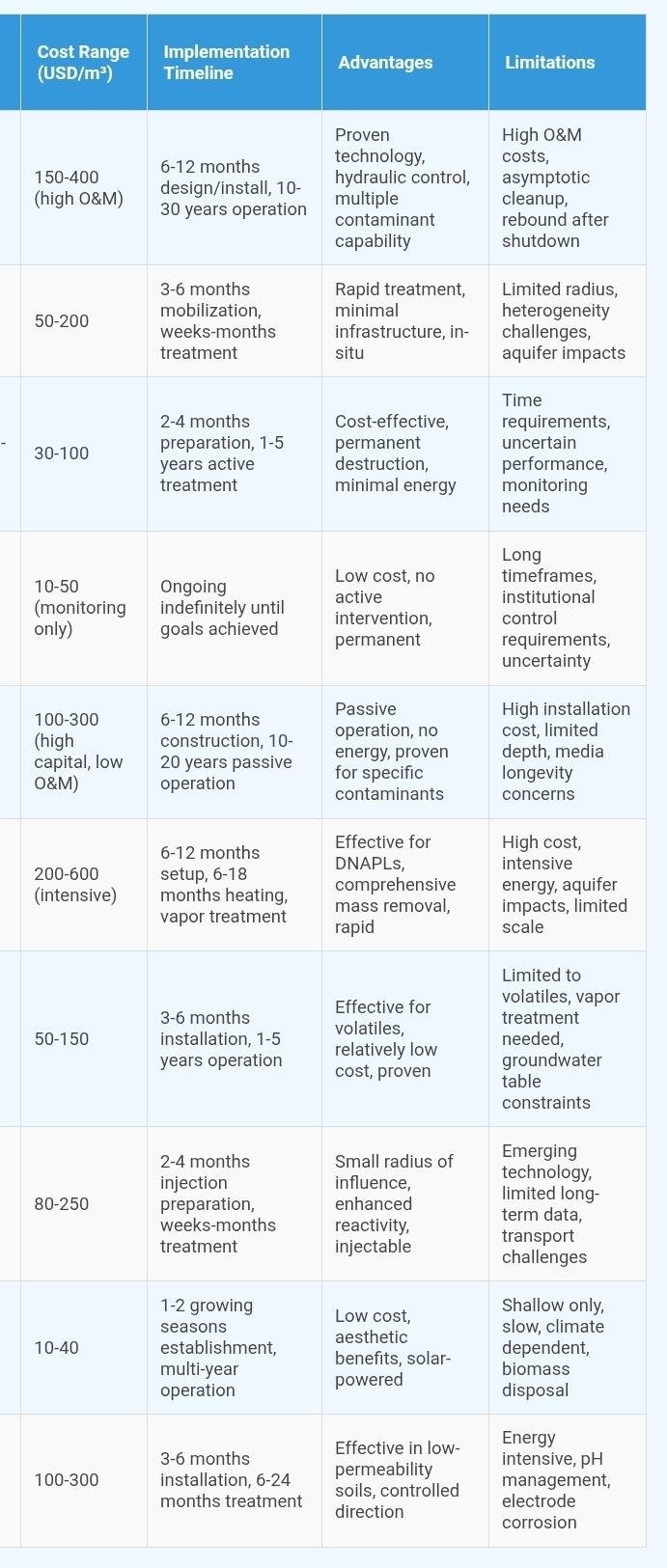
• Cost Optimization Frameworks: Life-cycle cost analysis demonstrates in-situ technologies typically cost 40-60% less than pump-and-treat for equivalent cleanup (USD 50-200 per cubic meter versus USD 150-400), while technical impracticability waivers provide pathway for sites where restoration to drinking water standards proves economically or technically infeasible within reasonable timeframe
• Performance Monitoring Requirements: International guidelines mandate comprehensive monitoring programs tracking concentration trends, natural attenuation rates, technology performance, and ecological indicators, with statistical methods ensuring 95% confidence in cleanup goals achievement and contingency provisions addressing underperformance through adaptive management frameworks
Executive Summary
Groundwater contamination represents persistent environmental challenge affecting drinking water supplies, ecosystems, and human health globally, with United States Environmental Protection Agency (EPA) documenting over 1,700 National Priorities List (NPL) Superfund sites requiring groundwater remediation and estimated total of 450,000 contaminated sites worldwide needing intervention. Contaminant sources include industrial facilities, underground storage tanks, landfills, mining operations, agricultural activities, and improper waste disposal practices, releasing petroleum hydrocarbons, chlorinated solvents, heavy metals, pesticides, and emerging contaminants into subsurface environments where they persist for decades absent remedial action. Remediation costs prove substantial, with EPA estimating USD 50-500 per cubic meter of treated groundwater depending on contaminant type, concentration, geological complexity, and technology selection, though failure to remediate generates even higher long-term costs through continued exposure risks, expanded contamination footprints, and lost beneficial water resource uses.1
International remediation frameworks established primarily through US EPA CERCLA/Superfund program and adopted by European Union, Australia, Canada, and other developed nations emphasize systematic five-phase approach: comprehensive site characterization quantifying contamination extent, source characteristics, and hydrogeological controls; remedy selection evaluating alternatives against nine criteria including protectiveness, compliance with ARARs, long-term effectiveness, reduction of toxicity through treatment, short-term effectiveness, implementability, cost, state acceptance, and community acceptance; remedial design translating selected remedy into detailed engineering specifications and construction documents; implementation and operation executing construction and operating systems until cleanup goals achieved; and closure evaluation verifying attainment of remedial objectives and transitioning to long-term stewardship. This structured process ensures protection of human health and environment while optimizing cost-effectiveness through systematic decision-making incorporating stakeholder input and scientific uncertainty.
Technology development during past three decades shifted emphasis from conventional pump-and-treat systems toward in-situ treatment methods addressing contamination without extracting groundwater, with current best practices favoring source zone treatment using chemical oxidation or thermal methods, followed by monitored natural attenuation of dissolved-phase plumes enhanced through bioaugmentation or permeable reactive barriers as appropriate. Recent innovations include nanotechnology applications delivering iron nanoparticles for in-situ contaminant reduction, molecular biological tools quantifying biodegradation through gene expression analysis, real-time monitoring systems enabling adaptive management, and integrated remedy optimization systematically improving performance while reducing costs through operational adjustments informed by comprehensive monitoring data. International consensus recognizes no universally optimal technology exists, with remedy selection requiring site-specific evaluation considering contaminant characteristics, hydrogeology, regulatory requirements, cost constraints, and restoration timeframes balancing stakeholder expectations against technical feasibility.
This comprehensive analysis examines advanced frameworks for groundwater contamination remediation synthesizing international guidelines, proven technologies, emerging innovations, decision tools, and implementation strategies supporting effective site cleanup protecting human health and restoring beneficial water resource uses. Discussion covers regulatory frameworks establishing remediation requirements, systematic characterization methodologies defining problem scope and controls, remedy selection processes evaluating alternatives, technology descriptions spanning conventional through innovative approaches, design considerations ensuring implementability, operation and monitoring protocols tracking performance, optimization strategies improving cost-effectiveness, technical impracticability determinations addressing infeasible cleanup scenarios, and closure criteria verifying success. Real-world case studies demonstrate application across diverse contamination scenarios with quantitative cost and performance data supporting informed decision-making for groundwater remediation projects worldwide.
Regulatory Frameworks and Cleanup Standards
United States Comprehensive Environmental Response, Compensation, and Liability Act (CERCLA) enacted 1980 and reauthorized through Superfund Amendments and Reauthorization Act (SARA) 1986 establishes comprehensive framework for contaminated site cleanup including groundwater remediation, with EPA regulations under 40 CFR Part 300 National Oil and Hazardous Substances Pollution Contingency Plan (NCP) providing detailed procedures for response actions. CERCLA authority applies to sites listed on National Priorities List (NPL) representing most serious threats, while similar frameworks govern state programs, Resource Conservation and Recovery Act (RCRA) corrective action at hazardous waste facilities, and underground storage tank (UST) programs addressing petroleum releases. International jurisdictions including European Union Water Framework Directive, Australian National Environment Protection Measures, Canadian Environmental Protection Act, and national legislations in Japan, South Korea, and other developed nations establish comparable frameworks emphasizing protection of groundwater resources through cleanup or containment of contamination sources.1
Cleanup standards under CERCLA derive from applicable or relevant and appropriate requirements (ARARs) comprising federal and state environmental laws establishing specific requirements applicable to contaminated site conditions or remedial actions. Chemical-specific ARARs establish acceptable contaminant concentrations typically referencing Safe Drinking Water Act Maximum Contaminant Levels (MCLs) for groundwater classified as actual or potential drinking water sources, with MCLs ranging from 0.005 mg/L for certain carcinogens to tens of mg/L for less toxic compounds. Location-specific ARARs address activities in sensitive areas including wetlands, endangered species habitat, historic sites, or sole-source aquifers, while action-specific ARARs govern treatment, storage, or disposal activities during remediation. When ARARs prove absent, overly broad, or environmentally inappropriate, EPA establishes risk-based cleanup goals through comprehensive risk assessment evaluating exposure pathways, toxicity data, and acceptable risk levels typically targeting cumulative cancer risk below 10⁻⁶ to 10⁻⁴ and hazard quotients below 1.0 for non-carcinogenic effects.
Key Regulatory Framework Components:
Applicable or Relevant and Appropriate Requirements (ARARs):
• Chemical-specific: Safe Drinking Water Act MCLs for groundwater (e.g., benzene 0.005 mg/L, TCE 0.005 mg/L, arsenic 0.010 mg/L)
• Location-specific: Regulations governing activities in wetlands, floodplains, sole-source aquifers, endangered species habitat
• Action-specific: RCRA treatment standards, Clean Water Act discharge limits, Clean Air Act emission limits
• State standards: May be more stringent than federal, automatically qualify as ARARs
• To-be-considered guidance: Non-regulatory guidance considered but not legally binding
• Waiver provisions: Technical impracticability, equivalent standard of performance, interim measures, inconsistency with NCP, greater risk
Risk Assessment Framework:
• Hazard identification: Determining which contaminants present threat based on toxicity, mobility, persistence
• Exposure assessment: Evaluating potential exposure pathways (drinking water, vapor intrusion, ecological receptors)
• Toxicity assessment: Compiling dose-response relationships from EPA Integrated Risk Information System (IRIS)
• Risk characterization: Calculating cancer risk and hazard index for each exposure pathway
• Uncertainty analysis: Quantifying and communicating limitations in risk estimates
• Risk management: Selecting cleanup goals balancing protectiveness, feasibility, cost, and stakeholder concerns
Nine Remedy Selection Criteria:
• Threshold criteria: Overall protection of human health and environment; compliance with ARARs
• Balancing criteria: Long-term effectiveness and permanence; reduction of toxicity, mobility, or volume through treatment; short-term effectiveness; implementability; cost
• Modifying criteria: State acceptance; community acceptance
• Evaluation process: Detailed analysis of alternatives against all nine criteria with comparative assessment
International Standards Convergence:
• EU Water Framework Directive: Achieving good chemical and ecological status in groundwater bodies
• WHO drinking water guidelines: International health-based standards widely referenced globally
• ISO 16133:2024: International standard for groundwater quality measurement and monitoring
• ASTM standards: Consensus technical standards for site characterization, remediation technologies, monitoring
• Harmonization trends: Growing international consistency in risk-based approaches, monitoring protocols, technology evaluation
Technical impracticability (TI) determinations provide framework for sites where restoration to ARARs or risk-based cleanup goals proves technically infeasible due to contaminant characteristics (dense non-aqueous phase liquids or DNAPLs serving as persistent sources), hydrogeological factors (extreme heterogeneity, fractured rock, karst), technology limitations (no available technology effectively treating specific contaminant-media combinations), or unreasonable restoration timeframes (centuries required for natural processes). TI waivers require comprehensive technical demonstration through multiple lines of evidence including conceptual site model documentation, technology evaluation showing alternatives cannot achieve goals within reasonable timeframe or cost, and development of alternative remedial strategies focusing on containment, institutional controls, and monitoring. EPA guidance emphasizes TI represents last-resort exception rather than routine remedy component, applicable only after thorough evaluation confirming impracticability of restoration approaches. Recent data indicates approximately 15-20% of Superfund groundwater remedies incorporate TI components recognizing practical limits to aquifer restoration while maintaining protection through engineered and institutional measures.
Systematic Site Characterization Methodology
Comprehensive site characterization constitutes foundation for effective remediation through systematic data collection and analysis defining contamination nature and extent, source characteristics, hydrogeological controls on contaminant transport, exposure pathways, and factors influencing remedy performance. Characterization proceeds through iterative phases beginning with preliminary assessment compiling historical information, progressing through site inspection documenting current conditions and sampling confirming contamination presence, advancing to remedial investigation (RI) quantifying problem scope through detailed sampling and testing, and culminating in focused characterization addressing data gaps identified during remedy design. EPA guidance emphasizes sufficient characterization enabling confident remedy selection while avoiding unnecessary data collection, with systematic planning through Data Quality Objectives (DQO) process ensuring investigation addresses decision-making needs efficiently.
Hydrogeological characterization determines aquifer properties controlling contaminant transport and influencing remedy effectiveness through comprehensive evaluation of stratigraphy documenting layering and lithology, hydraulic properties including conductivity and gradient controlling flow rates and directions, boundaries defining aquifer extent and connections to surface water, and recharge/discharge zones affecting water balance. Investigation methods span review of existing information (geological maps, well logs, prior studies), geophysical surveys (electrical resistivity, electromagnetics, seismic) defining subsurface structure non-invasively, monitoring well installation providing direct observation points, aquifer testing (slug tests, pumping tests) quantifying hydraulic parameters, and tracer studies demonstrating actual transport pathways and rates. High-resolution characterization techniques including membrane interface probe (MIP), laser-induced fluorescence (LIF), and direct-push electrical conductivity profiling enable rapid vertical profiling identifying contaminated intervals and lithological boundaries supporting efficient well placement and conceptual model development.
Site Characterization Components and Methods:
Contamination Distribution Assessment:
• Source zone identification: Soil boring, groundwater sampling, geophysical surveys defining primary release areas
• Dissolved plume delineation: Monitoring well networks measuring lateral and vertical extent
• NAPL detection: Fluorescence logging, membrane interface probe, bail-down testing identifying free product
• Vertical profiling: Discrete interval sampling, multilevel monitoring systems characterizing depth distribution
• Temporal trends: Time-series monitoring establishing whether contamination stable, expanding, or attenuating
• Mass estimation: Concentration-volume analysis quantifying total contaminant mass requiring treatment
Hydrogeological Parameters:
• Hydraulic conductivity: Range 10⁻⁸ to 10⁻¹ cm/s spanning clay through gravel, measured through slug/pumping tests
• Groundwater velocity: Typically 0.01-1 m/day in unconsolidated aquifers calculated from gradient and conductivity
• Effective porosity: 0.05-0.35 for common materials determining pore volume available for transport
• Dispersivity: Longitudinal 0.1-100 m, transverse 10-100 times smaller controlling plume spreading
• Heterogeneity: Spatial variability in properties profoundly influencing transport requiring geostatistical analysis
• Anisotropy: Directional differences typical in layered sediments affecting plume geometry
Contaminant Fate and Transport Processes:
• Advection: Transport with flowing groundwater as dominant process for conservative compounds
• Dispersion: Mechanical spreading from velocity variations plus molecular diffusion
• Sorption: Reversible binding to organic matter and minerals retarding transport, quantified by partition coefficient
• Biodegradation: Microbial transformation under aerobic or anaerobic conditions with varying rates
• Abiotic transformation: Chemical reactions including hydrolysis, oxidation-reduction independent of biology
• Volatilization: Transfer to soil gas important for vapor intrusion pathway assessment
Advanced Characterization Technologies:
• High-resolution site characterization: Membrane interface probe, laser-induced fluorescence providing continuous vertical profiles
• Passive samplers: Diffusion-based devices integrating concentrations over deployment period
• Compound-specific isotope analysis: Determining whether concentration decreases result from degradation versus dilution
• Molecular biological tools: Quantitative PCR detecting and quantifying biodegradation genes
• 3D geological modeling: Software platforms integrating geophysical, lithological, and hydrochemical data
• Contaminant mass flux measurement: Transect monitoring quantifying mass discharge rates supporting remedy optimization
Conceptual site model (CSM) development synthesizes characterization data into structured representation of site conditions serving as basis for fate and transport predictions, exposure assessment, and remedy design. Effective CSM documents contaminant sources, release mechanisms, affected media, migration pathways, potential receptors, and exposure routes through integrated presentation combining text descriptions, cross-sections, plan view maps, and tabular summaries. CSM explicitly acknowledges uncertainties and data gaps requiring additional investigation or conservative assumptions in decision-making. Iterative CSM refinement occurs throughout remediation phases as additional data emerge from ongoing monitoring, with updates informing remedy optimization or contingency actions if actual conditions differ from initial assumptions. EPA emphasizes CSM completeness and accuracy directly influence remedy effectiveness, with flawed models leading to underdesigned systems failing performance goals or overdesigned systems incurring unnecessary costs.
Risk assessment integrates CSM with toxicity information determining whether contamination requires remedial action and establishing cleanup goals protecting identified receptors. Human health risk assessment evaluates exposure pathways including groundwater ingestion (drinking water consumption), dermal contact, vapor inhalation (indoor and outdoor air), and food chain transfer, calculating incremental lifetime cancer risk and non-cancer hazard quotients comparing exposure concentrations to reference doses. Ecological risk assessment addresses impacts to aquatic ecosystems in surface water receiving groundwater discharge, terrestrial organisms accessing contaminated seeps, and sensitive species in habitats overlying contaminated aquifers. Current risk assessment practices incorporate probabilistic methods characterizing uncertainty distributions rather than single-point estimates, cumulative risk evaluation considering multiple contaminants and pathways simultaneously, and consideration of vulnerable populations including children and subsistence fishers experiencing higher exposure or sensitivity.
Remedy Selection Process and Decision Criteria
Remedy selection under CERCLA National Contingency Plan follows structured feasibility study (FS) process systematically evaluating remedial alternatives against nine criteria established by SARA amendments ensuring selection protects human health and environment while optimizing effectiveness, implementability, and cost. Process begins with identifying remedial action objectives (RAOs) specifying media to be addressed, exposure pathways requiring control, contaminant levels triggering action, and acceptable remaining risks after remedy implementation. RAOs derive from site-specific risk assessment, applicable ARARs, and stakeholder concerns, providing quantitative targets guiding technology screening and alternative development. Typical RAOs might specify restoring groundwater to MCLs throughout aquifer within 30 years, preventing contaminant migration past specified boundaries, or reducing vapor intrusion risks to acceptable levels through source removal and institutional controls.2
Alternative development combines general response actions (no action, institutional controls, containment, removal, treatment) with specific technologies into integrated approaches evaluated as complete systems. EPA guidance recommends evaluating 3-6 alternatives spanning low to high levels of treatment and representing different strategic approaches, enabling comparative assessment identifying optimal balance among competing objectives. Required no-action alternative establishes baseline for comparison though never selected absent determination that site poses no unacceptable risk. Common alternative structures include passive approaches relying primarily on monitored natural attenuation possibly enhanced through source reduction, containment alternatives using barriers and pump-and-treat systems preventing migration while not necessarily restoring aquifer, and aggressive treatment alternatives employing in-situ technologies targeting rapid mass reduction and aquifer restoration. Each alternative requires preliminary design establishing implementability and developing cost estimates supporting comparative evaluation.
Nine Remedy Selection Criteria Evaluation:
Threshold Criteria (Must Be Satisfied):
• Overall protection: Remedy eliminates, reduces, or controls risks through engineering or institutional measures
• Compliance with ARARs: Remedy attains applicable federal/state requirements or obtains waivers
• Evaluation: Pass/fail assessment ensuring fundamental acceptability of alternative
Primary Balancing Criteria:
• Long-term effectiveness: Residual risk after cleanup, adequacy and reliability of institutional controls, persistence of treatment
• Reduction of toxicity/mobility/volume: Permanence through destruction, detoxification, or removal versus containment
• Short-term effectiveness: Community and worker risks during implementation, environmental impacts, time until objectives achieved
• Implementability: Technical feasibility, material/specialist availability, administrative feasibility, coordination requirements
• Cost: Capital costs, operation and maintenance costs over remedy life, net present value analysis
• Evaluation: Comparative assessment identifying superior alternatives across multiple dimensions
Modifying Criteria:
• State acceptance: State environmental agency support essential given enforcement role
• Community acceptance: Stakeholder input on alternatives through public comment, potentially influencing remedy selection
• Evaluation: Incorporated after proposed plan released through responsiveness summary addressing comments
Typical Alternative Evaluation Matrix:
• Alternative 1: No action (baseline comparison)
• Alternative 2: Monitored natural attenuation with institutional controls (passive approach)
• Alternative 3: Enhanced biodegradation with monitoring (active enhancement of natural processes)
• Alternative 4: Pump-and-treat with ex-situ treatment (conventional active remediation)
• Alternative 5: In-situ chemical oxidation plus monitored natural attenuation (aggressive source treatment)
• Alternative 6: Multi-phase extraction with thermal treatment (maximum treatment intensity)
• Comparative evaluation: Detailed analysis of each alternative against all nine criteria identifying preferred remedy
Cost estimation for remedial alternatives requires comprehensive life-cycle analysis capturing all expenditures from mobilization through closure certification, with net present value calculation discounting future costs using standard rate typically 3-7% to enable fair comparison between alternatives with different temporal profiles. Capital costs encompass engineering design, equipment procurement and installation, utility extensions, mobilization and site preparation, construction activities, and startup/shakedown testing, typically representing 20-40% of total costs for long-duration remedies. Operation and maintenance (O&M) costs include routine operations labor, utilities consumption (electricity representing major expense for pump-and-treat), treatment media replacement, equipment repair and replacement, monitoring program expenses, and administrative/reporting costs, often exceeding capital costs through extended operations spanning decades for many groundwater remedies. Periodic cost updates every five years assess remedy performance and costs supporting optimization decisions or contingency actions if actual costs substantially exceed projections.
Presumptive remedies established by EPA for common contamination scenarios provide starting points for alternative development based on extensive experience demonstrating typical effectiveness, implementability, and cost-efficiency. For source zones, presumptive approaches emphasize aggressive treatment through soil excavation and ex-situ treatment, in-situ thermal treatment for DNAPLs, or in-situ chemical oxidation depending on contaminant type and distribution. For dissolved plumes, presumptive remedies favor monitoring natural attenuation with contingencies if adequate evidence of degradation, enhanced biodegradation for amenable compounds including petroleum hydrocarbons and certain chlorinated solvents, or pump-and-treat for plume control while recognizing restoration limitations. Presumptive remedies do not mandate specific approaches but rather accelerate FS process by focusing evaluation on alternatives with documented performance, though site-specific conditions may justify departures requiring thorough documentation explaining rationale for alternative approaches.
Comprehensive Groundwater Remediation Technology Comparison
In-Situ Chemical Oxidation: Mechanisms and Implementation
In-situ chemical oxidation (ISCO) represents widely-applied technology for rapid source zone treatment through injection of strong oxidants destroying organic contaminants via chemical reactions without requiring groundwater extraction. Commonly used oxidants include permanganate (MnO₄⁻), hydrogen peroxide (H₂O₂) frequently activated through Fenton's reagent with ferrous iron, persulfate (S₂O₈²⁻) activated chemically or thermally, and ozone (O₃) generated on-site and injected as gas or dissolved in water. Each oxidant exhibits distinct characteristics regarding contaminant applicability, delivery methods, persistence in subsurface, pH sensitivity, and potential impacts on aquifer materials. Permanganate proves effective for alkenes including chlorinated ethenes (TCE, PCE), aromatic compounds, and certain petroleum constituents, persisting weeks to months enabling treatment of larger volumes though reacting slowly requiring extended contact times. Hydrogen peroxide activated through Fenton's process generates highly reactive hydroxyl radicals (•OH) destroying wide range of organics rapidly, though persistence measured in hours to days limits treatment radius requiring closely-spaced injection points.2
ISCO implementation follows systematic sequence beginning with treatability studies evaluating oxidant selection, dosing requirements, and potential interferences through bench-scale and pilot-scale testing using site-specific groundwater and soil samples. Studies quantify oxidant demand from soil organic matter, reduced minerals, and natural organic matter competing for oxidant before contaminant reaction, determining total oxidant requirement as contaminant-specific plus natural demand. Injection system design considers radius of influence achievable with selected delivery method, spacing between injection points achieving overlapping treatment zones, total oxidant mass requirements, and injection sequencing or recirculation enhancing distribution. Delivery methods include direct-push injection through temporary points for shallow applications, permanent well injection for deeper or repeated treatments, pneumatic fracturing enhancing distribution in low-permeability zones, and recirculation systems continuously reapplying oxidant maximizing utilization. Post-injection monitoring tracks performance through concentration reductions, oxidant presence and consumption rates, redox potential or dissolved oxygen indicating oxidizing conditions, and secondary parameters including pH, metals mobilization, and rebound assessment.
In-Situ Chemical Oxidation Technology Specifications:
Permanganate Oxidation:
• Oxidant: Sodium or potassium permanganate (NaMnO₄, KMnO₄), typical concentration 0.5-5%
• Mechanism: Direct electron transfer, selective for alkenes and aromatic compounds
• Persistence: Weeks to months depending on demand, enabling large treatment volumes
• pH impact: Increases pH to 8-10, may mobilize metals requiring monitoring
• Application: Chlorinated ethenes (TCE, PCE, DCE), petroleum aromatics (benzene, toluene)
• Cost: USD 80-150 per cubic meter treated including oxidant, delivery, monitoring
Fenton's Reagent (H₂O₂ + Fe²⁺):
• Oxidant: Hydrogen peroxide 3-25% with ferrous iron catalyst (Fe²⁺)
• Mechanism: Hydroxyl radical (•OH) generation, rapid non-selective oxidation
• Persistence: Hours to days, rapid consumption requiring close injection spacing
• pH impact: Effective pH 3-5, may require pH adjustment pre- and post-treatment
• Application: Wide range including petroleum hydrocarbons, chlorinated compounds, explosives
• Cost: USD 100-200 per cubic meter including oxidant, pH control, multiple injection events
Persulfate Activation:
• Oxidant: Sodium persulfate (Na₂S₂O₈), typical concentration 1-5%
• Activation: Chemical (chelated iron), thermal (heating), or alkaline (high pH)
• Mechanism: Sulfate radical (SO₄•⁻) generation, aggressive oxidation
• Persistence: Intermediate (days to weeks), longer than peroxide, shorter than permanganate
• Application: Petroleum hydrocarbons, chlorinated solvents, PAHs, pesticides
• Cost: USD 90-180 per cubic meter depending on activation method
Design and Implementation Considerations:
• Treatability testing: Bench-scale studies determining oxidant selection, dosing, contact time
• Natural oxidant demand: Soil organic matter, reduced minerals consuming oxidant before contaminant reaction
• Radius of influence: Typically 3-8 meters depending on injection pressure, aquifer permeability
• Multiple injection events: Often required achieving target reduction, spaced weeks to months apart
• Aquifer impacts: Temporary changes in pH, redox, metals concentration requiring monitoring
• Safety: Oxidants hazardous, requiring trained personnel, proper equipment, emergency protocols
• Performance monitoring: Contaminant reduction, oxidant presence, geochemical parameters, rebound assessment
ISCO performance depends heavily on oxidant distribution achieving contact with contaminant mass, with heterogeneity representing primary challenge causing preferential flow through high-permeability zones while bypassing low-permeability zones harboring contamination. Enhanced delivery techniques address heterogeneity including pneumatic fracturing creating high-permeability pathways for oxidant injection, hydraulic pulsing periodically varying injection pressure inducing vertical mixing, colloidal delivery systems using surfactants or polymers stabilizing oxidants enabling enhanced distribution, and directional drilling installing horizontal injection wells beneath contamination maximizing vertical distribution. Recent applications increasingly combine ISCO with complementary technologies, such as thermal heating mobilizing DNAPLs before oxidation, biological treatment following ISCO for residual mass, or excavation of highest-concentration zones reducing oxidant demand enabling more effective treatment of remaining contamination.
Case studies demonstrate ISCO effectiveness across diverse applications. At former dry-cleaning site in California, persulfate oxidation reduced PCE concentrations from 15,000 μg/L to below 5 μg/L (99.97% reduction) in source zone over three injection events spanning 18 months at total cost of USD 1.2 million treating 2,500 cubic meters, substantially less than estimated USD 3.8 million for equivalent pump-and-treat system operating 25 years. However, other sites show more modest results particularly where heterogeneity limits distribution or DNAPL mass exceeds oxidant carrying capacity of aquifer. Meta-analysis of 242 ISCO applications found median concentration reduction of 90% in source zones and 75% in dissolved plumes, with greatest success at sites with relatively homogeneous geology, moderate contaminant concentrations, and multiple injection events. Technology optimization continues through advanced oxidant formulations, improved delivery systems, real-time monitoring enabling adaptive management, and integrated approaches combining ISCO with complementary technologies addressing limitations.
Enhanced Bioremediation Technologies and Molecular Tools
Enhanced bioremediation accelerates natural biodegradation processes through amendments supporting microbial activity, including electron donors stimulating anaerobic degradation, electron acceptors enhancing aerobic respiration, nutrients addressing limitation, and bioaugmentation introducing specialized degrading organisms where indigenous populations lack necessary capabilities. Intrinsic biodegradation occurs naturally at many contaminated sites through indigenous microorganisms metabolizing contaminants for energy and carbon, though rates often prove insufficient for timely remediation requiring enhancement. Technology selection depends on contaminant characteristics, with petroleum hydrocarbons amenable to aerobic treatment using oxygen or peroxide as electron acceptors, while chlorinated solvents typically require anaerobic reductive dechlorination stimulated through electron donors including vegetable oil, lactate, or slow-release substrates generating hydrogen as primary electron donor supporting specialized organisms (Dehalococcoides species) capable of complete dechlorination to non-toxic ethene.
Biostimulation enhances indigenous microbial populations through amendment injection creating favorable conditions for contaminant degradation. For aerobic processes treating petroleum hydrocarbons, oxygen delivery through air sparging, oxygen-releasing compounds, or hydrogen peroxide addition overcomes oxygen limitation typical in contaminated aquifers, enabling aerobic respiration where bacteria oxidize hydrocarbons to carbon dioxide and water. Nutrient addition (nitrogen, phosphorus) addresses imbalances limiting biomass production despite adequate electron acceptors and carbon source. For anaerobic dechlorination of chlorinated solvents, electron donor injection creates reducing conditions supporting reductive dechlorination where specialized bacteria sequentially remove chlorine atoms from compounds like PCE (tetrachloroethene) → TCE (trichloroethene) → DCE (dichloroethene) → VC (vinyl chloride) → ethene (non-toxic). Sustained donor release over months to years maintains reducing conditions long enough for complete dechlorination, though incomplete dechlorination may accumulate toxic intermediates like DCE or VC requiring monitoring and contingency provisions.
Enhanced Bioremediation Approaches and Monitoring:
Biostimulation for Petroleum Hydrocarbons:
• Electron acceptor: Oxygen via air sparging (AS), oxygen-releasing compounds (ORC), H₂O₂
• Nutrients: Nitrogen (N) and phosphorus (P) achieving C:N:P ratio ~100:10:1
• Mechanism: Aerobic respiration oxidizing hydrocarbons to CO₂ and H₂O
• Target compounds: BTEX, aliphatic hydrocarbons, PAHs
• Performance: 80-95% reduction in 6-24 months under favorable conditions
• Monitoring: Dissolved oxygen, contaminant concentrations, metabolic byproducts (CO₂), nutrients
Anaerobic Bioremediation for Chlorinated Solvents:
• Electron donor: Emulsified vegetable oil (EVO), lactate, slow-release compounds (HRC)
• Mechanism: Reductive dechlorination PCE → TCE → DCE → VC → ethene
• Bioaugmentation: Dehalococcoides cultures if absent/insufficient in native population
• Monitoring: Contaminant daughter products, hydrogen concentration (1-4 nM target), redox indicators
• Performance: Variable, complete dechlorination achievable but stalling at DCE/VC common
• Timeframe: 1-5 years for substantial reduction, ongoing monitoring decades
Molecular Biological Tools for Performance Verification:
• Quantitative PCR (qPCR): Enumerating functional genes (e.g., Dehalococcoides 16S rRNA, reductive dehalogenase genes)
• Gene expression analysis: Demonstrating active transcription indicating ongoing degradation
• Microbial community analysis: 16S rRNA sequencing characterizing community structure and diversity
• Stable isotope probing: Confirming degradation versus dilution through isotope fractionation
• Metagenomics: Comprehensive genetic potential assessment identifying degradation pathways
• Application: Three lines of evidence protocols now incorporate molecular data alongside geochemical and concentration trends
Design Optimization Strategies:
• Pilot testing: Field-scale treatability demonstration before full implementation
• Substrate selection: Balancing release rate, longevity, cost, secondary impacts
• Bioaugmentation timing: After establishing reducing conditions if natural populations insufficient
• Injection approach: Direct-push points, permanent wells, recirculation systems
• Monitoring network: Transect-based design assessing treatment zone progression
• Adaptive management: Adjusting amendments based on performance monitoring
• Contingency planning: Alternative approaches if biodegradation stalls or fails
Bioaugmentation introduces exogenous microorganisms when site assessment demonstrates indigenous populations lack necessary degradation capabilities despite favorable geochemical conditions from biostimulation. Commercial cultures containing Dehalococcoides and supporting organisms enable complete dechlorination of chlorinated solvents to ethene at sites where native populations lack sufficient Dehalococcoides abundance or genetic potential for complete degradation. Bioaugmentation success requires establishing that organisms are delivered to contaminated zones, establish viable populations competing with indigenous microbes, and actively degrade target compounds rather than persisting without function. Molecular biological tools including quantitative PCR enable tracking bioaugmented organisms distinguishing from native populations, verifying establishment, and monitoring population dynamics through treatment progress. Meta-analysis of bioaugmentation applications shows enhanced performance at approximately 70% of sites compared to biostimulation alone, though successful establishment requires favorable redox conditions, adequate substrate, and appropriate temperature (typically >10°C) limiting effectiveness in cold climates or deep aquifers.
Recent advances integrate sophisticated monitoring tools with adaptive management frameworks optimizing bioremediation performance. Real-time monitoring of dissolved hydrogen concentrations using probes or passive samplers indicates whether reductive conditions adequate for dechlorination maintained throughout treatment zones, with concentrations between 1-4 nM optimal for Dehalococcoides activity. Compound-specific isotope analysis (CSIA) distinguishes concentration decreases from degradation (causing isotope fractionation) versus physical processes like dilution or sorption (no fractionation), providing definitive evidence of biodegradation essential for monitored natural attenuation demonstration. High-resolution microbial community analysis through next-generation sequencing characterizes complete community structure and functional gene inventory, identifying potential limitations (e.g., missing dechlorinating populations, absence of specific genes) guiding bioaugmentation decisions. Integration of these tools with conventional monitoring enables adaptive management where amendment types, dosing, and frequencies adjust based on performance data, substantially improving outcomes compared to static designs established at project onset and operated without modification.
Comprehensive Case Study: Chlorinated Solvent Plume Remediation Using Integrated Approach
Site Characteristics and Contamination:
Location: Former electronics manufacturing facility, northeastern United States
Site area: 5 hectares with contamination extending 600 meters downgradient
Geology: Interbedded sand and silt glacial deposits, hydraulic conductivity 10⁻⁴ to 10⁻⁵ cm/s
Contaminants: Trichloroethene (TCE) up to 45,000 μg/L in source, perchloroethene (PCE) up to 8,200 μg/L
Plume volume: Approximately 15,000 cubic meters above MCLs (TCE 5 μg/L, PCE 5 μg/L)
Receptors: Municipal water supply wells 2 km downgradient, residential wells nearby
Remedial objective: Achieve MCLs throughout plume within 15 years, prevent further migration
Selected Remedy and Implementation:
Remedy components:
• Source zone: In-situ chemical oxidation using activated persulfate (Phase 1)
• Plume treatment: Enhanced anaerobic bioremediation with bioaugmentation (Phase 2)
• Downgradient plume: Monitored natural attenuation with contingency pump-and-treat (Phase 3)
• Monitoring: Comprehensive network with molecular biological tools verification
Phase 1 - Source Zone ISCO (Years 1-2):
• Injected sodium persulfate activated with chelated iron in 32 injection points
• Three injection events at 6-month intervals, total 45 metric tons oxidant
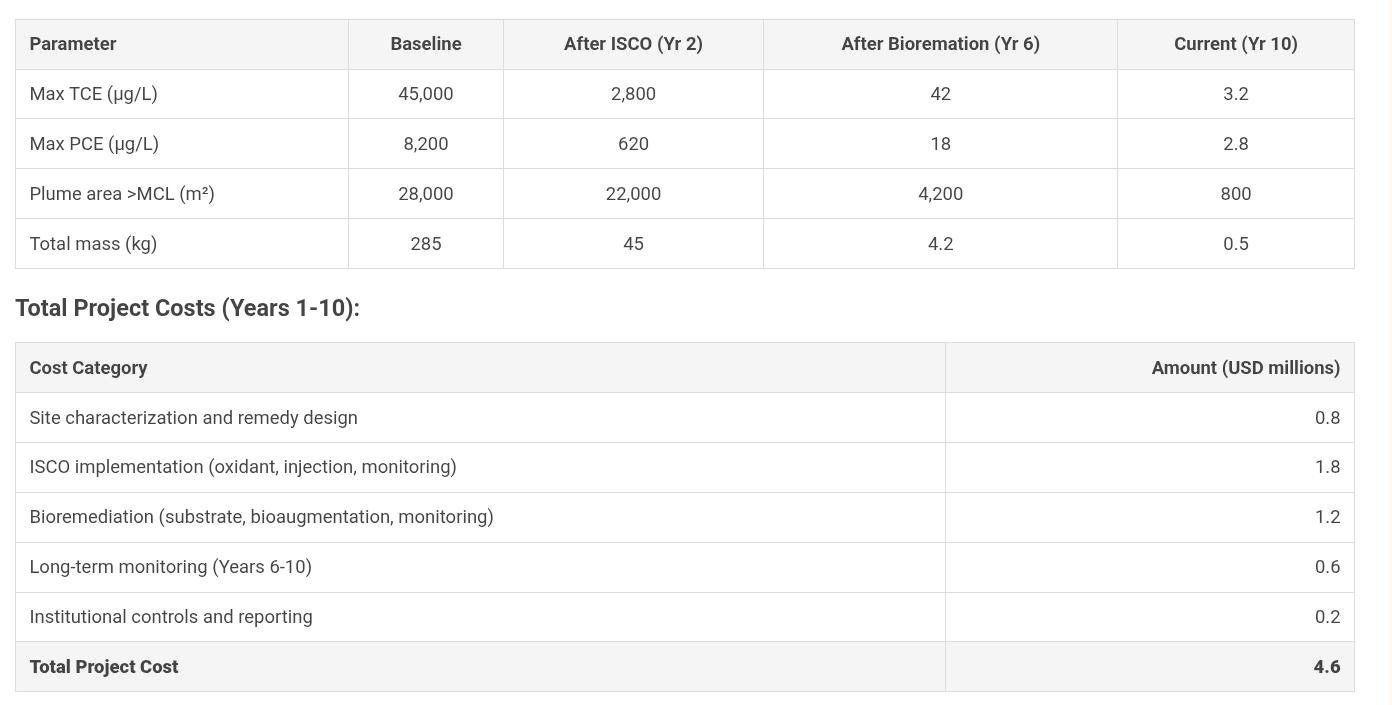
• Source zone TCE reduced from 45,000 μg/L to 2,800 μg/L (94% reduction)
• PCE reduced from 8,200 μg/L to 620 μg/L (92% reduction)
• Cost: USD 1.8 million including oxidant, injection, monitoring
Phase 2 - Enhanced Bioremediation (Years 2-6):
• Injected emulsified vegetable oil (EVO) substrate in 28 injection points through plume
• Bioaugmentation with commercial Dehalococcoides culture (SDC-9) at Year 3
• Monitoring showed hydrogen production, reducing conditions, Dehalococcoides establishment
• Complete dechlorination to ethene confirmed via isotope analysis and molecular tools
• Plume-wide TCE reduced to <50 μg/L (>90% reduction from post-ISCO levels)
• Cost: USD 1.2 million including substrate, bioaugmentation, enhanced monitoring
Performance Results and Cost Analysis:
Cost Comparison to Alternatives:
Pump-and-treat estimate: USD 12.8 million over 25 years (NPV @ 5% = USD 8.2 million)
Integrated in-situ approach: USD 4.6 million over 10 years (NPV @ 5% = USD 4.2 million)
Cost savings: USD 3.8 million (49% reduction) with faster cleanup (10 vs 25 years)
Key Success Factors and Lessons Learned:
Essential Success Elements:
• Source zone mass reduction via ISCO prevented continued plume expansion
• Bioaugmentation necessary - native populations insufficient for complete dechlorination
• Molecular tools confirmed biodegradation distinguishing from dilution effects
• Adaptive management adjusted substrate dosing based on hydrogen monitoring
• Comprehensive monitoring network enabled performance verification and optimization
Challenges Encountered:
• ISCO heterogeneity required three injection events achieving adequate distribution
• Initial biostimulation showed limited degradation necessitating bioaugmentation
• Cis-DCE accumulation at some locations required additional substrate and monitoring
• Monitoring well network required expansion tracking unexpected plume migration pathways
Project Status: Approaching Closure
Currently Year 10, contaminant concentrations declining below MCLs throughout most of plume. Monitoring frequency reduced to semi-annual. Closure anticipated Year 12-13 after demonstrating sustained compliance through statistical evaluation. Institutional controls will remain until complete aquifer restoration confirmed. Integrated approach achieved cleanup 60% faster and 50% cheaper than conventional pump-and-treat alternative while demonstrating sustainability advantages through permanent contaminant destruction versus transfer to treatment media.
Frequently Asked Questions About Groundwater Remediation
1. What is technical impracticability and when does it apply to groundwater remediation?
Technical impracticability (TI) determination establishes that restoration of contaminated groundwater to applicable cleanup standards proves technically infeasible given current or reasonably anticipated technologies and site-specific conditions. EPA guidance identifies four categories supporting TI findings: contaminant characteristics including DNAPLs serving as persistent sources impossible to completely remove, hydrogeological factors such as extreme heterogeneity or fractured bedrock preventing effective treatment, technology limitations where no available methods effectively address specific contaminant-media combinations, and unreasonable restoration timeframes requiring centuries through available approaches. TI does not exempt sites from remediation but rather shifts focus to alternative strategies including containment preventing migration, institutional controls restricting exposure, and alternative concentration limits based on site-specific risk assessment. TI determination requires comprehensive technical demonstration through multiple lines of evidence showing restoration attempts have been made or thoroughly evaluated and found impractical, with emphasis on maximizing source removal and mass reduction even when complete restoration unachievable. Approximately 15-20% of Superfund groundwater remedies incorporate TI components, typically at complex sites with DNAPL source zones in fractured bedrock or highly heterogeneous unconsolidated deposits.
2. How long does groundwater remediation typically take and what factors influence duration?
Groundwater remediation duration varies dramatically by site-specific factors including contaminant type and concentration, geological complexity, cleanup goals, technology selection, and regulatory requirements, with EPA data showing median operation time of 10-15 years for active remedies at Superfund sites though significant variation from 3-5 years for successful ISCO or thermal treatment to 30+ years for pump-and-treat systems addressing large plumes or persistent sources. Monitored natural attenuation timeframes span decades given reliance on slow natural processes, though require less active intervention. Key factors influencing duration include source control effectiveness with uncontrolled sources continually releasing contamination extending remediation indefinitely, contaminant characteristics where volatile organics generally remediate faster than semi-volatiles or metals, hydrogeological heterogeneity causing preferential flow and mass transfer limitations, cleanup goal stringency with restoration to MCLs requiring longer than risk-based alternatives, and technology effectiveness where aggressive approaches like thermal treatment or ISCO achieve faster cleanup than conventional pump-and-treat. Recent remediation optimization initiatives emphasize realistic timeframe establishment recognizing asymptotic behavior where concentration reductions slow dramatically after initial progress, potentially justifying technology transitions from active treatment to monitored natural attenuation after achieving substantial mass reduction even if cleanup goals not fully met. Stakeholder communication should establish realistic expectations acknowledging groundwater remediation typically measured in years to decades given contaminant persistence, aquifer geometry, and practical treatment limitations.
3. What are main advantages and limitations of monitored natural attenuation?
Monitored natural attenuation (MNA) relies on natural processes including biodegradation, dispersion, dilution, sorption, and chemical transformation to reduce contaminant concentrations over time without active intervention exceeding comprehensive monitoring verifying attenuation occurs at rates protective of receptors. Primary advantages include substantially lower costs (typically USD 10-50 per cubic meter monitored versus USD 50-400 for active treatment), minimal site disturbance and energy consumption supporting sustainability objectives, permanent contaminant destruction through biodegradation mechanisms, and applicability to large plume volumes economically prohibitive for active treatment. However, significant limitations constrain MNA application including extended remediation timeframes potentially spanning decades or centuries for complete cleanup, requiring long-term institutional controls preventing exposure during natural attenuation, performance uncertainty given reliance on natural processes influenced by hydrogeological and geochemical variability, limited applicability for highly toxic or persistent compounds resisting biodegradation, and stakeholder acceptance challenges given perception of "doing nothing" despite comprehensive monitoring requirements. EPA protocol mandates three lines of evidence supporting MNA selection: documented concentration trends showing attenuation occurring, geochemical indicators demonstrating degradation mechanisms active, and modeling predictions showing receptors remain protected throughout attenuation period. MNA often serves as polishing step following active source treatment or applies to downgradient plume segments with lower concentrations after aggressive upgradient treatment, representing component of integrated remediation strategies rather than standalone approach for high-concentration source zones requiring active intervention.
4. How do regulatory cleanup standards for groundwater contamination get established?
Groundwater cleanup standards under CERCLA derive primarily from applicable or relevant and appropriate requirements (ARARs) comprising existing federal and state environmental regulations establishing protective concentration limits, with Safe Drinking Water Act Maximum Contaminant Levels (MCLs) serving as most common standards for aquifers classified as actual or potential drinking water sources. MCLs represent enforceable standards for public water systems established by EPA based on health effects, analytical feasibility, and treatment technology availability, with values ranging from 0.005 mg/L (5 μg/L) for certain carcinogens like benzene and TCE to tens of mg/L for less toxic compounds like nitrate (10 mg/L) or sulfate (250 mg/L as secondary standard). State regulations may establish more stringent standards than federal MCLs, automatically qualifying as ARARs. When ARARs prove absent or environmentally inappropriate, risk-based cleanup goals derive from site-specific risk assessment evaluating exposure pathways, toxicity data, and acceptable risk levels, typically targeting cumulative cancer risk between 10⁻⁶ to 10⁻⁴ (one in million to one in ten thousand additional cancers) and hazard quotients below 1.0 for non-carcinogenic effects. Alternative concentration limits (ACLs) may apply for aquifers with limited beneficial use due to high natural salinity, low yield, or extreme depth, requiring demonstration that groundwater not reasonable drinking water source and alternative cleanup levels remain protective. International frameworks follow similar risk-based approaches, with European Union Water Framework Directive establishing good chemical status objectives, WHO drinking water guidelines providing health-based standards globally referenced, and individual nations implementing context-specific standards balancing protectiveness, technical feasibility, and economic considerations.
5. What emerging technologies show promise for improving groundwater remediation effectiveness?
Several emerging technologies demonstrate potential for enhancing groundwater remediation through improved efficiency, reduced costs, or expanded contaminant applicability. Nanoscale zero-valent iron (nZVI) delivers highly reactive iron particles for in-situ reductive dechlorination of chlorinated solvents, with small size enabling injection and transport through aquifer pore spaces reaching contamination inaccessible to conventional barriers, though long-term performance data and potential environmental impacts require additional evaluation before widespread application. Electrical resistance heating (ERH) and thermal conduction heating rapidly elevate subsurface temperatures to 100°C+ mobilizing and destroying contaminants including recalcitrant DNAPLs, achieving near-complete removal from heated zones in months rather than decades though high energy costs and limited treatment radius constrain applicability to high-priority source zones. Colloidal delivery systems using surfactants or polymers stabilize reactive amendments like oxidants or biostimulation substrates enabling enhanced distribution in low-permeability zones traditionally bypassed by injected solutions, improving treatment uniformity though requiring careful formulation avoiding detrimental mobility impacts. Gene-directed enzyme prodrug therapy (GDEPT) represents truly novel approach where genetically modified microorganisms produce enzymes converting non-toxic prodrugs into toxic forms only within contaminated zones, though remains largely research-stage requiring significant development before field application. Real-time monitoring technologies including fiber-optic distributed sensing systems, autonomous underwater vehicles, and wireless sensor networks enable continuous high-resolution data collection supporting adaptive management and optimization, increasingly integrated into conventional remediation approaches improving performance while reducing costs through informed operational adjustments. Hybrid approaches combining multiple technologies in strategic sequences (e.g., thermal treatment mobilizing DNAPLs followed by in-situ oxidation or enhanced biodegradation treating dissolved-phase) show particular promise addressing limitations of individual technologies through synergistic effects achieving more complete cleanup in shorter timeframes.
6. What role does monitored natural attenuation play in modern remediation strategies?
Monitored natural attenuation changed from dismissed approach in early CERCLA implementation to accepted remediation strategy for appropriate site conditions following 1999 EPA protocol establishing rigorous evaluation and monitoring requirements. Current best practice positions MNA as component of integrated remedy rather than standalone approach, typically following active source treatment substantially reducing contaminant mass and eliminating driving force for continued plume expansion. After source removal or containment, residual dissolved-phase contamination may attenuate through natural processes at rates protective of receptors without continued active intervention, transitioning site from costly operation and maintenance to less intensive long-term monitoring. Three lines of evidence support MNA selection: historical data demonstrating contaminant concentration decreases over time indicating attenuation occurring, geochemical and microbiological evidence showing degradation mechanisms active (e.g., reduced sulfate and dissolved oxygen for anaerobic respiration, presence of degradation byproducts and specialized microorganisms), and fate and transport modeling predicting plume behavior and receptor exposure demonstrating protection throughout attenuation period. Performance monitoring must continue indefinitely until cleanup goals achieved, with contingency provisions triggering active treatment if monitoring shows attenuation inadequate or receptors threatened. Molecular biological tools increasingly supplement conventional monitoring, quantifying functional genes and demonstrating active degradation through gene expression analysis providing definitive evidence distinguishing biodegradation from physical processes. MNA applicability varies by contaminant, with petroleum hydrocarbons readily amenable to aerobic biodegradation and certain chlorinated solvents undergoing reductive dechlorination, while recalcitrant compounds like highly chlorinated pesticides or certain metals show limited natural attenuation necessitating active treatment or containment alternatives.
7. How does source zone treatment influence overall remediation strategy and costs?
Source zone treatment targeting highest-concentration areas or DNAPL accumulations fundamentally influences remediation effectiveness and economics by eliminating or substantially reducing contaminant mass continuously releasing to dissolved plume, decreasing mass flux (mass discharge rate) to downgradient plume, enabling natural attenuation or less intensive treatment of residual contamination, and shortening overall remediation timeframes through elimination of persistent sources continually replenishing plume. Aggressive source treatment using in-situ chemical oxidation, thermal methods, or excavation typically represents 30-50% of total remediation expenditure but can reduce total project duration by 50-70% compared to strategies relying primarily on downgradient plume treatment without source control. Mass flux reduction rather than complete source removal increasingly recognized as practical objective, with 90-95% mass reduction often achievable at reasonable cost while final 5-10% may prove disproportionately expensive given heterogeneity and DNAPL persistence in low-permeability zones. Following aggressive source treatment reducing mass flux below threshold where natural attenuation processes exceed continued release rates, dissolved plume begins shrinking rather than remaining stable or expanding, enabling transition from active treatment to monitored natural attenuation substantially reducing long-term O&M costs. Cost-benefit analysis should compare source-focused strategies against alternatives including full plume pump-and-treat, evaluating total lifecycle costs and remediation timeframes recognizing that source control investment often generates substantial downstream savings through reduced treatment requirements and accelerated cleanup enabling earlier site reuse. However, source treatment proves less effective where multiple diffuse sources exist, migration already transported mass significant distances from source areas, or geological heterogeneity prevents effective treatment contact with source mass, requiring careful evaluation of site-specific conditions determining optimal allocation of remediation resources between source and plume components.
8. What are key considerations for transitioning from active remediation to long-term monitoring?
Transition from active treatment to long-term monitoring or monitored natural attenuation requires comprehensive evaluation demonstrating remedial objectives achieved or continued active treatment provides minimal additional benefit justifying operational costs and impacts. Key decision factors include concentration trend analysis showing sustained declining trends continuing absent active treatment, mass reduction assessment documenting substantial removal (typically >90%) through active phase operations, geochemical indicators demonstrating favorable conditions for natural attenuation including adequate electron acceptors (aerobic) or donors (anaerobic), appropriate pH and temperature, and absence of toxic metals or competing processes inhibiting biodegradation, and fate and transport modeling predicting continued concentration decline protecting receptors throughout transition and subsequent attenuation period. Statistical methods including Mann-Kendall trend tests and multiple comparison tests with prediction intervals quantify confidence in declining trends distinguishing from random fluctuations. Regulatory agencies typically require demonstration through pilot shutdown periods where active treatment suspended while enhanced monitoring tracks response, with restart provisions if monitoring shows unacceptable concentration increases or migration threatening receptors. Transition timing often proves important, with premature shutdown causing concentration rebound requiring restart, while extended operation after effectiveness diminishes wastes resources better allocated elsewhere. Optimal transition occurs when marginal benefit of continued active treatment (small incremental mass removal) no longer justifies marginal costs, recognizing asymptotic behavior typical of pump-and-treat and many in-situ technologies where initial rapid progress slows dramatically approaching cleanup goals. Long-term stewardship requirements survive transition including groundwater use restrictions preventing exposure during natural attenuation, periodic monitoring verifying attenuation continues, contingency provisions enabling treatment restart if necessary, and institutional memory preservation through registries and five-year reviews ensuring future land users remain aware of residual contamination and restrictions.
9. How do remediation approaches differ between petroleum hydrocarbons and chlorinated solvents?
Fundamental differences in contaminant characteristics dictate distinct remediation strategies for petroleum hydrocarbons versus chlorinated solvents, though site-specific factors ultimately determine optimal approaches. Petroleum hydrocarbons including BTEX (benzene, toluene, ethylbenzene, xylenes) and aliphatic compounds undergo aerobic biodegradation relatively readily when oxygen available, with biostimulation through air sparging, oxygen-releasing compounds, or bioventing often proving cost-effective achieving 80-95% reduction in 1-3 years at costs of USD 30-100 per cubic meter. Petroleum compounds show limited persistence given rapid biodegradation under favorable conditions, though free-product (LNAPL) accumulations require physical recovery before dissolved-phase treatment. In contrast, chlorinated solvents including TCE, PCE, and carbon tetrachloride resist aerobic degradation requiring anaerobic reductive dechlorination stimulated through electron donor injection (lactate, vegetable oil, hydrogen) creating reducing conditions enabling specialized bacteria like Dehalococcoides to sequentially remove chlorine atoms transforming highly chlorinated parent compounds through less chlorinated intermediates to non-toxic ethene or ethane. Chlorinated solvent DNAPLs prove particularly persistent given high density causing downward migration to bedrock or confining layers, low solubility causing gradual dissolution over decades, and resistance to biodegradation in native form, requiring aggressive source treatment through chemical oxidation or thermal methods before dissolved-phase bioremediation. Treatment selection should recognize these differences, with petroleum sites generally favoring aerobic approaches while chlorinated solvent sites typically require anaerobic conditions, though mixed contamination scenarios complicate strategy selection sometimes requiring sequential or zoned treatment approaches addressing different contaminants through specialized methods rather than single universal approach.
10. What documentation and reporting requirements apply to groundwater remediation projects?
Comprehensive documentation requirements under CERCLA and parallel state programs ensure transparency, support informed decision-making, and maintain institutional memory throughout remediation lifecycle spanning decades. Initial documentation includes Preliminary Assessment/Site Inspection (PA/SI) reports documenting contamination presence and preliminary evaluation, Remedial Investigation (RI) reports presenting detailed characterization data and risk assessment, Feasibility Study (FS) reports evaluating remedial alternatives against nine criteria, Proposed Plan presenting preferred alternative for public comment, Record of Decision (ROD) formally selecting remedy with responsiveness summary addressing comments, and Remedial Design (RD) reports documenting engineering specifications and construction documents. Implementation generates Operations and Maintenance (O&M) manuals detailing system operation procedures, periodic monitoring reports (quarterly initially, transitioning to annual or less frequent) presenting analytical results and performance evaluation, annual project status reports updating stakeholders on progress and costs, and contingency action documentation if performance issues require operational modifications. Closure documentation includes five-year review reports evaluating remedy protectiveness and appropriateness every five years until cleanup goals achieved, remedial action completion reports demonstrating cleanup goal attainment through statistical evaluation, and preliminary closeout report requesting deletion from National Priorities List. All reports undergo multi-level review including EPA, state agencies, and often third-party technical peer review before finalization, with public repositories maintaining copies ensuring stakeholder access. Quality assurance project plans (QAPPs) govern sampling and analytical procedures ensuring data quality supporting decision-making, with comprehensive QA/QC requirements including field duplicates, equipment blanks, trip blanks, matrix spike/matrix spike duplicates, and participation in performance evaluation programs. International projects follow similar frameworks adapted to local regulatory requirements, with ISO standards increasingly providing harmonized protocols for sampling, analysis, quality assurance, and reporting facilitating consistency across jurisdictions.
Strategic Recommendations and Future Outlook
Groundwater contamination remediation requires systematic approach integrating comprehensive characterization, risk-based cleanup goal establishment, technology selection matching site-specific conditions, adaptive management responding to performance data, and realistic timeframe recognition acknowledging cleanup typically measured in years to decades given contaminant persistence and aquifer complexity. Organizations addressing groundwater contamination should adopt structured frameworks established through EPA CERCLA program and international consensus, emphasizing protection of human health and environment while optimizing cost-effectiveness through informed decision-making incorporating stakeholder input and scientific uncertainty. Early investment in quality site characterization proves necessary, with inadequate understanding of source characteristics, hydrogeological controls, and contaminant distribution leading to remedy failures requiring costly redesign and prolonged cleanup.
Technology selection should favor source-focused strategies aggressively treating highest-concentration zones or DNAPL accumulations using chemical oxidation, thermal methods, or excavation followed by natural attenuation or enhanced biodegradation of residual dissolved contamination, recognizing source control fundamentally determines overall effectiveness and duration. Integrated approaches combining complementary technologies in strategic sequences show particular promise, such as ISCO reducing source mass enabling subsequent biodegradation, or thermal treatment mobilizing DNAPLs for recovery or destruction. Conventional pump-and-treat should serve as component of containment strategies preventing migration rather than primary restoration approach given documented limitations achieving cleanup goals within reasonable timeframes, with transition to monitored natural attenuation after substantial mass reduction increasingly standard practice. Emerging technologies including nanoscale materials, advanced oxidation processes, molecular biological tools, and real-time monitoring systems offer potential improvements though require careful evaluation recognizing limited track records compared to established approaches.
Performance monitoring constitutes necessary ongoing requirement verifying remedy effectiveness and triggering contingencies if performance inadequate, with statistical methods ensuring confident cleanup goal achievement and adaptive management frameworks enabling operational optimization. Monitoring networks should incorporate multiple lines of evidence including concentration trends, geochemical indicators, molecular tools demonstrating biodegradation, and mass flux measurements quantifying contaminant discharge, providing comprehensive assessment distinguishing concentration decreases from genuine mass reduction versus physical processes like dilution producing misleading signals. Technical impracticability determinations provide realistic pathway for sites where complete restoration proves infeasible, shifting focus to containment and long-term management while maintaining protection through institutional controls and alternative concentration limits, though requiring thorough technical demonstration and continued monitoring ensuring protectiveness.
Future remediation practice will increasingly emphasize sustainability considerations balancing environmental restoration against energy consumption, carbon footprint, and resource utilization, with green remediation principles favoring natural processes, renewable energy, and minimal waste generation. Life-cycle assessment methodologies enable comprehensive sustainability evaluation comparing alternatives across multiple dimensions rather than solely concentration reduction or cost. Climate change impacts including altered precipitation patterns affecting aquifer recharge, sea level rise causing saltwater intrusion threatening coastal aquifers, and extreme weather events disrupting remediation operations require consideration in remedy design ensuring resilience and long-term protectiveness. Emerging contaminants including per- and polyfluoroalkyl substances (PFAS), microplastics, nanomaterials, and pharmaceutical compounds present challenges given limited treatment options and changing regulatory frameworks, requiring flexible approaches adapting to improving scientific understanding and technology development. International collaboration through organizations including International Groundwater Resources Assessment Centre, International Association of Hydrogeologists, and bilateral technical exchanges accelerates innovation diffusion and capacity building supporting effective groundwater protection and restoration worldwide.
Essential International Guidelines for Groundwater Remediation
Download these authoritative US EPA and international technical references providing comprehensive frameworks, detailed procedures, case studies, and decision tools for groundwater contamination remediation:
1. Guidance on Remedial Actions for Contaminated Groundwater at Superfund Sites (US EPA, 2023)
Comprehensive policy framework establishing remedy selection criteria, applicable or relevant and appropriate requirements (ARARs), presumptive remedies, technical impracticability considerations, restoration timeframes, and performance monitoring requirements for contaminated aquifer remediation under CERCLA/Superfund program with applicability to international sites.
2. Examples of Groundwater Remediation at National Priorities List Sites (US EPA, 2018)
Detailed case study compilation documenting remediation approaches, technologies implemented, costs incurred, performance achieved, and lessons learned from 45 NPL sites across United States, providing practical insights into in-situ treatment, pump-and-treat systems, monitored natural attenuation, containment, and combined remedy performance under diverse geological and contamination scenarios.
3. Guidance for Evaluating Technical Impracticability of Groundwater Restoration (US EPA, 2023)
Policy guidance establishing criteria and evaluation procedures for determining when restoration of contaminated groundwater to applicable standards proves technically impracticable due to geological complexity, contaminant characteristics, technology limitations, or unreasonable timeframes, with alternative remedial strategies including containment, institutional controls, and alternative concentration limits requiring demonstration through comprehensive technical analysis.
4. Use of Monitored Natural Attenuation at Superfund, RCRA Corrective Action, and Underground Storage Tank Sites (US EPA, 2024)
Technical protocol for evaluating, implementing, and monitoring natural attenuation processes including biodegradation, dispersion, dilution, sorption, and chemical transformation as remediation strategy, establishing three lines of evidence requirements, performance monitoring programs, contingency planning, and documentation standards ensuring protection of human health and environment through passive remediation mechanisms.
5. Use of Monitored Natural Attenuation for Inorganic Contaminants in Groundwater at Superfund Sites (US EPA, 2023)
Specialized guidance addressing natural attenuation of metals, radionuclides, and other inorganic compounds through sorption, precipitation, matrix diffusion, and radioactive decay, with evaluation protocols distinguishing from organic contaminant attenuation, geochemical modeling requirements, long-term stability assessment, and monitoring networks ensuring sustained protectiveness throughout extended remediation timeframes typical for inorganic contamination.
6. Considerations in Groundwater Remediation at Superfund Sites and RCRA Facilities (US EPA, 2023)
Comprehensive update to EPA's 1996 directive providing current considerations for remedy selection including source zone management, mass flux reduction versus concentration reduction, adaptive site management, optimization approaches, integration with vapor intrusion pathway, emerging contaminants, and coordination between groundwater and soil remediation ensuring comprehensive site cleanup protecting all exposure pathways.
7. Presumptive Response Strategy and Ex-Situ Treatment Technologies for Contaminated Groundwater at CERCLA Sites (US EPA, 2022)
Policy establishing presumptive remedy approaches for common groundwater contamination scenarios including petroleum hydrocarbons, chlorinated solvents, and metals, with detailed technical guidance on pump-and-treat system design, treatment technologies (air stripping, carbon adsorption, chemical oxidation, biological treatment), hydraulic control, and transition to monitored natural attenuation following source removal or mass reduction achieving remedial objectives.
8. Guidelines for Groundwater Classification Under EPA Groundwater Protection Strategy (US EPA, 2023)
Framework for classifying groundwater resources based on current and potential beneficial uses, establishing protection priorities, defining applicable cleanup standards, and determining when alternative concentration limits may apply for aquifers with limited beneficial use potential due to salinity, yield limitations, or depth, supporting risk-based decision-making in remediation goal establishment while maintaining protection of drinking water resources.
9. Groundwater Sampling Guidelines for Superfund and RCRA Project Managers (US EPA, 2024)
Technical manual providing detailed procedures for groundwater sampling program design, well installation specifications, purging and sampling protocols, quality assurance/quality control requirements, statistical analysis methods, and data interpretation supporting characterization, remedy selection, and performance monitoring phases of groundwater remediation ensuring scientifically defensible results supporting regulatory decision-making and stakeholder communication.
10. Introduction to Pump-and-Treat Groundwater Remediation Systems: Design and Implementation Guide (EPA-aligned, 2024)
Practical engineering guide covering hydraulic design principles, extraction well placement optimization, treatment system selection and sizing, discharge alternatives, operational considerations, cost estimation, and performance evaluation for conventional pump-and-treat systems, incorporating lessons learned from decades of implementation showing limitations and optimization strategies improving mass removal efficiency and reducing operational costs through adaptive management approaches.
References and Data Sources:
1. United States Environmental Protection Agency. (2023). Guidance on Remedial Actions for Contaminated Groundwater at Superfund Sites.
https://www.epa.gov/sites/default/files/2015-08/documents/gwremed.pdf
2. United States Environmental Protection Agency. (2018). Examples of Groundwater Remediation at National Priorities List Sites.
https://www.epa.gov/sites/default/files/2018-05/documents/examples_of_groundwater_remediation_at_npl_sites.pdf
3. United States Environmental Protection Agency. (2023). Guidance for Evaluating Technical Impracticability of Groundwater Restoration.
https://www.epa.gov/sites/default/files/2015-09/documents/technical_impracticability.pdf
4. United States Environmental Protection Agency. (2024). Use of Monitored Natural Attenuation at Superfund, RCRA Corrective Action, and Underground Storage Tank Sites.
https://www.epa.gov/sites/default/files/2015-09/documents/mna.pdf
5. United States Environmental Protection Agency. (2023). Use of Monitored Natural Attenuation for Inorganic Contaminants in Groundwater at Superfund Sites.
https://www.epa.gov/sites/default/files/2015-09/documents/mna_inorganic.pdf
6. United States Environmental Protection Agency. (2023). Considerations in Groundwater Remediation at Superfund Sites and RCRA Facilities.
https://www.epa.gov/sites/default/files/2010-08/documents/considerations_in_groundwater_remediation.pdf
7. United States Environmental Protection Agency. (2022). Presumptive Response Strategy and Ex-Situ Treatment Technologies for Contaminated Groundwater at CERCLA Sites.
https://www.epa.gov/sites/default/files/2015-09/documents/presumptive_response.pdf
8. United States Environmental Protection Agency. (2023). Guidelines for Groundwater Classification Under EPA Groundwater Protection Strategy.
https://www.epa.gov/sites/default/files/2010-08/documents/groundwater_protection_strategy.pdf
9. United States Environmental Protection Agency. (2024). Groundwater Sampling Guidelines for Superfund and RCRA Project Managers.
https://www.epa.gov/sites/default/files/2015-06/documents/gw_sampling_guide.pdf
10. Technology Innovation Office. (2024). Introduction to Pump-and-Treat Groundwater Remediation Systems: Design and Implementation Guide.
https://www.clean.com.br/artigos/remediation/Introduction%20to%20Pump%20&%20Treat%20Remediation.pdf

Professional Groundwater Remediation Consulting Services
SUPRA International provides comprehensive groundwater contamination assessment and remediation services integrating site characterization, risk evaluation, remedy selection, detailed engineering design, implementation oversight, performance monitoring, and optimization strategies supporting effective cleanup protecting human health and restoring beneficial water resource uses. Our multidisciplinary team combines hydrogeologists, environmental engineers, geochemists, and regulatory specialists delivering technical excellence throughout remediation lifecycle from initial investigation through closure certification.
Services encompass contaminated site investigation using advanced characterization techniques, feasibility studies evaluating remedial alternatives against regulatory criteria and cost-effectiveness, remedial design incorporating proven and emerging technologies, construction quality assurance ensuring proper system installation, startup optimization establishing effective operations, long-term performance monitoring tracking cleanup progress, remedy optimization improving effectiveness while reducing costs, technical impracticability evaluations supporting realistic goal establishment, and regulatory liaison supporting permitting and stakeholder communication. Whether addressing industrial legacy contamination, petroleum releases, agricultural impacts, or emerging contaminants, we provide practical solutions balancing protectiveness, technical feasibility, and economic constraints achieving successful environmental outcomes.
Addressing Groundwater Contamination or Optimizing Existing Remediation Systems?
Contact us to discuss site assessment, remedy evaluation, or performance enhancement services
Share:
If you face challenges in water, waste, or energy, whether it is system reliability, regulatory compliance, efficiency, or cost control, SUPRA is here to support you. When you connect with us, our experts will have a detailed discussion to understand your specific needs and determine which phase of the full-lifecycle delivery model fits your project best.