
Governance Framework for Urban Waste Management in Indonesia
Comprehensive Governance Framework for Urban Waste Management in Indonesia: Legal Structure, Technical Standards, Institutional Architecture, and Strategic Implementation Guidelines
Reading Time: 58 minutes
Key Highlights
• Critical National Challenge: Indonesia generates approximately 175,000 tons daily urban waste with SIPSN data showing 33.79 million tons generated in 2024 from 311 reporting municipalities out of 514 total districts and cities, though Ministry field verification conducted June 2025 indicates only 9-10% receives proper management despite SIPSN reporting 39% managed, creating urgent need for transformative governance and infrastructure interventions
• Comprehensive Legal Framework: Law 18/2008 establishes foundational waste management law implementing 3R principles and extended producer responsibility, supplemented by Presidential Regulation 109/2025 enacted October 10, 2025 revolutionizing waste-to-energy development through centralized procurement under BPI Danantara, fixed USD 0.20 per kilowatt-hour tariffs for 30 years, and streamlined regulatory processes replacing failed Presidential Regulation 35/2018 framework yielding only two operational facilities over seven years
• Technical Standards Architecture: SNI 19-2454-2002 provides detailed operational procedures covering waste containment using appropriate receptacles sized 40-1,100 liters depending on source, collection systems employing vehicles from handcarts to compactor trucks with minimum 2-3 times weekly residential frequency, transfer station specifications consolidating waste before long-distance transport, processing through composting and recycling facilities, and sanitary landfill standards ensuring environmental protection and public health safety
• Implementation Performance Gap: Monitoring data reveals 538 of 922 TPS3R community-based waste treatment facilities (58.35%) function properly per 2015-2022 assessment, inadequate municipal budgets typically below 1% regional spending constraining service delivery, limited technical capacity among implementing agencies, and coordination challenges across stakeholders requiring strategic interventions spanning capacity building, infrastructure investment, community mobilization, regulatory enforcement, and technology adoption advancing national transformation
Executive Summary
Indonesia confronts mounting urban waste management challenges driven by rapid urbanization adding millions of urban residents annually, with waste generation reaching approximately 175,000 tons daily across major cities representing substantial environmental burden and public health risk. According to SIPSN (Sistem Informasi Pengelolaan Sampah Nasional) data from Ministry of Environment and Forestry, Indonesia generated 33.79 million tons of waste in 2024 from 311 reporting municipalities out of 514 total districts and cities, indicating incomplete national data coverage limiting comprehensive assessment. Current management capacity proves severely inadequate, as government field verification conducted in June 2025 indicates only 9-10% of waste receives proper management despite SIPSN reporting 39% managed, revealing substantial discrepancy between self-reported municipal data and actual ground conditions. Remainder accumulates in overflowing landfills operating beyond design capacity, informal disposal sites lacking environmental controls, or directly enters environment through open dumping and burning causing air pollution, water contamination, soil degradation, and public health risks threatening achievement of sustainable development objectives under Indonesia's commitments to United Nations Sustainable Development Goals and Paris Agreement climate targets.
Indonesia's waste management governance architecture encompasses comprehensive legal framework established through Law 18/2008 on Waste Management defining national policy foundation emphasizing 3R principles (Reduce, Reuse, Recycle) integrated with extended producer responsibility requiring manufacturers assume lifecycle obligations for packaging and products. This foundational law receives implementation through Government Regulation 81/2012 on household and household-like waste management establishing planning requirements including 20-year Master Plans (RIPS - Rencana Induk Persampahan) for each of 514 municipalities, performance targets requiring minimum 30% waste reduction through source limitation and recycling programs combined with 70% proper handling ensuring collection coverage and environmentally sound disposal, and institutional responsibilities distributing functions across national, provincial, and district/city government levels. Presidential Regulation 97/2017 establishes National Waste Management Strategy (Jakstranas) translating legal requirements into actionable targets and implementation roadmaps guiding municipal and provincial efforts through 2025, while transformative Presidential Regulation 109/2025 enacted October 10, 2025 revolutionizes waste-to-energy sector development through centralized procurement under BPI Danantara state investment holding, fixed feed-in tariffs of USD 0.20 per kilowatt-hour for 30 years providing revenue certainty supporting project finance, and streamlined regulatory processes addressing previous implementation barriers under Presidential Regulation 35/2018 framework that yielded only two operational facilities at Bantargebang serving Jakarta and Surakarta despite substantial government effort over seven-year period from 2018-2025.
Technical standards notably SNI 19-2454-2002 on Technical Procedures for Urban Waste Management Operations provide detailed specifications establishing systematic framework for municipal implementation across diverse contexts from large metropolitan areas like Jakarta, Surabaya, and Bandung generating thousands of tons daily to smaller municipal towns with limited resources and technical capacity. Standards address waste containment using appropriate receptacles ranging from 40-120 liter household bins to 660-1,100 liter commercial containers manufactured from durable materials with tight-fitting lids preventing vector access, collection systems employing vehicles appropriate to urban density from handcarts and motorcycles serving narrow alleys in dense informal settlements to compactor trucks serving planned residential developments, transfer station specifications establishing intermediate consolidation facilities optimizing transportation economics, processing technologies including composting organic waste representing 39.36% of total waste composition and recycling materials like plastics (18.47%), paper/cardboard (11.16%), and metals generating economic value while diverting waste from disposal, and sanitary landfill operational standards ensuring environmental protection through engineered liners preventing groundwater contamination, leachate collection and treatment systems, methane gas management reducing greenhouse gas emissions, and systematic waste placement with daily cover preventing vector breeding and odor nuisance affecting surrounding communities.
Institutional arrangements distribute responsibilities across Ministry of Environment and Forestry (KLHK) providing national-level policy formulation establishing strategic direction through regulations and technical guidance, regulatory oversight ensuring compliance with environmental standards and waste management law, and monitoring through SIPSN platform tracking performance across 514 municipalities enabling data-driven policymaking though current coverage remains incomplete with only 311 municipalities submitting 2024 data, provincial governments facilitating inter-municipal coordination essential for developing shared facilities achieving economies of scale particularly benefiting smaller municipalities lacking individual capacity, and district/city governments bearing primary operational responsibility for service delivery within municipal boundaries serving local populations through regular waste collection, infrastructure development including transfer stations and TPS3R community-based facilities, landfill operations meeting environmental standards, community engagement programs, budget allocation dedicating financial resources often constrained below 1% of municipal budgets, and regulatory enforcement implementing local regulations on waste separation, collection fees, and illegal disposal penalties.
Implementation challenges persist despite comprehensive governance framework, including inadequate municipal budgets typically below 1% of regional spending for waste management according to Ministry assessment far below international benchmarks for effective service delivery, limited technical capacity among implementing agencies with many smaller municipalities lacking dedicated waste management technical staff relying on general public works personnel with limited specialized knowledge, insufficient infrastructure spanning inadequate collection vehicle fleets often substantially below requirements for maintaining scheduled service, aging equipment requiring high maintenance costs and experiencing frequent breakdowns, insufficient transfer station capacity increasing transportation costs, and landfill capacity limitations as existing sites approach capacity exhaustion without alternative disposal options, and coordination difficulties across stakeholders spanning Ministry of Energy and Mineral Resources for waste-to-energy development, Ministry of Home Affairs for local government capacity building, PT PLN for electricity offtake, regional governments for project implementation, and private developers for facility investment creating communication failures and implementation paralysis despite Indonesia's declared waste emergency status requiring urgent coordinated action.
Strategic priorities for advancing Indonesia's waste management transformation include sustained municipal capacity building through training programs developing expertise in planning methodologies, facility operations, financial management, and regulatory compliance, infrastructure investment mobilizing financial resources from government budgets complemented by development bank lending from Asian Development Bank and World Bank, private sector partnerships through public-private cooperation models, and innovative financing mechanisms including green bonds and blended finance structures, community mobilization expanding participation in waste separation at source supporting TPS3R operations and waste bank programs currently serving thousands of communities though requiring scaled expansion, regulatory enforcement implementing penalties for illegal disposal including open burning and river dumping while ensuring compliance with collection fees and separation requirements, and technology adoption leveraging digital systems for route optimization and performance monitoring, advanced processing methods recovering maximum value from waste streams, and innovative approaches improving operational efficiency supporting evidence-based management and continuous improvement across national waste management system serving over 270 million population distributed across Indonesian archipelago's diverse geographic and socioeconomic contexts from densely populated Java and Sumatra to more remote islands facing distinct logistical challenges.
Legal and Regulatory Framework Foundation
Indonesia's waste management legal framework establishes multi-tiered regulatory architecture beginning with Law No. 18/2008 on Waste Management providing foundational national policy framework, supplemented by numerous implementing regulations at national, provincial, and district/city levels creating comprehensive but complex regulatory environment requiring careful navigation by implementing agencies, service providers, and affected stakeholders. This legal framework evolved from earlier approaches under Law 23/1997 on Environmental Management and Law 32/2004 on Regional Government focused primarily on disposal toward integrated waste management emphasizing reduction at source, materials recovery, and circular economy principles aligned with international best practices promoted through United Nations Environment Programme, World Bank technical assistance programs, and regional cooperation initiatives while adapted to Indonesian institutional contexts, socioeconomic conditions, and cultural practices affecting waste generation behaviors and community acceptance of management approaches.
Law No. 18/2008 on Waste Management enacted May 7, 2008 establishes fundamental principles, objectives, and institutional arrangements for waste management nationwide replacing previous fragmented approaches lacking integrated framework. The law defines waste broadly as residue from daily human activities and natural processes in solid form, categorizing waste into household waste generated from residential activities, household-like waste from commercial establishments, offices, hotels, restaurants, markets, and institutional facilities sharing similar characteristics with household waste enabling integrated management, and specific waste including hazardous waste (B3 - Bahan Berbahaya dan Beracun) containing toxic, flammable, reactive, infectious, or corrosive properties requiring specialized handling, B3-containing waste like spent batteries, fluorescent lamps, and electronic waste, disaster debris from natural disasters or catastrophic events, construction and demolition waste from building activities, and other specialized categories requiring particular management approaches different from conventional municipal solid waste systems established for household and household-like materials.
Law 18/2008 Core Framework Components:
Waste Classification System:
• Household waste: Residue from residential daily activities including food preparation waste, packaging materials, personal care items, and general household discards
• Household-like waste: Commercial, industrial, and institutional sources with similar characteristics including offices generating paper waste, restaurants producing food waste, hotels creating mixed waste streams, and markets generating organic and packaging waste
• Specific waste categories: Hazardous waste (B3) requiring specialized treatment and disposal, B3-containing waste like batteries and electronics, disaster debris from natural catastrophes, construction/demolition waste from building activities, and other specialized streams
Management Principles (Article 20):
• Waste reduction: Limitation at source through sustainable consumption patterns and minimizing packaging waste, reuse extending product life through repair services and second-hand markets, recycling materials through waste banks and TPS3R facilities preventing disposal and conserving virgin resources
• Waste handling: Sorting separating materials by type at generation points or centralized facilities, collection using appropriate vehicles and schedules, transportation employing covered trucks preventing littering, processing through composting or recycling, environmentally sound final disposal at sanitary landfills
• Extended producer responsibility: Manufacturers obligated to implement take-back programs for packaging, design products for recyclability, and support waste management infrastructure
• Polluter pays principle: Waste generators financially responsible for management costs through user fees or direct service payments
• Community participation rights: Legal standing for planning involvement, implementation oversight, and monitoring activities
Institutional Responsibilities Distribution:
• National government: Formulating policies establishing strategic direction, developing norms and standards guiding implementation, creating procedures and criteria for facility operations, establishing national strategies coordinating efforts across regions, providing technical guidance supporting municipal capabilities, conducting regulatory oversight ensuring compliance
• Provincial government: Facilitating inter-district/city coordination enabling shared facilities, integrating regional waste management systems optimizing resources, mediating disputes between municipalities, providing technical assistance to jurisdictions lacking expertise, monitoring municipal performance tracking progress
• District/city government: Implementing operational services including collection, transportation, processing, disposal, developing infrastructure constructing required facilities, engaging communities through education programs, enforcing regulations addressing illegal disposal, allocating budgets dedicating resources, reporting performance to provincial and national authorities
• Business sector: Providing collection and processing services under contract or concession, developing and operating facilities including waste-to-energy plants, supplying technology and equipment, investing capital in infrastructure, participating in public-private partnerships
Enforcement Mechanisms:
• Administrative sanctions: Written warnings for initial violations, activity suspension for repeated non-compliance, permit revocation for serious or continuing violations affecting licenses to operate facilities or provide services
• Criminal sanctions: Imprisonment up to 9 years for most serious violations, fines up to IDR 3 billion (approximately USD 200,000), applicable to activities including illegal disposal causing environmental damage, open burning creating air pollution, obstructing public facilities through improper waste placement
• Civil liability: Compensation obligations for damages resulting from improper waste management practices including groundwater contamination, property damage from inadequate disposal, health impacts from pollution, and ecosystem degradation
• Multi-level monitoring: Supervisory agencies across national, provincial, district/city governments ensuring regulatory compliance through inspections, audits, performance reviews, and investigation of complaints from communities or environmental organizations
Article 20 of Law 18/2008 establishes waste management comprises two primary components: waste reduction and waste handling, creating balanced framework addressing problem from both supply-side through generation prevention and demand-side through appropriate treatment of materials inevitably generated. Waste reduction encompasses three sub-components of limitation at source requiring behavior change campaigns promoting sustainable consumption patterns and minimizing unnecessary packaging, reuse initiatives extending product lifespans through repair services, donation programs, and second-hand markets creating value from items otherwise discarded, and recycling activities recovering materials through waste banks mobilizing community participation, TPS3R facilities enabling local processing, and industrial recycling operations processing bulk materials. Waste handling component comprises sorting activities separating materials by type enabling appropriate treatment pathways, collection systems removing waste from generation points using appropriate vehicles and schedules, transportation moving waste to processing or disposal facilities employing covered trucks preventing littering and odor nuisance, processing through composting organic materials, recycling recovering value from materials, or advanced thermal treatment like waste-to-energy plants, and final disposal at sanitary landfills for residual waste meeting environmental protection standards preventing groundwater contamination, controlling methane emissions, and managing leachate.
Government Regulation No. 81/2012 on Management of Household and Household-Like Waste provides detailed implementing provisions for Law 18/2008, establishing comprehensive procedures for planning requiring municipalities develop systematic approaches, implementation specifying operational requirements, financing addressing funding mechanisms and cost recovery, supervision enabling oversight and enforcement, and community participation ensuring stakeholder engagement throughout planning and operations. Regulation requires each of Indonesia's 514 districts and cities develop Master Plan for Waste Management (RIPS - Rencana Induk Persampahan) covering 20-year planning periods with infrastructure development roadmaps identifying required facilities, service coverage targets progressing toward universal access, technology options appropriate to local conditions, and investment requirements matching municipal fiscal capacities and potential external funding sources, Strategic Plans (Renstra - Rencana Strategis) for 5-year implementation terms aligned with regional development planning cycles and medium-term expenditure frameworks enabling budget integration, and Annual Plans (Rencana Kerja Tahunan) with detailed activity schedules, monthly timelines, performance indicators enabling progress tracking, and budget allocations supporting implementation while enabling monitoring, evaluation, and adaptive management responding to changing conditions, emerging challenges, or unforeseen circumstances requiring plan adjustments.
Government Regulation 81/2012 Planning Requirements
Master Plan (RIPS) - 20 Year Strategic Framework:
Essential Components:
• Baseline assessment: Current waste generation volumes by source, composition analysis determining material categories, existing infrastructure inventory including vehicles and facilities, service coverage mapping identifying served and unserved areas, institutional capacity evaluation, financial analysis reviewing budgets and revenue sources
• Demand projections: Population growth forecasts driving waste generation, economic development impacts on consumption patterns, urbanization trends concentrating waste in specific areas, demographic shifts affecting waste characteristics, seasonal variations requiring capacity planning
• Infrastructure roadmap: Collection system expansion plans achieving universal coverage targets, vehicle fleet requirements replacing aging equipment and serving new areas, transfer station locations optimizing transportation networks, processing facility development including TPS3R and waste banks, landfill capacity expansions or new site development, waste-to-energy plant feasibility assessment
• Service standards: Collection frequency minimums for different area types, response times for special requests, facility accessibility standards, environmental performance targets, customer service protocols, complaint resolution procedures
• Implementation phasing: Short-term priorities addressing urgent needs (0-5 years), medium-term development expanding coverage and capabilities (5-10 years), long-term strategic investments positioning for future growth (10-20 years), contingency planning addressing uncertainties
• Financial planning: Capital investment requirements totaling across planning period, operating cost projections based on service expansion, revenue strategies including user fees and cost recovery mechanisms, external funding opportunities from national programs and development banks, financial sustainability analysis ensuring long-term viability
Strategic Plan (Renstra) - 5 Year Implementation Detail:
Operational Specifications:
• Service expansion targets: Coverage percentages by year progressing toward universal access, population served increasing annually, waste diverted from landfills through 3R programs, facility development milestones with construction timelines, performance improvement objectives enhancing operational efficiency
• Infrastructure investments: Specific projects identified for 5-year period, budget allocations by fiscal year, procurement schedules for equipment and services, construction timelines for facilities, commissioning and handover procedures
• Institutional development: Staffing plans addressing capacity needs, training programs building technical expertise, organizational restructuring improving efficiency, technology adoption enhancing operations, partnership development engaging stakeholders
• Performance monitoring: Key performance indicators tracking progress, measurement methodologies ensuring data quality, reporting schedules to provincial and national authorities, evaluation procedures assessing effectiveness, corrective action processes addressing deficiencies
• Budget integration: Alignment with regional medium-term expenditure frameworks, coordination with other sectoral plans like spatial planning and environmental protection, resource allocation optimizing limited funds, cost control measures ensuring fiscal discipline
Annual Plan (Rencana Kerja Tahunan) - Detailed Activity Scheduling:
Implementation Management:
• Activity schedules: Monthly or quarterly work plans detailing specific activities, responsibility assignments to departments or personnel, resource requirements including equipment and materials, coordination mechanisms with other agencies, milestone tracking
• Budget details: Line-item appropriations for specific activities, procurement schedules for goods and services, payment schedules aligned with activity completion, contingency reserves addressing unforeseen needs, budget absorption tracking
• Performance targets: Quantitative indicators with monthly or quarterly targets, collection coverage percentages, waste reduction achievements, facility operations metrics, customer satisfaction measurements, environmental compliance monitoring
• Reporting requirements: Monthly operational reports to municipal leadership, quarterly performance reviews assessing progress toward targets, annual evaluation synthesizing achievements and challenges, submission to provincial authorities for regional monitoring, input to SIPSN national information system
Article 17 of Government Regulation 81/2012 mandates quantitative performance targets creating measurable framework for assessing municipal waste management effectiveness and progress toward national objectives. Waste reduction target establishes minimum 30% reduction from baseline generation levels through integrated approaches spanning source limitation programs promoting sustainable consumption patterns including reducing single-use plastics, minimizing unnecessary packaging, and adopting waste-conscious purchasing behaviors, reuse initiatives extending product lifespans through repair services networks, donation programs, second-hand markets, and sharing economy platforms reducing demand for new products, and recycling activities recovering materials through waste banks engaging thousands of communities nationwide though requiring scaled expansion, TPS3R facilities enabling local processing of organic and recyclable materials with 922 units established nationally though only 538 or 58.35% function properly per monitoring data, and industrial recycling operations processing bulk materials collected from informal sector and waste management facilities. Waste handling component requires minimum 70% of generated waste receives proper treatment encompassing collection using appropriate vehicles and schedules ensuring regular service preventing accumulation, transportation employing covered trucks preventing littering and odor nuisance during transit to facilities, processing through composting reducing organic waste volume 70-80% while producing soil amendments, recycling recovering value from materials like plastics, paper, metals, and glass, and final disposal at sanitary landfills meeting environmental standards protecting groundwater through engineered liners, controlling methane emissions through gas collection systems, and managing leachate preventing pollution of surface water and groundwater resources in surrounding areas.
Presidential Regulation 97/2017: National Waste Management Strategy (Jakstranas)
Presidential Regulation No. 97/2017 on National Policy and Strategy for Waste Management (Kebijakan dan Strategi Nasional Pengelolaan Sampah - Jakstranas) issued May 2, 2017 establishes coordinated national framework translating legal requirements under Law 18/2008 and Government Regulation 81/2012 into actionable targets and implementation roadmaps guiding municipal and provincial efforts toward achieving comprehensive waste management transformation by 2025. Regulation sets ambitious quantitative targets of 30% waste reduction and 70% proper handling nationwide by 2025, establishes strategic priorities spanning infrastructure development, community mobilization, institutional strengthening, and financing mechanisms, creates coordination structures linking national, provincial, and municipal levels, and mandates monitoring and evaluation systems tracking progress enabling adaptive management responding to implementation challenges, emerging opportunities, or changing circumstances affecting waste management sector development across Indonesian archipelago's diverse contexts.
Strategic priorities under Jakstranas encompass six integrated dimensions addressing technical, institutional, financial, and social aspects of waste management transformation. Infrastructure development priority emphasizes constructing TPS3R community-based waste treatment facilities targeting coverage across urban and peri-urban areas with 922 units established nationally providing local waste processing capabilities, expanding waste bank networks mobilizing community participation in recycling with thousands of units operating across 34 provinces serving hundreds of municipalities, developing transfer stations optimizing transportation logistics in larger urban areas where long distances from collection areas to disposal or processing facilities create inefficiencies, upgrading landfill operations from predominantly open dumping practices toward sanitary landfill standards meeting environmental requirements, and establishing waste-to-energy facilities in major urban centers generating 1,000+ tons daily waste supporting commercially viable projects contributing renewable energy targets. Community mobilization dimension focuses on education campaigns raising awareness about waste reduction practices, proper disposal behaviors, and environmental impacts of mismanagement, establishing waste separation at source systems requiring households and businesses segregate materials by type facilitating downstream recycling and composting, supporting waste bank development through training, equipment provision, and market linkages enabling financial sustainability, and encouraging community-based initiatives including neighborhood cleanup programs, school environmental education, and grassroots environmental advocacy.
Jakstranas Strategic Priorities and Implementation Framework
Priority 1: Infrastructure Development
TPS3R Community Facilities:
• Target deployment: Establish facilities serving communities nationwide with focus on urban and peri-urban areas lacking centralized collection systems
• Design capacity: Standard 1-2 tons/day serving approximately 400 households, scalable to 5-10 tons/day for larger communities or clustered neighborhoods
• Functional components: Manual sorting platforms separating recyclables from organics and residuals, composting systems processing organic waste, recyclable storage areas, residual waste temporary storage
• Operational model: Community management with training and technical support from municipalities, revenue generation through recyclable sales and compost marketing, sustainable financing through user fees or municipal subsidies
• Performance targets: 30-40% waste reduction from landfill disposal, 15-20% recyclable recovery rates, 50-60% organic processing through composting or black soldier fly cultivation
Waste Bank Networks:
• National expansion: Scale existing waste banks operating in thousands of communities across 34 provinces to achieve broader geographic coverage and deeper community penetration
• Operational support: Provide training for waste bank managers and personnel, supply equipment including scales and storage containers, facilitate market linkages with recycling intermediaries and processors
• Financial mechanisms: Support 85% customer payment for deposited materials with 15% operational cost deduction, establish pricing guidelines aligned with market values, create contingency funds addressing price volatility
• Integration strategy: Link individual waste banks to centralized units aggregating volumes improving bargaining power with buyers, establish regional networks sharing best practices and resources, develop digital platforms tracking transactions and performance
• Success metrics: Number of active waste banks by region, customer participation rates, volumes of materials collected and sold, revenue generation supporting sustainability, environmental impact through disposal diversion
Transfer Station Development:
• Strategic location: Position facilities at optimal points consolidating waste from multiple collection routes before long-distance transport to disposal or processing facilities
• Capacity sizing: Design throughput handling daily waste volumes from designated service areas typically 500-2,000 tons/day with buffer capacity for peak periods and operational contingencies
• Environmental controls: Enclosed structures or covered areas preventing odor dispersal and weather exposure, ventilation systems managing air quality, leachate collection preventing contamination, security measures controlling access
• Equipment provision: Compaction systems reducing waste volume before transport, mechanical loading equipment transferring waste to long-haul vehicles, weighing systems tracking material flows, supporting utilities including power and water
• Operational efficiency: Reduce transportation costs compared to direct haul from collection areas to distant facilities, optimize vehicle utilization separating collection from long-distance transport functions, improve service reliability through dedicated long-haul vehicles
Sanitary Landfill Upgrades:
• Environmental standards: Transform open dumping practices to controlled sanitary landfill operations meeting regulatory requirements for groundwater protection, methane management, leachate treatment
• Engineering requirements: Install liner systems preventing contaminant migration, construct leachate collection and treatment facilities, establish gas collection and flaring or energy recovery systems, implement daily cover procedures
• Operational improvements: Systematic waste placement in cells progressing through site, compaction reducing volume and extending capacity, access control preventing scavenging and illegal disposal, monitoring groundwater quality and gas emissions
• Capacity planning: Assess remaining capacity at existing facilities, identify alternative sites for future development, implement waste diversion programs extending existing facility lifespans, develop closure and post-closure plans
• Financial sustainability: Establish tipping fees covering operational costs and capital recovery, secure national or provincial subsidies for infrastructure investments, explore carbon finance opportunities from methane capture and destruction
Waste-to-Energy Facilities:
• Target cities: Focus on major urban centers generating 1,000+ tons/day waste supporting commercially viable projects, prioritize cities with capacity constraints at existing landfills creating disposal urgency
• Technology options: Evaluate incineration with energy recovery, gasification producing synthesis gas for power generation, anaerobic digestion generating biogas from organic waste, pyrolysis converting plastics to fuel oil
• Implementation framework: Coordinate through Ministry of Energy and Mineral Resources and Ministry of Environment and Forestry ensuring alignment with renewable energy and environmental policies, engage PT PLN for electricity offtake agreements
• Financial structuring: Utilize public-private partnerships transferring capital obligations and technology risk to private developers, establish feed-in tariffs providing revenue certainty supporting project finance, provide government guarantees or subsidies improving project economics
• Expected outcomes: Significant waste volume reduction extending landfill capacity, renewable energy generation contributing national targets, greenhouse gas emission reductions through avoided methane from landfills, environmental protection through controlled emissions and residue management
Institutional strengthening dimension addresses capacity constraints limiting effective implementation across Indonesia's 514 municipalities with varying technical expertise, financial resources, and institutional capabilities. Training programs focus on developing professional competencies in waste management planning methodologies including demand forecasting and infrastructure sizing, facility design and operations for collection systems, TPS3R facilities, transfer stations, and landfills, financial management encompassing budgeting, cost control, and revenue generation, regulatory compliance ensuring adherence to environmental standards and reporting requirements, and community engagement techniques for education campaigns and stakeholder consultation. Technical assistance mechanisms provide municipalities access to specialized expertise through provincial technical support units, national centers of excellence like Ministry of Public Works research institutes, international organizations including World Bank and Asian Development Bank funding advisory programs, and peer-to-peer learning networks enabling municipalities share experiences, solutions, and innovations addressing common challenges. Organizational development interventions support institutional reforms including establishing dedicated waste management agencies separating functions from general public works departments, developing performance management systems linking individual and organizational incentives to service delivery outcomes, implementing quality management approaches based on ISO standards or similar frameworks, and strengthening coordination mechanisms improving integration across municipal departments, between municipalities for regional cooperation, and with provincial and national authorities enabling policy alignment and resource mobilization.
Financing mechanisms dimension recognizes municipal budget constraints as primary barrier to achieving infrastructure and service improvements, requiring creative approaches mobilizing resources beyond conventional municipal allocations. National government support programs channel funds to municipalities through specific allocation funds (Dana Alokasi Khusus - DAK) earmarked for waste management infrastructure competing with other sectoral priorities, village funds (Dana Desa) enabling rural waste management initiatives though requiring capacity building for effective utilization, and special assistance programs targeting priority projects or innovative approaches demonstrating replication potential. Development finance institutions including Asian Development Bank providing concessional lending and technical assistance, World Bank supporting sector reforms and infrastructure investments through multi-year programs, Indonesia Infrastructure Finance (PT Sarana Multi Infrastruktur) offering specialized financing products for sub-national infrastructure, and bilateral development agencies from Japan (JICA), Germany (GIZ), Australia (DFAT), and others contributing grants and soft loans, create opportunities accessing external capital with favorable terms supporting projects generating social and environmental benefits though limited revenue potential for commercial financing. Public-private partnerships enable municipalities leverage private sector capital, technology, and operational expertise through various models including management contracts improving operational efficiency while municipality retains asset ownership, build-operate-transfer arrangements where private partners construct facilities and operate for concession period before transferring to government, and full concessions transferring comprehensive responsibility for service delivery to private operators recovering investments through user charges subject to regulatory oversight ensuring affordability and service quality.
Presidential Regulation 109/2025: Transformative Waste-to-Energy Framework
Presidential Regulation No. 109/2025 on Urban Waste Handling through Waste Processing into Renewable Energy Based on Environmentally Friendly Technology enacted October 10, 2025 by President Prabowo Subianto represents landmark policy shift addressing stagnation in waste-to-energy sector development under previous regulatory framework established by Presidential Regulation 35/2018. The new regulation fundamentally restructures institutional arrangements, commercial frameworks, and procedural requirements creating more favorable environment for private investment while ensuring environmental protection and public benefit objectives through carefully designed risk allocation mechanisms, standardized processes reducing transaction costs and development timelines, and government support mechanisms improving overall project bankability compared to previous fragmented approaches yielding severely limited results despite substantial government promotion efforts, technical assistance programs, and declared policy priority status for waste-to-energy development as solution to Indonesia's mounting waste crisis and renewable energy development objectives.
Previous framework under Presidential Regulation 35/2018 focused narrowly on waste-to-electricity plants in 12 designated cities including Jakarta generating over 7,000 tons/day waste, Surabaya with approximately 2,000 tons/day, Bandung, Semarang, Makassar, Tangerang, Bekasi, and others with substantial waste generation supporting potentially viable projects, establishing technical requirements for plant operations, environmental standards, and coordination mechanisms among relevant ministries and agencies. Despite comprehensive framework and strong government commitment including Ministry of Energy and Mineral Resources promotion, facilitation from Ministry of Environment and Forestry, regional government engagement, and substantial technical assistance from development partners, implementation achieved severely limited results with only two operational facilities at Bantargebang serving Jakarta metropolitan area with capacity approximately 2,000 tons/day generating 60 MW electricity though experiencing operational challenges affecting availability and performance, and Surakarta with smaller 200 ton/day facility demonstrating gasification technology, representing approximately 15-20% of targeted capacity after seven-year implementation period from 2018-2025 creating urgent need for policy reassessment and framework transformation addressing fundamental barriers preventing project development despite apparent economic attractiveness given Indonesia's high waste generation, landfill capacity constraints, and renewable energy demand supporting waste-to-energy business case under appropriate policy conditions.
Implementation Failures Under Presidential Regulation 35/2018 Framework
Institutional and Procedural Barriers:
Decentralized procurement complexity: Regional government-led competitive tenders consumed 18-24 months per project requiring detailed feasibility studies, environmental impact assessments, complex technical specifications, legal document preparation, and stakeholder consultations creating substantial upfront costs and timeline uncertainties discouraging investor participation, particularly international developers unfamiliar with Indonesian regulatory environment and regional government capacities varying substantially across jurisdictions from sophisticated municipalities like Jakarta and Surabaya with dedicated procurement expertise to smaller cities lacking experience managing complex infrastructure transactions
Inconsistent evaluation criteria: Each regional government tender established unique requirements and selection methodologies creating challenges for developers attempting to standardize approaches across multiple potential projects, requiring customized proposals for each jurisdiction increasing transaction costs, and preventing accumulation of institutional learning that could improve efficiency and reduce risks over successive procurement rounds if standardized frameworks enabled consistent evaluation and documentation
Limited coordination: Multiple ministries and agencies involved in waste-to-energy development including Ministry of Energy and Mineral Resources for power sector regulation, Ministry of Environment and Forestry for waste management and environmental standards, Ministry of Home Affairs for local government capacity building, PT PLN for electricity offtake, regional governments for project implementation, and private developers creating communication failures, conflicting directives, duplicative requirements, and implementation paralysis frustrating all parties attempting to advance projects
Licensing bottlenecks: Environmental permits required multiple agency approvals at national and regional levels consuming 6-12 months, electricity business licenses from Ministry of Energy and Mineral Resources, land use permits from regional spatial planning authorities, building permits from municipal construction departments, operational licenses from environmental agencies, and numerous other authorizations creating cumulative delays extending project development timelines beyond investor patience particularly when combined with procurement complexities
Commercial and Financial Challenges:
Unclear revenue structures: Dual payment streams involving regional governments providing tipping fees for waste disposal service based on tonnage delivered and PT PLN purchasing electricity based on generation created fundamental bankability concerns as investors and lenders struggled determining which revenue source provided primary cash flow supporting debt service and equity returns, particularly given uncertainties about regional government budget reliability, waste delivery guarantees from collection systems often inadequate or unreliable, and electricity tariff levels potentially insufficient covering costs given Indonesian waste characteristics
Tariff inadequacy: Electricity tariffs negotiated project-by-project between developers and PT PLN without standardized methodology often proposed at levels below those required for economic viability particularly when accounting for Indonesian waste high moisture content reducing calorific value and requiring additional fuel or advanced pre-processing, technology costs for environmentally sound operations meeting emission standards, and financing costs reflecting perceived risks in emerging market infrastructure projects without established track record creating risk premium demands from lenders
Tipping fee uncertainty: Regional government commitments to pay tipping fees for waste disposal service faced substantial implementation risks including annual budget approval uncertainties as each fiscal year required legislative council authorization creating potential for payment discontinuation or reduction, inter-governmental disputes about obligations if collection systems delivered less waste than projected affecting facility economics, and competing priorities for limited municipal budgets creating concerns about sustained payment reliability over 20-30 year project periods required for investment recovery
Waste supply risks: Developers required confidence in long-term waste supply volumes and characteristics supporting rated capacity and energy generation, but regional collection systems often inadequate or unreliable with actual tonnages delivered to facilities frequently below projections affecting revenue and operational efficiency, waste composition varying seasonally or by source creating challenges for thermal treatment technologies designed for specific input characteristics, and competition from informal recyclers removing high-value combustible materials before formal collection reducing waste quality for energy recovery
Financing constraints: Commercial banks and development finance institutions hesitant providing project finance without clearer revenue structures, demonstrated waste supply reliability, and government support mechanisms improving risk-adjusted returns to levels attractive for infrastructure investment, while equity investors concerned about technology risks given limited operational track record for chosen technologies in Indonesian conditions, regulatory uncertainties about licensing and ongoing compliance, and longer-than-anticipated development timelines eroding project economics through carrying costs and currency risks
Technical and Operational Issues:
Inappropriate technology selection: Some projects selected technologies designed for different waste compositions than Indonesian municipal solid waste characterized by high moisture content (40-60% typical), substantial organic fraction (approximately 40% of total composition), and lower calorific value (1,500-2,500 kcal/kg typical compared to 2,500-3,500 kcal/kg in developed countries) requiring supplemental fuel or advanced pre-treatment increasing capital and operating costs beyond initial projections
Emission control challenges: Meeting Indonesian air emission standards while processing waste with varying characteristics required sophisticated pollution control equipment and operational expertise, with some projects underestimating complexity and costs for flue gas treatment systems removing particulates, acid gases, heavy metals, and dioxins/furans to regulatory limits, creating concerns about sustained compliance and potential for costly retrofits or operational restrictions affecting project economics
Residue management: Bottom ash and fly ash residues from thermal treatment requiring appropriate disposal or beneficial use faced unclear regulatory frameworks and limited disposal capacity at facilities meeting standards for ash hazardous characteristics, creating potential operational bottlenecks if ash accumulation exceeded storage capacity or disposal availability, and adding costs for testing, transport, and disposal reducing net project revenues
Land acquisition difficulties: Identifying suitable sites near waste generation areas while maintaining adequate separation from sensitive receptors like residential areas, schools, and hospitals to address community concerns about odor, traffic, and potential environmental impacts proved challenging in dense urban environments with limited available land, high land costs, and strong NIMBY (Not In My Backyard) opposition from nearby communities concerned about property values, health risks, and quality of life impacts from facility operations
Presidential Regulation 109/2025 addresses these multifaceted barriers through comprehensive framework reforms spanning institutional arrangements, commercial terms, procedural simplifications, and government support mechanisms. Centralized procurement authority transfers responsibility from individual regional governments to BPI Danantara (Badan Pengelola Investasi Danantara), state investment holding company managing major SOE portfolios and coordinating strategic infrastructure investments, enabling standardized processes, accumulated institutional learning, economies of scale in project preparation and development, and concentrated expertise replacing fragmented regional capacities. BPI Danantara responsibilities encompass project identification assessing waste generation volumes and characteristics across Indonesia's 514 districts and cities, comprehensive feasibility studies evaluating technical viability, economic returns, environmental impacts, and social acceptability, technology selection matching appropriate approaches to local conditions and available waste characteristics, developer selection through transparent competitive processes from pre-qualified provider lists, contract negotiation and administration ensuring fair terms and compliance with obligations, and performance monitoring throughout facility construction and operations providing oversight protecting public interest while supporting successful project outcomes.
Fixed feed-in tariff structure establishes USD 0.20 per kilowatt-hour for electricity sales to PT PLN as exclusive off-taker, eliminating previous project-specific negotiations consuming time and creating uncertainties for developers and lenders evaluating revenue potential. Uniform tariff application across all project capacities nationwide simplifies financial modeling, enables standardized project finance structures adaptable to different sites and technologies with consistent revenue assumptions, and creates transparency for developers comparing opportunities and making investment decisions. Contract duration of 30 years provides long-term revenue certainty matching infrastructure economic lifetimes and debt amortization periods typically 15-20 years, ensuring adequate period for investment recovery while aligning incentives for proper facility maintenance and operations given developers retain ownership and operational responsibility throughout contract term. Fixed rate without inflation adjustment over full contract period creates operating cost risks for developers as labor, maintenance, and other expenses increase over time without corresponding revenue escalation, requiring efficiency improvements and operational optimization to maintain margins, though this structure benefits electricity consumers and government by avoiding escalating subsidy requirements over extended periods.
Presidential Regulation 109/2025: Commercial Framework and Risk Allocation
Revenue Structure and Tariff Provisions:
Fixed Feed-in Tariff:
• Tariff rate: USD 0.20 per kilowatt-hour for all electricity delivered to PT PLN providing revenue certainty supporting project finance and investment decisions
• Uniform application: Single tariff applies across all project capacities, technologies, and locations nationwide eliminating project-specific negotiations and creating standardized commercial framework
• Contract duration: 30-year Power Purchase Agreement terms providing long-term revenue visibility matching infrastructure economic life and debt amortization requirements
• No escalation: Fixed tariff without inflation adjustment over full contract period creating operational efficiency incentives for developers while avoiding escalating costs for electricity consumers and government
• Currency denomination: Tariff denominated in USD protecting developers from IDR depreciation risks though creating currency exposure requiring hedging strategies or natural hedges through dollar-denominated revenue streams
• Government compensation: Fiscal support mechanism for PT PLN receiving compensation if purchase price exceeds PT PLN's average generation cost, enabling tariff levels supporting project viability without imposing unsustainable costs on state utility
Power Purchase Agreement Terms:
• Must-dispatch priority: Electricity from waste-to-energy facilities dispatched on priority basis according to annual contracted energy providing revenue predictability and capacity utilization certainty
• Take-and-pay provisions: PT PLN payment obligations when energy available for delivery regardless of actual dispatch if curtailment results from grid constraints or PT PLN operational decisions protecting developer revenue
• Performance guarantees: Developer obligations maintaining minimum availability and generation efficiency with potential penalties for sustained underperformance creating incentives for proper operations and maintenance
• Force majeure protection: Provisions addressing events beyond parties' control including natural disasters, government actions, or other circumstances preventing performance with equitable relief mechanisms
• Termination conditions: Limited circumstances enabling contract termination including sustained non-payment by PT PLN, persistent developer failure meeting obligations, or mutual agreement with compensation for remaining investment
• Change in law provisions: Mechanisms addressing regulatory changes affecting project economics or operations ensuring equitable adjustment rather than uncompensated impacts on either party
Regional Government Obligations:
Land Provision Requirements:
• No-cost lend-lease: Regional governments provide land for facilities through long-term lease arrangements at no cost to developers eliminating land acquisition expenses and complexities from project economics
• Site suitability: Locations meeting technical requirements for facility development including adequate area, appropriate zoning, utility access, transportation connectivity, and separation from sensitive receptors
• Clear title: Government obligation ensuring unencumbered land rights free from competing claims, informal settlements, or legal disputes preventing development or creating future complications
• Lease duration: Term matching or exceeding PPA duration ensuring facility operations throughout concession period without land access disruptions or disputes about continued occupancy rights
• Default remedies: Compensation obligations if regional government fails providing land as committed or terminates lease prematurely without cause, protecting developer investment and lender security interests
Waste Supply Assurance:
• Minimum volume guarantee: Regional government commitment delivering minimum 1,000 tons per day household and similar waste ensuring adequate feedstock supporting rated capacity and revenue generation
• Quality specifications: Waste meeting characteristics suitable for chosen technology including calorific value minimums, moisture content maximums, contaminant limits for materials like hazardous waste or construction debris
• Delivery logistics: Regional government responsibility ensuring reliable waste delivery through adequate collection systems, vehicle capacity, transfer station operations, and scheduling coordination with facility requirements
• Long-term commitment: Waste supply obligations extending throughout facility operational period creating stable feedstock foundation supporting project finance and operational planning
• Shortfall compensation: Payment obligations if regional government fails delivering minimum waste volumes affecting facility operations and revenue generation, allocating waste supply risk to party controlling collection systems
Collection Infrastructure and Fees:
• Collection system adequacy: Regional government obligation maintaining adequate personnel, vehicle fleet capacity, transfer stations, and other infrastructure ensuring reliable waste delivery to facility
• Fee regulation establishment: Local regulations implementing waste collection retribution systems creating sustainable revenue supporting collection operations and service expansion toward universal coverage
• Fee enforcement: Effective collection mechanisms ensuring compliance and payment rates supporting financial sustainability rather than merely establishing fees without adequate enforcement creating revenue shortfalls
• Service standards: Maintaining collection frequency, coverage areas, and service quality supporting waste delivery obligations while meeting community needs and environmental protection objectives
Developer selection process transitions from fragmented regional government-led tenders to centralized procurement through BPI Danantara employing standardized procedures, transparent evaluation criteria, and pre-qualification systems streamlining subsequent project-specific selections. Selected Provider List establishment requires developers register demonstrating qualifications including proven environmentally friendly waste-to-energy technology with documented performance at operational reference projects spanning design capacity achievement, emissions compliance, operational reliability, and financial viability, adequate financial capacity supporting construction financing through equity commitments and debt raising capability, working capital for operations, and financial strength ensuring long-term sustainability through economic cycles and operational challenges, relevant experience in waste-to-energy or comparable infrastructure sectors demonstrating capabilities in project development navigating complex permitting and stakeholder processes, engineering and construction managing technical complexities and contractor coordination, commissioning and startup transitioning facilities from construction to stable operations, and operations and maintenance delivering sustained performance meeting contractual obligations over extended periods. Pre-qualification streamlines subsequent project-specific selections by establishing baseline capability assessments enabling BPI Danantara focus evaluations on site-specific proposals, commercial terms, and implementation approaches rather than repeatedly assessing fundamental qualifications, accelerating procurement timelines while maintaining quality standards and competitive dynamics among qualified developers.
Eligibility criteria for participating cities and regencies establish minimum thresholds ensuring projects achieve sufficient scale supporting economic viability and environmental effectiveness while targeting jurisdictions where waste-to-energy provides greatest benefits relative to alternative management approaches. Waste volume threshold requires minimum 1,000 tons per day of household and similar waste ensuring adequate feedstock supporting commercially viable facilities given capital costs, operational economies, and revenue structures under fixed tariff framework, with larger urban centers generating 2,000-5,000+ tons/day potentially supporting multiple facilities or higher-capacity plants achieving further economies of scale. Reliable logistics support obligation requires regional governments demonstrate adequate collection infrastructure including appropriate vehicle fleets with sufficient capacity maintaining scheduled service, trained personnel operating collection systems including drivers, crew members, and supervisory staff, and supporting facilities such as transfer stations consolidating waste from dispersed collection routes before long-distance transport to waste-to-energy facilities optimizing overall system efficiency and economics, ensuring waste-to-energy projects receive consistent feedstock enabling stable operations and revenue generation rather than experiencing variable supply affecting facility utilization and financial performance.
SNI 19-2454-2002: Technical Operational Standards and Implementation Requirements
Indonesian National Standard SNI 19-2454-2002 on Technical Procedures for Urban Waste Management Operations provides comprehensive technical specifications establishing systematic framework for municipal waste management implementation across Indonesia's 514 districts and cities spanning diverse urban contexts from metropolitan centers like Jakarta with over 10 million population generating 7,000+ tons/day waste to smaller municipal towns with populations under 100,000 generating 50-200 tons/day. Originally issued in 2002 as revision of SNI 19-2454-1991 based on accumulated experience and international best practice evolution, standard codifies approaches for waste containment at generation points, collection systems removing waste from households and businesses, transfer station operations consolidating waste for efficient transport, transportation moving waste to processing or disposal facilities, processing through composting or recycling, and final disposal at sanitary landfills meeting environmental protection standards, adapted to Indonesian conditions including tropical climate with high temperatures and rainfall affecting decomposition rates and leachate generation, varied topography from flat coastal plains to mountainous terrain affecting facility siting and transportation logistics, diverse socioeconomic contexts from affluent planned communities to low-income informal settlements with distinct infrastructure requirements, and municipal capacity constraints affecting technology selection and operational approaches balancing effectiveness with local capabilities and resources.
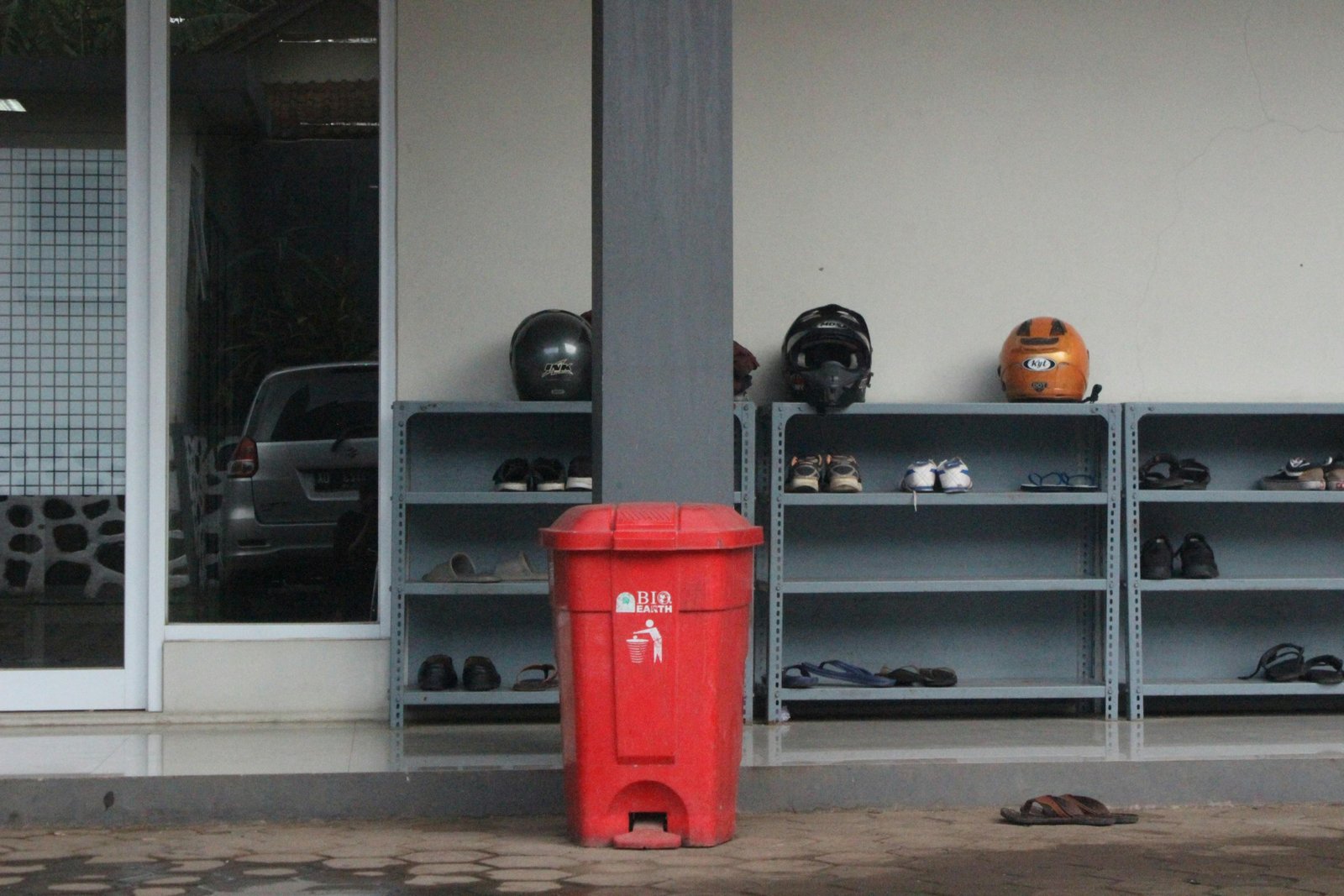
Waste containment specifications establish requirements for receptacles at generation points enabling hygienic temporary storage before collection while preventing environmental contamination, vector access, and nuisance conditions affecting surrounding areas. Household waste containment employs individual bins for single-family dwellings or communal containers for multi-family buildings, manufactured from durable materials including plastic providing lightweight corrosion resistance, metal offering strength and longevity though requiring rust protection, or fiber composites balancing durability with cost considerations, with capacity typically 40-120 liters for individual household bins enabling 2-3 day storage between collections without overflow, or 120-660 liters for communal containers serving multiple households in apartment buildings or dense neighborhoods. Receptacles incorporate tight-fitting lids preventing vector access including rats, insects, and scavenging animals while containing odors during storage periods, designed for manual or mechanical handling matching collection systems employed whether handcart collection requiring lightweight manageable bins or mechanical collection using specialized trucks lifting and emptying containers, and placed at accessible locations facilitating collection crew efficiency including curbside for individual pickup, designated communal collection points minimizing collection time and route length, or building refuse rooms for multi-story structures centralizing waste management. Commercial and institutional waste containment requires larger capacity containers reflecting higher generation rates from restaurants producing substantial food waste, markets generating mixed organic and packaging waste, offices creating paper and general waste, and hotels producing diverse waste streams, with specifications typically ranging from 660-1,100 liters enabling daily collection schedules preventing overflow and maintaining sanitary conditions, constructed from durable materials withstanding heavy use and frequent mechanical emptying, and positioned in designated areas not obstructing pedestrian or vehicular traffic while providing convenient access for collection vehicles and crews.
SNI 19-2454-2002 Collection System Specifications
Collection Frequency Standards:
Residential Areas:
• Minimum frequency: 2-3 times weekly for low-density residential areas with limited generation and adequate household storage capacity
• Recommended frequency: 3-4 times weekly for medium-density areas balancing service quality with operational costs and vehicle capacity utilization
• High-density requirements: Daily collection for dense urban areas including apartment complexes, informal settlements, or areas with limited household storage space preventing accumulation
• Climate considerations: More frequent collection in hot humid climates accelerating decomposition and odor generation, potentially reduced in cooler areas or dry seasons
• Special circumstances: Increased frequency during holidays or celebrations generating higher-than-normal waste volumes preventing overflow and service disruptions
Commercial Districts:
• Daily collection: Standard for commercial areas including shopping districts, restaurant zones, and business centers generating perishable waste requiring frequent removal
• Market areas: Multiple daily collections for traditional markets generating substantial organic waste with rapid decomposition creating odor and sanitation concerns
• Industrial zones: Frequency determined by generation rates and waste characteristics with some industries requiring daily service while others adequate with 2-3 times weekly
• Institutional facilities: Schools, hospitals, government offices typically daily collection matching operational patterns and waste generation characteristics
Collection Methods and Technologies:
Individual Curbside Pickup:
• Application areas: Planned residential developments with good street access, adequate road widths enabling collection vehicle maneuvering, and regular street networks facilitating efficient routing
• Operational procedure: Crew members retrieve household bins from property line or curbside, empty contents into collection vehicle, return bins to designated locations, systematic progression along collection route
• Vehicle requirements: Compactor trucks providing maximum payload capacity and route efficiency, open trucks with crew manually loading and compacting, or specialized vehicles with mechanical bin-lifting systems
• Crew sizing: Typically 1 driver plus 2-3 crew members per vehicle enabling efficient operations balancing collection speed with crew fatigue and safety considerations
• Time efficiency: Approximately 300-600 households per vehicle per day depending on route density, bin sizes, travel distances, and disposal facility proximity
Communal Collection Points:
• Application areas: Dense informal settlements with narrow alleys preventing vehicle access, mixed residential-commercial areas with space constraints, or communities preferring shared responsibility models
• Container provision: Municipalities or communities provide large communal containers sized 660-1,100 liters positioned at strategic locations within reasonable walking distance for residents
• Collection procedure: Mechanical collection vehicles with hydraulic lifting systems empty communal containers, crews position containers for lifting and return after emptying, systematic route through collection points
• Advantages: Reduced collection time per household served, lower crew labor requirements, flexible positioning accommodating informal settlement evolution, community engagement opportunities
• Challenges: Potential for illegal dumping if containers overflow, maintenance responsibilities sometimes unclear, community cooperation essential for cleanliness and proper use
Container Systems:
• Application areas: Commercial districts with high generation rates, high-density residential buildings including apartments and condominiums, institutional facilities like universities or hospitals
• Standardization: Uniform container specifications enabling interchangeability and mechanical handling, typically 660-1,100 liters with compatible lifting mechanisms across vehicle fleet
• Operational efficiency: Specialized vehicles with hydraulic lifting and emptying systems service multiple containers per stop, higher productivity compared to manual handling systems, reduced crew physical demands
• Infrastructure investment: Higher capital costs for standardized containers and specialized collection vehicles, maintenance requirements for mechanical systems, replacement programs for damaged containers
• Performance characteristics: Significantly higher collection productivity measured in tons per vehicle per day, professional appearance enhancing service perception, reduced contamination and spillage during collection operations
Collection vehicle specifications match appropriate technology to urban density, road conditions, waste volumes, and available resources balancing effectiveness with affordability and sustainability. Handcarts and motorcycles serve dense informal settlements or narrow alleys where larger vehicles cannot access, providing lightweight maneuverability through restricted spaces at low capital and operating costs though limited capacity requiring frequent trips to transfer points or disposal facilities restricting service area and daily productivity. Small trucks typically 1-3 ton capacity serve low-density residential areas or smaller municipalities with modest budgets, providing enclosed or open-bed configurations, basic mechanical simplification reducing maintenance requirements and supporting local repair capabilities, and adequate capacity for typical residential collection routes though lacking compaction capabilities increasing trip frequency to disposal facilities. Compactor trucks typically 6-10 ton capacity represent standard for medium and large municipalities providing substantial payload capacity supporting extensive service areas before disposal trips, mechanical compaction reducing waste volume 3-4 times increasing productivity, enclosed bodies preventing littering and odor nuisance during transport, and hydraulic mechanisms lifting and emptying containers in mechanical collection systems though requiring higher capital investment, more sophisticated maintenance including hydraulic systems and compaction mechanisms, and adequate road conditions supporting heavy vehicle operations.
Transfer station specifications address operational and environmental requirements for intermediate facilities consolidating waste from collection vehicles before long-distance transport to final disposal or processing facilities. Strategic location considerations balance proximity to waste generation areas minimizing collection vehicle travel time and fuel costs against community acceptance concerns often generating NIMBY opposition due to perceived odor, traffic, noise, and aesthetic impacts, site availability in dense urban contexts with land scarcity and competing uses, regulatory requirements including environmental permits and spatial planning consistency, and transportation network access enabling efficient haul routes to disposal or processing facilities potentially 20-50+ kilometers distant. Capacity sizing ensures facilities handle daily waste volumes from designated service areas typically serving populations 200,000-1,000,000+ generating 500-2,000+ tons/day with buffer capacity accommodating peak generation periods during holidays or special events and operational disruptions at disposal facilities requiring temporary storage, employing enclosed buildings or covered structures preventing odor dispersal to surrounding areas, vector access enabling unsanitary conditions, and weather exposure affecting operations and creating leachate generation during rainfall events, while providing adequate working environment for personnel conducting waste consolidation, vehicle marshaling, and facility maintenance activities essential for safe efficient operations.
Transfer Station Design and Operations Best Practices
Site Selection Criteria:
• Proximity optimization: Locate facilities at strategic points consolidating waste from multiple collection routes while minimizing average travel distance from service area, typically positioning at periphery of dense collection zones near arterial roads enabling efficient transport to disposal facilities
• Transportation access: Ensure adequate road capacity supporting frequent truck traffic without creating congestion or safety hazards, sufficient turning radius for large transport vehicles, proximity to highways or main roads enabling efficient long-distance haul to landfills or processing facilities
• Buffer distances: Maintain separation from sensitive receptors including residential areas preferably 200+ meters, schools and hospitals 500+ meters, commercial areas based on local conditions, protecting community from odor, noise, and visual impacts while addressing NIMBY concerns
• Environmental protection: Avoid flood-prone areas preventing operational disruptions and leachate contamination risks, ensure adequate drainage managing surface runoff, prevent groundwater contamination through proper facility design and operations, control potential air emissions through enclosed structures or odor management systems
• Land tenure: Secure long-term land rights matching facility operational lifetime, typically 20-30+ years through ownership or extended leases, ensuring site control without displacement risks or competing claims creating operational uncertainties
Facility Design Elements:
Receiving and Tipping Area:
• Concrete floor construction providing durable surface withstanding heavy traffic and waste handling, sloped design enabling drainage preventing ponding and leachate accumulation, adequate lighting for safe operations during extended hours or early morning shifts
• Vehicle circulation planning with separate entrance and exit points preventing congestion, adequate space for simultaneous unloading by multiple collection vehicles, designated queuing areas managing peak arrival periods during morning collection schedules
• Weighing systems including weighbridge or loadcell scales recording incoming waste volumes by source for monitoring and billing purposes, providing operational data supporting route optimization and resource allocation decisions
• Sorting capabilities where appropriate enabling recovery of valuable recyclables before compaction or containerization, manual or mechanical separation platforms, temporary storage for recovered materials pending sale or transfer to recycling facilities
Waste Processing and Transfer:
• Compaction equipment including stationary or mobile compactors reducing waste volume 3-4 times improving transport efficiency, loading mechanisms transferring compacted waste into transport vehicles or containers, adequate power supply and backup systems ensuring operational continuity
• Container systems for large-scale operations utilizing roll-off containers or detachable bodies enabling rapid exchange between transport vehicles, mechanical loading systems positioning containers for efficient coupling and transport
• Direct push systems for continuous operations where collection vehicles push waste directly into transport trailers without intermediate handling, reducing labor requirements and processing time, requiring careful synchronization between collection vehicle arrivals and transport vehicle scheduling
• Storage capacity for operational buffering enabling temporary accumulation when transport vehicles delayed or unavailable, preventing collection service disruptions from disposal facility closures or transport logistics challenges, typically designed for 1-2 days capacity
Environmental and Support Facilities:
• Leachate management including collection sumps capturing liquids draining from waste, treatment systems or connection to municipal wastewater infrastructure preventing environmental contamination, emergency containment for spills or equipment failures
• Odor control measures employing enclosed structures containing emissions, ventilation systems managing airflow patterns, air treatment technologies like biofilters or chemical scrubbers where necessary for sensitive locations, operational practices minimizing odor generation through rapid waste processing
• Vehicle washing facilities enabling collection vehicle cleaning reducing odor and maintaining sanitary conditions, covered wash bays collecting wash water for treatment preventing direct discharge of contaminated runoff
• Personnel facilities including changing rooms and lockers for staff, sanitation facilities meeting occupational health standards, rest areas providing break space during long shifts, administrative offices for supervisory personnel and record keeping
• Fire protection systems including hydrants, fire extinguishers, and potentially sprinkler systems protecting infrastructure investment and preventing service disruptions from fire incidents, particularly important for facilities handling dry combustible materials
Processing facility standards address composting operations converting organic waste to soil amendment products, recycling facilities sorting and preparing materials for market, and other intermediate treatment approaches reducing volume or recovering value before final disposal. Composting specifications establish requirements for windrow composting employing outdoor piles periodically turned enabling aerobic decomposition over 2-4 month periods, suitable for municipalities with available land and limited capital for mechanized systems though requiring adequate space, proper moisture and temperature management, and odor control measures protecting neighbors, in-vessel composting utilizing enclosed chambers or tunnels accelerating decomposition through controlled temperature, moisture, and aeration typically completing processing within 2-4 weeks with smaller land requirements and better odor control though higher capital and operating costs, or vermicomposting using earthworms processing organic materials particularly suitable for smaller scales or community-based operations producing high-quality compost though requiring careful operational management and market development for end products. Recycling facility design addresses manual sorting platforms elevating waste for worker access and safety, mechanical sorting equipment including screens, air classifiers, and optical sorters improving efficiency and consistency though requiring higher capital investment and technical expertise, storage areas segregating materials by type and quality meeting buyer specifications, and processing equipment like balers producing standardized bales facilitating transportation and handling, shredders reducing material volumes, or densifiers compacting plastics increasing handling efficiency.
Sanitary Landfill Standards and Environmental Protection
SNI 19-2454-2002 establishes comprehensive sanitary landfill standards ensuring environmentally sound final disposal protecting groundwater resources, controlling air emissions, managing leachate preventing water pollution, and minimizing adverse impacts on surrounding communities and ecosystems. Sanitary landfill definition requires engineered facilities designed and operated according to environmental protection principles, contrasting with open dumping lacking environmental controls and creating substantial pollution and public health risks still practiced at many Indonesian disposal sites despite legal prohibitions. Key components include site preparation with natural or artificial barriers preventing contaminant migration, systematic waste placement and compaction optimizing site utilization and reducing settlement, daily cover application preventing vector access and controlling odors, leachate collection and treatment systems managing contaminated liquids generated from rainfall infiltration and waste decomposition, landfill gas management capturing or flaring methane reducing greenhouse gas emissions and explosion risks, groundwater monitoring ensuring early detection of contamination enabling corrective action, and post-closure care maintaining environmental controls after waste placement ceases typically continuing 20-30 years ensuring long-term environmental protection and site stability before reuse for other purposes.
Site selection for landfills requires careful evaluation of geological, hydrological, environmental, and social factors determining suitability and identifying locations minimizing environmental risks while ensuring operational viability and community acceptance. Geological considerations emphasize substrates providing natural barriers to contaminant migration including thick clay layers with low permeability impeding leachate movement, adequate separation from bedrock preventing groundwater contamination risks, and seismic stability in earthquake-prone regions ensuring structural integrity during ground shaking events. Hydrological factors address separation distances from surface water bodies including rivers, lakes, and wetlands typically requiring 300+ meters preventing contamination from leachate seepage or surface runoff, adequate depth to groundwater table typically 3+ meters providing attenuation zone between waste and aquifer, and watershed position considering downstream impacts from potential contamination events affecting water supplies or sensitive ecosystems. Environmental criteria ensure adequate buffer distances from protected areas including national parks, wildlife reserves, and conservation zones typically prohibiting landfills within 1-2 kilometers, avoid sensitive habitats like mangroves or critical wetlands providing essential ecological functions, and minimize impacts on agricultural land especially productive areas supporting food security objectives. Social considerations balance proximity to waste generation areas reducing transportation costs against community acceptance concerns often generating opposition due to odor, traffic, aesthetic impacts, and property value effects, requiring careful siting engaging stakeholders through transparent processes, addressing concerns through facility design and operational commitments, and potentially providing community benefits including employment opportunities, infrastructure improvements, or compensation programs building support for necessary but locally unpopular facilities.
Sanitary Landfill Engineering and Operational Requirements:
Base Liner System Design:
• Primary liner: High-density polyethylene (HDPE) geomembrane minimum 1.5mm thickness providing impermeable barrier preventing leachate migration, or compacted clay liner minimum 0.6 meters thick with maximum permeability 1x10⁻⁷ cm/sec providing natural containment
• Composite liner: Combination of geomembrane and compacted clay maximizing redundancy and leak detection capability, recommended for sites with higher groundwater vulnerability or larger waste disposal capacities
• Leachate collection layer: Permeable drainage layer typically 0.3-0.5 meters thick granular material overlying liner, collection pipes gathering leachate to treatment systems, adequate slope typically 2-3% ensuring gravity drainage
• Protective layer: Geotextile fabric preventing puncture damage to geomembrane from overlying waste or equipment, drainage layer separation preventing clogging from fine particles
• Quality assurance: Construction quality control including material testing, installation inspections, leak detection surveys, ensuring liner system integrity before waste placement
Waste Placement and Operations:
• Cell construction: Systematic waste placement in designated areas or cells progressing through site, daily cell dimensions based on incoming waste volumes and equipment capabilities, working face minimization reducing active disposal area
• Compaction procedures: Heavy equipment compacting waste layers achieving target density typically 700-900 kg/m³, multiple passes ensuring uniform compaction, adequate equipment maintained for continuous operations
• Daily cover application: Minimum 15-20 cm soil or alternative cover material applied at end of each operating day preventing vector access, controlling odors, managing stormwater runoff, containing waste during non-operating hours
• Intermediate and final cover: Thicker cover layers for completed cells or site areas, typically 30-60 cm intermediate cover for cells closed less than one year, minimum 60-90 cm final cover for completed areas including vegetation support layer
• Stormwater management: Diversion systems preventing clean stormwater entering waste disposal areas reducing leachate generation, collection systems managing runoff from active areas, erosion control protecting cover materials and site slopes
Leachate Management Systems:
• Collection infrastructure: Perforated pipes in drainage layer gathering leachate, manholes providing access for maintenance and monitoring, pumping systems transferring leachate to treatment facilities, capacity designed for maximum generation during wet season
• Treatment technologies: On-site treatment using aerobic or anaerobic biological processes removing organic contaminants, physical-chemical treatment for ammonia or heavy metal removal, membrane technologies producing high-quality effluent for discharge or reuse
• Off-site disposal: Transportation to municipal wastewater treatment facilities where on-site treatment not feasible, coordination with treatment plant operators ensuring compatibility with plant processes, backup arrangements for treatment plant disruptions
• Storage capacity: Equalization basins or tanks accommodating seasonal variations and treatment system maintenance, typically designed for 30-60 days leachate generation preventing untreated discharge during maintenance or equipment failures
• Discharge compliance: Meeting effluent standards for receiving water bodies or wastewater systems, monitoring discharge quality, reporting to environmental authorities, maintaining treatment performance records
Landfill Gas Management:
• Gas collection system: Vertical or horizontal wells penetrating waste mass, interconnecting piping network conveying gas to treatment or utilization systems, vacuum or pressure control maintaining optimal collection efficiency
• Gas utilization: Electricity generation using reciprocating engines or gas turbines for sites with sufficient gas production (typically 1+ MW capacity), direct use for thermal applications, upgrading to pipeline-quality natural gas
• Flaring alternatives: Open flare or enclosed flare destroying methane preventing greenhouse gas emissions where utilization not economical, automatic ignition systems ensuring continuous operation, emission monitoring meeting air quality standards
• Monitoring requirements: Perimeter gas monitoring preventing off-site migration and explosive concentrations in structures, surface monitoring detecting leaks or uncollected gas, gas composition analysis informing system design and operations
• Carbon finance: Potential for Clean Development Mechanism or other carbon credit revenue from methane capture and destruction, project development following approved methodologies, third-party verification of emission reductions
Post-closure care requirements ensure continued environmental protection after waste placement ceases and landfill reaches design capacity or operations terminate. Site closure process follows systematic progression including final waste placement compacting remaining waste and completing final elevation contours, final cover installation typically comprising 60-90 cm total thickness with multiple layers including gas venting layer enabling continued gas release preventing pressure buildup, barrier layer preventing infiltration reducing leachate generation, drainage layer managing surface water runoff, and vegetation support layer enabling plant establishment providing erosion control and aesthetic improvement transforming waste disposal site to potentially productive land uses including parks, open space, or compatible commercial development subject to settlement and gas generation constraints. Post-closure monitoring continues typically 20-30 years after closure following Ministry of Environment and Forestry guidelines ensuring environmental controls remain effective, groundwater monitoring wells sampled quarterly or semi-annually detecting any contamination migration requiring response, landfill gas monitoring continues until production declines to negligible levels no longer creating explosion risks or greenhouse gas emissions, settlement monitoring tracks subsidence affecting surface uses and potentially damaging cover integrity requiring repairs, and leachate system maintenance ensures continued collection and treatment though volumes decline over time as waste stabilizes and cover systems reduce infiltration. Financial assurance mechanisms ensure adequate resources for post-closure care including closure trust funds or reserves accumulated during operations, letters of credit or surety bonds providing guaranteed funding, insurance products covering post-closure obligations, or direct government assumption of responsibilities particularly for publicly-owned facilities, protecting against operator insolvency or abandonment leaving communities and environment at risk from inadequately closed facilities requiring public sector cleanup or management at taxpayer expense.
TPS3R Community-Based Waste Treatment Facilities
TPS3R (Tempat Pengolahan Sampah Reduce Reuse Recycle - Waste Treatment Facility with 3R Principles) facilities represent innovative community-scale waste management approach emphasizing local processing reducing waste volumes requiring collection and transportation to distant landfills while recovering value through material recycling and organic waste composting, creating local employment opportunities, providing environmental education demonstration sites, and empowering communities taking active role in waste management rather than passively depending on municipal collection services often inadequate or unreliable in lower-income areas or peripheral neighborhoods lacking priority in resource allocation decisions. Ministry of Public Works and Housing Regulation No. 3/2013 establishes technical guidelines for TPS3R development specifying minimum design standards, operational procedures, and institutional arrangements supporting sustainable community-based waste management integrated with broader municipal solid waste systems. Guidelines establish minimum capacity 1-2 tons per day serving approximately 400 households representing typical neighborhood or community scale, expandable to 5-10 tons/day for larger communities or clustered neighborhoods achieving modest economies of scale while maintaining community participation and management feasibility, minimum land area 200 square meters for basic facility accommodating required functional zones though 300-500 square meters preferred enabling comfortable operations and potential expansion, and location considerations balancing accessibility for waste delivery against separation from sensitive receptors like residences and schools addressing potential odor or aesthetic concerns despite community scale operations generating limited impacts compared to centralized facilities.
Essential facility components include waste receiving area with weighbridge or platform scales recording incoming waste quantities for monitoring and potential payment systems, manual or basic mechanical sorting platforms where materials manually separated by type including recyclables like paper, cardboard, plastics, metals, and glass, organic waste for composting, and residual waste requiring disposal, organic waste treatment employing composting windrows periodically turned exposing materials to oxygen enabling aerobic decomposition over 6-8 week periods producing stable compost suitable for agricultural or landscaping applications, in-vessel composting using enclosed bins or reactors accelerating process through better environmental control, or black soldier fly cultivation providing alternative organic waste treatment producing protein-rich larvae for animal feed while rapidly processing organic materials within 2-3 weeks requiring specialized knowledge and markets though offering enhanced economic returns compared to composting alone, recyclable material storage including segregated bins or designated areas for different material types pending sale to waste collectors or recycling processors, maintaining material quality and value through proper handling preventing contamination or degradation, residual waste storage for materials unsuitable for recycling or composting requiring ultimate disposal at sanitary landfills, typically representing 20-30% of incoming waste after maximum practical recovery though percentages varying based on incoming waste composition and sorting effectiveness, and supporting facilities including equipment storage for tools and materials, sanitation facilities for workers and visitors, potentially small administrative office or meeting space for community coordination and training activities, and collection vehicle parking for tricycles, small trucks, or handcarts used for waste collection within community service area supplementing or replacing municipal collection services depending on local arrangements.
TPS3R Implementation Case Study: Surabaya Green and Clean Program
Background and Context:
Surabaya, Indonesia's second-largest city with population approximately 3 million generating 2,000+ tons daily waste, pioneered integrated community-based waste management approach addressing landfill capacity crisis at Benowo landfill approaching exhaustion while serving entire metropolitan area creating urgent need for waste diversion strategies reducing disposal demands.
Municipal government under Mayor Tri Rismaharini (2010-2020) implemented ambitious Green and Clean program establishing network of community-based waste management facilities including 50+ TPS3R units, hundreds of waste banks, and composting centers supported by comprehensive policy framework, adequate municipal budgets, strong leadership commitment, and sustained community mobilization efforts recognized nationally and internationally as Indonesian waste management success story.
TPS3R Implementation Approach:
Strategic Deployment:
• Geographic distribution: Facilities positioned across city districts ensuring reasonable access for communities, prioritizing underserved areas lacking adequate municipal collection, and targeting neighborhoods with active community organizations demonstrating capacity for facility management
• Phased development: Initial pilot facilities tested approaches and identified challenges, successful models replicated and scaled with adaptations for different neighborhood contexts, iterative improvements informed by operational experience and community feedback
• Municipal investment: City government funded facility construction providing land, buildings, equipment, and initial working capital, with operating budgets supporting personnel salaries, consumables, and maintenance while facilities developed self-sufficiency through recyclable sales and service fees
• Technical support: Municipal waste management agency provided ongoing technical assistance for facility operations, troubleshooting operational challenges, training community managers and workers, facilitating market connections for recyclable materials and compost products
Community Engagement Model:
• Participatory planning: Community consultations identified suitable locations, assessed community willingness participating in waste separation and facility operations, addressed concerns about odor or other potential impacts, and established management committees representing neighborhood stakeholders
• Education campaigns: Intensive community education explaining waste separation techniques, facility operations and benefits, environmental impacts of improper waste management, using workshops, door-to-door outreach, school programs, and community events building awareness and participation
• Economic incentives: Waste banks operating at many TPS3R facilities provided financial returns for recyclable materials deposited by community members, creating direct economic benefits supplementing environmental motivations, with savings accounts particularly appealing to lower-income households accumulating balances for school fees or other expenses
• Social recognition: Public ceremonies and awards recognizing high-performing neighborhoods and facilities, media coverage showcasing success stories, competition programs fostering friendly rivalry between communities driving participation and pride in environmental achievements
Performance Outcomes and Impacts:
Waste Diversion Results:
• Volume reduction: TPS3R network collectively diverted estimated 400-600 tons daily waste from Benowo landfill representing 20-30% of city's total generation, significantly extending landfill operational lifetime and postponing expensive new landfill development
• Material recovery: Facilities recovered substantial quantities of recyclable materials including paper, plastics, metals, and glass generating revenue while reducing virgin resource extraction, with exact tonnages varying by facility and season
• Organic processing: Composting operations processed hundreds of tons organic waste monthly producing soil amendments distributed free to community gardens and urban agriculture programs or sold to plant nurseries and landscaping businesses
• Residual reduction: Comprehensive sorting and processing reduced residual waste to approximately 20-25% of incoming materials representing maximum practical recovery given current technology and market conditions, with remaining residuals still requiring landfill disposal
Socioeconomic Benefits:
• Employment creation: Each facility employed 5-10 workers including facility managers, sorting crew, composting operators, and maintenance personnel providing stable income in often economically disadvantaged communities
• Informal sector integration: TPS3R facilities provided stable supply of recyclable materials to informal waste collectors and small recycling businesses, formalizing relationships and improving livelihoods for thousands of previously marginalized waste workers
• Community income: Waste bank programs connected to TPS3R operations provided financial benefits to participating households, with some families accumulating savings equivalent to 10-15% of monthly household income through consistent recyclable material deposits
• Skills development: Community members gained valuable technical skills in waste sorting, composting operations, facility management, and small business operations transferable to other employment opportunities or entrepreneurial ventures
• Social cohesion: Collaborative waste management activities strengthened community bonds through shared environmental goals, regular interactions at facilities and collection events, collective problem-solving addressing operational challenges, fostering civic engagement extending beyond waste management
Critical Success Factors:
• Strong political leadership: Sustained commitment from Mayor and senior municipal officials providing political cover for resource allocation, addressing implementation obstacles, maintaining program priority through electoral and administrative transitions
• Adequate financial investment: Municipal budget allocations supporting facility construction, equipment procurement, personnel salaries, and ongoing technical support during operational development period before facilities achieved financial sustainability
• Comprehensive community engagement: Intensive education, participatory planning, economic incentives, and social recognition programs building genuine community ownership rather than imposed top-down initiatives often failing from lack of local support
• Technical support infrastructure: Municipal waste management agency capacity providing ongoing operational assistance, troubleshooting problems, facilitating market connections, enabling continuous improvement based on accumulated experience and innovations
• Phased implementation approach: Piloting and learning from initial facilities before large-scale replication, adapting approaches to different neighborhood contexts, allowing time for community behavioral change and facility optimization
• Integration with municipal systems: TPS3R operations coordinated with municipal collection services, landfill operations, and broader waste management planning rather than isolated initiatives, ensuring complementary roles and avoiding conflicts or duplication
Nationwide monitoring data compiled by Ministry of Public Works and Housing tracking 922 TPS3R units established during 2015-2022 implementation period reveals mixed performance with only 538 facilities or 58.35% operating effectively processing design capacity and achieving waste reduction objectives, while remaining 384 units or 41.65% experience operational challenges ranging from complete inactivity where facilities constructed but never commenced operations or ceased functioning after initial periods, to partial functionality operating below design capacity or providing limited services compared to full waste processing capabilities. Primary operational challenges identified through field assessments and operator surveys include inadequate human resources with insufficient trained personnel managing daily operations including waste sorting requiring knowledge of material types and values, composting process control demanding understanding of moisture content, aeration, temperature management, and troubleshooting decomposition problems, equipment maintenance addressing mechanical issues with scales, shredders, composters, and vehicles, and administrative functions including financial record-keeping, reporting to authorities, community coordination, and market development for recovered materials, creating workload exceeding available staff capabilities particularly when relying on volunteers or minimally compensated community workers lacking technical expertise or sustained motivation. Limited operational funds constitute second major challenge as initial government subsidies supporting facility construction typically exclude ongoing operational budgets, creating financial sustainability gap once facilities transition to community management relying on revenues from recyclable sales and compost marketing often insufficient covering personnel costs, equipment maintenance, utilities, and supplies, requiring either municipal subsidies, community contributions, or service fees from waste generators though all three revenue sources face challenges from budget constraints, community financial limitations, or resistance to waste payment expectations respectively. Technical difficulties operating equipment designed for community scale but requiring proper maintenance, spare parts availability, and operator training include composters with mechanical turning mechanisms breaking down from inadequate maintenance or harsh operating conditions, shredders for organic waste processing experiencing jams or blade wear requiring expensive replacement, scales providing essential monitoring data but requiring calibration and protection from weather and rough handling, and vehicles for waste collection needing regular servicing and fuel supply which community budgets struggle providing consistently. Community participation challenges maintaining consistent waste delivery and separation behaviors essential for effective facility operations prove difficult as initial enthusiasm often wanes over time absent sustained engagement programs, sorting quality deteriorates when residents lack understanding or motivation, facility utilization drops when competing informal collectors offer immediate cash payment for valuable materials, and management committee turnover disrupts institutional knowledge and stakeholder relationships requiring periodic rebuilding of community support and operational capacity.
Glossary: Technical Terms and Definitions
Essential Terminology for Indonesian Waste Management
Comprehensive reference guide covering technical terms, acronyms, Indonesian terminology, and key concepts essential for understanding waste management governance, regulations, and implementation
3R Principles (Reduce, Reuse, Recycle)
Waste management hierarchy emphasizing waste prevention and resource recovery over disposal, with reduce referring to minimizing waste generation through sustainable consumption and packaging reduction, reuse extending product lifespans through repair and second-hand markets, and recycling recovering materials for manufacturing new products. Indonesia's Law 18/2008 and Jakstranas strategy prioritize 3R achieving minimum 30% waste reduction targets by 2025.
AMDAL (Analisis Mengenai Dampak Lingkungan)
Environmental Impact Assessment required for major development projects including waste management facilities under Indonesian environmental regulations, involving baseline environmental studies, impact prediction covering air, water, soil, biodiversity, social effects, mitigation measures reducing adverse impacts, monitoring programs tracking environmental performance, and stakeholder consultation ensuring community input in project planning and approval processes.
B3 (Bahan Berbahaya dan Beracun)
Hazardous and Toxic Materials classification for waste containing toxic, flammable, reactive, infectious, or corrosive properties requiring specialized handling, treatment, and disposal under Law 32/2009 on Environmental Protection and Management and Government Regulation 101/2014 on Hazardous Waste Management. Examples include industrial chemicals, medical waste, spent batteries, fluorescent lamps containing mercury, and other materials posing environmental and health risks if mismanaged.
Bank Sampah (Waste Bank)
Community-based waste management mechanism operating on banking principles where residents deposit sorted recyclable materials receiving financial credit recorded in individual account books, creating economic incentives for household waste separation while mobilizing grassroots participation in recycling. Pioneered in Indonesia 2008, waste banks operate in thousands of communities nationwide aggregating recyclable materials for sale to processors while providing environmental education and community development benefits.
BPI Danantara
Badan Pengelola Investasi Danantara, state investment holding company managing major State-Owned Enterprise portfolios established under Presidential Regulation 109/2025 as central coordinating body for waste-to-energy project identification, feasibility studies, developer selection, and contract administration replacing previous fragmented regional government-led approaches that yielded limited implementation success under Presidential Regulation 35/2018 framework.
Calorific Value
Energy content per unit mass of waste determining suitability for thermal treatment including incineration or gasification, typically measured in kilocalories per kilogram (kcal/kg) or megajoules per kilogram (MJ/kg). Indonesian municipal solid waste typically exhibits 1,500-2,500 kcal/kg calorific value lower than developed country waste (2,500-3,500 kcal/kg) due to high moisture content and organic fraction, often requiring supplemental fuel or advanced pre-treatment for effective waste-to-energy operations.
Collection Coverage
Percentage of population or geographic area receiving regular scheduled waste collection service, key performance indicator for municipal waste management systems tracking progress toward universal access targets. Indonesia's current collection coverage varies substantially among municipalities from over 90% in major cities like Jakarta and Surabaya to below 50% in many smaller municipalities, with national averages difficult determining due to incomplete SIPSN reporting coverage.
Compaction Ratio
Volume reduction achieved through mechanical compression of waste in collection vehicles or at disposal facilities, typically expressed as ratio of compacted to uncompacted volumes. Collection vehicle compactors achieve 3-4:1 reduction enabling higher payload capacity and reduced trip frequency to disposal facilities, while landfill compaction using heavy equipment achieves 2-3:1 reduction optimizing site capacity utilization and improving operational characteristics including settlement reduction and vector control.
Composting
Biological decomposition of organic waste under controlled aerobic conditions producing stabilized organic material (compost) suitable for soil amendment applications, reducing waste volumes 70-80% while recovering nutrients and organic matter for agricultural or landscaping use. Common composting methods in Indonesia include windrow composting using outdoor piles periodically turned, in-vessel composting in enclosed chambers or reactors accelerating process through environmental control, vermicomposting using earthworms particularly for community-scale operations, and black soldier fly cultivation providing rapid processing with valuable protein byproduct.
DAK (Dana Alokasi Khusus)
Special Allocation Fund providing earmarked transfers from national government to regional governments for specific sectoral priorities including infrastructure development, with waste management eligible for DAK funding supporting facility construction, equipment procurement, and capacity building initiatives. Municipalities compete for DAK funding through proposal submissions demonstrating needs, implementation capacity, and alignment with national priorities, with allocations varying annually based on budget availability and priority determinations.
Extended Producer Responsibility (EPR)
Policy principle requiring producers assume responsibility for entire product lifecycle including post-consumer collection, recycling, and disposal, codified in Indonesia's Law 18/2008 Articles 15-16 obligating manufacturers implement waste reduction programs, design products and packaging for recyclability, establish take-back systems, and contribute financially to waste management infrastructure. Implementation remains limited despite legal framework, with gradual development of specific EPR regulations for packaging and electronic waste establishing concrete producer obligations and enforcement mechanisms.
Feed-in Tariff
Guaranteed price paid by electricity utility (PT PLN) for renewable energy including waste-to-energy generation, providing revenue certainty supporting project finance and investment decisions. Presidential Regulation 109/2025 establishes fixed feed-in tariff of USD 0.20 per kilowatt-hour for 30-year contract duration for waste-to-energy facilities, eliminating previous project-specific negotiations and creating standardized commercial framework facilitating development.
Final Cover
Multi-layer capping system installed over completed landfill sections providing permanent barrier preventing infiltration reducing leachate generation, controlling gas emissions, enabling vegetation establishment, and preparing site for post-closure land uses. Indonesian sanitary landfill standards require minimum 60-90 cm final cover thickness comprising drainage layer managing surface water runoff, barrier layer preventing infiltration, and vegetation support layer enabling plant growth providing erosion control and aesthetic improvement.
Informal Sector
Network of individual waste collectors, sorting facilities, and small recycling businesses operating outside formal regulated systems, playing crucial role in Indonesia's waste management recovering estimated 15-20% of generated waste through door-to-door collection, landfill scavenging, and street collection activities. Estimated 3.7 million people nationwide derive livelihoods from informal waste activities, though facing health risks, economic vulnerability, and social marginalization, with increasing efforts toward formalization through waste banks, cooperatives, and integration with municipal systems improving working conditions and livelihoods.
Incineration
Thermal treatment technology combusting waste at high temperatures (850-1,000°C) reducing volume 90% and mass 70% while recovering energy through electricity generation or heat production, producing bottom ash and fly ash residues requiring appropriate management due to concentrated contaminants. Modern incineration facilities include sophisticated air pollution control systems removing particulates, acid gases, heavy metals, and dioxins/furans meeting environmental emission standards, though requiring substantial capital investment and technical expertise creating implementation challenges in Indonesian context.
Jakstranas
Kebijakan dan Strategi Nasional Pengelolaan Sampah (National Policy and Strategy for Waste Management) established through Presidential Regulation 97/2017 translating legal requirements into actionable targets and implementation roadmaps. Jakstranas sets quantitative goals of 30% waste reduction and 70% proper handling by 2025, establishes strategic priorities spanning infrastructure development, community mobilization, institutional strengthening, and financing mechanisms, creating coordinated national framework guiding municipal and provincial efforts toward comprehensive waste management transformation.
KLHK (Kementerian Lingkungan Hidup dan Kehutanan)
Ministry of Environment and Forestry serving as national-level authority for waste management policy formulation, regulatory oversight, and performance monitoring through SIPSN information system tracking 514 municipalities nationwide. KLHK develops regulations, technical guidance, and standards supporting municipal implementation, coordinates with other ministries on cross-cutting issues, and represents Indonesia in international environmental forums addressing waste management and circular economy development.
Landfill Gas
Mixture of methane (typically 45-60%), carbon dioxide (40-50%), and trace gases produced through anaerobic decomposition of organic waste in landfills, creating explosion risks if accumulated in enclosed spaces and greenhouse gas emissions affecting climate change given methane's 25-times greater global warming potential than carbon dioxide over 100-year period. Sanitary landfills install gas collection systems capturing landfill gas for energy recovery through electricity generation or flaring for methane destruction reducing environmental impacts.
Leachate
Contaminated liquid generated when water percolates through waste extracting dissolved and suspended materials creating highly polluted effluent containing organic compounds, ammonia, heavy metals, and other contaminants posing risks to groundwater and surface water if inadequately managed. Sanitary landfills employ liner systems preventing leachate migration, collection systems gathering leachate for treatment using biological, physical-chemical, or advanced technologies achieving discharge standards, and cover systems minimizing infiltration reducing leachate generation particularly important in high-rainfall tropical climates.
Material Recovery Facility (MRF)
Facility receiving mixed waste or source-separated recyclables for sorting, processing, and marketing to end-use manufacturers, employing manual sorting by workers on elevated platforms or mechanical systems using screens, air classifiers, optical sorters, and magnetic separators achieving higher efficiency and consistency. Indonesia's TPS3R facilities serve as community-scale MRFs combining manual sorting with composting operations, while larger centralized MRFs could enhance recyclable recovery efficiency though requiring substantial investment and coordinated collection systems delivering adequate material volumes supporting economic operations.
Moisture Content
Percentage of waste mass comprising water significantly affecting handling characteristics, decomposition rates, and treatment suitability, with Indonesian municipal solid waste typically exhibiting 40-60% moisture content compared to 20-30% in developed countries due to high organic fraction and tropical climate. High moisture reduces calorific value affecting waste-to-energy viability, accelerates decomposition increasing leachate generation at landfills, and complicates thermal treatment requiring supplemental fuel or advanced drying systems for effective combustion.
NIMBY (Not In My Backyard)
Community opposition phenomenon where residents acknowledge need for waste facilities but resist local siting due to concerns about odor, traffic, noise, property values, and environmental impacts affecting quality of life, creating significant implementation challenges for essential infrastructure development. Addressing NIMBY requires transparent planning processes engaging communities early, facility design minimizing impacts through setbacks and operational controls, community benefit arrangements including employment or infrastructure improvements, and effective communication addressing concerns with factual information about environmental safeguards and operational practices.
Open Dumping
Disposal practice lacking environmental controls where waste discharged onto land without liners preventing contamination migration, leachate collection and treatment, gas management, or operational procedures including daily cover and systematic placement, creating substantial pollution and public health risks including groundwater contamination, surface water pollution, air emissions from uncontrolled fires, vector breeding, and aesthetic degradation. Indonesian law prohibits open dumping requiring sanitary landfill standards, though implementation remains incomplete with many municipalities continuing inadequate practices due to resource constraints and capacity limitations.
Organic Waste
Biodegradable materials derived from plant or animal sources including food waste from preparation and consumption, yard waste like grass clippings and tree trimmings, paper products, and natural fibers, typically representing 39.36% of Indonesian municipal solid waste composition according to SIPSN data. Organic waste management emphasizes composting converting materials to soil amendments, anaerobic digestion producing biogas for energy generation, or black soldier fly cultivation creating animal feed protein, diverting substantial volumes from landfills while recovering valuable resources supporting circular economy objectives.
Perda (Peraturan Daerah)
Regional Regulation enacted by provincial or district/city governments establishing local implementation rules for waste management including collection service requirements, waste separation obligations, user fee structures, facility siting procedures, and enforcement mechanisms addressing illegal disposal. Perda implement national laws like Law 18/2008 adapted to local conditions and priorities, requiring approval from regional legislative councils (DPRD) ensuring democratic legitimacy and stakeholder input, with effectiveness dependent on adequate enforcement capacity and community acceptance.
Public-Private Partnership (PPP)
Contractual arrangement between government and private sector sharing responsibilities for financing, design, construction, operations, and risk allocation in infrastructure projects including waste management facilities and services, enabling municipalities leverage private capital, technical expertise, and operational efficiency while maintaining public oversight and service quality standards. PPP models for waste management include management contracts improving operations while government retains assets, build-operate-transfer (BOT) arrangements where private partners construct and operate facilities before transferring to government, and concessions granting comprehensive service delivery responsibility to private operators recovering investments through user charges subject to regulatory oversight.
Recycling
Recovery and reprocessing of waste materials into new products reducing virgin resource extraction, energy consumption, and disposal needs supporting circular economy objectives. Common recyclable materials in Indonesia include paper and cardboard (11.16% of waste composition), plastics particularly PET bottles and HDPE containers (18.47% total plastics with varying recycling suitability), metals including aluminum cans and ferrous materials, and glass bottles and containers, with recovery occurring through waste banks, informal sector collection, TPS3R facilities, and commercial recycling operations though overall recycling rates remaining modest requiring scaled expansion of collection systems and processing capacity.
Renstra (Rencana Strategis)
Strategic Plan covering 5-year implementation periods aligned with regional government electoral cycles and medium-term expenditure frameworks, required under Government Regulation 81/2012 translating 20-year Master Plans (RIPS) into concrete actions with budget allocations, performance targets, and implementation schedules. Renstra specify service expansion milestones, infrastructure investments, organizational development initiatives, and performance monitoring systems enabling tracking progress toward waste management objectives while ensuring integration with broader municipal planning and budgeting processes.
RIPS (Rencana Induk Persampahan)
Master Plan for Waste Management required for each of Indonesia's 514 districts and cities under Government Regulation 81/2012, covering 20-year planning horizons with infrastructure development roadmaps, service coverage targets, technology options, and investment requirements providing strategic framework guiding municipal waste management development. RIPS preparation involves comprehensive baseline assessment of current conditions, demand projections based on population growth and economic development, infrastructure needs analysis identifying gaps, and implementation phasing balancing immediate priorities with long-term strategic investments, though many municipalities lack current valid RIPS limiting planning effectiveness.
Sanitary Landfill
Engineered waste disposal facility designed and operated meeting environmental protection standards through liner systems preventing contamination migration, leachate collection and treatment, landfill gas management, systematic waste placement with daily cover, and post-closure monitoring ensuring long-term environmental safety, contrasting with open dumps lacking these essential controls. Indonesian sanitary landfill standards codified in SNI 19-2454-2002 establish comprehensive requirements for site selection, engineering design, operational procedures, environmental monitoring, and closure planning though implementation challenges persist with many municipalities operating facilities below standards due to resource constraints and technical capacity limitations.
SIPSN (Sistem Informasi Pengelolaan Sampah Nasional)
National Waste Management Information System established under Ministerial Regulation LHK No. 6/2022 collecting, processing, and disseminating waste management data from Indonesia's 514 municipalities supporting evidence-based policymaking, performance monitoring, and public transparency. SIPSN integrates municipal reporting on waste generation volumes, composition, collection coverage, processing facilities, and disposal operations, providing national oversight while enabling municipal benchmarking and identifying best practices, though current data quality and coverage challenges limit comprehensiveness with only 311 municipalities submitting 2024 data and discrepancies between reported versus field-verified performance requiring continued system improvements.
SNI (Standar Nasional Indonesia)
Indonesian National Standard developed through National Standardization Agency (BSN) establishing technical specifications for products, services, processes, and systems supporting quality assurance, safety, and interoperability. Waste management SNI standards include SNI 19-2454-2002 on Technical Procedures for Urban Waste Management Operations providing comprehensive operational guidance, SNI 3242-2008 on Waste Management in Settlements, and other standards addressing specific technologies or facility types, with compliance generally voluntary unless referenced in regulations or contracts though providing important technical reference for professional practice.
Source Separation
Practice of segregating waste into different categories at generation points by households, businesses, or institutions before collection, typically distinguishing organic waste for composting, recyclable materials for material recovery, and residual waste for disposal, improving downstream processing efficiency and recovered material quality compared to mixed waste collection requiring centralized sorting. Indonesian implementation remains limited despite legal requirements under Law 18/2008 and Jakstranas targets, requiring sustained education campaigns, economic incentives through waste banks, and potentially enforcement of separation obligations through local regulations.
TPA (Tempat Pemrosesan Akhir)
Final Processing Facility, Indonesian term for landfills or other final disposal sites receiving waste after collection and potential intermediate processing, with terminology shift from Tempat Pembuangan Akhir (Final Disposal Site) emphasizing disposal toward Tempat Pemrosesan Akhir highlighting processing and resource recovery activities at modern facilities. Major Indonesian TPAs include Bantar Gebang serving Jakarta metropolitan area (one of world's largest landfills receiving 7,000+ tons/day), Benowo serving Surabaya, and hundreds of smaller facilities across 514 municipalities with varying operational standards from rudimentary open dumps to engineered sanitary landfills meeting environmental protection requirements.
TPS (Tempat Penampungan Sementara)
Temporary Collection Point or transfer station providing intermediate waste storage and transfer functions between collection vehicles and transport vehicles or processing facilities, optimizing logistics by consolidating waste from multiple small collection vehicles into larger transport vehicles reducing long-distance transportation costs. TPS specifications under SNI 19-2454-2002 address capacity sizing, environmental controls, equipment requirements, and operational procedures ensuring hygienic temporary storage while preventing impacts on surrounding communities through odor management, leachate containment, and aesthetic considerations.
TPS3R (Tempat Pengolahan Sampah 3R)
Community-based waste treatment facility implementing 3R principles (Reduce, Reuse, Recycle) through integrated operations including manual sorting separating recyclables for market sale, composting organic waste producing soil amendments, and temporary storage of residual waste for ultimate disposal, serving neighborhood scales typically 400 households generating 1-2 tons/day with potential expansion to 5-10 tons/day for larger communities. Indonesia established 922 TPS3R units nationwide during 2015-2022 period though monitoring indicates only 538 facilities (58.35%) operate effectively due to challenges including inadequate human resources, limited operational funds, technical difficulties, and community participation sustainability requiring continued capacity building and support for successful long-term operations.
Conclusions and Strategic Implications
Indonesia's urban waste management governance framework encompasses comprehensive legal architecture spanning foundational Law 18/2008 through recent Presidential Regulation 109/2025 enacted October 10, 2025 transforming waste-to-energy sector development, detailed technical standards notably SNI 19-2454-2002 establishing operational procedures for 514 municipalities nationwide, multi-level institutional arrangements distributing responsibilities across Ministry of Environment and Forestry providing national coordination, provincial governments facilitating inter-municipal cooperation, and district/city governments implementing operational services, and supporting systems including SIPSN monitoring platform tracking performance though data quality and coverage challenges requiring continued improvement, TPS3R community-based facilities with 922 units established though only 58.35% functioning effectively, and waste bank networks mobilizing grassroots participation though requiring scaled expansion achieving broader geographic coverage and deeper community penetration. This comprehensive framework provides foundation for addressing waste challenges driven by rapid urbanization generating approximately 175,000 tons daily urban waste, economic growth increasing consumption and packaging waste, and environmental imperatives requiring sustainable resource management protecting public health and ecosystem integrity while contributing climate mitigation objectives through methane emission reductions, materials recovery reducing energy-intensive virgin production, and waste-to-energy generation displacing fossil fuel-based electricity.
Implementation progress remains insufficient despite comprehensive policy frameworks and sustained government commitment, with SIPSN data showing 33.79 million tons waste generated 2024 from 311 reporting municipalities representing 60.5% of total 514 jurisdictions indicating incomplete national coverage limiting comprehensive assessment, reported 39% properly managed though Ministry field verification conducted June 2025 indicates merely 9-10% receives adequate treatment meeting environmental standards revealing substantial discrepancy between self-reported municipal data and actual ground conditions, and monitoring showing only 538 of 922 TPS3R facilities (58.35%) operate effectively per 2015-2022 assessment highlighting implementation gap between infrastructure construction and sustained operational performance. This implementation gap reflects multiple interrelated challenges including inadequate municipal budgets typically below 1% of regional spending far below international benchmarks for effective service delivery creating chronic resource constraints limiting vehicle procurement, facility construction, staff training, and operational improvements, limited technical capacity among 514 municipalities particularly smaller jurisdictions lacking dedicated waste management expertise relying on general public works personnel with limited specialized knowledge in facility design, operations optimization, financial management, and regulatory compliance, insufficient infrastructure spanning inadequate collection vehicle fleets often substantially below requirements for maintaining scheduled service across expanding service areas, aging equipment requiring high maintenance costs and experiencing frequent breakdowns disrupting service continuity, insufficient transfer station capacity increasing transportation costs and inefficiencies, and landfill capacity limitations as existing sites approach capacity exhaustion without alternative disposal options or expansion investments, and coordination difficulties across stakeholders spanning multiple ministries, between national and regional governments, among municipalities for regional cooperation, and with private sector for public-private partnerships creating communication failures, conflicting directives, and implementation paralysis despite Indonesia's declared waste emergency status requiring urgent coordinated action.
Presidential Regulation 109/2025 represents landmark policy innovation potentially catalyzing waste-to-energy sector transformation through fundamental restructuring of institutional arrangements replacing fragmented regional government-led approaches with centralized procurement under BPI Danantara state investment holding providing standardized procedures and accumulated institutional learning, fixed USD 0.20 per kilowatt-hour electricity tariff for 30 years providing revenue certainty supporting project finance compared to previous unclear dual payment streams from regional governments and PT PLN creating bankability concerns, minimum 1,000 tons/day waste volume thresholds ensuring commercially viable project scales addressing economic viability challenges, mandatory regional government obligations including no-cost land provision eliminating acquisition expenses and reliable waste supply creating foundation for sustainable operations, streamlined licensing and approvals reducing project development timelines and transaction costs discouraging private investment, and government fiscal support mechanisms for PT PLN improving overall project bankability attracting private investment addressing Indonesia's waste emergency while contributing renewable energy targets established under Ministry of Energy and Mineral Resources roadmaps. This framework addresses previous implementation failures under Presidential Regulation 35/2018 yielding only two operational facilities at Bantargebang serving Jakarta and Surakarta from 12 planned cities over seven years despite substantial government promotion efforts, with new approach expected accelerating development pipeline supporting transformative infrastructure deployment serving Indonesia's mounting waste management and renewable energy needs through coordinated public-private collaboration deploying billions of dollars investment over coming decades.
Strategic priorities for advancing Indonesia's comprehensive waste management transformation include sustained municipal capacity building through structured training programs developing expertise in planning methodologies incorporating demand forecasting and infrastructure sizing, facility operations spanning collection systems optimization, TPS3R management, transfer station operations, and sanitary landfill procedures, financial management encompassing budgeting, cost control, revenue generation through user fees and cost recovery, regulatory compliance ensuring adherence to environmental standards and reporting requirements, and community engagement techniques for education campaigns building participation and stakeholder consultation addressing concerns, supported by technical assistance mechanisms providing municipalities access to specialized expertise through provincial support units, national centers of excellence including Ministry of Public Works research institutes, international organizations funding advisory programs, and peer-to-peer learning networks enabling experience sharing and innovation diffusion. Infrastructure investment requires mobilizing financial resources from government budgets complemented by development bank lending from Asian Development Bank and World Bank providing concessional terms and technical assistance, Indonesia Infrastructure Finance offering specialized financing products for sub-national infrastructure, private sector partnerships through public-private cooperation models ranging from management contracts to full concessions, and innovative financing mechanisms including green bonds attracting environmental investment and blended finance structures combining concessional public funds with commercial lending improving project economics, constructing collection systems providing universal coverage across urban areas, TPS3R facilities enabling community-based processing and waste bank networks mobilizing grassroots recycling participation, transfer stations optimizing transportation logistics in larger urban areas, sanitary landfills replacing open dumping with environmentally sound disposal, and waste-to-energy plants in major cities generating 1,000+ tons daily supporting commercially viable projects contributing renewable energy while reducing disposal demands.
Community mobilization expanding participation in waste separation at source supporting TPS3R operations and waste bank programs requires sustained education campaigns using mass media, community events, school programs, and door-to-door outreach explaining waste reduction benefits, separation techniques, facility operations, and environmental impacts of mismanagement building awareness and motivation, economic incentives through waste banks providing tangible financial returns for recyclable deposits particularly appealing to lower-income households accumulating savings supporting household needs, potentially mandatory separation regulations with gradual enforcement building compliance over time as systems mature and community capacity develops, and social recognition programs including competitions among neighborhoods, public ceremonies honoring high performers, and media coverage showcasing success stories fostering community pride and friendly rivalry driving participation. Regulatory enforcement implementing penalties for illegal disposal including open burning creating air pollution and river dumping causing water contamination requires adequate municipal capacity for inspections, investigations, prosecutions, and penalty collection, community awareness of regulations and consequences creating deterrence effects, accessible legal disposal options ensuring compliance feasibility without imposing unreasonable burdens particularly on lower-income households lacking resources for formal service payment, and progressive enforcement beginning with education and warnings before escalating to financial penalties or criminal prosecution for serious persistent violations, while ensuring compliance with collection fees supporting financial sustainability, separation requirements enabling effective downstream processing, and facility operations standards maintaining environmental protection and service quality requiring continuous monitoring, periodic inspections, and corrective action when deficiencies identified.
Technology adoption leveraging digital systems for route optimization and performance monitoring, advanced processing methods recovering maximum value from waste streams, and innovative approaches improving operational efficiency proves essential supporting evidence-based management and continuous improvement across national waste management system. Digital technologies including GPS tracking systems enabling real-time vehicle monitoring supporting route optimization, performance analytics, and operational oversight, mobile data collection platforms equipping field personnel with tablets or smartphones recording collection data, facility operations information, and customer service interactions enabling digital record-keeping replacing paper-based systems, SIPSN platform enhancements improving data quality, expanding reporting participation from current 311 of 514 municipalities, and developing analytical capabilities supporting municipal benchmarking and best practice identification, and potentially blockchain applications ensuring transparency in recyclable material transactions and carbon credit verification creating trust in emerging markets, improve operational efficiency while enhancing accountability and enabling informed decision-making based on comprehensive accurate data rather than incomplete anecdotal information. Advanced processing technologies including mechanical biological treatment combining sorting, composting, and potentially anaerobic digestion in integrated facilities, advanced thermal treatment employing gasification or pyrolysis converting waste to synthesis gas or fuel oil enabling energy recovery with potentially lower emissions than conventional incineration, plasma gasification offering ultra-high temperature conversion producing minimal residues though facing high capital costs and energy requirements limiting applications, and extended producer responsibility systems requiring manufacturers fund collection and recycling infrastructure creating sustainable financing replacing municipal budget dependencies, support waste reduction and resource recovery objectives while generating economic value from materials otherwise disposed representing environmental and economic waste.
References and Data Sources:
1. Legal Framework and Regulations:
• Law No. 18/2008 on Waste Management - Government of Indonesia
• Government Regulation No. 81/2012 on Household Waste Management
• Presidential Regulation No. 97/2017 on National Waste Strategy (Jakstranas)
• Presidential Regulation No. 109/2025 on Waste-to-Energy (October 10, 2025)
• Ministerial Regulation LHK No. 6/2022 on SIPSN National Information System
• Ministerial Regulation LHK No. 9/2024 on Waste Management Technical Standards
2. Official Government Sources:
• Ministry of Environment and Forestry (KLHK) - SIPSN Data Platform 2024: sipsn.menlhk.go.id
• Databoks Katadata - Indonesia Waste Statistics 2024: databoks.katadata.co.id
• ANTARA News - Ministry Assessment June 2025 Waste Management Performance
3. Technical Standards:
• SNI 19-2454-2002 Technical Procedures Urban Waste Management Operations - BSN
• SNI 3242-2008 Waste Management in Settlements - National Standardization Agency
• SNI 03-2398-2002 Septic Tank Planning Procedures
4. Legal Analysis and Commentary:
• A&O Shearman - Presidential Regulation 109/2025 Analysis: aoshearman.com
• ADCO Law - PR 109/2025 Framework Overview: adcolaw.com
• Lexology - Waste-to-Energy Updated Regulation Analysis: lexology.com
• Mori Hamada & Matsumoto - Waste to Energy Regulation Updated: morihamada.com
5. Academic and Research Sources:
• ScienceDirect (2024) - Techno-economic Analysis TPS3R Community Facilities: sciencedirect.com
• Kompas.id - The Long Road To A Trash-Free Indonesia (2023)
• Modern Diplomacy - Recognizing Indonesia's Informal Waste Workforce (2025)
• MBA FEB UGM - Circular Economy Initiatives in Waste Management Indonesia (2024)
6. Development Organizations:
• IGES CCET - Waste Bank System Documentation and Training Modules: ccet.jp
• World Bank - Urban Wastewater Management Indonesia Technical Guide
• Asian Development Bank - Infrastructure Development Technical Reports
• IESR - Solutions to Waste Crisis in Indonesia (2025): iesr.or.id
7. Industry and NGO Reports:
• Greeneration Foundation - Waste Bank Solutions Overview (2023): greeneration.org
• Indonesia Asri - Waste Statistics and Management Analysis (2025): indonesiaasri.com
• Eco-Mantra - Is Zero Waste in Indonesia Possible (2025): eco-mantra.com
• Asia News Network - Waste Processing Rate Analysis (June 2025): asianews.network

Professional Consulting Services for Indonesian Waste Management Development
SUPRA International provides comprehensive consulting services supporting Indonesian urban waste management development spanning regulatory compliance assessment under Law 18/2008 and Presidential Regulation 109/2025, Master Plan (RIPS) preparation for municipalities meeting Government Regulation 81/2012 requirements, waste-to-energy project feasibility studies and transaction advisory for developers and investors, TPS3R facility design and operations optimization supporting community-based waste management, waste bank network development and capacity building programs, public-private partnership structuring for collection services and infrastructure development, SIPSN data system implementation and performance monitoring, technical training for municipal personnel and community groups, financing strategy development accessing government grants and development bank support, and strategic planning aligning waste management initiatives with broader urban development and environmental protection objectives.
Need expert guidance on Indonesian waste management governance, project development, or regulatory compliance?
Contact us to discuss your waste management planning, infrastructure investment, or capacity building needs
Share:
If you face challenges in water, waste, or energy, whether it is system reliability, regulatory compliance, efficiency, or cost control, SUPRA is here to support you. When you connect with us, our experts will have a detailed discussion to understand your specific needs and determine which phase of the full-lifecycle delivery model fits your project best.