
Technical Guide to Industrial Wastewater Treatment Plant Design and Construction: International Standards and Best Practices
Technical Guide to Industrial Wastewater Treatment Plant Design and Construction: International Standards and Best Practices
Reading Time: 75 minutes
Key Highlights
• Stringent EU Standards: New Urban Wastewater Treatment Directive requires total nitrogen discharge ≤6 mg/L by 2036 and energy neutrality targets by 2045, with mandatory tertiary treatment for populations over 10,000
• Advanced Treatment Requirements: International guidelines now emphasize removal of emerging contaminants including microplastics, PFAS, pharmaceuticals, and endocrine disruptors alongside conventional parameters
• Pre-Treatment Mandates: Industrial dischargers must implement on-site pre-treatment for hazardous substances with automated monitoring systems before connection to municipal treatment networks
• Circular Economy Integration: Modern WWTP design incorporates resource recovery including biogas generation, nutrient extraction, and water reuse systems achieving up to 85% water recycling rates in industrial applications
Executive Summary
Industrial wastewater treatment plant design and construction represent critical infrastructure investments requiring comprehensive understanding of process engineering, environmental regulations, construction methodologies, and operational considerations. International standards have evolved substantially in recent years, with the European Union's revised Urban Wastewater Treatment Directive establishing stringent discharge limits including total nitrogen concentrations not exceeding 6 mg/L by 2036 and total phosphorus below 0.5 mg/L, alongside energy neutrality requirements by 2045. These regulations reflect growing recognition that wastewater treatment must address not only conventional pollutants but also emerging contaminants including microplastics, per- and polyfluoroalkyl substances (PFAS), pharmaceutical residues, and endocrine-disrupting compounds affecting aquatic ecosystems and human health through water supply contamination.
Modern industrial WWTP design integrates multiple treatment stages spanning preliminary screening and grit removal, primary sedimentation, secondary biological treatment, tertiary advanced treatment, and sludge processing systems. Technology selection depends fundamentally on wastewater characteristics including organic loading measured as biochemical oxygen demand (BOD) and chemical oxygen demand (COD), nutrient concentrations, suspended solids content, toxicity from industrial chemicals, temperature variations, and flow rate patterns exhibiting daily and seasonal fluctuations. International Water Association technical guidelines emphasize that proper characterization of influent wastewater through comprehensive sampling programs constitutes the essential foundation for appropriate treatment process selection and sizing, with inadequate characterization leading to underperforming facilities unable to meet discharge standards or requiring costly retrofits addressing initially unrecognized contaminants.
Construction of industrial wastewater treatment facilities involves civil engineering for concrete tanks and structures, mechanical installation of pumps and mixers, electrical systems providing power distribution and motor controls, instrumentation and automation enabling process monitoring and optimization, and piping networks conveying wastewater and treatment chemicals. Quality assurance during construction proves critical for long-term performance, with common deficiencies including concrete permeability allowing groundwater infiltration or treated effluent exfiltration, incorrect equipment installation affecting hydraulic performance, inadequate electrical protection systems, and instrumentation calibration errors compromising process control. EPA guidelines recommend independent construction quality inspection by qualified engineers separate from contractors performing work, with documented verification of all critical elements including concrete strength testing, welding quality for metallic structures, equipment performance verification, and electrical system functionality before commissioning.
This comprehensive technical guide examines industrial wastewater treatment plant design and construction following international best practices and regulatory frameworks. Coverage spans wastewater characterization and design basis development, treatment process selection and sizing methodologies, detailed engineering of civil, mechanical, electrical, and instrumentation systems, construction planning and quality assurance procedures, equipment procurement and installation, commissioning protocols ensuring performance verification, and operational considerations affecting long-term success. Drawing on guidelines from organizations including United States Environmental Protection Agency, European Commission Directorate-General for Environment, International Water Association, Water Environment Federation, and Basel Convention technical committees, this analysis provides systematic framework for developing industrial wastewater treatment facilities meeting stringent international standards while achieving reliable performance and economic efficiency across diverse industrial sectors and regional contexts.
Wastewater Characterization and Design Basis Development
Comprehensive wastewater characterization constitutes the essential foundation for industrial WWTP design, establishing the design basis defining facility capacity, treatment process selection, and equipment sizing. Industrial wastewater composition varies dramatically across sectors, with food processing generating high organic loads with seasonal variations, textile operations producing colored effluents containing dyes and finishing chemicals, pharmaceutical manufacturing creating complex organic compounds potentially toxic to biological treatment, metal finishing generating heavy metal contamination requiring specialized removal, and petrochemical facilities producing oily wastewaters with volatile organic compounds. Each industry presents unique treatment challenges requiring thorough characterization before engineering design commences.
Characterization programs should encompass conventional parameters including BOD measuring biodegradable organic matter, COD indicating total organic content including both biodegradable and refractory compounds, total suspended solids affecting clarification requirements, pH and alkalinity influencing biological treatment, nutrients including nitrogen and phosphorus requiring removal in many jurisdictions, and temperature affecting biological activity rates. Advanced analysis addresses industry-specific contaminants including heavy metals (chromium, nickel, copper, zinc, lead, cadmium), volatile organic compounds, semi-volatile organics, oil and grease, specific toxic substances like cyanides or phenols, and emerging contaminants including PFAS, microplastics, and pharmaceutical residues depending on industrial processes. The Basel Convention technical guidelines for hazardous waste management emphasize systematic characterization of potentially hazardous constituents requiring specialized treatment or disposal rather than conventional biological processes.
Comprehensive Characterization Parameters Framework:
Conventional Parameters:
• Biochemical Oxygen Demand (BOD₅ and BOD₂₀): 5-day and 20-day testing
• Chemical Oxygen Demand (COD total and soluble): Measuring total organic content
• Total Suspended Solids (TSS) and Volatile Suspended Solids (VSS)
• Total Nitrogen (TN), Ammonia-N, Nitrate-N, Organic-N: Complete nitrogen profile
• Total Phosphorus (TP) and Orthophosphate: Nutrient analysis
• pH, Temperature, Alkalinity, Conductivity: Basic water quality
• Oil and Grease (mineral and vegetable): Hydrocarbon contamination
Metals and Inorganics:
• Heavy metals (Cr, Ni, Cu, Zn, Pb, Cd, Hg, As): Toxicity assessment
• Total dissolved solids and specific ions: Salinity profile
• Sulfates, sulfides, and sulfites: Odor and corrosion indicators
• Cyanides (free and complex): Toxicity for biological treatment
• Fluorides and chlorides: Corrosion considerations
• Hardness (calcium and magnesium): Scaling potential
Organic Contaminants:
• Volatile Organic Compounds (VOCs): Air stripping considerations
• Semi-Volatile Organic Compounds (SVOCs): Treatment complexity
• Petroleum hydrocarbons: Oil-water separation needs
• Phenolic compounds: Biological treatment inhibition
• Pesticides and herbicides: Refractory organics
• Polycyclic Aromatic Hydrocarbons (PAHs): Advanced treatment requirements
Emerging Contaminants:
• Per- and Polyfluoroalkyl Substances (PFAS): Advanced treatment necessity
• Microplastics and nanoplastics: Physical removal challenges
• Pharmaceutical and personal care products: Biological recalcitrance
• Endocrine-disrupting compounds: Low-level toxicity concerns
• Antibiotic-resistant bacteria and genes: Public health implications
• Industrial surfactants and detergents: Foam and biological impacts
Sampling methodology significantly affects characterization accuracy and reliability. Composite sampling over 24-hour periods captures diurnal variations in industrial operations, with flow-proportional sampling providing more representative results than time-proportional approaches for facilities with highly variable discharge rates. Multiple sampling campaigns spanning different production schedules, seasonal variations, and operational conditions ensure design basis reflects actual facility operations rather than atypical conditions during single sampling events. International Water Association guidelines recommend minimum 10-12 composite samples collected over 2-3 month periods for establishing reliable design parameters, with additional sampling for particularly variable operations or when characterization reveals unexpected results requiring verification.
Sampling Protocol Best Practices
Duration and Frequency:
• Minimum 24-hour composite sampling for daily variation capture
• Flow-proportional sampling preferred over time-based for variable flows
• 10-12 independent sampling events over 2-3 months minimum
• Include weekend/holiday periods if operations differ from weekdays
• Seasonal sampling for industries with production variations
Quality Assurance:
• Chain of custody documentation for all samples
• Appropriate sample preservation and holding times
• Certified laboratory analysis using approved methods
• Field duplicates and blanks for QA/QC verification
• Statistical analysis identifying outliers requiring investigation
Flow characterization establishes hydraulic loading patterns affecting equipment sizing and operational flexibility requirements. Average daily flow determines overall facility capacity and annual operating costs, while peak hourly flow affects tank sizing, pumping requirements, and process equipment capacity ensuring adequate treatment during maximum loading periods. Many industrial facilities exhibit pronounced diurnal patterns with minimal nighttime flows and peak discharges during production shifts, requiring equalization systems dampening flow variations before biological treatment. Seasonal variations affect food processing, agricultural operations, and tourist-related industries, potentially requiring design accommodating wide capacity ranges or seasonal operational adjustments. Future growth projections incorporated into design basis determine if facilities should include capacity for expansion, modular construction allowing phased development, or conservative sizing accommodating increased production without major reconstruction.
Design Flow Determination Methodology:
| Flow Parameter | Design Application | Typical Safety Factor |
|---|---|---|
| Average Daily Flow | Overall capacity, annual operating costs, process sizing | 1.1 - 1.2 times measured average |
| Peak Hourly Flow | Pumping capacity, hydraulic structures, equalization | 1.5 - 2.5 times average (industry-specific) |
| Minimum Flow | Process stability, turndown requirements, aeration control | Design for 20-30% of average |
| Future Design Flow | Expansion provisions, modular construction planning | 10-20 year growth projection |
Design basis documents synthesizing characterization data establish the technical foundation for engineering design. These documents specify average and peak flow rates, constituent concentrations for all parameters requiring treatment, loading rates in mass per unit time, temperature ranges, discharge standards requiring achievement, and design criteria for treatment processes. Regulatory requirements from national environmental agencies, regional authorities, and receiving water protection standards define treatment objectives, with industrial pre-treatment regulations specifying limits for discharge to municipal sewers when connecting to public treatment systems rather than direct environmental discharge. The European Commission's Best Available Techniques reference documents provide technology-specific guidance for various industrial sectors, establishing performance benchmarks and recommended treatment approaches for sectors including chemicals manufacturing, food processing, metal treatment, and textile production.
Treatment Process Selection and Technology Evaluation
Treatment process selection represents the critical decision determining facility performance capability, operational complexity, energy consumption, chemical requirements, and capital investment. Industrial wastewater treatment typically integrates multiple unit processes addressing different contaminant categories through sequential treatment stages. Preliminary treatment removes large solids and grit protecting downstream equipment from damage and excessive wear. Primary treatment separates settleable solids and floating materials reducing organic loading on biological systems. Secondary treatment employs biological processes degrading dissolved organic matter through microbial metabolism. Tertiary treatment applies advanced processes removing nutrients, residual organics, or specific contaminants not adequately addressed by conventional secondary treatment. Selection among alternative technologies for each treatment stage depends on wastewater characteristics, discharge requirements, site constraints, capital and operating cost considerations, and operational complexity relative to available technical expertise.
Treatment Train Decision Framework
Phase 1: Preliminary Treatment
Purpose: Protect downstream equipment and processes from damage, excessive wear, or operational problems
Key Decisions:
• Screen type and size (coarse 50mm, medium 20mm, fine 6mm, micro <1mm)
• Grit removal method (aerated, vortex, detritus chamber)
• Flow equalization requirements and sizing
• Oil-water separation for petroleum-contaminated waste
• pH adjustment and neutralization systems
Phase 2: Primary Treatment
Purpose: Remove settleable and floatable solids, reduce organic loading on biological treatment
Key Decisions:
• Clarifier type (rectangular, circular) and sizing criteria
• Chemical addition (coagulation/flocculation) necessity
• Dissolved air flotation for low-density solids
• Primary sludge handling approach
• Expected removal efficiency (40-60% BOD, 50-70% TSS typical)
Phase 3: Secondary Biological Treatment
Purpose: Remove dissolved organic matter through microbial degradation
Key Decisions:
• Aerobic vs anaerobic treatment based on waste strength
• Suspended growth (activated sludge) vs attached growth (biofilm)
• Process configuration (conventional, extended aeration, SBR, MBR)
• Nutrient removal requirements (nitrification/denitrification, P removal)
• Loading rates and detention times
• Sludge production and handling
Phase 4: Tertiary/Advanced Treatment
Purpose: Polish effluent to meet stringent discharge limits or enable reuse
Key Decisions:
• Filtration requirements (sand, multimedia, membrane)
• Nutrient polishing (chemical precipitation, biological uptake)
• Disinfection method (chlorine, UV, ozone)
• Emerging contaminant removal (activated carbon, advanced oxidation)
• Water reuse treatment (reverse osmosis, additional disinfection)
Biological treatment technologies constitute the core of most industrial wastewater treatment facilities, leveraging microbial processes degrading organic matter into carbon dioxide, water, and biomass under controlled conditions. Activated sludge processes maintain suspended microbial cultures in aerated basins, with solids separation in secondary clarifiers and partial sludge recycle maintaining biomass concentrations supporting treatment. Conventional activated sludge variants include complete-mix systems providing uniform conditions, plug-flow configurations creating concentration gradients driving reaction kinetics, sequencing batch reactors integrating treatment and clarification in single vessels through timed operational cycles, and membrane bioreactors replacing clarifiers with ultrafiltration membranes achieving superior effluent quality with smaller footprints. Water Environment Federation Manual of Practice No. 8 on activated sludge provides comprehensive design guidance including kinetic parameters, loading rates, oxygen requirements, and configuration selection criteria for diverse applications.
Biological Treatment Technology Comparison Matrix:
| Technology | BOD Range (mg/L) | HRT (hours) | Footprint | Capital Cost | O&M Complexity |
|---|---|---|---|---|---|
| Conventional Activated Sludge | 100-600 | 4-8 | Large | Medium | Medium |
| Extended Aeration | 100-500 | 18-36 | Very Large | Medium | Low |
| Sequencing Batch Reactor (SBR) | 100-800 | 6-12 | Medium | Medium | Medium-High |
| Membrane Bioreactor (MBR) | 200-1000 | 3-6 | Small | High | High |
| Moving Bed Biofilm Reactor (MBBR) | 150-800 | 2-4 | Medium-Small | Medium-High | Medium |
| Anaerobic Digestion (UASB) | >2000 COD | 6-12 | Small | Medium-High | High |
Note: Costs are relative comparisons. Actual costs depend on capacity, site conditions, and local factors. HRT = Hydraulic Retention Time.
Membrane bioreactor technology has gained substantial adoption for industrial applications requiring high-quality effluent with compact footprint. MBR systems integrate biological treatment with membrane filtration, eliminating secondary clarifiers while producing effluent essentially free of suspended solids suitable for direct discharge or advanced reuse applications. Membrane modules using hollow fiber or flat sheet configurations operate under vacuum or pressure, with permeate extraction through membranes retaining all biomass within biological reactors. This complete biomass retention enables operation at higher mixed liquor suspended solids concentrations (8,000-12,000 mg/L versus 2,000-4,000 mg/L in conventional activated sludge), reducing reactor volume by 50-70% for equivalent treatment capacity. International Water Association published comprehensive MBR design guidelines in 2024 addressing membrane selection, flux optimization, fouling control, energy consumption minimization, and operational strategies achieving reliable long-term performance.
Nutrient removal requirements drive selection of enhanced biological treatment processes. Nitrogen removal through nitrification-denitrification requires aerobic zones converting ammonia to nitrate followed by anoxic zones reducing nitrate to nitrogen gas using organic carbon as electron donor. Process configurations include Modified Ludzack-Ettinger with pre-anoxic zone, Bardenpho four-stage systems achieving very low nitrogen concentrations, and sequencing batch reactors implementing timed aerobic and anoxic cycles. Phosphorus removal through enhanced biological phosphorus removal (EBPR) creates alternating anaerobic and aerobic conditions promoting phosphorus-accumulating organisms storing excess phosphorus within cellular structure for removal with waste sludge. Chemical phosphorus precipitation using aluminum or iron salts provides alternative or supplemental removal when biological processes prove insufficient. European Union requirements for total nitrogen below 6 mg/L and total phosphorus below 0.5 mg/L in treated effluent from facilities serving over 10,000 population equivalents necessitate sophisticated nutrient removal processes for municipal and large industrial facilities.
Nutrient Removal Process Selection Guide
Nitrogen Removal Configurations:
Modified Ludzack-Ettinger (MLE):
• Pre-anoxic zone for denitrification with internal recycle
• Aerobic zone for nitrification and BOD removal
• Achieves: 8-12 mg/L total nitrogen with 3-4x internal recycle
• Best for: Moderate nitrogen removal requirements
• HRT: 6-10 hours total; Volume ratio anoxic:aerobic = 1:2 to 1:3
Four-Stage Bardenpho:
• 1st anoxic zone with internal recycle from aerobic
• 1st aerobic zone for nitrification
• 2nd anoxic zone for residual nitrate removal
• 2nd aerobic zone for DO restoration and stripping
• Achieves: 3-5 mg/L total nitrogen
• Best for: Stringent nitrogen limits (<6 mg/L)
• HRT: 10-16 hours total; More complex but superior removal
Phosphorus Removal Approaches:
Enhanced Biological Phosphorus Removal (EBPR):
• Anaerobic zone 1-2 hours for VFA uptake and P release
• Aerobic zone 3-6 hours for P uptake and storage
• Achieves: 0.5-2.0 mg/L TP (performance variable)
• Requires careful control: RAS management, no nitrates in anaerobic zone
Chemical Precipitation:
• Alum or ferric salts dosing: 1.5-3.0 moles metal per mole P
• Achieves: <0.5 mg/L TP reliably
• Higher sludge production: 2-4 times biological alone
• Often combined with EBPR for consistent performance
Anaerobic treatment offers advantages for high-strength industrial wastewaters exceeding 2,000 mg/L COD, generating methane gas for energy recovery while producing minimal excess sludge compared to aerobic processes. Upflow anaerobic sludge blanket reactors maintain dense granular sludge beds achieving high treatment rates in compact vessels, though requiring careful operational control maintaining stable granule formation. Anaerobic membrane bioreactors combine anaerobic digestion with membrane separation, eliminating biomass washout limitations of conventional anaerobic systems while producing high-quality effluent. Anaerobic treatment proves particularly suitable for food processing, beverage production, and pulp and paper industries generating high organic loads, though requiring downstream aerobic polishing achieving discharge standards since anaerobic processes alone cannot achieve effluent quality meeting stringent limits for residual organics and nutrients.
Advanced oxidation processes address refractory organic compounds resistant to conventional biological treatment, including pharmaceuticals, pesticides, dyes, and industrial chemicals. These technologies generate highly reactive hydroxyl radicals through combinations of ozone, hydrogen peroxide, UV radiation, and catalysts, achieving oxidation of complex organic molecules into smaller biodegradable compounds or complete mineralization to carbon dioxide and water. Fenton and photo-Fenton processes using iron catalysts with hydrogen peroxide and UV light prove effective for color removal from textile wastewaters and degradation of pharmaceutical compounds. Ozonation systems provide both oxidation and disinfection, though requiring careful design for ozone generation, contact systems, and off-gas treatment preventing atmospheric ozone release. Advanced oxidation typically serves as tertiary treatment following biological processes, addressing specific problematic compounds remaining after conventional treatment rather than replacing biological systems due to higher costs and energy requirements.
Process Design Criteria and Kinetic Calculations
Process design requires translation of wastewater characteristics and treatment objectives into specific equipment sizes and operational parameters through engineering calculations applying kinetic principles and empirical design criteria. Activated sludge design exemplifies this process, determining reactor volume, aeration requirements, sludge production rates, and recycle flows achieving specified treatment performance. Design approaches range from empirical loading criteria based on historical experience to detailed kinetic modeling predicting system behavior under various operating conditions. International design guidelines provide recommended loading rates and safety factors developed from extensive operating experience across diverse applications, while site-specific pilots or jar tests refine designs for unusual wastewaters or innovative treatment approaches requiring validation before full-scale implementation.
Activated Sludge Design Parameters - Detailed Specifications:
| Parameter | Conventional | Extended Aeration | High-Rate | Units |
|---|---|---|---|---|
| Hydraulic Retention Time (HRT) | 4-8 | 18-36 | 2-4 | hours |
| Sludge Retention Time (SRT) | 5-15 | 20-30 | 3-5 | days |
| F/M Ratio | 0.2-0.4 | 0.05-0.15 | 0.4-1.5 | kg BOD/kg MLVSS·d |
| Volumetric Loading | 0.3-0.6 | 0.1-0.2 | 1.0-1.6 | kg BOD/m³·d |
| MLSS Concentration | 2000-4000 | 3000-5000 | 1000-2000 | mg/L |
| Sludge Volume Index (SVI) | 80-150 (good settling); >200 indicates bulking problems | mL/g | ||
| Dissolved Oxygen Target | 1.5-2.5 (aerobic zones); <0.2 (anoxic zones) | mg/L | ||
| Return Activated Sludge Ratio | 25-100 | 50-150 | 25-50 | % of Q |
| Observed Yield (Yobs) | 0.4-0.6 | 0.2-0.3 | 0.5-0.7 | kg VSS/kg BOD |
| BOD Removal Efficiency | 85-95 | 90-98 | 75-90 | % |
Oxygen requirements for aerobic biological treatment constitute major operating cost component through aeration energy consumption. Stoichiometric oxygen demand includes carbonaceous oxidation requiring approximately 0.5-0.7 kg O₂ per kg BOD removed (accounting for biomass synthesis incorporating oxygen into cell mass), plus nitrification demanding 4.6 kg O₂ per kg ammonia-nitrogen oxidized to nitrate according to biochemical stoichiometry. Actual field oxygen requirements exceed stoichiometric values due to inefficiencies in oxygen transfer from gas phase to dissolved state in mixed liquor. Standard oxygen transfer efficiency for fine bubble diffused aeration ranges from 1.8-2.5 kg O₂ per kWh depending on diffuser design, basin depth, and mixing intensity, with further corrections for wastewater characteristics through alpha factors (typically 0.4-0.8) accounting for reduced transfer efficiency in actual wastewater compared to clean water used for equipment testing. Safety factors between 1.5-2.0 on calculated oxygen requirements ensure adequate capacity for peak loads and changing conditions over facility lifetime.
Oxygen Requirement Calculation Example
Given Design Conditions:
• Flow (Q) = 1,000 m³/day
• Influent BOD₅ = 400 mg/L
• Influent NH₃-N = 30 mg/L
• Effluent BOD₅ = 20 mg/L
• Effluent NH₃-N = 1 mg/L (complete nitrification)
• Design Temperature = 20°C
• Elevation = Sea level
Step 1: Carbonaceous Oxygen Demand
BOD removed = (400 - 20) mg/L = 380 mg/L
Daily BOD load removed = 380 mg/L × 1,000 m³/d = 380 kg/d
O₂ for carbonaceous = 380 kg/d × 0.6 kg O₂/kg BOD = 228 kg O₂/day
Step 2: Nitrification Oxygen Demand
NH₃-N oxidized = (30 - 1) mg/L = 29 mg/L
Daily N load oxidized = 29 mg/L × 1,000 m³/d = 29 kg/d
O₂ for nitrification = 29 kg/d × 4.6 kg O₂/kg N = 133 kg O₂/day
Step 3: Total Oxygen Requirement
Total = 228 + 133 = 361 kg O₂/day
Apply peak factor 1.5 = 361 × 1.5 = 542 kg O₂/day peak
Hourly average = 542/24 = 22.6 kg O₂/hour
Step 4: Blower Power Requirement
Assuming fine bubble diffusers at 2.0 kg O₂/kWh standard efficiency
Alpha factor = 0.5 (wastewater correction)
Field efficiency = 2.0 × 0.5 = 1.0 kg O₂/kWh
Power required = 22.6 kg/hr ÷ 1.0 kg/kWh = 22.6 kW average
With safety factor 1.3 for aging = 29.4 kW installed capacity
Sludge production calculations determine solids handling requirements affecting significant capital costs for thickening, digestion, dewatering, and disposal systems. Sludge yield in activated sludge processes typically ranges from 0.4-0.6 kg VSS per kg BOD removed for conventional systems, decreasing to 0.2-0.3 kg VSS/kg BOD for extended aeration systems due to enhanced endogenous respiration. Additional sludge originates from chemical addition (coagulants, pH adjustment) and inert suspended solids in influent not degraded by biological treatment. Sludge wasting rates determined by desired solids retention time maintain appropriate biomass concentrations while preventing accumulation of slowly-degrading or inert materials. For facilities treating 1,000 m³/d industrial wastewater with 500 mg/L BOD, sludge production approximates 200-300 kg dry solids per day requiring handling, treatment, and disposal with associated costs often representing 25-40% of total operating expenses.
Membrane bioreactor design follows similar biological kinetics but employs different physical criteria accounting for membrane separation replacing gravity clarification. Critical flux concept defines maximum sustainable permeate extraction rate avoiding excessive fouling, typically ranging from 15-25 liters per square meter per hour (LMH) for municipal wastewater and 10-18 LMH for industrial applications with more challenging characteristics. Membrane area requirements divide design flow by sustainable flux with appropriate safety factors, while transmembrane pressure monitoring indicates fouling progression requiring cleaning intervention. Chemical cleaning frequency affects operational costs and membrane lifetime, with well-designed systems achieving 2-4 weeks between cleanings through optimized flux, mixed liquor management, and preventive maintenance. Membrane replacement costs require consideration in lifecycle economic analysis, with modern membranes exhibiting 7-10 year lifespans before requiring replacement due to irreversible fouling or mechanical degradation.
Temperature effects significantly influence biological treatment kinetics, with reaction rates typically doubling for each 10°C temperature increase described by Arrhenius relationships with temperature coefficients (θ values) typically ranging from 1.02-1.10 for different biological reactions. Nitrification proves particularly temperature-sensitive with substantially reduced rates below 15°C, potentially requiring extended SRT or increased reactor volumes for facilities experiencing cold winter conditions. Many tropical regions including Indonesia benefit from consistently elevated temperatures (25-30°C) enhancing biological treatment rates and enabling more compact designs compared to facilities in temperate climates, though potentially creating challenges with excessive sludge bulking or foaming at very high temperatures. Design calculations should employ conservative temperature values representing actual operating conditions rather than assuming optimal laboratory temperatures not consistently achieved in practice.
Civil Engineering Design and Structural Considerations
Civil engineering design encompasses concrete tanks and structures housing treatment processes, site grading and drainage, access roads and buildings, utility systems, and foundations supporting heavy equipment. Structural design must accommodate not only normal operating loads but also construction stresses, seismic forces in earthquake-prone regions, wind loads on elevated structures, frost effects in cold climates, and accidental loads from vehicle impacts or equipment failures. International building codes and structural design standards provide minimum requirements, though wastewater treatment structures often require enhanced durability and leak-tightness exceeding conventional building standards due to continuous water exposure, aggressive chemical environments, and consequences of structural failure potentially causing environmental contamination through untreated discharge.
Concrete Design Specifications for Wastewater Structures:
| Design Element | Specification | Standard Reference |
|---|---|---|
| Minimum Compressive Strength | 25-30 MPa (3,600-4,350 psi) at 28 days | ACI 350, Eurocode 2 |
| Maximum Water-Cement Ratio | ≤0.50 for impermeability; ≤0.45 for severe exposure | ACI 350-06 |
| Minimum Concrete Cover | 50-75 mm for reinforcement protection (water-facing) | ACI 350, BS 8007 |
| Maximum Crack Width | 0.25 mm for water-retaining structures; 0.10 mm for aggressive environments | ACI 350, BS EN 1992-3 |
| Joint Spacing | 6-9 meters for contraction joints; waterstops required | ACI 350 |
| Minimum Wall Thickness | 200-300 mm for typical basins; varies with depth and loading | Structural calculation |
| Permeability Requirement | <10⁻¹¹ m/s for water-retaining structures | BS 8007 |
| Sulfate Resistance | Type II or V cement for high sulfate exposure (>150 ppm SO₄²⁻) | ACI 318, ASTM C150 |
| Air Content (Freeze-Thaw) | 5-7% for frost-resistant concrete in cold climates | ACI 318 |
Reinforced concrete constitutes primary construction material for wastewater treatment tanks and structures, offering durability, moldability into required shapes, impermeability when properly constructed, and resistance to most wastewater constituents. Concrete mix design critically affects long-term performance, with minimum compressive strength typically 25-30 MPa for structural elements and water-cement ratios below 0.50 achieving adequate impermeability. Supplementary cementitious materials including fly ash or ground granulated blast furnace slag enhance durability and reduce permeability while potentially lowering costs through partial cement replacement. Concrete admixtures including water reducers, air entraining agents, and set retarders modify properties improving workability, freeze-thaw resistance, or construction efficiency. American Concrete Institute standards ACI 350 specifically address design and construction of environmental engineering concrete structures including requirements for crack control, water-tightness, and chemical resistance appropriate for wastewater applications.
Tank Design Critical Considerations
Structural Loading Analysis:
• Hydrostatic Pressure: Full tank condition with maximum water level
• Empty Tank Condition: External soil pressure and groundwater uplift (buoyancy)
• Thermal Movements: Temperature differential between interior and exterior
• Surcharge Loading: Adjacent equipment, vehicles, or soil berms
• Seismic Forces: Hydrodynamic pressure during earthquake acceleration
• Construction Loading: Formwork support and concrete placement sequence
Waterproofing Strategy:
• Primary Defense: Quality concrete with low w/c ratio and proper curing
• Joint Treatment: PVC or rubber waterstops at all construction joints
• Crack Control: Proper reinforcement distribution limiting crack width
• Surface Protection: Epoxy or polyurethane coatings for severe exposure
• External Waterproofing: Membrane systems for below-grade structures
Corrosion Protection Measures:
• Sulfide Attack: Coating systems above water line in anaerobic zones
• Acid Attack: Calcium aluminate cement or acid-resistant coatings
• Reinforcement Protection: Adequate cover (50-75mm), epoxy-coated rebar in severe conditions
• Aggressive Chemicals: Chemical-resistant linings (FRP, PVC, epoxy) as needed
• Inspection Access: Design for coating inspection and maintenance
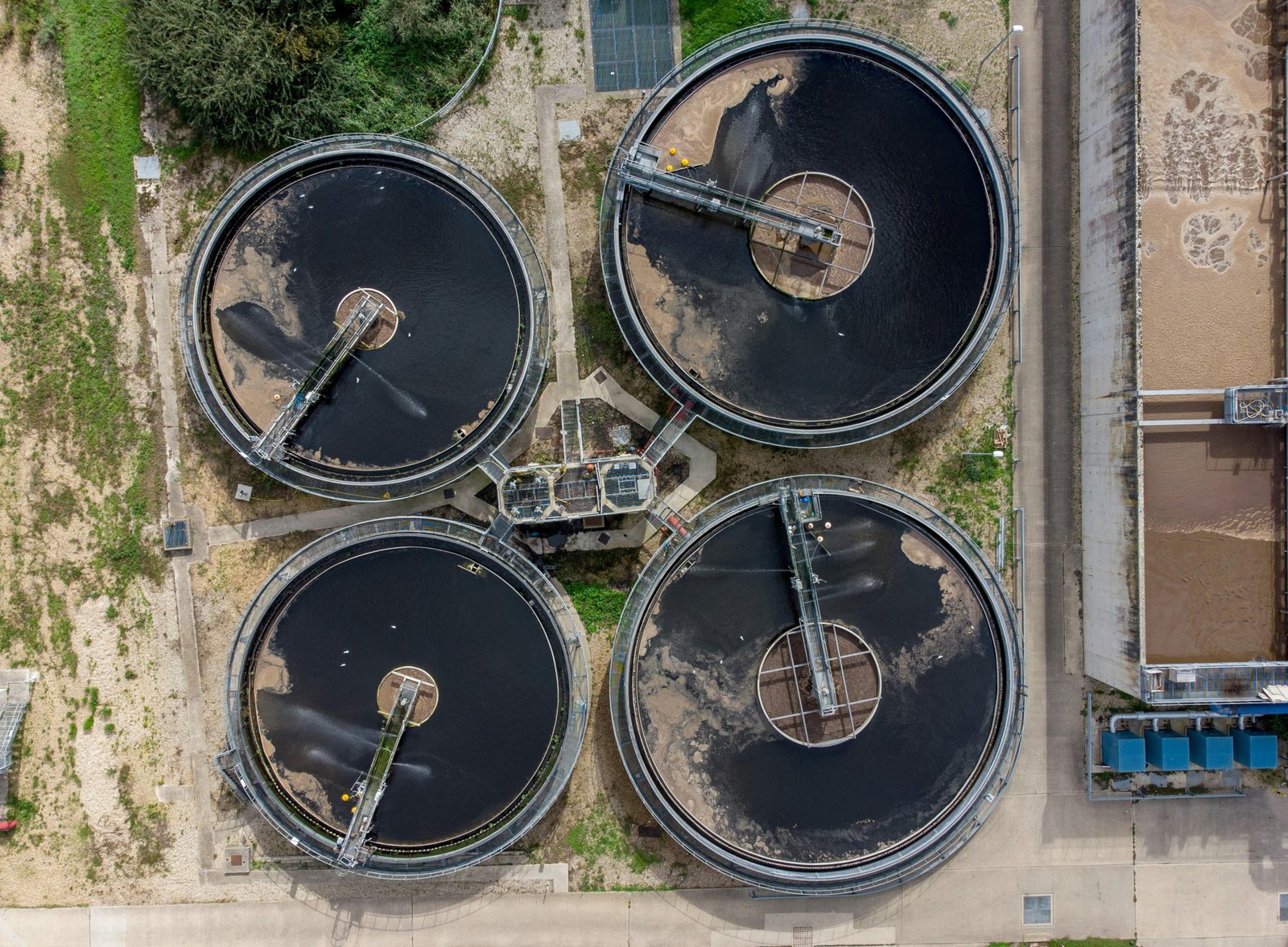
Tank sizing balances hydraulic retention time requirements with practical construction limitations and cost optimization. Rectangular tanks prove advantageous for plug-flow configurations and ease of construction, while circular tanks benefit from structural efficiency in resisting hydrostatic pressure and simplified sludge collection using rotating mechanisms. Typical dimensions include rectangular aeration basins ranging from 5-10 meters wide, 20-50 meters long, and 4-6 meters sidewater depth, with larger facilities using multiple parallel tanks enabling operational flexibility for maintenance without plant shutdown. Circular clarifiers typically employ diameters between 10-40 meters with sidewater depths of 3.5-5 meters, governed by surface overflow rate requirements and solids loading criteria rather than volume considerations. Very large facilities may employ larger clarifiers approaching 60-70 meter diameters, though construction and equipment complexities at this scale require careful evaluation against multiple smaller units providing redundancy and operational flexibility.
Foundation design accounts for soil bearing capacity, settlement potential, and groundwater conditions affecting construction approach and structural requirements. Geotechnical investigation through soil borings and testing establishes design parameters including allowable bearing pressures, settlement characteristics, groundwater elevations, and soil corrosivity affecting buried piping and concrete structures. Poor soil conditions may necessitate deep foundations using piles or ground improvement techniques including soil replacement, compaction grouting, or soil-cement mixing achieving adequate support for heavily-loaded structures. Groundwater control during construction represents major concern for below-grade tanks, potentially requiring dewatering systems, waterproofing of exterior surfaces, or buoyancy calculations ensuring empty tanks resist flotation forces from surrounding groundwater.
Seismic design proves critical in earthquake-prone regions, requiring structural analysis of dynamic loading and design of adequate reinforcement resisting seismic forces. Liquid-containing structures experience hydrodynamic forces during earthquakes as water mass oscillates within tanks, generating significantly higher stresses than static conditions alone. Seismic design codes including International Building Code and Eurocode 8 provide methodologies for calculating seismic forces on liquid-containing structures, while specialized software enables dynamic analysis for critical or unusual structures. Seismic isolation systems using base isolators or damping devices may prove cost-effective for large critical facilities requiring continued operation following earthquakes, though adding substantial complexity and cost requiring careful economic evaluation. Indonesian facilities must address seismic risks given the nation's location along tectonic plate boundaries, with design incorporating appropriate seismic provisions following national building codes informed by regional seismic hazard assessments.
Mechanical Equipment Selection and Design
Mechanical equipment selection encompasses pumps conveying wastewater through treatment processes, mixers maintaining uniform conditions in tanks, aerators supplying oxygen for biological treatment, clarifier mechanisms collecting settled sludge, screens and grit removal systems protecting downstream equipment, and sludge handling equipment including thickeners, digesters, and dewatering systems. Equipment specifications must address not only hydraulic and process performance requirements but also constructability, maintainability, reliability, energy efficiency, and lifecycle costs over typical 15-25 year service lives for major mechanical components. Standardization on equipment manufacturers and models reduces spare parts inventory requirements and simplifies maintenance training, though must balance against competitive procurement and avoiding sole-source dependencies creating vulnerability to supply disruptions or unfavorable pricing.
Mechanical Equipment Detailed Specifications:
Pumping Systems - Selection Criteria:
| Application | Pump Type | Typical Efficiency | Key Features |
|---|---|---|---|
| Raw Wastewater | Non-clog Centrifugal (submersible or dry-pit) | 65-75% | Open impeller, 75-100mm solids passage |
| Process Transfer | Centrifugal (horizontal or vertical) | 70-80% | Semi-open impeller, moderate solids handling |
| Sludge Transfer | Progressive Cavity or Lobe | 50-70% | Positive displacement, high viscosity capability |
| Chemical Dosing | Diaphragm or Peristaltic | N/A | Precision metering, ±1% accuracy, chemical-resistant |
| High-Pressure Applications | Multistage Centrifugal | 75-85% | RO feed, filter backwash, high TDH requirements |
Aeration Equipment - Technology Comparison:
| Technology | SOTE (%) | kg O₂/kWh | Best Application | Maintenance |
|---|---|---|---|---|
| Fine Bubble Disc Diffusers | 30-38% | 2.0-2.5 | Deep tanks (4.5-6m), high efficiency | Replace every 8-12 years |
| Fine Bubble Tube Diffusers | 28-35% | 1.9-2.3 | Medium tanks, good distribution | Replace every 8-10 years |
| Coarse Bubble Diffusers | 15-25% | 1.2-1.6 | Mixing, coarse aeration, fouling resistance | Very low, long life |
| Mechanical Surface Aerators | 8-15% | 1.2-1.8 | Lagoons, oxidation ditches, simultaneous mixing | Bearings, gearbox service |
| High-Speed Turbo Blowers | N/A | System: 2.5-3.0 | High efficiency, wide turndown 25-100% | Air filters, inspection cycles |
SOTE = Standard Oxygen Transfer Efficiency (clean water, standard conditions). Field efficiency typically 40-60% of SOTE due to alpha factor.
Pump selection accounts for flow requirements, total dynamic head including elevation changes and friction losses, wastewater characteristics affecting pump selection, required reliability, and efficiency considerations affecting operating costs. Centrifugal pumps dominate wastewater applications due to simplicity, reliability, and relatively low maintenance requirements compared to positive displacement alternatives. Non-clog centrifugal pumps with open or semi-open impellers handle wastewater containing solids and debris without clogging, though sacrificing some efficiency compared to closed impellers used for clear liquids. Submersible pumps installed within wet wells eliminate above-ground pump rooms while simplifying installation, though complicating maintenance requiring removal from wet wells for service. Variable frequency drives enable pump speed modulation matching flows without throttling losses, improving efficiency by 20-40% in variable-flow applications while providing soft-starting reducing electrical demand and mechanical stress. Hydraulic Institute standards provide comprehensive guidance on pump selection, installation, and maintenance for wastewater applications.
Aeration systems represent major capital investment and dominant operating cost component through energy consumption. Technology selection balances initial cost, energy efficiency, oxygen transfer performance, reliability, and maintenance requirements. Fine bubble diffused aeration provides highest oxygen transfer efficiency (1.8-2.5 kg O₂/kWh in clean water) through small bubbles maximizing gas-liquid interfacial area, though requiring compressed air from blowers and periodic diffuser replacement every 8-12 years due to fouling and mechanical degradation. Mechanical surface aerators eliminate blowers and diffusers while providing simultaneous mixing, proving cost-effective for lagoons and oxidation ditches, though exhibiting lower oxygen transfer efficiency (1.2-1.8 kg O₂/kWh). High-speed turbo blowers using magnetic bearings achieve superior energy efficiency compared to traditional positive displacement blowers, reducing power consumption by 15-30% with payback periods typically under 3-5 years justifying higher initial investment for facilities with substantial aeration requirements and high electricity costs.
Energy Optimization Strategy for Aeration Systems
Equipment Selection:
• High-efficiency blowers (turbo or centrifugal with magnetic bearings)
• Premium efficiency motors (IE3/IE4 classification)
• Variable frequency drives for load matching
• Fine bubble diffusers for maximum oxygen transfer
• Proper sizing: avoid oversizing leading to inefficient operation
Process Control:
• Dissolved oxygen control loops maintaining optimal setpoints (1.5-2.5 mg/L)
• Aeration zone control (multiple DO setpoints for plug-flow configurations)
• Ammonia-based control for nitrification efficiency
• Blower staging and sequencing optimization
• Peak shaving strategies during high electricity rate periods
Maintenance:
• Regular diffuser cleaning (acid, caustic, or high-pressure water)
• Air filter maintenance preventing blower inefficiency
• Piping inspection for leaks causing air loss
• Performance monitoring: SOTE testing every 2-3 years
• Benchmarking: track kg O₂/kWh actual field performance
Screening equipment removes large debris protecting pumps and downstream equipment from damage or clogging. Bar screens with openings ranging from 6-50 mm intercept rags, plastics, and other large solids, with mechanically-cleaned screens automatically removing collected material for disposal. Fine screens with openings under 6 mm provide additional protection particularly for membrane systems susceptible to clogging from fibrous materials. Grit removal systems separate sand and other dense inorganic solids causing abrasive wear on pumps and accumulating in tanks reducing effective volume. Aerated grit chambers, vortex-type grit removal units, or detritus tanks achieve grit separation with various degrees of organic matter separation, with grit washing systems minimizing organic content in removed material facilitating disposal. Equipment selection balances removal efficiency, operational simplicity, maintenance requirements, and initial costs, with larger facilities typically justifying more sophisticated automated systems while smaller operations may employ simpler manual or semi-automated alternatives.
Sludge thickening reduces volume for subsequent processing, with gravity thickening achieving 3-6% solids concentration from typical 0.8-1.2% activated sludge, while dissolved air flotation thickens to 4-6% particularly effective for biological sludges producing poor settling characteristics in gravity thickeners. Mechanical thickening using centrifuges, gravity belt thickeners, or rotary drum thickeners achieves 5-8% solids with smaller footprint than gravity thickening but higher energy consumption and maintenance requirements. Digestion stabilizes sludge reducing pathogens and odors while producing methane gas for energy recovery. Anaerobic digestion requires heated tanks maintained at 35-38°C for mesophilic operation or 50-55°C for thermophilic digestion achieving shorter retention times, with biogas production typically 0.5-0.8 m³ per kg volatile solids destroyed. Aerobic digestion provides simpler alternative without energy recovery, suitable for smaller facilities where biogas utilization proves economically marginal.
Dewatering removes additional water achieving 18-30% solids content suitable for cost-effective hauling and disposal or beneficial reuse. Belt filter presses achieve 15-20% solids for biological sludges with relatively low capital and operating costs, though requiring polymer conditioning and careful operation avoiding poor dewatering and excessive polymer usage. Centrifuges achieve 20-30% solids with higher capital and energy costs but greater operational flexibility and reduced labor requirements compared to belt presses. Screw presses represent emerging technology achieving 15-25% solids with compact footprint and lower energy than centrifuges, gaining adoption though with less extensive operating history than established technologies. Technology selection considers sludge characteristics, required cake dryness, disposal costs encouraging higher dryness, capital budget constraints, and operational complexity relative to available staff expertise, with process selection substantially impacting overall facility operating costs through effects on dewatering performance, polymer consumption, and disposal tonnage.
Instrumentation, Control, and Automation Systems
Modern wastewater treatment facilities employ sophisticated instrumentation and control systems enabling automated operation, process optimization, regulatory compliance monitoring, and operational efficiency improvements. Instrumentation measures process variables including flow rates, dissolved oxygen, pH, temperature, suspended solids, nutrient concentrations, and chemical feed rates, transmitting data to programmable logic controllers executing control algorithms maintaining setpoints and responding to process upsets. Supervisory control and data acquisition (SCADA) systems provide centralized monitoring and control interfaces, historical trending, alarm management, and reporting capabilities supporting operations staff in process management while documenting performance for regulatory compliance. Automation levels range from basic pump control and level management to advanced model-based control optimizing multiple process variables simultaneously, with appropriate sophistication depending on facility complexity, regulatory requirements, operational staff capabilities, and economic justification of automation investments.
Instrumentation and Control Architecture:
Field Instrumentation Layer:
| Parameter | Technology | Accuracy | Calibration Freq. | Applications |
|---|---|---|---|---|
| Flow Rate | Electromagnetic (mag meter) | ±0.5% | Annual | Process control, compliance monitoring |
| Level | Ultrasonic or radar | ±3-5mm | 6 months | Tank level, pump control |
| Dissolved Oxygen | Optical (luminescence) | ±0.1 mg/L | Monthly | Aeration control, process optimization |
| pH | Glass electrode or ISFET | ±0.1 pH | Weekly | Neutralization, biological control |
| TSS/Turbidity | Optical scatter/absorption | ±5% FS | Monthly | MLSS, clarifier, effluent monitoring |
| Ammonia-N | Ion-selective electrode | ±10% | Weekly | Nitrification control, compliance |
| Nitrate-N | UV absorption or ISE | ±10% | Weekly | Denitrification control |
| COD/TOC | UV oxidation or wet chemistry | ±5-10% | Monthly | Load monitoring, compliance |
Control System Architecture:
• Level 1 (Field): Smart sensors with digital communication (4-20mA, Modbus, Profibus)
• Level 2 (Process): Programmable Logic Controllers (PLCs) executing control algorithms
• Level 3 (Supervisory): SCADA system with HMI, trending, alarming, reporting
• Level 4 (Enterprise): Data integration with LIMS, CMMS, ERP systems
• Redundancy: Critical systems with N+1 configuration, redundant communication paths
Flow measurement throughout treatment processes provides fundamental data for process control, performance monitoring, and regulatory reporting. Electromagnetic flowmeters offer accuracy and reliability for conductive liquids including wastewater, without moving parts requiring maintenance and exhibiting minimal pressure loss. Open channel flow measurement using weirs or flumes with ultrasonic level sensors proves suitable for gravity flow applications including influent and effluent monitoring. Mechanical flowmeters including turbine or propeller types offer lower costs though with moving parts requiring periodic maintenance and vulnerability to fouling in wastewater applications. Flow measurement accuracy requirements depend on application, with custody transfer or compliance monitoring requiring ±2% accuracy while process control applications may accept ±5% accuracy, affecting instrument selection and calibration frequency requirements. International Organization for Standardization standards ISO 5167 and ISO 9104 provide guidance on flow measurement in closed conduits and open channels respectively.
Dissolved oxygen control constitutes critical element in activated sludge process optimization, maintaining adequate oxygen for biological treatment while avoiding excessive aeration consuming unnecessary energy. Online dissolved oxygen sensors measure real-time concentrations in aeration basins, feeding back to controllers modulating blower speeds or valve positions maintaining desired setpoints typically 1.5-2.5 mg/L. Advanced control strategies including cascade control, feedforward compensation for flow or load changes, and model-based optimization achieve tighter control with less variability and energy consumption compared to simple on-off control. Studies demonstrate that properly-tuned dissolved oxygen control reduces aeration energy consumption by 15-30% compared to fixed-speed constant operation, while improving effluent quality through more stable biological conditions. Investment in quality instrumentation, proper installation avoiding interference from mixing equipment, and regular maintenance including sensor cleaning and calibration prove essential for reliable dissolved oxygen control delivering advertised benefits.
Advanced Control Strategies
1. Cascade DO Control:
• Primary controller: DO setpoint generates airflow demand
• Secondary controller: Airflow master modulates blower speed/valve position
• Benefits: Faster response, reduced overshoot, 5-10% energy savings vs. single loop
2. Ammonia-Based Aeration Control:
• Effluent ammonia analyzer controls DO setpoint (not fixed)
• Logic: Low NH₃ → reduce DO (energy savings); High NH₃ → increase DO (treatment)
• Benefits: Optimizes energy while ensuring nitrification, 10-20% energy reduction
3. Model Predictive Control (MPC):
• Dynamic model predicts process response to control actions
• Optimizes multiple variables simultaneously (DO, RAS, WAS, chemical feeds)
• Constraints: Effluent limits, equipment capacities, operational limits
• Benefits: Superior performance, 15-25% energy reduction, improved effluent quality
• Complexity: Requires model development, tuning, skilled staff
4. Feedforward Control:
• Influent flow/load measurement anticipates process changes
• Preemptive adjustment before process upset occurs
• Example: Influent COD spike → increase aeration before DO drops
• Benefits: Proactive vs. reactive, reduced process variability
Nutrient analyzers enable automated control of nitrification and denitrification processes, measuring ammonia, nitrate, and sometimes nitrite concentrations online without manual sampling and laboratory analysis. Ion-selective electrode instruments measure ammonia directly, while nitrate sensors employ optical absorption at specific wavelengths. These measurements enable control strategies adjusting aeration in nitrification zones maintaining adequate aerobic conditions for ammonia oxidation, while controlling carbon addition in denitrification zones ensuring sufficient electron donor for nitrate reduction without wasteful excess. Real-time nutrient monitoring also enables early detection of process upsets including nitrification failures from temperature drops or toxic shock loads, allowing corrective actions before substantial treatment performance degradation. Capital costs for nutrient analyzers range from USD 15,000-40,000 per analyzer depending on technology and required accuracy, with maintenance requirements including reagent replacement, calibration verification, and periodic cleaning affecting operational costs that must be weighed against benefits from improved control and regulatory compliance assurance.
SCADA systems integrate data from distributed instruments and controllers, presenting unified operational interface for monitoring and control across entire treatment facility. Modern SCADA architectures employ industrial Ethernet networks connecting field devices, with redundant servers ensuring continued operation during hardware failures. Operator workstations display process graphics, trend historical data, manage alarms, and enable control adjustments, while generating automated reports for management review and regulatory submission. Remote access capabilities enable off-site monitoring and expert troubleshooting, though requiring robust cybersecurity measures preventing unauthorized access potentially disrupting treatment operations. Cloud-based SCADA platforms reduce on-site IT infrastructure requirements while enabling advanced analytics and predictive maintenance applications leveraging large-scale computing resources unavailable with traditional on-premise systems, though raising concerns regarding data security and dependence on internet connectivity for critical infrastructure operations.
Cybersecurity for industrial control systems addresses growing threats from malicious actors targeting critical infrastructure. Wastewater treatment facilities increasingly face ransomware attacks encrypting control systems or data, unauthorized access modifying process setpoints causing treatment failures, or denial-of-service attacks disrupting operations. Defense-in-depth strategies employ multiple security layers including network segmentation isolating control systems from business networks and internet, firewalls filtering network traffic, strong authentication requiring multi-factor verification, encryption protecting data transmission and storage, regular security updates patching known vulnerabilities, and staff training recognizing social engineering attempts. International standards including IEC 62443 provide comprehensive frameworks for industrial automation and control system security, with compliance increasingly required by insurance providers, regulatory agencies, and industry standards as cyber threats to critical infrastructure gain prominence.
Electrical Systems and Power Distribution
Electrical design provides reliable power distribution to motors, lighting, controls, and ancillary systems while ensuring personnel safety and equipment protection. Wastewater treatment plants represent continuous process operations requiring high electrical reliability, with power interruptions causing treatment upsets, environmental compliance violations, and potential equipment damage from improper shutdown. Electrical design follows national electrical codes and industrial facility standards, addressing unique wastewater environment characteristics including high humidity, corrosive atmospheres, and proximity to water requiring enhanced electrical protection and specialized equipment ratings. Motor control centers consolidate motor starters, overload protection, and local controls in centralized locations, while variable frequency drives provide energy-efficient flow and speed control for pumps, blowers, and mixers constituting major electrical loads.
Electrical System Design Requirements:
Power Distribution Infrastructure:
• Medium voltage service: 11-33 kV from utility grid
• On-site transformers to 380-480V three-phase
• Motor Control Centers (MCCs) with intelligent motor starters
• Variable Frequency Drives: 30-50% of motor load capacity
• Emergency generator: 50-100% of critical load
• Automatic transfer switches: 2-10 second transfer time
• UPS systems: 15-30 minute battery backup for controls
Motor Efficiency Standards:
• Premium Efficiency IE3 minimum (IEC 60034-30)
• Super Premium IE4 for continuous operation >2000 hrs/year
• Motor sizing: 80-100% rated load for optimal efficiency
• Enclosures: TEFC (Totally Enclosed Fan Cooled) for harsh environments
• Inverter-duty rated motors for VFD applications
• Soft starters for large motors without VFD control
Safety and Protection Systems:
• Ground fault protection: Class A (6mA) for personnel protection
• Arc flash hazard analysis with protective device coordination
• Equipment grounding and bonding per NEC/IEC standards
• Lightning protection: ESE terminals or Franklin rod systems
• Emergency shutdown systems: accessible E-stop stations
• Explosion-proof equipment: Class I Division 1/2 where required
• Lockout/tagout provisions for maintenance safety
Power distribution typically employs medium voltage (11-33 kV) service from utility grid, with on-site transformers reducing to utilization voltages of 380-480V for motors and 220-240V for lighting and small equipment. Transformer sizing accounts for connected load, demand factors reflecting simultaneous operation, power factor correction, and future expansion provisions. Motor efficiency standards under international programs including IEC 60034-30 establish minimum efficiency classifications, with Premium Efficiency (IE3) or Super Premium Efficiency (IE4) motors reducing energy consumption by 2-8% compared to standard efficiency motors, justifying modest cost premiums through lifecycle operating cost savings particularly for continuously-operating large motors. Power factor correction using capacitor banks improves electrical efficiency while reducing utility demand charges in jurisdictions penalizing low power factor, typically achieving overall facility power factors above 0.95.
Emergency power systems ensure continued operation of critical equipment during utility power interruptions, preventing untreated discharge and maintaining essential processes. Emergency generators sized for minimum 50-100% of critical load capacity provide backup power, with automatic transfer switches detecting power failures and starting generators within 10-30 seconds. Critical loads typically include influent pumping preventing backup into collection systems, minimum aeration maintaining biological processes, effluent pumping for discharge, essential lighting and control systems, and safety systems. Non-critical loads including administration buildings, maintenance shops, and some treatment processes may operate on utility power only, reducing generator sizing and fuel consumption. Diesel generators dominate emergency power applications due to reliability, fuel storage simplicity, and relatively low capital costs compared to natural gas generators requiring pipeline service potentially disrupted during emergencies affecting wastewater facilities.
Construction Planning and Quality Assurance
Construction planning establishes sequences, schedules, resource requirements, and quality assurance procedures ensuring timely completion within budget while achieving specified quality standards. Construction of industrial wastewater treatment facilities involves civil concrete work for tanks and structures, underground piping installation, mechanical equipment setting and alignment, electrical installation and termination, instrumentation connection and calibration, and final testing and commissioning. Work sequencing must accommodate construction logistics including access for equipment delivery, curing times for concrete before backfilling, utility installations before paving, and testing schedules ensuring completed systems before operations commence. Critical path scheduling identifies activities determining overall project duration, focusing management attention on elements potentially delaying completion while enabling compression of non-critical activities when schedule delays require recovery actions.
Construction Quality Assurance Program Framework
Phase 1: Pre-Construction (Weeks -4 to 0)
• Submittal review and approval (shop drawings, equipment data, materials)
• Pre-construction meeting establishing QA/QC procedures
• Material testing laboratory selection and approval
• Inspection and testing plan approval
• Site mobilization and temporary facilities setup
Phase 2: Earthwork and Foundations (Weeks 1-8)
• Clearing and grubbing verification
• Geotechnical observation of excavations
• Foundation bearing verification before concrete placement
• Dewatering system performance monitoring
• Underground utility verification (potholing)
• Backfill material testing: gradation, compaction (95% standard Proctor minimum)
Phase 3: Concrete Structures (Weeks 4-24)
• Concrete mix design approval and batch plant inspection
• Formwork dimensional inspection and approval
• Reinforcement placement verification (size, spacing, cover, splices)
• Embedded items and penetration sleeves inspection
• Concrete placement observation: slump, air content, temperature
• Cylinder sampling: one set per 50 m³ or per pour, whichever more frequent
• Curing monitoring and documentation
• Strength testing before formwork removal or load application
• Surface finish inspection and repair approval
• Hydrostatic testing of water-retaining structures
Phase 4: Mechanical and Piping (Weeks 12-32)
• Pipe material verification and visual inspection
• Bedding and support inspection before backfill
• Joint assembly witnessing per specifications
• Pressure testing: 1.5x design pressure for 2 hours minimum
• Equipment receipt inspection and damage documentation
• Equipment setting and grouting verification
• Alignment and vibration testing after installation
• Performance testing at design conditions
Phase 5: Electrical and Controls (Weeks 20-36)
• Conduit and cable tray installation inspection
• Grounding system continuity testing
• Insulation resistance (megger) testing before energization
• Motor rotation direction verification
• Protective relay calibration verification
• Control system factory acceptance testing
• SCADA system integration testing
• Emergency generator load bank testing
Phase 6: Commissioning (Weeks 32-40)
• Pre-startup checklist completion and approval
• Systems integration testing
• Biological process startup and stabilization
• Performance testing against design criteria
• Operator training completion
• Punch list development and completion
• As-built documentation submittal
• Final acceptance and warranty period commencement
Concrete placement represents critical activity affecting long-term structural integrity and water-tightness. Pre-placement activities include formwork inspection confirming dimensions and alignment, reinforcement verification including bar sizes, spacing, chair support, and splice lengths, and embedded item installation including piping penetrations, anchor bolts, and mechanical connections. Concrete placement should occur continuously without cold joints weakening structures, requiring adequate batch plant capacity and delivery logistics supporting placement rates without interruption. Consolidation using mechanical vibrators eliminates air voids and ensures complete filling around reinforcement, while avoiding over-vibration causing segregation or reinforcement displacement. Surface finishing provides specified texture and flatness, with troweling for smooth finishes or broom finishes for slip-resistance where required. Curing maintains moisture and temperature enabling proper cement hydration, using methods including water spraying, wet burlap coverings, curing compounds, or insulated blankets in cold weather.
Concrete Testing Requirements Summary:
| Test Type | Frequency | Acceptance Criteria | Standard |
|---|---|---|---|
| Slump Test | Each load delivered | 75-150mm typical (per mix design) | ASTM C143 |
| Air Content | One per day or 100 m³ | 5-7% for freeze-thaw resistance | ASTM C231 |
| Compressive Strength | One set (3 cylinders) per 50 m³ | ≥28-day design strength (25-30 MPa) | ASTM C39 |
| Temperature | Each batch at placement | 10-32°C (cold/hot weather limits) | ASTM C1064 |
| Water Permeability | Representative samples per structure | <10⁻¹¹ m/s for water-retaining | BS EN 12390-8 |
Testing and inspection verify quality throughout construction. Third-party testing laboratories provide independent verification of materials and workmanship, including concrete testing, soil compaction verification, pipe pressure testing, electrical testing, and final equipment performance verification. Resident inspection by owner's representative or engineer observes ongoing work, identifies deficiencies requiring correction, approves pay quantities, and maintains project documentation. Regular project meetings between owner, engineer, contractor, and major subcontractors review progress, address conflicts or problems, and coordinate activities requiring interfaces between different contractors or trades. Photographic documentation captures construction progress and concealed work before burial, providing records valuable for future maintenance, expansions, or troubleshooting.
Equipment Procurement and Vendor Management
Equipment procurement for industrial wastewater treatment facilities involves selecting qualified manufacturers, preparing detailed technical specifications, soliciting competitive bids, evaluating proposals, negotiating commercial terms, managing fabrication and quality control, coordinating delivery and installation, and administering warranties and service agreements. Major equipment packages including pumps, blowers, clarifier mechanisms, membrane systems, dewatering equipment, and chemical feed systems represent substantial capital costs while critically affecting operational performance and reliability. Procurement strategies balance competitive pricing through multiple bidders against standardization benefits, manufacturer experience and reputation, service and spare parts availability, and lifecycle cost considerations where lower initial costs may indicate inferior quality resulting in higher maintenance expenses or premature replacement.
Equipment Procurement Evaluation Matrix:
| Evaluation Criteria | Weight (%) | Key Considerations |
|---|---|---|
| Technical Compliance | 30-35 | Meets all specification requirements, performance guarantees, quality standards |
| Price Competitiveness | 25-30 | Initial cost, spare parts pricing, lifecycle cost analysis |
| Manufacturer Experience | 15-20 | Similar applications, reference projects, years in business, financial stability |
| Service & Support | 10-15 | Local service network, spare parts availability, response time, training |
| Delivery Schedule | 10-15 | Lead time, ability to meet project milestones, liquidated damages |
| Warranty Terms | 5-10 | Duration, coverage, exclusions, response obligations |
Technical specifications define equipment requirements including capacity, materials of construction, performance criteria, testing requirements, documentation, and quality assurance procedures. Performance specifications emphasize results required rather than prescribing specific equipment types or manufacturers, enabling vendors proposing alternative approaches potentially offering superior performance or value. Design specifications prescribe specific equipment configurations or manufacturers when particular approaches prove essential for compatibility, standardization, or addressing unique requirements not adequately covered by performance specifications alone. Reference standards from organizations including International Organization for Standardization (ISO), American Society of Mechanical Engineers (ASME), American Water Works Association (AWWA), and relevant industry organizations provide recognized criteria for equipment design, fabrication, testing, and documentation.
Factory testing verifies equipment performance before shipment when field problems prove difficult and expensive to correct. Pump testing demonstrates capacity and head at design conditions while establishing performance curves enabling operational optimization. Blower testing verifies flow delivery, pressure capability, and power consumption under simulated field conditions. Mechanical equipment testing includes alignment verification, vibration measurement, and bearing temperature monitoring confirming proper assembly and operation. Membrane testing demonstrates permeability, rejection performance for key contaminants, and integrity testing procedures. Testing presence by owner's representative or independent inspector provides verification, while testing documentation becomes part of permanent project records.
Commissioning and Performance Verification
Commissioning systematically verifies all systems operate properly and achieve specified performance before accepting facilities from contractors and commencing regular operations. Systematic commissioning programs progress through equipment checkout verifying mechanical integrity, system functional testing confirming proper operation, integrated testing of complete treatment processes, performance testing demonstrating achievement of design criteria, and operator training enabling facility staff to operate and maintain systems properly. Comprehensive commissioning identifies and corrects problems before contractors demobilize and warranties commence, avoiding expensive callbacks or contractor disputes regarding responsibility for deficiencies discovered after project completion.
Commissioning Phase Checklist
Pre-Commissioning Activities (Week -2 to 0):
• Complete punch list items affecting system operation
• Verify all equipment delivered and installed
• Complete all electrical and control system testing
• Flush and clean all piping systems
• Lubricate all mechanical equipment per manufacturer requirements
• Calibrate all instrumentation to reference standards
• Complete as-built drawings review and correction
• Compile O&M manuals and equipment documentation
• Develop detailed startup procedures and sequences
Equipment Checkout Phase (Week 1-2):
• Visual inspection: installation completeness and alignment
• Rotation direction verification for all motors
• Vibration baseline measurement for rotating equipment
• Control valve stroking and position indication verification
• Instrument loop testing: sensors to control system
• Safety interlock functional testing
• Emergency shutdown testing
• SCADA system point verification and alarm testing
System Functional Testing (Week 2-4):
• Piping hydrostatic testing: 1.5x design pressure, 2 hours minimum
• Pump performance testing at multiple flow points
• Blower flow and pressure verification at design conditions
• Clarifier mechanism operation and sludge collection testing
• Chemical feed system accuracy verification (±2% target)
• Membrane system integrity testing (pressure decay or bubble test)
• Dewatering equipment performance with surrogate or actual sludge
• Emergency power transfer and generator load testing
Biological System Startup (Week 3-8):
• Biomass seeding: 500-1000 mg/L MLSS initial concentration
• Gradual loading increase: start 25-50% design, increase weekly
• MLSS development to design concentration (2000-4000 mg/L typical)
• SVI monitoring: target 80-150 mL/g indicating good settling
• Dissolved oxygen optimization: maintain 1.5-2.5 mg/L aerobic zones
• Sludge wasting rate establishment per design SRT
• Nutrient balance verification and supplementation if needed
• Microscopic examination: floc structure, protozoa diversity
• Performance monitoring: BOD, NH3, TSS removal trending toward targets
Performance Testing (Week 8-10):
• Composite sampling: 24-hour composites for minimum 5 consecutive days
• Influent characterization: flow, BOD, COD, TSS, TN, TP, pH, temp
• Effluent quality verification against permit limits
• Mass balance calculations: verify treatment efficiency
• Hydraulic capacity testing at peak design flow
• Process stability evaluation under varying loads
• Energy consumption measurement vs. design projections
• Biogas production and quality verification (if applicable)
• Sludge production rate verification
Training and Documentation (Week 8-12):
• Classroom training: process theory, equipment operation, safety
• Hands-on training: equipment operation, routine maintenance
• Control system operation training
• Troubleshooting procedures and common problems
• Emergency response procedures and drills
• Regulatory sampling and reporting requirements
• Competency assessment and certification
• Final documentation delivery: as-builts, O&M manuals, warranties
• Spare parts inventory transfer and verification
Biological process startup requires time for microbial populations developing before achieving design treatment performance. Activated sludge systems may be seeded with biomass from existing facilities accelerating startup, or developed from domestic wastewater or activated sludge from municipal plants if available. Initial biomass concentrations of 500-1,000 mg/L gradually increase to design concentrations over 2-4 weeks through controlled sludge wasting and settling characteristics monitoring. Gradual loading increases prevent shock loading that could inhibit biological activity, beginning with perhaps 25-50% of design organic loading and incrementally increasing as treatment performance demonstrates adequate degradation.
Performance testing demonstrates achievement of design criteria and permit compliance. Testing protocols specify sampling locations, frequency, and analytical methods following regulatory requirements and quality assurance procedures. Composite sampling over 24-hour periods captures normal operational variations, with multiple sampling campaigns over several days or weeks confirming consistent performance rather than temporary results potentially unrepresentative of long-term operation. Mass balance calculations verify treatment efficiency and identify losses or measurement inconsistencies, comparing influent loading to effluent discharge plus accumulation in sludge and gaseous emissions.
Operations and Maintenance Planning
Long-term operational success requires systematic operations and maintenance planning establishing procedures, schedules, resource requirements, and performance monitoring systems supporting reliable treatment performance at optimal cost. Operations and maintenance manuals consolidate information including facility description, process design basis, operating procedures, routine maintenance schedules, equipment manufacturer manuals, instrumentation calibration procedures, spare parts lists, and as-built drawings. Staffing plans define positions, responsibilities, shift schedules, and required qualifications for operators, maintenance personnel, laboratory staff, and management.
Preventive Maintenance Program Structure:
| Equipment Type | Daily | Weekly | Monthly | Quarterly | Annual |
|---|---|---|---|---|---|
| Pumps | Visual inspection, unusual noise/vibration | Bearing temp check | Performance curve verification | Vibration analysis | Seal/bearing replacement, alignment check |
| Blowers | Visual, noise check | Air filter check/clean | Belt tension (if belt-driven) | Oil analysis, vibration | Oil change, filter replace, bearing inspect |
| Mixers | Visual operation check | - | Gear oil level check | Seal inspection | Propeller inspect, seal replace if needed |
| Clarifier Mechanisms | Sludge blanket level | Visual inspection | Lubrication, torque check | Scraper blade condition | Drain and inspect, bearing check, paint |
| Diffusers | DO monitoring | - | Performance check | - | Cleaning (acid/caustic), SOTE test every 2-3 yrs |
| Membranes (MBR) | TMP monitoring, flux check | CEB (if scheduled) | CIP cleaning, integrity test | Performance trending analysis | Module inspection, replace as needed (7-10 yr life) |
| Instrumentation | Data review, alarm check | Sensor cleaning (DO, pH) | Calibration verification | Full calibration | Sensor replacement as needed, loop testing |
| Dewatering Equipment | Cake dryness, polymer dose | Belt/screen condition | Bearing lubrication | Belt/screen replace if needed | Major overhaul, bearing replacement |
Energy management reduces operating costs while advancing environmental sustainability. Aeration energy typically dominates at 50-60% of total facility power consumption, making dissolved oxygen optimization primary target for energy reduction. Optimizing dissolved oxygen setpoints, upgrading to high-efficiency blowers, and implementing variable frequency drives can reduce aeration energy by 20-40%. Pumping energy optimization through system evaluation identifying excessive friction losses, pump efficiency assessment replacing worn or inefficient units, and control strategies minimizing pumping against high heads during low-demand periods achieve 10-25% pumping energy reductions.
Key Performance Indicators (KPIs) for WWTP Operations
Treatment Performance:
• BOD/COD removal efficiency: Target >95% for secondary treatment
• Total nitrogen removal: Target <6 mg/L (EU standards) or <10 mg/L (typical)
• Total phosphorus removal: Target <0.5 mg/L (stringent) or <1.0 mg/L (standard)
• TSS in effluent: Target <10 mg/L for secondary, <5 mg/L for tertiary
• Permit compliance rate: Target 100% (zero violations)
Energy Efficiency:
• Specific energy consumption: 0.3-0.6 kWh/m³ treated (target lower end)
• Aeration efficiency: 1.5-2.5 kg O₂/kWh actual field conditions
• Energy cost per m³: Benchmark against similar facilities
• Renewable energy percentage: Target >20% from biogas/solar
• Power factor: Target >0.95 to minimize demand charges
Operational Efficiency:
• Unplanned downtime: Target <2% of operational hours
• Maintenance cost ratio: 15-25% of total operating cost
• Staff productivity: m³ treated per FTE (Full-Time Equivalent)
• Chemical cost per m³: Optimize polymer, coagulant usage
• Sludge disposal cost: USD/ton dry solids
Asset Management:
• Equipment availability: Target >98% for critical equipment
• Preventive maintenance compliance: Target >90% scheduled tasks completed
• Mean time between failures (MTBF): Track and trend by equipment type
• Asset age profile: Plan replacement for equipment >75% design life
• Spare parts inventory turnover: Optimize to avoid excess or shortage
Staffing for wastewater treatment operations requires qualified personnel with appropriate technical knowledge and certifications. Operator certification programs in many jurisdictions require demonstrating knowledge through examinations with different grade levels corresponding to facility complexity and size. Maintenance staff require mechanical, electrical, and instrumentation skills maintaining diverse equipment. Laboratory staff conduct analytical testing following approved methods with quality assurance procedures ensuring accuracy. Safety training including confined space entry, hazardous materials handling, lockout-tagout procedures, and emergency response proves essential for worker protection in industrial facilities with numerous hazards.
Regulatory Compliance and Discharge Permitting
Industrial wastewater treatment facilities operate under regulatory frameworks established by national environmental agencies, regional water authorities, and local jurisdictions having authority over wastewater discharge. Regulatory requirements span construction permitting, discharge permits establishing effluent quality limits, monitoring and reporting obligations, safety regulations, and environmental management systems. Discharge permits commonly follow National Pollutant Discharge Elimination System (NPDES) frameworks in countries adopting United States models, or European Union Urban Wastewater Treatment Directive requirements in regions following European approaches, or local variations adapted to specific national circumstances.
International Discharge Standards Comparison:
| Parameter | EU Directive 2024 (>10k PE) |
US EPA Secondary |
WHO Guidelines Irrigation Reuse |
Indonesia Std Discharge |
|---|---|---|---|---|
| BOD₅ | 25 mg/L | 30 mg/L | - | 30 mg/L |
| COD | 125 mg/L | - | - | 100 mg/L |
| TSS | 35 mg/L | 30 mg/L | - | 30 mg/L |
| Total Nitrogen | 6 mg/L (2036) | - | 5 mg/L (NO₃-N) | 20 mg/L |
| Total Phosphorus | 0.5 mg/L | - | - | 2 mg/L |
| pH | 6-9 | 6-9 | 6.5-8.5 | 6-9 |
| Fecal Coliforms | - | 200/100 mL (geometric mean) | ≤1000/100 mL | 3000/100 mL |
| Oil & Grease | - | - | - | 5 mg/L |
Note: Standards vary by receiving water classification, discharge type, and local conditions. Always verify specific applicable limits with regulatory authorities.
The European Union's revised Urban Wastewater Treatment Directive adopted in 2024 establishes among the world's most stringent wastewater treatment requirements, with total nitrogen discharge limits decreasing to 6 mg/L and total phosphorus to 0.5 mg/L for facilities serving populations exceeding 10,000 equivalents. These requirements necessitate advanced nutrient removal processes beyond conventional secondary treatment capabilities. Microplastics monitoring and removal requirements address emerging concern regarding plastic pollution entering water bodies, though specific removal technologies remain under development with guidance forthcoming as treatment approaches mature. Energy neutrality requirements by 2045 drive adoption of energy efficiency measures and renewable energy generation including biogas recovery, solar PV, and potentially wind power depending on facility scale and location.
Emerging contaminants including PFAS, pharmaceuticals, personal care products, and endocrine disruptors increasingly receive regulatory attention though specific discharge limits remain under development in most jurisdictions. PFAS compounds exhibit extreme persistence and bioaccumulation raising health concerns, with treatment requiring advanced processes including granular activated carbon, ion exchange, or advanced oxidation since conventional biological treatment proves ineffective. Pharmaceutical residues from manufacturing facilities or metabolic excretion pass through conventional treatment entering surface waters affecting aquatic organisms, requiring advanced treatment through ozonation, advanced oxidation, or membrane processes.
Emerging Contaminant Treatment Technologies
PFAS Removal Technologies:
• Granular Activated Carbon (GAC): 80-99% removal, requires frequent regeneration (3-6 months), EBCT 15-30 minutes
• Ion Exchange: 90-99% removal, selective resins for PFAS, regeneration creates concentrate requiring disposal
• Reverse Osmosis: >95% removal, produces concentrate 5-10% of feed flow
• Advanced Oxidation: UV/sulfite, electrochemical oxidation, mineralization possible but energy-intensive
• Challenge: Concentrate disposal - incineration >1000°C only proven destruction method
Pharmaceutical Compound Removal:
• Ozonation: 50-95% removal depending on compound, dose 5-10 mg O₃/L typical
• UV/H₂O₂ Advanced Oxidation: 70-95% removal, UV dose 400-1000 mJ/cm²
• Membrane Bioreactor + GAC: Combined approach achieving >90% removal
• Powdered Activated Carbon (PAC): Dose 10-30 mg/L, 60-80% removal
• Biological Treatment: Limited effectiveness (20-50%) for most pharmaceuticals
Microplastics Removal:
• Conventional Secondary Treatment: 90-95% removal of particles >100 μm
• Membrane Filtration (MBR, UF): >99% removal down to 1-10 μm
• Dissolved Air Flotation: 85-95% removal when optimized
• Cloth Media Filtration: 95-98% removal as tertiary treatment
• Challenge: Microplastics <1 μm difficult to remove; monitoring methods still developing
Environmental management systems following ISO 14001 provide structured frameworks for managing environmental obligations, identifying improvement opportunities, and demonstrating environmental stewardship beyond mere regulatory compliance. EMS implementation establishes environmental policy, identifies environmental aspects and impacts, sets objectives and targets, implements operational controls and monitoring, conducts management review, and pursues continual improvement. Benefits include systematic compliance assurance reducing violation risks, improved operational efficiency through waste reduction and energy conservation, enhanced public image demonstrating environmental responsibility, and competitive advantages in markets increasingly valuing environmental performance.
Advanced Treatment Technologies and Future Trends
Advanced treatment technologies address increasingly stringent regulations while enabling resource recovery creating value from wastewater constituents previously considered waste requiring disposal. Resource recovery encompasses nutrient extraction producing commercial fertilizers, biogas generation for renewable energy, water reuse reducing freshwater demand, and biosolids conversion to soil amendments or energy through composting, pyrolysis, or gasification. Circular economy principles transform wastewater treatment from end-of-pipe pollution control to resource recovery processes generating value while reducing environmental impacts.
Resource Recovery Technologies and Economics:
| Resource | Technology | Recovery Rate | Product Value | Payback Period |
|---|---|---|---|---|
| Phosphorus | Struvite Precipitation | 85-95% | USD 200-400/ton P₂O₅ | 5-10 years |
| Nitrogen | Ammonia Stripping + Recovery | 70-90% | USD 300-500/ton N | 7-12 years |
| Biogas/Energy | Anaerobic Digestion + CHP | 0.5-0.8 m³ CH₄/kg VS | USD 0.05-0.10/kWh | 3-7 years |
| Reclaimed Water | MBR + RO + UV | 70-85% (RO recovery) | USD 0.30-0.80/m³ | 5-15 years (location-dependent) |
| Biosolids | Composting or Pyrolysis | 100% (beneficial use) | Disposal cost avoidance | 3-8 years |
| Heat | Heat Pumps from Effluent | COP 3-5 | Heating cost reduction | 8-15 years |
Nutrient recovery technologies extract nitrogen and phosphorus for beneficial use rather than releasing to environment or disposing in sludge. Struvite precipitation from digester supernatant recovers phosphorus as magnesium ammonium phosphate, a slow-release fertilizer marketable for agricultural use. Recovery rates achieve 85-95% phosphorus removal from concentrated sources like digester supernatant, producing granular product requiring minimal post-processing before sale. Ammonia stripping from digester liquors or other concentrated nitrogen sources recovers nitrogen as ammonium sulfate solution usable as fertilizer. These technologies convert waste management problems and disposal costs into revenue-generating products, improving project economics while reducing environmental impacts from nutrient discharge.
Artificial intelligence and machine learning enable advanced process control optimizing multiple variables simultaneously while adapting to changing conditions. Neural networks trained on historical process data predict effluent quality enabling proactive adjustments preventing upsets. Reinforcement learning algorithms discover optimal control strategies through trial and error in simulation environments before deployment. Computer vision using cameras and image processing monitors clarifier performance, foam development, or sludge characteristics providing early warning of developing problems. Predictive maintenance algorithms analyze equipment vibration, temperature, power consumption, and other parameters forecasting failures days or weeks before occurrence enabling scheduled maintenance during convenient periods rather than emergency repairs during production shifts.
Digital Transformation in Wastewater Treatment
Artificial Intelligence Applications:
• Machine learning for effluent quality prediction (24-48 hour ahead forecasting)
• Neural networks optimizing aeration control (10-20% energy savings)
• Computer vision for sludge settleability assessment
• Natural language processing for automated regulatory report generation
• Anomaly detection identifying process upsets before performance degradation
Digital Twin Technology:
• Real-time process simulation mirroring physical plant
• Scenario analysis for operational optimization
• Virtual commissioning reducing startup time 20-30%
• Training simulator for operator skill development
• Predictive analytics for capacity planning and expansion
Internet of Things (IoT) Integration:
• Wireless sensor networks reducing installation costs 40-60%
• Edge computing for real-time data processing
• Mobile workforce management with augmented reality maintenance guidance
• Asset tracking and inventory management
• Remote monitoring enabling expert support without travel
Blockchain Applications:
• Immutable compliance documentation and audit trail
• Water quality certification for reuse applications
• Energy credit trading for renewable generation
• Supply chain transparency for chemical and equipment procurement
• Automated payment systems for service contracts
Climate change adaptation requires treatment facilities resilient to flooding, drought, extreme temperatures, and other climate impacts. Flood protection through elevated critical equipment, waterproof buildings, and flood barriers prevents damage from increasingly frequent flooding events. Drought contingency planning addresses reduced receiving water dilution capacity potentially requiring enhanced treatment, while demand management and water reuse reduce dependence on scarce water supplies. Temperature tolerance in biological processes accommodates wider temperature ranges through process design providing adequate capacity across expected temperature extremes. Nature-based solutions including constructed wetlands provide treatment while creating habitat and climate resilience through flood attenuation and drought buffering.
Frequently Asked Questions
What are typical capital costs for industrial wastewater treatment facilities?
Capital costs vary substantially depending on capacity, treatment complexity, and site conditions, typically ranging from USD 500-2,000 per cubic meter of daily capacity. A 1,000 m³/day facility with conventional activated sludge treatment might cost USD 800,000-1,500,000, while advanced treatment with nutrient removal and membrane filtration could reach USD 1,500,000-2,500,000. Costs scale non-linearly with capacity, with larger facilities achieving lower unit costs through economies of scale. For example, a 5,000 m³/day facility might achieve USD 400-800 per m³/day capacity.
How long does industrial WWTP construction typically take?
Construction schedules depend on facility size and complexity. Small facilities (under 500 m³/day) may complete in 8-12 months, medium facilities (500-2,000 m³/day) typically require 12-18 months, and large installations exceed 18-24 months. Design and permitting before construction add 6-12 months. Biological process startup after construction adds 1-3 months before stable performance achievement. Total project duration from conception to stable operation typically spans 2-4 years for industrial facilities.
What are typical operating costs as percentage of capital investment?
Annual operating costs typically range from 5-15% of capital investment, varying with treatment process complexity, energy costs, labor rates, and regulatory requirements. For a USD 1,000,000 facility, annual operating costs might be USD 50,000-150,000. Energy often represents 30-50% of operating costs, particularly for aeration-intensive processes. Chemical costs contribute 15-25%, labor 20-30%, maintenance 10-15%, and sludge disposal 10-20%. Facilities implementing energy recovery through biogas may achieve operating costs below 5% of capital investment.
How do membrane bioreactors compare to conventional activated sludge?
MBR systems offer superior effluent quality (virtually zero TSS, effluent BOD <5 mg/L consistently), smaller footprint (50-70% reduction in land requirements), and elimination of secondary clarifiers. However, capital costs typically exceed conventional systems by 30-50% (USD 800-1,200 vs USD 600-900 per m³/day capacity), and operating costs may increase 10-30% due to membrane replacement every 7-10 years, cleaning chemicals, and slightly higher energy consumption. MBR proves advantageous where land is constrained, effluent reuse is planned, stringent discharge limits (<5 mg/L TSS) are required, or future expansion needs accommodation. Conventional systems remain cost-effective for less stringent applications with adequate land availability.
What are key differences between aerobic and anaerobic treatment?
Aerobic treatment using activated sludge handles low to medium strength wastewater (BOD under 4,000 mg/L) producing high-quality effluent but requiring energy for aeration (typically 0.5-1.0 kWh/kg BOD removed) and producing substantial excess sludge (0.4-0.6 kg VSS per kg BOD removed). Anaerobic treatment suits high-strength waste (COD above 2,000 mg/L), generates methane for energy recovery (0.35 m³ CH₄/kg COD removed, equivalent to 3.5 kWh), produces minimal excess sludge (0.05-0.15 kg VSS per kg COD removed), but requires downstream aerobic polishing achieving discharge standards and involves more complex process control including temperature control (35°C typical) and pH management. Anaerobic treatment proves particularly economical for food processing, beverage production, and industries with high organic loads and available heat sources.
How effective are treatment plants for emerging contaminants like PFAS?
Conventional biological treatment proves largely ineffective for PFAS (typically <20% removal) and many pharmaceuticals due to molecular stability resisting biodegradation. Advanced treatment including granular activated carbon achieves 80-99% PFAS removal depending on chain length and carbon contact time, requiring regeneration or replacement every 3-6 months for concentrated PFAS waste. Ion exchange demonstrates similar effectiveness (90-99% removal) with selective resins. Advanced oxidation shows promise for certain PFAS compounds though requiring optimization and high energy consumption (>5 kWh/m³). Membrane processes including reverse osmosis and nanofiltration effectively remove PFAS through size exclusion (>95% removal), though creating concentrate requiring further management. Concentrate disposal remains challenging, with high-temperature incineration (>1000°C) currently the only proven destruction method. Regulatory limits for these contaminants remain under development in most jurisdictions, with monitoring requirements preceding treatment mandates.
What professional qualifications are required for wastewater treatment operators?
Requirements vary by jurisdiction, though typically include operator certification through examinations demonstrating knowledge of treatment processes, regulations, safety, and mathematics. Grade levels from I (basic) to IV or V (advanced) correspond to facility complexity and capacity. Entry-level positions may require high school education with on-the-job training (Grade I certification within 1-2 years), while senior operators often hold technical diplomas or bachelor degrees in environmental engineering, chemistry, or related fields along with Grade III-IV certification. Continuing education maintains certification, with typical requirements of 20-40 hours annually through workshops, conferences, or approved courses. Many countries follow frameworks similar to California's or associations like Water Environment Federation certification programs, adapted to local conditions.
How should facilities prepare for future regulatory requirements?
Design with flexibility for upgrades: provide space for additional treatment stages, oversized tanks accommodating future process additions, and modular equipment enabling capacity increases. Monitor regulatory trends in jurisdictions with stringent standards (EU, California) as indicators of future global requirements. Implement emerging contaminant monitoring programs (PFAS, microplastics, pharmaceuticals) establishing baseline data and identifying potential issues before mandates. Invest in advanced treatment technologies offering robust performance across multiple parameters rather than minimally-compliant conventional approaches. Consider water reuse capability even if not immediately required, as water scarcity drives reuse mandates. Design for energy efficiency and renewable energy integration anticipating climate regulations and energy costs. Engage with regulatory agencies during planning to understand future direction and secure favorable permit conditions. Implement environmental management systems (ISO 14001) demonstrating commitment to continuous improvement beyond minimum compliance.
Conclusions and Strategic Recommendations
Industrial wastewater treatment plant design and construction represent complex multidisciplinary undertakings requiring integration of process engineering, civil and structural design, mechanical equipment selection, electrical systems, instrumentation and controls, and regulatory compliance within economic constraints supporting project viability. Success requires systematic approaches spanning comprehensive wastewater characterization establishing design basis, appropriate treatment technology selection addressing specific industrial requirements, detailed engineering across all disciplines, quality construction with robust QA/QC programs, thorough commissioning including biological startup stabilization, and competent operations and maintenance with qualified staff and preventive maintenance programs. International standards and guidelines from organizations including US EPA, European Commission, International Water Association, Water Environment Federation, and Basel Convention provide technical frameworks though requiring adaptation to specific regional conditions, regulatory requirements, and local capabilities.
Emerging regulatory requirements including stringent nutrient limits under EU directives (TN <6 mg/L, TP <0.5 mg/L by 2036), emerging contaminant monitoring and control for PFAS and pharmaceuticals, energy neutrality targets by 2045, and circular economy principles emphasizing resource recovery drive technology evolution toward advanced treatment processes, enhanced process control through automation and AI, and sustainability integration through renewable energy and nutrient recovery. Successful facilities increasingly emphasize lifecycle thinking over initial capital cost minimization, with quality design and construction investment proving economically justified through superior long-term performance (95-98% uptime vs. 85-90% for cost-minimized facilities), reduced operating costs (20-30% lower energy through optimization), extended asset life (30-40 years vs. 20-25 years typical), and minimized regulatory compliance risks avoiding penalties averaging USD 10,000-100,000 per violation in developed jurisdictions.
Strategic Implementation Recommendations
For Industrial Facility Owners:
• Engage experienced consultants with demonstrated industrial WWTP expertise early in planning
• Invest in comprehensive wastewater characterization (10-12 sampling campaigns over 2-3 months minimum)
• Emphasize lifecycle costs over initial capital costs: analyze 20-year total cost of ownership
• Design for flexibility: modular construction, space for future expansion, technology upgrade capability
• Implement robust construction QA program with independent third-party testing and inspection
• Allocate adequate commissioning time (8-12 weeks) for biological process stabilization
• Invest in operator training and certification supporting competent long-term operations
• Establish preventive maintenance programs preventing premature equipment failures
• Consider performance contracting transferring operational risk to specialized service providers
• Monitor regulatory trends and prepare for future requirements proactively
For Engineering Design Firms:
• Conduct pilot testing for unusual wastewaters or innovative treatment approaches
• Apply conservative design factors (1.2-1.5x average loading) ensuring reliable performance
• Specify quality equipment from reputable manufacturers with proven track records
• Design for operability: access for maintenance, redundancy for critical equipment, automated controls
• Integrate energy efficiency: high-efficiency motors, VFDs, optimized hydraulic design
• Consider resource recovery opportunities: biogas, nutrient extraction, water reuse
• Provide comprehensive O&M documentation: procedures, troubleshooting guides, training materials
• Stay current with emerging treatment technologies and regulatory requirements
• Learn from operating experience: conduct post-commissioning evaluations, incorporate lessons learned
For Construction Contractors:
• Employ experienced construction management with wastewater treatment facility expertise
• Implement rigorous quality control: material testing, workmanship verification, documentation
• Coordinate closely with equipment suppliers: delivery schedules, installation support, testing
• Protect installed work: proper storage, weather protection, security during construction
• Plan for commissioning: coordinate with operators, provide training, support performance testing
• Document as-built conditions thoroughly: record deviations, buried utilities, equipment settings
• Address punch list items promptly before substantial completion
• Provide comprehensive warranty support during initial operations
• Maintain safety focus: wastewater construction presents numerous hazards requiring constant vigilance
For industrial facilities developing wastewater treatment capabilities, strategic recommendations include: engage experienced consultants and contractors with demonstrated expertise in similar applications rather than selecting based primarily on lowest cost (typical premium for experienced firms 10-20% yields 30-50% better lifecycle value); invest in comprehensive wastewater characterization supporting appropriate technology selection (USD 20,000-50,000 characterization investment prevents USD 200,000-500,000 design errors); emphasize lifecycle costs over initial capital costs alone recognizing operations span decades with substantial recurring expenses (typical O&M costs 5-15% annually of capital investment over 20 years equals 100-300% of initial investment); implement robust quality assurance during design and construction preventing deficiencies expensive to correct after completion (1-2% of construction budget for QA/QC prevents 5-10% rework costs).
Provide adequate commissioning time for biological process stabilization and performance verification (8-12 weeks typical, insufficient commissioning leading to 6-12 months operational problems); develop competent operations staff through training and certification (certified operators reducing operating costs 15-25% through optimization); establish preventive maintenance programs avoiding premature equipment failures (PM programs cost 1-2% of capital annually, prevent 5-10% emergency repair costs); monitor performance continuously enabling early detection of developing problems (automated monitoring systems cost USD 100,000-300,000, prevent USD 500,000-2,000,000 major failures); maintain flexibility for adaptation to evolving regulatory requirements (design with 20% excess capacity and space for technology additions); and consider resource recovery opportunities converting compliance costs to revenue generators improving project economics while advancing environmental sustainability objectives (nutrient recovery, biogas, water reuse potentially offsetting 10-30% of operating costs).
Future wastewater treatment will increasingly integrate digital technologies enabling advanced control and optimization (AI/ML adoption expected to reach 50% of large facilities by 2030), emphasize resource recovery creating circular economy value chains (nutrient recovery market projected USD 3 billion globally by 2030), pursue energy neutrality or net energy production (biogas-to-electricity offsetting 40-60% of facility power consumption typical, reaching 100-150% with solar PV integration), and demonstrate climate resilience accommodating uncertain future conditions (climate-adapted designs preventing USD 1-5 million flood damage costs). Facilities designed and constructed following international best practices while maintaining operational flexibility for future adaptation will achieve reliable long-term performance meeting stringent environmental standards while supporting industrial operations dependent on wastewater treatment infrastructure for regulatory compliance and environmental stewardship.
Investment in quality infrastructure (capital cost premium 10-20% for quality design/construction), competent operations (certified operators, preventive maintenance, continuous monitoring), and continuous improvement (regular performance benchmarking, technology upgrades, staff development) positions industrial facilities for success in increasingly stringent regulatory environments while contributing to broader sustainability objectives including water security, resource conservation, and climate change mitigation through greenhouse gas emissions reductions from energy efficiency and renewable energy adoption. The transition from wastewater treatment as environmental compliance burden to integrated resource management creating value while protecting environment represents fundamental paradigm shift characterizing 21st century industrial water management, with successful facilities embracing this transformation achieving competitive advantages through operational excellence, regulatory leadership, and environmental stewardship recognized by customers, communities, and stakeholders.
References and Technical Resources:
1. AquaCycl. (2025). Wastewater Regulations for European Industrial Dischargers 2025.
https://aquacycl.com/blog/wastewater-regulations-for-european-industrial-dischargers-2025/
2. US EPA. (2025). NPDES Permit Limits for Industrial Wastewater Discharges.
https://www.epa.gov/npdes/npdes-permit-limits-industrial-wastewater-discharges
3. Basel Convention. Technical Guidelines for Hazardous Waste Management.
https://www.basel.int/Implementation/TechnicalMatters/DevelopmentofTechnicalGuidelines/TechnicalGuidelines/tabid/8025/Default.aspx
4. International Water Association. Design of Wastewater Treatment Plants.
https://www.iwapublishing.com/news/design-wastewater-treatment-plants
5. European Commission. (2024). Urban Wastewater Treatment Directive.
https://environment.ec.europa.eu/topics/water/urban-wastewater_en
6. Water Environment Federation. Manual of Practice No. 8: Design of Municipal Wastewater Treatment Plants.
https://www.wef.org/resources/publications/books/manual-of-practice/
7. International Water Association. (2024). Membrane Bioreactor Design Guidelines.
https://www.iwa-network.org/publications/membrane-bioreactors/
8. EUR-Lex. (2024). Regulation 2024/93 - Urban Wastewater Treatment Directive Recast.
https://eur-lex.europa.eu/legal-content/EN/TXT/?uri=CELEX:32024R0093
9. American Concrete Institute. ACI 350: Code Requirements for Environmental Engineering Concrete Structures.
https://www.concrete.org/store/productdetail.aspx?ItemID=350R20
10. Hydraulic Institute. Pump Standards and Guidelines.
https://www.pumps.org/standards/
11. Water Environment Federation. Optimization of Aeration Systems.
https://www.wef.org/resources/for-the-public/article-highlights/optimization-of-aeration-systems/
12. ISA. IEC 62443 Series: Industrial Automation and Control Systems Security.
https://www.isa.org/standards-and-publications/isa-standards/isa-iec-62443-series-of-standards
13. ASHRAE. Guideline 0: The Commissioning Process.
https://www.ashrae.org/technical-resources/standards-and-guidelines/commissioning-guidelines
14. US EPA. National Pollutant Discharge Elimination System (NPDES).
https://www.epa.gov/npdes
15. Best Baltic Project. Guidelines for Management of Industrial Wastewater.
https://bestbalticproject.eu/about/guidelines-for-industrial-waste-water-management-wp5/
16. TZ Group. (2025). Wastewater Treatment: What You Need to Know in 2025.
https://tzgroupusa.com/blog/wastewater-treatment-what-you-need-to-know-in-2025/
17. US EPA. (2024). Pretreatment Streamlining Rule Fact Sheet.
https://www.epa.gov/npdes/pretreatment-program
18. International Organization for Standardization. ISO 5167: Measurement of Fluid Flow.
https://www.iso.org/standard/65601.html
19. Water Environment Federation. (2023). Nutrient Removal Manual of Practice.
https://www.wef.org/resources/publications/
20. IWA Publishing. (2024). Biological Wastewater Treatment: Principles, Modelling and Design.
https://www.iwapublishing.com/

Professional Industrial Wastewater Treatment Design and Engineering Services
SUPRA International provides comprehensive consulting services for industrial wastewater treatment plant design, engineering, construction supervision, commissioning, and operational support. Our team of environmental engineers and wastewater specialists supports industrial clients, developers, and environmental compliance managers with feasibility studies, treatment technology selection, detailed engineering across civil, mechanical, electrical, and instrumentation disciplines, regulatory permitting assistance, construction quality assurance, startup and commissioning services, performance optimization programs, and ongoing operational support ensuring reliable long-term performance meeting stringent international environmental standards.
Need expert guidance on industrial wastewater treatment plant design and implementation?
Contact us to discuss your wastewater treatment requirements and project development needs
Share:
If you face challenges in water, waste, or energy, whether it is system reliability, regulatory compliance, efficiency, or cost control, SUPRA is here to support you. When you connect with us, our experts will have a detailed discussion to understand your specific needs and determine which phase of the full-lifecycle delivery model fits your project best.